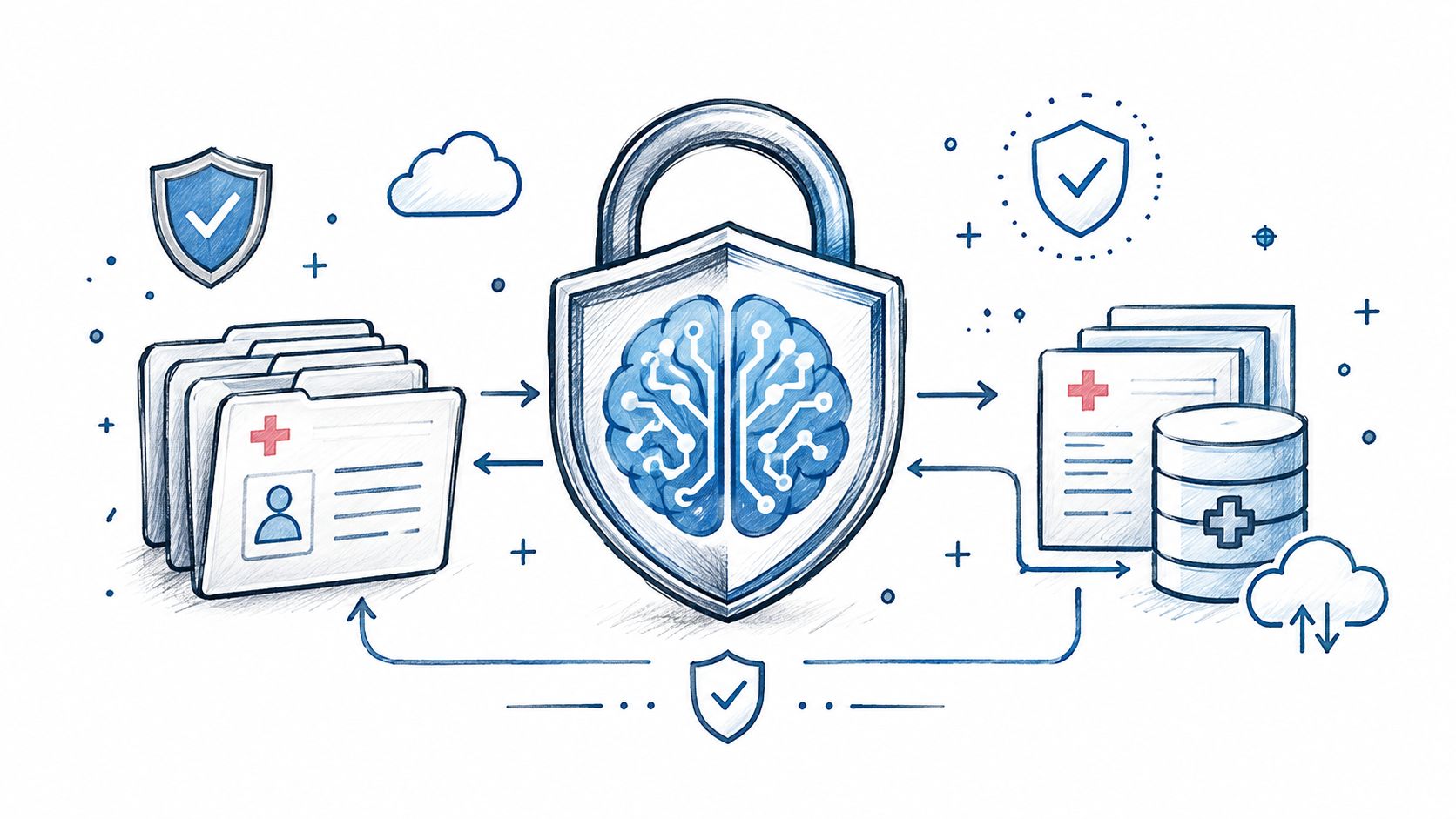
AI in Healthcare
HIPAA-Compliant AI: How to Use LLMs With PHI Safely
How to build HIPAA-compliant AI: when LLM providers need a BAA, data minimization, de-identification, audit controls and a reference architecture.
October 16, 2026Read more
Unlock efficiency & improve patient care with AI orchestration in healthcare workflows. Guide covers architecture, implementation, risks, & KPIs for leaders.

As of 2025, 86% of healthcare organizations globally report they are already extensively using AI in their workflows, and the global healthcare AI market is projected to exceed $120 billion by 2028, according to Blue Prism's healthcare AI statistics roundup. That number changes the conversation. AI orchestration in healthcare workflows is no longer a pilot topic. It's an operating model question.
What matters now isn't whether a health system has AI. It's whether that AI is coordinated, governed, and embedded in actual care and operational processes. A chatbot sitting beside the workflow is one thing. An orchestration layer that moves intake data into documentation, triggers routing logic, alerts staff, and preserves auditability is something else entirely.
Most CTOs already know the promise. The harder part is separating what works in production from what demos well. That's where the implementation details matter, especially data quality, workflow ownership, integration design, and governance.
AI orchestration in healthcare workflows works like an air traffic control system for clinical and operational tasks. Individual models may classify, summarize, predict, or extract. The orchestration layer decides what happens next, which system gets updated, who gets notified, what requires human review, and how exceptions are handled.
That's why orchestration matters more than isolated AI features. A strong model can generate an insight. A strong orchestration layer turns that insight into action without creating more administrative work for clinicians.

Healthcare teams are already seeing this shift in routine operations. AI-driven systems automate tasks such as updating patient records through digital intake forms and directly populating EHRs. They also coordinate appointment reminders, prescription alerts, and patient query responses through chatbots, which helps free clinicians for face-to-face care while supporting remote monitoring, virtual consultations, and automated scheduling. In practice, this is what makes Healthcare AI Services feel operational rather than experimental.
Without orchestration, hospitals end up with disconnected AI tools. One tool drafts notes. Another handles messages. A third predicts staffing needs. Each may be useful, but none owns the handoff between systems or teams.
With orchestration, the workflow becomes the unit of design:
Practical rule: If an AI output still forces staff to manually copy, chase, reconcile, or re-enter data, you haven't orchestrated the workflow. You've only added another tool.
Most organizations underestimate the distance between “we have usable data” and “we are orchestration-ready.” Data might be accessible enough for dashboards or one-off reporting, but still too inconsistent for workflow automation that has to run reliably across EHR, scheduling, imaging, billing, and patient communication systems.
That gap is where many programs stall. The opportunity is massive. So is the implementation discipline required to capture it.
The cleanest way to think about AI orchestration in healthcare workflows is as a four-layer system. If any layer is weak, the entire workflow becomes brittle.

This layer pulls information from EHRs, patient intake tools, scheduling systems, imaging platforms, labs, call center software, and payer workflows. The technical challenge isn't just connectivity. It's normalization.
If patient identifiers don't match, timestamps are inconsistent, note structures vary, or order statuses mean different things across systems, orchestration logic starts making weak decisions. Data ingestion has to do more than collect. It has to standardize enough context for downstream automation to be trustworthy.
This is the decision engine. Models classify urgency, summarize encounters, extract entities from clinical text, suggest next-best actions, or predict operational bottlenecks.
A common mistake is putting too much intelligence here. Models should support decisions, not independently manage every branch of the workflow. In healthcare, the safest systems keep model outputs bounded, observable, and reviewable.
This layer coordinates what happens after the model produces an output. It handles task sequencing, queue assignment, escalations, retries, approvals, exception routing, and audit logging. It's the system that says, “if this patient meets criteria X and imaging is pending, notify role Y, create task Z, and hold action until review is complete.”
For teams evaluating platforms, this is usually where generic automation software starts to show its limits. Healthcare workflows require more than if-then automation. They need state management, clinical context, and reliable handoffs across fragmented systems. That's the core of AI workflow automation.
The orchestration layer is where technical integration becomes operational execution.
The final layer surfaces tasks, recommendations, and alerts in the systems people already use. It also tracks failures, latency, override rates, routing accuracy, and human intervention patterns. If teams can't see why the system acted, they won't trust it. If engineering can't observe workflow failures quickly, they won't control it.
A useful production example comes from imaging. As described by ITN's analysis of AI-driven orchestration in medical imaging, orchestration improves workflow efficiency by automating system coordination, ensuring accurate data normalization, and routing cases correctly. Just as important, validation protocols verify that AI performs as intended, and explainability mechanisms clarify why a study was prioritized.
That example matters because imaging is unforgiving. If orchestration can work there, it can inform broader enterprise design.
Teams that want a cross-industry lens on scaling coordination across multiple agents can also review this guide for scaling enterprise AI. The healthcare lesson is the same. Orchestration only scales when architecture, governance, and observability are designed together.
The strongest use cases aren't the flashiest ones. They're the workflows where staff repeat low-value tasks, data gets re-entered across systems, and delays compound because no one owns the handoff.
Scheduling is one of the clearest examples. According to a review published in PMC, AI-driven scheduling systems can reduce appointment no-shows by predicting peak times and adjusting slots accordingly. The same review notes that AI algorithms analyzing admission, discharge, and transfer patterns help hospitals allocate beds, staff, and equipment preemptively to improve patient flow.
That sounds operational because it is. Good orchestration doesn't stop at prediction. It converts the prediction into queue changes, staffing actions, reminders, and escalations.
Documentation is another high-return area because it sits at the intersection of clinician burnout, coding completeness, and reimbursement. Healthcare AI agents can convert documentation from a retrospective task into a real-time workflow by listening to doctor-patient conversations with consent, capturing clinically relevant details as the conversation unfolds, and continuously monitoring compliance processes to ensure auditable records of actions, as outlined in Kore.ai's healthcare AI agents overview.
If your team is evaluating this area from a practical front-line angle, this explainer on understanding AI for healthcare documentation is a useful companion read because it focuses on how AI fits into medical transcription and note workflows rather than treating documentation as a generic automation problem.
One concrete example stands out. IBM's write-up on ViClinic reports that the company achieved efficiency gains of up to 20% by streamlining end-to-end workflows that coordinate documentation, reimbursement, and care operations together. The reported outcomes included faster care starts, reduced clinician documentation burden, improved coding completeness, and fewer claim denials.
Patients feel orchestration most when systems stop behaving like separate departments. Appointment reminders, prescription alerts, intake follow-ups, and query handling can be coordinated as one flow rather than a chain of disconnected interactions.
That's where a product such as Clinic AI Assistant fits. In practical terms, tools in this category are useful when they sit inside scheduling, intake, and communication workflows instead of operating as standalone chat interfaces.
The pattern across successful deployments is consistent:
A useful test is simple. If the workflow still depends on staff remembering the next step, the orchestration layer hasn't gone far enough.
A large share of healthcare AI projects stall before production for one simple reason. The organization confuses basic data cleanup with orchestration readiness.

The hard part is not choosing a model or wiring up a prompt. It is getting workflows, source systems, and governance into a state where the orchestration layer can make reliable decisions. As noted in this healthcare AI workflow analysis, the gap between “data cleaning” and real production readiness is a common failure point. In complex EHR environments, data remediation often takes 12 to 18 months. Many executive teams still plan as if it is a short discovery phase.
Start with a workflow that has measurable operational pain. Do not start with vendor demos.
Good candidates usually have repeated handoffs, high rework, long cycle times, or inconsistent routing decisions. Prior authorization, referral intake, discharge follow-up, imaging coordination, documentation review, and bed management often surface quickly because the costs are already visible in delays, denials, and staff workarounds.
The assessment should answer a few plain questions:
This is also the point to define decision rights. If no one owns the workflow across departments, orchestration will inherit the same fragmentation you are trying to remove.
This phase is usually the longest. It is also where weak programs start to slip.
“Clean data” is too vague to be useful here. Teams need a field-level view of source systems, data definitions, timing gaps, duplicate records, missing events, and conflicting status logic across EHR, scheduling, billing, CRM, imaging, and patient communication tools. A workflow can look fine in a workshop and still fail in production because timestamps arrive late, patient identifiers do not reconcile, or referral status means different things in two systems.
A practical remediation program usually includes:
Field note: If the team cannot explain what happens when data is late, duplicated, or contradictory, the orchestration design is still at the whiteboard stage.
Pick one bounded workflow with visible pain, manageable risk, and a cooperative operations team. That combination matters more than ambition.
The pilot should have clear entry criteria, a defined human review path, and a short list of operational measures that matter to the business. Time to action, exception rate, rework, turnaround time, and denial reduction are usually more useful than model accuracy in isolation. Frontline users should be part of weekly review. They will find failure modes architecture diagrams miss.
Keep the scope tight. A pilot that spans six departments often turns into a governance exercise instead of an implementation.
Scale the operating pattern, not just the use case.
Once a pilot is stable, reuse the pieces that make orchestration dependable: state management, exception handling, approval paths, audit logs, monitoring, workflow versioning, and release controls. CTOs often underestimate the work involved in these areas. Infrastructure matters, but most scaling problems come from inconsistent process ownership, unresolved policy questions, and local workflow variations that were never documented.
Expect to adjust staffing and governance as the footprint expands. Someone needs authority over workflow changes. Someone needs to monitor drift in both data quality and operational outcomes. Someone needs to decide when a workflow should fall back to manual handling instead of forcing automation through bad inputs.
That is why the roadmap should be planned in quarters, not in a single launch window. In healthcare, orchestration succeeds when the organization treats data remediation, workflow design, and governance as one implementation program.
The wrong platform decision can burn a year. In healthcare, that usually happens when teams buy for model features before they confirm orchestration fit: messy source data, brittle integrations, unclear exception paths, and no practical way to keep humans in the loop.
CTOs should treat vendor selection as an operating model decision first and a product decision second. The stack has to work with the data reality you have during the next 12 to 18 months, not the cleaner state you hope to reach after remediation. That gap is where many orchestration programs stall. A vendor demo may look polished on normalized sample data. Production workflows depend on patient matching, document quality, coding variance, routing rules, identity resolution, and approval logic that are rarely in that state on day one.
Start with the workflow that needs to run, the systems it touches, and the exceptions that break it. Then assess whether the technology can support that path without forcing custom work at every branch.
If a vendor cannot explain how the system handles interoperability, human review, explainability, auditability, and workflow exceptions, move on. Healthcare automation usually fails because the product does not hold up under real operating conditions.
Product platforms and custom engineering often need to coexist. That is especially true for clinician queues, care coordination logic, and administrative workflows that do not map cleanly to standard software. In some cases, this also overlaps with broader custom healthcare software development.
A practical test helps here. Ask the vendor to walk through one ugly case from your environment, not the happy path. Use incomplete intake data, a missing document, a conflicting payer record, or an order that needs escalation. Their answer will tell you more than a feature checklist.
| Criterion | Why It Matters | Key Questions to Ask |
|---|---|---|
| Interoperability | Healthcare workflows span EHRs, imaging, scheduling, labs, portals, and payer systems | Does it support the standards and interfaces your environment depends on? Who maintains integrations as source systems change? |
| Explainability | Clinicians and operators need to understand why the system acted | Can users see why a case was prioritized, routed, or escalated in terms they can verify? |
| Human oversight | Many workflows require review before action is committed | Where can staff intervene, approve, override, or stop automation? How is fallback to manual handling triggered? |
| Auditability | Regulated environments require traceable actions and decision histories | What is logged? Can you reconstruct who approved what, when it changed, and which data was used? |
| Workflow flexibility | Hard-coded flows break under healthcare variation | Can the system handle retries, branching logic, exceptions, and local policy differences without rebuilding the workflow? |
| Security and compliance | Sensitive data and regulated workflows raise the stakes | How are access controls, consent, segmentation, monitoring, and data retention handled? |
| Deployment fit | Some environments require hybrid or on-prem constraints | Can the platform run inside your infrastructure and governance model? |
| Operating model | Technology does not own adoption or maintenance | Who configures, monitors, updates, and supports workflows after go-live? |
Choose partners who will challenge your assumptions about readiness. A strong implementation partner will ask how long data remediation will take, where identifiers conflict, which workflows differ by site, and who has authority to change routing or approval logic. If those questions do not show up early, expect delays later.
Regulatory input also needs to arrive early. A regulatory compliance partner can help define where automation is appropriate, what must remain reviewable, and how audit requirements should shape architecture before contracts and integrations lock in bad decisions.
If your team is comparing strategy and delivery support options, include one simple filter. Can the partner translate AI ambition into a phased implementation plan that accounts for remediation work, governance load, and integration sequencing? Ekipa AI is one example of a strategy-oriented option in that category, as noted earlier. The important point is not the brand. It is whether the partner can help structure a roadmap that survives contact with healthcare operations.
Feature count matters less than execution fit. In practice, the best choice is usually the platform and partner combination that can handle imperfect data, fit your control model, and get one workflow live without creating a long tail of manual cleanup.
Orchestration fails in production for ordinary reasons. An outdated routing rule. A model tuned on last year's documentation patterns. A patient record that looks complete until a downstream system needs the field that was never standardized. In healthcare, governance has to account for those day-two failures, not just approve the pilot.
That is why orchestration readiness is different from data cleaning. A team can finish a data quality sprint and still be months away from safe automation at scale. In practice, the hard part is making sure identities match, source systems stay aligned, exceptions are reviewable, and every workflow change has an owner. For many organizations, that remediation and operating setup takes 12 to 18 months. Teams that skip that reality usually end up measuring pilot activity instead of operational performance.
Every production workflow needs named accountability for four things. Workflow logic, model behavior, approval thresholds, and exception handling. Change control matters just as much. Someone has to decide what triggers a review, who signs off on updates, how rollback works, and how audit evidence is stored.
Automation can remove a large volume of repetitive coordination work across triage, throughput, and administrative follow-up, as described in BizData360's healthcare workflow automation overview. The trade-off is straightforward. The more actions the system can take on its own, the more disciplined your controls must be around review points, overrides, and traceability.
A practical governance model usually includes clinical leadership, operations, compliance, security, and the team that owns the underlying data mappings. If the data steward is absent, governance turns into policy language with no way to enforce it in the workflow.
The biggest governance failures tend to cluster in four areas:
Good governance keeps automation visible. Once a bad workflow becomes routine, recovery gets expensive. Staff work around it, audit gaps accumulate, and trust drops faster than technical teams expect.
ROI belongs on the dashboard, but it should not dominate it. In healthcare, the better question is whether orchestration reduced friction without creating hidden risk.
Track a balanced scorecard across clinical, operational, and workforce outcomes:
One measure I like in practice is avoided manual effort. Not vendor-reported click savings. Measured reductions in work your staff had to do before the workflow went live. Establish the baseline early, because retrospective measurement is usually weak. If timestamps are inconsistent, task logs are incomplete, or teams changed the process halfway through remediation, your success story will be hard to prove.
If you need support defining that operating model, Ekipa AI is one example mentioned earlier. The useful test is whether the advisor can help set ownership, controls, and measurement before the first workflow scales.
Start with a workflow that clinicians already dislike. Documentation, inbox triage, referral follow-up, and repetitive intake are better starting points than anything that feels like black-box decision support.
Then make the system visible. Show what data it used, why it made a recommendation, and where the human can override it. Clinicians usually resist hidden automation more than automation itself.
Yes, but the integration design matters more than the label on the EHR. Many healthcare environments will need a layered approach that connects existing systems through APIs, interface engines, middleware, and workflow services rather than replacing the core platform.
The practical question isn't “is the EHR old?” It's “can you reliably access, normalize, and act on the right events and records without breaking clinical operations?”
Simple workflow automation follows predefined rules. AI orchestration does that too, but it also incorporates model outputs, dynamic routing, contextual decision-making, and exception handling across multiple systems and teams.
A reminder email sent at a fixed interval is automation. A workflow that interprets intake details, prioritizes the case, updates records, routes tasks, triggers outreach, and logs the whole chain for review is orchestration.
Start where the process is high-friction, repeatable, and measurable. Don't begin with the most politically sensitive workflow. Begin with one that has obvious handoff failures, enough data to support a pilot, and operational leaders who will stay involved after launch.
You'll learn more from one disciplined workflow in production than from five disconnected pilots.
Ekipa AI works with digital health and healthcare teams that need practical support across strategy, implementation, integrations, and workflow design. If you're evaluating AI orchestration in healthcare workflows and want a delivery-minded healthtech engineering partner, review real-world use cases, explore SaMD solutions, or meet our expert team.
How to build HIPAA-compliant AI: when LLM providers need a BAA, data minimization, de-identification, audit controls and a reference architecture.
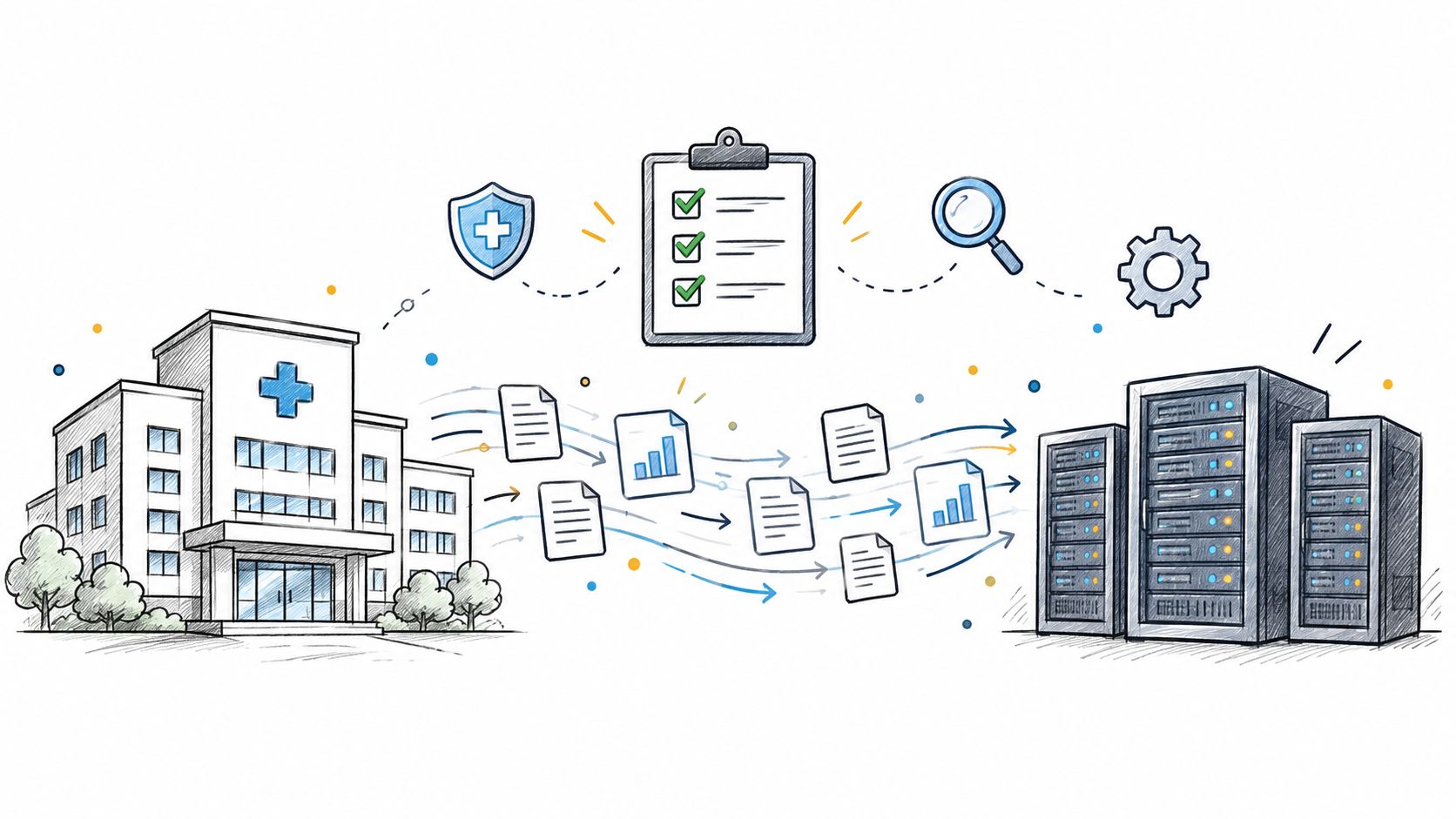
Practical data migration planning guide for healthcare teams. Scope, mapping, compliance, validation, cutover and rollback decisions explained end to end.
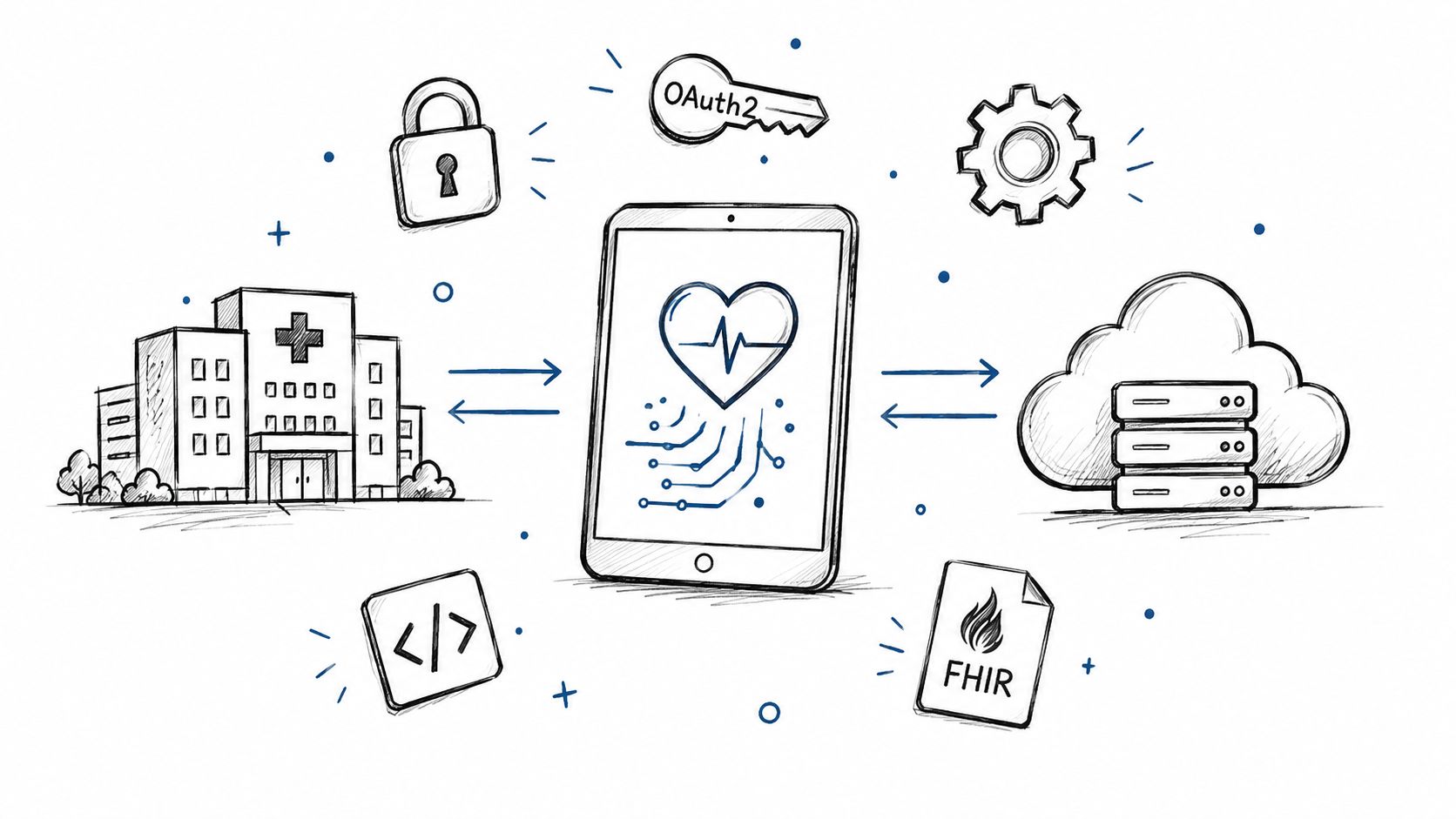
Smart on FHIR guide for healthtech engineers. Learn the OAuth 2.0 launch model, scope syntax, backend services, and US regulatory requirements.
Connect with our team to explore how AI expertise can transform your business.