AI in Healthcare
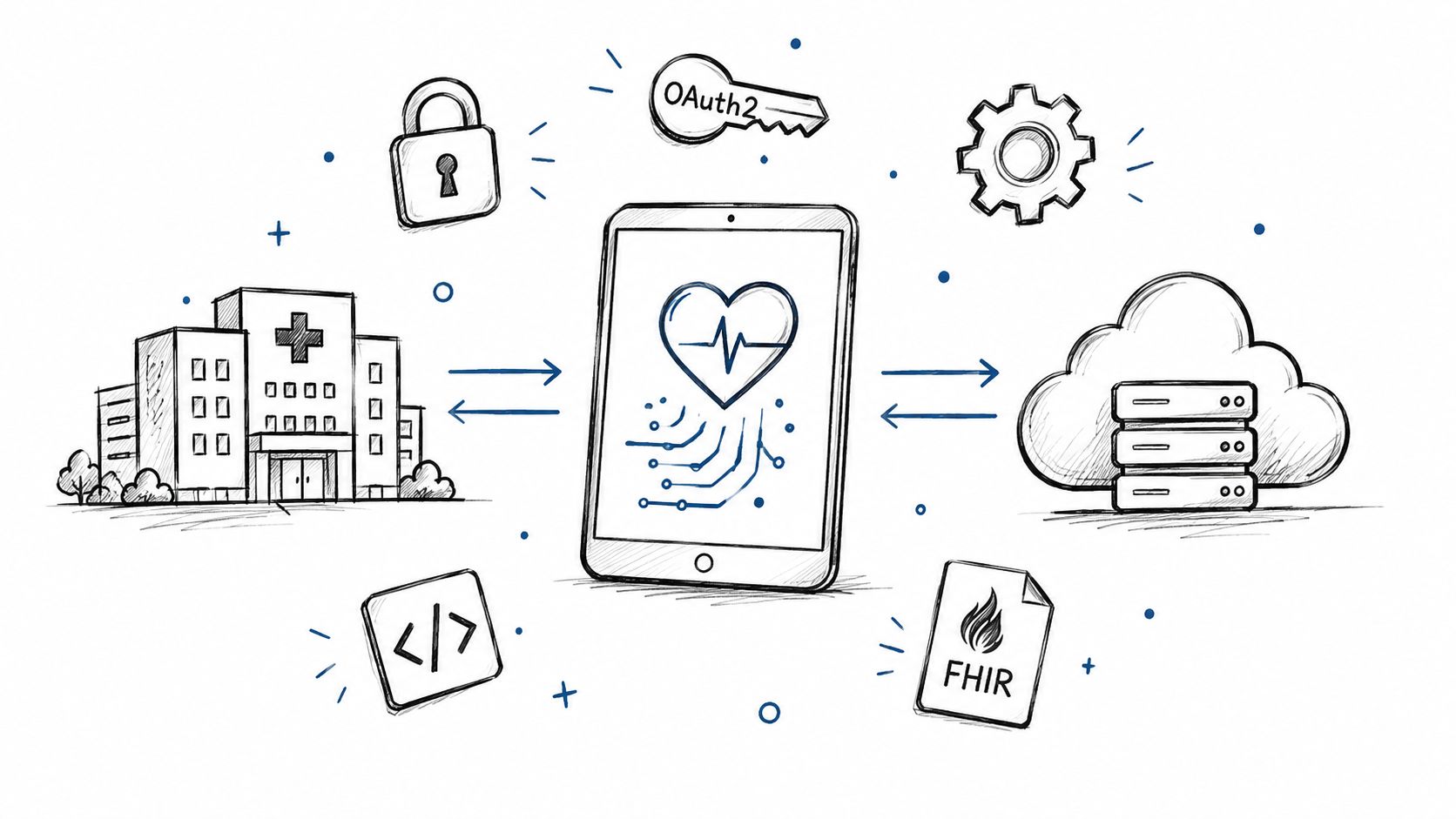
Smart on FHIR: What It Is and How It Works in Practice
Smart on FHIR guide for healthtech engineers. Learn the OAuth 2.0 launch model, scope syntax, backend services, and US regulatory requirements.
October 14, 2026Read more
Choose, implement, and scale an AI platform for healthtech integration. Our 2026 guide covers architecture, ROI, pitfalls, and vendor selection.

Most health systems don't have an AI adoption problem anymore. They have an integration problem.
Eighty-six percent of healthcare organizations already report using AI extensively, and the global healthcare AI market is projected to exceed $120 billion by 2028, according to Blue Prism's healthcare AI statistics roundup. That changes the conversation. The hard question isn't whether AI belongs in healthcare. It's whether your organization can connect AI to the systems that run care, operations, and revenue.
That's where most plans get stuck. A model might classify documents well in a demo, summarize charts accurately in a sandbox, or answer patient questions in a pilot. But when you try to connect it to an EHR, a billing workflow, a scheduling system, a patient portal, or a remote monitoring feed, practical constraints show up fast. Data arrives late. Interfaces are inconsistent. Security teams push back. Clinicians ask where the output came from. Compliance officers ask who approved it.
An AI platform for healthtech integration exists to solve that exact problem. Not as another isolated tool, but as the operational layer that makes AI usable inside regulated, fragmented care environments.
More healthcare organizations are already using AI than many boards realize. The missed target is not interest. It is operational integration, especially once AI has to work inside legacy EHRs, revenue systems, scheduling tools, and regulated clinical workflows.
That is where many programs stall. Teams can get a model to perform in a pilot, then lose momentum when they hit interface gaps, approval queues, fragmented data, and unclear ownership between IT, operations, compliance, and clinical leadership. In practice, over 70% of AI projects struggle at the point where technical promise has to become workflow change and measurable ROI. The problem is usually not the model. It is the path into production.
For CEOs, CTOs, and product leaders, the timing risk is real. Waiting can feel prudent, but delay often creates a different problem: a stack of disconnected pilots, each with its own vendor, controls, and support burden. That raises integration cost later and makes governance harder once the organization decides to scale.
Healthcare infrastructure was built to record transactions and move claims, orders, and messages between departments. It was not built to support AI outputs that need context, traceability, human review, and write-back into the exact workflow where a scheduler, nurse, biller, or physician is already working.
The consequences show up quickly:
The right Healthcare AI Services conversation, therefore, starts with integration architecture, not model hype.
Practical rule: If AI cannot write back into the system where the work happens, it is still a pilot.
Urgency does not mean pushing a chatbot into production because the board asked about generative AI. It means choosing a workflow where the operational drag is obvious, the data path can be controlled, and the outcome can be measured. Intake, referrals, prior authorization, care coordination, coding support, and patient messaging are common starting points because they cross teams and expose underlying integration constraints early.
I have seen this pattern repeatedly. The organizations that scale successfully do one thing well first: they make a messy, cross-system workflow reliable enough that staff trust it. They define system owners, set review thresholds, instrument the handoffs, and prove that the output reduces labor or shortens cycle time without creating clinical or compliance risk. After that, the second use case is faster because the integration pattern already exists.
That same discipline applies in lab and diagnostics workflows, where AI often fails not on model quality but on handoff design and human review. Woolf Software's lab in the loop guide is a useful example of how production AI depends on controlled review paths, not just model performance.
The clock is simple. HealthTech teams need to connect AI to the systems they already have before competitors turn similar models into working operations.
A standard integration layer moves data from one system to another. A standalone AI product generates outputs from data you feed it. An AI platform for healthtech integration does both, but with healthcare-specific controls around provenance, compliance, orchestration, and clinical usability.
The simplest way to think about it is as a digital nervous system for your healthcare stack. It senses signals from EHRs, labs, devices, intake forms, imaging systems, patient-reported tools, and messaging channels. It routes those signals to the right services, applies AI where it helps, and pushes results back into the systems where teams already act.
A real platform in this category typically handles:
That's why this category is different from generic middleware. Healthcare teams need the platform to understand not just APIs, but care workflows, regulated data handling, and operational handoffs.
It isn't just a chatbot sitting on top of an EHR.
It isn't just an iPaaS with a healthcare connector.
And it isn't just a model endpoint that your developers wire into a front-end.
Those can all be components. None of them is sufficient on its own.
A useful reference point is workflow design in diagnostics and lab operations, where integration quality often matters more than clever modeling. Woolf Software's lab in the loop guide is a good example of this broader lesson. The value comes from embedding software into high-stakes operational loops, not from treating AI as a detached feature.
A lot of teams buy for prediction quality and discover too late that deployment friction is the actual cost center. They ask, “How accurate is the model?” before asking “How does this fit Epic, Cerner, document ingestion, clinician review, and patient communication without creating another queue?”
That's backwards.
A healthtech integration platform earns its keep when it can:
| Capability | Why it matters in healthcare |
|---|---|
| Workflow-aware orchestration | AI outputs need to land inside existing care and ops processes |
| Domain connectors | Healthcare data is messy, standardized unevenly, and often legacy-bound |
| Review and escalation controls | Many outputs require clinician or staff confirmation |
| Traceable data handling | Teams need to know what source produced each recommendation |
| Continuous operations support | The system must survive changing interfaces, templates, and data quality |
When people say they need an AI platform, they often mean they need a stable way to operationalize AI without rebuilding their digital estate from scratch. That's a narrower problem than “AI transformation,” and a much more solvable one.
The architecture matters more than the model catalog. In healthcare, poor plumbing will sink a strong model faster than weak prompting or a suboptimal classifier.
Three features are essential: interoperability, secure governance, and orchestration that preserves clinical traceability.

Healthcare has spent years moving toward interoperable standards, and the current benchmark is clear. The sector's move toward FHIR and HL7 is the defining trend, but modern platforms also need to preserve data provenance including source, time, and author lineage so downstream AI remains clinically traceable and auditable, as described in this peer-reviewed study on integrating AI, EHRs, and patient-generated data.
That last point gets missed in a lot of architecture diagrams. It's not enough to map data into a unified schema. You need to keep the metadata that lets a clinician or auditor answer basic but critical questions:
If your platform drops that context during ingestion, every downstream score, summary, or recommendation becomes harder to defend.
A mature extraction layer should also deal with messy source material. That includes scanned referrals, PDFs, structured forms, and inbound clinical documents. In many environments, tools like this AI-powered data extraction engine become a bridge between unstructured intake and interoperable workflow data.
Healthcare teams often treat security as a review gate near go-live. That's too late. Security requirements shape deployment topology, storage design, identity management, and access boundaries from day one.
A workable platform usually needs decisions on:
The practical trade-off is simple. The more casually you mix model experimentation with operational data, the more expensive remediation becomes later.
A secure architecture doesn't slow healthcare AI down. It prevents redesign after the first compliance review.
The platform also has to manage the lifecycle between inbound data and outbound action. That includes confidence handling, exception routing, explanation layers, and monitoring for quality drift.
Here's what works better than “fire and forget” automation:
A platform that supports explainable outputs but can't monitor changing inputs will fail unnoticed. A platform that monitors inputs but can't show reasoning will struggle with adoption. In regulated healthcare workflows, you need both.
A healthtech AI project rarely fails because the model was slightly worse than expected. It fails because integration breaks under real operating conditions. Partner selection should reflect that reality.
The evaluation goal is simple. Find the team that can connect AI to your existing systems, contain risk when data or workflows go off script, and prove business value before the rollout gets expensive.

Product demos hide the hard part. An implementation walkthrough exposes it.
Ask the vendor to describe, step by step, how they would connect one live workflow from source system to end action. Use a concrete scenario such as referral intake from faxed documents into an EHR work queue, or prior authorization data moving from a payer portal into an internal operations system. Teams with real healthcare delivery experience get specific fast. Teams without it drift back to generic platform language.
A capable partner should answer questions like these clearly:
I usually listen hardest for how a partner talks about failure. If they cannot explain message mismatches, duplicate records, downtime handling, or rollback procedures in plain terms, they will struggle once the pilot meets production traffic.
Many vendors present explainability as a polished interface feature. That is not enough in healthcare. Users need to understand why the system produced an output, what level of confidence it has, and what should happen when confidence is low.
Ask vendors to show evidence in four areas:
| What to ask for | What a strong answer looks like |
|---|---|
| Explanation method | A defined mechanism tied to the output, not a vague claim of transparency |
| Uncertainty handling | Clear thresholds, review rules, and blocked-action conditions |
| Data-quality monitoring | Checks for feed changes, missing fields, format drift, and broken mappings |
| User feedback loop | Corrections captured in operations and routed into model or workflow improvement |
The trade-off is practical. More visibility into model behavior can add design and implementation work up front. It also reduces downstream risk during compliance review, clinician adoption, and incident response.
Selection should not stop at technical fit. The better question is whether the partner can turn ambiguity into a controlled delivery plan.
That usually means a defined discovery process, a narrow first use case, named system boundaries, measurable success criteria, and agreement on who signs off at each stage. Teams that offer AI implementation support for healthcare integration programs should be able to show how they de-risk those first decisions before asking for a broad rollout commitment.
Ekipa's framework is useful here because it pushes the conversation toward operating constraints, integration dependencies, and measurable workflow outcomes before engineering starts. That discipline matters more than a long feature list.
Selection lens: Choose the team that can explain failure modes, controls, and operating trade-offs calmly and specifically. In healthcare, delivery maturity shows up long before launch.
A big-bang rollout usually creates broad exposure and shallow learning. A phased rollout creates narrower risk and stronger institutional memory.
The right roadmap starts with one workflow where integration is painful, the process is visible, and the human review path is well understood. Patient intake, referral triage, document classification, and appointment communications often fit that profile.

The first pilot should prove that AI can function inside an existing workflow with acceptable controls. Keep the scope tight. One entry channel, one system boundary, one operational owner.
A good pilot has these characteristics:
Avoid broad mandates like “deploy AI for care coordination.” Start with “extract and validate intake data, then route exceptions to staff review.”
Once the workflow is live, most of the actual work begins. This phase is about discovering operational edge cases and making them boring.
Teams should focus on:
This is also where implementation discipline matters. A structured AI Product Development Workflow helps teams move from pilot enthusiasm to repeatable delivery. The same is true for ai assisted software development, especially when engineering teams need to ship integrations, controls, and monitoring in parallel.
The best next use case is usually adjacent to the first one. If you automated document intake, add downstream routing. If you improved patient communication, add scheduling or reminders. Reuse the same security model, provenance pattern, monitoring approach, and review logic wherever possible.
That reuse is what turns a project into a platform.
A practical expansion sequence often looks like this:
| Expansion pattern | Why it works |
|---|---|
| Intake to EHR update | Reuses ingestion and validation components |
| Document extraction to coding support | Extends the same parsing and review foundation |
| Patient messaging to scheduling actions | Builds on communication and task orchestration |
| Remote monitoring to alert triage | Uses event handling and escalation controls |
Scaling isn't just “more departments.” It means standardizing how use cases are approved, monitored, and supported.
That usually requires:
When organizations skip this phase, they end up with a pile of AI-enabled features and no operating model. When they do it well, the second and third deployments move faster than the first because the hard decisions have already been made.
Most failed healthtech AI projects don't fail because the model is weak. They fail because teams underestimate integration drag, governance work, and the operational cost of ambiguity.
The most important warning sign is architectural. Recent data indicates that 74% of healthtech AI failures stem from integration latency and data privacy breaches during the cloud-to-edge handoff, not from model inaccuracies, according to Ekipa research on AI implementation failure patterns. That should immediately change where leaders focus diligence.
Three failure patterns appear repeatedly.
First, teams assume legacy systems are only a connector problem. They aren't. They're also a workflow problem. Old systems often carry old habits, undocumented fields, manual exception handling, and local workarounds that no API spec captures.
Second, teams launch automation without operational ownership. If nobody owns the exception queue, the review rules, and the user feedback cycle, the system degrades even if the model output looks good.
Third, teams measure ROI too narrowly. If the only metric is cost reduction, they miss where healthtech value accumulates.
Most healthcare AI value comes from fewer handoff failures, faster throughput, and higher staff confidence. Those gains are real even when they don't fit a simplistic automation narrative.
Use practical controls, not slogans:
For legacy integration risk
Map every handoff, including manual ones. Don't stop at system diagrams. Follow the workflow until a human acts on the data.
For privacy risk during handoff
Minimize unnecessary data movement. Keep processing close to the governed environment when possible, and separate experimentation paths from operational ones.
For clinician resistance
Show provenance, confidence, and escalation rules. Clinicians don't need marketing. They need defensible outputs and a safe override path.
For data quality issues
Monitor source changes continuously. A renamed field, altered document template, or changed export behavior can break downstream logic long before anyone notices.
A useful ROI model combines efficiency, quality, and adoption.
Track outcomes such as:
| ROI dimension | What to measure qualitatively or operationally |
|---|---|
| Throughput | Faster completion of intake, routing, review, or follow-up tasks |
| Reliability | Fewer dropped handoffs, rework loops, or reconciliation failures |
| Staff experience | Reduced repetitive work and lower cognitive burden |
| Clinical trust | Higher acceptance of recommendations with review visibility |
| Expansion readiness | Ability to reuse the same pattern in another workflow |
For teams looking for examples of where that kind of ROI shows up, browsing real-world use cases can help frame which operational outcomes matter before you commit to implementation.
A final point matters here. True ROI in healthtech almost never comes from replacing humans outright. It comes from giving humans cleaner inputs, better prioritization, and fewer avoidable handoffs.
A large share of healthcare AI projects stall between pilot and production. The failure point usually is not model quality. It is integration strategy. Teams struggle to connect AI to legacy EHRs, define safe operating boundaries, and prove workflow-level value before sponsors lose patience.
Ekipa AI is relevant in that middle ground. The approach is neither generic strategy theater nor raw API work. It starts with delivery questions that matter in regulated environments: which workflow breaks first, which systems must stay in scope, who reviews output, and what evidence will justify expansion.

In practice, the execution model has four layers, each reducing a different category of delivery risk:
For some organizations, the work also extends into wider platform modernization. In those cases, broader custom healthcare software development can matter because the AI layer only performs as well as the systems around it.
A disciplined program uses strategy to narrow scope, then moves into a pilot with explicit controls, named owners, and a production path that is realistic for the existing stack. That is the part many teams skip. They buy tooling before they decide how the workflow should operate under audit, exception handling, and source-system change.
Ekipa AI is a useful example of this framework-led model. It combines early discovery with implementation support for teams that need to move from use-case selection into deployable systems, especially when the environment includes legacy infrastructure and regulated workflows.
Start with the bottleneck, not the demo. Define the workflow pain, integration boundaries, provenance requirements, and operational owner. Once those are concrete, the right platform pattern becomes easier to choose, and the business case becomes easier to defend.
A standard iPaaS is useful for moving data between applications. A healthcare-specific AI integration platform goes further. It needs to understand healthcare data standards, support workflow-aware orchestration, preserve provenance, and provide controls for review, auditability, and explainability.
In practice, an iPaaS can connect systems. An AI platform for healthtech integration connects systems and manages how AI behaves inside regulated workflows.
You can, but most organizations underestimate the maintenance burden. Building means owning connectors, data normalization, lineage preservation, monitoring, role-based controls, review workflows, and ongoing changes in source systems. It also means carrying more delivery risk internally.
A hybrid model is often more practical. Use a platform or framework for the integration foundation, then build the proprietary clinical logic or workflow layer that differentiates your product or service.
Start with strategy, not tooling. Choose one operational bottleneck that is painful, feasible, and measurable. Define the system boundaries, the review path, and the success criteria before evaluating vendors or building anything.
That early discovery work is where many teams save months of churn. A disciplined intake process surfaces whether the problem is suitable for AI, what data is available, and what governance has to be in place for production use.
Keep the first ROI model close to the workflow. Focus on throughput, rework reduction, staff burden, reliability of handoffs, and user trust. Avoid trying to justify the whole AI program from one pilot.
If the first deployment creates a reusable integration pattern, that alone can be strategically valuable because it lowers the cost and risk of the next use case.
If you're evaluating an AI platform for healthtech integration and want a structured path from workflow discovery to implementation, Ekipa AI can help you scope the opportunity, define the right architecture, and move toward production with fewer avoidable risks.
Smart on FHIR guide for healthtech engineers. Learn the OAuth 2.0 launch model, scope syntax, backend services, and US regulatory requirements.
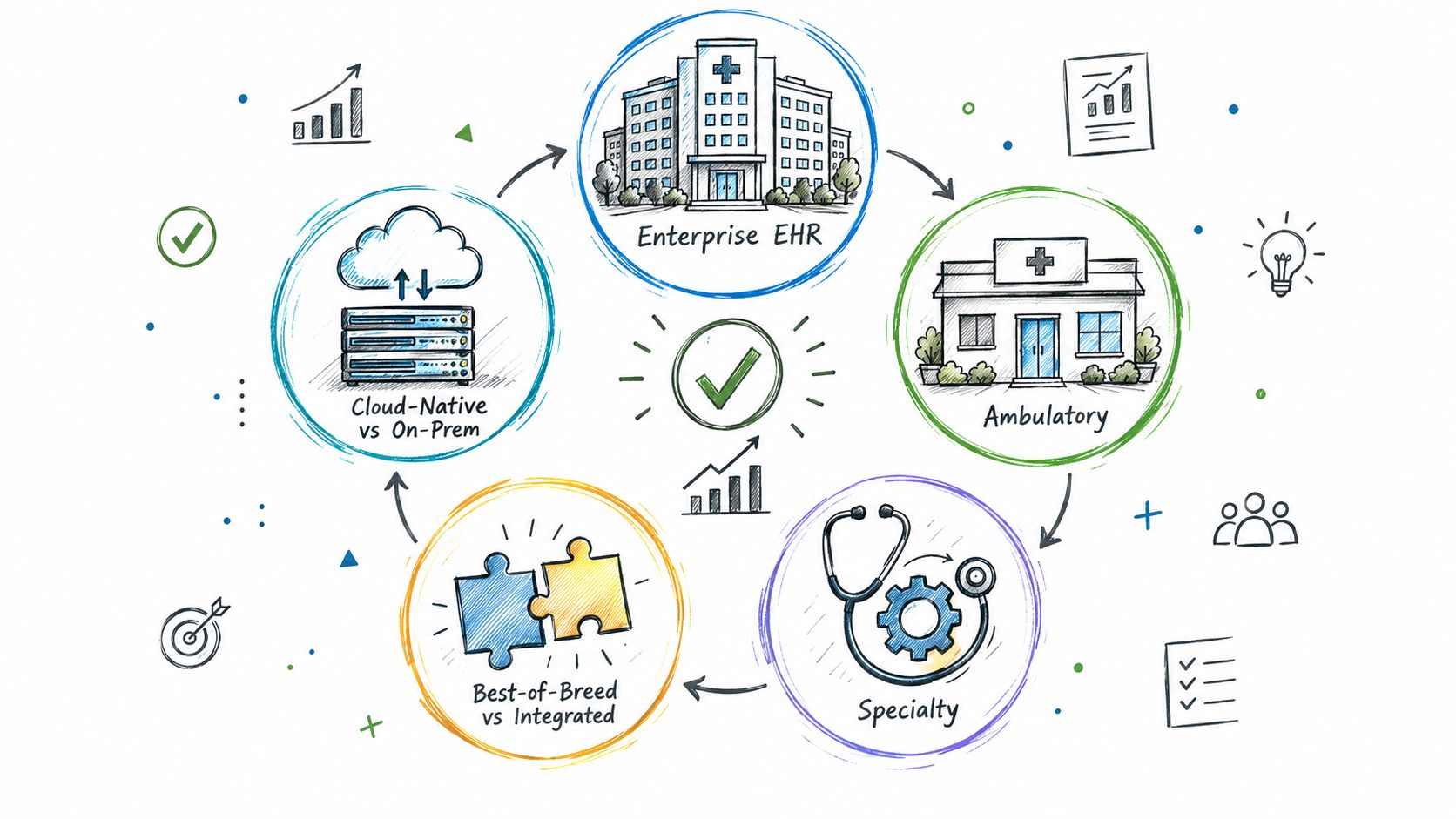
Explore the types of EHR systems by deployment model, care setting and scope. Compare integration options, trade-offs and selection tips for healthtech teams.
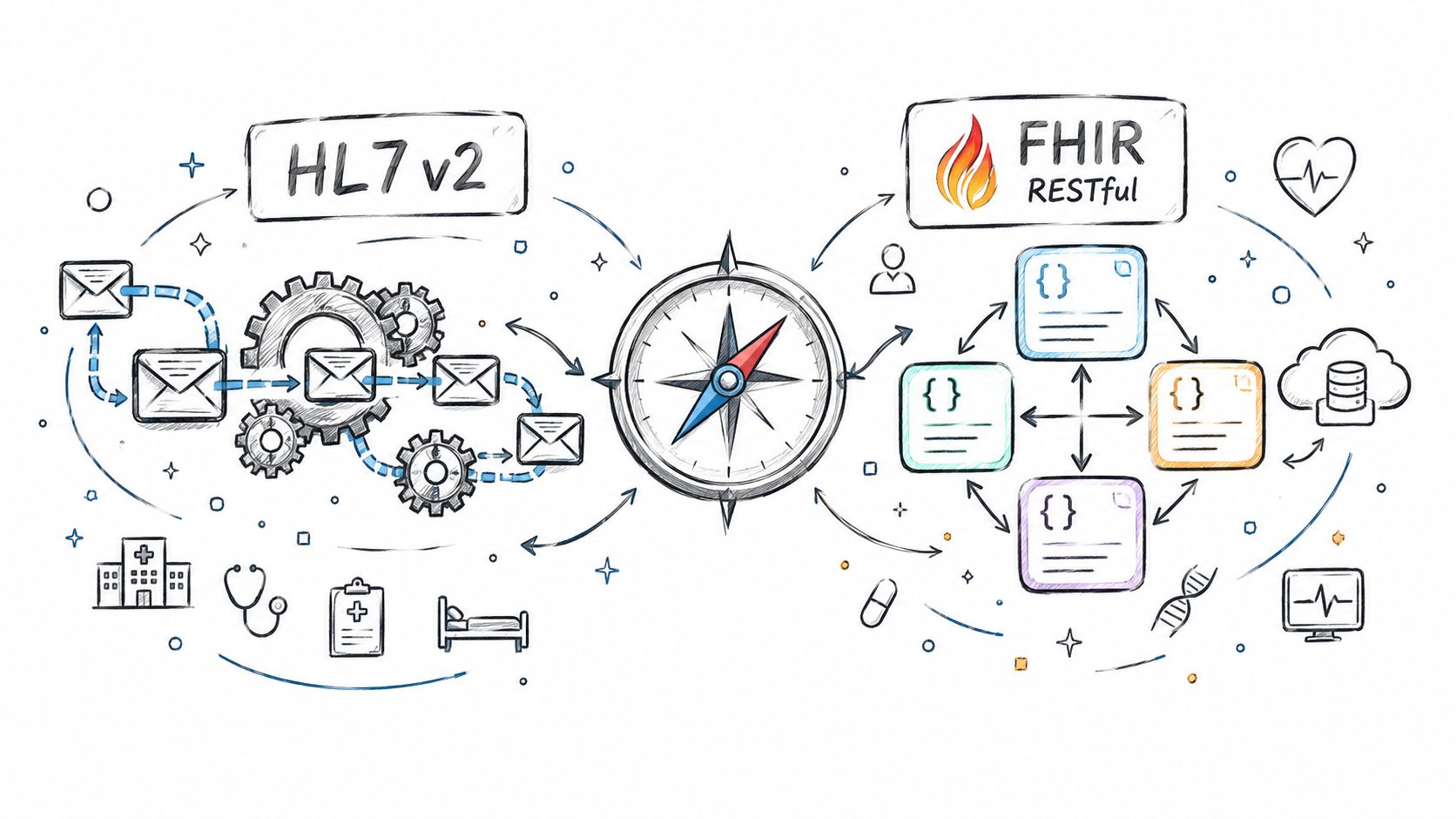
Compare Fhir vs. hl7 standards for healthtech integration. See how HL7 v2 and FHIR differ in use, mechanics, regulation, and real-world architecture.
Connect with our team to explore how AI expertise can transform your business.