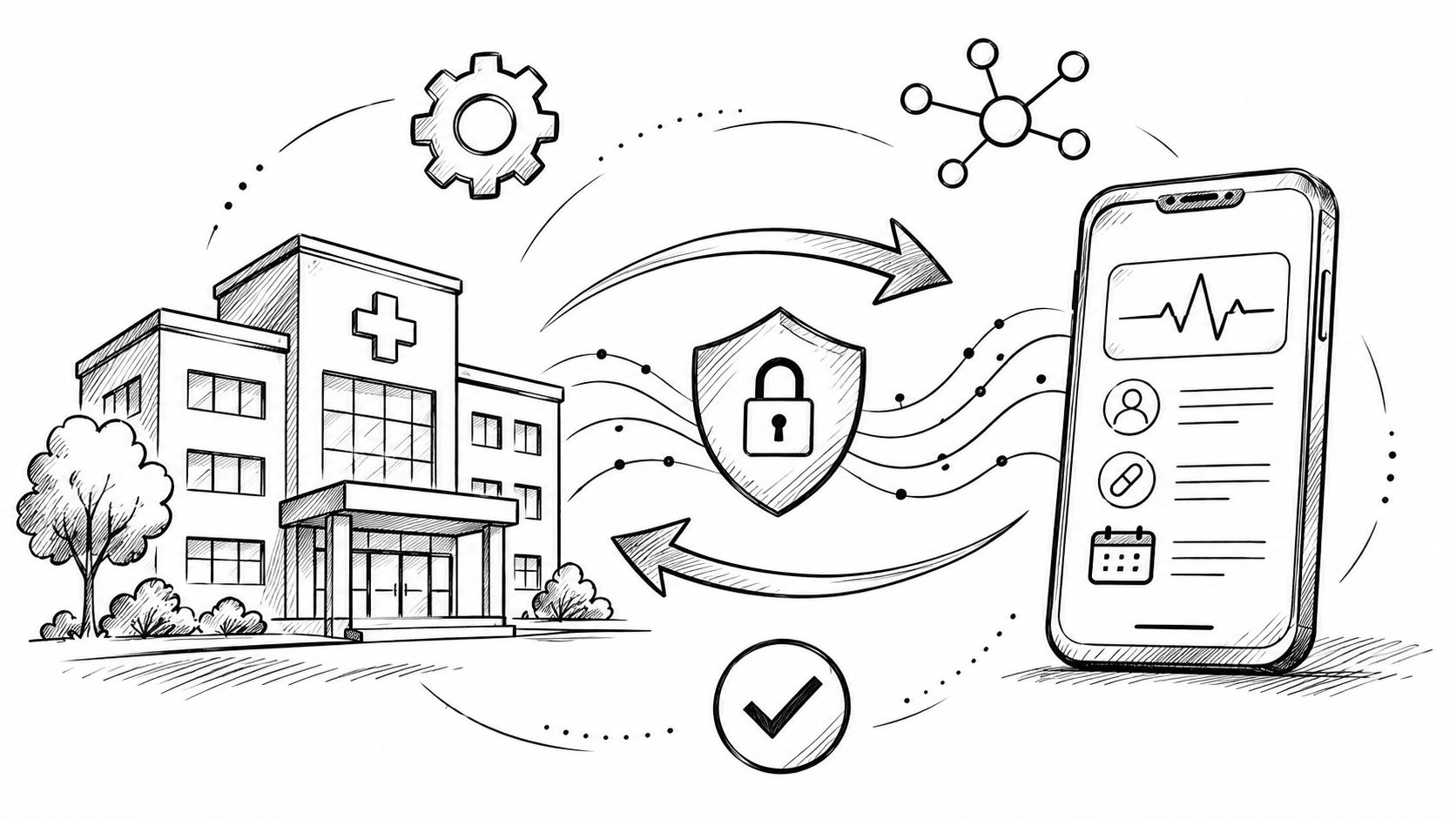
Healthcare AI spending is rising fast, but budget alone does not produce clinical value. Health systems get returns when AI is treated as infrastructure with clear ownership, data controls, workflow integration, and a plan for proving clinical and financial impact.
Many health system leadership teams still frame AI adoption as if they are selecting another point solution. That framing creates predictable failure modes: models with weak data inputs, pilots that never reach production, governance reviews that start too late, and clinician-facing tools that add clicks instead of removing work. Clinical intelligence infrastructure is the operating foundation that prevents those mistakes.
The board-level question is more specific now. Can the organization support AI that is safe, auditable, workflow-native, and equitable across service lines and patient populations?
That requires more than model access. It requires data pipelines that can handle fragmented clinical records, identity and terminology controls, security and monitoring, human oversight, and decision rights for when a model should be used, limited, or shut off. Teams building healthcare AI implementation capabilities usually find the same trade-off early: speed matters, but unmanaged speed creates downstream rework in compliance, integration, and clinician adoption.
This article takes a different approach from the usual component checklist. It connects architecture decisions to clinical ROI, lays out a phased roadmap leaders can use to sequence investment, and gives governance and equity the same weight as models and tooling. That is the difference between an AI program that demos well and one that holds up in daily care delivery.
The New Normal in Healthcare AI
By 2025, AI use in hospitals had shifted from limited experimentation to broad operational adoption. The headline is not the size of the market. It is where the technology now sits inside care delivery. AI is being applied to documentation, coding, risk prediction, inbox management, and capacity decisions across systems that already carry clinical work.

That shift changes the architecture question. The issue is no longer whether a health system can test a model. The issue is whether it can run AI inside production workflows with acceptable latency, traceability, clinical review, and downtime procedures.
Many programs incur significant costs when patient identity is inconsistent across sources, terminology mapping is weak, audit logs are incomplete, or the output lands in the wrong step of the clinician workflow. Health systems that treat AI as part of core digital infrastructure usually make better decisions earlier on data contracts, integration patterns, model oversight, and support ownership. Teams building broader healthcare AI implementation programs usually discover the same pattern. Speed helps at the pilot stage, but shortcuts in governance and integration show up later as rework, safety reviews, and low adoption.
Why adoption changed so quickly
Three forces pushed AI into routine operations.
Vendors embedded AI into EHR-adjacent products that hospitals were already buying. Clinical and revenue cycle teams started asking for relief in areas with obvious labor pressure, especially documentation and coding. Leadership also saw that waiting carried its own cost, because competing systems were already building internal capacity, governance processes, and contracting muscle.
There is also a harder truth. Once one service line starts getting measurable value from AI, other departments want the same support. That creates demand for a shared platform, not a collection of disconnected tools.
Clinical AI usually breaks at the workflow, data, or governance layer before it breaks at the model layer.
What leaders should take from this
The new normal creates three management problems at once:
- Operational demand: Clinical and administrative teams want tools that remove manual work without adding review burden.
- Governance load: Compliance, legal, clinical leadership, and security need defined approval paths, monitoring rules, and shutdown criteria.
- Capital discipline: Early platform choices affect future integration cost, vendor lock-in, and how quickly new use cases can be deployed.
The organizations getting real return are not the ones with the most pilots. They are the ones that treat AI as a reusable clinical capability, sequence use cases in phases, and tie architecture decisions to outcomes such as time saved, throughput improved, denial reduction, and patient safety. They also address a point many programs postpone. Governance and equity have to be designed into the operating model early, because retrofitting them after deployment is slower, more political, and more expensive.
What Is Clinical Intelligence Infrastructure
Clinical intelligence infrastructure is the operating foundation that turns fragmented clinical data into workflow-ready decisions. It connects EHR data, claims, labs, documents, and operational signals, applies governance and validation, and delivers outputs inside the systems clinicians and staff already use.
The distinction matters because leadership teams often fund a use case and assume they have funded the platform. A sepsis model, prior auth automation tool, or care-gap dashboard may create value, but none of them is the infrastructure. The infrastructure is the shared capability underneath them. It handles data ingestion, identity resolution, orchestration, security, auditability, monitoring, and workflow delivery so each new use case does not require a fresh integration project.
What it is and what it isn't
A practical definition helps during budgeting and vendor review.
| What it is |
What it isn't |
| A governed platform for integrating clinical data and delivering workflow-native intelligence |
A single AI model or one vendor product |
| A stack built across infrastructure, data, algorithm, application, and security layers |
A dashboard disconnected from live care processes |
| A long-term capability that supports multiple use cases |
A one-off pilot with no pathway to scale |
These layers matter for business reasons, not just technical neatness:
- Infrastructure layer: Compute, storage, runtime environments, and secure hosting for healthcare data.
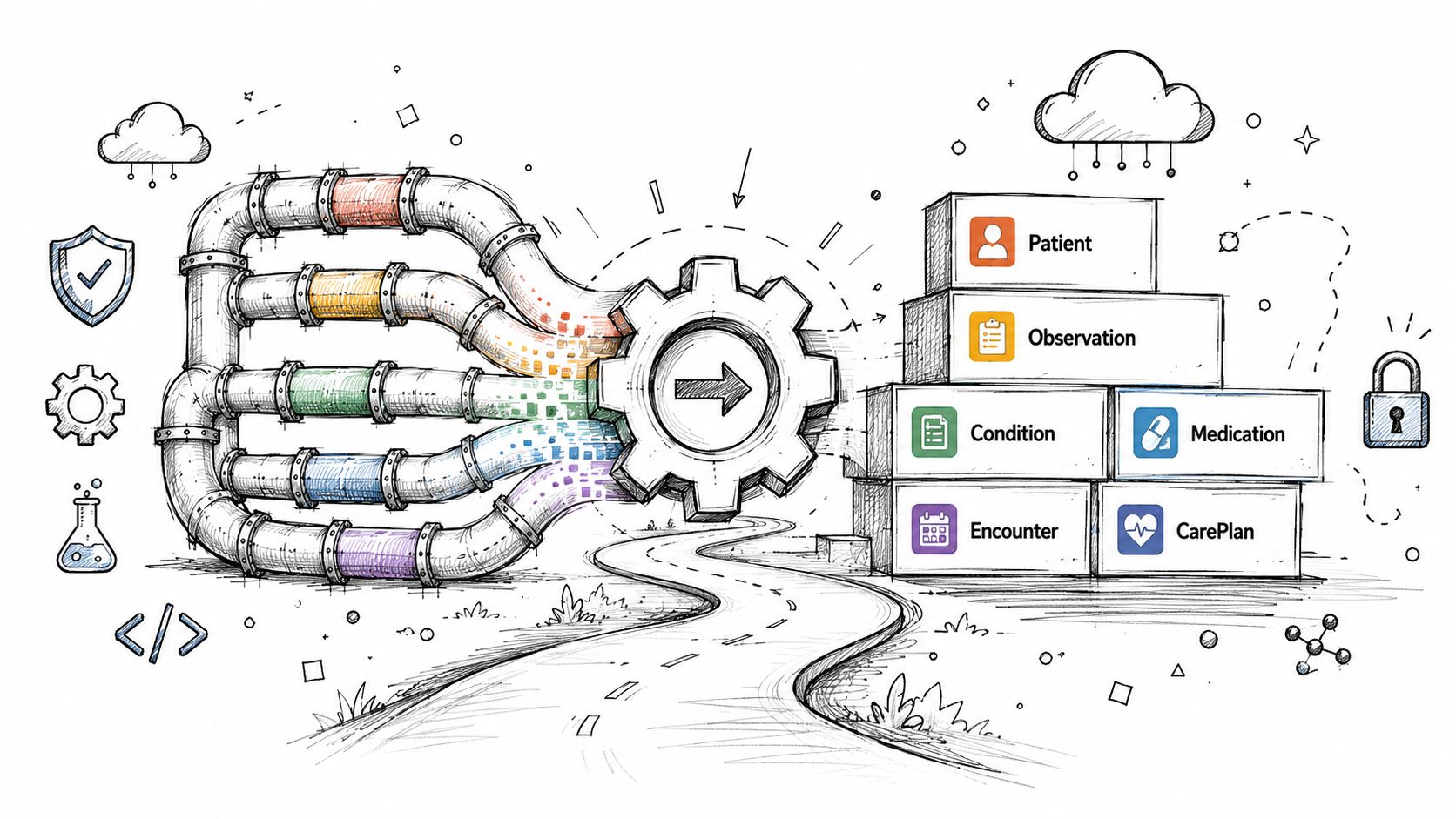
- Data layer: Interoperability, normalization, quality controls, document ingestion, and standards such as HL7 FHIR. In many health systems, this also includes tools for AI-powered clinical document extraction when key information still arrives in faxed, scanned, or semi-structured formats.
- Algorithm layer: Model selection, validation, versioning, routing, and ongoing performance monitoring.
- Application layer: Decision support, coding support, documentation workflows, alerts, and user interfaces embedded in daily work.
- Security layer: Privacy controls, role-based access, audit trails, consent handling, and governance rules.
The "central nervous system" analogy is useful only up to a point. The primary issue is operational. Hospitals already have plenty of data. They lack a reliable method to convert that data into actions clinicians trust, finance teams can measure, and compliance leaders can defend.
That trust is won through design choices. If medication history arrives late, if scanned referrals never become structured data, or if an alert fires outside the normal charting workflow, adoption drops fast. Clinical intelligence infrastructure exists to reduce those failure points across many use cases, not just one.
Practical rule: If the insight does not appear inside the user's normal workflow with clear provenance and accountability, it will struggle to produce clinical or financial return.
Architecture strategy becomes critical once teams move past the pilot stage. The hard part is not picking a model. The hard part is choosing a stack that fits referral patterns, documentation burden, legacy interfaces, security requirements, and the approval process for clinical change. A HealthTech engineering partner such as Ekipa AI can help evaluate those trade-offs in a factual way, but the guiding principle should stay the same: design the platform around care delivery, governance, and measurable ROI, then phase in use cases on top of that foundation.
The Architectural Pillars of Clinical Intelligence
A robust clinical intelligence infrastructure needs a five-layer architecture. Building it isn't cheap. JMIR notes that cloud-based data lakes range from $100,000 to $1M, while middleware for legacy integration typically costs $50,000 to $500,000. The same source reports that better data quality and standardization can reduce predictive model inference errors by 15–20%.

Those numbers are useful because they force honest planning. Clinical intelligence is not a lightweight software add-on. It is an enterprise platform decision with integration debt, storage design, runtime demands, and governance obligations.
Data ingestion and integration
Most projects struggle here first. Hospitals rarely start with clean, harmonized data. They start with legacy EHR modules, lab systems, claims feeds, imaging repositories, and departmental workarounds.
Your ingestion layer must support ETL pipelines, APIs, and standards-based exchange. FHIR matters because standardized formats directly improve data completeness and lower downstream model error. If a problem list, medication history, and lab feed arrive in inconsistent shapes, the model layer inherits that mess.
A practical stack often includes specialized extraction and normalization services. Tools such as an AI-powered data extraction engine fit here when teams need to convert messy clinical content into structured inputs without hand-building every parser.
Governance and security
This layer is often discussed late and regretted early. Privacy, access controls, data lineage, auditability, and bias monitoring should be designed with the platform, not bolted on after a pilot goes live.
For teams evaluating infrastructure options, operational hosting matters too. If your deployment includes PHI-heavy workloads, guidance around secure hosting for healthcare data is useful because infrastructure decisions affect latency, access control, backup policies, and compliance posture all at once.
Storage and compute
A clinical data lake or warehouse has to support both structured and unstructured data. That means orders, labs, claims, and notes, but also transcripts, imaging metadata, and device feeds.
Many architectures fail due to over-simplification. Teams buy a warehouse optimized for reporting, then expect it to power near-real-time inference. Or they optimize for rapid experimentation and ignore retention, lineage, and access segmentation.
Analytics, AI, and application delivery
The model layer doesn't just host one algorithm. It manages the lifecycle of many. Predictive models, ambient documentation services, LLM routing, and rules-based support often coexist. The application layer then determines whether those outputs appear as alerts, summaries, order suggestions, coding prompts, or workflow automation.
A useful enterprise pattern is this:
- Ingest and normalize first
- Store with governance intact
- Run analytics and models with monitoring
- Deliver outputs in the EHR or adjacent workflow tools
- Log usage and outcomes continuously
That final step is where architecture connects to value. If you can't see whether clinicians used the recommendation, overrode it, or ignored it, you don't have an intelligence platform. You have a black box.
High-Impact Use Cases and Demonstrating ROI
The strongest argument for clinical intelligence infrastructure isn't conceptual. It's operational. When the architecture is solid, you can deploy use cases that clinicians feel and leadership can measure.
Market Growth Reports attributes a 38% reduction in prescription errors between 2023 and 2024 to integrated clinical intelligence infrastructure. The same source reports that ambient AI documentation systems achieved a 4.95x faster note completion rate in a 2025 study.

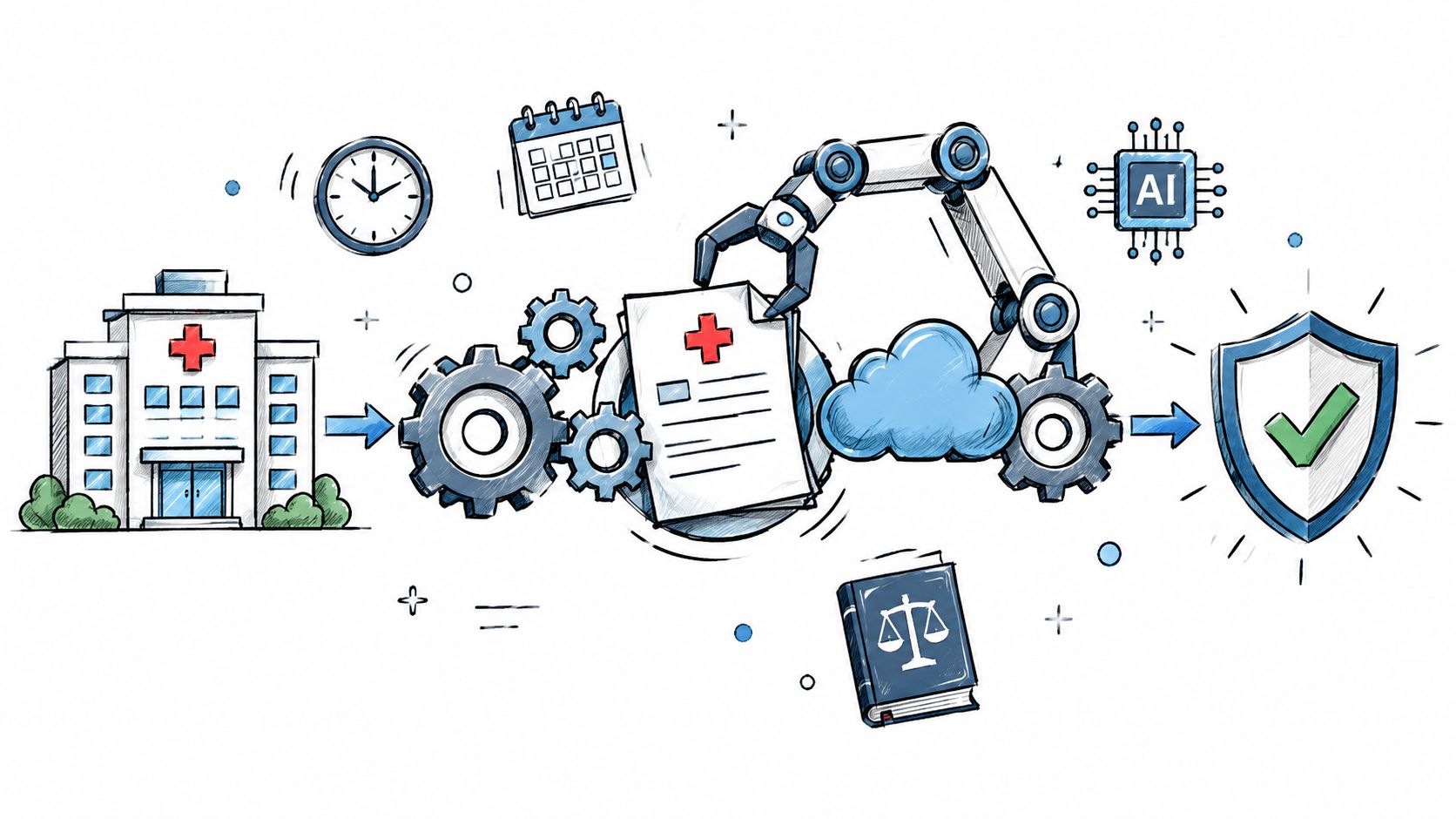
The image above illustrates common value categories, but in practice I'd be careful with generic ROI templates. Every health system should validate local impact against its own workflows, patient population, and baseline data.
Ambient clinical intelligence
Ambient tooling is one of the clearest examples because clinicians feel the benefit immediately. A mature system captures conversation, structures it, drafts notes, and pushes usable output back into workflow. But ambient success depends on more than speech recognition. It needs source capture, cloud processing, concept extraction, and secure delivery into the EHR or adjacent workflow.
When ambient tools underperform, the problem usually isn't that the note draft is ugly. It's that the output doesn't map to the visit type, specialty, or documentation pattern clinicians already follow.
Medication safety and order support
Medication workflows expose the value of integration better than almost any other use case. Prescription support touches allergies, active meds, problem lists, recent labs, and clinician intent. If those signals are fragmented, error rates rise and alerts become noise.
That's why infrastructure-led improvement matters. Safety gains come from governed access to current data in workflow, not from a standalone model scoring records after the fact.
Workflow automation and digital products
Clinical intelligence also supports a wider portfolio of operational tools:
- Decision support applications: These often sit inside or beside the EHR and depend on clean data contracts.
- Documentation and coding tools: They reduce friction only when they understand workflow context.
- Patient-facing and clinician-facing products: Many teams extend the same infrastructure into triage, follow-up, or care coordination experiences.
That's where real-world use cases are useful. Leaders need to compare which problems are architecture-dependent, which can be solved with lighter automation, and which belong in regulated SaMD solutions. For some organizations, staged deployment through AI Automation as a Service is a practical route when the internal platform team is still small.
A good ROI story starts with workflow friction clinicians already complain about, not with a model the data team wants to deploy.
A Phased Implementation Roadmap for Leaders
Most failures happen because health systems try to deploy clinical intelligence as a software installation. It isn't. It's a managed transformation across governance, data, workflows, validation, training, and operational support.
A practical roadmap has five stages: scope definition, infrastructure build, validation, staged go-live, and continuous optimization, and serious programs need an AI oversight structure with leaders from clinical, operations, compliance, legal, and data teams, according to Xia & He Publishing.

Stage one and two
The first stage is governance and scope. Pick one or two high-friction use cases. Define success in clinical and operational terms. Name the accountable owners. If nobody owns the workflow after launch, the project will drift.
The second stage is infrastructure build-out. That includes interfaces, access management, data quality routines, environment setup, and workflow integration points. During this stage, many organizations discover that their real constraint isn't the model. It's missing interfaces, unclear data ownership, or inconsistent source data.
A disciplined AI Product Development Workflow helps here because implementation work has to move in sequence. Architecture before scale. Validation before broad rollout. Training before trust.
Stage three and four
Validation is not optional. Stanford's guidance for safe medical AI platforms describes a three-stage validation process: retrospective testing against historical outcomes, prospective studies in clinical workflows under supervision, and continuous monitoring over time through Stanford HAI. That same source notes that successful pilots serving 5,000 patients require training 20 staff members on AI outputs and data quality, with governance dashboards maintained across 12-month migration cycles.
Once validation is acceptable, go live in stages. Start with a limited service line, a manageable user cohort, and clear fallback paths. Don't force a big-bang launch unless the workflow is simple and the blast radius is low.
Stage five
Optimization is where mature programs separate themselves. Teams should review:
- Usage patterns: Are clinicians using the tool in live care?
- Override behavior: Are recommendations being dismissed for the same reasons?
- Data quality signals: Are missing fields or delayed feeds degrading performance?
- Outcome measures: Is the intervention changing workflow, safety, or throughput?
Governance committees should decide where AI belongs in care delivery. Vendors and model teams shouldn't make that call alone.
This is also the point where detailed AI requirements analysis pays off. It keeps the roadmap tied to care delivery priorities instead of expanding into loosely related experiments.
Navigating Vendor Selection and Technology Stacks
Build versus buy is the wrong first question. The better question is which parts of the stack are strategic for your health system and which parts are commodity enough to procure.
Most organizations should avoid building everything. They should also avoid buying a platform that controls data models, validation logic, and workflow configuration so tightly that internal teams can't adapt it. The goal is selective control.
What to evaluate beyond feature lists
A polished demo doesn't prove deployability. Vendor assessment should focus on the areas that tend to break in production:
- Workflow fit: Can the system deliver insights where clinicians already work?
- Interoperability depth: Does it support live EHR access, standards-based exchange, and legacy realities?
- MLOps and monitoring: Can your team track degradation, drift, and usage over time?
- Governance tooling: Are audit trails, permissions, and review paths visible and manageable?
- Extensibility: Can the stack support new use cases without rebuilding the foundation?
Operational due diligence matters too. Procurement and security teams should treat AI vendors like critical infrastructure providers. A structured approach to third-party vendor risk assessment helps because clinical AI vendors often process sensitive data while introducing model-specific risks that standard SaaS reviews miss.
The neglected issue of equity
Most technical evaluations ignore whether the solution is deployable in under-resourced settings. That's a mistake. The California Health Care Foundation argues that equitable AI adoption requires dedicated funding pathways and stronger infrastructure support for under-resourced clinics in its analysis of AI for underserved communities.
If your vendor assumes every facility has mature data pipelines, modern endpoints, and dedicated AI operations staff, the platform may work in flagship hospitals and fail everywhere else in the network.
A practical selection lens
Use a simple decision split:
| Build internally |
Buy or partner |
| Workflow logic unique to your care model |
Commodity infrastructure components |
| Governance models tied to your internal oversight |
Mature integrations already solved by vendors |
| Specialized internal tooling for operational fit |
Established AI tools for business that reduce time to value |
For organizations that need a structured decision memo, a Custom AI Strategy report can be a useful planning artifact. It's also worth reviewing related thinking, such as Ekipa AI's AI adoption guide, when teams need a shared language for sequencing decisions across data, compliance, and product delivery.
Building Your Health System's AI Foundation
Health systems that scale AI successfully usually spend more time on operating discipline than on model selection. The work that holds up in production starts with data access, workflow fit, accountability, and a funding plan that survives beyond a pilot budget.
A durable foundation has four parts. Clear ownership for clinical, technical, and compliance decisions. An integration layer that can support EHR, payer, and patient-facing workflows without custom work for every use case. A validation process that measures clinical safety, operational impact, and user adoption before expansion. A service model for support, retraining, incident response, and change control after go-live.
Many leadership teams miscalculate cost. The expensive part is rarely the model alone. It is interface work, terminology mapping, identity and access controls, clinician review time, audit logging, training, and the steady labor required to keep outputs reliable as workflows change. If those line items are missing from the business case, the ROI model is incomplete.
The same principle applies outside the core EHR. Teams extending clinical intelligence into patient apps or remote care programs still need stable data contracts, consent controls, and fallback logic when inputs are late or missing. Work on building mobile health applications makes this point from the product side. Good front-end design cannot compensate for weak interoperability or poorly governed clinical logic in the back end.
Build the foundation in phases tied to measurable value. Start with one or two workflows where the data is accessible, the clinical owner is clear, and the outcome can be measured in weeks or months, not years. Use that first deployment to prove governance, support, and adoption mechanics. Then expand to adjacent use cases with shared infrastructure, rather than treating each launch as a separate project.
Partner selection matters here, but the test is practical. Ask how the team handles EHR integration, validation protocols, model monitoring, downtime procedures, and workflow redesign. Ask who owns post-deployment changes. Ekipa AI can be part of that discussion when the program needs HealthTech engineering capacity across architecture, compliance, workflow design, and AI deployment, but the standard should stay the same for any partner. Can they help your system build an operating model that produces clinical ROI, not just a demo?
Frequently Asked Questions
How is clinical intelligence infrastructure different from a single AI tool
A single AI tool solves one problem. Clinical intelligence infrastructure supports many tools through shared data pipelines, governance, security, monitoring, and workflow integration. If you buy point solutions without that foundation, each deployment becomes a separate integration and compliance project.
What are the hidden costs leaders usually underestimate
The obvious costs are software and cloud spend. The underestimated costs are middleware, workflow redesign, validation time, training, governance operations, and legacy system compatibility. Teams also underestimate the cost of low-quality data because it shows up later as poor output quality, clinician rejection, and extra support work.
How do you know whether your organization is ready
Readiness isn't just about budget. It depends on digitization maturity, data access, interface quality, governance capacity, workforce training, and the ability to validate tools in real workflows. If a health system can't identify data owners, define fallback procedures, or track usage after go-live, it's not ready to scale safely.
Should you start with ambient documentation, predictive models, or workflow automation
Start where workflow pain is high and measurement is straightforward. Ambient documentation often gains traction because users feel the benefit quickly. Medication safety, coding support, and operational workflow automation can also be strong entry points. The right first use case is the one with clear ownership, accessible data, and a plausible path from pilot to operational adoption.
How do you drive clinician adoption
Adoption follows trust. Trust comes from fit, not mandates. The tool has to appear in the right workflow, produce useful output, and respect clinical reality. Training matters, but so do local champions, transparent validation, visible escalation paths, and the ability for users to report where the system fails.
If clinicians have to leave their normal workflow, fix AI output manually, and guess whether anyone reviews their feedback, adoption will stall.
How often should fairness and bias reviews happen
They should be continuous, not one-time checks. Ongoing monitoring should look for performance differences across demographic and socioeconomic groups, drift over time, and failure patterns that don't show up in aggregate metrics. Participatory design also matters. Teams should include affected populations and frontline users in design and review, not only technical staff.
What does a good enterprise stack look like in practice
A workable stack usually includes data ingestion and interoperability, unified storage and modeling, analytics and AI execution, and delivery into workflow. In more advanced environments, teams also add model routing, function services, and continuous governance dashboards. The exact tooling can vary. The architectural responsibilities can't.
When should a health system bring in outside help
Bring in outside expertise when internal teams are strong clinically but stretched on interoperability, compliance engineering, platform design, or validation operations. External support is most useful when the organization needs acceleration without giving up governance control.
Ekipa AI can support teams that are defining healthcare AI use cases, planning architecture, building integrations, or operationalizing deployment across clinical workflows. If you're evaluating your next step, an AI Strategy consulting tool can help frame priorities, and a conversation with our expert team can help clarify what's feasible for your environment.