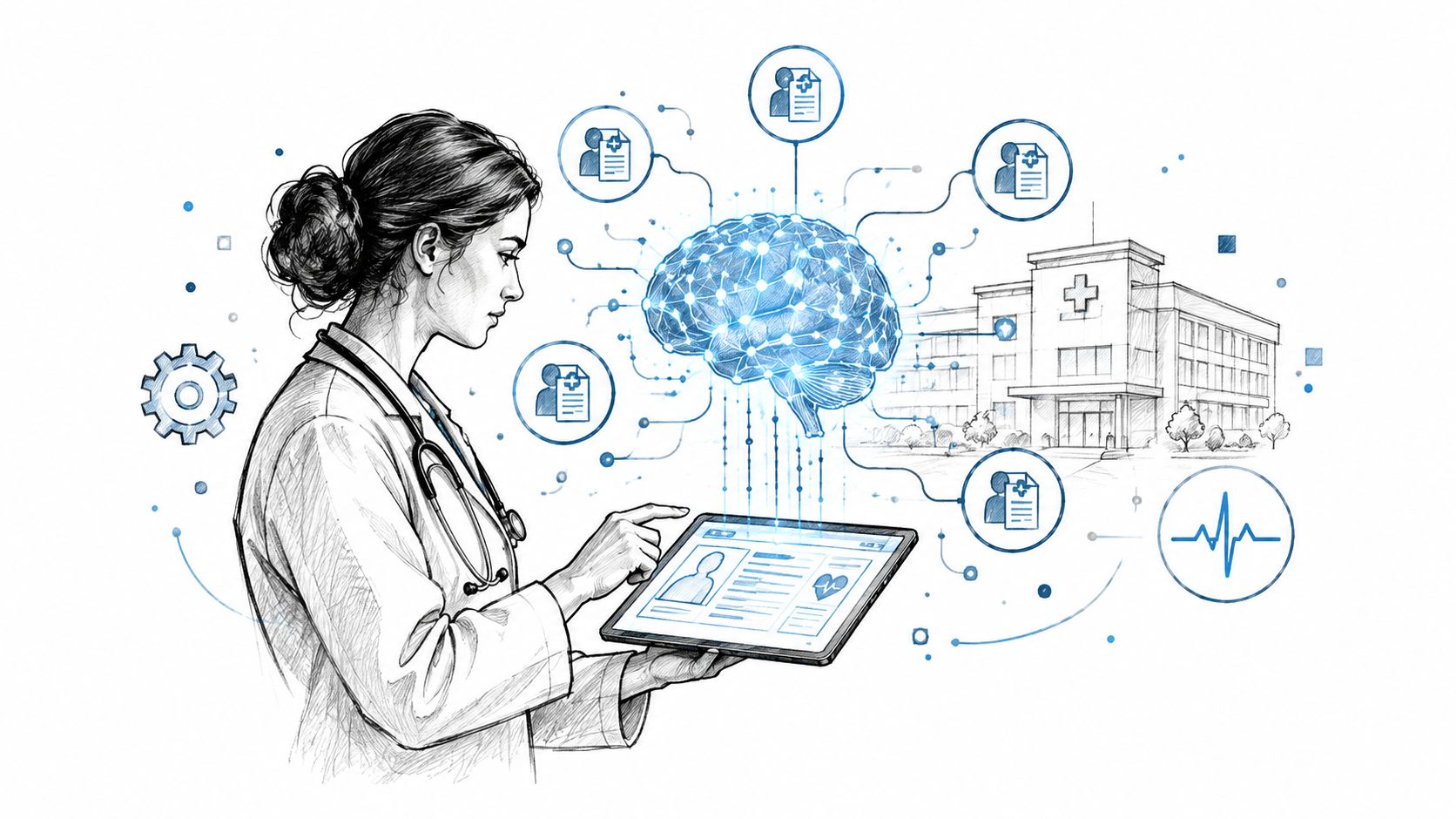
AI in Healthcare
AI Transformation Healthcare Industry Explained
Learn what AI transformation healthcare industry means, from EHR integration to governance, ROI, and adoption roadmap for healthtech leaders.
September 23, 2026Read more
AI transformation succeeds when technology and teams evolve together. Discover why co-creation is the missing link that turns AI strategy into real business impact.
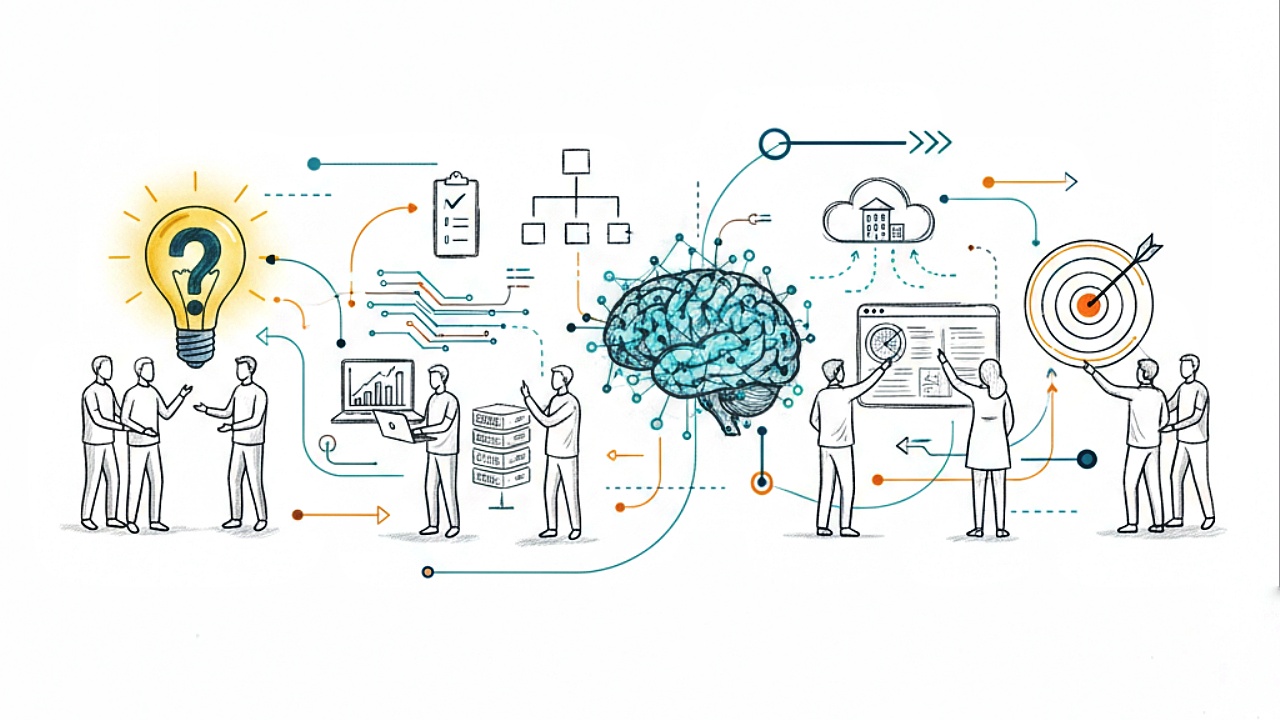
A growing number of organizations are exploring advanced technologies to improve their operations. Yet one key approach consistently stays in the background. Co-creation receives far less attention than tools or platforms. Its role, however, is critical for making real progress in artificial intelligence. When diverse teams work alongside AI from the outset, the solutions they develop address real problems in practical and effective ways. This partnership forms the core of the true AI co-creation model. It is the steady foundation for transformation that endures.
AI projects often stumble from the start by focusing on the technology first, not the people who will use it. Teams leap into building without a clear understanding of the problem they are meant to solve. When technical experts and business teams work in isolation, the result rarely meets expectations. This is where a collaborative approach makes all the difference. Co-creation brings these groups together from the beginning. It supports knowledge sharing, early idea testing, and issue resolution before actual development begins. This process helps identify clear AI use cases that directly address important challenges. It can also reveal valuable opportunities that no single team would see on its own.
To take the first step, organizations often start with an AI readiness assessment that highlights their strengths, weaknesses, and current capabilities. It sparks important conversations among leadership, domain teams, and technical groups. These discussions lead to better planning for future AI Solutions that support the company's goals.
AI transformation succeeds when the people who will use a system help to shape it. Co-creation generates confidence and trust as teams feel connected to the solution. This approach also creates balance. People provide the necessary context, reasoning, and experience. AI contributes speed and deeper insight. This effective partnership reduces wasted effort and leads to more consistent progress. Digital transformation trends indicate that collective involvement produces better outcomes.
During the early stages of planning, some companies involve their AI implementation partner to support workshops, idea testing, and feedback sessions. The goal is to guide each idea through an organized path. These sessions help teams select the right features, refine them, and prepare for efficient execution. This is where the AI co-creation model differs from traditional methods. It combines creativity with technical structure.
When teams work closely in this way, they not only build better systems but also gain clarity on their long-term AI adoption roadmap. They understand how a solution grows, how it can scale in the future, and how it fits with ongoing business plans. This clarity helps leadership build commitments that last beyond pilot phases and early trials.

A successful AI journey depends on more than technology. A company's culture influences how people accept change. When employees join in planning and testing, they develop a positive view of AI. They feel ready to share their thoughts and concerns because they helped shape the project from the start. This method reduces later resistance and confusion.
Leaders also gain value from cultural involvement. They learn how people work, what they expect from new systems, and what support they need. This information proves very helpful when creating a custom AI strategy report, as the recommendations are much more grounded in reality. Many organizations even use an AI maturity model to understand how their culture aligns with technical capabilities. With this clarity, they can move forward with confidence, not relying on assumptions.
The strength of co-creation lies in active involvement. It brings clarity to AI strategy consulting. Experts receive direct input from teams aware of operational challenges. This helps avoid a common problem. Strategies appear sound in theory but fail in practice. When people share their ideas openly, refining project plans becomes a more natural process.
An advantage of this approach is timely validation. Teams test ideas quickly, review outcomes, and modify them before moving to development. This reduces spending, saves time, and prevents major mistakes. It also promotes transparency, which builds trust across departments. During these discussions, leaders can point to established methods such as design thinking.
The purpose of co-creation is not just to build solutions but to shape a shared vision. This helps teams stay aligned throughout the transformation journey. When challenges arise, they already have a strong communication structure in place.
This concept is simple, yet many organizations overlook it. They focus mostly on tools, models, and data frameworks. The human side of AI often receives much less attention. Some teams believe that strong technology will automatically lead to strong results. Others use an approach where decisions are made without team feedback. These methods limit creativity and keep new ideas within a small group.
The AI co-creation model challenges this approach by reminding companies that transformation grows through participation. When people at different levels join the journey, the solutions become more useful, more accepted, and more scalable.
Co-creation offers a practical approach for organizations to build AI projects that fit genuine business needs. It helps teams communicate clearly, test ideas efficiently, and move forward with a shared plan. When people take part in planning, their confidence grows, and the path forward becomes clearer. Companies that use this approach often see better results. Their AI projects reflect actual needs. For organizations planning their next step in artificial intelligence, co-creation is the approach that delivers lasting impact. Contact us to start.
The AI co-creation model is a collaborative approach where business teams, technical experts, and leaders jointly design AI Solutions from the start. It ensures AI use cases solve real operational challenges.
An AI readiness assessment identifies current capabilities, gaps, and cultural factors. It helps teams align early and prepare a structured AI adoption roadmap before full implementation begins.
An AI implementation partner facilitates workshops, validates ideas, and guides execution. Their involvement strengthens planning and ensures AI Solutions move smoothly from concept to deployment.
Co-creation enhances AI strategy consulting by incorporating real team insights into planning. This leads to a practical custom AI strategy report backed by clear AI use cases and measurable goals.
An AI maturity model helps organizations assess technical and cultural readiness. It supports better decision-making, structured growth, and a realistic AI adoption roadmap for long-term success.
Learn what AI transformation healthcare industry means, from EHR integration to governance, ROI, and adoption roadmap for healthtech leaders.

Explore skilled nursing facility software in 2026. Covers core modules, compliance, KPIs, vendor evaluation, & AI integration for executives.

Unlock scalable impact with a practical healthcare AI transformation framework. This guide covers strategy, governance, ROI, and a phased roadmap for leaders.
Connect with our team to explore how AI expertise can transform your business.