
AI in Healthcare
HIPAA-Compliant AI: How to Use LLMs With PHI Safely
How to build HIPAA-compliant AI: when LLM providers need a BAA, data minimization, de-identification, audit controls and a reference architecture.
October 16, 2026Read more
Point AI solutions may deliver quick wins, but they often create hidden complexity over time. Learn how short-term fixes can lead to long-term technical debt.
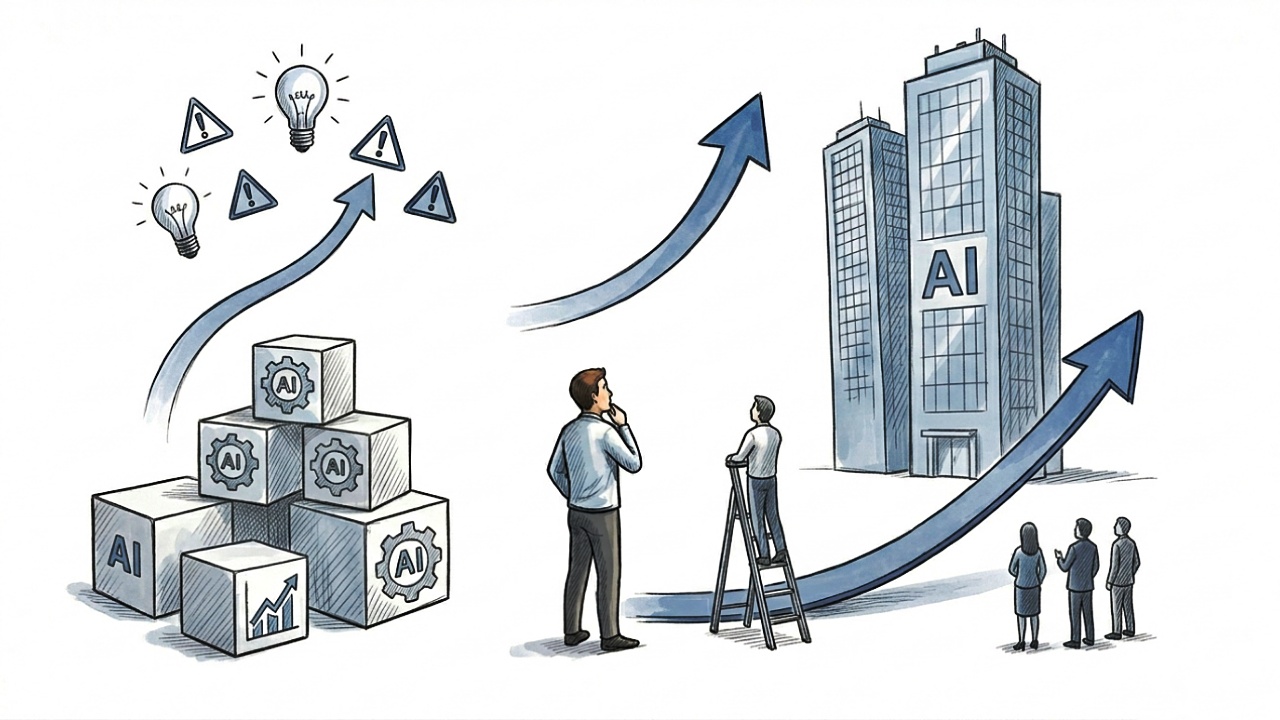
Artificial intelligence transforms business operations, creating new opportunities. Teams often adopt a single, specific AI tool for a single pressing task. These AI solutions deliver a rapid result. Artificial intelligence affects business operations, creating new opportunities. This accumulating burden is known as AI technical debt. It forms when immediate success makes the overall system more fragile and difficult to improve later. Recognizing how point AI solutions contribute to this long-term burden is a key consideration for any organization committed to sustainable growth.
Point AI solutions are designed to fix a single, specific problem within a company. Think of a chatbot handling service questions, a program forecasting next month's sales, or software that sorts through invoices. These examples represent focused AI use cases that target one task at a time. On the surface, these tools appear to streamline work and reduce effort. But that tight focus has a downside. But that tight focus has a downside. It can quietly create new, unexpected connections and requirements within existing systems.
If these tools do not fit with the broader technology setup or a company's larger plan for AI, connecting them becomes a complex challenge. Every separate solution typically requires a dedicated data pipeline, a unique model, and individual links to other software. This leads to a disconnected setup. As months and years pass, this patchwork makes maintenance more expensive, complicates issue resolution, and extends the time required for updates.
The initial implementation of point AI solutions often brings strong, quick results. This early success can suggest the project is simpler than it truly is. The fast start and clear benefits obscure the real work of managing several separate AI tools. In the push to move quickly, teams often favor speed over thoughtful design. This approach plants the seeds for future difficulties.
AI models cannot be installed and then ignored. They need regular checking and updating to stay accurate. Shifts in data, evolving business needs, and new software versions can harm connections or reduce a model's reliability. Without a single, clear plan for managing all AI tools, keeping each point solution running smoothly requires significant effort. This ongoing maintenance burden adds directly to AI technical debt. Later, teams will spend their time fixing issues that earlier, more strategic planning could have prevented.
A lack of planning for how things connect is one of the biggest reasons long-term system problems grow. Every individual AI tool can adopt unique data formats, a distinct structure, and separate operating rules. When more tools are added, the system becomes fragmented. This makes keeping everything in sync across a business much more difficult.
For example, a team's tool for predicting sales might pull numbers from a single source. At the same time, the system that suggests products to customers might use different numbers. This leads to conflicting information, which can confuse business decisions. Straightening out these conflicts usually means someone has to step in and fix it by hand, or build a complicated bridge between the systems. That extra work adds more to the final bill over time. A company moving forward without a clear AI adoption roadmap might find this kind of technical debt growing much quicker than anyone thought.

Many point solutions rely on outside software libraries, frameworks, or cloud platforms. These outside pieces save time during creation, but they bring in risk. A vendor might change or stop supporting a tool without much notice, forcing a team to rework a solution. Issues with software licenses or conflicting versions can also disrupt a system's operation.
Over time, the use of multiple external tools increases system complexity. This demands more oversight and maintenance effort. While central monitoring and clear documentation can lessen some risk, the accumulated strain from rapid deployments remains a challenge.
Point solutions usually aim for a fast, immediate result rather than aligning with a company's long-term direction. They are put in place to address a specific issue without considering their role in the organization's broader AI vision.
Imagine a company that launches a new AI tool for customer support emails. If this is done without talking to the analytics team or the IT department, it operates in a bubble. Other parts of the company could be developing their own similar projects simultaneously. This separated way of working often creates duplicate efforts and mismatched information.
A company that invests in AI strategy consulting, develops an AI maturity model, or conducts an AI readiness assessment gains the perspective to spot where point solutions could build future obstacles. They can see exactly where those individual point solutions might lead to problems in the future. When each new AI tool is part of a full company plan for adoption, businesses reduce the risk of a patchwork system and unexpected costs.
AI tools require quality, reliable data to function properly. AI solutions often use and create data independently, sidestepping the company's shared data standards. This can lead to the same data being stored in multiple places, with different formats, and with pieces missing.
Managing multiple datasets across isolated tools increases the workload for data teams. Over time, handling this scattered information becomes difficult. Errors accumulate, increasing long-term maintenance pressure. A centralized data system or a custom AI strategy report can improve coordination, though early design decisions still influence future stability.
Organizations that adopt multiple point AI solutions often face similar challenges:
Quick deployment without integration planning splits the system.
A lack of long-term monitoring can lead to models losing their effectiveness.
Multiple dependencies on external vendors add significant difficulty to maintenance.
Siloed AI projects lead to repeated work and mismatched data flows.
These factors combine to make any future updates or expansion of AI projects a more challenging and expensive task. A minor disconnect in approach now can grow into a major burden. This reality highlights why careful, upfront planning is fundamental before a point AI solution begins.
While point solutions carry risks, organizations can take steps to manage the resulting AI technical debt.
Establish a centralized data and model governance system. It provides a common foundation for all teams.
Develop modular and reusable AI components. They connect more easily than isolated, single-use tools.
Perform periodic AI readiness assessments. These reviews measure system performance and strategic alignment.
Engage an AI implementation partner. This brings experienced guidance and project coordination.
Taking these steps helps a company control the downsides of point solutions while keeping their benefits. Good planning turns separate tools into integrated pieces of a unified, manageable AI system.
Point AI solutions deliver quick results. However, they can create hidden problems that expand over time. Issues such as broken systems, reliance on outside vendors, messy data, and unclear goals all add to AI technical debt. Recognizing these risks and planning with strategy in mind is key to lasting success with AI. A company that plans each step, applies clear management rules, and evaluates its progress honestly can prevent long-term costs from outweighing short-term gains.
For support in building a clear plan that mixes new ideas with steady growth, contact us.
AI technical debt accumulates when isolated AI solutions are deployed quickly without integration planning, resulting in long-term maintenance challenges and system complexity.
Isolated AI applications often rely on separate data pipelines and models, which leads to disconnected systems and increased operational burden.
An AI adoption roadmap aligns each deployment with enterprise goals, preventing fragmented systems and controlling AI technical debt.
An AI readiness assessment and AI maturity model evaluate integration gaps and ensure AI Solutions support sustainable growth.
AI strategy consulting and a custom AI strategy report establish long-term direction, while an AI implementation partner ensures scalable, well-integrated execution.
How to build HIPAA-compliant AI: when LLM providers need a BAA, data minimization, de-identification, audit controls and a reference architecture.

Practical data migration planning guide for healthcare teams. Scope, mapping, compliance, validation, cutover and rollback decisions explained end to end.

Smart on FHIR guide for healthtech engineers. Learn the OAuth 2.0 launch model, scope syntax, backend services, and US regulatory requirements.
Connect with our team to explore how AI expertise can transform your business.