
AI in Healthcare
Smart on FHIR: What It Is and How It Works in Practice
Smart on FHIR guide for healthtech engineers. Learn the OAuth 2.0 launch model, scope syntax, backend services, and US regulatory requirements.
October 14, 2026Read more
Struggling with AI adoption challenges? Our guide provides proven strategies to overcome cultural, technical, and financial hurdles for successful integration.

The biggest AI adoption challenges holding companies back aren't just about the technology itself. The real roadblocks are often found deep within a company's culture, its data practices, and its overall strategy. It's one thing to dabble with AI tools, but it’s a completely different ballgame to truly integrate them in a way that creates real, measurable value.
There's a curious thing happening in business right now. Nearly everyone is adopting AI, but almost no one is truly mastering it. By 2025, it's predicted that somewhere between 72% and 78% of businesses worldwide will be using AI in some form. Yet, here's the kicker: a tiny fraction—just 1% of those companies—feel they’ve actually achieved AI maturity. This insight, highlighted in recent AI adoption statistics, points to a massive disconnect.
So, why the gap? This chasm between ambition and reality is carved out by a mix of predictable, yet difficult, hurdles. Too many organizations dive headfirst into AI without a clear game plan, resulting in a collection of disjointed projects that go nowhere. They often misjudge just how much foundational work is needed before the real magic can happen.
To get a clearer picture of these common roadblocks, let's break them down.
| Challenge Category | Primary Obstacle | Impact on Business |
|---|---|---|
| Data & Security | Poor data quality and governance. | Flawed insights, unreliable AI models, and compliance risks. |
| Technology | Outdated legacy systems. | Integration nightmares, slow progress, and ballooning costs. |
| Leadership | Lack of a clear, committed vision. | Underfunded projects, strategic drift, and stalled initiatives. |
| Culture & Skills | Resistance to change and talent gaps. | Low user adoption and an inability to scale AI effectively. |
These are the core issues we'll be exploring in depth. They represent the most common reasons why promising AI initiatives end up falling short.
The path from a cool AI experiment to a company-wide capability is littered with these challenges. Let’s look a little closer at the big three that trip up most organizations.
Data and Security: This is a huge one. AI models are only as smart as the data they learn from. If your data is a mess—inaccurate, incomplete, or poorly managed—your AI will be, too. Throw in security concerns, and you have a recipe for disaster.
Legacy Systems: Trying to plug shiny, new AI tools into a clunky, outdated IT infrastructure is often a technical nightmare. It’s like trying to run a supercomputer on a dial-up modem; it slows everything down and drives up costs.
Hesitant Leadership: Without a clear vision and unwavering support from the top, AI projects are often starved of the resources, focus, and strategic direction they need to thrive. They become interesting side projects instead of core business drivers.
Data privacy and security, in particular, loom large over all these efforts.
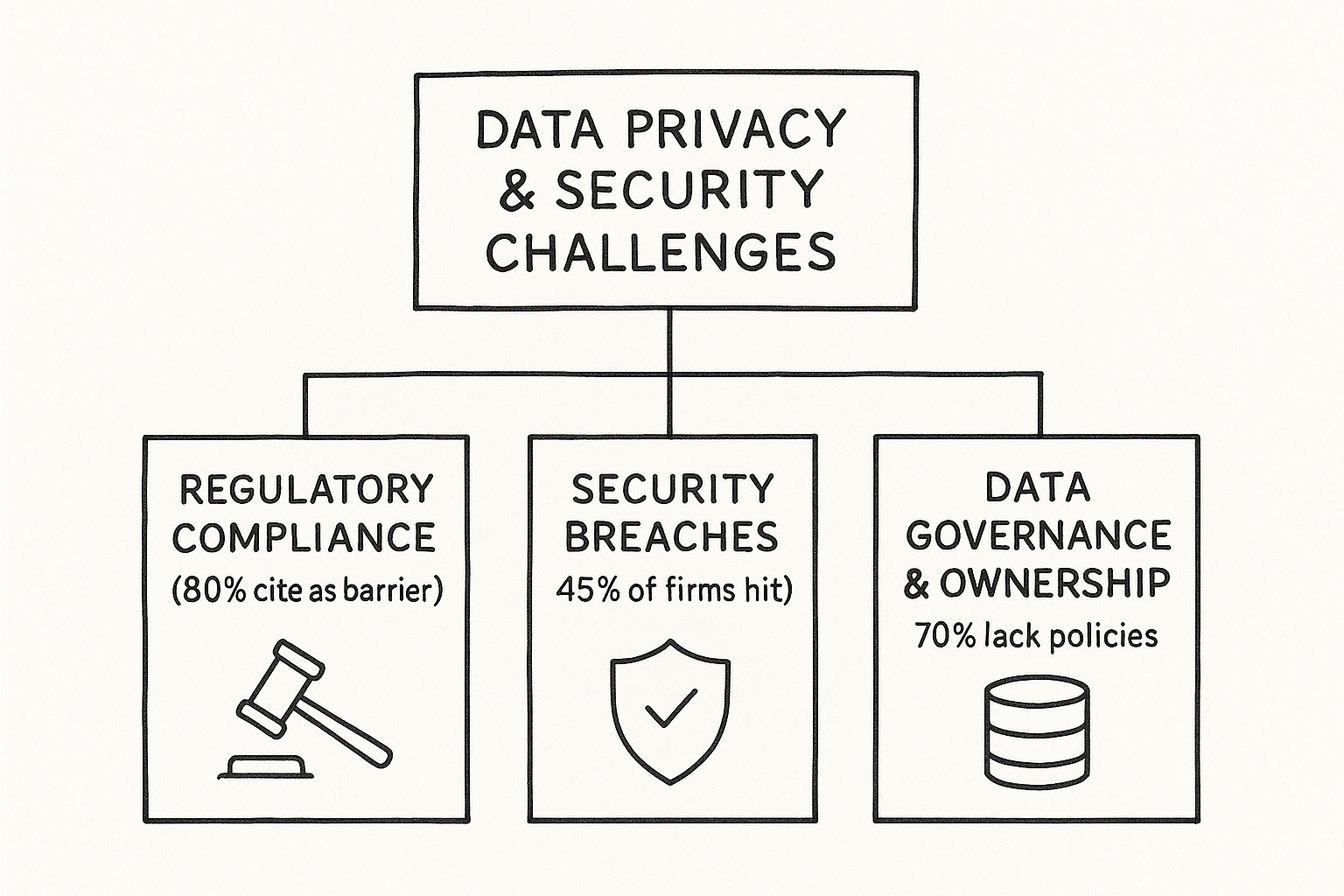
As you can see, a whopping 80% of organizations point to regulatory compliance as a major barrier. This underscores just how central governance and security are to the entire AI puzzle.
Getting a handle on this divide is the first step. From here, you can start building an effective AI strategy framework that takes you beyond just playing with tools. The goal is to drive real growth, and that often means embracing collaborative methods like AI co creation to get everyone on board.

You can have the best data and the most powerful systems, but the toughest AI adoption challenges are almost always human. It’s one thing to debug a piece of code; it’s another thing entirely to navigate fear, resistance, and a fuzzy vision for the future. An AI project’s success often has less to do with the algorithm and more to do with the people who will actually use it.
This is where leadership has to step up. If the C-suite isn't visibly and vocally committed, AI projects get treated like side quests instead of core business priorities. A hesitant leadership team creates a ripple of doubt across the entire organization, which starves these initiatives of the resources and energy they need to succeed.
Let’s be honest: when people hear "AI," many immediately think of job loss. It's a natural reaction. They worry that these new, shiny systems are here to replace them, not help them. That fear is a powerful motivator for resistance, leading to low adoption rates and even active sabotage of the very tools meant to make their lives easier.
The only way to counter this is by changing the story from one of automation to one of augmentation. The message has to be clear: we're not replacing your expertise; we're giving you a superpower to amplify it. This requires a focused communication plan that shows exactly how AI will take over the tedious, repetitive work, freeing up your team for the creative, strategic, and high-value tasks they were hired to do.
"AI, like all new technologies, will disrupt the economy and displace some jobs. But... AI will create new opportunities that will outweigh many of the challenges ahead. If used well, AI will help lower the barriers to entry for many professions, replace rote tasks, and create a foundation for human creativity that builds on AI tools."
Think of change management as the bridge that connects your AI strategy to its real-world success. It's a blend of clear communication, hands-on training, and creating a space where people feel safe to experiment, learn, and even fail. As we explored in our AI adoption guide, getting your team ready is just as critical as the tech itself. A smart AI strategy consulting partner can be invaluable in guiding you through these tricky cultural waters.
An AI-ready culture is fundamentally a learning culture. It’s a place where failure isn't a disaster but simply another data point on the path to getting it right. To build this kind of environment, leaders need to be proactive.
Here's how to start:
Beyond the cultural shift, there's a serious technical gauntlet where even the most promising AI projects can get stuck. The biggest AI adoption challenges in this arena almost always come down to three things: data, integration, and security. If you can't get these right, you can't build AI systems that actually work at scale. It's as simple as that.
We've all heard the old IT saying, "garbage in, garbage out." Well, with AI, that's magnified by a factor of ten. An AI model is a direct reflection of the data you train it on. If that data is a mess—flawed, incomplete, or biased—the model's predictions will be unreliable, or worse, downright harmful. This is about more than just cleaning up a few spreadsheets; it's about building solid data governance from the very beginning.
A huge bottleneck for many companies is trying to plug shiny new AI tools into clunky, aging legacy systems. It’s like trying to run a high-speed bullet train on tracks built a century ago. The old infrastructure just can't handle the new technology, leading to frustrating delays, bloated costs, and a massive cap on what your AI can actually achieve.
For AI to really work, it needs a steady diet of high-quality data, both structured and unstructured. The quality of this data directly impacts how effective your models will be. And while the potential is exciting, the reality is that high upfront costs, deployment complexity, data privacy fears, and a shortage of skilled people are still major roadblocks for most businesses. You can find more on 2025 AI adoption trends on coherentsolutions.com. This just goes to show how critical it is to have a clear game plan before you dive in.
At its core, being technically ready for AI means creating a smooth, secure pipeline for high-quality data to flow between all your systems, old and new. This isn't an accident; it requires a deliberate, forward-thinking approach to your entire tech architecture.
Getting past these integration headaches is a make-or-break step. You need a clear map of how data will be gathered, stored, and fed to your AI systems, ensuring it can move freely but securely across your entire tech stack. For big, complicated projects, getting expert AI implementation support can be the key to bridging these technical gaps without derailing the whole initiative.
Finally, let's talk about security and privacy. These aren't just boxes to check at the end of a project—they have to be baked in from day one. AI models are hungry for data, and the more information they process, the more attractive they become to cyber attackers. A breach involving sensitive customer data or your own trade secrets can be catastrophic, destroying trust and bringing on heavy fines.
To successfully navigate the technical side of AI, you have to tackle these three pillars head-on:
By looking at real-world use cases, leaders can see how other companies have navigated these exact same problems. They didn't just buy an AI tool off the shelf; they invested in the foundational data infrastructure, integration capabilities, and security frameworks needed to make it truly effective.

As AI technology moves at a breakneck pace, it’s creating a serious problem for companies trying to keep up: a massive talent shortage. This is one of the most common AI adoption challenges we see. Businesses are quickly realizing their teams don't have the specific know-how to build, launch, and maintain complex AI systems.
This isn't just about finding one or two data scientists. It's about a fundamental shift in the skills your entire organization needs to thrive.
The battle for top AI talent is intense. Experts like data scientists, machine learning engineers, and AI ethicists are in incredibly high demand, and there simply aren't enough of them to go around. This scarcity not only drives up salaries but can bring promising AI projects to a grinding halt.
While looking outside is part of the solution, the most sustainable path forward is growing skills from the inside. Upskilling your current employees is a smart move. It's often more cost-effective than hiring, and it builds on the priceless institutional knowledge your people already have. They know your business, your customers, and your unique operational quirks better than anyone you could bring in.
To make this work, you need a culture that champions continuous learning. When you invest in your people’s growth, you're sending a clear message that they are vital to the company's future.
A proactive AI strategy framework is your best tool for anticipating future skill requirements. It helps you build a sustainable talent pipeline by identifying gaps before they become critical roadblocks, ensuring your team is always ready for what's next.
As we covered in our AI adoption guide, investing in your team is just as important as any technology you buy. A clear plan for employee development is a cornerstone of long-term AI success.
The best approach is a balanced one: hire strategically for roles you can't fill internally while developing your existing team. To cast a wider net, many companies are successfully hiring Data Scientists and AI/ML Engineers from global talent pools. This opens up a world of possibilities beyond your local market.
At the same time, you need a serious commitment to internal training. Here are a few ways to get started:
By the end of this decade, AI is expected to inject over $15 trillion into the global economy. Supporting that growth will require roughly 97 million new skilled professionals. These numbers aren't just statistics; they represent both a massive opportunity and a huge challenge. Discover more insights about AI's economic impact on explodingtopics.com.
Ultimately, you can't unlock that potential without first closing the skills gap.
Let's be honest: one of the biggest hurdles in getting any AI project off the ground comes down to money. It's the classic question from stakeholders and budget holders: "Will this actually make us money or save us money?" If you can't answer that question with a straight face and solid numbers, your brilliant AI initiative is likely dead on arrival.
It’s about building a business case grounded in real-world value, not just excitement about a new toy.
The sticker price for AI software is just the beginning. You have to think about the whole picture: beefing up your infrastructure, paying for data storage, hiring people who actually know what they're doing, and the constant care and feeding that AI models require. Overlook these ongoing costs, and your budget will be blown before you know it, taking your credibility with it.
To get that crucial buy-in, you have to flip the script. Stop talking about how much AI costs and start talking about how much value it creates. Vague promises of "more efficiency" won't cut it. You need to draw a direct line from the technology to a number that matters on a balance sheet.
The point of AI isn't just to have AI. It's to solve a real business problem in a way that makes financial sense. To prove the ROI, you need to show exactly how your AI project will move a key metric—whether that's slashing operational costs, boosting sales, or keeping customers from walking away.
A great way to do this is to think small at first. Pick one, well-defined problem and launch a pilot project to solve it. A quick, measurable win from a pilot project is the best proof you can offer. It builds momentum and makes it infinitely easier to get the green light for bigger, bolder plans. A solid AI strategy framework is your best friend here, helping you pinpoint those perfect, high-impact starting points.
So, how do you actually put a number on what AI brings to the table? You need to track both the obvious and the not-so-obvious benefits. When you’re building your case, focus on these areas:
Tools like an AI Strategy consulting tool can be a huge help in mapping all this out. They connect the dots between what you want to do and the financial metrics that prove its worth. This approach turns the "should we invest?" conversation from a gamble into a smart, calculated business move.

Getting past the common hurdles of AI adoption means you have to stop treating it like a series of isolated science projects. What you really need is a clear, actionable plan—a strategic roadmap that ties every single AI initiative back to what actually matters: your core business goals. Think of it less as a static document and more as a living guide for the journey ahead.
The first move is to get crystal clear on what "success" even means for you. Vague goals like "let's improve efficiency" are just wishful thinking. You need to nail down concrete Key Performance Indicators (KPIs) that you can actually measure.
For example, you might aim to:
When you have hard numbers like these, your team has a clear target, and it becomes much easier to prove the value of your work down the line.
With your goals set, it's time to dig into a thorough AI requirements analysis. This is where you make sure you're solving the right problems instead of just chasing the newest shiny object. This deep dive involves mapping out your data, figuring out if your tech is ready, and pinpointing the exact business processes that are primed for an AI upgrade.
A roadmap isn't about perfectly predicting the future. It’s about building a flexible framework that lets you start small, learn fast, and pivot when you need to. This iterative approach is the secret to managing risk and building momentum.
Your roadmap should lay out a series of phased projects, kicking off with pilot programs that promise a big impact without a ton of complexity. Scoring these early wins is crucial for getting stakeholders excited and securing the buy-in you'll need for bigger, more ambitious projects later on.
Putting this plan into action comes down to having the right tools and, more importantly, the right people. A truly effective roadmap needs a solid foundation, which you can design with a proven AI strategy framework. This ensures you have a cohesive strategy for growth, not just a random list of projects.
As your organization gets more comfortable and capable with AI, your roadmap needs to evolve right along with it. Make a habit of regularly reviewing and adjusting your priorities based on what you’ve learned, new challenges that pop up, and what’s becoming possible with new technology.
This journey—from a rough idea to real, scalable results—can feel overwhelming. That's where we come in. Partnering with our expert team gives you the guidance to build and execute a plan that turns your vision for AI into a reality that truly moves the needle.
Getting started with AI often brings up more questions than answers. It's a complex journey, but you're not alone in facing these hurdles. Let's tackle some of the most pressing questions leaders ask about AI adoption challenges.
If you're looking for more, we've got a whole list of answers on our AI frequently asked questions page.
It’s tempting to point to data issues or technical glitches, and those are definitely real problems. But time and again, the biggest roadblock is organizational culture.
You can have the best algorithm in the world, but if your leadership isn't fully on board, or if your teams are resistant to new ways of working, the project is likely to stall. It all comes down to the people. Without a clear vision for how AI helps—not replaces—your team, even the most promising tech will fall flat.
This is a big one. The key is to stop thinking of AI as a cost and start framing it as a value driver. Build a solid business case that connects the investment directly to tangible results. Are you aiming to boost efficiency by 30%? Create new revenue streams? Or slash customer churn?
Don’t try to boil the ocean. Start with a small, manageable pilot project where you have a high chance of a quick win. A successful pilot delivers a clear return on investment (ROI) and builds the confidence you need to get stakeholders excited for bigger projects. Pinpointing these high-value opportunities is much easier with a detailed AI requirements analysis.
The worst way to start is by chasing the technology. The best way? Find a nagging, high-impact business problem that AI is uniquely suited to solve.
Look for areas bogged down by repetitive tasks, drowning in data, or just begging for better forecasting. A great first step is to get your team in a room and brainstorm some real-world use cases that align with what your company is trying to achieve. This approach ensures your first AI initiative is focused, relevant, and has a clear definition of success.
At the end of the day, winning with AI isn’t about having the fanciest tech. It's about having the smartest strategy. When you start by solving a real problem, you give your AI journey a clear purpose and a measurable path to victory.
Ready to turn your AI adoption challenges into a clear, actionable strategy? At Ekipa, our next-gen platform delivers tailored AI roadmaps in just 24 hours. Start your AI transformation journey with us today or get in touch with our expert team to learn more.
Smart on FHIR guide for healthtech engineers. Learn the OAuth 2.0 launch model, scope syntax, backend services, and US regulatory requirements.
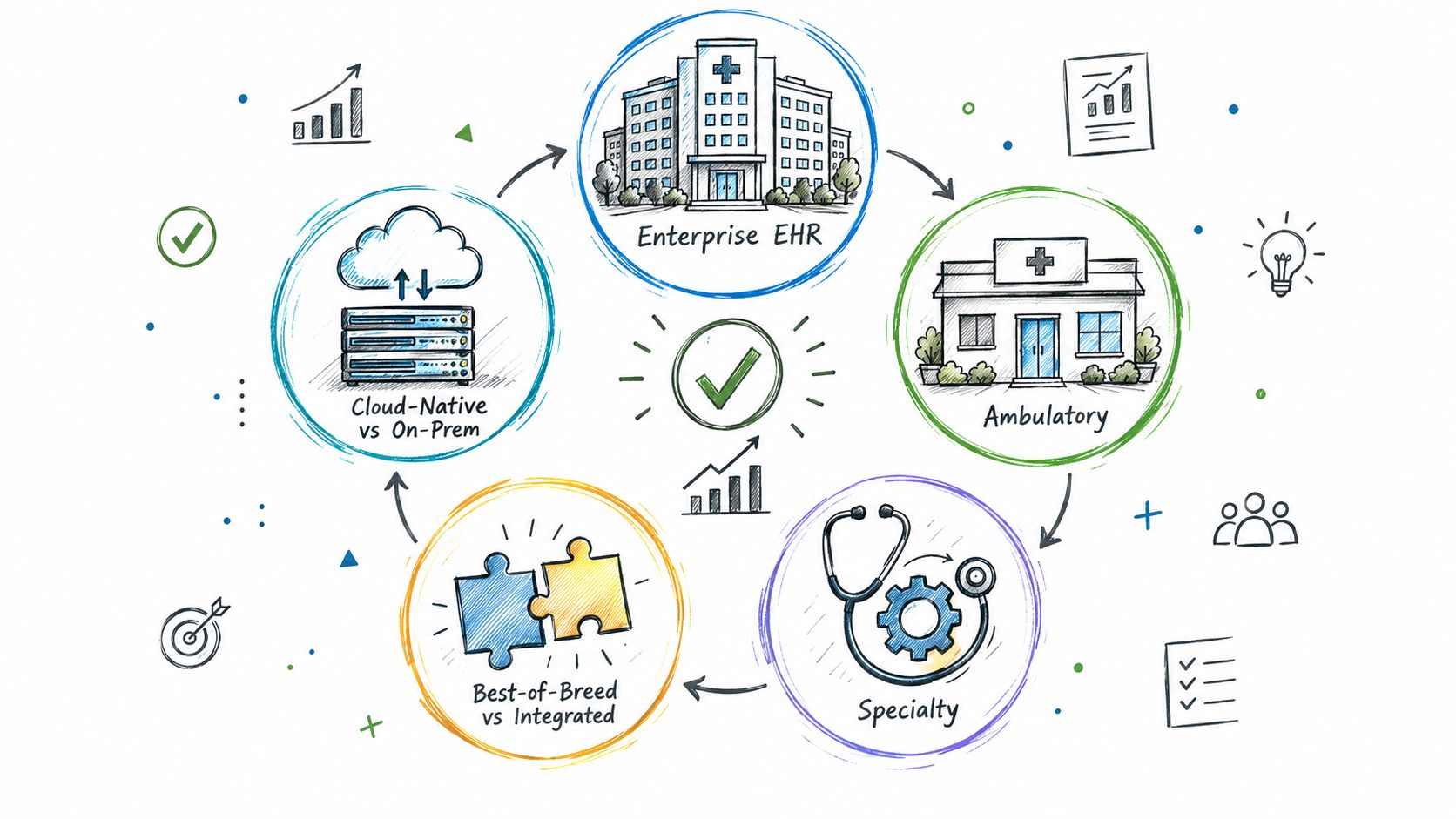
Explore the types of EHR systems by deployment model, care setting and scope. Compare integration options, trade-offs and selection tips for healthtech teams.
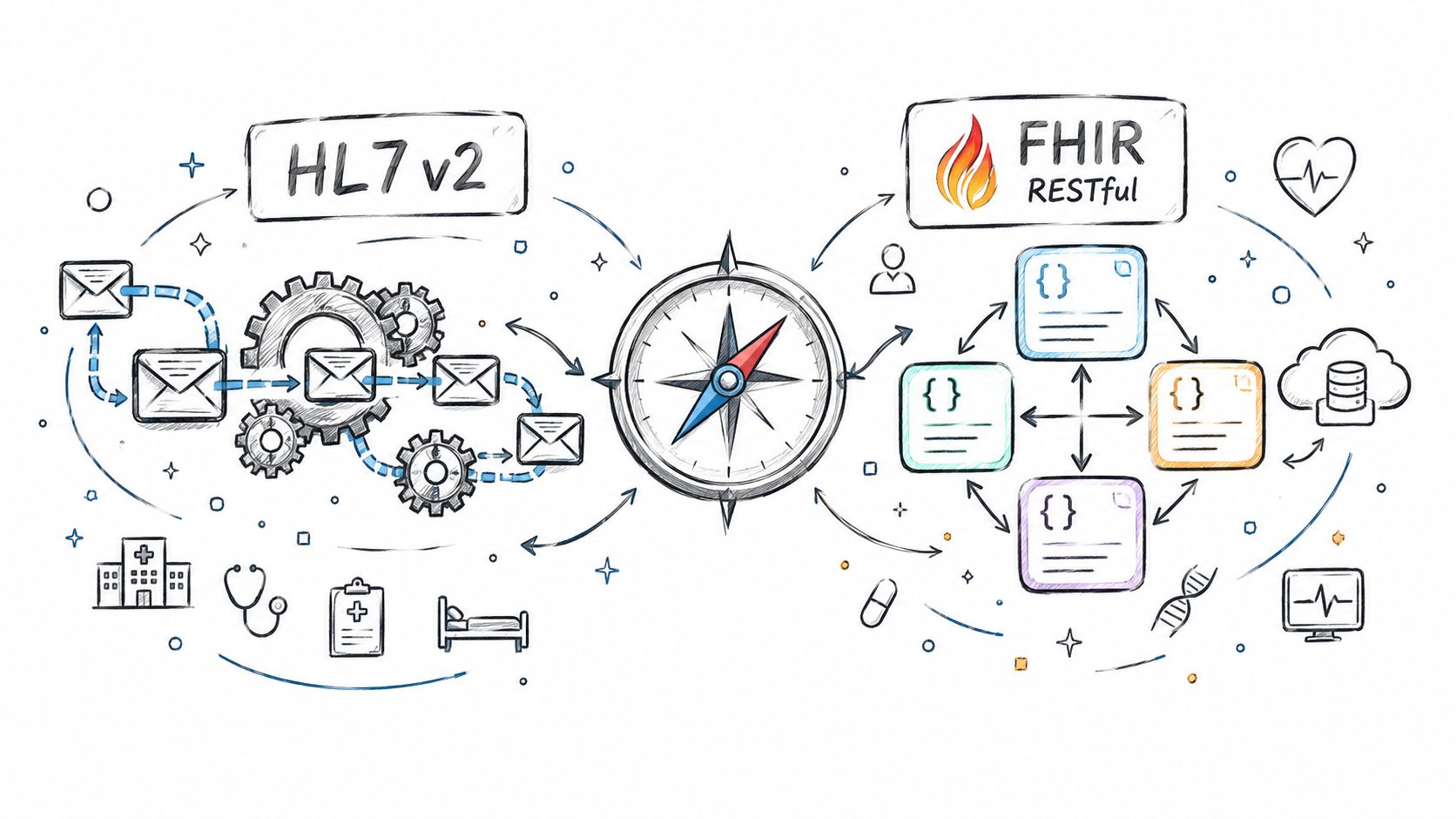
Compare Fhir vs. hl7 standards for healthtech integration. See how HL7 v2 and FHIR differ in use, mechanics, regulation, and real-world architecture.
Connect with our team to explore how AI expertise can transform your business.