
AI in Healthcare
Smart on FHIR: What It Is and How It Works in Practice
Smart on FHIR guide for healthtech engineers. Learn the OAuth 2.0 launch model, scope syntax, backend services, and US regulatory requirements.
October 14, 2026Read more
Unlock AI-based automation for healthtech services. Explore use cases, ROI, implementation & pitfalls to drive clinical & operational value.

Healthcare AI is already shaping executive performance. The immediate question for a CEO is whether automation is improving margin, access, and care delivery in measurable ways, or adding another layer of operational and compliance risk.
That decision is harder than many vendors suggest. AI-based automation in healthtech services affects core systems, reimbursement workflows, clinician trust, patient communication, and the quality of operational data that leadership relies on. A weak deployment does more than waste budget. It can create audit gaps, introduce bias into triage or outreach, and widen access problems for patients with limited digital literacy, language support needs, or inconsistent access to care.
The leadership teams that get results treat AI as an operating model decision, not a software purchase. They set a higher bar from the start: clear ROI beyond labor savings, safe deployment with traceability, and governance that can stand up to compliance review, board scrutiny, and patient expectations.
That standard matters.
Cost reduction gets attention, but it is not enough to justify long-term investment. The stronger business case ties automation to faster patient throughput, better staff capacity, cleaner claims workflows, fewer avoidable denials, more reliable service levels, and a patient experience that does not sacrifice fairness for efficiency. If your automation strategy cannot show who benefits, who may be excluded, and how decisions can be audited, it is not ready for scale.
Administrative work still consumes a large share of healthcare operating capacity. That is why AI has moved out of the lab and into frontline service delivery. It is already shaping how organizations handle documentation, coding, billing, scheduling, patient communication, prior authorization, and care navigation.
Framing AI as experimental is a sign an organization is already behind the operational curve. The issue is not whether AI is arriving. The issue is whether your team is applying it to the workflows that control access, margin, and staff capacity.
CEOs should treat this as an operating model decision. The first gains are showing up in high-volume administrative processes where delays create direct financial and service consequences. Documentation bottlenecks slow clinicians down. Billing errors delay cash. Poor scheduling logic leaves capacity unused while patients wait longer.
Analysts have pointed to ambient documentation and revenue cycle workflows as major areas of commercial investment and adoption, as noted earlier. That should get executive attention for a simple reason. These are core service functions with measurable impact on throughput, denial rates, labor allocation, and patient experience.
Executive view: Start with workflows where volume is high, rules are clear, risk is manageable, and every delay has a visible cost.
That means asking harder questions than vendors usually invite. Will this reduce days in A/R, improve schedule utilization, cut avoidable rework, or raise patient conversion from intake to visit completion? Can every automated action be traced, reviewed, and corrected? Will the model perform fairly across language, literacy, age, and access differences, or will it shift friction onto the patients who already face the most barriers?
Those questions separate a serious AI program from a budget drain.
AI in healthtech now sits with operations, finance, compliance, and clinical leadership together. A useful strategy does three things at once: it removes friction from core workflows, creates an audit trail leadership can defend, and produces results stronger than labor savings alone.
That is why early action matters. Health systems and healthtech companies that commit now can redesign service delivery before faster response times, cleaner documentation, and better patient routing become baseline expectations. Teams evaluating AI automation for healthcare operations should judge every use case by three standards: financial return, deployment safety, and equity impact. If one of those three is missing, do not scale it.
AI-based automation for healthtech services isn't one tool. It's a system of capabilities that takes in messy operational inputs, interprets them, and pushes structured outputs into clinical or business systems.
A useful analogy is air traffic control for healthcare operations. Human teams still make the critical judgments. AI helps route volume, flag risk, organize information, and reduce delays that happen when too much work hits too few people across too many systems.
In healthtech services, the highest-value automation usually starts with workflows that are both repetitive and information-heavy. Think of dictated notes, scanned documents, patient messages, scheduling requests, intake forms, prior auth packets, referral data, and claim-related records.
The point isn't to remove people. The point is to stop making skilled people act like middleware.
One industry estimate cited by HealthTech Magazine's analysis of healthcare automation values administrative workflow assistance alone at $18 billion, and the same piece notes AI use for worklist optimization, hanging protocols, and machine-assisted preauthorization. That tells you where near-term value lives: high-volume administrative flow, not speculative moonshots.
AI automation tends to perform best in workflows with these traits:
A practical example is scheduling. Staff often spend time interpreting patient intent, eligibility context, visit type, urgency, provider availability, and follow-up rules. AI can assist with the interpretation layer so your systems and staff handle fewer manual touchpoints.
It's not magic, and it's not a chatbot bolted onto a broken process. If your workflow logic is inconsistent, your data fields are unreliable, and your teams don't trust the outputs, automation will amplify confusion.
That's why many organizations turn to AI Automation as a Service when they want a structured path from workflow assessment to implementation. The delivery model matters less than the discipline behind it.
Good healthcare automation doesn't hide process problems. It exposes them, forces decisions, and then scales the fixes.
The strongest use cases for AI-based automation for healthtech services don't look futuristic. They look overdue. They remove friction that patients and providers have tolerated for years because there was no practical way to handle complexity at scale.

This is still the first place to look. When scheduling, claims preparation, prior authorization support, documentation routing, and billing follow-up remain heavily manual, the entire organization pays for it.
Before automation, teams chase missing information, re-enter data, and bounce between payer rules, calendars, forms, and EHR fields. After automation, a larger share of those inputs gets standardized on intake, routed correctly, and prepared for human review only when needed.
A few high-value examples:
For many organizations, this is the fastest path to visible operational relief.
Patients don't experience your AI strategy. They experience wait times, confusion, repeated form-filling, and poor follow-up. That's why patient-facing automation often matters more than leaders expect.
Virtual assistants and triage flows can handle routine questions, guide next steps, collect symptom or intake information, and escalate the right cases to staff. The value isn't novelty. The value is consistent responsiveness and cleaner front-door operations.
For this reason, a broader Healthcare AI Services strategy matters. If patient engagement tools aren't connected to scheduling, triage logic, documentation, and escalation pathways, they become another disconnected digital layer.
Patients judge service quality long before they meet a clinician. Automation at the front door shapes access, trust, and abandonment.
Some of the most promising use cases sit at the edge between service operations and clinical intervention. Remote monitoring is a strong example. The pattern is straightforward: collect continuous data from wearables, biosensors, or EHR feeds, identify signals that suggest deterioration, and trigger follow-up before the situation escalates.
This doesn't replace care teams. It helps them act earlier and allocate attention where it matters most.
The same logic applies to triage support and decision support tools that surface relevant patterns from records, messages, or real-time feeds. In some contexts, these may be delivered as SaMD solutions when the product crosses into software-based clinical functionality with regulatory implications.
Use this table to separate high-value use cases from interesting distractions.
| Use case type | Strong fit when | Weak fit when |
|---|---|---|
| Administrative automation | Volume is high and workflow steps are repeatable | Every case is bespoke and process rules are unclear |
| Patient engagement | Inbound demand is large and response consistency matters | Escalation pathways are undefined |
| Clinical support | Relevant data is available in workflow context | Teams must leave their system to use it |
| Remote monitoring | There's a clear intervention model after risk is flagged | Data arrives, but nobody owns response |
The point is simple. Pick use cases where action can follow insight.
AI in healthcare creates value only when it fits the operating model, passes audit scrutiny, and improves decisions without adding risk. If the system cannot connect to core platforms, document its behavior, and fail safely, do not scale it.

A typical healthtech environment includes EHRs, billing platforms, PACS, document repositories, patient messaging tools, CRM systems, and payer workflows. Your AI stack has to work inside that reality. If clinicians, coordinators, or revenue cycle teams have to leave their native system to find an output, usage drops and ROI disappears.
The architecture should support four jobs clearly.
That write-back layer matters more than many teams admit. Prediction alone does not create value. Action in workflow does.
This is also where many projects stall financially. Leaders approve a model, then discover the core work sits in integration, exception handling, identity management, and workflow redesign. Budget for those items early. They determine whether the deployment produces measurable throughput, quality, and patient access gains, or just another pilot.
If your team needs hands-on healthtech AI implementation support, treat integration design, data mapping, and workflow ownership as first-order decisions, not post-pilot cleanup.
Compliance failures rarely come from one dramatic mistake. They usually come from small design decisions that were never resolved. Who can see the output. What data was retained. Whether PHI entered a third-party model. Whether confidence thresholds triggered review. Whether anyone can reconstruct what happened six months later.
That is why security and compliance belong in the architecture from day one. Build for least-privilege access, audit logs, role-based permissions, data minimization, retention controls, encryption in transit and at rest, model hosting rules, and de-identification where appropriate. For teams responsible for ensuring compliance for digital health products, the ultimate standard is not policy language. The definitive standard is whether the product behaves safely under normal use and edge cases.
One rule should be required across every deployment.
Every AI output must be traceable to its inputs, review path, and downstream action.
If you cannot prove provenance, you cannot defend the system to compliance, clinical leadership, payers, or the board.
Many technical guides stop at HIPAA and access control. That is too narrow for a CEO making a scale decision.
You also need to know whether the system performs consistently across sites, specialties, languages, insurance groups, and patient populations. An automation layer that speeds up service for one group while degrading access or accuracy for another creates ethical exposure and business risk. Complaints rise. Staff lose trust. Regulators pay attention. So do enterprise buyers.
Ask for monitoring that goes beyond uptime and model accuracy. Demand exception rates, override rates, false escalation patterns, subgroup performance checks, and a documented escalation path when the system behaves inconsistently. Safe deployment is not just about privacy. It is about fairness, accountability, and control.
Do not ask whether the model is impressive. Ask whether the operating system around it is sound.
These are not technical preferences. They are board-level controls for ROI, risk, and trust.
Healthcare AI business cases often fail scrutiny because they are too shallow. They show a promising demo, cite time savings, and skip the harder questions a CEO, CFO, and compliance lead will ask. Where does the margin improve. Which risk declines. Who owns the exceptions. How do you prove the system is safe, auditable, and fair as volume grows.
A more useful standard is end-to-end operating impact. Research on AI in healthcare operations highlights the shift: leaders are no longer asking whether AI can help, but how to deploy it at scale without increasing clinician burden or operational risk, as discussed in this review of AI in healthcare operations.

Start with the economic bottleneck, not the model.
Map the workflow in enough detail to expose waste, delay, rework, denial risk, and avoidable staff effort. Find the point where automation changes a business outcome, not just a task. In practice, that usually means a narrow workflow with clear boundaries, a known owner, and a measurable failure mode.
This stage should answer one blunt question: if this gets better, who feels it first and how will you measure it? Finance may see lower leakage. Operations may see faster throughput. Clinicians may recover time. Patients may get faster access. If you cannot name the first beneficiary and the metric that changes, the use case is not ready.
The inputs that matter most are:
Good discovery turns ambition into operating requirements. Teams that need a more structured way to do that can use an AI Product Development Workflow to define requirements, controls, validation criteria, and rollout phases before build work starts.
A pilot has one job. Reduce uncertainty.
That means testing technical performance, workflow fit, user trust, and financial impact at the same time. A pilot that produces accurate outputs but creates extra clicks, hidden rework, or unclear accountability is not a success. It is an expensive warning.
Measure what executives need to decide on expansion:
| Pilot question | What to look for |
|---|---|
| Does it improve unit economics? | Lower cost per case, fewer denials, faster throughput, or better capacity use |
| Does it fit real workflows? | Use inside existing systems, fewer manual handoffs, no shadow processes |
| Does it stay controlled under pressure? | Stable exception handling, clear escalation paths, complete audit records |
| Does it work fairly across populations? | Performance checks by subgroup, review of disparate error patterns, documented fixes |
One recommendation. Put an expiration date on every pilot. If the team cannot show a clear operational gain, acceptable risk profile, and credible adoption pattern in a defined period, stop funding it. Health systems waste too much money on pilots that linger because no one wants to call them inconclusive.
If staff need to invent workarounds to make the tool usable, the workflow design is still wrong.
Scale exposes the problems the pilot could hide. Edge cases multiply. Override volumes rise. Financial gains flatten if exception handling is sloppy. Equity issues become visible only after deployment reaches broader patient populations.
Treat scale as an operating model. Assign owners for performance monitoring, workflow changes, user feedback, audit reviews, and model updates. Set a review cadence that covers business KPIs, safety signals, and subgroup performance. Tie continued rollout to evidence, not internal momentum.
The CEOs who get this right do three things consistently. They expand one workflow family at a time. They refuse to count labor savings that never convert into real capacity or margin. They require every scaled deployment to show traceability, human accountability, and a plan for addressing uneven impact across patient groups.
That discipline is what turns AI-based automation from a promising tool into a durable part of the business.
Health systems do not lose money on AI because the models are weak. They lose money because strategy, governance, and delivery break apart the moment a pilot meets real operations.

That is the standard your partner has to meet. You need a team that can turn an AI idea into an operating decision. Which workflow should change first. What evidence will justify expansion. Where human review stays in place. How the organization will audit output, document overrides, and explain impact to compliance, finance, and clinical leadership.
A useful partner should help you make four decisions well:
Ekipa AI is relevant if you need support across that chain, from use case selection to implementation planning. The question is not whether a vendor offers AI services. The question is whether they can help your team make disciplined choices in a compliance-sensitive environment.
Use that standard when you evaluate any firm, including Ekipa. Ask to see how they scope ambiguous workflows, define success metrics, map data dependencies, and handle cases where the model should defer to a human. Ask how they address subgroup performance and patient equity before rollout expands. If they cannot answer those questions clearly, they are selling technology, not helping you run a healthtech business.
Good execution produces concrete artifacts early, not vague momentum:
For leaders comparing options, real-world use cases can help pressure-test what practical deployment looks like. Then judge the partner on one thing. Can they help you build a system that is economically credible, operationally usable, and safe to defend in front of your board, your compliance team, and your patients?
Most healthcare AI failures aren't caused by weak models. They're caused by bad operating assumptions.
Leaders often choose a use case because it sounds advanced, not because it solves a painful workflow problem. Then they discover the data is inconsistent, the users don't trust the output, and the pilot never survives contact with daily operations.
If clinicians, schedulers, coders, or care coordinators don't help shape the workflow, your deployment will look elegant in a slide deck and awkward in practice. Staff adoption isn't a communication problem. It's a design problem.
Use short feedback loops. Test the system where real work happens. Watch how people respond under time pressure, not during a polished walkthrough.
Healthcare data is fragmented, incomplete, and full of edge cases. Notes don't follow perfect structure. Payer requirements vary. Legacy systems behave unpredictably. If your team assumes clean inputs, your timeline is fantasy.
As we explored in our AI adoption guide, the right move is to scope tightly, define exception paths early, and keep a human review layer where ambiguity remains. That's also why many teams start with internal operational workflows before moving into more sensitive patient-facing or clinically consequential use cases.
This is the most overlooked risk. A major underserved angle in healthcare automation is whether deployment conditions support use in low-resource settings. Policy analysis from the California Health Care Foundation on lifting up underserved communities with AI warns that bias in algorithms and unequal access to technology can undermine AI's benefits, and that the blockers are often affordability, infrastructure, and adoption conditions, not just technical accuracy.
That matters more than most product teams admit.
If your automation assumes stable broadband, modern devices, well-staffed clinics, and digital fluency, it may perform well in one environment and fail in another. In healthcare, that isn't just a product flaw. It's a strategic and ethical failure.
Don't ask only whether the model is accurate. Ask who can actually use the system, under what constraints, and who gets left behind.
No. Cost reduction matters, but it's too narrow. The better lens is operational performance. Strong automation can improve throughput, reduce administrative burden, support staff capacity, and create cleaner handoffs across scheduling, documentation, billing, and triage.
Start with a workflow that is high-volume, repetitive, painful, and measurable. Documentation support, intake classification, scheduling, prior authorization support, and revenue-cycle workflows are often better starting points than ambitious clinical use cases.
Use a balanced scorecard. Track labor impact, workflow speed, exception rates, user adoption, auditability, and downstream financial effects such as cleaner billing or fewer avoidable delays. If your ROI model only shows labor savings, it's incomplete.
A lot, especially early. Healthcare automation should be designed with review thresholds, escalation paths, and clear ownership. The goal is not autonomous operation everywhere. The goal is reliable augmentation where humans stay in control of exceptions and sensitive decisions.
Compliance is a design constraint, not the main barrier. The harder issues are usually workflow fit, integration, data quality, and trust. Teams that treat privacy, access control, and auditability as part of architecture usually move faster later.
Smaller providers can benefit, but they should be selective. Choose narrow service workflows with obvious operational pain. Don't start with a broad platform rollout. Start with one process that staff already want fixed.
If you're evaluating AI-based automation for healthtech services, start with a specific workflow, a measurable business case, and a delivery plan that can survive real operational complexity. Ekipa AI can help you move from opportunity mapping to implementation, whether you need a Custom AI Strategy report, sharper AI requirements analysis, or direct access to our expert team.
Smart on FHIR guide for healthtech engineers. Learn the OAuth 2.0 launch model, scope syntax, backend services, and US regulatory requirements.
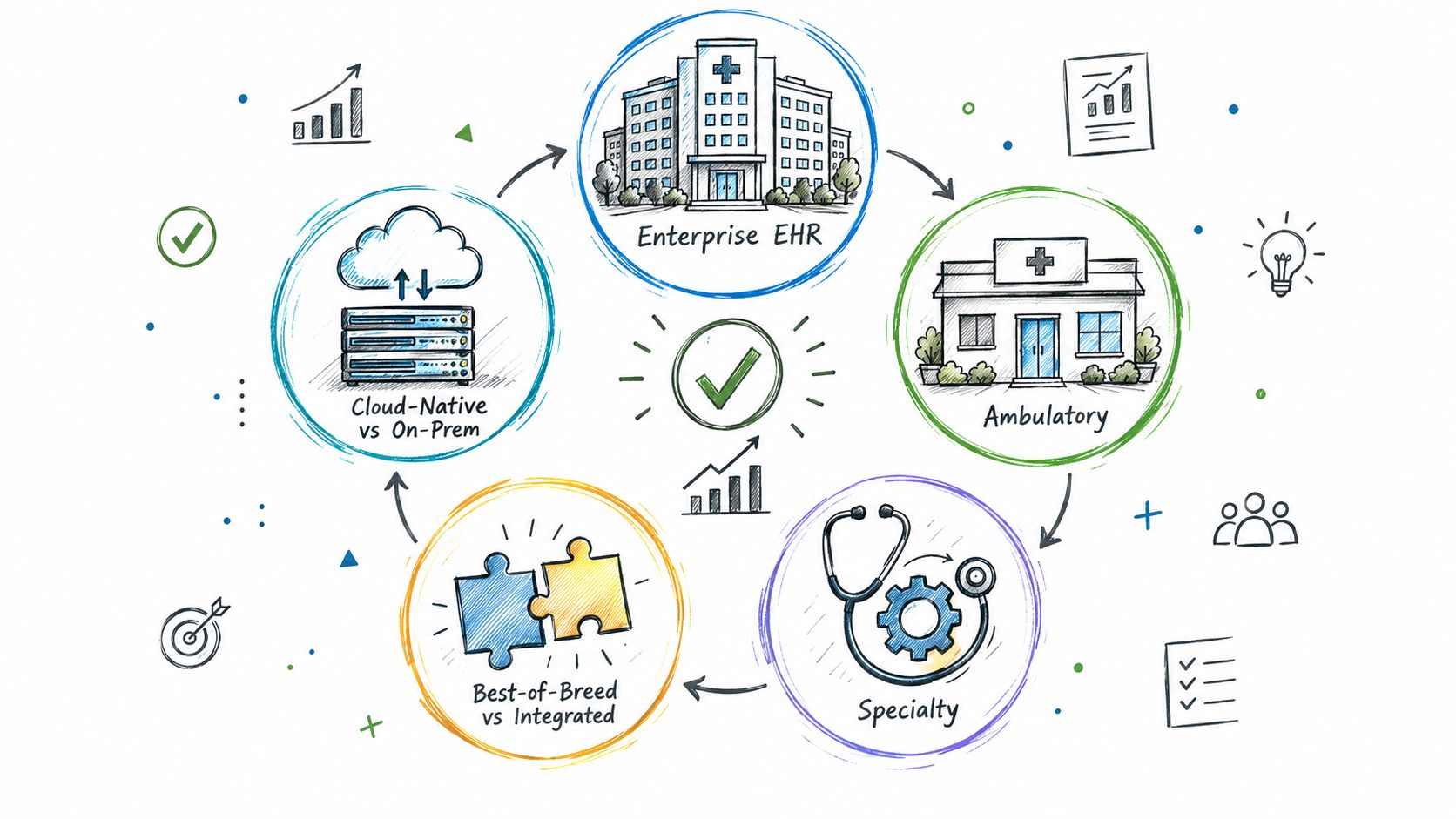
Explore the types of EHR systems by deployment model, care setting and scope. Compare integration options, trade-offs and selection tips for healthtech teams.
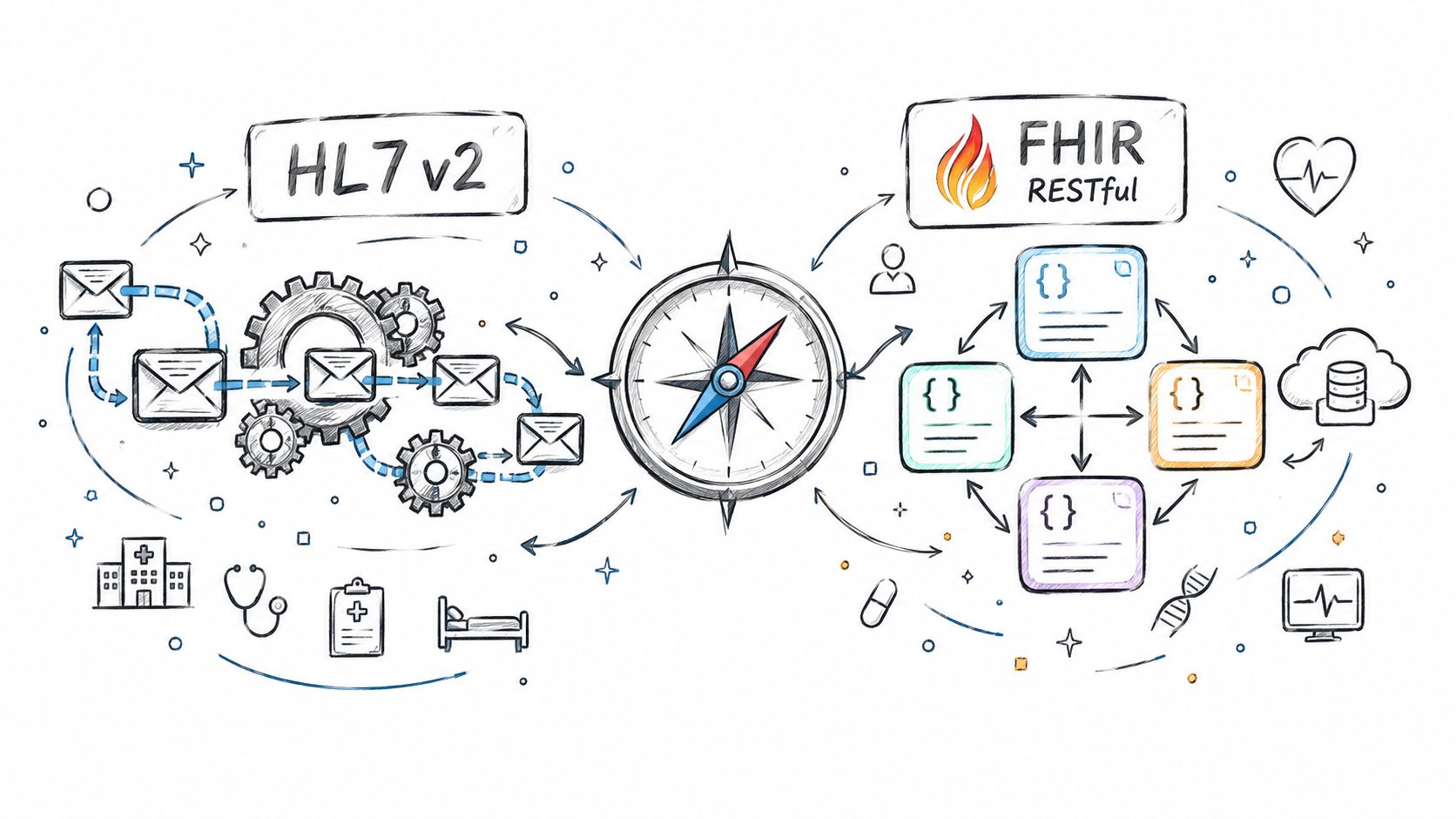
Compare Fhir vs. hl7 standards for healthtech integration. See how HL7 v2 and FHIR differ in use, mechanics, regulation, and real-world architecture.
Connect with our team to explore how AI expertise can transform your business.