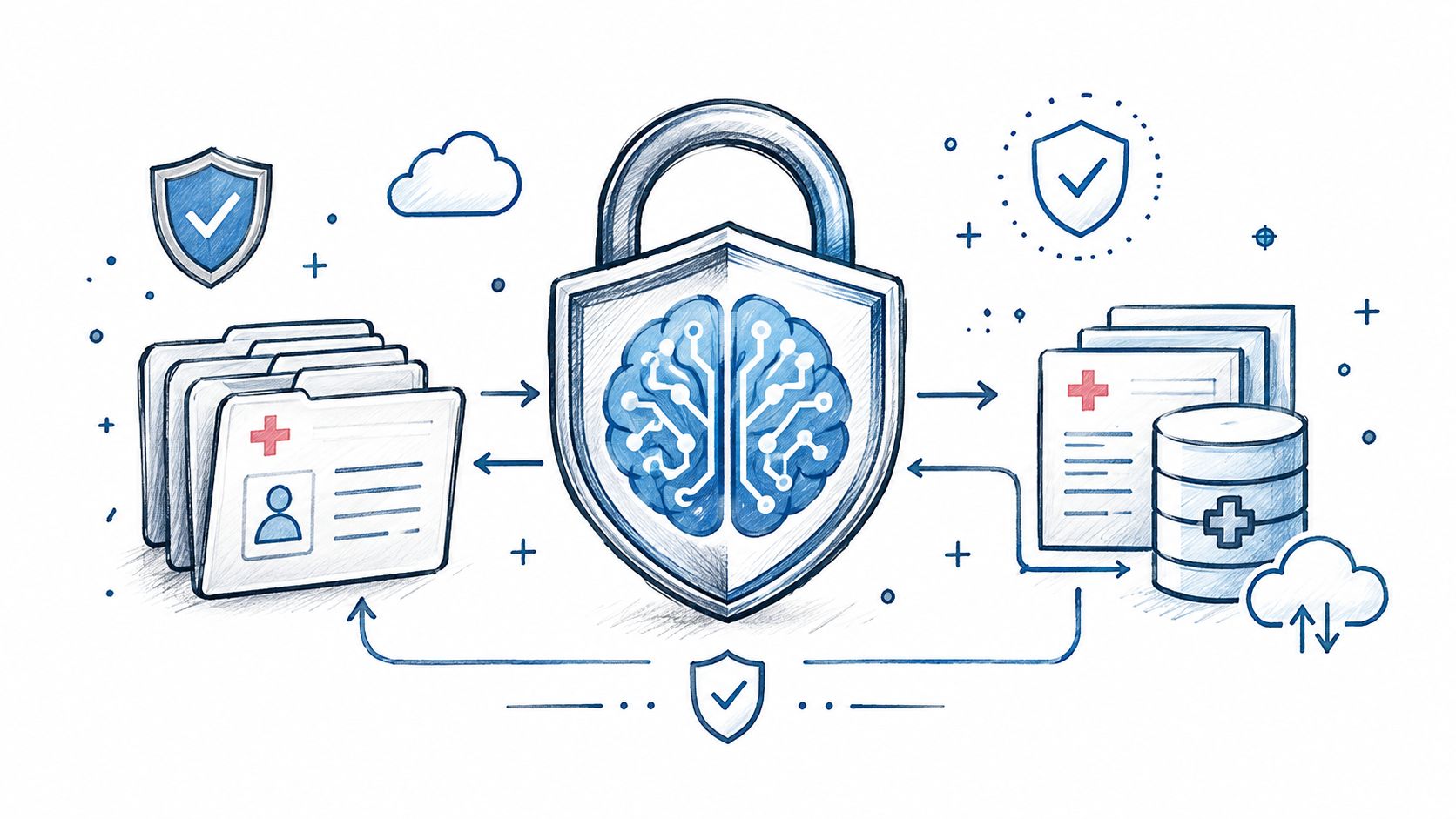
AI in Healthcare
HIPAA-Compliant AI: How to Use LLMs With PHI Safely
How to build HIPAA-compliant AI: when LLM providers need a BAA, data minimization, de-identification, audit controls and a reference architecture.
October 16, 2026Read more
Unlock hospital efficiency with Healthtech Operational Intelligence with AI. Explore 2026 use cases, ROI, and implementation for real outcomes.

Hospitals don't have an AI problem. They have an execution problem.
That distinction matters because operational AI is no longer a fringe experiment. The market is already large and still expanding. Grand View Research estimated the AI-in-healthcare market at $36.7 billion in 2025 and projected $505.6 billion by 2033 at a 38.9% CAGR, while Menlo Ventures reported heavy spending in workflow-centered categories such as ambient clinical documentation and coding and billing automation, together representing more than $1 billion in spending (Menlo Ventures). The money is moving toward operational pain, not just clinical novelty.
That's why healthtech operational intelligence with AI deserves a more practical definition. It's not another dashboard. It's a hospital's operational control layer. It connects live signals from clinical and administrative systems, interprets what's happening now, and helps teams act before delays, shortages, and bottlenecks spread.
For leaders evaluating Healthcare AI Services, the primary question isn't whether AI belongs in hospital operations. It does. The better question is which operating model turns AI from scattered pilots into measurable throughput, staffing, revenue-cycle, and service-line gains.
Most hospitals already know what operational chaos feels like. A delayed discharge backs up the ED. A missing infusion pump sends nurses searching across units. A coding backlog slows reimbursement. None of these failures sit neatly inside one department, which is why point solutions often disappoint.
Healthtech operational intelligence with AI works best when you stop thinking of it as a tool and start treating it as a coordination system. The closest analogy is air traffic control. The tower doesn't just record where planes are. It continuously monitors movement, predicts conflicts, prioritizes routes, and directs action fast enough to prevent system-wide disruption.
That's the right mental model for hospital operations. Patients, staff, beds, equipment, schedules, and claims all move through interconnected workflows. If those workflows run on stale reports and manual escalation, leaders end up managing yesterday's problems. When AI is embedded into those workflows, operations become more predictive and less reactive.
Practical rule: If an AI initiative can't help a frontline team make a better operational decision during the shift, it probably isn't operational intelligence. It's analytics without impact.
The shift from hype to efficiency starts there. Not with a bigger model. With a tighter connection between live operational data, workflow decisions, and accountability.
Operational intelligence in healthcare sits between raw system data and real-world action. It pulls signals from systems such as the EHR, nurse call, bed management, staffing tools, and equipment tracking, then applies AI to detect patterns, anticipate pressure points, and trigger the next best operational response.

Clinical AI usually focuses on diagnosis, risk scoring, or treatment support. Operational intelligence focuses on flow, capacity, coordination, and execution. It asks different questions.
A clinical model might identify a patient at higher risk. An operational model asks whether the right bed, nurse, equipment, transport, and discharge sequence are available to keep care moving safely.
That distinction matters at the executive level because operational intelligence maps directly to board-level concerns:
Static reporting tells you what happened. Operational intelligence tells you what's happening and what likely happens next.
That's why the combination of AI with real-time location systems and core hospital platforms is so powerful. When AI is fused with RTLS, EHR, nurse call, and bed management, it can reason over live asset, staff, and patient-flow state. That supports automated detection of equipment hoarding, shortage prediction, proximity-based alert routing, and usage-triggered maintenance workflows (PenguinIN on RTLS and operational AI in healthcare).
Without that live context, many hospital AI projects remain retrospective. They produce insights after the operational moment has passed.
The most useful operational model is rarely the most sophisticated one. It's the one connected to the systems that staff already use to move work forward.
In practice, healthtech operational intelligence with AI usually depends on a stack like this:
| Layer | What it does | Typical systems involved |
|---|---|---|
| Data intake | Pulls live operational and workflow signals | EHR, scheduling, bed management, nurse call, CMMS, billing systems |
| Context layer | Resolves entities and status across departments | Patient status, room state, device location, staff availability |
| Intelligence layer | Predicts, prioritizes, flags, or recommends | Staffing forecasts, shortage alerts, claim review, discharge timing |
| Workflow layer | Delivers action into daily work | Work queues, alerts, routing, escalations, dashboard prompts |
| Governance layer | Controls risk, monitoring, and ownership | Validation, compliance review, metric tracking, change control |
Hospitals that skip one of these layers usually hit the same wall. They have an interesting model but no operational advantage.
The strongest business case for operational intelligence doesn't start with algorithms. It starts with recurring operational friction that already has a cost.
A typical hospital has dozens of these moments every day. Staff can't find needed equipment. Unit managers build schedules with incomplete demand signals. Revenue-cycle teams chase coding issues after the fact. Bed placement decisions happen with partial visibility into discharge readiness and housekeeping status. Each problem looks local. The cost accumulates system-wide.

In the U.S., operational AI has moved well past the pilot stage. A HealthIT.gov data brief on hospital AI trends found that 71% of hospitals reported using predictive AI integrated with the EHR in 2024, up from 66% in 2023. The same brief showed especially rapid growth in billing automation, rising from 36% to 61%, and scheduling, increasing from 51% to 67%.
Those numbers are important for one reason. They show where hospitals are finding value. Not in abstract AI transformation language, but in revenue-cycle execution and capacity coordination.
The simplest operational gains come from reducing waste that leaders already know exists but can't consistently see in real time. Search time, rework, queue buildup, duplicate handoffs, and avoidable delays don't always look dramatic in isolation. Together, they consume labor and create downstream disruption.
When AI helps route tasks, predict shortages, or surface exceptions earlier, cost reduction comes from fewer operational misses rather than from replacing teams.
Revenue gains often arrive through better execution, not bigger demand. Faster coding and billing review, fewer process bottlenecks, smoother bed turnover, and more predictable scheduling all support revenue capture.
This is why billing automation has gained traction so quickly. It sits at the intersection of operational reliability and financial performance.
Patients rarely distinguish between “clinical” and “operational” problems. They experience the whole journey. If transport is late, the room isn't ready, or discharge timing is unclear, the experience degrades even if the care itself is excellent.
Operational intelligence helps by reducing coordination failures that patients feel immediately.
Frontline staff don't need more dashboards. They need fewer avoidable interruptions and better timing. AI creates value when it removes manual triage, eliminates duplicate checking, and brings needed context into the workflow already in use.
A useful operational AI system doesn't ask staff to admire its predictions. It helps them finish the shift with fewer preventable workarounds.
Before operational intelligence, a bed manager often works from fragmented updates: likely discharge, transport delayed, housekeeping pending, incoming admission uncertain. Decision quality depends heavily on who knows whom and who picks up the phone first.
After operational intelligence, the system can surface likely discharge windows, identify blockers, prioritize turnover tasks, and push the next action to the right team. The difference isn't futuristic. It's operationally disciplined.
The same pattern applies to scheduling and billing. Before AI, managers and revenue teams spend time chasing missing context. After AI, they spend more time resolving exceptions that need human judgment.
The most credible use cases share three traits. They solve a visible operational problem, they fit into an existing workflow, and they have an owner who can act on the output.
Some hospitals start with glamorous ideas and stall. A better sequence is to begin where data is available, workflows are repetitive, and delays are already expensive.
| Use Case | Business Problem Solved | Key Metrics (KPIs) Improved | Implementation Complexity |
|---|---|---|---|
| Predictive staffing | Mismatch between expected demand and scheduled coverage | Staffing alignment, overtime pressure, shift disruption | Medium |
| Real-time asset management | Staff lose time locating mobile equipment and identifying shortages | Equipment availability, search burden, maintenance responsiveness | Medium to High |
| Billing and claims automation | Manual review slows coding and increases downstream rework | Claim readiness, coding workflow speed, billing accuracy review | Medium |
| Patient flow optimization | Admissions, discharges, and room turnover are poorly coordinated | Throughput, bed readiness, discharge coordination, transfer delays | High |
A staffing model should do more than forecast demand. It needs to influence schedule design, float allocation, escalation thresholds, and shift management.
Teams usually get traction when they combine historical volume patterns with structured operational data and then deliver planning output to the people who control staffing. If the model sits in a separate analytics environment, adoption drops fast.
Asset tracking becomes operational intelligence when location data drives action. An infusion pump's position is only useful if the system can also identify unusual dwell time, likely shortage conditions, or maintenance triggers based on use.
Many hospitals frequently under-scope the work. They buy tracking capability but don't connect it to the operational workflow that would make the signal matter.
Billing and claims use cases often produce faster value because the workflows are structured and the business pain is obvious. AI can help review documentation, support coding workflows, and surface issues earlier in the process.
For leaders working through document-heavy administrative flows, this overview of UK clinic document management is useful because it highlights the operational burden created by fragmented records and manual handling. The same logic applies inside hospital billing and admin functions. Document flow is an operations problem before it becomes a technology problem.
Patient flow is usually the highest-value use case and the hardest to operationalize. It crosses too many teams to succeed on model quality alone.
What works is a phased path:
A practical implementation often includes focused interfaces such as a clinic AI assistant for workflow support, intake coordination, and administrative handoffs. The point isn't the interface itself. It's whether the tool helps staff act inside the work, not alongside it.
Most AI roadmaps fail because they assume technology is the hard part. In healthcare operations, it usually isn't. The harder problem is agreeing on which use cases matter, who owns them, and what evidence is required to move from pilot to production.

Strong programs begin with a narrow operational question: where is delay, rework, or revenue leakage showing up often enough to justify intervention?
That first phase should identify baseline metrics, current workflow owners, decision points, data sources, and constraints. If leaders can't articulate the current process in operational terms, they aren't ready for AI. They're still in idea generation.
A structured AI Product Development Workflow helps here because it forces discovery to stay tied to execution rather than drifting into technical abstraction.
A practical pattern in healthcare AI operations is predictive analytics for staffing, inventory, and billing automation, but successful deployments need security, HIPAA-style compliance, and deep integration with existing infrastructure because the gains come from embedding intelligence into current workflows rather than replacing them (Pointcore's guide to AI in healthcare operations).
That means architects should ask blunt questions early:
A good pilot doesn't try to prove that AI is impressive. It proves that one operational decision can be improved reliably enough to matter.
Choose one use case with visible friction, an accessible workflow owner, and a measurable baseline. Define what human override looks like before deployment. If the pilot creates more review work than it removes, redesign it.
Field note: The fastest way into pilot purgatory is launching a model without a pre-agreed rule for scaling, stopping, or redesigning it.
Scaling isn't a technical extension of the pilot. It's a governance decision. Once multiple departments propose AI, automation, and analytics projects, duplication appears quickly. One team wants scheduling optimization. Another wants staffing prediction. A third wants command center analytics. If nobody owns prioritization, the portfolio fragments.
The answer is a centralized intake and review model. AI proposals should enter one queue, use consistent problem definitions, include current metrics, and be reviewed on a regular cadence by leaders spanning operations, clinical, finance, compliance, and IT. That's how organizations decide which ideas to advance, merge, defer, or stop.
Hospitals rarely miss AI value because a model cannot generate a prediction. They miss it because no one owns the decision to deploy, monitor, and retire that prediction inside a live workflow.
Many hospital IT and operations teams can identify promising use cases. Fewer have a disciplined way to decide which ones deserve resources, who signs off on risk, and what evidence is required before scale. That gap creates the same pattern over and over. Good ideas enter the system through different doors, get reviewed by different people, and produce uneven results.
A working governance model is less complicated than many teams expect. Use one intake path for AI, automation, and analytics requests. Review them on a fixed cadence. Score them against the same criteria: operational impact, workflow fit, data readiness, risk level, owner accountability, and measurable financial or service outcomes. Naviant's healthcare AI operating model guidance outlines this approach well.
Done properly, that structure reduces four expensive failure modes:
Keep the intake form short. Make it hard to dodge the fundamentals. What decision will improve, who owns the workflow, what metric changes would justify investment, what data is required, and what could go wrong in production?
Operational intelligence in healthcare often touches patient flow, staffing, scheduling, throughput, utilization, and escalation logic. That data may not look clinical at first glance, but it still carries privacy, workforce, and regulatory implications.
The implementation mistakes are predictable. A team tests on curated sample data that does not reflect live data quality. An alert gets routed through an extra tool and creates a secondary exposure path no one documented. Model performance gets validated once, then left alone while workflows, coding practices, and volumes change around it.
Compliance teams should not be asked to bless a finished system. They should help set requirements for data handling, auditability, human review, monitoring frequency, and exception management before build starts. Organizations operating in Europe or dealing with cross-border AI governance questions should also review resources on navigating AI Act regulations, especially when operational systems influence prioritization or decision support in regulated environments.
A technically sound system still fails if it adds friction to frontline work.
Staff adopt tools that help with the next decision already sitting in front of them. They ignore tools that require another login, another dashboard, or blind trust in an output with no context. In practice, three design choices matter more than most feature discussions:
I have seen accurate models stall because teams treated training as the change plan. Training matters, but it does not fix poor workflow placement or unclear accountability. Managers need to know what action is expected, staff need to know when they can override the system, and leadership needs a review rhythm for adoption, exception rates, and outcome drift.
A strategy and delivery platform such as Ekipa AI can support this by structuring intake, prioritization, and execution around operational use cases rather than disconnected pilot requests. That support is most useful when internal teams already understand the pain points and need a repeatable way to convert them into governed, buildable initiatives.
Staff adoption comes from usefulness at the point of decision, not from better explanations of AI.

A large share of health system AI programs never make it past pilot stage. The pattern is familiar. Teams can identify promising use cases, but they stall on ownership, workflow fit, procurement, data readiness, and risk review.
That is why the partner decision matters. The right partner does more than build models or automate tasks. They help the organization choose where to start, define decision owners, set delivery gates, and measure whether the work is improving operations in a way finance and clinical leadership will recognize.
Start with the use case that meets three tests. It should solve a visible operational problem, sit inside a process with an accountable owner, and rely on data that is available without months of remediation work.
This sounds simple, but many teams still choose the use case with the strongest executive sponsor rather than the one with the clearest path to measurable impact. That decision usually delays value. A narrower first deployment often teaches more than an ambitious cross-functional program because it exposes operational constraints early, including exceptions, handoffs, and reporting needs.
Good partners force that prioritization discipline. Ekipa AI, for example, is most useful when a team needs structure around intake, sequencing, and execution rather than another round of generic AI ideation.
Use the existing workflow by default. If the model output sits outside the system where staff already act, usage drops and exception handling gets messy.
The question is not only technical. It is economic. Every extra screen, login, or manual handoff adds adoption risk, training time, and support overhead. In practice, delivery choices such as ai assisted software development, AI Automation as a Service, internal tooling, or more regulated builds such as SaMD solutions should be judged by one standard: do they improve the decision inside the actual workflow, with auditability and low friction?
Buy when the problem is common, the workflow is relatively standard, and the integration path is proven in settings like yours. Build when your process logic, data dependencies, or governance requirements differ enough that a packaged product will force awkward workarounds.
That trade-off becomes clear in areas like patient flow orchestration, referral triage, utilization management, or revenue cycle exception handling. A point solution can get you live faster, but speed at purchase does not always translate into speed to value. If internal teams spend months adapting local workflows to fit the product, the apparent savings disappear.
That is often the point where organizations compare a HealthTech engineering partner, AI strategy consulting, a Custom AI Strategy report, an AI requirements analysis, or broader AI tools for business. The better question is whether the partner can help you realize operational gains through a governed implementation model, not whether they can show a long feature list. If your roadmap includes tightly integrated workflows or custom healthcare software development, operational fit and decision accountability should carry more weight than product breadth.
For examples of adjacent applications, operating patterns, and real-world use cases, it helps to compare where packaged tools perform well and where a custom execution model produces better results.
Hospitals don't need more AI pilots. They need better operational decisions, delivered in the moment, inside workflows that staff already use.
That's the promise of healthtech operational intelligence with AI. It turns fragmented signals into coordinated action across staffing, equipment, patient flow, and revenue operations. But the biggest determinant of success isn't model novelty. It's whether the organization has the discipline to govern intake, define ownership, validate risk, and scale what works.
Leaders who approach this as an operating model change will move faster than those who treat it as a technology procurement exercise. The institutions that win won't be the ones with the most pilots. They'll be the ones with the clearest path from operational pain to accountable execution.
If you want to assess that path with people who work at the strategy-to-delivery boundary, connect with our expert team.
Analytics usually explains what happened. Operational intelligence supports decisions while operations are still unfolding. The distinction is timing, workflow fit, and whether the output changes an action on the shift.
A pilot is worth scaling when it improves a specific operational decision, fits into an existing workflow, has a clear owner, and can be reviewed against baseline metrics and risk controls. Technical accuracy alone isn't enough.
No single team should own it alone. Operations, IT, compliance, finance, and clinical leadership all need a role. Day-to-day accountability should sit with the team that owns the workflow being changed, while a cross-functional governance group prioritizes and reviews the portfolio.
Ekipa AI helps organizations move from scattered AI ideas to a structured execution path. If you're evaluating healthcare operations use cases, need a practical intake and prioritization model, or want help translating workflow pain into an actionable roadmap, explore Ekipa AI and see how the platform and team can support your next step.
How to build HIPAA-compliant AI: when LLM providers need a BAA, data minimization, de-identification, audit controls and a reference architecture.
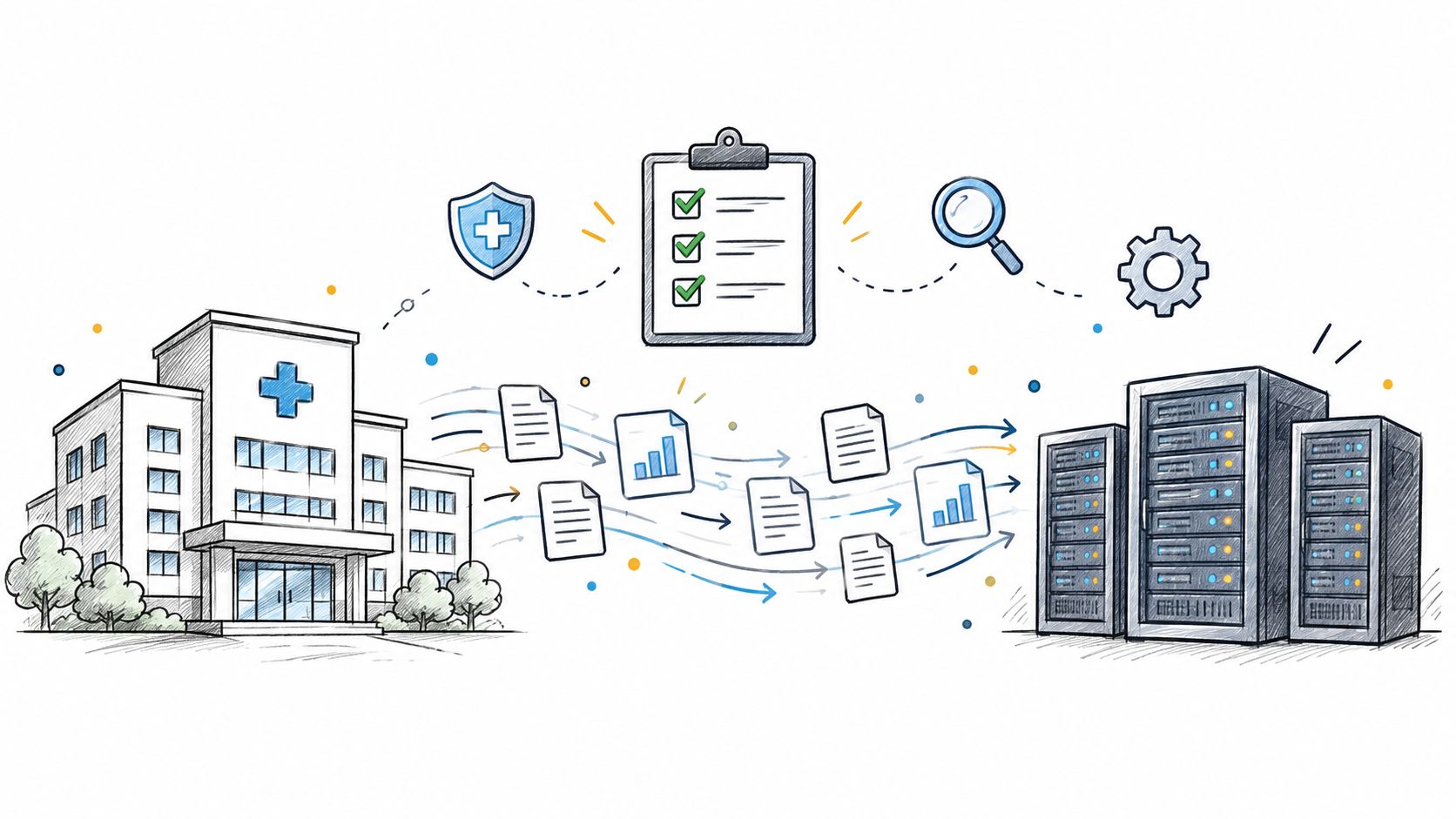
Practical data migration planning guide for healthcare teams. Scope, mapping, compliance, validation, cutover and rollback decisions explained end to end.
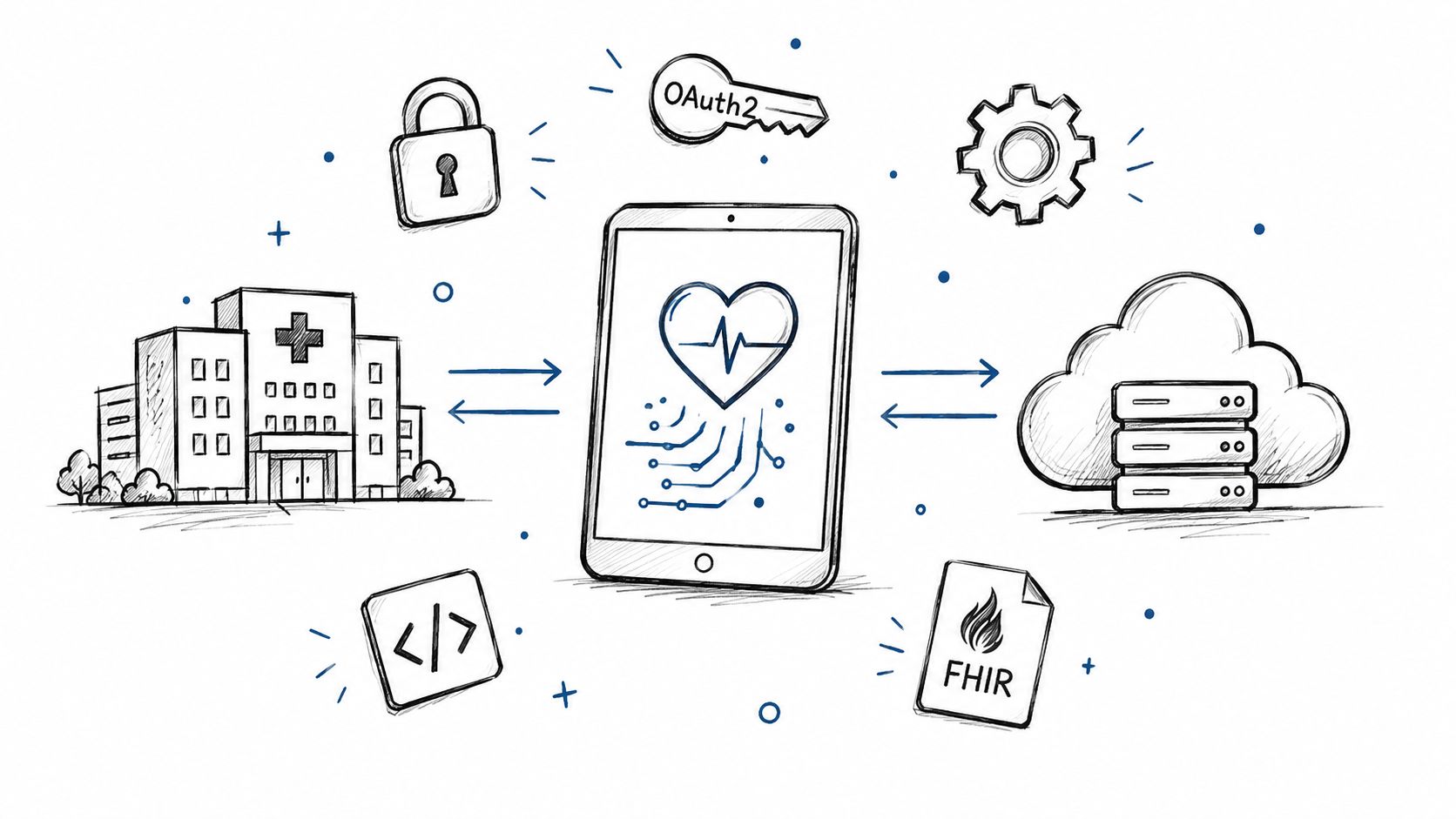
Smart on FHIR guide for healthtech engineers. Learn the OAuth 2.0 launch model, scope syntax, backend services, and US regulatory requirements.
Connect with our team to explore how AI expertise can transform your business.