AI in Healthcare
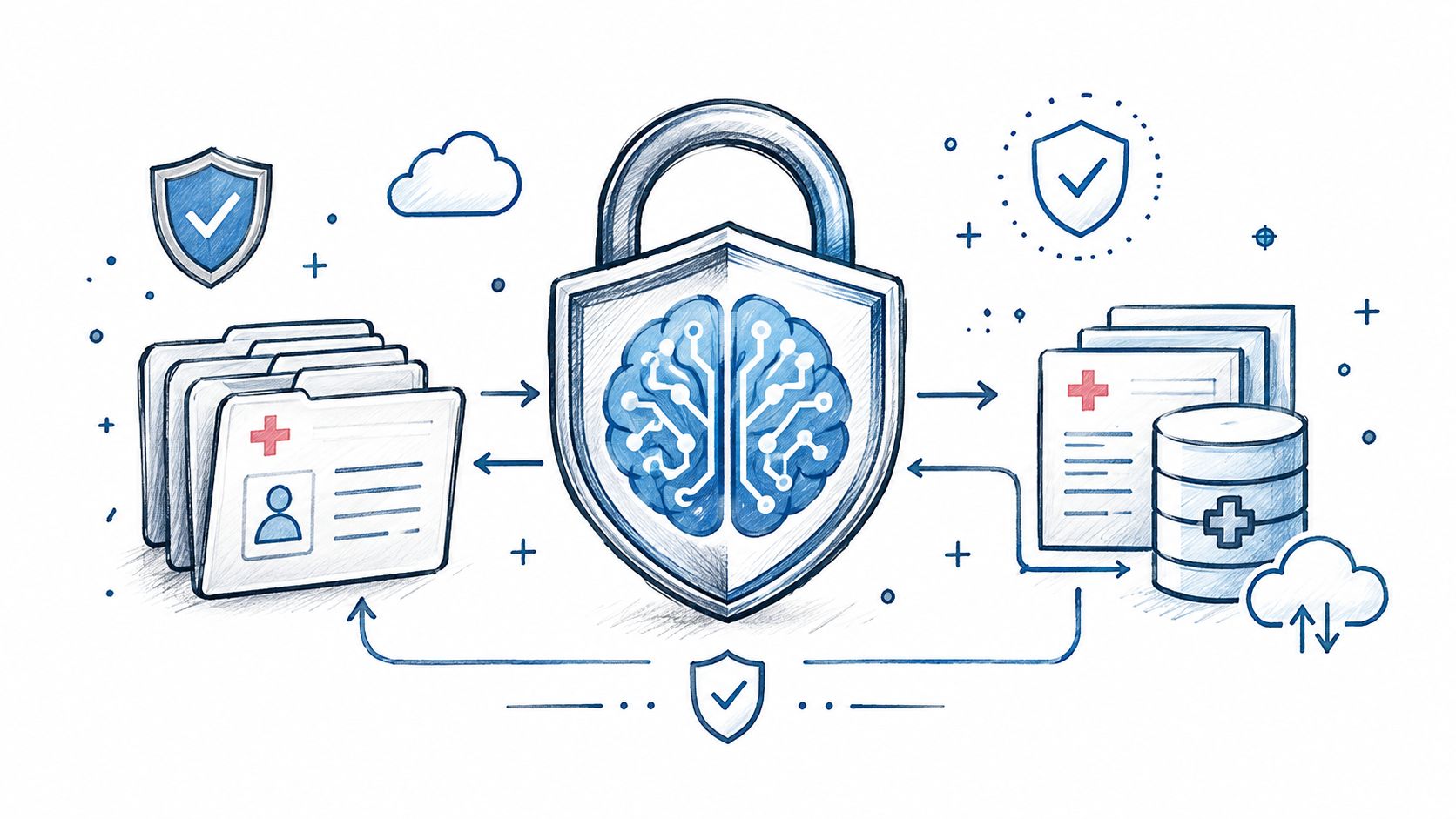
HIPAA-Compliant AI: How to Use LLMs With PHI Safely
How to build HIPAA-compliant AI: when LLM providers need a BAA, data minimization, de-identification, audit controls and a reference architecture.
October 16, 2026Read more
A strategic guide for healthcare leaders on ambient AI for clinical note taking. Explore ROI, workflow integration, vendor selection, and implementation risks.

A primary care physician finishes clinic and still has notes left at home. The technology problem isn't typing speed. It's that documentation has been bolted onto the visit instead of built into it.
Ambient AI for clinical note taking matters because it tackles one of the most expensive operational failures in healthcare: forcing clinicians to split attention between the patient and the chart. Most digital documentation tools never fixed that. They just changed the input method.
What's different now is scale. Cleveland Clinic reported that more than 4,000 physicians and advanced practice providers were using AI Scribe, and those clinicians had already documented and summarized 1 million patient encounters. Active users relied on it for 76% of scheduled office visits, while average documentation time fell by 14 minutes per day and 2 minutes per appointment according to Cleveland Clinic's deployment update. That's no longer a pilot story. That's infrastructure.
For a hospital CTO, that should change the conversation. The question isn't whether ambient AI is real. It is. The question is whether your organization can implement it without creating a new layer of clinical, legal, and operational mess.
Old dictation asked the clinician to stop, remember, summarize, and dictate. Ambient systems try to pull documentation into the encounter itself. That matters because the burden isn't only the act of typing. It's the constant context switching.
Three things make this shift strategically important:
Ambient AI becomes valuable when clinicians stop thinking about the tool and start trusting the review workflow.
If you're assessing where this sits in a broader digital roadmap, it belongs with frontline productivity and clinician experience, not in a generic innovation bucket. Teams that treat it as a side experiment usually stall. Teams that evaluate it alongside platform, compliance, and workflow redesign make better decisions. That's the lens I use in Healthcare AI Services.
Adopt ambient AI for clinical note taking if your ambulatory documentation burden is high, your clinicians are frustrated, and your EHR isn't going to save you. But don't buy on demo quality alone. Buy on governance, review design, specialty fit, and change management.
Ambient AI scribes aren't just voice recorders with a medical label. They listen to the encounter, convert speech to text, infer what's clinically relevant, and assemble a structured draft note that the clinician reviews before finalizing.

Think of the system as a clinical co-pilot with a narrow job. It doesn't practice medicine. It turns conversation into documentation.
The workflow usually looks like this:
Capture the visit
The tool records the natural exchange between clinician and patient in real time.
Transcribe the speech
Speech-to-text creates a transcript of the encounter.
Extract clinical meaning
The model identifies the details that belong in history, assessment, plan, exam, and related note sections.
Generate a structured draft
Instead of dumping text into a blob, the system organizes the content for the EHR.
Require physician review
The final safeguard is still the clinician. The draft must be checked, edited, and approved.
That's the key distinction from dictation. Dictation converts audio into text. Ambient AI tries to understand context well enough to draft documentation in usable clinical form.
In simulated clinical settings, ambient AI systems improved note quality while shortening consultations by 26.3% on average, and the proportion of notes above a quality threshold rose from 43% to 100% versus standard EHR documentation, as described in Veradigm's overview of ambient AI medical scribe workflows. That tells you the upside isn't just faster input. It's better note completeness and structure when the system is properly designed.
The broader technology stack overlaps with what's driving the future of medical voice recognition. The market isn't moving toward simple transcription. It's moving toward context-aware documentation workflows that can fit clinical operations.
Practical rule: If a vendor describes the product like a faster microphone, you're probably looking at dressed-up dictation, not ambient AI.
Before procurement, make your architects and clinical informatics leaders answer these questions:
You need those answers before you can do serious AI requirements analysis.
At 7:10 p.m., the clinic is empty, but the lights are still on in half the physician offices. The exam rooms are done. The charting is not. That is the business case for ambient AI.

Frame this as a documentation operations investment, not an AI innovation project. The upside comes from four places: lower pajama-time charting, lower burnout pressure, better note quality for coding and continuity, and tighter management control over how documentation gets done.
A multicenter quality improvement study of 263 ambulatory clinicians across 6 health care systems found burnout dropped from 51.9% before implementation to 38.8% after 30 days with an ambient AI scribe, with an odds ratio of 0.26. The same study reported an equivalent of 10.8 minutes saved per workday and a 2.64-point reduction in note-related cognitive task load on a 10-point scale. A separate randomized trial found ambient AI notetaking reduced documentation time by 30 minutes per provider per day and improved billing-related note accuracy, as summarized in this peer-reviewed review article.
That evidence justifies a pilot. It does not justify a broad rollout on faith.
The gap between pilot success and enterprise value is usually operational, not technical. Hospitals miss this point all the time. They buy for transcription speed and then get stuck on clinician review habits, consent fatigue at check-in, weak specialty templates, and error patterns that create rework for coding, compliance, and informatics.
Finance teams often focus too narrowly on minutes saved. That misses the bigger picture.
| Operational area | Why it matters |
|---|---|
| Clinician capacity | Less after-hours charting reduces friction in the workday and gives clinicians more usable time for patient care, inbox work, or same-day chart closure. |
| Retention risk | Burnout reduction matters because replacing an experienced physician or APP is expensive and disrupts access, team stability, and patient continuity. |
| Revenue integrity | Better drafted notes can improve coding support, reduce clarification loops, and strengthen documentation for audits and denials. |
| Operational control | Ambient platforms create usage, exception, and edit data that leaders can review instead of relying on anecdotes about who is documenting well and who is struggling. |
The strongest ROI often comes from avoiding failure costs. A poor note creates downstream labor in coding review, clinician addenda, compliance follow-up, patient message cleanup, and sometimes legal exposure. Ambient AI can reduce that burden, but only if the draft quality is high and the review workflow is disciplined.
A credible business case includes the drag factors upfront.
Consent rates vary by setting. Behavioral health, emergency care, pediatrics, and interpreters change the operating assumptions. Audio quality drops in shared rooms and noisy clinics. Some clinicians will edit every line. Others will over-trust the draft. Those differences determine realized value more than vendor demos do.
Your model should include:
Use a specialty-by-specialty plan. Family medicine, orthopedics, oncology, and behavioral health should not share one ROI assumption.
Set baseline metrics before the pilot starts. Track after-hours EHR time, note turnaround, same-day closure, clinician satisfaction, coding review outcomes, and edit distance between AI drafts and signed notes. Then add two measures many teams skip: patient consent completion rate and the percentage of encounters where the tool fails to produce a usable draft.
Make one decision early. Are you buying this to improve clinician experience, improve documentation quality, or reduce labor cost? You can get all three over time, but the rollout will fail if leadership expects immediate savings while clinicians are still learning a new review habit.
The right standard is simple: fund ambient AI where documentation burden is high, note patterns are stable, governance is mature, and leaders are willing to manage change at the workflow level. Skip broad deployment until a pilot proves value under real operating conditions.
Most ambient AI discussions get privacy wrong. They start and end with "Is it HIPAA compliant?" That's too shallow to be useful.
You don't need a checkbox answer. You need an operating model for audio capture, consent, storage, retention, auditability, clinician review, and incident response.

Ambient AI notes have four critical failure modes: accidental inclusions, accidental omissions, hallucinations, and bias. That's the failure taxonomy leaders should care about.
Each category creates a different operational problem:
The hard truth is that the field still lacks granular frequency data for these failure types in high-stakes specialties. That means you can't quantify risk cleanly across every service line. You have to govern for uncertainty.
If your governance model assumes all note errors are equal, it will fail the first serious dispute.
This isn't only a vendor issue. It is a systems design issue inside your organization.
Use this checklist during architecture review:
Organizations operating across jurisdictions also need to think beyond U.S. rules. If your teams are handling UK or EU patient data, this practical 2026 GDPR guide for UK firms is a useful reminder that retention, lawful basis, and access controls can't be hand-waved.
For patients and staff, your public-facing expectations should also be explicit. A clear privacy policy isn't sufficient on its own, but ambiguity is worse.
Treat ambient AI like a regulated documentation workflow, not a convenience app. If your use case gets close to decision support, specialty-specific note logic, or higher-risk documentation pathways, involve a regulatory compliance partner and make sure your roadmap is aligned with broader SaMD solutions thinking.
At one large clinic, the ambient AI pilot looked strong on paper. The vendor demo impressed physicians. Leadership approved funding. Then go-live exposed the actual blockers. Front-desk staff forgot the consent script, clinicians disagreed on when to turn the tool on, managers had no playbook for declined recording, and note quality issues sat in a queue because nobody owned them. The product was not the failure point. The operating model was.
That pattern is common. Ambient AI succeeds when you treat it like a documentation change program with technical dependencies, clinical governance, and frontline behavior change.

Start with scope. Pick service lines where documentation burden is high, visit flow is predictable, and note formats are stable enough to review consistently. Family medicine, internal medicine, and selected ambulatory specialties usually give cleaner signal than high-acuity or highly procedural settings.
Before you launch anything, lock these decisions:
Do not start with enterprise procurement. Start with a narrow deployment design and a defined workflow for a production-grade ambient AI clinic assistant.
A weak pilot tells you whether clinicians like the idea. A strong pilot shows where the workflow breaks.
Choose a small group of respected clinicians with different documentation habits. Include at least one skeptic. They will surface issues your enthusiasts will ignore, especially over-trust in draft notes, inconsistent editing, and patient-facing friction.
Design the pilot to test operations, not just model output:
Consent fatigue deserves special attention. If staff ask awkwardly, ask too late, or ask differently in every clinic, adoption stalls. Standardize the script, decide who owns the ask, and make the fallback path fast enough that clinicians do not abandon the program after two difficult visits.
Vendor training is not enough. Your clinicians need local guidance on how to use the tool well, when not to use it, and what good review looks like under time pressure.
Focus on four areas:
The hardest part is not teaching physicians to click approve. It is teaching them where ambient AI tends to fail. Common error patterns are predictable. Attribution errors, omitted symptoms, incorrect carry-forward language, and polished but inaccurate summaries all create risk. Build training around those defects, then audit for them after go-live.
Expansion should be earned. If each clinic is improvising consent, review standards, and escalation, you are not scaling. You are multiplying inconsistency.
Use a readiness screen before adding departments:
| Question | If the answer is no |
|---|---|
| Are clinicians consistently reviewing drafts before sign-off? | Pause expansion and retrain the current sites. |
| Can front-desk or rooming staff handle consent smoothly? | Redesign the script, timing, and ownership. |
| Are coding, compliance, and informatics aligned on note patterns? | Tighten governance and sample reviews first. |
| Do clinics know what to do when the tool should not be used? | Build a clearer exception workflow. |
| Are defects being tracked by type and by site? | Set up issue taxonomy and operational review before scale. |
My recommendation is simple. Roll out ambient AI in waves, not all at once. Start where the workflow is stable, instrument the failure points, and make one team accountable for note quality after go-live. Hospitals that do this well treat ambient AI as a clinical operations program supported by technology, not a software purchase dressed up as transformation.
At one health system, the demo went perfectly. The note appeared in seconds, the clinician smiled, and the procurement team marked the vendor as a frontrunner. Two weeks later, the pilot stalled on problems the demo never showed: awkward consent language at check-in, notes that looked polished but missed key negatives, and no clear path for routing exceptions. That is how ambient AI purchases go sideways. The product may work. The operating model may not.
Treat vendor selection as an operational risk review with software attached. If your team evaluates ambient AI the way it buys a standard SaaS tool, expect rework, clinician pushback, and quality drift after launch.
Use this framework when comparing vendors:
| Evaluation area | What to ask |
|---|---|
| EHR integration | Does the draft enter the current documentation workflow cleanly, or does it force clinicians into another screen, another inbox, or another sign-in? |
| Specialty fit | Can the system handle the note structure, terminology, and visit patterns in the service lines you plan to start with? Ask for examples from visits that are messy, not scripted demos. |
| Error management | What are the common failure modes, and how does the vendor detect, surface, and help your team correct them? Press on omissions, attribution mistakes, copied forward language, and confident but wrong summaries. |
| Consent workflow | How does the product support patient notice and staff scripting without slowing rooming? If the answer is vague, your clinics will end up improvising. |
| Review controls | How are edits tracked, what signals show clinician review, and what prevents draft text from being treated like finished documentation? |
| Security and retention | Where is audio processed, how long is it stored, who can access it, and what audit logs are available to compliance and security teams? |
| Support model | Who owns training, issue triage, configuration changes, and post-go-live optimization? A help desk is not an implementation plan. |
One test separates serious vendors from polished sales teams. Ask them where their product should not be used. A credible partner will name weak-fit specialties, edge cases, and workflow conditions that raise risk.
You need a partner that can help your organization make good decisions under clinical pressure.
Ambient AI touches front-desk scripts, rooming flow, clinician habits, compliance review, note governance, and informatics support at the same time. That means selection should include the people the vendor brings to implementation, not just model quality and contract terms. Ask who will help redesign consent, who will review note defects with your team, and who will own escalation when clinicians lose trust after a bad draft.
Some health systems need a packaged product with strong deployment support. Others need tighter configuration, specialty tuning, reporting, or governance workflows around the core product. If you are assessing point solutions, review what a production-ready clinic AI assistant for ambulatory documentation workflows should support day to day, including exception handling and operational visibility.
My recommendation is blunt. Do not buy the vendor with the best demo. Buy the one that speaks clearly about failure, shows how it handles exceptions, and can help your operators reduce friction in clinical operations. In ambient AI, that is what separates a pilot that looks promising from a program that endures.
No. They produce a draft, and the clinician remains accountable for what enters the legal medical record. Set that rule early, train to it, and audit against it. If clinicians start treating the output as finished documentation, note quality drops fast and risk rises with it.
Some will, and pretending otherwise causes trouble. The goal is not scripted bedside language. The goal is clearer verbal structure. Clinicians who state the assessment plainly, summarize decisions out loud, and separate patient history from plan usually get cleaner drafts with less editing.
That creates a change management task, not just a software deployment task.
Have a standard fallback before go-live. Do not force staff to invent one visit by visit.
The practical risk is consent fatigue. If front-desk staff ask poorly, or ask too often without context, patients decline more often and clinicians lose confidence in the workflow. Track decline patterns by site and specialty. If one clinic is seeing frequent opt-outs, fix the script, timing, or staffing model before expanding.
It can draft them. That is not the same as handling them well.
The failure mode in complex visits is rarely total breakdown. It is partial accuracy that looks credible at a glance. Missed negations, wrong attribution, blended speakers, omitted exceptions to the treatment plan, and confusion around medication changes are the error types that matter. High-acuity specialties, multilingual visits, overlapping conversation, and heavy chart review during the encounter need tighter review rules and, in some cases, narrower use.
It is an operating model decision first.
A strong product cannot rescue weak governance, unclear escalation, loose edit standards, or poor clinician onboarding. A disciplined health system can still get value from an imperfect tool if it sets clear policies for where the scribe is used, how notes are reviewed, which defects trigger remediation, and who owns support when trust drops after a bad note.
Ask operational questions, not just adoption questions.
Which specialties show the highest edit burden? Which clinicians stop using the tool after a poor draft? How often do patients decline recording, and at what point in the visit? Which note defects recur by site, provider, or encounter type? Those answers tell you whether you have a model problem, a workflow problem, a training problem, or a consent problem.
Look beyond the scribe itself. Successful programs usually need reporting on note quality, clear exception queues, consent tracking, and a way to review defects across sites.
Review more real-world use cases, then pressure-test whether your current informatics and operations teams can support the workflows around the note, not just the note generator itself.
How to build HIPAA-compliant AI: when LLM providers need a BAA, data minimization, de-identification, audit controls and a reference architecture.
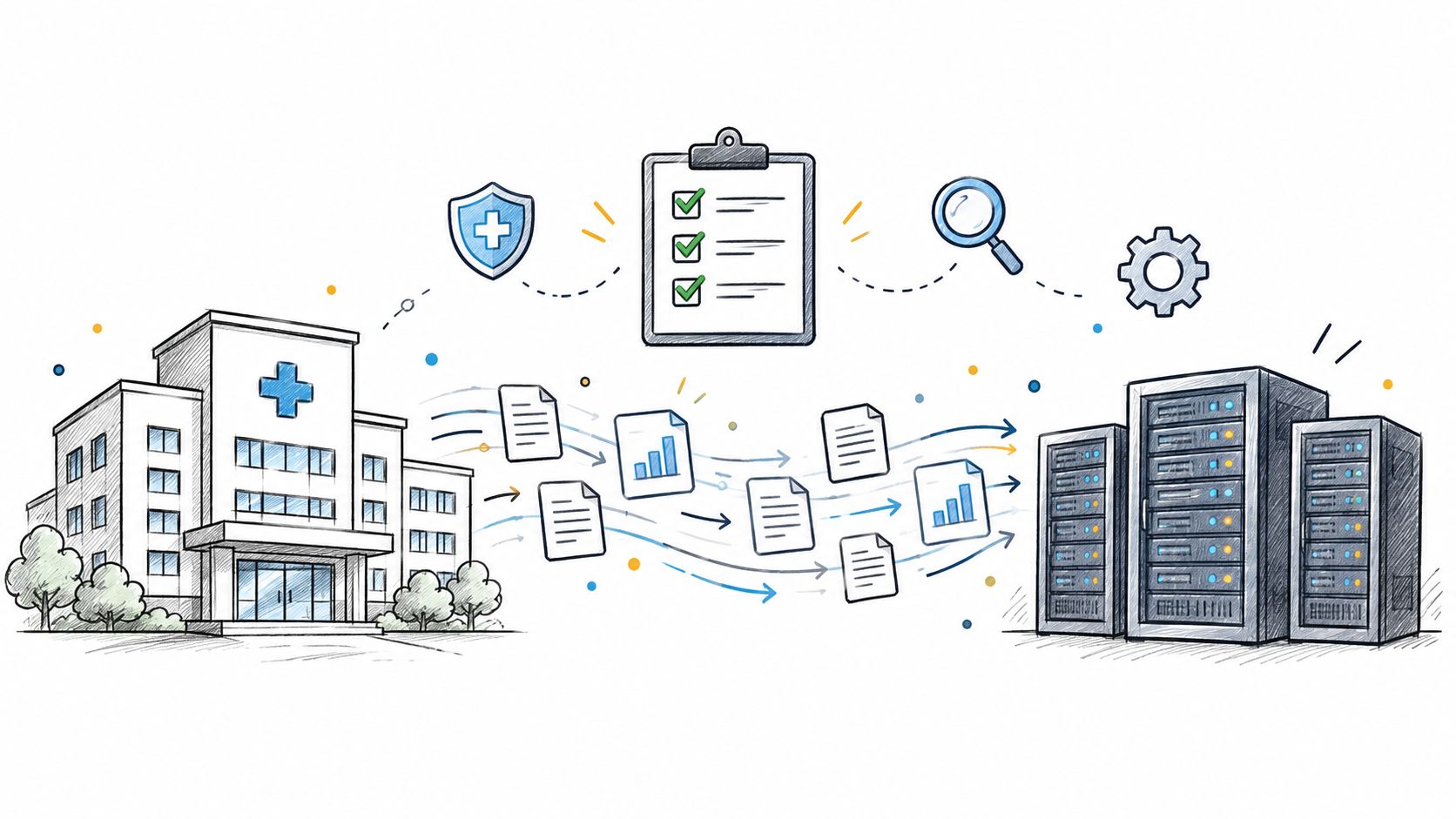
Practical data migration planning guide for healthcare teams. Scope, mapping, compliance, validation, cutover and rollback decisions explained end to end.
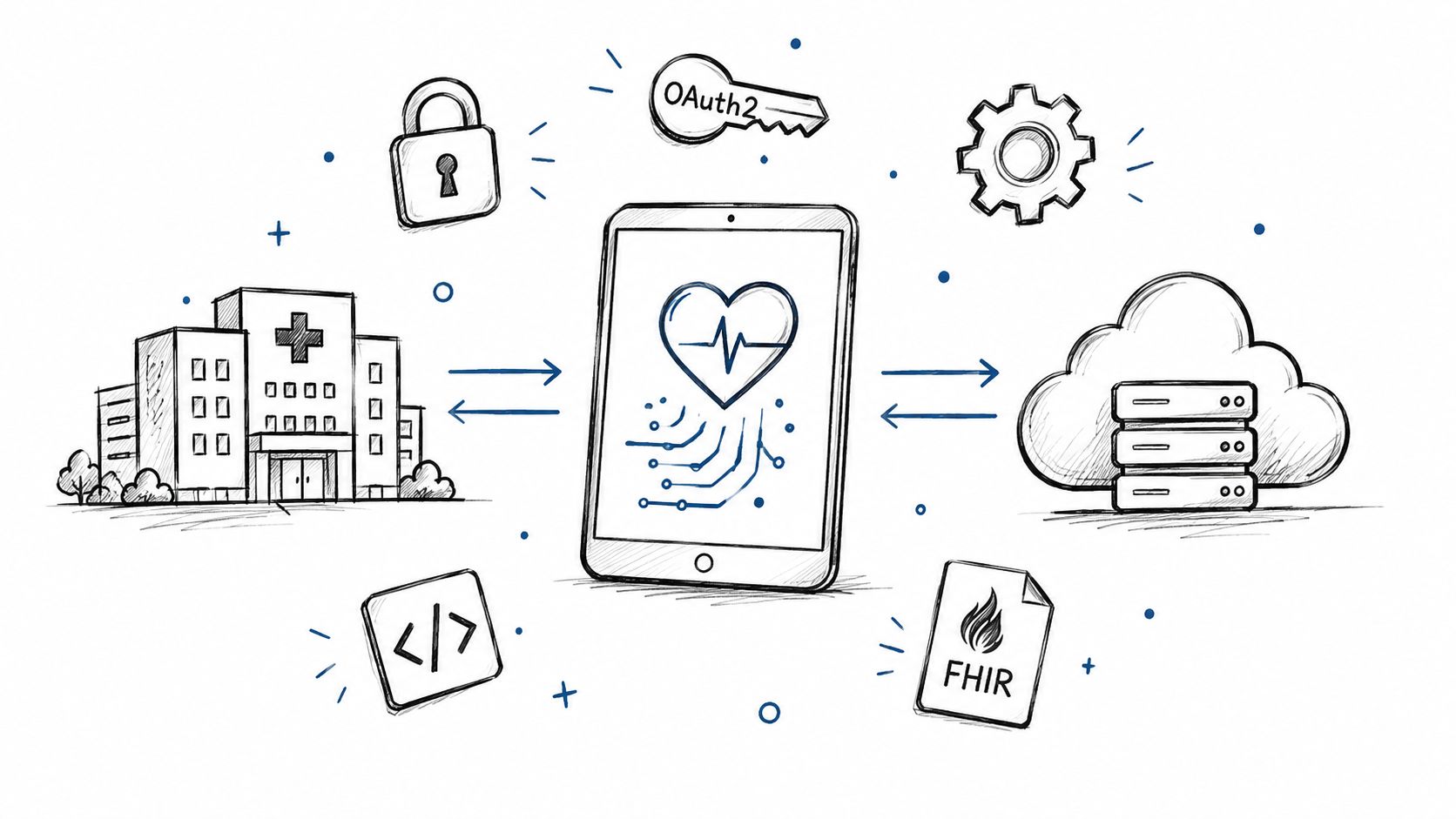
Smart on FHIR guide for healthtech engineers. Learn the OAuth 2.0 launch model, scope syntax, backend services, and US regulatory requirements.
Connect with our team to explore how AI expertise can transform your business.