AI in Healthcare
HIPAA-Compliant AI: How to Use LLMs With PHI Safely
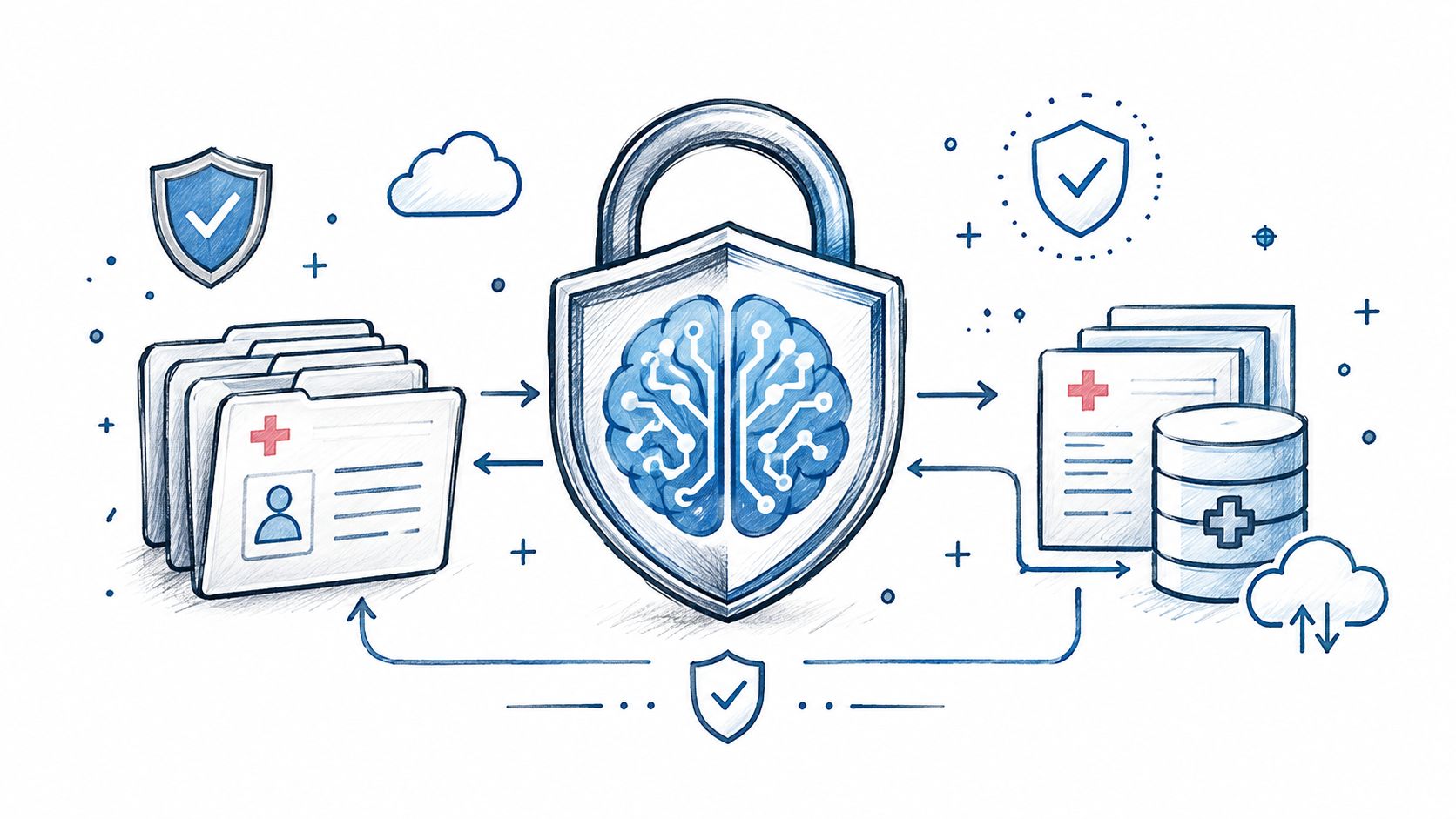
How to build HIPAA-compliant AI: when LLM providers need a BAA, data minimization, de-identification, audit controls and a reference architecture.
October 16, 2026Read more
Discover how intelligent medical documentation automation tackles clinician burnout and boosts ROI. Learn to implement AI in your healthcare workflow.

Picture a reality where clinicians can dedicate their full attention to patients, not screens and keyboards. Intelligent medical documentation automation isn't a far-off dream; it's here now, offering a direct solution to some of healthcare's most pressing challenges, like physician burnout and lost revenue.
For years, manual documentation has been the healthcare equivalent of a scribe hand-copying books while a printing press sits idle nearby. Intelligent medical documentation automation is that printing press. It employs technologies like Natural Language Processing (NLP) and generative AI to listen to a patient-doctor conversation and instantly convert it into structured, actionable data within the Electronic Health Record (EHR). This goes far beyond simple dictation—it understands the context, identifies key medical terms, and organizes the information correctly.
This capability is absolutely critical. An estimated 80–90% of all healthcare data is unstructured, locked away in free-text notes and spoken conversations. Trying to manually extract and analyze this data is not only a monumental time sink but also a process riddled with human error, making it nearly impossible for healthcare organizations to scale their operations effectively.

At its core, intelligent medical documentation automation is about turning a dreaded administrative task into a powerful operational asset. When implemented by a skilled healthtech engineering partner, these tools produce real, measurable results.
Here’s how it creates a new standard of efficiency:
Intelligent medical documentation automation is strategically important because it affects billing accuracy and administrative scale. The fastest-growing healthcare AI application is automating clinical documentation, coding, and billing, with annual spending of $450 million for billing automation alone.
This guide will show you how our Healthcare AI Services make this vision a reality, building systems that empower clinicians and drive better patient outcomes. To get a broader view of the foundational concepts, you can explore more AI automation use cases and their practical applications across industries.
Here’s a look at how this AI-powered documentation actually unfolds during a patient visit, step by step. It’s less about replacing doctors and more about giving them a hyper-efficient partner that handles the tedious administrative work.
The process kicks off the moment a patient and clinician start talking. An ambient listening device securely and discreetly captures the natural flow of their conversation. The doctor can finally stop dividing their attention between the patient and the computer screen and focus completely on the person in front of them.
Once the visit is over, the AI engine takes over. First, it transcribes the entire conversation into text. But this isn't just a simple dictation tool. The system’s Natural Language Processing (NLP) models are trained to understand the nuances of medical language—deciphering complex terminology, specific medications, symptoms, and diagnoses discussed.
Here's where the real power comes into play: interpretation. The AI doesn't just create a wall of text; it understands the context and identifies the critical information needed for a complete and accurate clinical note. It then intelligently summarizes the entire encounter, pulling out the most important findings and care decisions.
This structured summary is then used to auto-populate the correct fields within the Electronic Health Record (EHR). That single action saves hours of manual data entry, cuts down on the risk of human error, and ensures the final record is both thorough and compliant. It's this kind of seamless integration that is crucial for building effective and compliant SaMD solutions that fit naturally into the fast-paced healthcare world.
"The system acts as a hyper-efficient assistant, not a replacement. This process is a core component of developing compliant SaMD solutions that integrate seamlessly into the healthcare environment, enhancing human expertise rather than trying to replace it."
The difference this makes in a clinician's day is huge. Studies have shown that AI assistants can slash a physician’s documentation time by up to 70% by handling transcription and data entry. As a result, a striking 79% of healthcare workers report that this frees them up to focus on what truly matters: direct patient care. This helps combat the administrative burnout that has become all too common. You can read the full research on these efficiency gains here.
This seemingly magical workflow is actually a sophisticated stack of AI technologies working in perfect harmony. It’s not one single piece of software but a system of interconnected components.
The main parts include:
Together, these elements create a seamless pipeline, transforming unstructured conversation into structured, actionable data. To get a better sense of how the data is processed, you can explore the mechanics of our AI-powered data extraction engine, which is central to this intelligent automation.
Saving clinicians from burnout is a huge win, but the real business case for intelligent medical documentation automation hits the bottom line. This isn't just about giving doctors more time; it’s about directly improving your organization's financial health. When AI helps create more accurate and complete clinical notes, medical coding improves, leading to fewer claim denials and a much healthier revenue cycle.
By taking over repetitive administrative work, these systems also lower your operational costs. You can handle a growing patient load without needing to hire more administrative staff just to keep up.
The economic momentum is undeniable. The market for this kind of document AI is on track to hit a staggering $27.62 billion by 2030. It's not just a future trend—it's happening now. For example, hospital adoption of AI for billing automation jumped by 25 percentage points in just one year, showing how closely documentation is now tied to revenue. You can find more on these healthcare AI statistics and see the proof for yourself.
The following graphic breaks down how AI turns a simple conversation during a patient visit into structured data ready for the EHR.

This four-step flow, from ambient listening to automatically populating the EHR, is what makes the technology so powerful. It cuts out the manual steps where errors and costs tend to creep in.
Beyond the immediate savings, the long-term value is even more compelling. Clean, structured data becomes a powerful strategic asset. It's the foundation for everything from population health analytics to simplified regulatory reporting, allowing your organization to spot trends, improve care quality, and make smarter business decisions.
To truly grasp the benefits, it helps to see a direct comparison between the old way and the new. The table below shows just how stark the difference is.
| Metric | Manual Documentation Workflow | AI-Automated Workflow | Business Impact |
|---|---|---|---|
| Claim Accuracy | Prone to human error, typos, and incomplete notes, leading to higher denial rates. | AI-suggested codes are based on complete conversational data, improving first-pass acceptance. | Fewer costly denials, less rework, and more predictable revenue. |
| Operational Costs | Requires significant staff hours for transcription, manual coding, and quality review. | Frees up staff from tedious data entry and review, lowering administrative overhead. | Reduced operational expenses and the ability to scale services without proportional hiring. |
| Revenue Cycle Velocity | Documentation delays and coding bottlenecks slow down the entire billing process. | Documentation is generated and coded in near real-time, accelerating claim submission. | Improved cash flow and a significant reduction in days in accounts receivable (A/R). |
| Data Quality | Produces unstructured, inconsistent data that is difficult to analyze at scale. | Creates clean, structured, and queryable data as a byproduct of the workflow. | Enables advanced analytics, better reporting, and data-driven clinical and business insights. |
The takeaway is clear: automation doesn't just make the process faster; it fundamentally improves the quality of the output, which has a ripple effect across the entire organization.
By automating documentation, healthcare providers not only capture more accurate billing information but also create a rich, structured dataset. This data is the fuel for future innovation, from predictive analytics for patient outcomes to optimizing resource allocation across an entire health system.
Our AI Automation as a Service is built to deliver these exact financial outcomes. To see what this could look like for your specific needs, a Custom AI Strategy report can identify where intelligent medical documentation will create the biggest impact and highest return.
The real value of intelligent medical documentation automation isn't in the theory; it's in how these tools are solving everyday problems for clinicians and health systems right now. By zeroing in on the most frustrating and time-consuming parts of a doctor's day, these AI tools for business are already proving their worth.
The momentum is undeniable. Automating clinical documentation, coding, and billing is the fastest-growing segment in healthcare AI. In fact, spending on billing automation alone has already climbed to $450 million annually. This tells us the market is serious about turning messy, unstructured clinical conversations into the clean, structured data needed for billing, which directly boosts the bottom line. You can read more about this trend in clinical documentation here.
One of the most powerful real-world use cases we see today is the ambient scribe. Think of it as a silent partner in the exam room. The tool simply listens to the natural conversation between a patient and their doctor and, from that, automatically drafts a detailed clinical note. This one application directly tackles the biggest cause of physician burnout: the mountain of charting that has to be done long after the last patient has gone home.
By capturing the natural dialogue of a visit, an ambient scribe frees the clinician to focus entirely on the patient, improving engagement and care quality while simultaneously ensuring the record is accurate and detailed.
Another game-changer is the automated coding assistant. After a note is complete, this tool scans the text and suggests the right ICD-10 and CPT codes. This does more than just speed up the revenue cycle; it dramatically cuts down on the expensive claim denials and compliance headaches that stem from simple human error during manual coding.
These automation tools don't just work after the fact—they also help create better documentation from the very beginning. Some key applications include:
Each of these examples solves a specific, costly problem. Together, they show how automation is fundamentally changing both clinical work and administrative processes, making the entire system more efficient. For a closer look at how AI can support healthcare professionals, our guide on the HCP Engagement Co-pilot offers even more context.
Bringing intelligent medical documentation automation into a healthcare setting isn't just a tech upgrade; it's a fundamental shift in how your organization works. To get it right, you have to anticipate and tackle the common roadblocks, and the biggest one often isn't the technology—it's the people.
Clinician pushback is something we see all the time. It usually comes from a place of genuine concern. They worry about the AI's accuracy, how it will disrupt their established workflows, or that they'll lose control over the patient narrative.
To build trust, you need a smart change management plan. Start by clearly communicating the what's in it for them—less time spent on charts after hours and more quality time with patients. Follow that up with hands-on training that makes them feel confident and in control. When clinicians start seeing the tech as a helpful assistant, not a replacement, you'll see adoption take off.

Once you've started to win over your team, the next major piece of the puzzle is the technology itself. The new automation tool has to play nicely with your existing Electronic Health Record (EHR) system. If the integration is clunky or disconnected, you'll destroy any hope of efficiency and just create more frustration.
This takes serious planning between your IT department and your tech partner. The goal is a completely smooth experience where data flows from the AI tool straight into the patient's chart, landing in the right fields automatically. No extra clicks, no manual corrections.
And, of course, this is healthcare. We can't talk about new technology without talking about compliance. The rules around HIPAA and data privacy aren't just suggestions; they're absolute requirements.
Protected Health Information (PHI) has to be locked down and secure at every single step. That means end-to-end encryption, strict access controls, and detailed audit logs that show exactly who touched patient data and when.
This is precisely why selecting the right regulatory compliance partner is so important. They need to ensure every part of the system, from how data is stored to how it's sent, meets tough security standards. A mistake here doesn't just risk massive fines; it shatters the trust you have with your patients.
Our proven AI Product Development Workflow is built to navigate these challenges. We focus on establishing the right internal tooling and processes so that your new, automated systems are both effective and completely secure, paving the way for a successful and compliant launch.
Bringing intelligent medical documentation automation from an idea to a daily reality requires a deliberate, step-by-step plan. This isn't just about plugging in new software. It’s a significant shift that, when planned correctly for 2026, can reshape your organization's efficiency and future.
The journey starts with a hard look at your current operations. This is where getting help with AI strategy consulting and conducting a thorough AI requirements analysis is non-negotiable. The goal is simple: find the clinical or administrative workflows where documentation is the biggest bottleneck. You want to target the areas that promise the biggest impact and the fastest wins.
Once you know where to start, the rollout needs to be disciplined. I've seen this succeed time and again when organizations follow three core steps.
Contained Pilot Program: Don't try to boil the ocean. Launch a small-scale pilot with a handpicked group of clinicians. This gives you a safe space to test the technology, measure the initial ROI, and collect honest feedback without disrupting your entire hospital or clinic.
Performance Analysis and Refinement: The pilot will generate a ton of data—use it. Dig into the performance metrics and, just as importantly, listen to what your clinicians are saying. This is your chance to tweak workflows and iron out any issues, ensuring the solution is truly ready for primetime.
Scaled Rollout: Now you have a success story, backed by data and positive feedback. With this proven model, you can confidently expand the solution to other departments or across the entire organization. Gaining buy-in is far easier when you can point to tangible results.
As you map out your strategy for AI adoption by 2026, it's also wise to look at how other industries are tackling similar challenges. For instance, understanding AI code generation Python best practices can provide surprising parallels and useful insights into managing complex tech implementations.
The single biggest factor in a successful rollout is having an experienced guide. A good partner helps you sidestep common mistakes and builds a roadmap that turns your documentation headaches into a true strategic advantage.
Our AI Strategy consulting tool was built specifically to help organizations navigate this process. You can connect with our expert team to start building a plan that actually delivers results.
Think of it this way: traditional transcription is like a court stenographer, capturing every word spoken but with no understanding of what it means. It just turns voice into text.
Intelligent medical documentation automation, on the other hand, is like having an expert medical scribe in the room. It doesn't just hear the conversation; it understands the context. The AI can identify diagnoses, pick out prescribed medications, and summarize the entire patient encounter. It then takes all that unstructured dialogue and neatly organizes it into structured data fields right inside the EHR, even suggesting potential billing codes. It’s a huge leap from simple dictation.
This is probably the most critical question, and rightly so. For any reputable platform, HIPAA compliance isn't an afterthought—it's built into the very foundation of the technology.
Security starts with end-to-end encryption for all data, both in transit and at rest. The system also uses strict access controls and maintains detailed audit logs to track every interaction with patient data. A crucial step is ensuring your technology partner is an expert in areas like custom healthcare software development and will sign a Business Associate Agreement (BAA). This legally binds them to protect patient health information to the same standards you do.
The good news is that the best systems are designed to be almost invisible. Most ambient AI tools simply run in the background during a patient visit, requiring very little direct input from the clinician.
Of course, there’s an initial adjustment period. It takes a little time for physicians to learn to trust the AI's output and adapt their workflow. But because the goal is to reduce their burden, a user-focused design means most see productivity boosts within a few weeks. As we've covered in our AI adoption guide, a people-first approach with solid training makes all the difference in making adoption feel effortless.
Our expert team is ready to help you navigate these challenges and ensure a smooth, successful rollout.
At Ekipa AI, we specialize in turning complex AI opportunities into real-world business advantages. Our next-generation consulting platform can deliver a tailored Custom AI Strategy report in 24 hours, helping you identify and execute the most impactful automation opportunities without the costly consulting price tag.
How to build HIPAA-compliant AI: when LLM providers need a BAA, data minimization, de-identification, audit controls and a reference architecture.
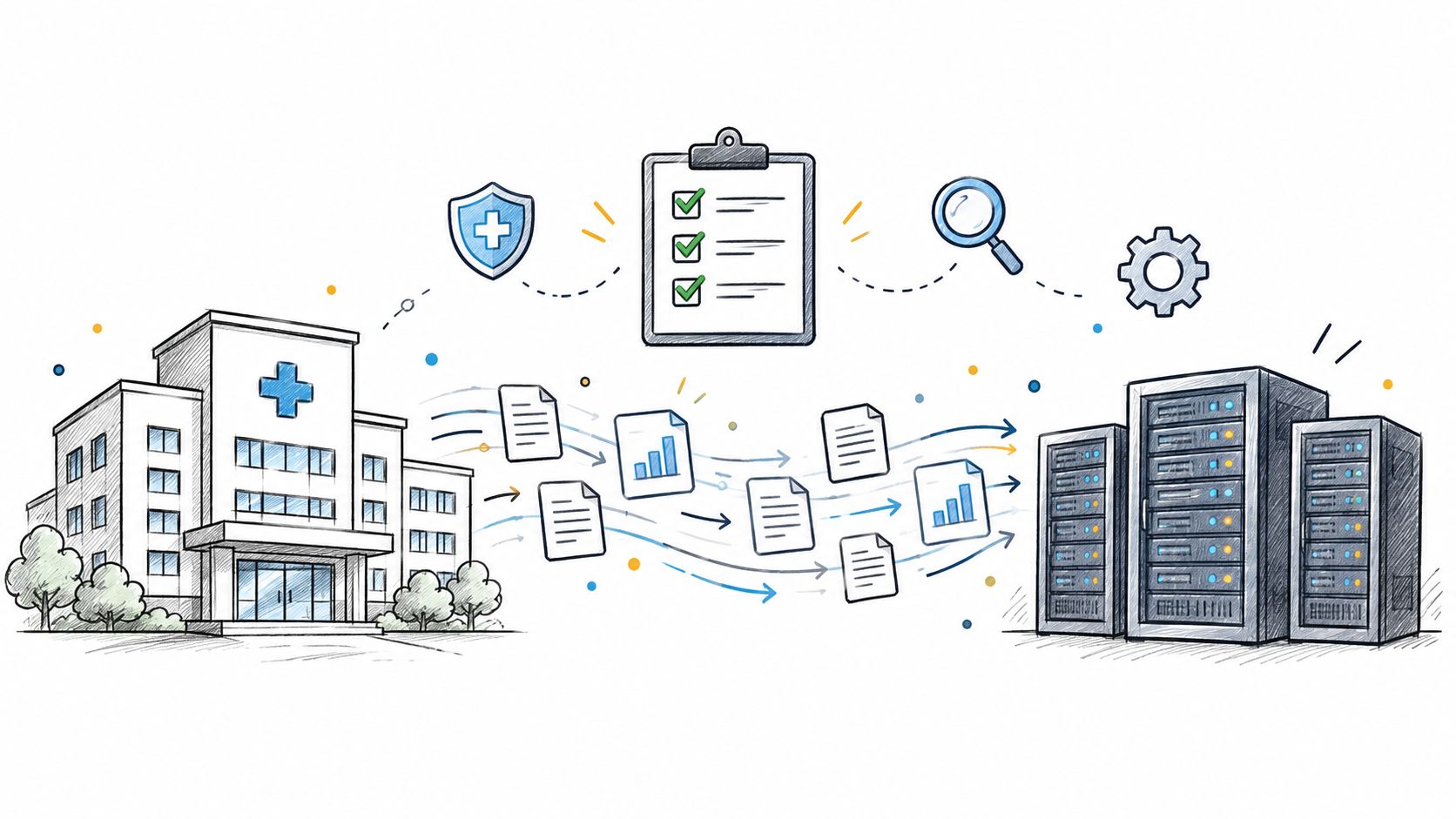
Practical data migration planning guide for healthcare teams. Scope, mapping, compliance, validation, cutover and rollback decisions explained end to end.
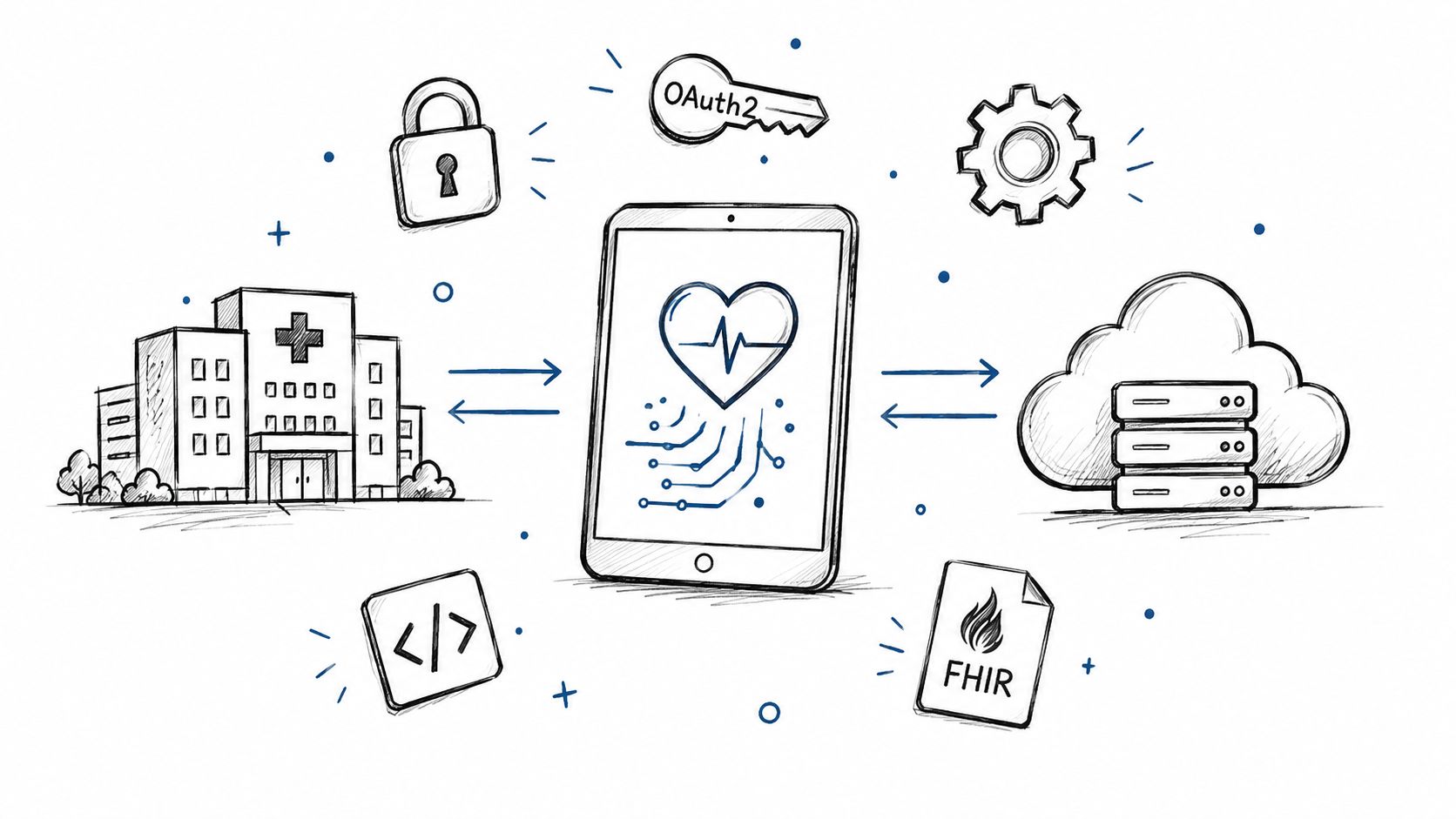
Smart on FHIR guide for healthtech engineers. Learn the OAuth 2.0 launch model, scope syntax, backend services, and US regulatory requirements.
Connect with our team to explore how AI expertise can transform your business.