AI in Healthcare
HIPAA-Compliant AI: How to Use LLMs With PHI Safely
How to build HIPAA-compliant AI: when LLM providers need a BAA, data minimization, de-identification, audit controls and a reference architecture.
October 16, 2026Read more
Discover how AI consulting healthcare can transform patient care. This guide covers strategies, implementation, and choosing the right AI partner.
When you hear "AI in healthcare," it's easy to picture futuristic robots or complex algorithms that seem a world away from the daily realities of patient care. But at its core, AI consulting is simply about connecting today's powerful technology with the real-world problems that doctors, nurses, and administrators face every single day. It’s the practical link that helps healthcare organizations move from just reacting to problems to actively predicting and preventing them with smart, targeted AI solutions.
The healthcare industry is navigating a perfect storm of rising costs, clinician burnout, and immense pressure to improve patient outcomes. AI presents a clear path forward, but the technology itself isn't a cure-all. This is precisely where AI consulting for healthcare becomes so critical. It’s not about just buying and installing new software; it's about fundamentally re-imagining how clinical and operational challenges get solved.
Think of an AI consultant as a translator. They need to be fluent in the languages of both medicine and machine learning to ensure that the technology directly addresses a genuine clinical or business need. Their job is to map out a clear path, helping organizations sidestep common traps and get the most out of their technology investment.
Without an expert guide, a hospital might pour resources into a brilliant diagnostic algorithm that clinicians don’t trust, or an automation tool that can’t talk to their existing Electronic Health Record (EHR) system. These missteps lead to wasted money, frustrated teams, and a growing skepticism about AI's true potential.
Good AI consulting avoids this by starting with the problem, not the technology. The entire goal is to tie every initiative back to specific, measurable objectives. This simple shift in focus ensures that every AI project is designed to deliver real value, whether that’s improving diagnostic accuracy, cutting down on administrative waste, or delivering more personalized care to patients.
The demand for this kind of strategic expertise is exploding. The global market for AI consulting services is expected to jump from about USD 11.07 billion in 2025 to a staggering USD 90.99 billion by 2035, a clear sign of how vital this role has become.
A specialized consultant does more than just recommend a tool. They help build the entire foundation for success, which includes:
Ultimately, AI consulting in healthcare is the essential bridge that turns the incredible promise of artificial intelligence into a practical, sustainable reality. By bringing in this expertise, healthcare organizations can finally cut through the complexity and start building a smarter, more efficient future for everyone involved. You can explore our dedicated approach to solving challenges within the healthcare industry here.
The real magic of a smart AI strategy in healthcare isn't about one-off wins in a single department. It’s about creating a ripple effect that touches every part of the organization. Think of it less like a single tool and more like a new nervous system for your hospital or clinic—one that connects patient care, daily operations, and financial health into a cohesive, intelligent whole. When you get this right, improvements in one area naturally feed success in others.
The market is exploding for a reason. Projections show the AI in healthcare space swelling from USD 29.01 billion in 2024 to an eye-watering USD 504.17 billion by 2032. This isn't just hype; it's driven by real results. We're seeing AI-assisted surgery slash hospital stays by over 20%, and other AI tools are cutting down on medication errors while freeing doctors from mountains of paperwork. For a deeper dive into these numbers, you can find more details in this comprehensive industry report.
Let's break down where this value comes from.
First and foremost, it’s about the patient. AI gives clinicians superpowers, helping them spot diseases earlier and design treatments that are truly personal. For instance, predictive models can sift through a patient's entire electronic health record (EHR), flagging subtle signs that point to a high risk of sepsis or heart failure long before a crisis hits. This is the difference between reacting to an emergency and preventing one.
In oncology, the impact is just as profound. AI algorithms can analyze a CT scan or MRI with a precision that catches what the human eye might miss, picking up faint patterns that signal a tumor. This means a faster, more certain diagnosis and a treatment plan built specifically for that person's unique condition. These real-world use cases show how AI is fundamentally moving medicine from a reactive stance to a predictive one.
Hospitals and clinics are incredibly complex to run. Behind every patient interaction is a mountain of logistics, and AI is perfect for tackling that complexity. So much of a clinician's day is eaten up by administrative work that has little to do with patient care. Intelligent systems can take over, handling everything from appointment scheduling and patient check-ins to transcribing clinical notes on the fly.
A fantastic example is the dreaded prior authorization process. Instead of having staff spend hours on the phone, an AI can pull the necessary patient data, assemble the request, and send it to the insurance company automatically. This simple change can eliminate a major source of frustration and delay for everyone involved.
This boost in efficiency doesn't stop at paperwork. AI models can forecast patient admission trends, helping hospitals manage bed capacity and schedule staff more effectively to avoid burnout and bottlenecks. By offloading these tedious tasks, you give your highly trained professionals the time and space to focus on their actual jobs. A great starting point for identifying these operational pain points is to use dedicated healthcare survey software to hear directly from your team.
A healthcare organization can't deliver great care if its finances are unstable. AI brings much-needed clarity and efficiency to the revenue cycle. Medical coding, for example, is a detailed process where small human errors can lead to big financial headaches. AI tools can read a doctor's notes and suggest the most accurate billing codes, drastically reducing mistakes.
This leads directly to fewer denied claims and faster payments. Even better, AI can spot patterns in the denials you do receive, helping your finance team fix the root cause instead of just patching problems. By tightening up billing and accelerating cash flow, these AI tools for business build a stronger financial base for the entire organization. It’s precisely these kinds of administrative burdens that tools like our Clinic AI Assistant are designed to solve.
To put it all together, here’s a quick look at how AI's influence spreads across the different domains of a healthcare organization. Each application builds on the others, creating a cumulative benefit that’s far greater than the sum of its parts.
| Healthcare Domain | Key AI Application | Primary Benefit |
|---|---|---|
| Clinical Care | Predictive diagnostics & personalized treatments | Improved patient outcomes & earlier disease intervention |
| Hospital Operations | Automated scheduling & resource allocation | Increased efficiency & reduced staff burnout |
| Administration | AI-powered transcription & prior authorizations | Lower administrative overhead & faster processes |
| Revenue Cycle | Automated medical coding & claim analysis | Fewer claim denials & accelerated reimbursement |
| Patient Experience | Intelligent chatbots & personalized communication | Enhanced engagement & better access to care |
Ultimately, applying AI thoughtfully across these areas creates a more resilient, efficient, and patient-focused healthcare system.
Jumping into an AI initiative without a clear plan is a recipe for disaster. It's like trying to navigate a complex medical procedure without a protocol—you're bound to run into trouble. A structured, phased approach is the only way to do it right, ensuring each step builds logically on the last to manage risk and get the best possible return on your investment.
This roadmap breaks the journey down into three manageable stages.
This entire process is about creating a domino effect, where one improvement naturally leads to the next. Better clinical outcomes create smoother operations, which in turn strengthen your financial health.
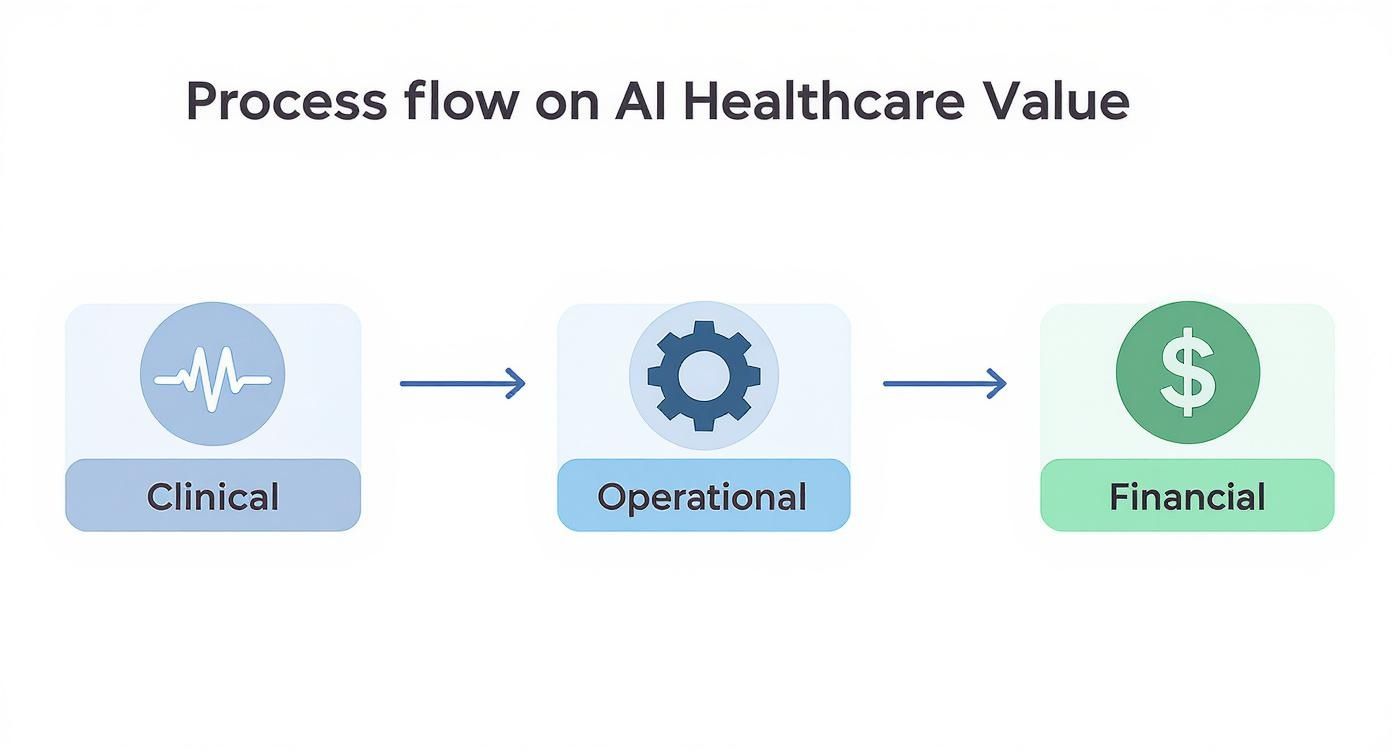
As you can see, it’s a logical progression. When you enhance patient care, you directly fuel operational efficiency and, ultimately, create a more stable financial foundation for your organization.
The best AI projects never start with a conversation about algorithms or platforms. They start with a real, nagging problem. Are you struggling with high readmission rates for cardiac patients? Is the soul-crushing administrative burden of prior authorizations burning out your staff and delaying care?
This first phase is all about pinpointing those critical pain points. It’s a deep dive into your current workflows, your data infrastructure, and what you’re trying to achieve as an organization. A thorough AI requirements analysis is non-negotiable here; it helps figure out what’s actually possible and what will deliver the biggest bang for your buck. Think of this less as a tech audit and more as a strategic exercise to align any potential AI strategy consulting with your core mission.
The big idea here is to prioritize problems, not platforms. A razor-sharp problem statement becomes your north star for the entire project, keeping every decision focused on solving a real-world challenge that actually matters to your clinicians and patients.
Once you’ve got a clear target, it’s time to test your idea on a small, controlled scale. This is the pilot phase. You'll build a Minimum Viable Product (MVP) or run a proof-of-concept to see if the AI solution actually works in the messy reality of a clinical setting. It’s your safety net for managing risk before you go all-in on a massive deployment.
Let’s say your goal is to reduce diagnostic errors in radiology. A pilot could involve running an AI image analysis tool in parallel with your human radiologists on a limited set of anonymized scans. The whole point is to measure everything:
This back-and-forth process of testing and refining lets you make adjustments based on hard data, not just hopeful assumptions. The lessons you learn here are what the entire full-scale launch will be built on.
After your pilot proves its worth and delivers real, measurable value, you’re ready to scale. This isn't just about flipping a switch for a wider rollout. It's about weaving the AI tool into the very fabric of your organization's daily life. This is where the truly complex work around data governance, change management, and system-wide integration really begins.
Successfully going from a pilot to a full-scale solution demands careful planning. You’ve got to guarantee that data privacy and security can hold up at scale, which often means navigating a maze of compliance checks. You'll also need to build out solid training programs so that every staff member feels confident using the new technology. The entire journey, from the first line of code to the final launch, is mapped out in a detailed AI Product Development Workflow.
Getting the AI tool to integrate seamlessly with core systems like your EHR and billing platforms is absolutely critical. But that technical heavy lifting has to be supported by a smart change management strategy to get people on board and make sure the solution becomes a trusted part of how you deliver care.
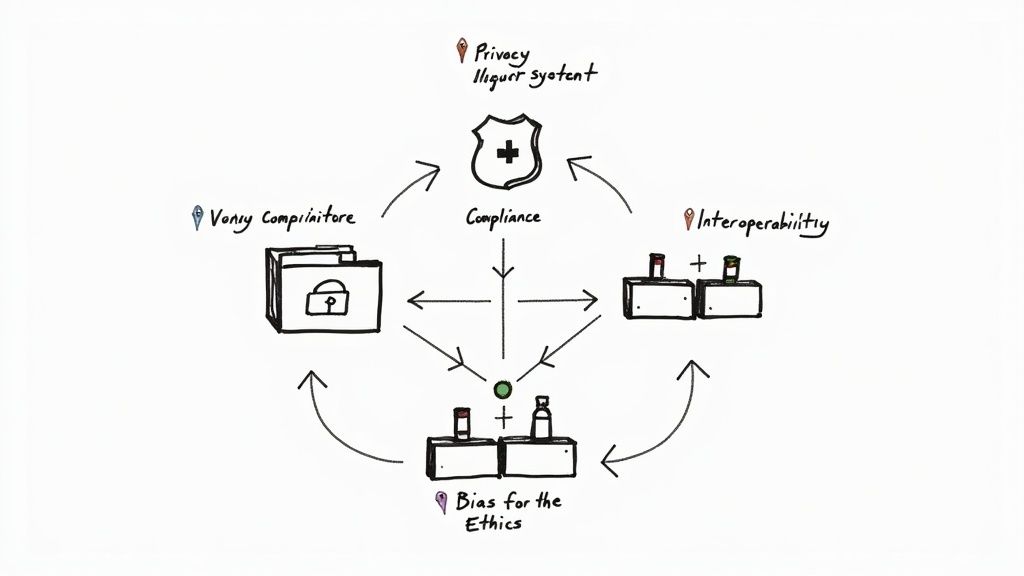
While the potential of AI in healthcare is thrilling, the road to getting it right is filled with some serious obstacles. Healthcare isn't like other industries; it operates under a microscope of tight regulations and deep-seated ethical duties. To make AI work, you have to meet these challenges head-on with a solid, well-thought-out plan.
The stakes are incredibly high, but so are the rewards. The AI healthcare market is set to explode, with some projections showing it could hit USD 701.79 billion by 2034. That's a massive jump from USD 37.09 billion in 2025. This growth is all about AI’s power to ease staff burdens and deliver personalized care, which is precisely why AI consulting in healthcare is so crucial for navigating the journey.
The single biggest challenge is protecting sensitive patient data. Every bit of information an AI model touches is shielded by strict laws like HIPAA in the U.S. and GDPR in Europe. Getting this wrong isn't just about massive fines—it's about breaking the core trust between a patient and their provider.
This is where an AI consulting partner who truly understands healthcare becomes indispensable. They help design systems that are compliant from the very start. This means tackling a few key areas:
Regulatory hurdles can feel like a maze, especially when AI is built into physical medical equipment. For those projects, a deep understanding of the FDA approval process for medical devices is non-negotiable.
Most healthcare organizations are running on a hodgepodge of different systems that simply don't talk to each other. This creates "data silos," where crucial information is locked away in separate Electronic Health Record (EHR) systems, billing software, and imaging archives.
An AI model is only as good as the data it’s fed. If your predictive algorithm can't see the full story—from lab results to a doctor's notes—its insights will be incomplete and, worse, potentially wrong.
Tearing down these walls is one of the first and most important steps. A good AI consulting healthcare engagement usually kicks off by mapping out this fragmented data landscape. The goal is to build a unified data pipeline where information flows freely and securely between systems, giving you a complete, 360-degree view of patient and operational data.
Here’s a risk that too often gets overlooked: algorithmic bias. If you train an AI model on data that mostly comes from one demographic group, its predictions for other groups will likely be less accurate. This can accidentally reinforce or even worsen existing health disparities.
A responsible AI strategy has to fight this proactively. That means:
Successfully navigating these ethical and technical minefields is where an expert guide really proves their worth. They ensure your AI projects aren't just technologically sound but are also compliant, fair, and deserving of the trust your patients place in you.
Picking the right partner for your AI initiative is easily one of the most critical decisions you'll make. This isn't just about hiring a tech vendor; it's about finding a strategic ally who truly understands the unique pulse of the medical world. The wrong choice can lead to expensive missteps and stalled projects, while the right one can accelerate real, meaningful progress.
You have to look past the slick sales presentations and zero in on a few core, non-negotiable qualities. You need a team that is fluent in both the language of medicine and the language of machine learning. This dual expertise is the secret sauce—it ensures that whatever they build is not only technically sound but also practical, compliant, and genuinely useful in a real-world clinical setting.
Your first filter, always, should be healthcare experience. A generalist IT consultant just won't cut it. They won't grasp the subtle complexities of HIPAA, the realities of clinical workflows, or the tangled relationships between providers, payers, and patients.
A true healthcare AI partner just gets it. They know the difference between an EHR and an EMR, they understand the immense pressure of value-based care, and they can spot regulatory hurdles a mile away—before they become roadblocks. This specialized knowledge is what allows a consultant to ask the right questions from day one and design solutions that clinicians will actually trust and use.
Here’s a quick test: ask a potential partner to walk you through how their proposed solution would integrate with your existing EHR. Their answer will tell you everything you need to know about their real-world understanding of healthcare's unique tech and operational landscape.
Of course, that deep industry knowledge has to be backed by serious technical skill. Your partner should have a rock-solid track record in AI and machine learning, with a portfolio of successful projects that prove they can deliver. Don't just take their word for it. Ask for detailed case studies and, more importantly, client references from within healthcare.
Beyond just tech skills, look for a strategic mindset. The best partners are obsessed with business outcomes, not just shiny new technology. They should be able to clearly explain how their work will help you hit specific targets, like reducing patient readmission rates by 15% or cutting administrative overhead by 25%. As we explored in our AI adoption guide, this focus on results is what separates successful AI projects from science experiments.
To help you sift through the options, we’ve put together a practical checklist. It’s designed to cut through the noise and help you focus on what truly matters when forming an AI consulting healthcare partnership.
Finding the right consulting partner requires a structured evaluation. This checklist will help you compare your options and ensure you’re asking the right questions to find a team that can deliver on its promises.
| Evaluation Criteria | Key Questions to Ask | Why It Matters |
|---|---|---|
| Healthcare Domain Expertise | Do they understand HIPAA, clinical workflows, and payer models? Can they talk fluently about our specific challenges? | Ensures solutions are compliant, practical, and address real-world needs, not just theoretical problems. |
| Technical AI/ML Proficiency | What are their core competencies in model development, data engineering, and MLOps? What frameworks do they use? | Guarantees they have the technical chops to build, deploy, and maintain robust and reliable AI systems. |
| Proven Track Record | Can they provide detailed case studies and client references in healthcare? What were the specific outcomes? | Validates their ability to deliver tangible results in a context similar to yours. Past performance is a strong indicator of future success. |
| Strategic Approach | Do they focus on solving our business problems or just on selling technology? How do they measure success? | A strategic partner aligns AI initiatives with your organization's core goals, ensuring a positive ROI. |
| Scalability & Support | What is their plan for scaling successful pilots? What does long-term support and model maintenance look like? | Ensures the solution can grow with your organization and won't become an unsupported, obsolete tool in a year. |
Using a structured approach like this helps you move beyond a gut feeling and confidently choose a partner who won't just build powerful technology, but who will guide you toward meaningful, sustainable results.
If you want a preview of how a strategic partner thinks, you can generate a Custom AI Strategy report tailored to your specific challenges. This process is driven by our expert team, who bring this exact combination of deep industry knowledge and technical excellence to the table.
We've covered a lot of ground, from what AI can do for patient care and back-office operations to the nitty-gritty of regulations and choosing the right partner. The path to a smarter, more efficient healthcare future is clearer than ever. Now, the real question isn’t if you should bring AI into your organization, but how you can get started without stumbling.
This is where having a true implementation partner, not just a consultant, really matters. At Ekipa AI, we don’t just hand you a report and walk away. We become an extension of your team, guiding you from that first spark of an idea all the way to a fully scaled solution. Our entire approach is built for speed and clarity, helping you sidestep those common pitfalls and see a return on your investment much faster.
Healthcare leaders need results they can see and measure, not just theoretical plans. That’s exactly why our services are designed to deliver real value at every step.
It all starts with our rapid AI Strategy consulting tool. Instead of waiting months for a traditional consulting firm to tell you where to begin, we help you pinpoint the most impactful opportunities quickly.
From there, we get hands-on to make sure your strategy becomes a reality. Whether it's taking complex workflows off your team's plate with our AI Automation as a Service, building powerful internal tooling to make their jobs easier, or managing a full-scale AI project from start to finish, we have the technical chops and deep healthcare knowledge to do it right.
Our goal is simple: connect your biggest challenges to the specific AI solutions that can actually solve them. We don't just advise; we build, implement, and support, ensuring your AI initiatives lead to measurable improvements for your patients and your bottom line.
The potential for AI in healthcare is massive, but you need a partner who can see the big picture and handle the technical details.
Ready to build a more intelligent, patient-focused future? Let’s talk. Connect with our expert team and see how we can turn your goals into a reality.
As hospitals and clinics start looking into AI, a lot of practical questions come up. It's only natural. Let's walk through some of the most common concerns to give you clear, straightforward answers that can help you make better decisions.
It’s tempting to start with the technology, but the best first step is to focus on a specific, high-impact problem. Don't ask "Where can we use AI?" Instead, ask "What's our biggest headache right now?" Maybe it's high patient readmission rates or a diagnostic workflow that’s just too slow.
Start with a discovery phase to pinpoint one of these critical pain points. An experienced AI consulting healthcare partner can run an AI requirements analysis to find the opportunities with the best potential return and the fewest roadblocks. This "problem-first" mindset ensures your first AI project is focused, measurable, and tied directly to what matters most to your organization—a core principle of any good AI strategy consulting effort.
Protecting patient data isn't just a priority; it's a must. There's no room for error here, and it takes a multi-layered approach. First off, any AI project has to be built for HIPAA compliance from day one, using proven techniques like data de-identification and anonymization to strip out personal information.
Next, you need rock-solid cybersecurity measures, like end-to-end data encryption, to protect data whether it's sitting still or being transmitted. Finally, you have to implement strict access controls so that only the right people can view or handle sensitive information. This is where working with a consultant who truly understands healthcare regulations is vital for building a secure data governance framework, which is a cornerstone of any custom healthcare software development.
Measuring the return on an AI investment in healthcare means looking at both hard numbers and the less tangible, but equally important, benefits. The quantitative ROI is what you can count—cost savings from automating tedious administrative work, efficiency gains like getting diagnostic results back faster, and more revenue from optimized billing cycles.
But the qualitative ROI is just as important. This includes better patient outcomes, happier and less burned-out clinicians, and higher patient satisfaction scores. A well-planned AI strategy defines these key performance indicators (KPIs) right at the beginning, so you can track progress and clearly show the value you're creating.
In a word, no. The goal of AI in healthcare isn’t to replace clinicians; it's to supercharge their abilities. Think of AI as an incredibly powerful assistant, not a replacement. AI is fantastic at sifting through massive datasets to find patterns humans might miss and automating repetitive tasks, a topic we covered in our guide on AI adoption in healthcare. This frees up doctors, nurses, and other staff from administrative drudgery, letting them focus on what they're truly great at: delivering compassionate care, making complex clinical decisions, and connecting with patients. With the right guidance from our expert team, AI helps your people do their best work, better.
Ready to turn these insights into action? Ekipa AI delivers tailored AI strategies and end-to-end execution to transform your healthcare organization. Discover your AI opportunities today at https://www.ekipa.ai.
How to build HIPAA-compliant AI: when LLM providers need a BAA, data minimization, de-identification, audit controls and a reference architecture.
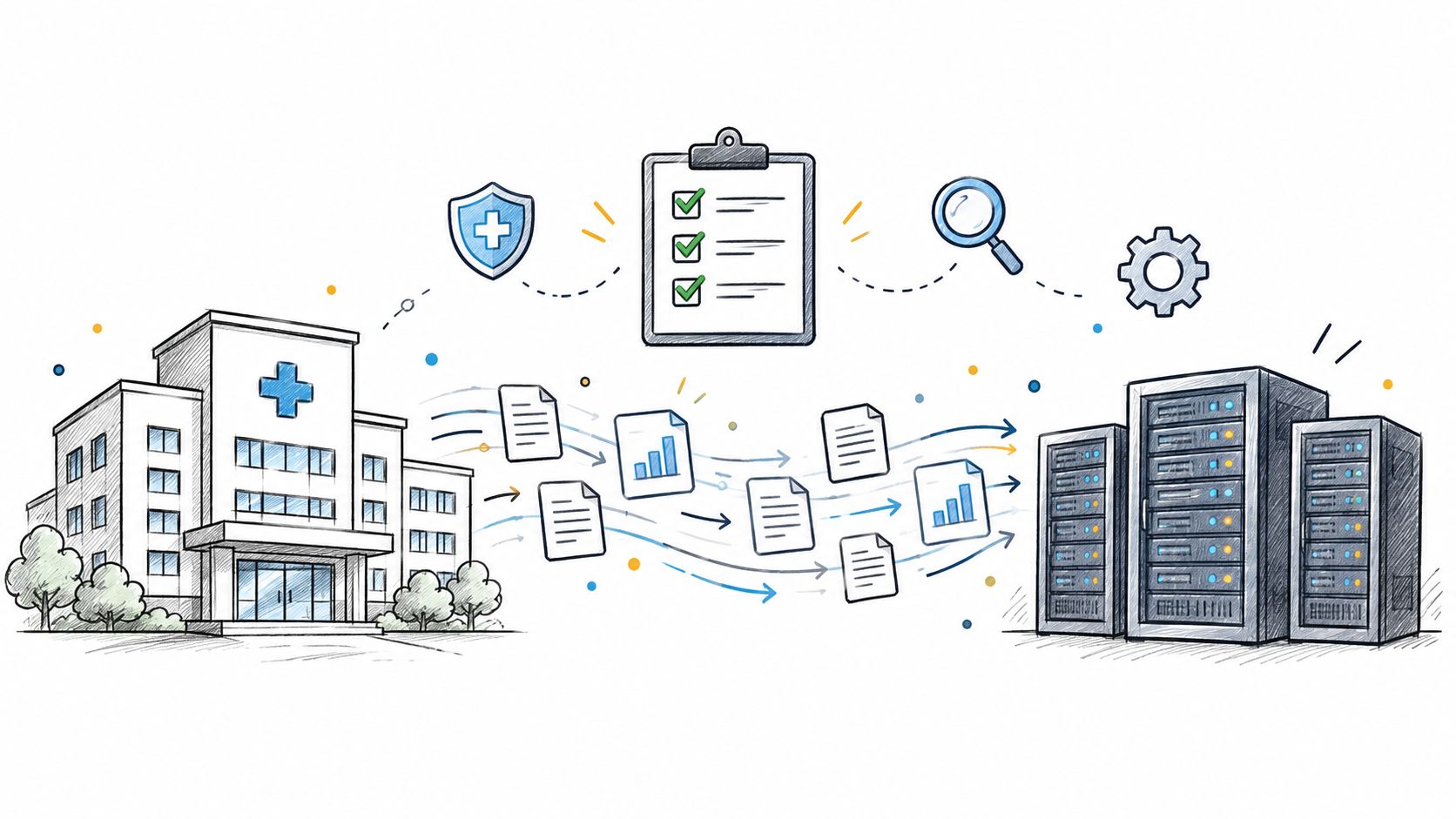
Practical data migration planning guide for healthcare teams. Scope, mapping, compliance, validation, cutover and rollback decisions explained end to end.
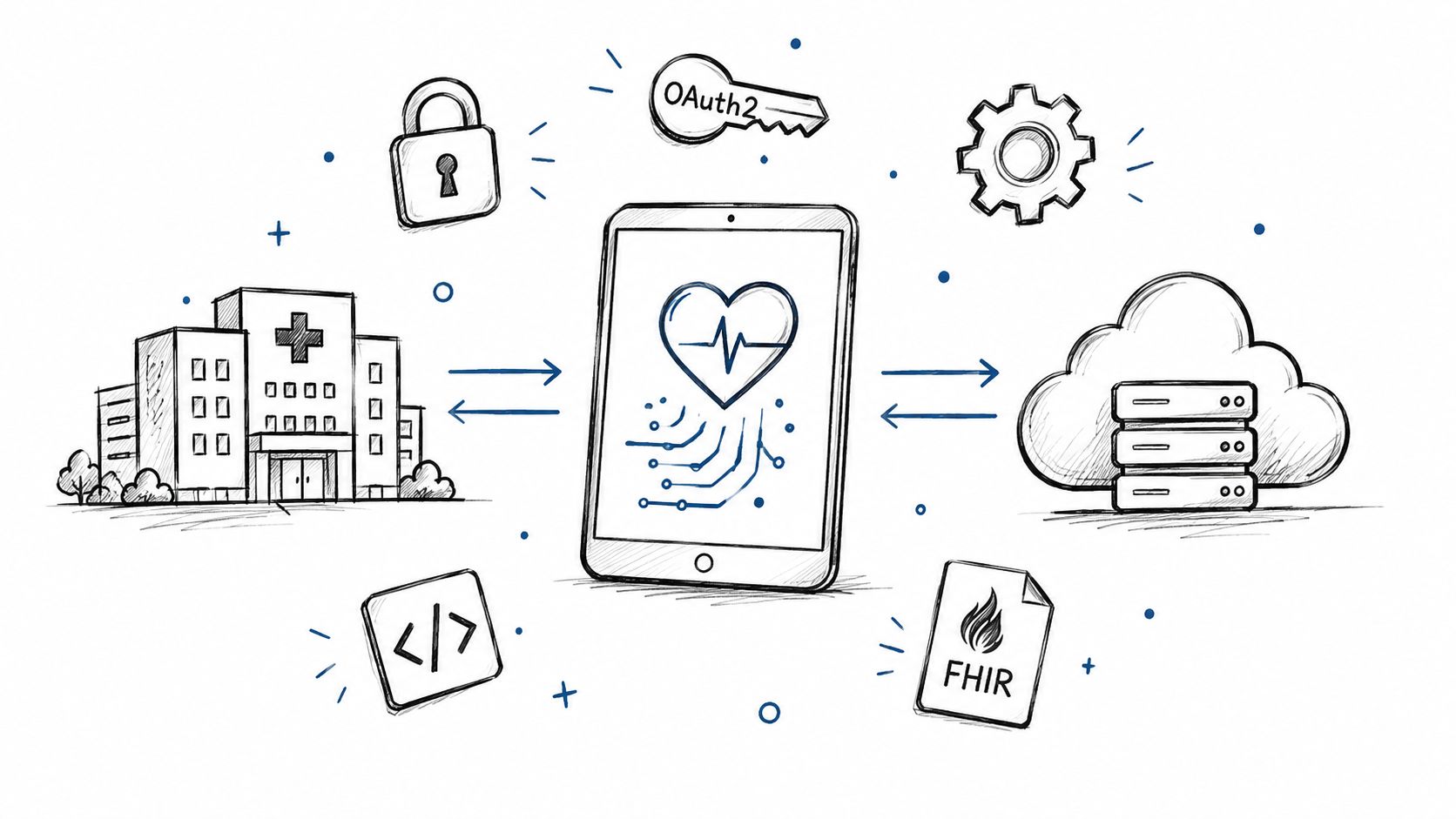
Smart on FHIR guide for healthtech engineers. Learn the OAuth 2.0 launch model, scope syntax, backend services, and US regulatory requirements.
Connect with our team to explore how AI expertise can transform your business.