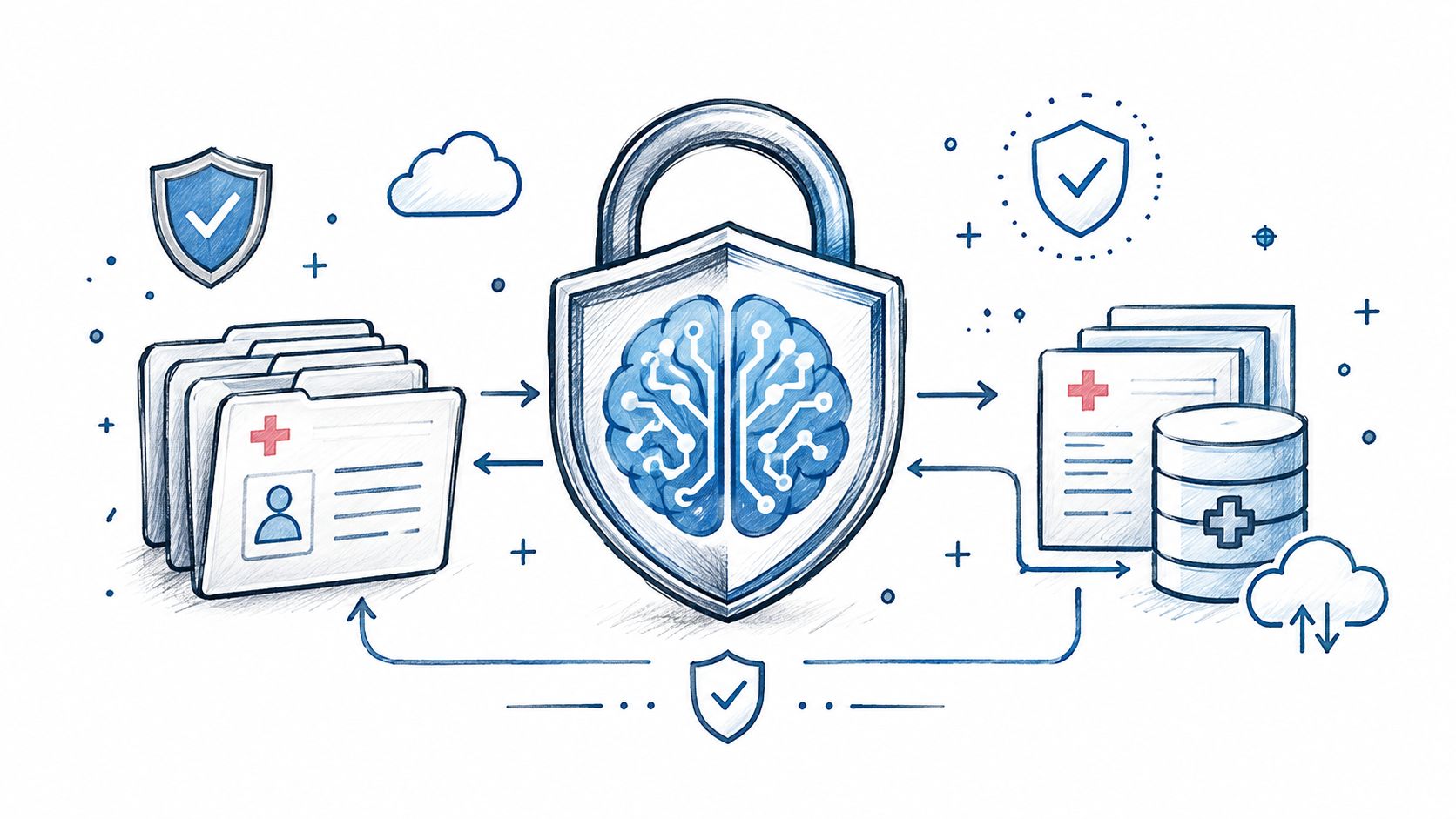
AI in Healthcare
HIPAA-Compliant AI: How to Use LLMs With PHI Safely
How to build HIPAA-compliant AI: when LLM providers need a BAA, data minimization, de-identification, audit controls and a reference architecture.
October 16, 2026Read more
Discover how AI-driven care quality improvement works in real clinical workflows. Learn implementation frameworks, KPIs, pitfalls, and use cases

The most popular advice about AI-driven care quality improvement starts in the wrong place. Teams are told to find a high-performing model, validate it on historical data, and then scale it across clinical operations. That sequence treats care quality as a model problem. In production, it's usually a workflow, trust, measurement, and governance problem.
A prediction can be technically strong and clinically irrelevant if it arrives after the decision, appears in a screen nobody opens, or asks a clinician to act without showing why. The practical question isn't “How accurate is the model?” It's “Did the tool change what happened to the patient, and can the organization prove it?” The evidence is encouraging but qualified. A large scoping review in The Lancet Digital Health identified 18 randomized controlled trials assessing AI interventions against care-management quality metrics, and 65 of 81 trials aiming to improve outcomes reported significant improvement for their primary endpoint. The same finding also means improvement wasn't universal. The Lancet Digital Health review00047-5/fulltext) supports measured deployment, not automatic optimism.
For product leaders, the work begins by connecting model behavior to clinical action. That means selecting a problem with a visible baseline, designing around the EHR workflow, testing how clinicians respond under pressure, and monitoring whether the benefit survives contact with real patients.
A high validation score doesn't guarantee better care. It only describes how a model performed against a particular dataset, label definition, and evaluation design. The model still has to reach the right person, at the right time, with enough context to support a defensible action.

A risk score generated in a batch job may never enter the clinician's decision path. An alert may appear in an already crowded inbox. A recommendation may lack the patient-specific evidence needed to earn attention. Each failure happens after model development, but each one determines whether quality improves.
Alert fatigue is one visible symptom. Poorly calibrated thresholds can produce too many low-value notifications, while incomplete EHR fields can suppress important signals. A prediction may be generated successfully and still fail because the clinician ignores it, cannot interpret it, or encounters it after treatment has already begun.
That is why I treat deployment as a product surface, not a handoff from engineering to operations. Teams need to define the clinical action before they define the model interface. A useful AI delivery framework should connect the prediction to ownership, timing, escalation, and documentation.
Practical rule: If the care team can't identify what changes after an alert appears, the organization hasn't defined a quality intervention yet.
Real clinical environments introduce missing fields, inconsistent coding, changing documentation habits, and patient populations that differ from the training data. Data drift can alter the meaning of a feature without producing an obvious software error. A model can remain available, return scores, and gradually become less useful.
The implementation literature points to a related problem. A 2025 evidence review found that external validation in recent studies rose from 23% to 46.7%, while regulatory uncertainty, limited transparency, data quality, and clinical integration remained persistent barriers. The PubMed-indexed evidence review makes the operational gap clear. Validation is becoming more common, but prospective measurement and deployment discipline still lag.
The fix isn't to abandon model evaluation. It's to broaden it. Measure whether data arrives on time, whether the alert is seen, whether clinicians accept or override it, whether the intended action occurs, and whether patient outcomes change. A model's discrimination is one input into that chain, not the definition of success.
AI tends to create its clearest quality value where clinicians face subtle signals, time pressure, and a meaningful cost of delay. Early detection and diagnosis are especially important. An AHRQ-linked review of 26 AI clinical decision-support studies found only 3 interventions rated highly effective, with those interventions concentrated in early detection and diagnosis use cases. The AHRQ patient-safety review supports a focused investment strategy rather than a general automation strategy.
A second signal comes from a 2024 quality-improvement study across 15 clinics and 39,849 patient visits. Clinicians using an AI clinical decision-support tool recorded 16% fewer diagnostic errors and 13% fewer treatment errors. The authors estimated that scaling the tool within the same organization could avert about 22,000 diagnostic errors and 29,000 treatment errors each year. In the accompanying survey, 100% of clinicians said the tool improved the quality of care they delivered, and 75% described the effect as substantial. The study on arXiv is useful because it connects clinician use with observed error reduction, rather than stopping at a benchmark score.
A pragmatic, cluster-randomized primary-care trial published in Nature Medicine adds necessary restraint. The generative AI support tool improved clinical decision-making and was safe, but it didn't significantly change short-term patient outcomes. Treatment failure within 14 days occurred at 2.2% in the AI-supported group and 2.0% with standard care, with similar hospitalization and death rates and no evidence of harm. The University of Birmingham trial summary describes why this trial matters. Better decisions are valuable, but they aren't interchangeable with better patient outcomes.
| Use Case | Evidence Level | Quality Metric Impact | Implementation Complexity |
|---|---|---|---|
| Early disease detection and diagnosis | Strongest concentration of effective interventions in the reviewed evidence | Diagnostic error, delay, and earlier intervention | High |
| Risk prediction for patient safety and readmissions | Promising, dependent on local labels and response workflows | Readmission risk, adverse-event review, care coordination | High |
| Diagnostic imaging triage | Context-dependent, especially sensitive to image quality and routing | Review prioritization and time to specialist attention | High |
| Medication safety support | Useful when recommendations fit prescribing workflow | Potentially fewer medication-related errors | High |
| Generic administrative automation | Variable quality impact unless tied to a clinical measure | Documentation completeness and reporting efficiency | Moderate |
The ranking is intentionally conservative. Predictive models may support patient-safety learning systems, and a PubMed-indexed study on adverse-event-related 30-day readmissions found performance varied by algorithm, with artificial neural networks producing the highest prediction performance in that analysis. The result doesn't establish universal superiority. It shows why teams must evaluate candidate models against the actual use case, data, and intervention design. The PubMed study record is already cited above for the evidence review, so the algorithm finding should be treated as contextual rather than a standalone deployment claim.
Generic automation can still matter. A 2024 UC San Diego pilot found an LLM-based system reached 90% agreement with manual reporting for hospital quality measures, suggesting a role in faster measurement and reporting. UC San Diego's pilot report illustrates an important distinction. Reporting automation may free quality teams to investigate and act, but it doesn't automatically improve the underlying clinical outcome.
Trust isn't a design flourish added after the model works. It's an operating requirement. A 2025 systematic review of 27 studies identified eight recurring trust factors, with transparency, training and familiarity, usability, clinical reliability, and alignment with clinician judgment standing out as major adoption enablers. The JMIR systematic review translates into a practical requirement: teams must ship explainability, training, and real-world validation with the model.

Begin with a data dictionary that names every input, source system, transformation, refresh expectation, and clinical owner. For EHR data, document how HL7 messages or FHIR resources become model features, including what happens when a field is absent, delayed, duplicated, or contradicted elsewhere.
A transparent pipeline gives clinicians and reviewers a way to investigate unexpected recommendations. It also gives engineers a basis for monitoring. If an input distribution changes, the team should know whether the cause is a patient-population shift, a documentation change, an interface failure, or a transformation bug.
The first implementation artifacts should include:
A clinician doesn't need a research paper inside the EHR. They need a concise explanation that connects the recommendation to patient-specific factors, data freshness, and the next available action. The interface should distinguish a model estimate from a clinical instruction, show relevant evidence, and make uncertainty visible.
Model selection should balance performance with interpretability and operational fit. A marginal performance gain isn't useful if it creates an opaque output that clinicians can't reconcile with their judgment. Decision-threshold documentation should explain why an alert fires, what evidence supports the threshold, who receives it, and what happens when the clinician disagrees.
Workflow integration matters just as much. The quality-improvement policy analysis in this hospital patient-safety review argues that AI can transform quality work, but only through careful implementation inside clinical workflows rather than as a standalone fix.
Governance should include a clinical champion, product owner, data steward, safety lead, and escalation route for edge cases. Create monitoring dashboards that track data freshness, missingness, output distributions, alert delivery, clinician interaction, overrides, and outcome measures.
Set review cadences before launch. A clinician feedback loop should capture false positives, false negatives, confusing explanations, and workflow friction. Drift triggers should initiate investigation, not automatic retraining without review. For regulated software, the release process must account for controlled model changes. The FDA's guidance page describes final guidance issued in December 2024 on Predetermined Change Control Plans for AI-enabled device software functions, building on transparency principles issued in June 2024. FDA's AI-enabled medical device guidance belongs in the governance backlog, not just the regulatory folder.
Teams that need implementation support can use an AI Product Development Workflow to structure discovery, integration, monitoring, and handoff artifacts. The specific vendor matters less than whether those artifacts exist and whether clinicians can influence model behavior after launch.
The requested deployment stories often sound more certain than the available evidence allows. Claims about a sepsis system reducing mortality by 15%, or diabetes support retraining improving usage by 40%, aren't included in the verified evidence for this article. They shouldn't be presented as established case studies. The safer lesson is that deployment outcomes depend on workflow design, staffing, data quality, and institutional trust.

The 2024 multi-clinic study offers a concrete example of a deployed clinical decision-support tool associated with fewer diagnostic and treatment errors. Its value isn't only the result. The study linked use to actual clinical visits and collected clinician feedback, giving product teams a better template than a retrospective benchmark alone. The published quality-improvement study still represents one organization and one implementation context, so replication remains important.
The primary-care randomized trial provides a different lesson. The tool improved decision-making and showed no evidence of harm, but short-term treatment failure remained similar between groups. That outcome prevents a common interpretive mistake: assuming that improved clinician performance must immediately produce a measurable patient-outcome difference. The real-world primary-care trial shows why outcome windows, baseline risk, sample size, and intervention intensity all matter.
The UC San Diego quality-reporting pilot illustrates a third pattern. An LLM can agree with manual quality reporting at a high level and reduce reporting effort, but faster measurement only creates clinical value when teams use the recovered time to investigate gaps and change care. The UC San Diego reporting study supports automation as infrastructure for improvement, not improvement itself.
A model doesn't control whether the unit is staffed to respond, whether the EHR presents an alert clearly, or whether leaders have created time for feedback. Those variables frequently determine prospective impact.
A successful pilot proves that people can use a tool. A successful deployment proves that the organization can sustain the behavior the tool requires.
For each rollout, record the operational conditions alongside model metrics. Include staffing coverage, response ownership, alert volume, response time, override reasons, data completeness, and escalation performance. If a tool works only under unusually attentive pilot conditions, the implementation team should know before claiming production readiness.
The most dangerous failures aren't always visible outages. A system can remain online while clinicians over-trust an incorrect recommendation, ignore a degraded score, or optimize documentation activity without improving patient outcomes. Safety evaluation is still underdeveloped. A 2026 industry report notes that clinically consequential failures such as hallucination, omission, automation bias, and silent degradation are poorly represented in current benchmarks. The 2026 healthcare AI industry report also highlights the limited prospective evidence on patient outcomes, human-machine collaboration, and physician deskilling.
| Pitfall | Root Cause | Mitigation Strategy | Owner |
|---|---|---|---|
| Automation bias | Clinicians treat an AI recommendation as authoritative | Add calibration training, visible uncertainty, required human review for defined decisions, and documented override paths | Clinical governance lead |
| Silent degradation | Patient mix, documentation, or source systems change over time | Monitor feature distributions, missingness, calibration, and outcome drift, with investigation triggers and controlled update procedures | ML engineering and quality teams |
| Regulatory ambiguity | The recommendation conflicts with protocol or the software changes without documented control | Maintain intended-use documentation, change records, clinical review, and an escalation policy for conflicting guidance | Regulatory and clinical safety leads |
| Proxy optimization | Teams optimize alert counts, clicks, or completion rates instead of patient outcomes | Tie dashboards to outcome measures, stratify by subgroup, and review unintended effects | Product owner and quality leader |
| Workflow abandonment | Alerts arrive in the wrong channel or require context switching | Embed the action in the existing EHR workflow, assign ownership, and remove low-value notifications | Clinical product and operations teams |
A disclaimer won't correct over-reliance. Clinicians need training that uses realistic edge cases, including situations where the model is uncertain or wrong. Interface design should make the supporting evidence inspectable and require an explicit review step when the recommendation carries material risk.
The review process should examine overrides, not punish them automatically. A high override rate may indicate poor calibration, but it may also reveal a workflow mismatch or a clinically valid exception the model doesn't represent.
Production monitoring should cover inputs, outputs, decisions, and outcomes. Statistical process control can help identify changes in data or behavior, but an alert is only useful if someone owns the investigation. Retraining triggers should be governed, tested, and reversible. Silent replacement of a model creates a new clinical intervention without a controlled change process.
The same principle applies to generative systems. Teams should monitor omissions, unsupported recommendations, and inconsistent responses, not just uptime and latency. A safety case needs prospective evidence wherever possible, because controlled benchmark performance doesn't fully represent the clinical environment.
ROI begins with a causal chain, not a dashboard full of technical metrics. Model latency, alert delivery, clinician interaction, and acceptance are leading indicators. They tell you whether the intervention is reaching the workflow. They don't prove that patients are safer.
Outcome metrics should sit above those signals. Depending on the use case, that can include diagnostic error, treatment error, treatment failure, preventable adverse events, readmissions, quality-reporting accuracy, or care-management completion. A hospital quality-reporting pilot found 90% agreement between an LLM-based system and manual reporting, which is a useful process measure, but it must be connected to what quality teams do with the improved reporting workflow. The UC San Diego findings demonstrate the difference between measurement performance and care impact.

Use three layers:
The financial model should include the full cost of ownership. Account for integration work, data infrastructure, monitoring, model review, clinician training, workflow redesign, support, and controlled updates. Avoid claiming savings from time recovered unless the organization has a credible plan for how that time will be redeployed.
Concurrent initiatives make attribution difficult. A stepped-wedge design can introduce the intervention in stages while preserving comparison periods. Difference-in-differences analysis can compare changes between exposed and unexposed groups when the assumptions are appropriate. Randomized designs remain especially valuable when operationally feasible.
Executives usually care about risk-adjusted readmissions, patient safety, quality scores, workforce burden, and contract performance. Product teams should translate technical measures into that language without pretending the mapping is automatic. Ekipa's financial insights dashboard is one example of a product category that can help connect operational signals to financial review, but the underlying measurement design still belongs to the health system.
Start with one narrow, high-volume problem that already has a baseline measure. Diagnostic support, early deterioration detection, readmission risk, medication reconciliation, and quality-reporting workflows can all be candidates, but the selection should depend on available labels, response capacity, and a defined clinical action.
Write the minimum viable data contract before selecting a model:
Use the FDA AI and software medical device guidance for regulatory planning, and align assurance work with current clinical AI safety expectations. Teams can also compare real-world use cases before committing engineering capacity, then document why the chosen problem is suitable for AI rather than rules or process redesign.
Ship small, measure relentlessly, and give clinicians a formal route to change the system. If the tool doesn't alter care safely and consistently, it isn't a quality-improvement product yet.
Ekipa AI helps healthtech teams turn clinical AI ideas into deployable workflows through EHR integration, implementation support, monitoring, and compliance-aware engineering. Visit Ekipa AI to discuss a focused care-quality initiative with our expert team and define the smallest safe path from model concept to measurable clinical impact.
How to build HIPAA-compliant AI: when LLM providers need a BAA, data minimization, de-identification, audit controls and a reference architecture.
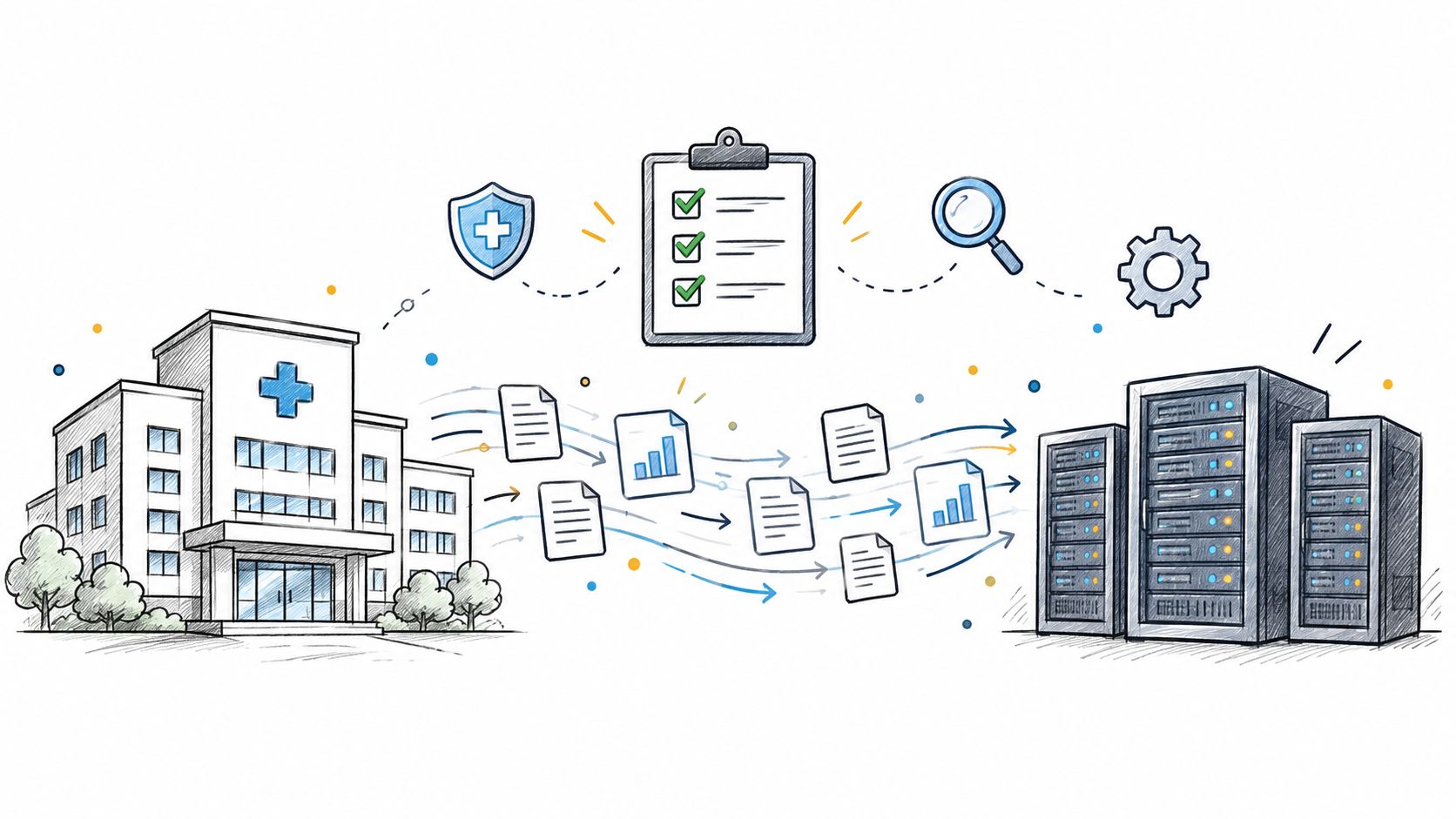
Practical data migration planning guide for healthcare teams. Scope, mapping, compliance, validation, cutover and rollback decisions explained end to end.
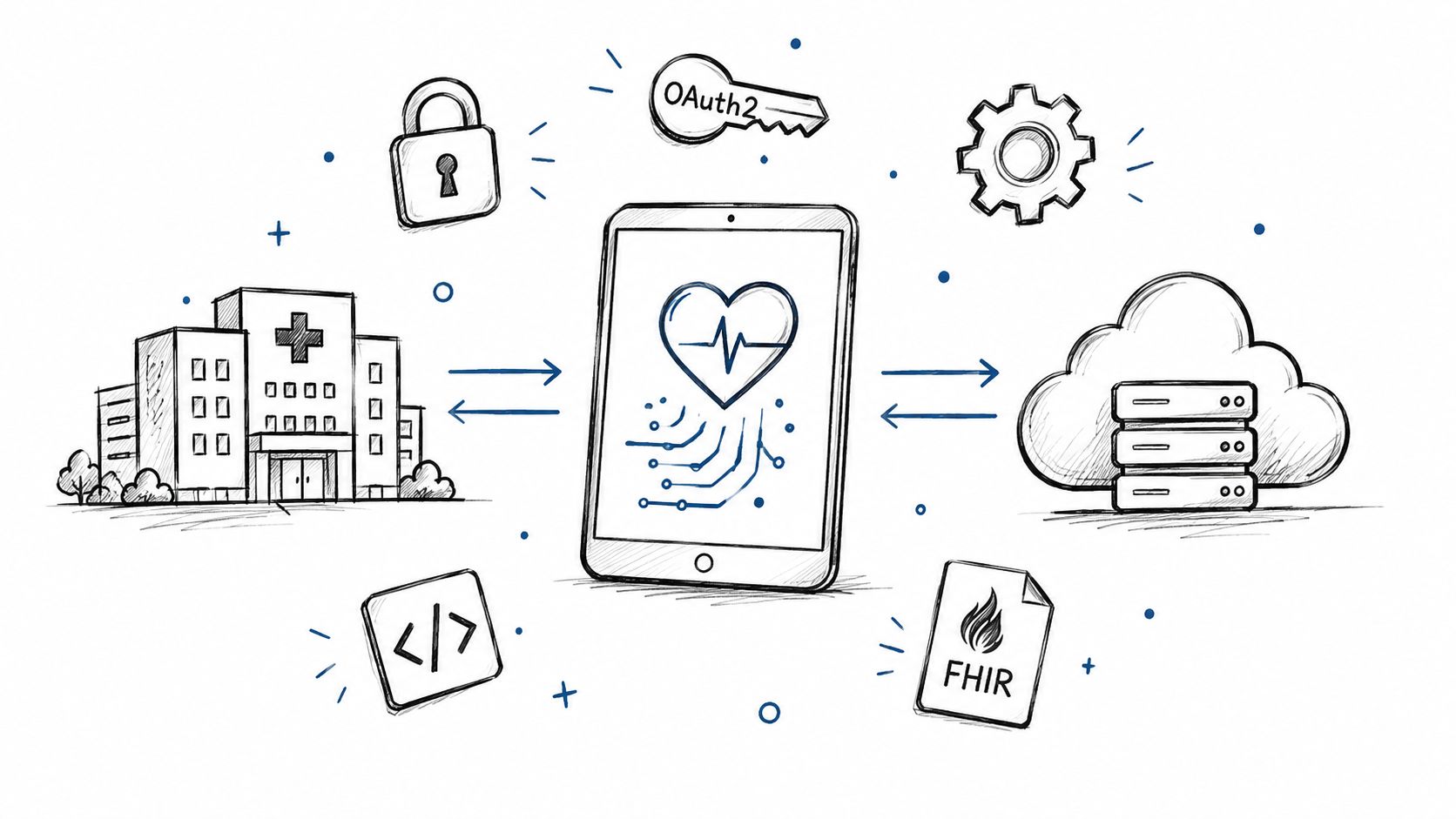
Smart on FHIR guide for healthtech engineers. Learn the OAuth 2.0 launch model, scope syntax, backend services, and US regulatory requirements.
Connect with our team to explore how AI expertise can transform your business.