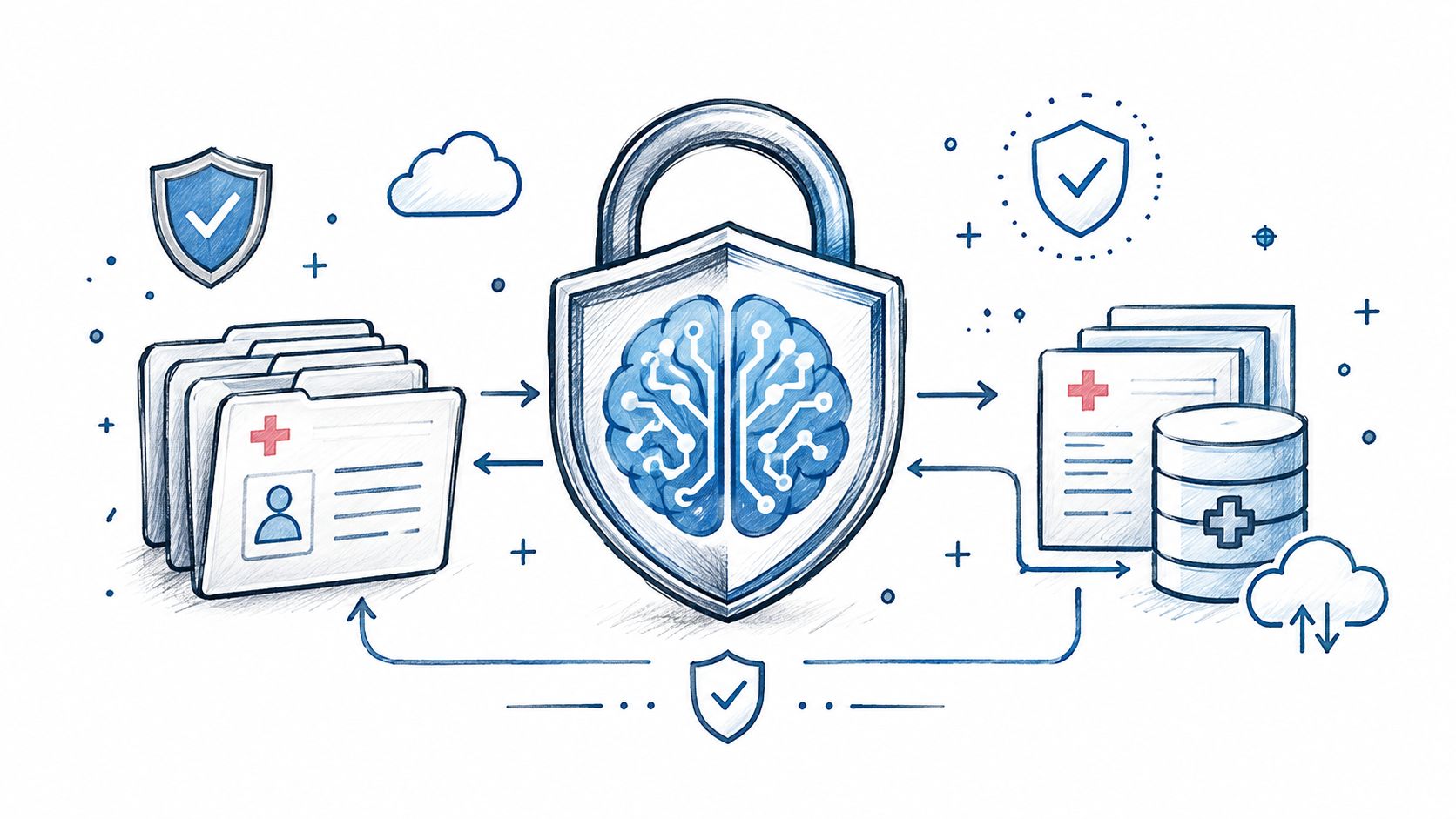
AI in Healthcare
HIPAA-Compliant AI: How to Use LLMs With PHI Safely
How to build HIPAA-compliant AI: when LLM providers need a BAA, data minimization, de-identification, audit controls and a reference architecture.
October 16, 2026Read more
A practical guide to AI enablement for hospitals. Learn to build a winning strategy, select high-impact use cases, and scale AI for real clinical results.

Integrating AI into hospital operations is no longer a conversation about the future; it's a pressing need for today. AI enablement for hospitals means strategically weaving artificial intelligence into the fabric of your clinical and operational workflows. As a dedicated HealthTech engineering partner, we've seen firsthand how this move is becoming essential for survival and growth.
The pressures on healthcare systems are immense. Administrative tasks are eating up budgets, clinicians are burning out from endless documentation, and patients are rightly demanding better, more responsive care. In this climate, simply maintaining the status quo is a losing game. AI offers a practical path forward—not just by adding new tech, but by fundamentally realigning people, processes, and technology for a more intelligent approach to medicine.

The numbers tell a story of both urgency and opportunity. In 2025, spending on healthcare AI shot up, nearly tripling to $1.4 billion and helping create eight new AI unicorns. This growth is a huge part of why the broader digital health market is projected to blow past $300 billion by 2026.
We're already seeing this adoption in practice. A 2026 Nvidia survey found AI use had reached 78% in digital health. Even more telling, 37% of providers identified virtual health assistants as a top investment for generating a return.
For hospital leaders, the question has shifted from if they should adopt AI to how and how fast. The operational and financial realities are just too significant to ignore.
The table below outlines the major forces compelling hospitals to embrace AI now. These aren't just isolated problems but deeply connected challenges that AI is well-suited to address.
| Driver | Impact on Hospitals | AI-Powered Solution Area |
|---|---|---|
| Unsustainable Admin Costs | A huge chunk of the budget is lost to non-clinical tasks like billing, coding, and records management. | Automation of repetitive back-office processes, freeing up staff and capital for patient-facing activities. |
| Widespread Clinician Burnout | Doctors and nurses are drowning in EHR data entry and documentation, leading to high turnover and dissatisfaction. | Ambient clinical intelligence tools that listen to and transcribe patient encounters, drastically cutting documentation time. |
| Rising Patient Expectations | Patients now demand the same seamless, on-demand experience from healthcare that they get from other industries. | Smart patient engagement platforms for personalized communication, streamlined scheduling, and automated follow-ups. |
These drivers show that AI is not just a "nice-to-have" technology; it's a direct response to the core business and clinical crises that legacy systems can no longer handle.
AI enablement is fundamentally about creating a more resilient, efficient, and human-centric healthcare system. It's the strategic response to the operational and clinical crises that legacy systems can no longer manage effectively.
Treating AI as just another IT project is a common mistake and a recipe for disappointment. True AI enablement for hospitals must be a top-down strategic initiative that gets the entire organization on the same page.
It starts with a C-suite champion and a clear vision. From there, you need a practical roadmap that ties every AI investment back to a tangible outcome, whether that's cutting patient wait times, boosting diagnostic accuracy, or optimizing operating room schedules.
This strategic focus ensures that technology actually serves the hospital's mission. Our Healthcare AI Services are built on this very principle. For hospital leaders, this is about much more than chasing the latest tech trend—it’s about securing the long-term health and effectiveness of your organization.
So, you're thinking about bringing AI into your hospital. That's a great first step, but before you get dazzled by the latest tech, let's talk about what really matters: your plan. A successful journey into healthcare AI starts with a clear, well-defined strategy, not a flashy new tool.
Without a solid roadmap, even the most promising AI projects can get bogged down, leading to wasted money and isolated efforts that don't really move the needle.

The first thing you need to do is define what success actually looks like for your organization. This means getting specific. Goals like "improving efficiency" are too vague. You need concrete, measurable objectives that everyone can get behind.
For instance, a hospital might aim to:
I’ve seen it happen countless times: hospitals start with scattered AI experiments. The radiology department might be testing an imaging tool while, down the hall, the finance team is exploring a new revenue cycle platform. It’s well-intentioned, but this fragmented approach rarely scales and often leads to redundant spending and systems that don’t talk to each other.
Think of a mid-sized regional hospital I worked with. Different departments were chasing their own AI pilots with zero central oversight. The result? A confusing mess of disconnected solutions and a whole lot of frustration.
The turning point came when they committed to a structured AI requirements analysis. Leadership brought everyone together and created a single, cohesive strategy. They started prioritizing projects based on their potential impact across the entire organization, not just one department. This shift from siloed tactics to an enterprise-wide strategy was everything.
The real goal of an AI strategy isn't just to make a list of cool projects. It's to build a unified framework that ensures every dollar you invest in AI directly supports your hospital's core mission: delivering outstanding patient care while staying financially healthy.
This means getting the right people in the room from the very beginning. You need clinicians, IT specialists, administrators, and finance officers all at the same table. Each group brings a unique perspective on the hospital's pain points and opportunities, and you absolutely need their buy-in for any of this to work.
A strong AI strategy is built on a business case that ties every single initiative to a measurable outcome. This is where many hospitals get stuck, but it doesn't have to be that complicated.
To build your business case, you need to connect your projects to both clinical and financial metrics. Ask yourself these questions:
A well-researched Custom AI Strategy report can fast-track this process, providing a clear, data-driven roadmap that’s tailored specifically to your hospital. This helps you move from just an idea to a concrete implementation plan much faster.
By clearly articulating the "why" behind each AI project and linking it to tangible value, you create a powerful argument for the investment. This isn't about adopting technology for its own sake. It’s about making smart, deliberate choices that will strengthen your hospital for years to come.
Once your strategy is set, the real work begins: deciding where to point your AI efforts first. The number of potential projects can feel overwhelming, but the goal isn’t to chase the shiniest new object. It's about moving from theory to practice by picking a few pilots that solve real problems and deliver clear value.
This is your chance to build momentum. The key is to focus on your hospital's most pressing challenges, as we explored in our AI adoption guide. Are your clinicians buried in EHR work? Are no-show appointments throwing your schedules into chaos? These are exactly the kinds of problems where a well-chosen AI tool can deliver a quick, demonstrable win.
The biggest mistake I see is hospitals jumping into projects that are either too complex or offer too little reward. To sidestep this, you need a simple, repeatable way to vet your ideas. Before you commit a single dollar, run every potential use case through a three-part filter: Clinical/Operational Impact, Technical Feasibility, and Data Readiness. If you're working with an AI strategy consulting partner, they can help, but the logic is something you can apply on your own.
Here's a simple visual for how to think through that evaluation process.

This framework forces you to ground your ambitions in reality. It’s the discipline that separates a successful pilot from a science project that never leaves the lab.
So, where should you look for those initial wins? Industry data gives us some pretty clear clues. A recent Nvidia survey found that 78% of healthcare organizations are already using AI. For hospitals, the value is crystallizing around specific applications: 39% report high ROI from automating administrative workflows, and 37% are seeing returns from virtual assistants. The commitment is real, with 85% planning to boost their AI budgets. You can dig into the specifics by reading the full Nvidia healthcare survey findings.
Drawing from that data and our own experience on the ground, a few areas consistently stand out as smart places to start:
Slash the Administrative Burden: This is often the lowest-hanging fruit. Think AI-powered revenue cycle management, prior authorization automation, or medical coding. These projects tend to have a fast and easily measured financial return, and they free up your staff to focus on more valuable work. Many of these can be addressed with effective internal tooling.
Fight Clinician Burnout: Tools like ambient AI scribes—which listen to and automatically document patient visits—are absolute game-changers. By giving doctors and nurses back the hours they lose to EHR data entry, you make a direct, positive impact on their daily lives. It's a huge win for morale and retention.
Smooth Out Patient Flow: Predictive models can do wonders for operational efficiency. They can help you forecast ER demand, optimize OR schedules, and even predict discharge times. The result is shorter wait times, calmer floors, and smarter use of your beds and staff.
The most successful first steps in AI solve a painful, expensive, or time-consuming problem that everyone in the hospital already recognizes. Zero in on a major point of friction for your staff or patients.
With a list of potential projects in hand, you can use the framework to score and rank them. It forces an honest conversation about what’s truly achievable right now.
Think of it this way: a project to predict sepsis in real-time has a massive clinical impact. But if your EMR data is a mess and scattered across different systems, its readiness score is in the basement. It’s a terrible choice for a first pilot.
On the other hand, an AI-powered tool for automating appointment reminders might seem less exciting. But it’s technically straightforward, has simple data requirements, and delivers a quick, measurable drop in your no-show rate. That’s a perfect "quick win." For more inspiration, check out this collection of real-world use cases that are already delivering value.
Choosing your initial projects is a deeply strategic decision. It sets the tone for your entire AI program. By focusing on quick wins that align with your bigger vision, you build credibility, get stakeholders excited, and create the foundation you need to scale your efforts down the road.
This is where the rubber meets the road. Having a great idea for an AI tool is one thing, but successfully building it, getting it into your clinicians' hands, and seeing it adopted is a whole different challenge. This is the stage where many promising AI projects quietly fizzle out.
A clear, structured path from concept to clinical reality makes all the difference. This is why following a dedicated AI Product Development Workflow is so critical. It provides the guardrails you need to move a project forward.

Think of it as more than just a technical checklist. It’s a complete discipline that starts with wrangling data and moves through model development, EHR integration, and—most importantly—a relentless focus on the people who will actually use the tool. Without a proven process, you're flying blind.
Early on, you’ll face a fundamental question: do you build a solution from scratch or buy one off the shelf? There’s no universal right answer. The best path forward really depends on your specific problem, your budget, and your long-term strategy.
Buying existing AI tools for business often makes sense when:
On the other hand, building a custom tool via custom healthcare software development is often the right call when:
For most health systems, the answer isn't purely one or the other. It's a hybrid approach: buy for the common stuff, build for what makes you unique.
Let’s be honest: the most sophisticated AI algorithm on the planet is completely useless if clinicians won't touch it. If you treat adoption as an afterthought, you've already lost. It has to be designed in from day one.
The "human-in-the-loop" model is the gold standard for a reason. It positions AI as a skilled assistant, not an autonomous replacement. The AI surfaces insights, flags potential risks, or handles tedious administrative work, but the clinician always makes the final call. This approach builds trust and keeps the focus squarely on patient safety.
"The ultimate test of an AI tool in a hospital isn't its technical sophistication—it's whether it makes a clinician's job easier. If it adds clicks, complicates workflows, or offers irrelevant suggestions, it will be abandoned. Design for the user, not the algorithm."
Want your tool to be embraced? It's simple. Involve doctors and nurses from the very beginning. Put prototypes in their hands. Watch how they interact with the user interface. Let them tell you exactly how this tool should fit into their already-packed day. This co-creation process doesn't just improve the product; it turns your clinicians into its biggest advocates.
In healthcare, you can't separate product development from governance. The two are intrinsically linked. When you're building solutions that touch sensitive patient data, a deep understanding of key compliance frameworks like SOC 2 and HITRUST isn't optional—it's foundational.
You have to get ahead of these critical considerations from the very start.
Tackling compliance proactively isn't just about avoiding penalties. It's about building a foundation of trust with patients and providers. It shows you're serious about deploying AI responsibly and ethically, ensuring your solution is not only effective but also secure, compliant, and ready for the real world.
A successful pilot is a huge milestone, but it's really just the starting point. The real win comes when you move beyond that initial success and scale your AI capabilities across the entire organization, proving a clear and undeniable return on investment. This is where you shift from isolated experiments to an enterprise-wide strategy.
Think about it this way: if your pilot saves one department time and money, the next question is how you replicate that success across ten more. How do you take a small win in one area and achieve broad technology-driven billing efficiencies, for example, across your entire revenue cycle operation? That’s the challenge of scaling.
Measuring the ROI of AI in a hospital setting goes far beyond simple cost savings. To get a complete picture, you need a framework that evaluates the impact on three critical fronts: clinical, operational, and financial. This approach tells a story that resonates with everyone, from the C-suite to the frontline clinicians.
Before you even think about scaling, define your key performance indicators (KPIs) for each category.
Clinical Outcomes: This is about patient care, first and foremost. Are you seeing a reduction in readmission rates? Has diagnostic accuracy improved? Are you lowering hospital-acquired infections or shortening the average length of stay for certain conditions? These are the metrics that show AI is improving care.
Operational Gains: This is about making the hospital run better for everyone. Track the time your staff gets back from administrative tasks, measure the drop in patient wait times, or watch bed turnover rates optimize. Don't forget to look at clinician satisfaction scores—less burnout is a major operational win.
Financial Metrics: This connects directly to the bottom line. Are you capturing more revenue, seeing fewer claims denials, or lowering specific operational costs? A healthy revenue cycle is a clear indicator of financial ROI.
A pilot proves a concept. Scaling proves its value. The goal is to move from "This AI tool works" to "This AI tool is an indispensable part of how we deliver care and run our hospital."
Scaling isn’t just about buying more licenses and rolling out the same tool to more people. That’s a recipe for chaos. A structured, deliberate approach is required.
Your first move should be to create an internal AI center of excellence (CoE). This central team—made up of your best clinical, IT, and data experts—becomes the engine for your entire AI program.
The CoE’s job is to prevent the "wild west" of fragmented AI projects by:
This centralized oversight ensures every new deployment is smarter than the last. It’s how you turn those initial victories into a comprehensive AI Automation as a Service strategy, a core component of our end-to-end Healthcare AI Services.
The market itself is showing just how big the opportunity is. We’re seeing healthcare AI companies hit $100M ARR—and even $200M—in under five years, a speed that took traditional software companies more than a decade to achieve. With investors projected to pour 54% of all digital health funding into AI in 2025, the message is clear. Hospitals, facing their own intense financial pressures, are doubling down on high-ROI applications like ambient scribes and revenue cycle AI to find major economic and operational relief. You can discover more insights on the state of Health AI from BVP.
This isn't about just keeping up. It's about building a powerful, sustainable advantage. As you scale, you begin to foster a culture of continuous improvement, where the data-driven insights from your AI tools feed directly back into your strategic planning. This creates a virtuous cycle of innovation that steadily strengthens your hospital's clinical and financial health for years to come.
We’ve covered a lot of ground, laying out a practical path for bringing AI into a hospital setting. As we've seen, this isn't about plugging in a new piece of software. It’s a fundamental shift that touches everything from strategy and data to your clinical staff and, most importantly, your patients.
The journey can feel complex, I know. But the end game isn't just about impressive technology; it’s about making a tangible difference. It’s about better outcomes for patients, easing the burden on your clinicians, and building a more resilient, sustainable hospital for the future.
This is the work we live and breathe at Ekipa. We’re not just vendors; we’re HealthTech engineering partners who have been in the trenches helping organizations navigate this exact path. We bring both the strategic thinking and the hands-on engineering know-how to guide you from that first idea to a fully scaled solution.
But all the planning in the world can't replace the need to simply get started.
The most important advice is simple: start now. Don't wait for all the answers before you begin. Pick a specific business problem that matters and start building.
Every hospital's challenges and opportunities are unique, which means your AI strategy needs to be, too. The next step isn't to solve everything at once, but to start a focused conversation about where you can make the biggest impact first.
Let’s talk. Reach out to our expert team, and we can begin mapping out what this journey looks like for you.
Don't jump straight to the tech. The absolute first move is to build a clear, unified AI strategy. Your leadership team needs to sit down and agree on what you're trying to fix or improve. A formal AI strategy consulting process forces these conversations. It helps you connect every potential AI project directly to your hospital's core goals and KPIs. This is how you avoid wasting money on scattered, small-scale projects and instead focus your resources where they’ll make a real difference.
Look for the "low-hanging fruit." You want to find opportunities that are high-impact but low-complexity. Think about the problems that are either costing you a ton of money or causing major headaches for your staff. For example: automating prior authorization, optimizing revenue cycle management, or using ambient AI scribes. These projects deliver a clear, measurable ROI fast. That quick win builds trust and momentum, making it much easier to get buy-in for more ambitious initiatives. Use a framework to score your real-world use cases based on data readiness, technical difficulty, and potential impact.
Adoption lives or dies by one thing: involving your clinicians from the very beginning. If a tool doesn't fit neatly into their existing workflow, they won't use it. You have to co-design these solutions with your doctors and nurses. Ask them what their biggest pain points are and build the tool to solve that specific problem. A "human-in-the-loop" model, where AI provides support and suggestions rather than final decisions, is key to building trust.
The biggest landmines are data privacy, regulatory compliance (like HIPAA), and algorithmic bias. You have to get ahead of these. Before you even think about deploying a tool, you need a rock-solid governance framework. Data security and HIPAA compliance are non-negotiable. For any AI model that touches clinical decisions, like SaMD solutions, you must aggressively test for and correct any biases to ensure care is equitable for all patient populations. This is complex territory, and working with an experienced HealthTech engineering partner can help you navigate the regulations and build ethical, responsible AI from the ground up.
Ready to turn your AI strategy into a real-world advantage? Ekipa AI delivers tailored AI roadmaps and end-to-end implementation support to help hospitals achieve measurable results. Our AI Strategy consulting tool and our expert team are here to guide you. Get your Custom AI Strategy report and start your journey today.
How to build HIPAA-compliant AI: when LLM providers need a BAA, data minimization, de-identification, audit controls and a reference architecture.
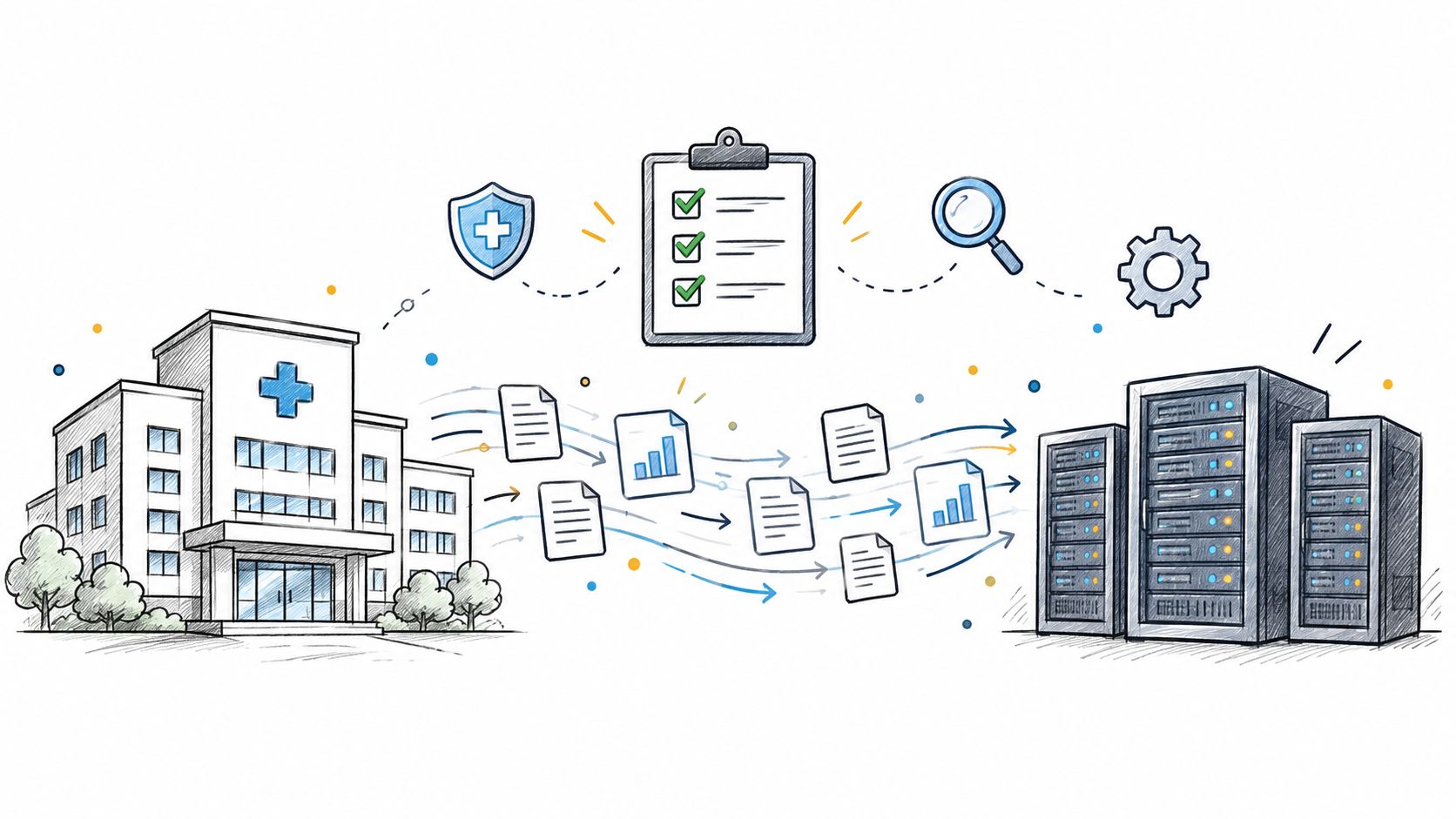
Practical data migration planning guide for healthcare teams. Scope, mapping, compliance, validation, cutover and rollback decisions explained end to end.
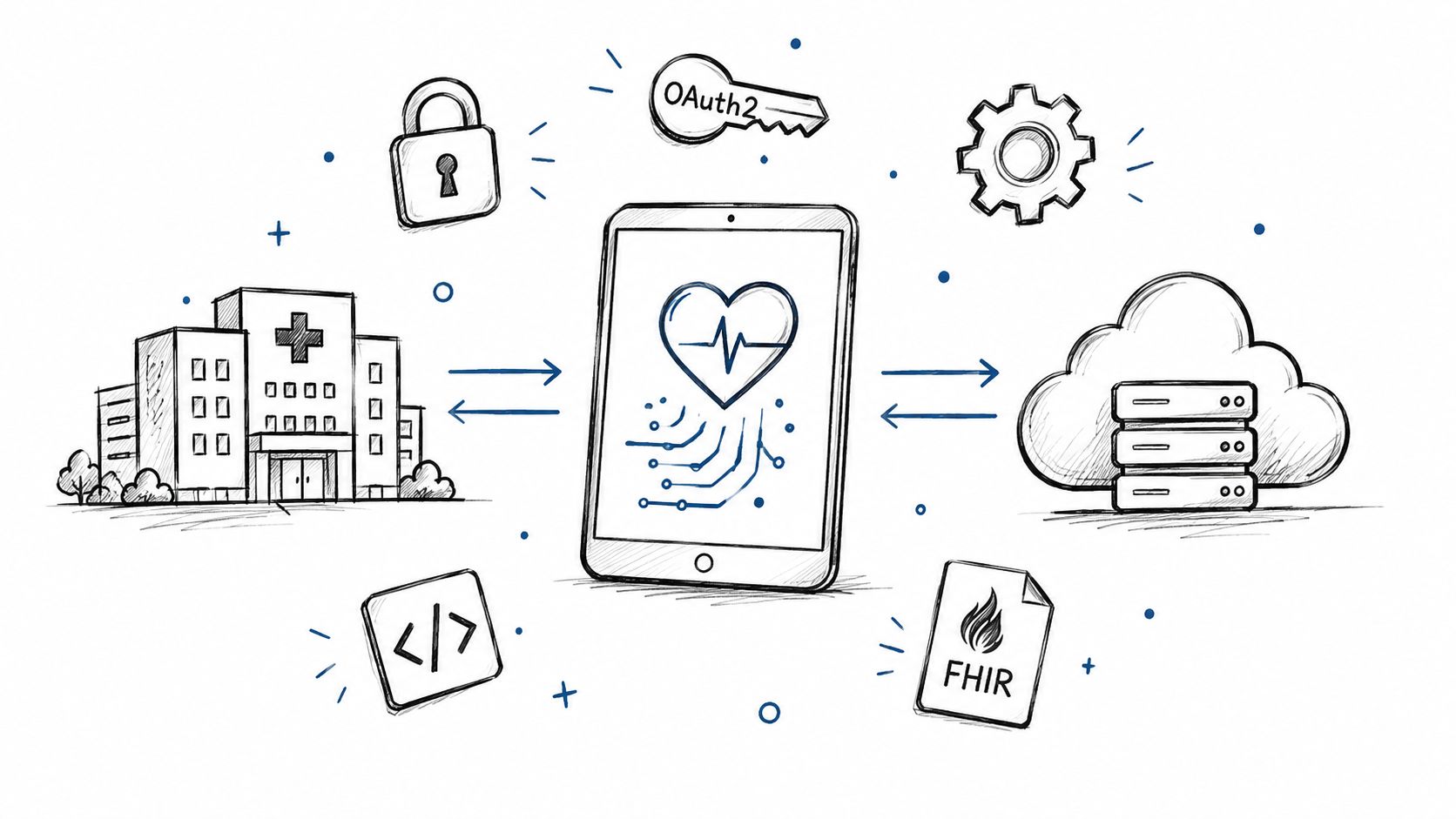
Smart on FHIR guide for healthtech engineers. Learn the OAuth 2.0 launch model, scope syntax, backend services, and US regulatory requirements.
Connect with our team to explore how AI expertise can transform your business.