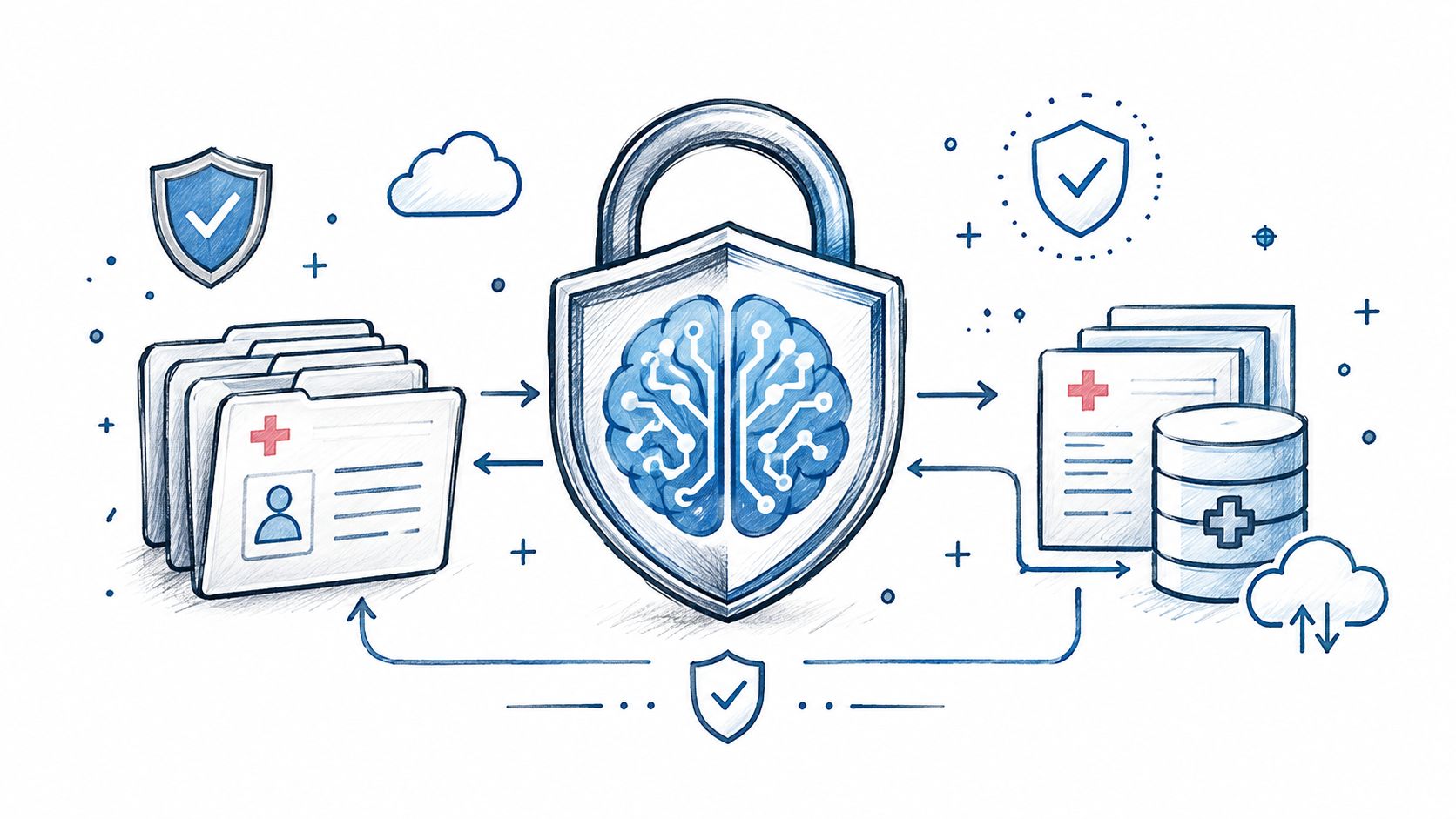
AI in Healthcare
HIPAA-Compliant AI: How to Use LLMs With PHI Safely
How to build HIPAA-compliant AI: when LLM providers need a BAA, data minimization, de-identification, audit controls and a reference architecture.
October 16, 2026Read more
Explore how AI feedback loops in healthcare are creating self-improving systems that enhance patient outcomes, reduce burnout, and drive innovation.

Most AI tools in healthcare are static. They’re built, trained on a dataset, and then deployed—never changing. But what if the tool could learn from every single patient interaction, getting smarter and more precise over time?
Think of it like a seasoned clinician whose expertise deepens with each patient they see. That’s the core idea behind AI feedback loops in healthcare. It's a shift from one-off predictions to a cycle of continuous, intelligent improvement.
The problem with a static AI model is that its performance is locked in at the moment of deployment. It's a snapshot in time. As clinical guidelines evolve, patient populations shift, and new data emerges, that snapshot becomes increasingly outdated. This slow decline in performance is a well-known issue called model drift, and it's a significant risk in a clinical setting.
AI feedback loops are the solution. They create a living system where the AI isn't just a tool but an active participant that refines its own understanding. It’s no longer a "fire-and-forget" technology; it’s a partner that grows more capable with every use.
The goal is to move beyond static predictors and create dynamic learning systems. This cycle—input, prediction, feedback, and adjustment—ensures the AI's performance doesn't just degrade. It actively improves, becoming safer and more effective with each clinical interaction.
This constant learning cycle delivers tangible benefits:
Moving from static models to intelligent learning systems is a complex journey. It demands not just a clear vision but also deep engineering expertise. Designing and deploying these loops safely and effectively is where a dedicated healthtech engineering partner becomes invaluable. As we detail in our overview of Healthcare AI Services, an expert team can help you build systems that are powerful, compliant, and genuinely useful in a clinical environment.
It's one thing to talk about AI feedback loops in the abstract, but what does this process actually look like on the ground in a busy clinic? Let's walk through a real-world scenario to see how this transforms a static algorithm into a dynamic, learning system.
Imagine an AI model designed to help radiologists spot early signs of pneumonia on chest X-rays. This is how the loop functions, step by step, for each and every patient.
This isn't a one-and-done prediction. It's a continuous cycle where every clinical interaction makes the AI smarter, more reliable, and ultimately more useful to the clinician.
Here’s the breakdown:
This cycle is the key to preventing model drift and building trustworthy SaMD solutions. The diagram below shows how this process creates a system that never stops learning.

As you can see, the clinician's interaction is what fuels the AI's improvement, turning a simple predictive tool into a true partner.
The clinical impact of this five-step cycle is profound. Research from the NIH and WHO found that between 2023 and 2025, hospitals that implemented robust human-in-the-loop AI systems saw a 41% reduction in diagnostic errors and a 37% increase in treatment personalization accuracy.
For a practical look at how we apply this, consider the design philosophy behind AI tools for business like our AI-powered diagnostic assistant, Diagnoo. Every new case isn't just another task to be completed; it's a lesson that makes the entire system smarter and more reliable for the next patient.
Building an effective AI feedback loop is less about simply collecting data and more about designing a system that turns that data into concrete improvements. A well-designed architecture maps out the entire journey of information—from the moment a user interacts with the software to the point where the model is retrained—ensuring no valuable insight is lost.
These systems can look very different depending on the goal. For instance, a patient-facing app might automatically A/B test different interface layouts to see which one best encourages medication adherence. On the other hand, a clinical decision support tool will absolutely require structured feedback from physicians to sharpen its diagnostic recommendations. Both need careful, deliberate design to work properly.

Your first move is to instrument your software to capture meaningful signals. Raw data on its own is just noise; you need to pinpoint the specific interactions that truly reflect system performance and user experience.
Some of the most valuable data sources include:
A structured AI Product Development Workflow is what turns these insights into actual product improvements. Without a clear process, that crucial feedback often gets siloed or ignored, breaking the loop before it can close. Getting AI strategy consulting from the start helps ensure these intelligent systems are built correctly from day one.
Research from 2026 showed that AI-powered feedback loops in EHR systems can reduce clinician burnout by 34%. By instrumenting workflows with three distinct feedback sources—user interactions, patient outcomes, and device telemetry—organizations achieved a 45% reduction in task burden and a 50% faster continuous improvement cycle.
Once you've captured the right data, it has to be processed into a format your models can actually learn from. As you build out the system, implementing robust monitoring tools for your AI is a non-negotiable step. These tools watch how your AI is performing in the wild and are essential for gathering the right data. For a deeper dive on this topic, check out this guide from MyMentions on LLM analytics.
The goal here is to create a clean, labeled dataset that directly informs how the model should be adjusted. This refined information is then used to either automatically retrain the algorithm or to provide clear, actionable recommendations for human-led updates. This architecture turns raw user activity into a powerful engine for continuous improvement, making healthcare systems smarter, safer, and more responsive to the real needs of both patients and clinicians.
With the power of self-improving AI comes immense responsibility. When you deploy AI feedback loops in healthcare, you have to be laser-focused on governance, risk, and compliance (GRC). This isn't just about ticking boxes; it's about making sure these systems operate safely, ethically, and fairly for every single patient.
A poorly designed loop doesn't just fail to help—it can actively cause harm. It can take existing biases in healthcare data and put them on steroids.
The most glaring risk here is algorithmic bias. If a model learns from data that already reflects historical health disparities, the feedback loop can lock it into a vicious cycle. The system gets progressively worse for underrepresented groups, reinforcing the very inequities we're trying to fix.

This isn't just a theoretical problem. A recent 2024 study showed that AI trained on even slightly biased human data can amplify those biases by up to 63% as it continues to learn. Thankfully, the same research highlights effective strategies to stop this from happening, leading to real improvements in fairness and patient outcomes. You can read more about the findings on bias amplification in Nature.
So, how do you fight back against bias? It comes down to a few key strategies:
A thorough AI requirements analysis right at the start of a project is absolutely critical. It’s your best chance to spot and fix these potential biases from day one, building fairness directly into the system's DNA. If you want to see how to proactively manage these risks, our VeriFAI tool is designed for just that.
Building a fair AI system isn’t just about the algorithm; it’s about the entire governance framework. This includes rigorous data privacy measures, clear model explainability, and a commitment to continuous monitoring to ensure the system performs as intended for everyone.
Beyond the risk of bias, data privacy is a massive concern. Feedback loops churn through enormous amounts of sensitive protected health information (PHI). That makes strict adherence to regulations like HIPAA completely non-negotiable. This excellent anonymization of data guide provides some great practical advice for protecting patient privacy when handling this kind of data.
Then you have the complex web of rules governing medical devices, especially for SaMD solutions. This adds another serious layer of complexity. Trying to navigate these requirements on your own is a huge challenge.
Working with a trusted regulatory compliance partner isn't just a good idea—it's essential for making sure your solution is both innovative and legally sound. They provide the guardrails you need to build systems that are safe, effective, and compliant from the get-go.
Getting your first AI feedback loop out of a slide deck and into a real clinical setting can feel like a huge leap. But it doesn't have to be. The secret isn't in the tech—it's in the focus. The biggest mistake teams make is trying to build a system that solves every problem at once.
Instead, start small. Pinpoint a single, high-impact frustration where a learning system could make a real difference. Maybe the goal is to cut down the time clinicians spend on a specific charting task or to sharpen the accuracy of one particular diagnostic suggestion. When you narrow your focus like this, you can design a tight, effective loop that's much easier to build, monitor, and prove works. That initial win is what gets you the buy-in and momentum for bigger projects later.
With a clear objective, you can figure out what success actually looks like. It’s not about collecting mountains of data; it’s about getting feedback that the model can actually learn from. The right metrics tell you if you're on track.
You'll want to watch a few key things:
Just as important is getting the right people involved. You need engineers and data scientists, of course. But the most crucial person on your team is the clinical validator. This is your expert—the radiologist, nurse, or physical therapist—who provides the “ground truth” that makes the entire system smarter. Their input is the fuel for the whole loop. If you're looking for ideas, you can find plenty of inspiration from a library of real-world use cases.
Before you ever write a line of code, walk through this checklist. Think of it as your blueprint. A formal Custom AI Strategy report can help solidify this plan and give your team and stakeholders a clear roadmap to follow.
Building your first loop is a huge milestone. Working with an expert in Healthcare AI Services can help you get the architecture, team, and governance right from the start, so you can move forward with confidence and sidestep common mistakes.
The real promise of AI feedback loops isn't just about making healthcare more efficient; it's about turning it into a proactive, continuously learning ecosystem. We're on the cusp of a future where AI works alongside clinicians, patient apps adapt to individual needs in real time, and even the internal tooling we use for operations gets smarter with every use.
Think of it this way: AI stops being a static tool and becomes a dynamic partner. A diabetic patient's app could adjust meal suggestions based on real-time glucose readings and how they report feeling. A hospital’s scheduling system could learn from clinician feedback to optimize operating room assignments, preventing burnout and delays.
These ideas aren't just theoretical. The core principle is about closing the loop between data and action, a concept found in proven NPS improvement strategies that turn raw feedback into tangible enhancements.
Building this future requires more than just good ideas; it demands a strong partnership between healthcare visionaries and expert engineers who can translate clinical needs into intelligent, reliable software.
This is where having a dedicated healthtech engineering partner makes all the difference. The journey from a fixed algorithm to a truly adaptive system is a complex one, paved with challenges in data architecture, compliance, and user-focused design.
Let us help you build the intelligent healthcare solutions of tomorrow. If you're ready to turn your vision into a reality that improves care for everyone, connect with our expert team to start the conversation.
An AI feedback loop is a system where an artificial intelligence model continuously improves its performance by learning from real-world interactions. In a clinical setting, this means the AI's predictions are reviewed by human experts (like doctors), and their feedback is used to automatically refine the model, making it more accurate and reliable over time. It transforms a static tool into a dynamic, learning partner.
Model drift occurs when an AI's performance degrades because the real-world data it encounters has changed since it was initially trained. In healthcare, this is a major risk. Patient populations shift, clinical guidelines evolve, and new diseases emerge. A static AI model can quickly become outdated and make inaccurate recommendations, posing a threat to patient safety. Feedback loops are the primary solution to combat model drift.
A successful loop requires several key components working together:
Mitigating bias is critical to ensure fairness. Strategies include pre-processing (cleaning training data to remove biases), in-processing (building fairness constraints into the algorithm), and post-processing (adjusting the AI's outputs for equity). A strong governance framework, continuous monitoring, and a thorough AI requirements analysis are essential to prevent the system from amplifying existing health disparities.
Start small and focus on a single, high-impact problem. Instead of trying to build a system that does everything, pick one specific workflow where a learning AI could make a significant difference—like reducing administrative burden or improving a specific diagnostic suggestion. Define clear success metrics, assemble a team with both technical and clinical experts, and design a simple, frictionless way for users to provide feedback. As we explored in our AI adoption guide, this focused approach builds momentum and proves value quickly.
At Ekipa AI, we live and breathe this stuff, turning these complex ideas into practical, real-world solutions. If you’re ready to build healthcare tools that truly learn and get better over time, connect with our expert team and let's start the conversation.
How to build HIPAA-compliant AI: when LLM providers need a BAA, data minimization, de-identification, audit controls and a reference architecture.
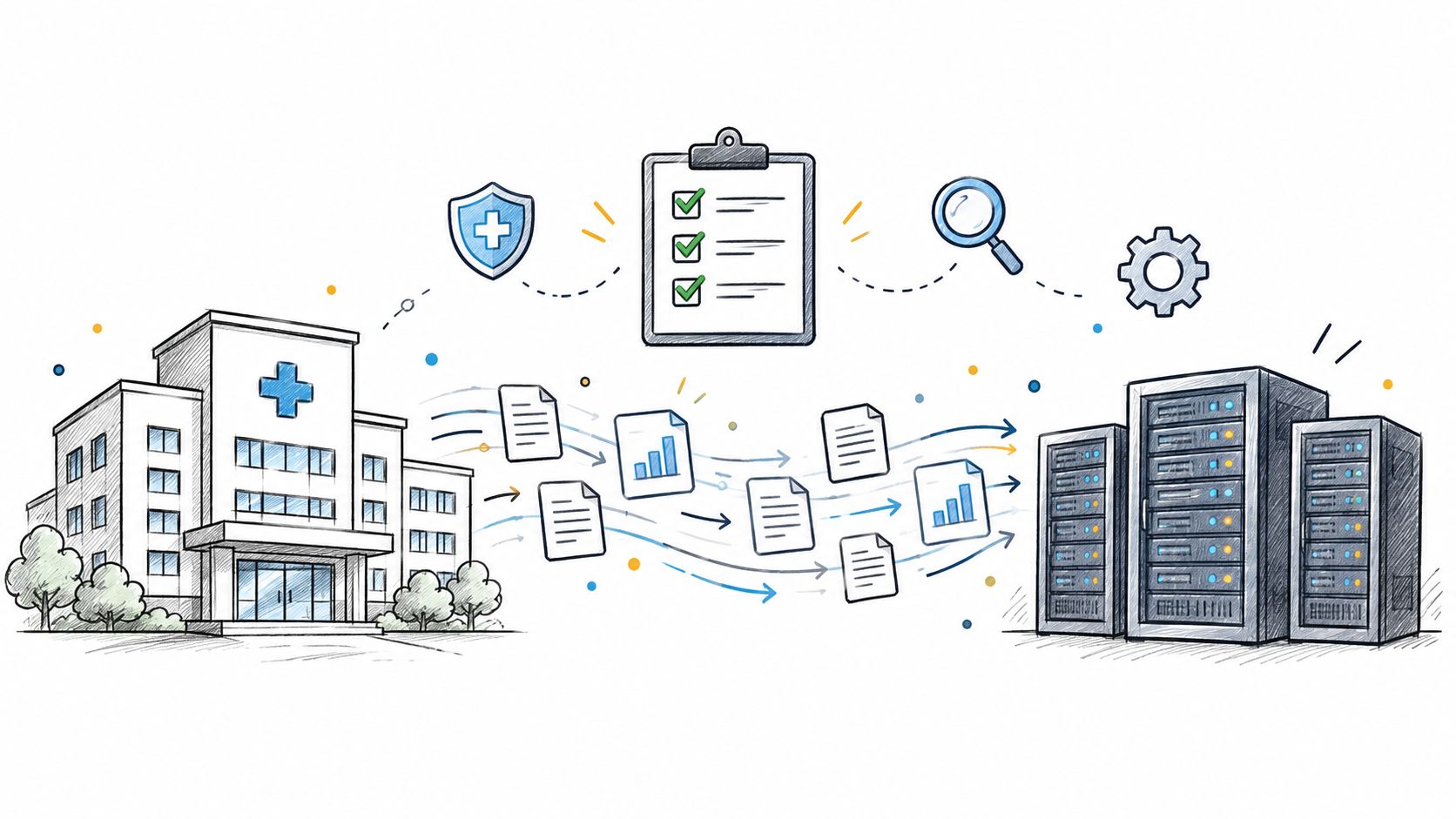
Practical data migration planning guide for healthcare teams. Scope, mapping, compliance, validation, cutover and rollback decisions explained end to end.
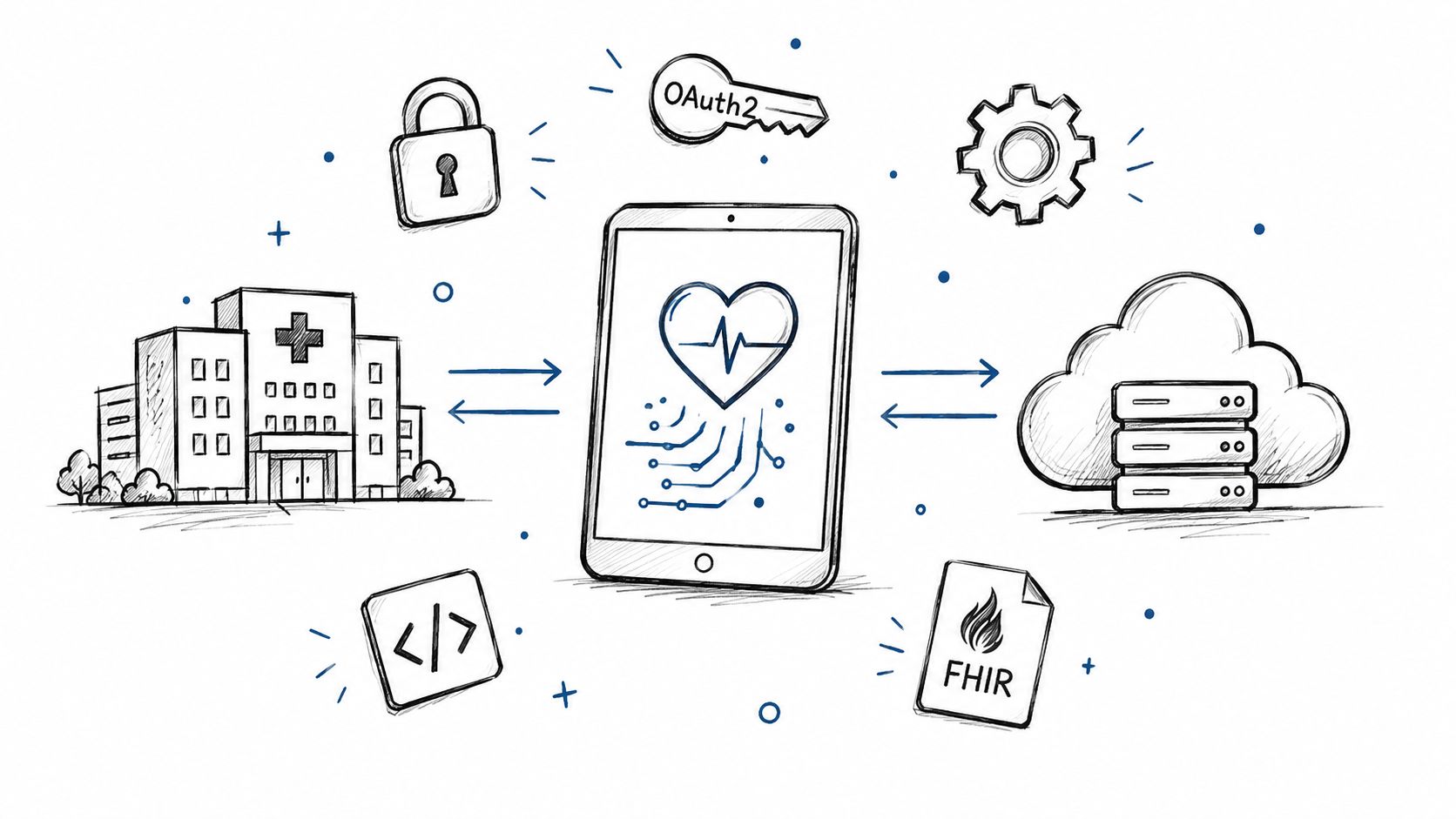
Smart on FHIR guide for healthtech engineers. Learn the OAuth 2.0 launch model, scope syntax, backend services, and US regulatory requirements.
Connect with our team to explore how AI expertise can transform your business.