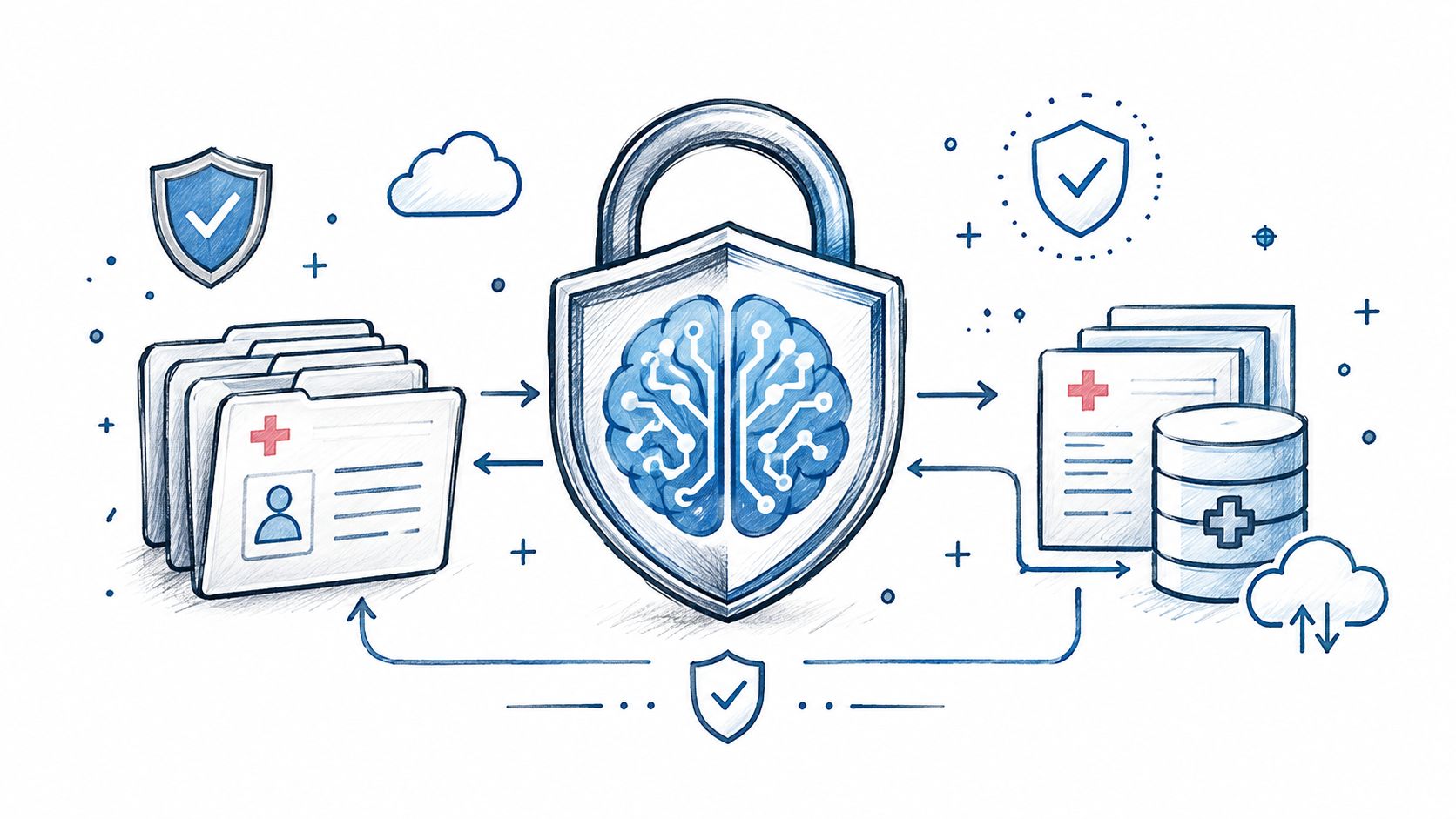
AI in Healthcare
HIPAA-Compliant AI: How to Use LLMs With PHI Safely
How to build HIPAA-compliant AI: when LLM providers need a BAA, data minimization, de-identification, audit controls and a reference architecture.
October 16, 2026Read more
Discover how continuous engineering in healthcare transforms SaMD & EHR. Covers CI/CD, compliance, & 2026 adoption roadmap.

At its core, continuous engineering in healthcare is a business strategy that weaves software development and IT operations together. The goal? To deliver safe, compliant, and effective digital health solutions faster and more reliably. It swaps out the slow, rigid product cycles of the past for a fluid process of constant innovation, verification, and monitoring—an absolute necessity in today's healthtech world.
The pressure to innovate in healthcare has never been higher. The global telemedicine market, for instance, is on track to hit a staggering $185.6 billion by 2026. What was once a pandemic stopgap is now a permanent fixture of care delivery.
This explosive growth, coupled with critical workforce shortages and patients who expect better digital tools, is forcing a major shift. Healthcare organizations simply can't afford the sluggish, step-by-step development methods that used to be the norm.
Continuous engineering is the answer. It embeds quality and speed directly into the development lifecycle from day one. Instead of treating testing, security, and compliance as afterthoughts, this approach automates them from the very beginning. This is especially critical for complex platforms like Electronic Health Record (EHR) applications or Software as a Medical Device (SaMD solutions), where a single software bug could have dire consequences for patient safety.

The traditional "waterfall" approach to development—where a project moves slowly from one distinct stage to the next—is just too stiff for the modern healthcare market. It creates agonizingly long feedback loops, delays the delivery of valuable features, and makes adapting to new regulations or clinical insights a massive undertaking.
The result is often outdated technology, frustrated users, and missed opportunities to improve care. The table below shows just how different the two approaches are.
| Aspect | Traditional Development | Continuous Engineering |
|---|---|---|
| Release Cycle | Months or years | Days or weeks |
| Risk Management | Risk accumulates until a big "go-live" event | Risk is managed in small, frequent increments |
| Feedback Loop | Long; feedback is gathered late in the process | Short; continuous feedback from users and systems |
| Compliance | Manual checks, often a bottleneck at the end | Automated and integrated throughout the lifecycle |
| Adaptability | Low; difficult to change course mid-project | High; designed to adapt to new requirements quickly |
| Patient Safety | Bugs are often discovered late in testing | Safety is verified continuously with each small change |
The contrast is stark. While traditional methods create a high-stakes, all-or-nothing launch, continuous engineering turns releases into routine, low-risk events.
For CEOs and CTOs, the directive is clear: embrace a methodology that supports rapid, iterative improvement without ever compromising on safety or compliance. A key part of this is also understanding that making healthcare services accessible online is no longer optional but a fundamental requirement for equitable care.
Continuous engineering isn't just about shipping code faster. It's about building a resilient, compliant, and patient-centric innovation engine that systematically reduces risk with every release.
This approach is the backbone of modern Healthcare AI Services. By adopting it, organizations can confidently build and scale the next generation of digital health tools that patients and providers desperately need.
At the core of continuous engineering in healthcare are a handful of powerful, interconnected practices. These aren't just abstract concepts; they're the practical gears that allow healthtech teams to build, test, and release software quickly, safely, and in full compliance. Getting these right is non-negotiable for any organization serious about responsible innovation.
It all starts with Continuous Integration (CI). Picture a team of developers all working on a single, complex piece of software. Every time a developer commits a new piece of code, CI automatically merges it into the main project and runs a battery of tests. For a sophisticated SaMD solution, this is invaluable. It flags integration issues and bugs in minutes, not weeks, stopping small errors from ever becoming a risk to patient safety.

Continuous Delivery/Deployment (CD) is the logical next step. Once the code passes all its automated CI checks, CD takes over. It packages the new software version and prepares it for release, making it ready to be deployed to users with a single click (delivery) or even automatically pushing it live (deployment). This rapid cycle means critical updates and security patches can reach clinicians and patients almost instantly.
But speed without safety is reckless, especially in this field. This is where Continuous Verification comes in as the pipeline's built-in conscience.
This practice embeds security and regulatory checks directly into the automated workflow. Instead of being a final, manual hurdle, compliance becomes an ongoing, automated process.
Every time code is changed, the system automatically verifies that the software still meets crucial standards like HIPAA and GDPR. This is where a partnership with a dedicated regulatory compliance partner can be a huge advantage, helping to define and automate these essential checks. This "DevSecOps" mindset builds security in from day one, and a well-defined AI Product Development Workflow provides the blueprint for making it happen.
Finally, once the software is in the hands of users, the job isn't done. That’s where Observability comes into play. Think of it as a real-time diagnostic dashboard for your live application, like the cockpit of an airplane. It goes far beyond simple monitoring, giving your team deep, actionable insights into the system's health.
With strong observability, your team can ask—and answer—complex questions on the fly:
This constant stream of insight is absolutely crucial for ensuring the mission-critical applications that providers and patients rely on are performing flawlessly when it matters most.
In the tech world, the "move fast and break things" mantra is practically gospel. But in healthcare, that's a recipe for disaster. When patient safety, sensitive data, and FDA approval are on the line, you can't afford to break things. This is the tightrope walk of continuous engineering in healthcare: how do you move at the speed of software while operating under the intense scrutiny of regulation?
The only way to square this circle is to stop treating compliance like a final, painful checkpoint. Forget the old way of building for months and then spending weeks in a frantic scramble to assemble documentation for auditors. The modern approach weaves compliance directly into the fabric of the development cycle itself.
This creates what we call a compliant pipeline. Think of it as a system where every single action—every line of code, every test run, every deployment—is automatically logged with an immutable, time-stamped record. You're not just building software; you're building an always-on, real-time audit trail.
A truly compliant pipeline does more than just keep records. It actively enforces your safety and regulatory rules at every stage. For instance, when developing SaMD solutions, the pipeline can be configured to automatically block any code that might violate a specific FDA or privacy standard.
Here are a few core strategies for making this a reality:
Getting the details right is non-negotiable, and a deep understanding of the rules is essential for solving medical device compliance challenges.
Instead of slowing you down, continuous engineering actually de-risks your speed. By building these automated guardrails into your process, the fastest way to get your software to market also becomes the safest and most compliant path.
This isn't a simple plug-and-play solution; it requires a sophisticated blend of technical skill and deep regulatory knowledge. It's why many health tech companies choose to work with a custom healthcare software development partner who lives and breathes both CI/CD and the complex world of healthcare rules. Ultimately, a compliant pipeline turns the burden of regulation into a genuine competitive edge.
You can't really talk about modern AI in healthcare without also talking about continuous engineering. In fact, the whole field of MLOps (Machine Learning Operations) is essentially a specialized form of continuous engineering in healthcare, built specifically for the unique demands of AI models. Without a solid continuous pipeline, the incredible potential of AI in clinical settings just can't be safely or reliably unlocked.
Think about an AI model designed to predict sepsis risk for patients in the ICU. This isn't a "set it and forget it" piece of software. Its accuracy is entirely dependent on the data it was trained on. As things change—hospital protocols get updated, patient demographics shift, or even new strains of seasonal flu emerge—the model’s performance can slowly degrade. This is a well-known problem called "model drift," and if it goes unchecked, a tool that was once saving lives could become dangerously unreliable.
A continuous engineering pipeline is the only practical way to manage this risk. It automates the entire MLOps lifecycle from start to finish.
This automated feedback loop is what keeps the sepsis model a trustworthy, life-saving asset. Achieving this requires a smart blend of high-level planning and on-the-ground technical work, where a solid AI strategy consulting approach meets expert execution. As AI's role expands into areas like AI customer support in healthcare, these principles become even more critical.
By applying continuous engineering principles to machine learning, you turn AI models from static, high-maintenance assets into dynamic, self-improving systems that adapt to the realities of patient care.
What’s really interesting is that AI can also be used to improve the continuous engineering pipeline itself. For example, an AI Automation as a Service solution can analyze a project’s history of code changes and test results. It can then intelligently predict which specific tests are most critical for a new software update, saving huge amounts of time and computing resources. Seeing how these concepts drive better outcomes in practice, as we've explored with our HCP Engagement Co-Pilot, shows just how powerful this approach can be.
Jumping into continuous engineering in healthcare isn't something you do overnight. Think of it less like flipping a switch and more like building a strong foundation, brick by brick. A phased approach is the only way to introduce these practices without causing chaos in your critical operations.
The biggest mistake I see is teams trying to do everything at once. Don't boil the ocean. A great way to get started is by applying these principles to a lower-risk project first, as we explored in our AI adoption guide. This gives your team a safe space to learn the ropes and iron out the kinks before you touch a patient-facing application or a critical medical device.
This first phase is all about getting the absolute basics in place. You're laying the groundwork for all the automation and rapid feedback that will come later. If you rush this part, everything you build on top of it will be wobbly.
Here's what to focus on first:
This roadmap visualizes the whole journey, from these foundational first steps all the way to advanced deployment maturity.

As you can see, each phase builds on the last, giving you a stable and scalable path toward true continuous delivery.
Once your foundation is solid, it's time to weave quality and compliance checks directly into your automated pipeline. This is where continuous engineering really starts to pay off, catching security vulnerabilities and regulatory gaps much earlier and slashing the time spent on manual verification.
This is the turning point where you stop just checking for quality and start building quality in. By automating security and compliance scans, you make following the rules the easiest path for your developers, not an obstacle.
Essentially, your development pipeline starts to become a powerful regulatory asset.
In this final phase, you'll introduce more sophisticated strategies that dramatically lower the risk of each release and give you incredible insight into your live systems. This is where you achieve genuine operational excellence, making it possible to push rapid, reliable updates to even the most complex healthcare applications. We help organizations navigate this exact journey with our AI Product Development Workflow.
Key strategies at this stage include blue-green deployments, where you run two identical production environments to enable instant, zero-downtime releases. You'll also set up powerful observability dashboards that give you a real-time, in-depth view of system health, moving far beyond simple alerts.
When you shift to continuous engineering, your old ways of measuring success just won't cut it anymore. To justify the investment and keep the effort on track, you have to look past flashy but meaningless numbers and focus on what actually moves the needle for the business.
So, how do you know if it's working? The best teams I've seen all rally around the four key DORA metrics. They give you an honest, unfiltered look at the health of your engineering practice.
These aren't just abstract IT stats. They are direct indicators of faster time-to-market, better product quality, and a more robust system. Getting a clear baseline for these metrics, often through an initial AI requirements analysis, helps get everyone aligned from the start.
Even with the right metrics, the path is rarely a straight line. Knowing where others have stumbled is the best way to keep your own footing.
The most common failure we see is a tool-centric approach that completely ignores culture. Buying a fancy CI/CD platform without getting your teams to collaborate and take shared ownership is like buying a high-performance engine and leaving it in the garage.
Another critical mistake is trying to trade compliance for speed. In healthcare, that's a non-starter. Your pipeline must be built for compliance from day one, not as an afterthought.
Finally, without strong executive buy-in, these initiatives almost always lose steam when they face the inevitable pushback. Leaders have to do more than just sign the check; they need to champion the change and articulate why it's so important for the organization's future. You can see how we’ve navigated these challenges in some of our real-world use cases.
Making the move to continuous engineering can feel daunting, especially in a field as regulated as healthcare. Let's tackle some of the most common questions we hear from leaders and development teams on the ground.
My advice is always the same: don't try to boil the ocean. The best way to begin is with a new project that isn't patient-facing or mission-critical. Building out some internal tooling is a perfect example.
This creates a low-risk environment where your team can practice and build the right habits for automation and collaboration. Start with the absolute basics, like setting up automated builds (CI) and a simple suite of automated tests.
For existing products, just find the single most repetitive, time-consuming manual step in your release process and automate it. A trusted healthtech engineering partner can be invaluable here, helping you pinpoint where a small change can deliver the biggest impact.
It’s a common worry, but the answer is no. When done right, continuous engineering actually makes compliance much easier and more robust. The secret is building what we call a "compliant pipeline."
Instead of scrambling to create documentation after a release, your pipeline automates the creation of audit trails for every single change. Every code commit, every test run, and every deployment is automatically logged. This gives regulators a transparent, unchangeable record of your entire process.
This “Compliance as Code” approach turns your delivery pipeline into a powerful regulatory asset, proving you have a validated, repeatable process for updating your SaMD solutions.
They're definitely related, but they aren’t the same thing. It helps to think of DevOps as the overarching philosophy. It’s a cultural shift focused on breaking down the walls between development, operations, and quality teams to ship software faster and more reliably.
Continuous engineering provides the specific technical practices—like CI/CD, automated verification, and observability—that actually make a DevOps culture possible. It’s the engine that powers the car.
In healthcare, that distinction really matters. It emphasizes the deep engineering discipline needed to build, validate, and monitor software that is both safe and effective. As you move forward, you can trust our expert team to help navigate these nuances.
How to build HIPAA-compliant AI: when LLM providers need a BAA, data minimization, de-identification, audit controls and a reference architecture.
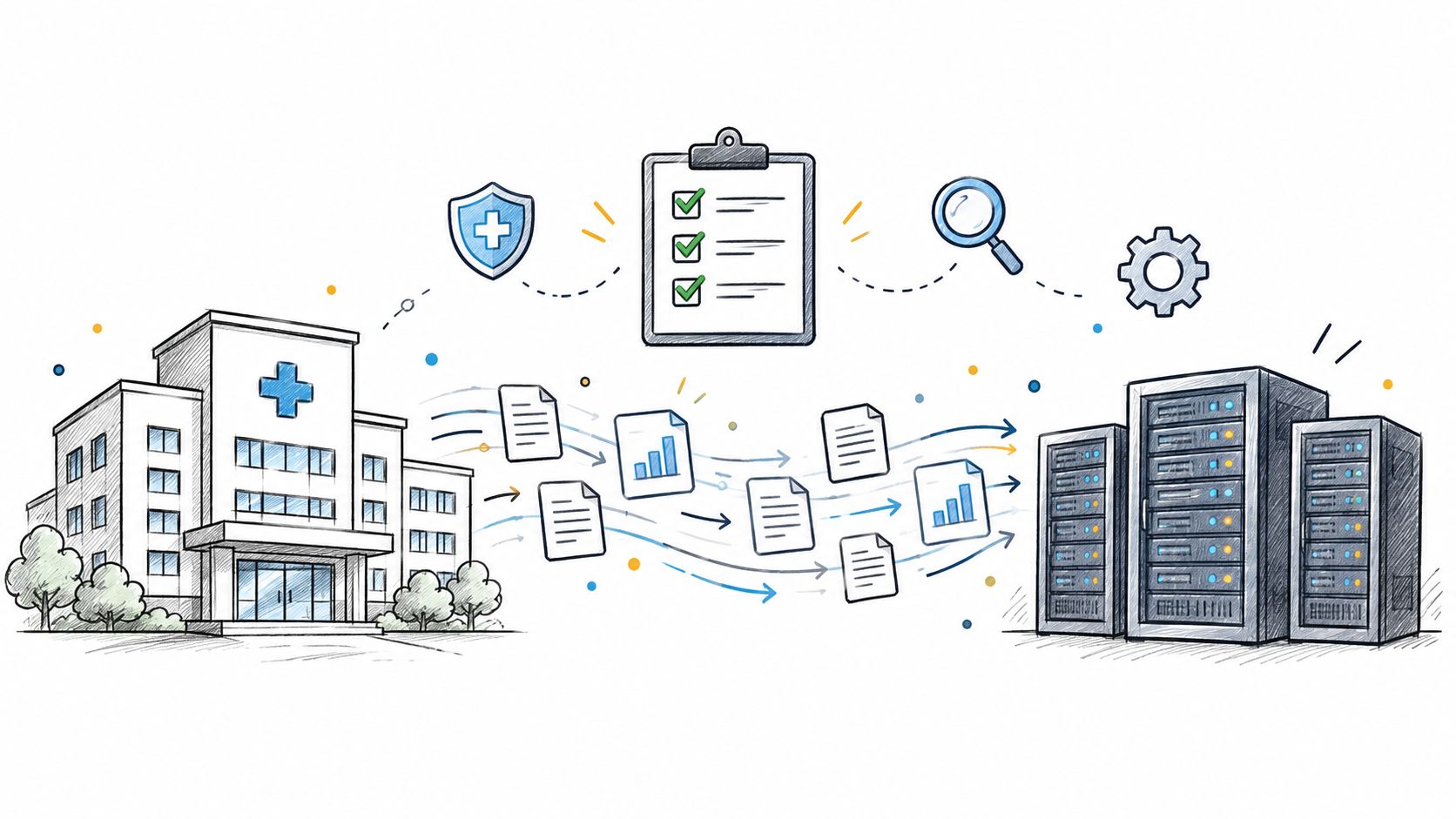
Practical data migration planning guide for healthcare teams. Scope, mapping, compliance, validation, cutover and rollback decisions explained end to end.
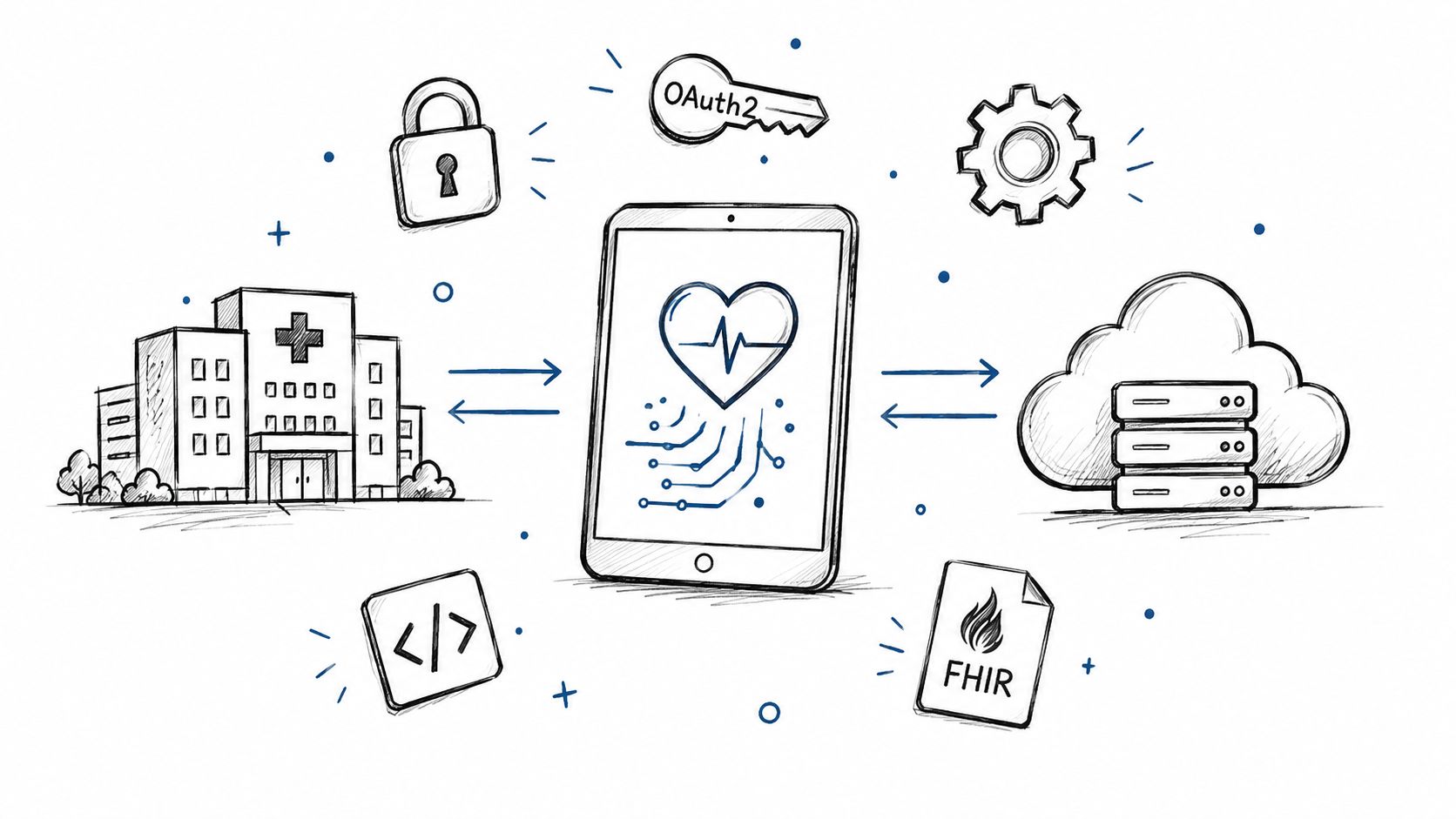
Smart on FHIR guide for healthtech engineers. Learn the OAuth 2.0 launch model, scope syntax, backend services, and US regulatory requirements.
Connect with our team to explore how AI expertise can transform your business.