
AI in Healthcare
HIPAA-Compliant AI: How to Use LLMs With PHI Safely
How to build HIPAA-compliant AI: when LLM providers need a BAA, data minimization, de-identification, audit controls and a reference architecture.
October 16, 2026Read more
AI is transforming healthcare compliance monitoring by automating checks, analyzing data, and identifying risks in real time. It helps organizations stay compliant while improving efficiency and accuracy.
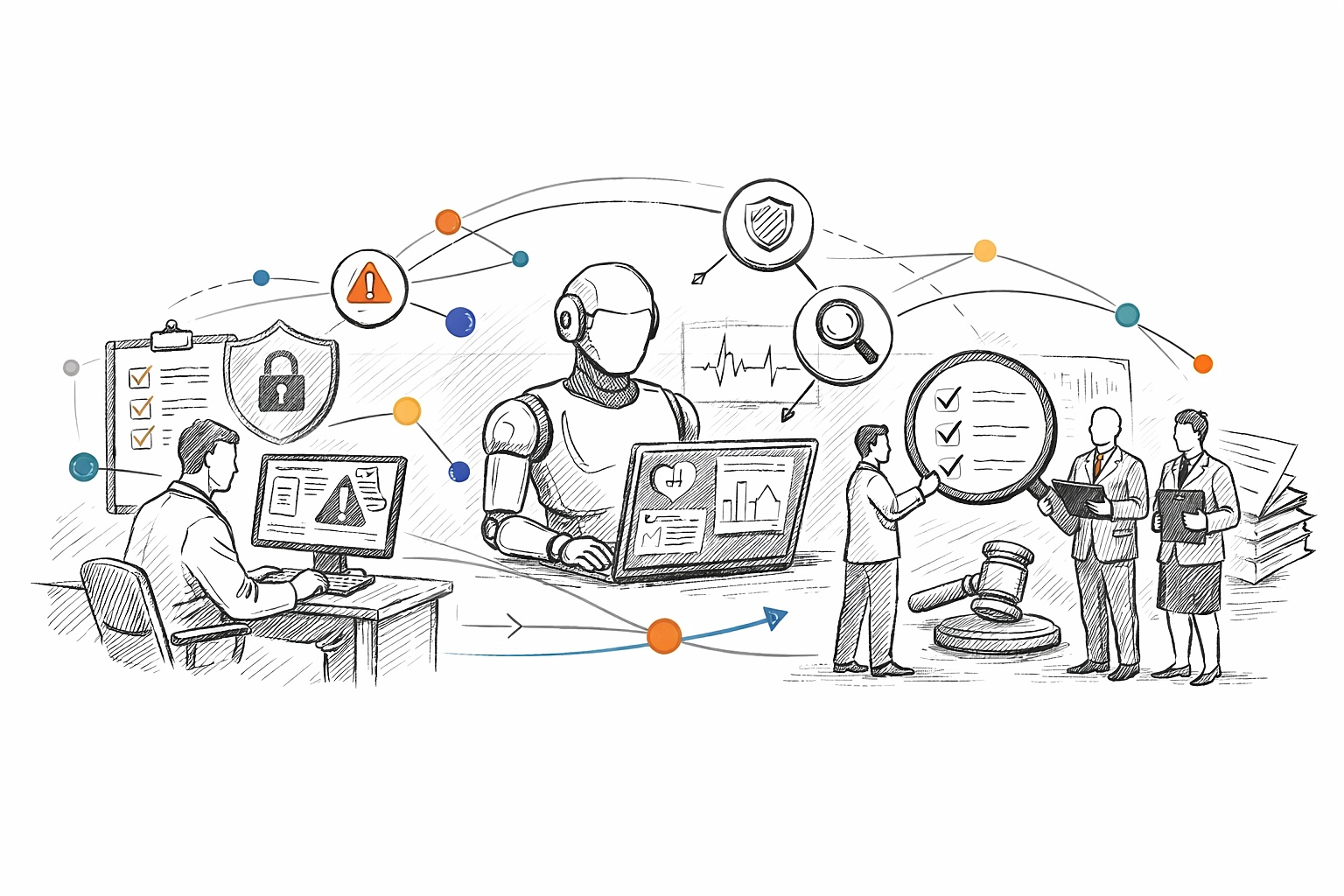
Healthcare systems once relied on manual checks, paper records, and audits conducted only periodically. That approach left gaps, caused delays, and raised risk in important areas. Rules in healthcare are strict because patient safety, legal responsibility, and data protection are always at stake. Every action in a healthcare setting must meet established standards, which adds complexity to daily operations.
AI refers to systems that analyze data, identify patterns, and make informed decisions. Healthcare compliance refers to adhering to laws, policies, and clinical guidelines. Compliance monitoring involves continuously tracking these activities to detect issues early. AI for healthcare compliance pulls these pieces together into a more accurate and continuous monitoring process.
Healthcare compliance monitoring means tracking whether clinical, administrative, and technical activities follow the required rules. It covers how patient data is handled, whether billing is accurate, how clinical protocols are followed, and who has access to systems. This work matters because it directly affects patient safety, legal risk, and data privacy. Even a single gap in compliance can lead to financial penalties or a loss of trust from patients.
Older methods relied on manual audits, which took time and effort. Mistakes often slip in during data review. Problems could go unnoticed for long stretches, adding more risk as they lingered. These limitations made it clear that a more consistent and reliable approach was needed.
AI systems keep an eye on activities across healthcare platforms in real time. They go through large amounts of data and flag irregular patterns as soon as they appear. This cuts down the time between an issue happening and it being noticed.
For instance, if someone tries to access patient data without permission, AI systems pick it up right away and send an alert. This quick visibility lowers risk and speeds up response. A healthcare organization working with a healthtech engineering partner often puts such systems in place to keep consistent oversight across daily operations.
AI tracks multiple data streams across systems without interruption. It keeps an eye on patient records, billing transactions, and access logs. This ongoing monitoring builds a full picture of what is happening across the system.
Through this process, AI picks up on unusual behavior, like repeated attempts to access records, inconsistent billing entries, or incomplete documentation. These insights bring more visibility to operations and help reduce risks that might otherwise stay hidden. Organizations that use healthcare AI services gain deeper insight across these data points and achieve more precise monitoring.
AI sends out alerts when it spots something that does not meet compliance standards. These alerts reach the appropriate teams immediately, reducing response time. AI also puts together detailed compliance reports. These reports cover patterns, risks, and summaries of system activity. This reduces the manual effort in documentation and provides a clear record for audits. A custom AI strategy report outlines how such reporting systems align with organizational goals and compliance needs.

AI improves accuracy by working through large datasets with precision. This lowers the chance of missing important details during reviews.
It reduces human errors by limiting manual involvement in repetitive tasks. This brings consistency to how monitoring is done.
Audits move faster because data collection and reporting happen automatically. Teams spend less time hunting for information and more time focusing on what the data shows.
Data security gets a boost from continuous tracking and the ability to spot unusual activity early. Unauthorized actions are caught sooner.
Cost and time efficiency improve as AI reduces manual work and speeds up compliance tasks. Organizations get more out of the resources they have.
SaMD solutions also help maintain compliance within software-driven medical systems, adding another layer of reliability.
AI uses past data to identify patterns and forecast potential risks. It reviews previous compliance issues and highlights areas that may need attention. This shifts compliance from reacting to problems after they happen to planning. Teams get time to address risks before they grow.
AI automation services often come with predictive models that help sharpen decision-making across compliance tasks.
AI runs audits by continuously analyzing data. It reviews transactions, records, and system logs without manual input. This cuts down the workload for compliance teams and makes audits more consistent. It also leaves a clear trail of activities for future reference. Organizations that invest in AI implementation support can bring these automated audit systems into their existing infrastructure.
AI spots unusual patterns in data. It detects fraud, misuse, or abnormal behavior by comparing what is happening now with what is considered normal. For example, sudden changes in billing entries or repeated access attempts trigger alerts. These insights help reduce the chance of risks slipping through. AI workflow automation strengthens this by connecting different systems and building a unified monitoring framework.
Data quality is a constant concern. AI depends on accurate information to deliver reliable insights. When data is incomplete or inconsistent, the results lose their effectiveness. AI bias can also become an issue if the training data lacks diversity. That can lead to uneven results across different situations.
Connecting AI with existing systems takes planning. Many healthcare organizations still run on older platforms, which adds technical complexity when introducing new tools. Relying too much on automation can reduce human oversight. Judgment from experienced people still matters, especially in complex decisions. Having a clear sense of AI use cases helps with implementation and reduces confusion as new systems are brought in.
Healthcare compliance monitoring continues to advance as AI systems improve. Real-time tracking becomes more precise, with faster analysis and deeper insights. Risk prediction gets sharper thanks to better data models.
Organizations can anticipate compliance issues with more clarity. Integration across smart hospital systems creates a connected environment where data moves smoothly between departments. Automation across workflows brings greater efficiency and consistency. Compliance becomes a continuous part of daily operations rather than a separate task.
AI for healthcare compliance monitoring marks a move from reacting to issues after they arise to staying ahead of them. It brings accuracy, efficiency, and early risk detection into a well-organized system. Healthcare organizations that adopt AI-driven monitoring gain clearer visibility into operations, improve data security, and close compliance gaps. This approach builds a solid foundation for managing complex regulatory environments.
Organizations looking to strengthen compliance monitoring should consider AI-driven solutions. Contact us to explore how AI for healthcare compliance can support your operational goals and improve long-term performance.
AI for healthcare compliance uses intelligent systems to monitor rules, detect risks, and ensure continuous adherence to regulations.
Healthcare AI services enable real-time tracking, automated alerts, and support key AI use cases for accurate and efficient compliance management.
A healthtech engineering partner helps integrate solutions, streamline processes, and provide AI implementation support for reliable compliance monitoring.
They can use a custom AI strategy report to define goals and implement AI automation services for continuous monitoring and reporting.
SaMD solutions and AI workflow automation enhance data tracking, reduce errors, and strengthen compliance processes across healthcare systems.
How to build HIPAA-compliant AI: when LLM providers need a BAA, data minimization, de-identification, audit controls and a reference architecture.

Practical data migration planning guide for healthcare teams. Scope, mapping, compliance, validation, cutover and rollback decisions explained end to end.

Smart on FHIR guide for healthtech engineers. Learn the OAuth 2.0 launch model, scope syntax, backend services, and US regulatory requirements.
Connect with our team to explore how AI expertise can transform your business.