
AI in Healthcare
HIPAA-Compliant AI: How to Use LLMs With PHI Safely
How to build HIPAA-compliant AI: when LLM providers need a BAA, data minimization, de-identification, audit controls and a reference architecture.
October 16, 2026Read more
AI is helping healthcare systems break down data silos by enabling seamless data sharing and integration. This improves care coordination, enhances decision-making, and supports better patient outcomes.
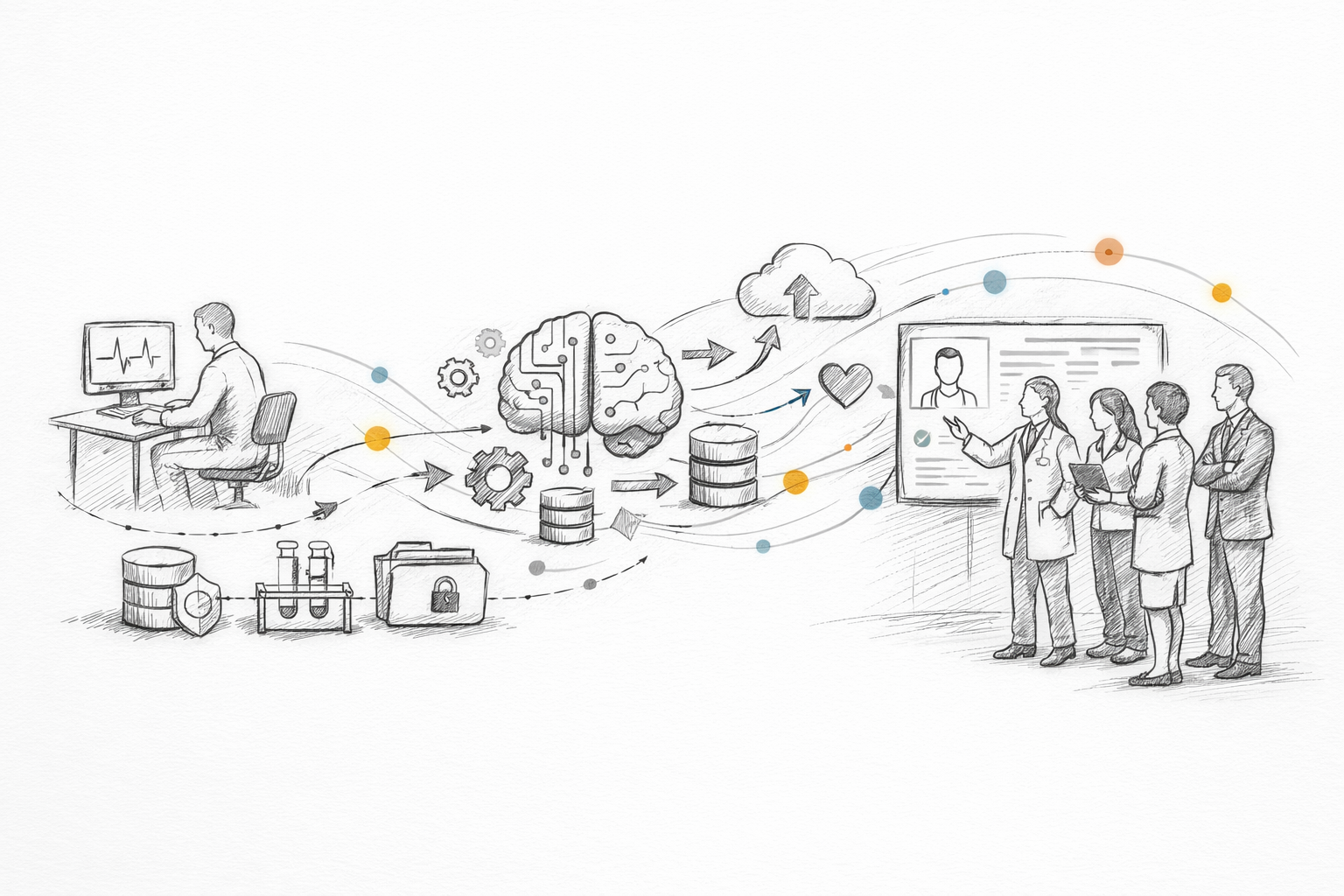
Healthcare systems collect enormous amounts of patient information from hospitals, labs, and administrative tools, but this data often remains locked inside separate systems. These disconnected silos slow down clinical work, leave gaps in patient records, and make it harder for care teams to see the full picture. Healthcare data interoperability addresses this by linking systems so information can flow freely. Artificial intelligence adds another layer by helping organize, clean up, and link this data in ways that actually make sense.
Healthcare data silos are separate storage systems where patient information gets trapped inside specific tools. Electronic health records, laboratory systems, pharmacy platforms, and insurance databases each hold their own sets of data with no connection between them. This lack of connection makes it harder to get a full view of a patient's history.
These silos form because systems use different formats, run on legacy technology, or adhere to different standards across providers. When platforms don't connect well, the insights pulled from data are incomplete, and that can affect both operational efficiency and the quality of patient care. A structured AI readiness assessment often brings these silos to light and shows where gaps in data access exist. Many organizations turn to specialized healthcare AI services to help identify these gaps and determine where integration work should actually start.
Healthcare data interoperability means different systems and applications can share, read, and make use of patient information without getting stuck. The goal is to create a connected environment where data moves easily between everyone involved.
There are three levels to how this works. Foundational interoperability handles basic data sharing. Structural interoperability sets the format for how data is exchanged. Semantic interoperability ensures the meaning of data remains consistent, regardless of which system it passes through. Together, these layers support a more connected way of delivering care.
Many organizations use a clear AI adoption roadmap to figure out how to build interoperability step by step through integration and data standardization efforts.
Artificial intelligence helps connect systems that were never designed to work together. It identifies patterns across different datasets and aligns them into a coherent structure. AI can organize messy records, extract valuable information, and transfer data between platforms without manual effort. This makes healthcare data interoperability stronger and helps ensure the information being shared is accurate. A well-thought-out custom AI strategy report offers guidance on which models and tools to use for building smooth integration across healthcare systems.

Machine learning analyzes data patterns across different systems and helps align formats that do not naturally match. It learns from past data and finds connections between fields, creating more consistent structures.
NLP takes clinical notes, prescriptions, and reports written in plain language and turns them into structured data. It extracts the important details and prepares them for use across integrated systems.
APIs and FHIR standards establish clear channels for data exchange between systems. AI adds another layer by identifying inconsistencies and supporting data accuracy.
These platforms gather information from many sources and create a single layer where it can all be analyzed. They handle large amounts of data and give care teams real-time access to patient records.
Organizations looking for advanced integration often work with a healthtech engineering partner to build systems that scale and fit their operational needs.
When data is connected, clinicians gain a more complete view of each patient. That leads to more accurate diagnoses and better treatment plans.
Having real-time access to records reduces waiting time. Doctors can act quickly with the right information in front of them.
Automating data exchange between systems reduces manual entry and repetitive work. Administrative staff can spend time on more valuable tasks.
Connected systems give instant access to updated patient information across every department. It also improves communication between departments, since every team works from the same updated records. This kind of access brings greater clarity to daily operations and supports better clinical decisions at every step of patient care.
When multiple providers can see the same data, it becomes easier to work together as a team.
Real-world AI use cases in hospitals show how connected data helps clinical teams work more efficiently and keeps patients more engaged in their care.
Patient information is highly sensitive and needs strong protection. Meeting privacy rules is a constant concern.
Older systems were not built to work with today's technology. Connecting them takes careful planning and technical know-how.
Different formats and coding methods create mismatches between data sources, making it harder to share information cleanly.
Upgrading systems and investing in new technology requires a significant financial commitment.
Healthcare providers exploring AI automation services often examine these challenges closely to develop strategies that remain effective over the long term.
Organizations should start by checking how ready their data really is. That means looking at quality, formats, and whether information can actually be accessed. Choosing a system that can scale is also important, allowing it to manage growing data and future connections.
Following healthcare regulations has to stay front and center throughout the entire process. Working with teams that know the space and picking the right tools makes long-term success more likely. Structured AI implementation support can help guide organizations through each phase of the rollout. Adopting targeted tools like SaMD solutions can also help align clinical workflows with interoperable systems while staying in line with regulatory expectations.
Artificial intelligence is helping shape a future where healthcare becomes more accurate and easier to access. Connected systems will allow for earlier diagnosis and more proactive care across hospitals, labs, and remote services. When patient data flows without interruption between systems, care teams get a clearer and more complete view of medical history, which supports better treatment decisions. Personalized care will move forward as information from clinical records, genetics, and daily habits comes together in one place. This kind of connection brings deeper insight and more precise care.
Fully connected digital systems will change how care is delivered across the entire healthcare space. Providers, specialists, and care teams will have access to the same up-to-date information without delays or missing pieces. This steady flow of data makes healthcare data interoperability stronger at every stage, from diagnosis through recovery and ongoing care. Smarter analytics will continue to sharpen clinical decisions, making them more reliable and grounded in data. As systems grow more connected, healthcare organizations will run more smoothly, coordinate better, and deliver care in a more unified way.
Healthcare data silos still get in the way of sharing important patient information across systems. Artificial intelligence brings order to scattered data and helps create a path toward smoother integration. Healthcare data interoperability is becoming a key piece of delivering better care and improving patient outcomes. Organizations that adopt AI-driven approaches can build connected systems that strengthen both clinical work and daily operations. Contact us to explore how intelligent data integration can reshape healthcare systems.
Healthcare data interoperability enables systems to share and use patient data seamlessly, improving access, accuracy, and coordination across healthcare environments.
Healthcare AI services use intelligent models to organize, map, and connect data across systems, supporting real-time exchange and better AI use cases.
A healthtech engineering partner helps build scalable systems, ensures smooth integration, and provides AI implementation support for connected healthcare platforms.
Organizations often begin with an AI readiness assessment and create a custom AI strategy report, followed by an AI adoption roadmap for structured implementation.
AI automation services, APIs, and regulated SaMD solutions help streamline data exchange, improve workflows, and strengthen healthcare data interoperability.
How to build HIPAA-compliant AI: when LLM providers need a BAA, data minimization, de-identification, audit controls and a reference architecture.

Practical data migration planning guide for healthcare teams. Scope, mapping, compliance, validation, cutover and rollback decisions explained end to end.

Smart on FHIR guide for healthtech engineers. Learn the OAuth 2.0 launch model, scope syntax, backend services, and US regulatory requirements.
Connect with our team to explore how AI expertise can transform your business.