
AI in Healthcare
HIPAA-Compliant AI: How to Use LLMs With PHI Safely
How to build HIPAA-compliant AI: when LLM providers need a BAA, data minimization, de-identification, audit controls and a reference architecture.
October 16, 2026Read more
Discover how AI improves patient safety and reduces errors in hospitals through intelligent monitoring, predictive analytics, and smarter clinical decision-making.
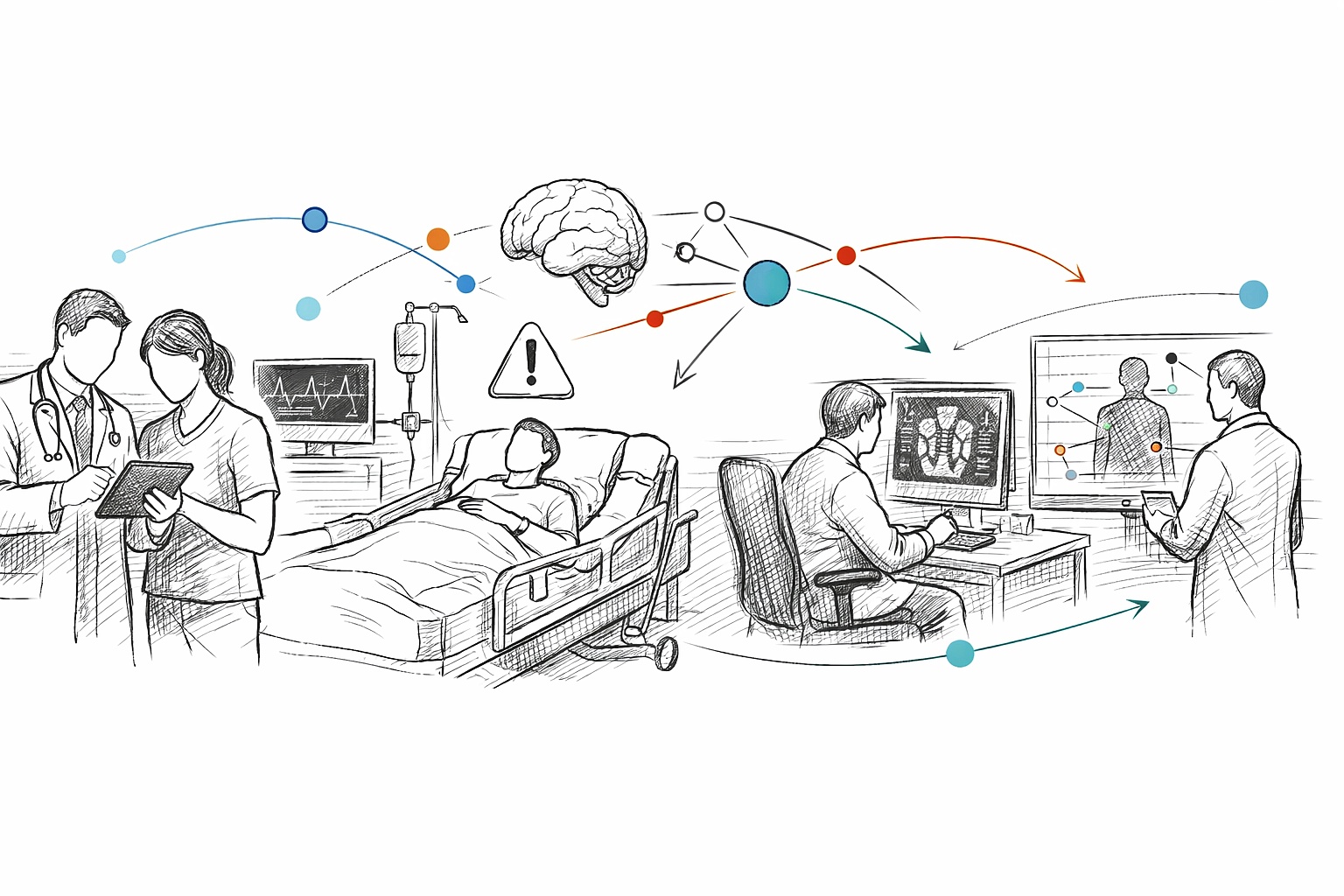
Hospitals run on continuous clinical judgment, clear documentation, and close teamwork. Each decision is directly linked to patient well-being, and even minor mistakes can have serious effects. As care becomes more complex, structured intelligence shapes safety thinking in clinical practice. AI patient safety reflects a careful approach that sharpens accuracy, lowers preventable risks, and maintains consistency in clinical decisions while respecting professional responsibility.
Medical errors rarely come from carelessness. They often result from fatigue, scattered information, unclear workflows, and pressure during busy hours. Clinicians manage large amounts of patient data, lab results, medication records, and notes spread across different systems. This continuous demand can exhaust even experienced teams and increase the chance of mistakes.
Healthcare AI services address this challenge by reviewing large amounts of data and highlighting risk patterns. AI integrates with clinical routines and delivers clear alerts that support patient safety priorities.
AI applications focus on areas where mistakes are common. These tools operate within hospital workflows and provide insights clinicians can trust. Large hospitals often deploy AI Solutions to strengthen safety in medication review, patient monitoring, and diagnosis.
Medication errors are a frequent source of patient harm. AI review systems scan prescriptions, lab values, allergy records, and treatment histories. They highlight unusual doses, risky drug combinations, and timing conflicts. Clinicians receive clear alerts that prompt review before medication is given to the patient. This process reduces preventable adverse drug events across inpatient care. AI strategy consulting offers structured planning to align medication safety tools with clinical governance and regulations.
Small changes in key readings can appear hours before a visible decline. AI models track patterns across heart rate, oxygen levels, lab results, and clinical notes. When risks surface, care teams receive early alerts. These alerts create opportunities for timely action, especially in intensive care units and specialized wards. They rely on proven AI use cases that demonstrate faster response times during patient deterioration.
Interpreting imaging places heavy demand on radiology teams, especially during high-volume periods. AI tools highlight areas of concern, prioritize urgent cases, and identify patterns linked with known conditions. Radiologists keep full clinical authority, with AI serving as an analytical tool that strengthens consistency and focus. Successful projects frequently involve an experienced AI implementation partner who understands clinical workflows and data standards.

Hospital workflows demand constant switching between tasks. Clinicians document, order tests, communicate with teams, and care for patients across different systems. Mistakes often occur during care transitions, handoffs, and gaps in documentation. Many organizations document these workflow risks with a custom AI strategy report. This report details safety priorities and integration needs.
AI workflow tools track these transitions and identify missing steps, incomplete records, or delayed actions. This lowers risk during patient transfers, discharge planning, and shift changes. Over time, hospitals gain a clearer understanding of process gaps that lead to repeated safety incidents.
For AI systems to improve patient safety, clinicians require confidence in their outputs. Predictions without explanation create hesitation. Modern hospital AI platforms focus on clarity, traceability, and clinical relevance.
Explanatory outputs indicate which data points influenced a recommendation. Clinicians review context instead of facing unexplained alerts. This transparency builds trust and encourages thoughtful clinical engagement rather than blind reliance.
AI patient safety appears here as a guiding principle rather than a single tool. It reflects a design approach supporting human judgment with clarity and accountability.
AI deployment aimed at safety requires close oversight. Hospital leaders set governance frameworks that define responsibility, review outcomes, and guide system updates. Clinical committees study performance trends, alert accuracy, and unexpected effects.
Data quality holds a central role. Models trained on incomplete or biased data can increase risk. Hospitals focus on data validation, continuous monitoring, and clinician feedback. This structured approach maintains AI alignment with clinical goals and ethical standards.
Hospitals collect incident reports across departments. In practice, this information is frequently unused due to its volume and the constraints of manual review. AI analysis studies patterns across years of reports, highlighting recurring risk factors, workflow bottlenecks, and environmental contributors.
Findings from an AI readiness assessment frequently direct decisions on where to introduce analytical capabilities safely. Insights from this analysis guide policy changes, training priorities, and system redesign. Hospitals move from reacting to problems toward reducing risks in advance, based on evidence.
Technology serves as a complement within patient safety programs. Clinical judgment, empathy, and ethical decision-making remain human responsibilities. AI tools add perspective, recognize patterns, and bring consistency across complex systems.
Care teams retain authority for final decisions. AI provides guidance based on data without replacing clinical reasoning. This balance preserves professional accountability and patient trust across care settings.
Lasting safety improvement requires cultural alignment with technology. Hospitals invest in staff education, clear communication, and practical expectations around AI capabilities. Teams learn to interpret alerts, question recommendations, and provide feedback, following a clear AI adoption roadmap with realistic phases.
Leadership involvement signals commitment to safety-focused innovation. When governance, clinical engagement, and technical design align, AI systems bring lasting value across hospital operations.
AI patient safety serves as a framework for thoughtful integration rather than rapid adoption. The focus remains on measurable harm reduction, clinical confidence, and patient outcomes. Technical novelty is not the primary goal.
AI is changing how hospitals manage safety and prevent errors. By detecting risks early, improving workflow visibility, and using data-driven insights, intelligent systems help reduce preventable harm in hospitals. AI patient safety represents a move toward reliability, transparency, and shared accountability between clinicians and technology teams. Hospitals that adopt this approach with care and discipline build stronger trust, clinical confidence, and better patient outcomes over time. Contact us to build safer hospital systems using AI-driven clinical insight.
AI patient safety uses intelligent systems to reduce errors, detect risks early, and support clinicians in making safer decisions.
Healthcare AI services analyze patient data, monitor deterioration, and streamline documentation to lower preventable risks.
AI Solutions support medication review, early warning for patient decline, imaging analysis, and workflow monitoring to prevent errors.
A custom AI strategy report, AI maturity model, and AI readiness assessment help plan safe integration and align with clinical goals.
Partnering with an AI implementation partner and following an AI adoption roadmap ensures structured, reliable, and trustworthy deployment.
How to build HIPAA-compliant AI: when LLM providers need a BAA, data minimization, de-identification, audit controls and a reference architecture.

Practical data migration planning guide for healthcare teams. Scope, mapping, compliance, validation, cutover and rollback decisions explained end to end.

Smart on FHIR guide for healthtech engineers. Learn the OAuth 2.0 launch model, scope syntax, backend services, and US regulatory requirements.
Connect with our team to explore how AI expertise can transform your business.