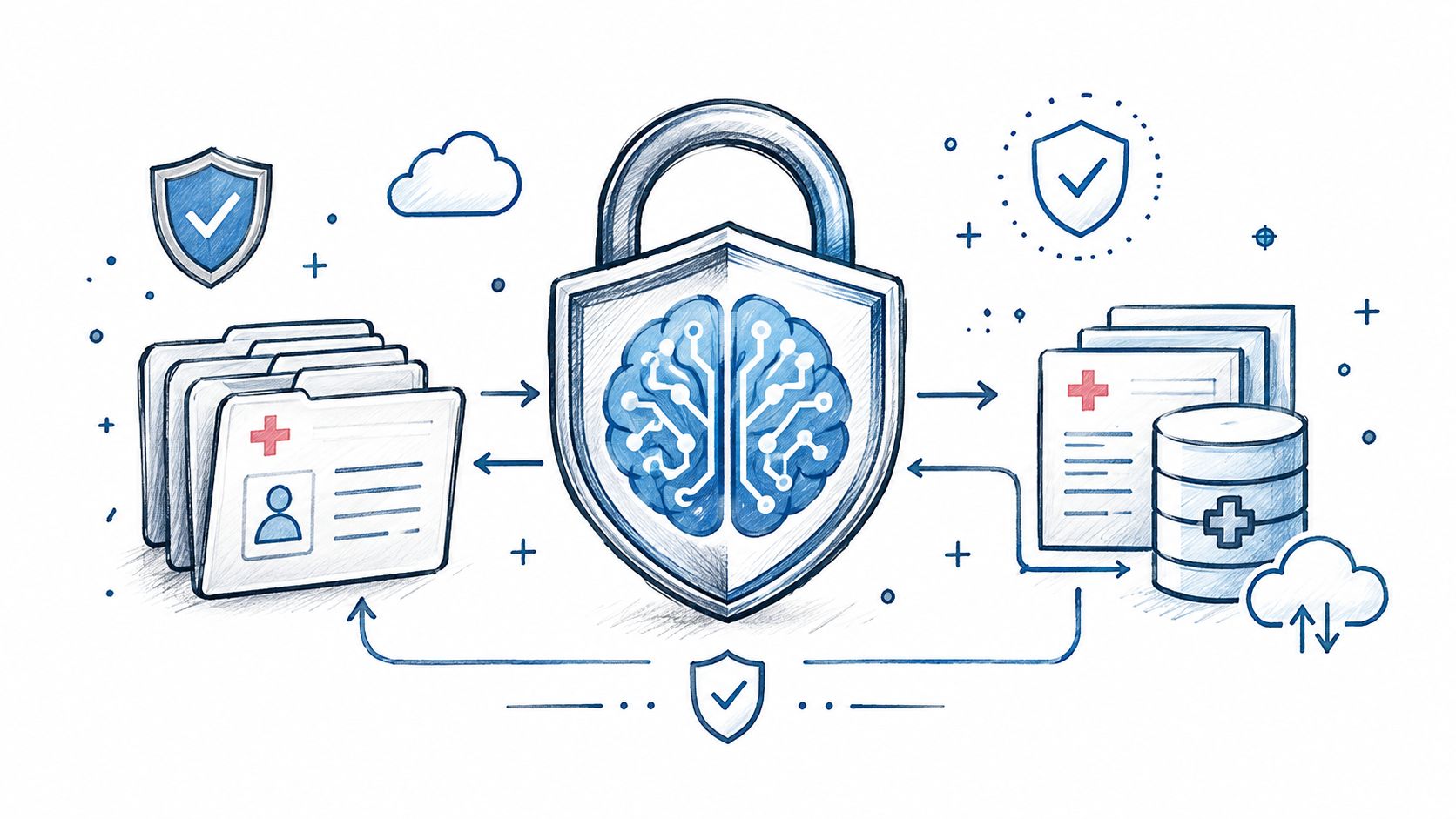
AI in Healthcare
HIPAA-Compliant AI: How to Use LLMs With PHI Safely
How to build HIPAA-compliant AI: when LLM providers need a BAA, data minimization, de-identification, audit controls and a reference architecture.
October 16, 2026Read more
Gain a competitive edge with strategic AI consulting and practical AI use cases. Discover how intelligent solutions can accelerate growth and help your business outperform rivals.

In the fast-evolving world of business technology, the term “AI competitive advantage” is becoming the defining factor between market leaders and followers. Companies that harness the power of artificial intelligence to inform decisions, automate operations, and reimagine customer experiences are pulling ahead. Today, 78 percent of organizations report using AI in at least one business function, up from 55 percent just a year earlier. Yet not every AI deployment yields lasting value. Truly sustainable gains come when AI is woven into a broader business strategy, guided by a strong AI roadmap and supported by capable teams.
In this post, we explore how enterprises can turn technology into a strategic asset, building AI competitive advantage not as a gadget, but as a core pillar of their business. We discuss challenges, success factors, real use cases, and how to choose an AI implementation partner or consulting team wisely. With data from authoritative sources and grounded examples, this is more than a marketing pitch; it’s a practical, evidence-based guide.
Many firms begin AI journeys by exploring niche AI use cases, for example, chatbots in customer service or anomaly detection in operations. Yet the companies that leap ahead are those that anchor AI in their corporate strategy. Top performers will move from chasing isolated use cases to leveraging AI to fulfill their overarching strategy. In effect, AI becomes not just a tool but a competitive axis.
Advantage in the age of AI are: a strong digital core of data, rapid organizational learning, capability reinvention, external partnerships, and trusted use of AI. When a firm aligns AI initiatives around these dimensions, the edge it gains is less likely to erode under competitive pressure.
Academic and industry research both support the link between well-deployed AI and better outcomes. AI adoption correlates with improved firm performance across sectors. AI usage, together with strong technology competencies and information management systems, significantly boosts competitive advantage. Still, care is needed. However, when AI becomes ubiquitous, its ability to confer a unique advantage diminishes. That underscores the need for a thoughtful, differentiated strategy.
A scattershot approach to AI rarely delivers. A structured plan, often guided by AI roadmap services, aligns AI projects with business goals, sequences investments, and ensures scalability. This roadmap should define priorities such as customer retention or process optimization, identify required data, and map out integration challenges.
AI is only as strong as its data. Leading firms invest heavily in data governance, unified digital platforms, and a “digital core” that centralizes and normalizes data flows. This is a foundational resource for competitive advantage. Without reliable, clean, well-governed data, AI models may fail or produce misleading insights.
Few organizations can build world-class AI capabilities overnight. That is where an AI implementation partner or AI consulting team can play a pivotal role. Look for partners who combine domain expertise, engineering depth, ethical orientation, and a track record of guiding clients from pilot to production scale.
Alignment between business and development teams is critical when scaling enterprise AI. A good AI strategy consulting team will help bridge that gap, ensuring AI efforts do not remain isolated silos.
Technology without governance is risky. As organizations scale AI, they must build guardrails such as ethical frameworks, bias detection, security controls, and auditability. Only 2 percent of companies currently meet mature standards for responsible AI usage. Training and talent matter just as much. Many firms consider lack of AI skills as a top barrier to realizing ROI. The AI consulting team should support skill development and cultural change, not just technical build.
Unlike one-time ERP installs, AI systems must evolve constantly. The ability to learn, iterate, and refine models provides an ongoing edge. This rate of learning is a key dimension of advantage. Metrics, feedback loops, and continuous retraining must be integral to the strategy.
Equipment downtime can be costly.Thus predictive maintenance is used where, using sensor data and machine learning, firms forecast failures before they happen. AI use in manufacturing can multiple the productivity and reduce energy consumption.
Personalization is increasingly popular among retailers in ecommerce businesses. Retailers use AI models to segment customers, tailor offers, and dynamically price products. AI enables real-time personalization at scale, a capability that was previously infeasible.
One classic AI scenario is replacing repetitive, rule-based tasks with workflow automation. In finance, HR, and operations, these automations free staff to focus on higher-value work. Digital and AI transformations yield an advantage when applied broadly and consistently.
Banks and insurers are deploying AI models to flag anomalous behavior, detect fraud, and assess credit risk in real time. The speed and accuracy of AI in dataset scanning exceed human capacity. It proves the capability of AI in securing a business.
From demand forecasting to routing logistics and inventory balancing, AI helps companies reduce costs while improving responsiveness. In industrial use, leaders report double productivity gains.
These are just a few among hundreds of AI use cases documented across sectors. The trick is selecting those that fit your context, then scaling them wisely through an AI roadmap and leveraging a strong AI implementation partner or consulting team.
While AI promises transformative outcomes, achieving a true AI competitive advantage is not a straightforward journey. Many organizations stumble when scaling beyond pilots, managing change, or establishing ethical oversight. Understanding these challenges upfront helps companies prepare for smoother execution and long-term sustainability.
One of the most common reasons AI initiatives fail is the disconnect between proof-of-concept enthusiasm and enterprise-wide integration. Many organizations invest heavily in AI pilots, but few make it past the experimentation phase. A majority of generative AI projects fail to deliver measurable returns, with less than 10 percent making a tangible impact on profit and loss. The reason often lies not in the technology itself but in flawed implementation and misaligned workflows.
AI solutions that operate in isolation, without clear integration into existing systems or business processes, rarely generate real value. For instance, implementing an AI model for demand forecasting means little if the insights are not linked to procurement and logistics systems. Similarly, deploying chatbots without aligning them with customer relationship workflows can frustrate users instead of improving service. To avoid these pitfalls, companies must ensure that AI deployment is part of a broader AI roadmap, supported by strong data pipelines, change management, and workflow optimization.
As AI tools, frameworks, and APIs become widely accessible, competitive advantage increasingly depends on how organizations use them rather than simply having them. What once required specialized skill or proprietary algorithms can now be achieved through open-source models and cloud AI services. This democratization is both an opportunity and a threat.
If every competitor in an industry uses similar AI models for recommendations, pricing, or sentiment analysis, the resulting capabilities become uniform and lose strategic value. To maintain a distinctive edge, companies must go beyond off-the-shelf models. They should develop proprietary datasets, fine-tune models to reflect domain-specific knowledge, and build organizational processes that learn and adapt faster than competitors. AI becomes a true differentiator only when it is embedded into the company’s DNA, reflected in culture, customer experience, and decision-making speed. That is why forward-looking enterprises invest in AI strategy consulting and AI roadmap services to ensure differentiation through innovation and agility.
AI transformation requires more than technology; it demands people who can interpret, trust, and act on AI-driven insights. Unfortunately, the global shortage of skilled AI professionals remains one of the biggest obstacles. Organizations face a widening gap in roles such as data scientists, ML engineers, and AI product managers. However, technical expertise alone does not guarantee success, the entire workforce must be aligned to the new ways of working that AI introduces.
Resistance often arises when employees fear job loss or mistrust automated decision-making. Without transparent communication and leadership endorsement, even the most sophisticated AI automation services can encounter pushback. Change management, continuous learning, and clear communication about how AI complements human effort are critical. Leadership teams should emphasize that AI is not replacing talent but empowering it, automating repetitive work so that employees can focus on creativity, judgment, and innovation. Building this trust-driven culture is as important as selecting the right AI implementation partner or consulting team.
AI’s power comes with responsibility. Poorly governed AI systems can amplify biases, compromise data privacy, or lead to unintended outcomes that harm brand reputation. Although most of the executives had experienced at least one AI-related incident in their organizations, only few met mature standards for responsible AI use. This gap reveals a critical need for stronger governance frameworks.
Governance should begin at the design stage, defining ethical standards, data handling protocols, and accountability mechanisms. Continuous monitoring, explainability, and model audits ensure that algorithms behave as intended and that their decisions are transparent. Bias detection tools, security audits, and fairness evaluations should be built into the AI lifecycle, not added as afterthoughts.
Moreover, as AI becomes more autonomous through workflow automation and decision systems, human oversight must remain integral. Ethical AI not only mitigates risk but also strengthens stakeholder trust, which in itself becomes a source of competitive advantage. Organizations that adopt strong ethical foundations in AI governance are better positioned to sustain their success, retain customers, and comply with evolving global regulations.
Building a sustainable AI competitive advantage begins with clarity of purpose. Organizations must first define what they aim to achieve with AI and ensure those goals align with broader business objectives. Whether the focus is on improving decision-making, enhancing customer experience, or automating key workflows, the AI vision should connect directly to measurable business outcomes. A strong strategic alignment ensures that AI initiatives don’t remain isolated experiments but instead become core to how the company operates and grows.
Before diving into implementation, it’s essential to assess your current readiness for AI adoption. This involves evaluating data quality, infrastructure maturity, and existing talent capabilities. Many businesses overlook this stage, leading to wasted investments or delayed rollouts. Assessing readiness helps identify where the organization stands in terms of technical capability, cultural openness, and process adaptability, three pillars that determine how well AI can be integrated into the existing ecosystem.
An AI roadmap provides a structured guide for deployment. It prioritizes use cases based on business value and feasibility, ensuring that high-impact projects receive the right focus early on. The roadmap should outline a sequence for development, data integration, model deployment, and governance measures. It should also factor in dependencies such as regulatory compliance, data availability, and talent resources. Partnering with experienced AI strategy consulting or AI roadmap services providers can help build a realistic and scalable implementation plan.
The right team is at the heart of successful AI implementation. Companies can either develop in-house capabilities or collaborate with an AI consulting team that brings expertise in both technology and business transformation. The ideal partner will not only offer strong technical knowledge but also understand your industry’s specific challenges. They can guide your organization through best practices, select suitable tools, and ensure seamless integration of AI automation services and workflow automation systems.
A successful AI transformation relies on experimentation and iteration. Start small with pilot projects that address specific AI use cases and measure their impact using predefined metrics such as cost savings, efficiency gains, or improved customer outcomes. Once validated, scale the most promising solutions across departments. Regular feedback loops and continuous monitoring ensure that the systems evolve with changing data and market dynamics, preserving your AI competitive advantage over time.
Responsible AI is not optional; it is foundational. Governance mechanisms should include model audits, transparency protocols, and accountability structures to detect and prevent bias or unintended consequences. Regular reviews ensure that ethical standards are upheld, protecting both reputation and compliance standing. This stage also reinforces customer trust, a vital asset when leveraging AI for decision-making.
AI success is driven as much by people as by technology. To sustain momentum, companies must invest in upskilling employees, fostering cross-functional collaboration, and encouraging a data-driven mindset. Leadership should promote experimentation and make AI learning accessible across roles, from executives to frontline teams. Over time, this cultural shift transforms AI from a project into an organizational capability, strengthening the company’s long-term position in the market.
Following this structured path enables organizations to move beyond isolated AI pilots and build a repeatable, scalable framework for value creation. When executed with clarity, governance, and collaboration, an AI roadmap becomes a living asset that drives sustained differentiation and resilience in an increasingly competitive landscape.
Achieving an AI competitive advantage has become essential for digital leadership. Yet the difference between hype and real advantage lies in strategy, discipline, and execution. The organizations that win will not be those chasing flashy models, but those who embed AI into their DNA by aligning it with business goals, embedding governance, and continuously learning. By choosing the right AI implementation partner, investing in robust AI roadmap services, and leveraging a capable AI consulting team, companies can transform AI into a strategic differentiator rather than an experiment.
Do not let AI be a trend you chase. Make it the backbone of your competitive playbook.
If you are ready to explore how AI can reshape your market position, let’s talk.
You can visit our website to learn how we can work together to design your AI strategy, build use cases, and scale your advantage.
1. What does “AI competitive advantage” really mean?
AI competitive advantage refers to the sustained edge that organizations gain by leveraging artificial intelligence in ways that are hard for competitors to replicate. It goes beyond mere automation; it involves unique data assets, fast learning loops, strategic alignment, and governance frameworks that embed AI into the firm’s identity.
2. How many AI use cases should an organization pursue?
It is better to start with a few high-impact, feasible AI use cases aligned with business priorities than to scatter effort across dozens of experiments. Focused pilots that scale can deliver meaningful returns, whereas too many parallel attempts dilute resources and create governance risk.
3. How do I evaluate an AI implementation partner or consulting team?
Look for partners with domain understanding, engineering capability, experience scaling from pilots to production, and ethics or governance proficiency. They should help bridge business and technical teams, not just deliver code. References, case studies, and cultural fit also matter.
4. Can AI advantage be sustained over time?
Yes, but only if you evolve. As baseline AI capabilities become widespread, advantage comes from refining deployment, improving data quality, faster learning, and domain specialization. Continuous investment in capability reinvention is key.
5. What is the role of governance and responsible use in AI strategy?
Governance ensures that AI systems behave reliably, transparently, and fairly. It guards against bias, misuse, and compliance issues. In a mature strategy, it is foundational. Models need auditing, explainability, monitoring, and accountability to preserve trust and uphold competitive advantage.
How to build HIPAA-compliant AI: when LLM providers need a BAA, data minimization, de-identification, audit controls and a reference architecture.
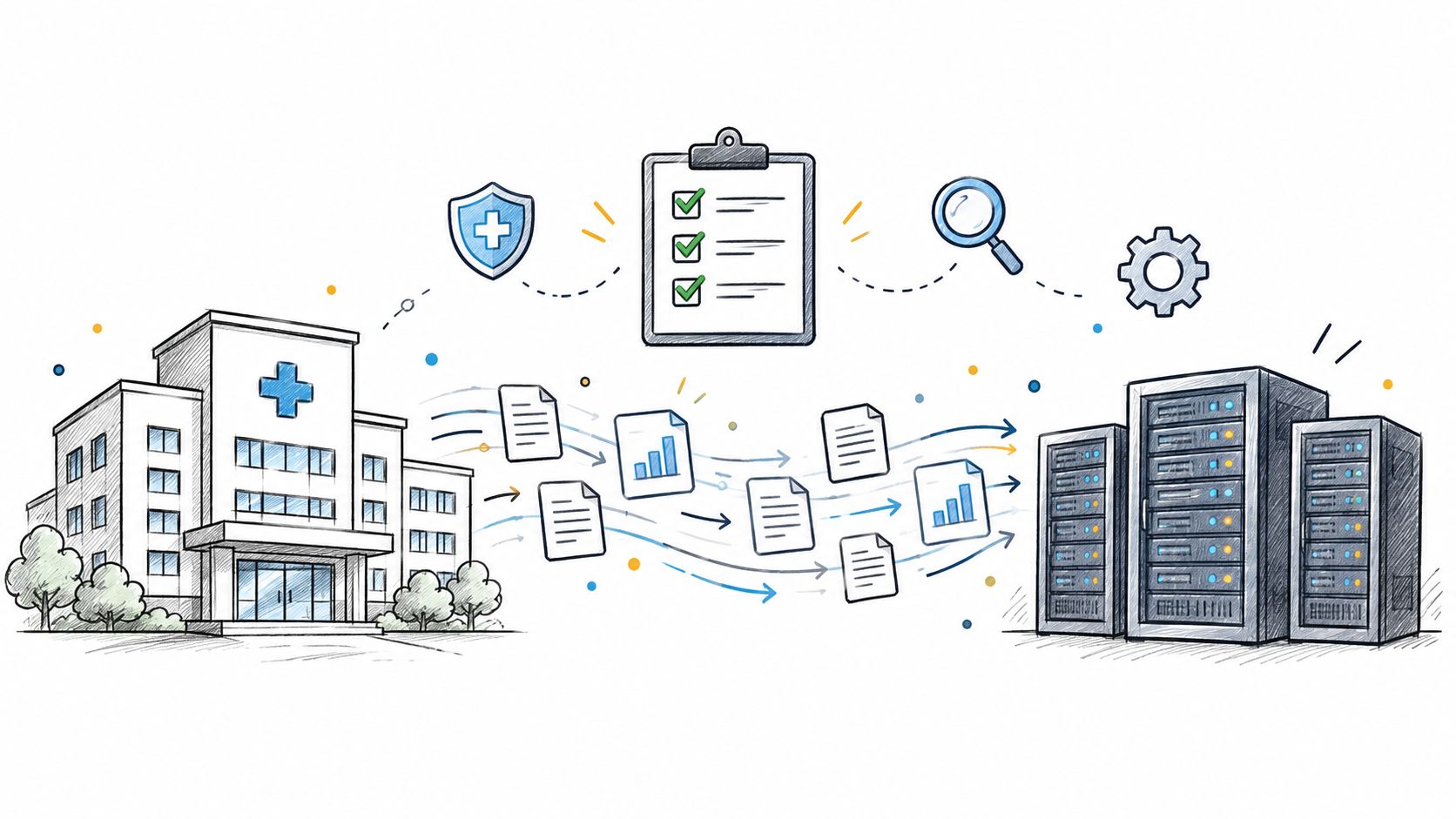
Practical data migration planning guide for healthcare teams. Scope, mapping, compliance, validation, cutover and rollback decisions explained end to end.

Smart on FHIR guide for healthtech engineers. Learn the OAuth 2.0 launch model, scope syntax, backend services, and US regulatory requirements.
Connect with our team to explore how AI expertise can transform your business.