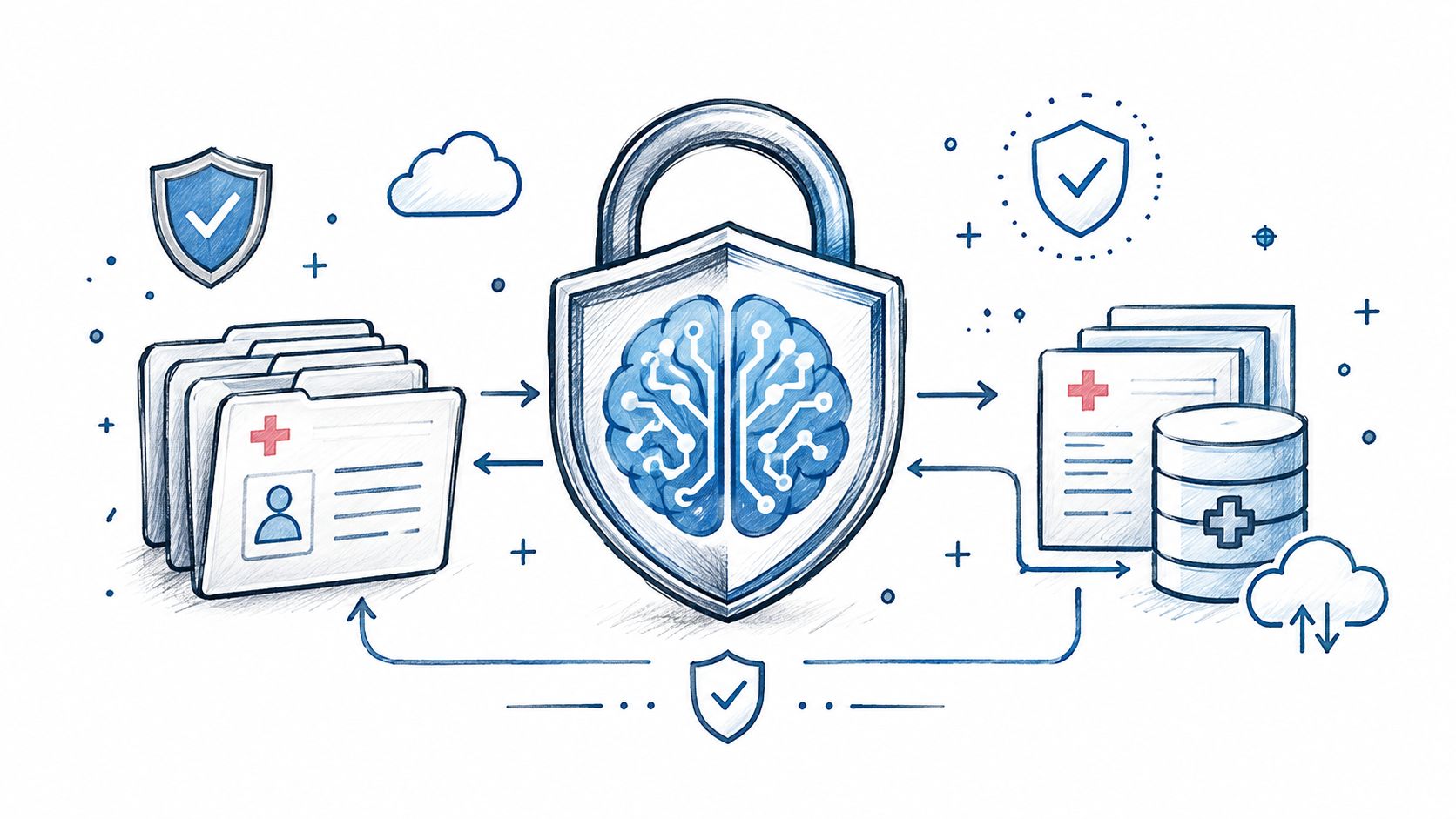
AI in Healthcare
HIPAA-Compliant AI: How to Use LLMs With PHI Safely
How to build HIPAA-compliant AI: when LLM providers need a BAA, data minimization, de-identification, audit controls and a reference architecture.
October 16, 2026Read more
Transform your research with clinical operations analytics. Learn to optimize trial efficiency, cut costs, and improve outcomes with data-driven strategies.

At its core, clinical operations analytics is all about using data to make clinical research smarter, faster, and more efficient. It’s the practice of digging into the mountains of data generated during trials and pulling out genuine insights that you can actually act on. This goes way beyond just running basic reports; it's about tackling the real-world pressures of drug development, like spiraling costs and the constant demand to get new therapies to patients sooner.
Most healthcare organizations are drowning in data but starving for wisdom. This is especially true in clinical trials. Information floods in from Electronic Health Records (EHRs), Clinical Trial Management Systems (CTMS), lab reports, and patient diaries, creating a tidal wave of disconnected data points.
Clinical operations analytics acts as a translator, turning that raw data into a clear story. It helps you see the bigger picture.
Think of it this way: knowing one patient's blood pressure is one thing. Understanding the collective health and risk profile of your entire trial population across multiple sites is something else entirely. That’s the clarity analytics provides. It helps you pinpoint the best-performing trial sites, accurately forecast patient recruitment, and manage your budget with confidence. Without it, you're just reacting. With it, you're making strategic, evidence-based decisions.

To give you a clearer idea, here is a quick overview of what clinical operations analytics involves.
| Aspect | Description | Key Benefit |
|---|---|---|
| What It Is | The practice of collecting, analyzing, and interpreting data from all phases of clinical research. | Transforms raw trial data into clear, actionable intelligence for decision-making. |
| Why It Matters | Addresses major industry challenges like high costs, long timelines, and operational inefficiencies. | Drives significant cost savings, accelerates research timelines, and improves trial success rates. |
| How It Works | Uses descriptive, predictive, and prescriptive analytics methods on data from various sources (CTMS, EHR, etc.). | Enables teams to identify trends, forecast future outcomes, and receive data-backed recommendations. |
This structured approach is what separates high-performing research organizations from the rest.
Let's be clear: embracing data isn't just a trend. It's a matter of survival. The numbers tell the story—the global Healthcare Operational Analytics Market, which stood at USD 17.09 billion in 2025, is expected to explode to USD 30.09 billion by 2029. That's a compound annual growth rate (CAGR) of 15.2%, signaling a massive industry-wide shift.
By applying analytics, clinical teams can pinpoint inefficiencies that were previously invisible, predict operational roadblocks before they occur, and allocate budgets with surgical precision. This approach turns the complex machinery of clinical research into a fine-tuned engine for innovation.
Turning complex clinical data into a true strategic asset is a specialized skill. Many teams find success by partnering with a Machine Learning Consultancy that can help uncover those hidden patterns.
Effectively working with these datasets often requires a skilled HealthTech engineering partner who gets both the technology and the unique compliance challenges of healthcare. And if you’re looking to get started, automating the first step—getting clean data out of your systems—is critical. Our guide on an AI-powered data extraction engine shows how that can be done.
To get a real handle on your clinical operations, you need to look at your data from three different angles. Each one gives you a different piece of the puzzle, moving you from simply reviewing the past to actively shaping the future. Think of it like a ship's navigator—you need all three perspectives to get to your destination quickly and safely.

These three approaches—descriptive, predictive, and prescriptive—are building blocks. You have to know what happened before you can forecast what will happen. And only then can you figure out the best thing to do next. Powerful Healthcare AI Services are designed to weave these together, giving you a smart, proactive command center for your operations.
Descriptive analytics is your operational logbook. It’s all about answering one fundamental question: "What happened?" This is the bedrock of any analytics strategy, painting a clear picture of your past performance.
Without this historical view, any attempt to forecast or improve is really just a shot in the dark. It involves pulling historical data into dashboards and reports that make it easy to see trends, patterns, and outliers at a glance.
Once you have a firm grasp of what happened, the natural next question is: "What will likely happen next?" This is where predictive analytics comes in. It uses your historical data, statistical models, and machine learning to make educated guesses about the future.
Think of this as your ship's weather forecast. The logbook (descriptive analytics) tells you you've been sailing steadily at 10 knots, but the forecast (predictive analytics) warns you about an approaching storm that could slow you down or knock you off course.
In clinical trials, this is how you shift from being reactive to proactive. For example, a predictive model could analyze patient data to flag individuals who have a high probability of dropping out of a study. This gives clinical teams a heads-up, allowing them to intervene with extra support before that patient is lost—a core capability of modern SaMD solutions. This forward-looking view is a cornerstone of any effective AI strategy consulting engagement, turning past data into a tool for heading off future risks.
This is the most advanced and valuable form of analytics. Prescriptive analytics takes things a step further to answer the most important question of all: "What should we do about it?" It doesn't just predict a problem; it recommends specific actions you can take to achieve the best possible outcome.
This is your ship’s AI-powered navigation system. It doesn’t just warn you about the storm. It crunches billions of data points—ocean currents, fuel consumption, weather patterns—to recommend a new, optimized route that avoids the bad weather while saving the most fuel.
Theory is one thing, but in clinical research, results are what matter. The true value of clinical operations analytics isn't in a slide deck; it's in solving the tough, high-stakes problems that teams face every day. So let's get practical and look at a few high-impact real-world use cases where analytics is already making a significant difference.
We'll focus on three critical areas where data isn't just being collected—it's being used to drive smarter decisions.
Getting a clinical trial design right is a monumental task. The sheer number of variables can feel overwhelming, but analytics helps bring data-driven clarity to the chaos, especially when it comes to site selection, recruitment forecasting, and keeping patients in the study.
For example, think about how sites are often chosen—sometimes it's based on old relationships or past performance that might not apply to a new, specialized study. Analytics flips that script. It can sift through massive datasets—demographics, a site's historical performance on similar trials, even the prevalence of specific diseases in the area—to pinpoint locations with the highest potential for success. You end up choosing sites based on solid evidence, not just a hunch.
Predictive models are also a game-changer for setting realistic timelines. Instead of just guessing, these models analyze how similar trials have performed to forecast enrollment rates with much greater accuracy. This helps sponsors set budgets and milestones they can actually hit, avoiding the costly delays that plague so many studies.
One of the most powerful applications is in tackling patient dropout. By analyzing subtle cues like visit adherence, reported side effects, and engagement levels, predictive analytics can flag patients who are at high risk of leaving a trial. This gives study teams a chance to step in with targeted support, improving that patient's experience while preserving the integrity of the study's data.
The results are tangible. Better site management and monitoring driven by analytics have been shown to shorten trial timelines by 15-20%. At the same time, AI-backed retention strategies are a powerful weapon against the 30% average dropout rates that can cripple a study's validity. You can find more details on how advanced analytics is shaping the healthcare and life sciences industry in recent research.
Clinical trials are sprawling, resource-heavy operations. You have teams, expensive equipment, and critical supplies spread across dozens of sites, and managing it all efficiently is a constant juggling act. Analytics provides the clear line of sight needed to get the most out of every asset.
Take staff scheduling, a notoriously complex task. Analytics can forecast workload demands at various sites by looking at patient visit schedules and the complexity of upcoming procedures. This ensures the right clinical research associates (CRAs) and coordinators are on-site when they're needed most, preventing burnout from understaffing or waste from overstaffing.
This same thinking applies to physical assets and the supply chain.
The goal here is to create a lean, responsive operation. The insights from analytics help organizations do more with less, which has a direct and positive impact on the trial's bottom line.
In clinical research, maintaining quality and ensuring regulatory compliance are completely non-negotiable. Even a small protocol deviation can put patients at risk and invalidate years of work. Analytics helps shift quality management from a reactive, audit-based chore to a proactive, real-time function.
AI-powered systems can monitor data as it flows in, automatically flagging potential issues. An algorithm could, for instance, spot a patient's lab result that falls outside the protocol's acceptable range or detect that a required procedure was missed during a visit. This enables the team to correct the issue immediately, long before it can snowball into a major problem.
This proactive approach is especially critical for patient safety. By analyzing data streams from wearables and electronic patient-reported outcomes (ePROs), predictive models can pick up on early warning signs of a potential adverse event. This early detection allows for swift intervention, dramatically improving patient care and safety. For organizations aiming to build these kinds of systems, following a well-defined AI Product Development Workflow is essential for success.
Ultimately, these applications show that clinical operations analytics is far more than just a reporting tool. It’s an engine for driving efficiency, improving safety, and accelerating timelines. The first step is to pinpoint where these solutions can make the biggest impact in your own organization, and a Custom AI Strategy report can provide that exact roadmap.
Bringing a powerful clinical operations analytics program to life isn’t a one-and-done project. It’s a journey. To get it right, you need a practical, phased approach that avoids overwhelming your teams and ensures each step builds on the last.
Think of this as a roadmap, breaking the process into manageable stages. We’ll start with the fundamentals and work our way up to an organization-wide, data-driven culture, prioritizing quick wins along the way to build momentum and get everyone on board.
Before you can pull any meaningful insights, you have to get your data in order. This is the most crucial part of the process, and frankly, it’s often the hardest. Clinical trial data is almost always spread across a dozen different systems—EHRs, a CTMS, lab portals, and more—all speaking different languages.
Your first job is to create a unified data layer. This doesn't mean you need to rip and replace your current systems. Instead, it's about integrating their data into a single source of truth. Right from the start, you have to establish strong data governance. It’s simply not optional. This means getting specific about:
If you skimp on building a clean, well-governed data foundation, every analysis you run will be built on shaky ground. Putting in the work here will save you from massive headaches down the road.
Bringing all that scattered data together is a heavy lift. It’s where a skilled HealthTech engineering partner can make a world of difference, helping you construct the data pipelines and governance frameworks you need.
Once your data house is in order, you can start shopping for the right technology to analyze it. You'll find a sea of analytics platforms and specialized AI tools for business, but it's critical to choose based on your actual needs, not just a flashy feature list.
When you're evaluating your options, keep these things in mind:
A classic mistake is buying a complicated, expensive platform before you even know what problem you’re trying to solve. Start by defining the specific questions you need answered, then go find the tool that’s best equipped to answer them.
This is also when you start thinking about more advanced capabilities. For example, if you want to automate how you spot protocol deviations, you might look into purpose-built SaMD solutions. A thorough AI requirements analysis ensures you're investing in tech that truly supports your strategy.
The process below shows just where analytics can plug in to add real value across the trial lifecycle.

From optimizing the initial trial design to managing resources and keeping an eye on quality, analytics touches every critical step.
With a solid data foundation and the right tools, it’s time to show what clinical operations analytics can do. The trick is to start small. Pick a few pilot projects that can deliver clear, measurable results in a short amount of time. This is how you build confidence and make a business case for more investment.
Look for a well-defined problem that’s a known source of pain. Good candidates for a pilot might be:
Success is all about showing a tangible return. For instance, demonstrating a 10% reduction in recruitment timelines or cutting supply waste by 15% from just one pilot speaks volumes. As we explored in our AI adoption guide, these early victories are absolutely essential for building buy-in across the organization.
After your pilots prove their worth, the final step is to scale your analytics program across the entire organization. This means taking what worked in your small projects and expanding it to other trials, departments, and functions. But scaling isn’t just about deploying more technology—it's about changing how your people work and think.
This is where having a repeatable framework, like a structured AI Product Development Workflow, becomes incredibly valuable. It gives you a clear process for finding new opportunities, building solutions, and weaving them into daily operations. The ultimate goal is to embed data-driven decision-making into your company’s DNA. This often requires creating custom internal tooling that puts insights directly into the hands of your clinical teams.
Making it through this entire roadmap—from sorting out your data to scaling across the enterprise—takes a mix of technical expertise and strategic foresight. Partnering with our expert team can help you sidestep common traps and accelerate your journey, ensuring your clinical operations analytics program delivers real, lasting value.
If traditional clinical operations analytics is like looking in the rearview mirror, then adding Artificial Intelligence (AI) is like installing a state-of-the-art navigation system. It doesn't just show you where you've been; it actively guides you, rerouting you around traffic jams before you even see them.
AI, especially with machine learning (ML) and natural language processing (NLP), fundamentally changes the game. Your analytics platform stops being a passive reporting tool and becomes an intelligent partner. It actively works for you, anticipating challenges and even recommending the best course of action.

Suddenly, you're not just tracking patient recruitment—you're predicting it with incredible accuracy. Instead of manually sifting through thousands of clinical notes for safety signals, AI spots potential adverse events in near real-time. This is the difference between simply having data and having data that works for you.
One of the biggest hurdles in clinical analytics is that a massive amount of crucial information—up to 80%—is "unstructured." Think about all the text in clinicians' notes, patient emails, and diagnostic reports. Traditional tools can't make sense of it, leaving a goldmine of insight completely untouched.
This is where Natural Language Processing (NLP) comes in. It acts like a universal translator, converting all that messy, human language into structured data that can finally be analyzed.
This capability is at the heart of many advanced SaMD solutions. By using NLP, a system can "read" thousands of patient records to find individuals who match complex trial criteria—a task that could easily take a human team weeks to accomplish.
This technology completely changes how you can monitor trials and protect patients. An NLP model can constantly scan site communications for early warning signs of friction or misunderstandings of the trial protocol, giving you a chance to step in and fix problems before they escalate.
While statisticians have been building predictive models for years, AI-powered Machine Learning is on a different level entirely. ML algorithms can juggle hundreds of variables and spot subtle, complex patterns that older methods would miss, leading to much more reliable forecasts. This incredible predictive power is what makes truly effective prescriptive analytics possible.
AI-driven software is already making a huge impact, delivering real-time insights that can cut diagnostic errors by 20-30% and accelerate drug development by 15%. This is especially true with new generative AI tools for hypothesis creation and graph neural networks.
Ultimately, the goal is to build a more responsive, self-optimizing clinical operation. AI is what makes this vision a reality by automating complex decisions that once ate up countless hours of manual work. Solutions like AI Automation as a Service are designed specifically to put these advanced capabilities to work.
Take the headache of managing a global clinical supply chain. An AI-powered system can:
This kind of smart automation frees up your teams to focus on what humans do best: strategy, creative problem-solving, and patient care. To see how AI is revolutionizing a critical, related field, check out this fascinating look at Artificial Intelligence in Cryo Banking. Identifying these high-impact opportunities for automation is the first step, and it all starts with a solid strategy.
For a clinical operations analytics program to stick, you have to prove it’s actually working. That means setting clear goals to measure your success and knowing how to handle the inevitable roadblocks that will pop up. A practical mindset is what separates a program that fizzles out from one that delivers real, lasting results.
When we talk about return on investment (ROI), it’s easy to just focus on money saved. But that's only part of the story. The true impact is seen across three distinct areas.
To show the value you're creating, you need to track the right Key Performance Indicators (KPIs). Think of these as the vital signs for your analytics efforts; they give you a clear, honest look at the health of your program. Grouping them helps you tell a more compelling story to stakeholders.
Financial Wins: This is the easiest ROI to point to. Are you seeing a reduced cost-per-patient? Spending less on clinical supplies that go to waste? Can you put a dollar figure on the protocol amendments you avoided because your data caught a problem early?
Operational Gains: This is all about getting faster and more efficient. Look for improvements in site activation times, quicker patient recruitment cycles, or a drop in the hours your team spends bogged down with manual data entry.
Quality Improvements: Ultimately, this is about patient safety and the integrity of your trial. The key metrics here are things like higher protocol adherence rates, a measurable decrease in reported adverse events, and better patient retention.
By tracking a balanced set of KPIs, you can demonstrate how analytics adds value from every angle—making trials not just cheaper, but faster and safer, too. This 360-degree view is exactly what you need to keep leadership bought in for the long haul.
Let's be realistic—launching a new analytics program is never a perfectly smooth ride. But if you know what challenges to expect, you can plan for them. What might look like a showstopper can become a manageable task. The most common hurdles are almost always data privacy, resistance from your own teams, and a simple lack of in-house skills.
Getting past them requires a smart, proactive approach:
Get Serious About Data Privacy and Security: We're dealing with incredibly sensitive clinical data, so security is table stakes. You need robust governance from day one. That means using techniques like anonymization and strict access controls to protect patient information while still making it available for analysis.
Manage the Human Side of Change: People naturally resist new ways of working. You can get ahead of this with clear communication that shows teams "what's in it for me." When you involve them in designing the new workflows and give them effective internal tooling that actually makes their jobs easier, you turn skeptics into champions.
Bridge the Analytics Skills Gap: Chances are, you don’t have a team of data scientists just waiting for a project. You can tackle this by training your existing staff, making a few strategic hires, or bringing in an external partner to fill the gaps while you build your own capabilities.
The end goal is to build a culture that instinctively looks to data for answers. A practical approach that combines clear measurement with proactive problem-solving is what gets you there. Success always comes down to having the right technology and the right people, a balance our expert team helps organizations find every day.
As you consider bringing analytics into your clinical operations, a few common questions usually pop up. Let's tackle them head-on.
Don't try to boil the ocean. The smartest way to start is with a clear-eyed "analytics readiness assessment." This isn't just about tech; it's about identifying your most pressing operational headache and figuring out if you have the data to solve it.
Take an honest look at what you have. Catalog your data sources—your CTMS, EHRs, and others—and be realistic about their quality. From there, a focused AI requirements analysis can help you define a small, high-impact pilot project. Think of something like optimizing recruitment for a single trial to prove the concept, secure stakeholder buy-in, and build momentum.
It’s all about focus. General healthcare analytics casts a wide net, looking at things like hospital billing or broad population health trends. Clinical operations analytics, on the other hand, is a specialist's tool.
Its sole purpose is to fine-tune the engine of clinical research. The goal is to make trials run faster, cost less, and produce better outcomes. Think of it as the dedicated toolkit for optimizing every step of the R&D pipeline, from initial site selection all the way to a successful regulatory submission.
Absolutely. The days of needing a massive, multi-million dollar upfront investment are over. Modern cloud platforms and more flexible service models have put powerful analytics within reach for organizations of all sizes.
The secret is to start smart, not big. A manageable, high-ROI project is the perfect entry point. Using an AI Strategy consulting tool can help pinpoint these cost-effective opportunities, letting you scale your investment as you demonstrate clear, tangible value.
This is a real challenge for many, but you’re not without options. You can grow your talent from within by upskilling your current team with targeted training. You can also hire data specialists directly, though they are in high demand.
A third, often faster route is to work with an external firm. A good HealthTech engineering partner can provide the necessary expertise right away, manage the technical heavy lifting, and even help train and build your own team’s capabilities for the long term.
Ready to turn your clinical operations data into a decisive advantage?
At Ekipa AI, we help organizations build and execute winning AI strategies. From uncovering high-impact use cases to delivering end-to-end technical execution, our expert team is here to help you make your data work for you.
How to build HIPAA-compliant AI: when LLM providers need a BAA, data minimization, de-identification, audit controls and a reference architecture.
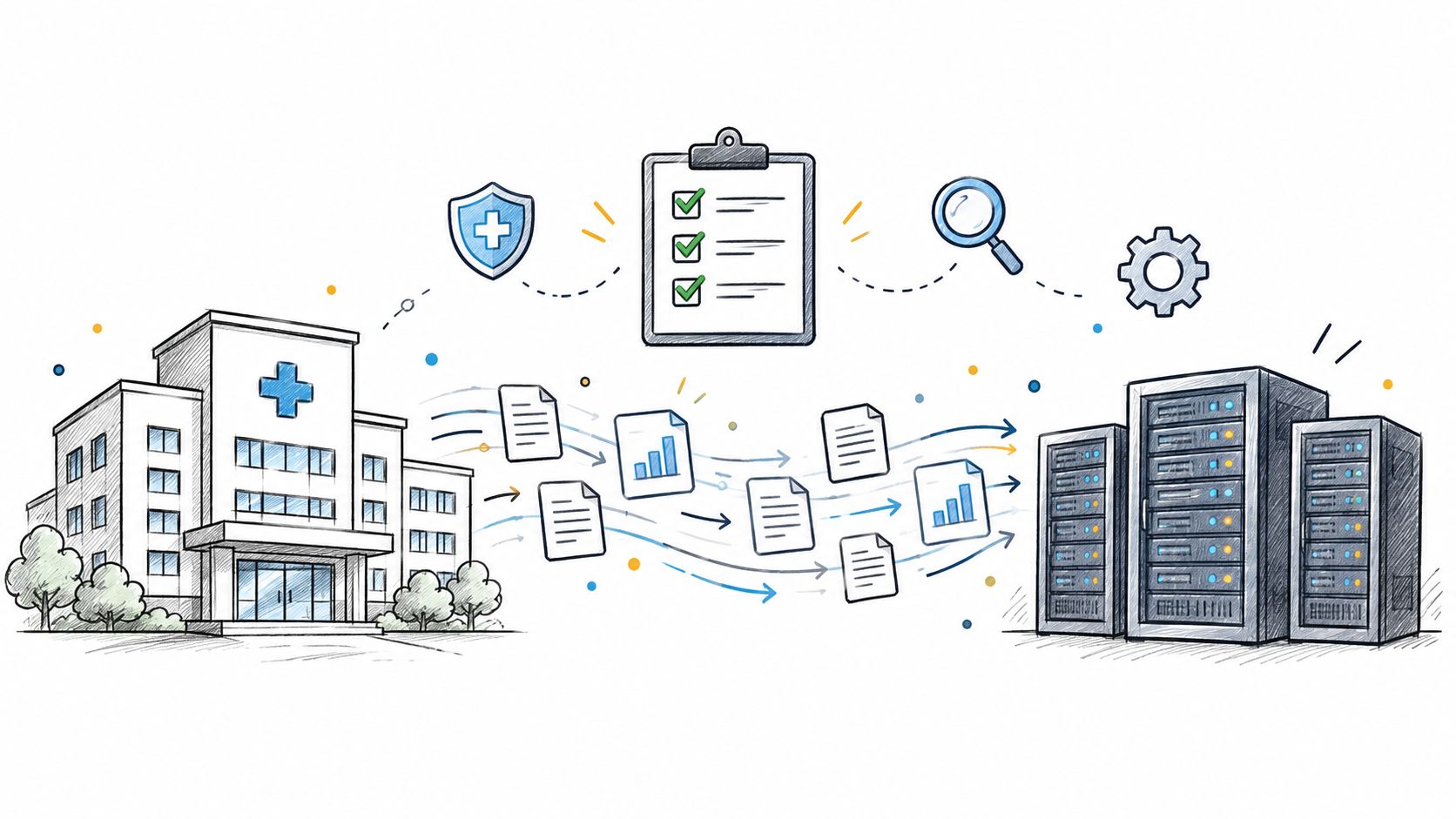
Practical data migration planning guide for healthcare teams. Scope, mapping, compliance, validation, cutover and rollback decisions explained end to end.
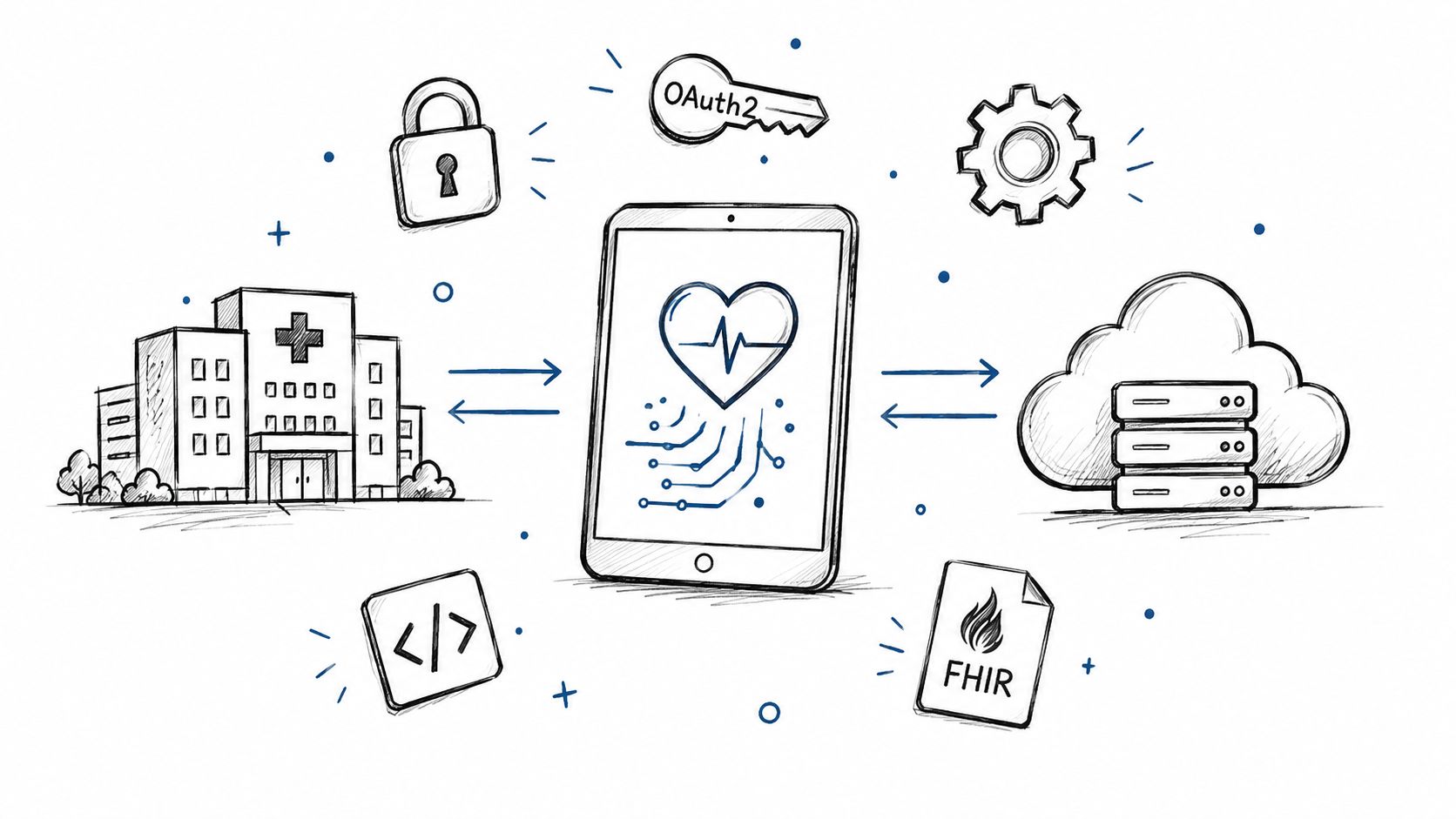
Smart on FHIR guide for healthtech engineers. Learn the OAuth 2.0 launch model, scope syntax, backend services, and US regulatory requirements.
Connect with our team to explore how AI expertise can transform your business.