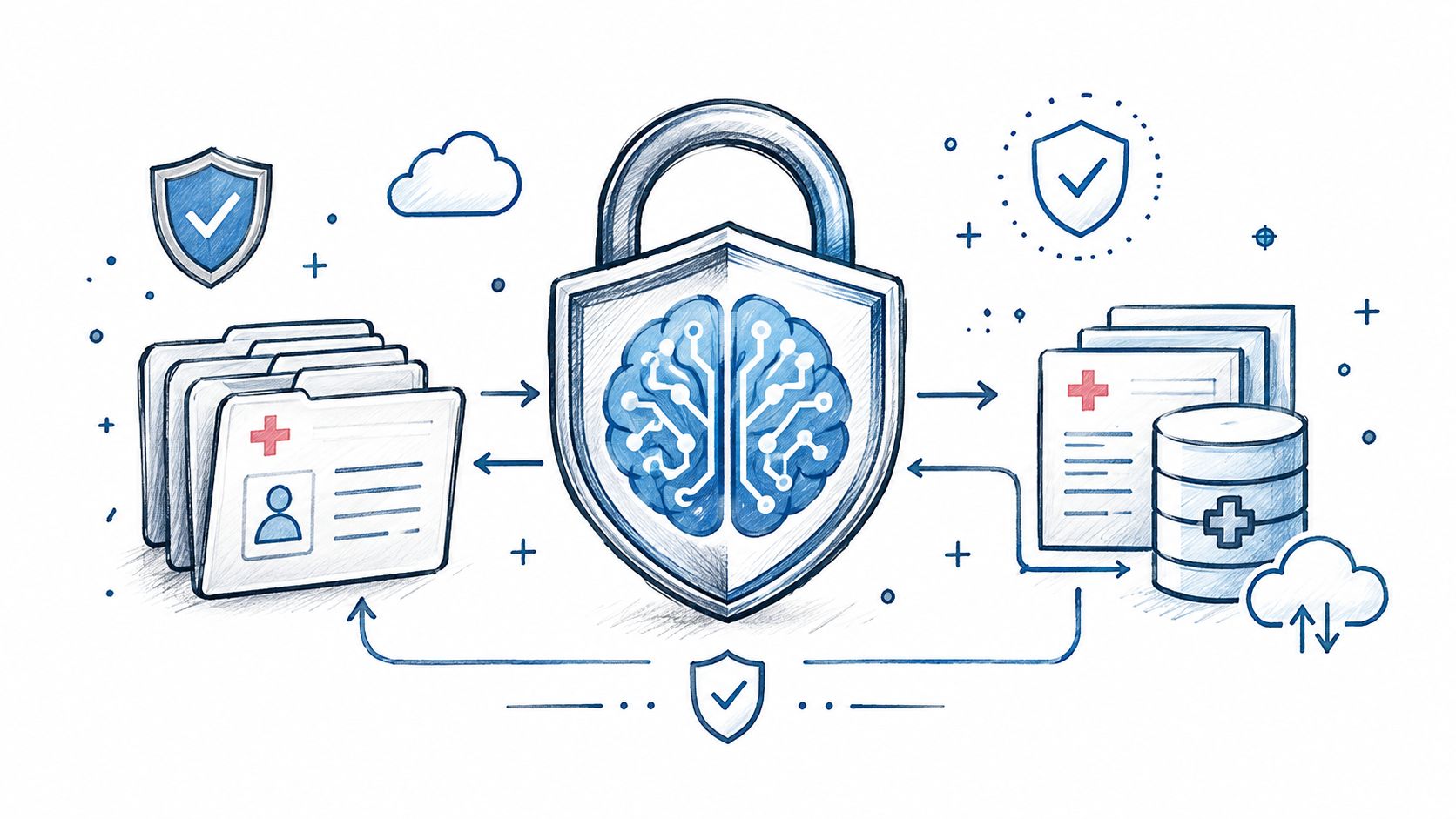
AI in Healthcare
HIPAA-Compliant AI: How to Use LLMs With PHI Safely
How to build HIPAA-compliant AI: when LLM providers need a BAA, data minimization, de-identification, audit controls and a reference architecture.
October 16, 2026Read more
Optimize patient discharge management with AI. This guide details workflows, KPIs, and a strategic roadmap for executives to reduce costs and improve care.

Nearly every hospital says capacity is tight. Many still ignore one of the fastest ways to free beds, protect margin, and reduce avoidable rework: discharge.
Patient discharge management deserves board attention because it directly affects revenue capture, labor productivity, length of stay, readmission exposure, and referral performance. Treat it as a back-end clinical task and you accept preventable delays, inconsistent handoffs, and poor visibility into what happens after the patient leaves. Treat it as an operating discipline and it becomes a measurable source of financial return.
This is also a competitive position issue. Health systems that move patients out safely and predictably can turn beds faster, support service-line growth without matching growth in fixed cost, and build stronger post-acute networks. The winners will use AI to remove coordination friction, standardize decision support, and surface discharge risk early enough to act. That shift is already showing up across AI operations strategies in healthcare.
The old model is too expensive. Discharge still depends on phone calls, faxed documents, fragmented EHR workflows, and staff memory across nursing, case management, physicians, transport, pharmacy, and post-acute partners. Every broken handoff creates delay. Every delay extends bed occupancy or increases the chance of a poor transition.
Boards should also connect discharge modernization to governance. If your organization is reviewing vendor controls, outsourced workflows, and audit exposure, discharge belongs in that review. Transition processes touch documentation quality, patient communication, referral coordination, and payer requirements. Those are the same operational fault lines that make healthcare BPO compliance a board-level concern.
Hospitals that outperform will not ask staff to work faster inside a weak process. They will redesign patient discharge management as a coordinated system with clear accountability, AI-supported workflows, and business metrics that tie directly to margin and growth.
Delayed discharge ties up one of the hospital's most expensive assets: staffed bed capacity. If your board is pushing for growth, margin improvement, or better access, discharge belongs on the same dashboard as OR block use, denials, and labor productivity.
This is not a narrow care-coordination issue. It is an enterprise throughput issue with direct impact on revenue, cost, and market position.
A hospital that cannot move clinically ready patients out on time loses twice. It gives up the next admission and absorbs avoidable labor, pharmacy, transport, and case-management friction inside an already expensive stay. Competitors with faster, more reliable discharge processes can add volume without adding the same level of fixed cost. That is a real operating advantage.
Patient discharge management shapes three board-level outcomes:
Boards should treat discharge as part of digital operations strategy, not as a back-office compliance task. Hospitals reviewing outsourced workflows, documentation controls, and regulated communications should also examine healthcare BPO compliance, because discharge often depends on the same audit-sensitive processes.
Board-level view: Discharge converts clinical readiness into financial results.
Strong discharge performance depends on more than good clinicians. It requires clear accountability, standardized decision points, interoperable systems, and disciplined execution across case management, nursing, physicians, pharmacy, transport, and external partners.
That is why AI belongs in the discussion. Used well, it helps hospitals identify likely discharge barriers earlier, prioritize staff attention, reduce manual coordination work, and create more consistent transitions at scale. Organizations building this capability usually need a team that understands both care operations and software delivery. That is the role of specialized AI services for healthcare operations.
Hospitals that treat discharge as a strategic asset will move patients faster, protect margin, and make growth easier to fund.
Most discharge failures don't begin at the moment a patient leaves. They begin much earlier, when nobody owns the transition end to end.
Research on discharge processes shows that common failure modes are workflow-based, especially inconsistent communication, pressure to free beds, and weak tracking of post-discharge referrals, while recommended controls include starting planning at admission, multidisciplinary coordination, medication reconciliation, and securing follow-up before departure in this discharge-process review.

The right time to start discharge planning is admission. Not day three. Not when utilization review raises a flag.
At this stage, physicians define expected clinical milestones. Nurses identify education needs. Case managers assess likely disposition. Social workers surface transportation, housing, caregiver, or access issues. Pharmacists may need early visibility if medication complexity is high.
If this phase is weak, every later phase becomes reactive.
This is the hardest part operationally because it depends on parallel work. Teams need discharge orders, payer coordination, post-acute placement, durable medical equipment, medication reconciliation, transport planning, and family communication all moving together.
Common choke points include:
Many organizations overestimate how effective this phase is. Staff may document that instructions were given, but that doesn't mean the patient or family can act on them.
A reliable handover includes medication changes, follow-up timing, warning signs, who to call, and what will happen next. The message must be understandable, not just complete.
Instructions that are technically accurate but operationally unusable still fail the patient.
Hospitals either close the loop or lose it during the discharge process. Someone needs to confirm the patient got medications, understands the care plan, knows the appointment schedule, and can escalate concerns before they become avoidable ED use or readmission.
For boards, the key takeaway is simple. Patient discharge management is not a single event. It's a multi-actor workflow with repeated handoffs, external dependencies, and predictable failure points. That makes it a prime candidate for redesign.
If a board wants to know whether discharge is under control, it shouldn't ask whether teams are “working hard.” They are. It should ask whether the process produces measurable operational results.
One hospital improvement study showed that the share of patients discharged before 11:00 a.m. rose from 9% to 14%, the share discharged before noon reached 26%, discharge orders entered into the EHR before 9:30 a.m. reached 16%, and average length of stay fell by 6.48 hours according to the discharge-timing improvement analysis from Wolters Kluwer. That's the kind of metric profile boards should care about because it directly affects bed turnover.

Not every KPI deserves the same attention. Focus on the ones that expose operational drag and financial leakage.
Discharge problems rarely come from one dramatic breakdown. They come from repeated small failures.
One team waits on another. A physician signs late. A case manager chases paperwork. A nurse explains medications while the family is distracted. A post-acute referral sits in limbo because no one can see its real status. The result is familiar: clinicians stay overloaded, throughput slows, and patients leave uncertain.
Operationally, the biggest pain points are usually:
Hospitals modernizing these workflows should also review secure infrastructure choices. For leadership teams exploring compliant cloud operations, Cloud Move cloud solutions for healthcare is a useful reference point for the broader hosting and data-handling side of regulated care workflows.
Hospitals can't separate discharge quality from compliance. A weak process creates inconsistent documentation, missing follow-up arrangements, and uneven patient education. Those aren't just operational misses. They create audit exposure and governance risk.
Better internal tooling is essential. If teams can't see status, ownership, pending tasks, and escalation paths in one place, leadership is managing discharge with blind spots.
A discharge process you can't measure consistently is a discharge process you can't govern.
AI in discharge management should target the points where hospitals lose money, delay capacity, and expose themselves to avoidable transition failures. The right use cases are not abstract clinical experiments. They are operational interventions that reduce manual work, tighten execution, and make discharge more predictable at scale.
The strongest opportunities sit inside repeatable coordination tasks. Risk prioritization, chart summarization, scheduling, outbound communication, exception handling, and follow-up monitoring fit that standard. They consume staff time every day, depend on fragmented information, and break down under volume.
Start with four use cases that improve throughput and labor efficiency without forcing a full workflow redesign.
First, early risk identification. AI can flag patients likely to need complex discharge planning, medication teaching, transportation support, or post-acute placement. That lets case management, pharmacy, and social work intervene sooner instead of scrambling near discharge.
Second, clinical summarization. Natural language tools can convert long notes, consults, and care plans into concise discharge-ready summaries for coordinators and receiving providers. That shortens chart review time and reduces handoff errors caused by incomplete context.
Third, workflow orchestration. AI can assign tasks, detect missing steps, trigger reminders, and escalate unresolved blockers before they turn into avoidable discharge delays. This is often the fastest path to ROI because it attacks administrative waste directly.
Fourth, patient communication and follow-through. A structured tool such as a Clinic AI assistant for patient communication and follow-up can reinforce instructions, answer routine questions, prompt next steps, and reduce the volume of manual outreach after discharge.
| Task | Manual Process (The Pain) | AI-Assisted Process (The Gain) |
|---|---|---|
| Risk triage | Staff identify complexity late, often after bottlenecks appear | AI flags likely high-risk discharges early so teams can prioritize |
| Chart review | Case managers read long notes and reconstruct the plan manually | NLP generates concise summaries and pending-action views |
| Follow-up scheduling | Staff place calls, wait on offices, and document status in multiple systems | Automated workflows trigger scheduling tasks and track completion |
| Patient education | Instructions are delivered once, often under time pressure | Digital assistants reinforce instructions in plain language after discharge |
| Referral tracking | Teams rely on spreadsheets, inboxes, and phone follow-up | Workflow engines monitor status and escalate unresolved referrals |
| Exception handling | Problems surface after a missed handoff or return visit | AI surfaces likely failures before they become operational losses |
Start with the most expensive friction.
Use this order:
This sequence matters. Hospitals that start with predictive models before fixing execution usually end up with better predictions inside the same broken process.
Generic automation is a poor fit for discharge. These workflows involve protected health information, clinical context, patient messaging, documentation standards, and named accountability across teams. Product choice and implementation discipline matter as much as model performance.
In practice, hospitals need systems that fit governance requirements, support integration with existing clinical and administrative tools, and preserve clear ownership of every task. AI should strengthen operational control, not create another black box for compliance and IT to clean up later.
That is why categories such as AI Automation as a Service, SaMD solutions, and disciplined ai assisted software development deserve board-level attention. They address a business question, not just a technical one. Can the hospital deploy AI in a way that fits real discharge operations, stands up to governance review, and produces measurable financial return?
AI tools for business can help leadership separate workflow infrastructure from point solutions. Ekipa AI is one example in this category, with capabilities relevant to discharge planning, patient outreach, appointment tracking, and post-discharge follow-up.
A board won't approve discharge AI because it sounds modern. It will approve it if leadership ties the program to capacity, cost, and quality in a way that survives finance review.
That business case already has a credible template. A peer-reviewed discharge improvement initiative using Lean methodology and the RED toolkit reduced 30-day readmissions from 3.9% to 2.0% with p = 0.002, and cut median 7-day ED visits from 9.6% to 6.1% in the published study on structured discharge improvement. The authors also reported better discharge-cycle efficiency, improved patient satisfaction with the discharge process, and direct bed-cost improvement.
Executives should frame investment around three categories.
Cost reduction comes first. Lower return utilization and less manual administrative effort are the fastest path to visible savings. Even when savings don't hit a single budget line neatly, they show up in staffing pressure, overtime pressure, and rework.
Capacity enhancement is often even more valuable. If AI-supported discharge planning helps move patients out earlier and with fewer delays, the hospital gains throughput. More throughput means better use of fixed assets.
Quality and experience improvement completes the case. Better discharge reliability improves patient confidence and supports organizational reputation. That matters in competitive markets.
A serious proposal should include:
If the finance team wants a cleaner operating view, a tool like a financial insights dashboard can help connect process changes to cost and throughput effects.
The strongest AI business case in healthcare starts with labor friction and bed capacity, not model sophistication.
Leadership teams that want a board-ready model should commission a Custom AI Strategy report. That's often the fastest way to turn discharge pain points into a credible investment thesis. It also helps to bring in AI strategy consulting when stakeholders need alignment across operations, IT, clinical leadership, and finance.
Most hospitals fail with AI when they jump from idea to procurement. The better path is staged, tightly governed, and tied to one operational outcome at a time.
A strong roadmap also has to account for equity. A recent review argues that culturally competent discharge planning must address language barriers, stigma, migration-related concerns, mistrust, and social determinants of health so instructions are not only given but also understood, acceptable, and actionable in the review on culturally competent discharge planning.

Start with reality, not vendor demos.
Map the current discharge workflow in detail. Identify delay points, manual workarounds, duplicate documentation, communication gaps, and post-discharge failure points. Then review data readiness. If the source data is incomplete, delayed, or inaccessible, the implementation plan needs to reflect that.
Use AI requirements analysis to narrow the problem set. The first use case should be high-friction, operationally visible, and narrow enough to pilot quickly.
A good first target might be:
Run a contained pilot in one department or patient cohort. Don't spread effort across the whole enterprise.
The pilot should fit into an AI Product Development Workflow with clear owners from operations, IT, and clinical leadership. Integration matters here. If the workflow sits outside the EHR and staff must re-enter information, adoption will stall.
Bring in the right build capability too. In many cases, this requires targeted custom healthcare software development so the solution fits your actual process rather than forcing teams into generic software patterns.
As we explored in our AI adoption guide, disciplined pilots beat broad declarations every time. Teams looking for applied examples can review real-world use cases to compare patterns before choosing a starting point.
Once the pilot proves operational value, expand carefully. Standardize workflows, train teams, define escalation rules, and monitor outcomes continuously.
Governance can't be an afterthought. Leadership needs explicit rules for:
Scale only after your organization can explain who owns the AI output, who reviews exceptions, and how fairness is assessed.
This is also where broader AI Strategy consulting tool support helps. Scaling discharge AI isn't just a software rollout. It's an operating model change.
Patient discharge management can either drain margin or strengthen it. The difference comes down to whether leadership treats discharge as a fragmented clinical afterthought or as a strategic workflow that deserves redesign.
Hospitals that combine process discipline, measurable governance, and practical AI can improve throughput, reduce avoidable friction, and build a better patient experience. That's not theory. It's an execution choice. If you're planning that shift, involve our expert team early so the roadmap, technology, and operating model stay aligned.
Start with the use case that removes the most repetitive coordination work without increasing clinical risk. In many hospitals, that's follow-up scheduling, post-discharge outreach, referral tracking, or discharge-summary support. These areas create visible operational drag and are easier to pilot than advanced predictive models.
Choose one department first. Measure workflow time, completion reliability, and exception volume before and after launch.
Don't begin with feature lists. Begin with workflow fit.
Ask vendors how their tools integrate with existing systems, how they handle patient communication governance, how exceptions are escalated, and how outcomes are measured. You should also ask whether the product supports multilingual communication and whether it can adapt to service-line differences.
A credible vendor should be able to explain implementation ownership, data handling, and change-management requirements in plain language.
Make equity a design requirement, not a cleanup exercise. Review whether instructions are understandable, culturally acceptable, and actionable for the populations you serve. Include language access, literacy, caregiver availability, and social barriers in workflow design.
That means validating patient messaging with frontline teams, checking for uneven performance across patient groups, and ensuring human review remains available when the situation is complex. If the AI improves speed but leaves vulnerable patients behind, the program failed.
If patient discharge management is limiting capacity, raising avoidable costs, or exposing workflow blind spots, Ekipa AI can help you assess the opportunity, prioritize the right AI use case, and build an execution plan that fits regulated healthcare operations.
How to build HIPAA-compliant AI: when LLM providers need a BAA, data minimization, de-identification, audit controls and a reference architecture.
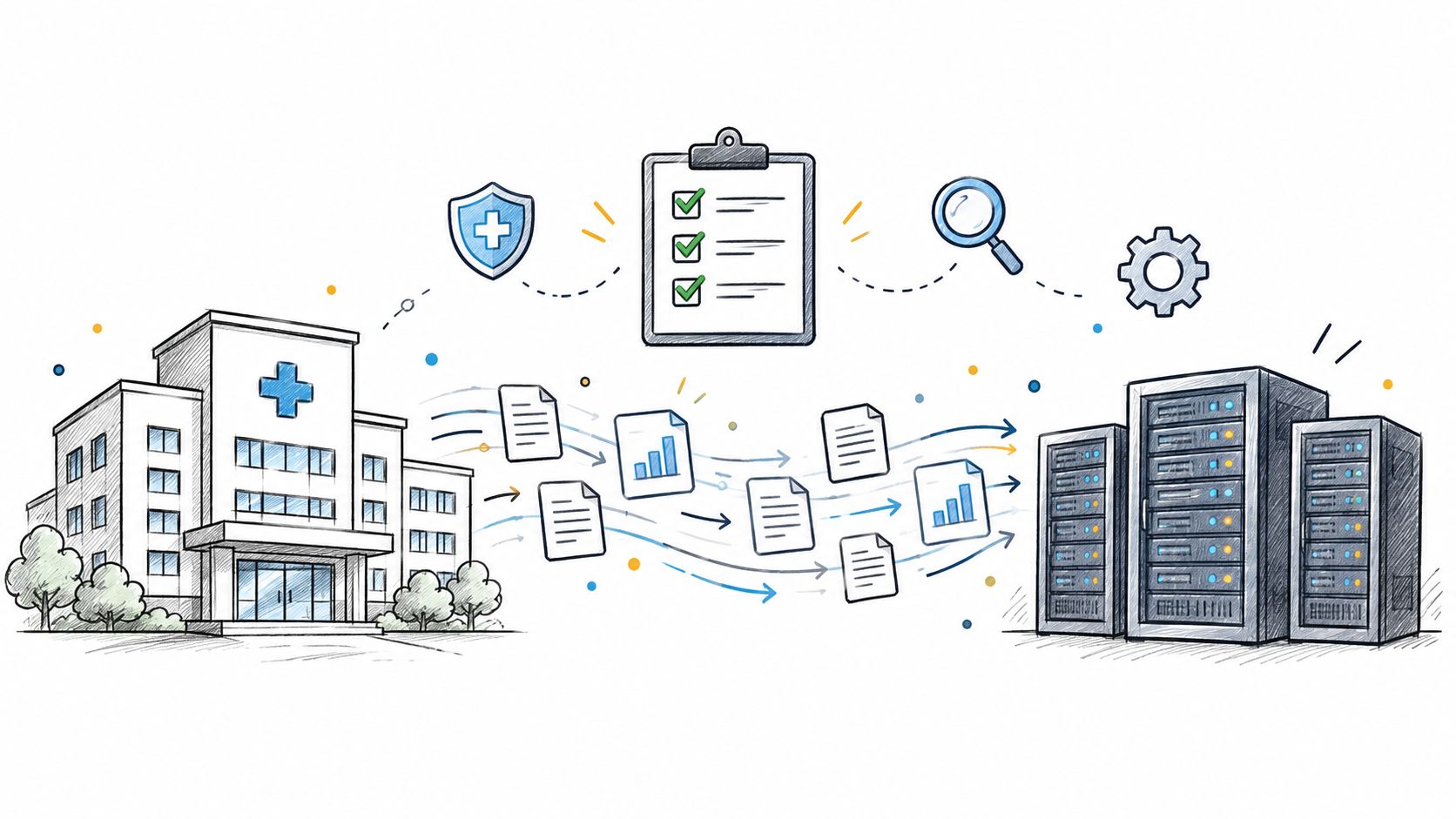
Practical data migration planning guide for healthcare teams. Scope, mapping, compliance, validation, cutover and rollback decisions explained end to end.
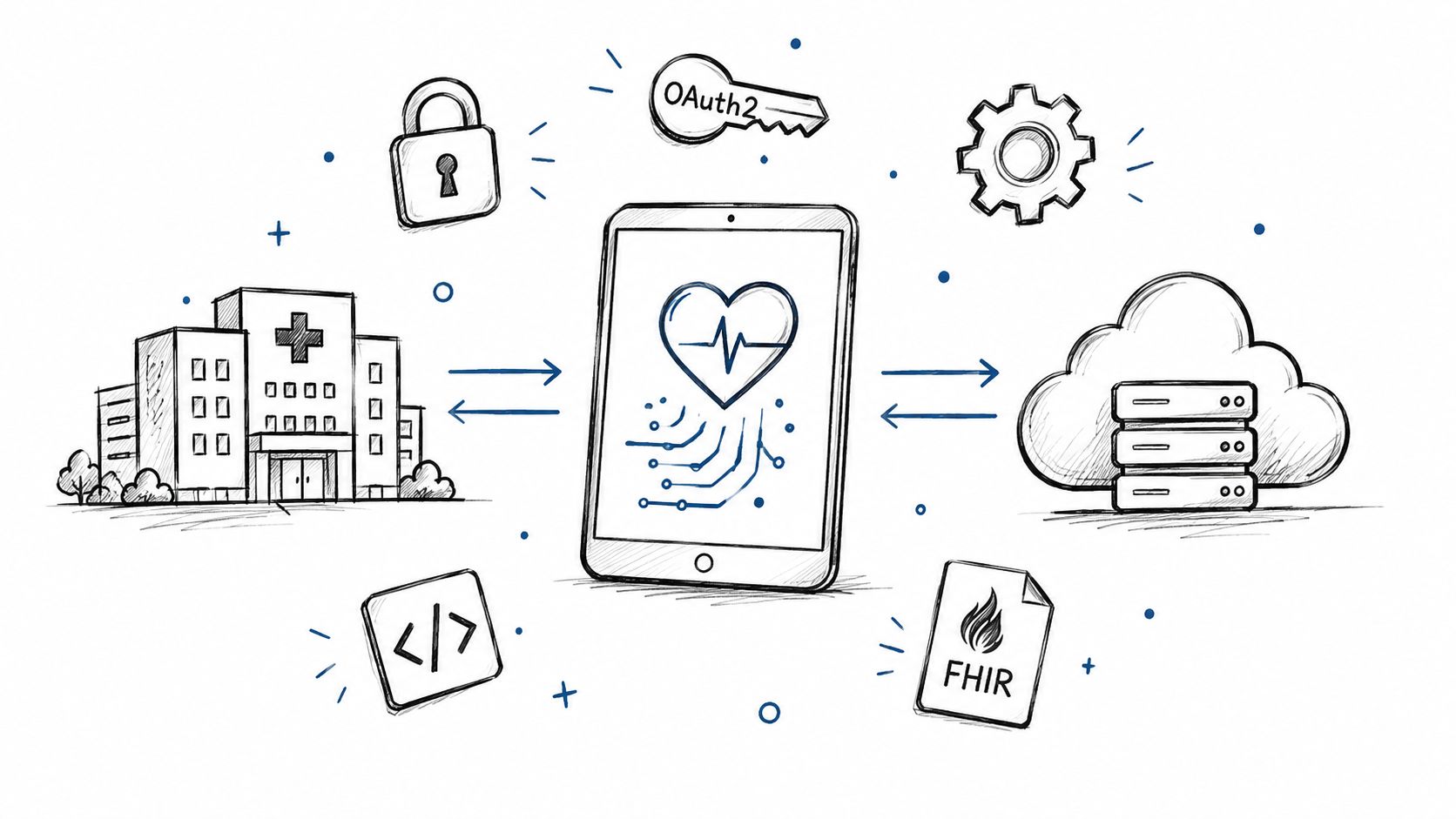
Smart on FHIR guide for healthtech engineers. Learn the OAuth 2.0 launch model, scope syntax, backend services, and US regulatory requirements.
Connect with our team to explore how AI expertise can transform your business.