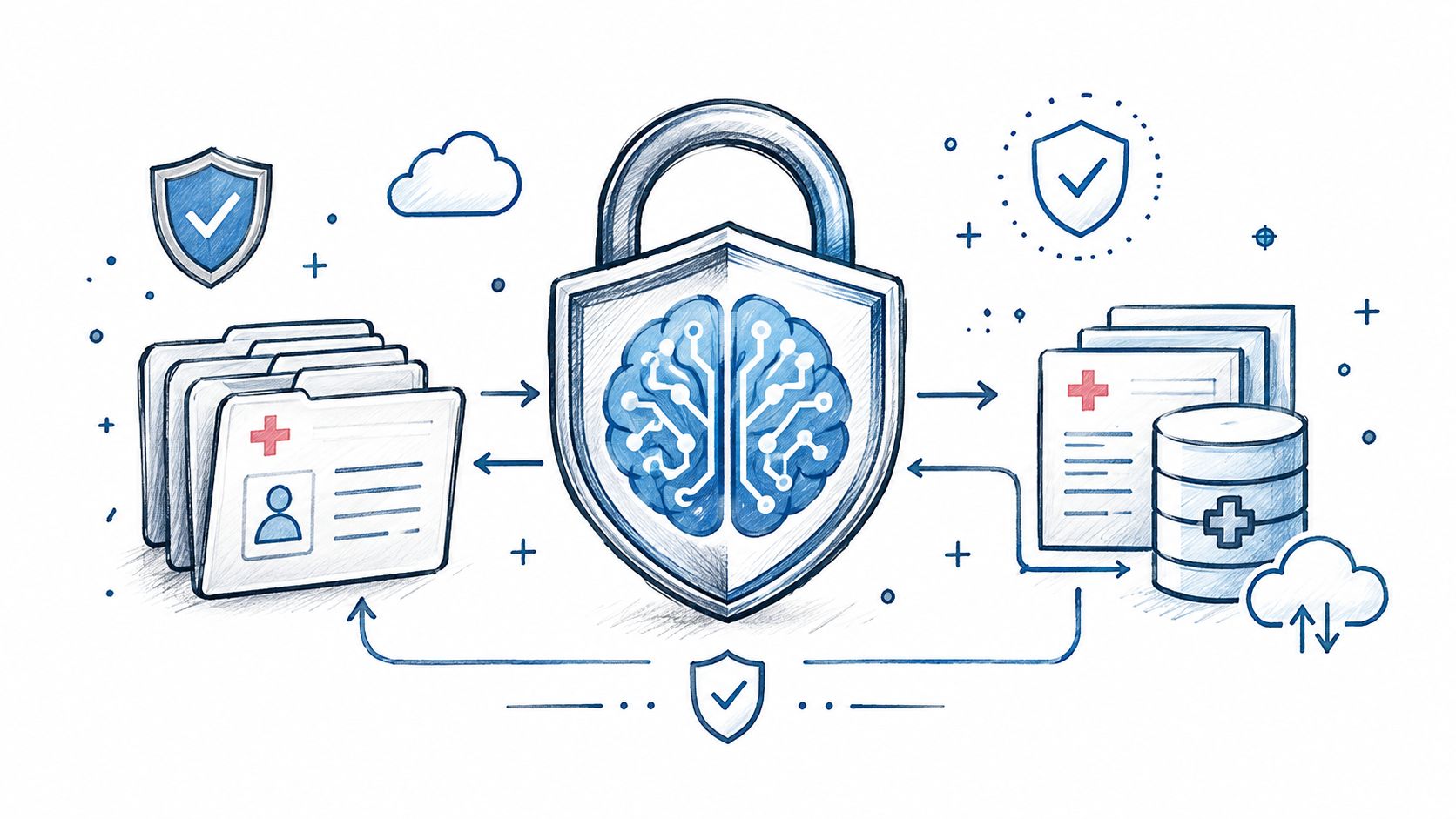
AI in Healthcare
HIPAA-Compliant AI: How to Use LLMs With PHI Safely
How to build HIPAA-compliant AI: when LLM providers need a BAA, data minimization, de-identification, audit controls and a reference architecture.
October 16, 2026Read more
Navigate EVV compliance software mandates in 2026. This guide covers regulations, core features, vendor selection, and implementation for home care agencies.

If you're leading a home care agency right now, you're probably dealing with the same ugly mix of problems everyone else is. State EVV rules feel inconsistent. Caregivers hate clunky mobile apps. Billing teams chase missing visit data after the fact. Claims get held up for reasons that look small on paper but turn into operational chaos in practice.
That's why EVV compliance software deserves executive attention. Not because it's trendy. Because it sits in the middle of reimbursement, workforce operations, audit readiness, and data quality. Agencies that still treat EVV as a narrow compliance purchase usually end up with fragmented workflows, frustrated staff, and weak reporting. Agencies that treat it as operational infrastructure make better decisions faster.
A lot of agency leaders still ask the wrong question. They ask, “What EVV app should we buy?” The better question is, “What system will protect reimbursement and give us control over field operations?”

The answer starts with federal law. The 21st Century Cures Act required compliant EVV systems for personal care services by January 1, 2020, and for home health care services by January 1, 2023. Those dates changed EVV from a back-office convenience into required infrastructure for Medicaid reimbursement and audit readiness.
If your agency serves Medicaid populations, EVV isn't optional. It directly affects whether a visit can be documented in a way that downstream systems can accept. That means operations, billing, payroll, and compliance can't live in separate silos anymore.
A lot of owners first encounter this through pain. A visit gets completed, but the record is incomplete. Staff then patch the data manually. Supervisors spend time resolving exceptions instead of managing care delivery. Finance teams wait on corrections before they can submit claims. What looked like a simple timekeeping issue becomes an agency-wide process failure.
Practical rule: If EVV data is captured poorly in the field, no amount of billing cleanup later will fully fix it.
For leaders comparing EVV with broader field operations software, this guide for service business owners is useful because it shows how dispatch, scheduling, and proof-of-service systems shape day-to-day execution. Home care has stricter regulatory demands, but the operational lesson is the same. Field data quality determines back-office performance.
Don't delegate EVV selection entirely to billing or compliance staff. The system will affect caregivers, schedulers, payroll teams, and revenue cycle operations every day. It also needs to fit the realities of regulated care delivery, which is why domain-specific Healthcare AI Services matter when agencies modernize their underlying platforms.
The agencies that win here don't chase the flashiest demo. They choose software that can hold up under real operational pressure.
Think of EVV as a digital receipt for care delivery. If the receipt is incomplete, inconsistent, or impossible to verify, the visit record becomes unreliable. That's the core logic behind the compliance model.
The backbone of EVV is a standardized six-point verification model covering service type, client, date, location, provider, and time. That structure exists for one reason. It creates a verifiable record of who delivered what service, to whom, when, and where.

Here's the model in plain English:
Service type
The record must show what kind of care was delivered. Without that, the visit doesn't align cleanly with authorization, care planning, or billing.
Client identity
The system must identify the person receiving care. This sounds obvious, but it's where agencies often expose duplicate records, naming inconsistencies, or intake errors.
Date of service
The visit has to be tied to the right day. That matters for scheduling logic, billing timing, and audit traceability.
Location of service
EVV needs to show where care occurred. In many workflows, that means validating the visit at the expected service location rather than relying on manual attestation alone.
Caregiver identity
The system must identify who delivered the care. This is what connects visit records to staffing, credentials, payroll, and accountability.
Start and end time
A compliant record captures when the visit began and when it ended. In this aspect, many agencies first feel the operational tension between real-world caregiving and rigid documentation workflows.
These six elements aren't abstract compliance boxes. They form the minimum viable record for a clean operational chain. If one element is weak, the whole visit becomes harder to trust.
That's why EVV implementation often exposes bigger process issues:
A similar pattern shows up in other regulated reporting environments. For teams that want a useful analogy, this resource on how organizations automate grant time tracking is worth a look. Different sector, same lesson. Structured time and activity data only helps if the data model is consistent from capture through reporting.
An EVV record should answer one question without ambiguity: did the right caregiver deliver the right service to the right person, at the right place, for the documented time?
Once leadership understands that, software evaluation gets easier. You stop shopping for features in isolation and start judging whether the platform can reliably produce a defensible visit record.
A modern EVV platform should do more than record a clock-in and clock-out. It should protect the integrity of the visit from point of care through billing.
That matters because EVV software has to bind identity, time, and place into one auditable transaction using six key fields, and a failure in any field can create a noncompliant visit and a failed claim. If your vendor can't explain exactly how their system handles that chain, keep looking.
Caregivers don't work in perfect conditions. They work in homes, apartment buildings, rural areas, and places with weak connectivity. Your EVV system has to reflect that reality.
Look for these capabilities:
If the mobile experience is clumsy, caregivers won't trust it. Then they'll work around it. Once staff start working around EVV, your compliance posture is already weaker than you think.
Strong EVV compliance software should catch problems before billing sees them. That means the platform should validate records against operational and payer logic as early as possible.
The most useful features are usually the least glamorous:
Many agencies underestimate the value of purpose-built verification tooling. Products like VerifAI reflect the broader shift toward automated validation rather than manual cleanup.
Operations leaders need more than raw logs. They need visibility. Good EVV software should make it easy to see missed check-ins, late starts, unresolved exceptions, and trends that point to staffing or workflow issues.
The best EVV systems don't just prove that a visit happened. They show where your processes are breaking before those failures reach claims, payroll, or audits.
That usually means dashboards for branch managers, supervisor review workflows, and reports that can separate isolated errors from recurring operational patterns. If a platform can't help your managers act on the data, it's just recording failure more neatly.
Most agencies choose EVV vendors too narrowly. They compare mobile screens, pricing tiers, and demo polish. That's not enough. You're not buying a timekeeping tool. You're choosing a long-term operational dependency.
The wrong vendor creates constant friction between caregivers, schedulers, compliance staff, and billing. The right one quietly holds the workflow together.
A bloated platform with weak state alignment will hurt you more than a simpler platform that fits your actual environment. Vendor selection should start with your payer mix, your service lines, your state requirements, and your current systems.
Privacy should also be on the table from day one. AxisCare notes that EVV software must be HIPAA compliant while agencies also need to manage employee monitoring concerns, client consent, and data retention for sensitive GPS data. If a vendor talks about “HIPAA compliance” as a slogan but can't explain retention controls, access management, and location-data handling, that's a red flag.
For leaders building broader governance practices, this practical guide for compliance management is helpful because it frames software choice as a controls problem, not just a usability decision.
| Evaluation Category | Key Questions to Ask | Why It Matters |
|---|---|---|
| State rule alignment | Can the platform support your state's EVV workflows, required fields, and submission logic? | If state-specific requirements don't fit the product, staff will rely on manual workarounds. |
| Aggregator integration | Does the vendor already support your required state aggregator and Medicaid data flow? | Integration failure creates submission friction and claim risk. |
| Caregiver usability | How many steps does a caregiver need to complete a compliant visit record? | Bad UX lowers adoption and increases documentation errors. |
| Exception management | How are missed check-ins, edits, and supervisor approvals handled? | Every agency has exceptions. The issue is whether the workflow stays controlled. |
| Reporting and audit support | Can managers trace edits, review noncompliant visits, and export defensible records? | Audits punish poor traceability, not just poor intentions. |
| Privacy and security | How is GPS data stored, retained, limited, and accessed? | EVV data can create legal and employee-relations issues if handled carelessly. |
| Support and onboarding | Who trains your staff, and how does support handle urgent workflow failures? | EVV disruptions affect field staff and reimbursement fast. |
| Integration depth | Can the platform connect cleanly with scheduling, payroll, and billing systems? | Fragmented architecture creates duplicate work and conflicting records. |
Pick the vendor that is strongest in state compliance fit, workflow reliability, and exception handling. Don't overvalue bells and whistles. Don't let sales teams distract you with side modules if the core visit record isn't rock solid.
And insist on seeing the ugly parts in the demo. Ask them to show missed clock-outs, location mismatches, manual edits, and failed submissions. If they only show the happy path, they're selling theater.
Most EVV rollouts fail for predictable reasons. The agency underestimates data cleanup, ignores frontline workflow design, or assumes the vendor's default setup will match state requirements. It won't.
Successful implementation is really a mapping exercise across your agency, your state program, and your downstream systems. As Aaniie explains, EVV software needs configurable data schemas and workflow rules that align with state-selected aggregators and Medicaid billing systems.

Start with governance and process truth. Not assumptions.
Assess current workflows
Document how visits are scheduled, assigned, delivered, corrected, approved, and billed today. Include the messy exceptions, not just the official process.
Clean your master data
Standardize client records, caregiver identifiers, service codes, and location data before migration. Bad source data will poison the new platform immediately.
Define integration points
Identify every system that touches visit data, including scheduling, payroll, billing, and state submission channels. If ownership is unclear, fix that before rollout.
Set decision rights early
Someone needs authority over configuration, exception policy, training standards, and go-live criteria. Shared ownership without clear accountability slows everything down.
Configuration is where EVV becomes real. This is also where many agencies discover that their internal practices don't match how they thought the business operated.
Use a structured rollout model:
Configure by state and payer reality
Don't rely on generic defaults. Match service definitions, workflows, validation logic, and required outputs to actual operational requirements.
Pilot with a controlled group
Start with a manageable cohort of caregivers, supervisors, and billing users. You want live friction to surface early, while the blast radius is still small.
Train by role
Caregivers need task-based instruction. Supervisors need exception management training. Billing teams need validation and reconciliation training.
Create a response plan for go-live issues
Missed visits, device confusion, edit bottlenecks, and aggregator submission errors should all have an owner and a documented response path.
Field lesson: Agencies don't struggle because EVV is conceptually hard. They struggle because they try to compress policy, workflow redesign, integration work, and staff behavior change into one rushed launch.
A disciplined delivery model helps. That's the same logic behind a structured AI Product Development Workflow. Complex regulated systems need staged implementation, explicit requirements, and operational feedback loops.
Once you're live, don't declare victory too early. Monitor exception rates, caregiver adoption issues, supervisor turnaround time, and reconciliation gaps between EVV and billing.
That's where continuous optimization matters:
Implementation isn't finished when the app launches. It's finished when compliant visit data flows cleanly through the agency without constant heroics.
Monday starts with three familiar problems. A visit ran late, payroll is questioning hours, and billing is holding claims because documentation does not match the schedule. If your EVV system only proves a visit happened, you are still managing the agency by exception and guesswork. Value comes when leadership uses EVV data to tighten operations, improve margins, and build a cleaner foundation for AI.
EVV captures something home care leaders rarely get in a structured form: what was scheduled, what happened, who delivered the service, where it occurred, and how often records needed correction. That combination makes EVV data useful far beyond audits and claim validation.

Start with operating decisions that affect cash flow, staffing, and service quality. Skip experimental dashboards. Fix the management questions that repeat every week.
Scheduling performance
Compare planned versus actual visit timing to identify chronic lateness, poor route design, unbalanced caseloads, and avoidable overtime.
Exception patterns
Review where missed check-ins, manual edits, and visit corrections cluster. That shows whether the problem sits with caregiver habits, supervisor response time, or workflow design.
Care delivery consistency
Measure whether visits are delivered as authorized and whether service patterns are drifting from the care plan. Leaders can spot staffing strain before it becomes a compliance or retention problem.
Revenue cycle friction Track how often EVV issues delay billing, force rebilling, or trigger write-offs. Compliance data thereby becomes margin data.
Risk monitoring
Look for recurring correction behavior, unusual visit patterns, and documentation anomalies that need manager review before they become payer issues.
Agencies that scale well do not rely on tribal knowledge. They run on trusted operational data. EVV can become one of the strongest inputs in that model if leadership treats it as part of the agency's core data infrastructure.
Once the data is clean, you can use it to forecast staffing demand, improve caregiver utilization, reduce avoidable supervisory work, and prioritize automation. You can also feed it into AI models that surface exception trends, predict missed visits, and highlight branches or service lines that need intervention.
That is the strategic inflection point. EVV starts as a mandate. Mature agencies turn it into a management system.
Agencies that treat EVV as a billing requirement get compliance. Agencies that treat it as structured operating data gain faster decisions, tighter execution, and a stronger base for AI.
Not every agency operates under the same payer and state requirements. But if your services fall within applicable Medicaid EVV rules, you need software and workflows that support compliant visit verification. Leadership should confirm requirements by service line and jurisdiction, then choose accordingly.
No single workflow fits every situation. Many platforms support mobile and telephony-based approaches. The right method depends on state rules, client setting, caregiver constraints, and privacy considerations.
The common failures are poor data cleanup, weak caregiver training, unclear exception handling, and bad integration planning. Most EVV problems aren't software problems alone. They're operating model problems that the software exposes.
Usually, no. Separate systems create reconciliation headaches unless integration is exceptionally well managed. Agencies generally benefit when EVV, scheduling, and billing operate as one controlled workflow.
Don't judge success by login counts or training completion. Judge it by operational stability. Are compliant records being captured consistently? Are supervisors resolving exceptions quickly? Is billing receiving cleaner visit data? That's what matters.
For more complex questions or to plan an EVV modernization path that fits your agency, connect with our expert team.
If your agency is rethinking EVV compliance software as part of a larger modernization effort, Ekipa AI can help you assess the workflow, data, and integration choices that are important. From Custom AI Strategy report planning to internal tooling, AI tools for business, and AI Strategy consulting tool, the goal is the same: build systems that reduce operational drag and make regulated care delivery easier to run.
How to build HIPAA-compliant AI: when LLM providers need a BAA, data minimization, de-identification, audit controls and a reference architecture.
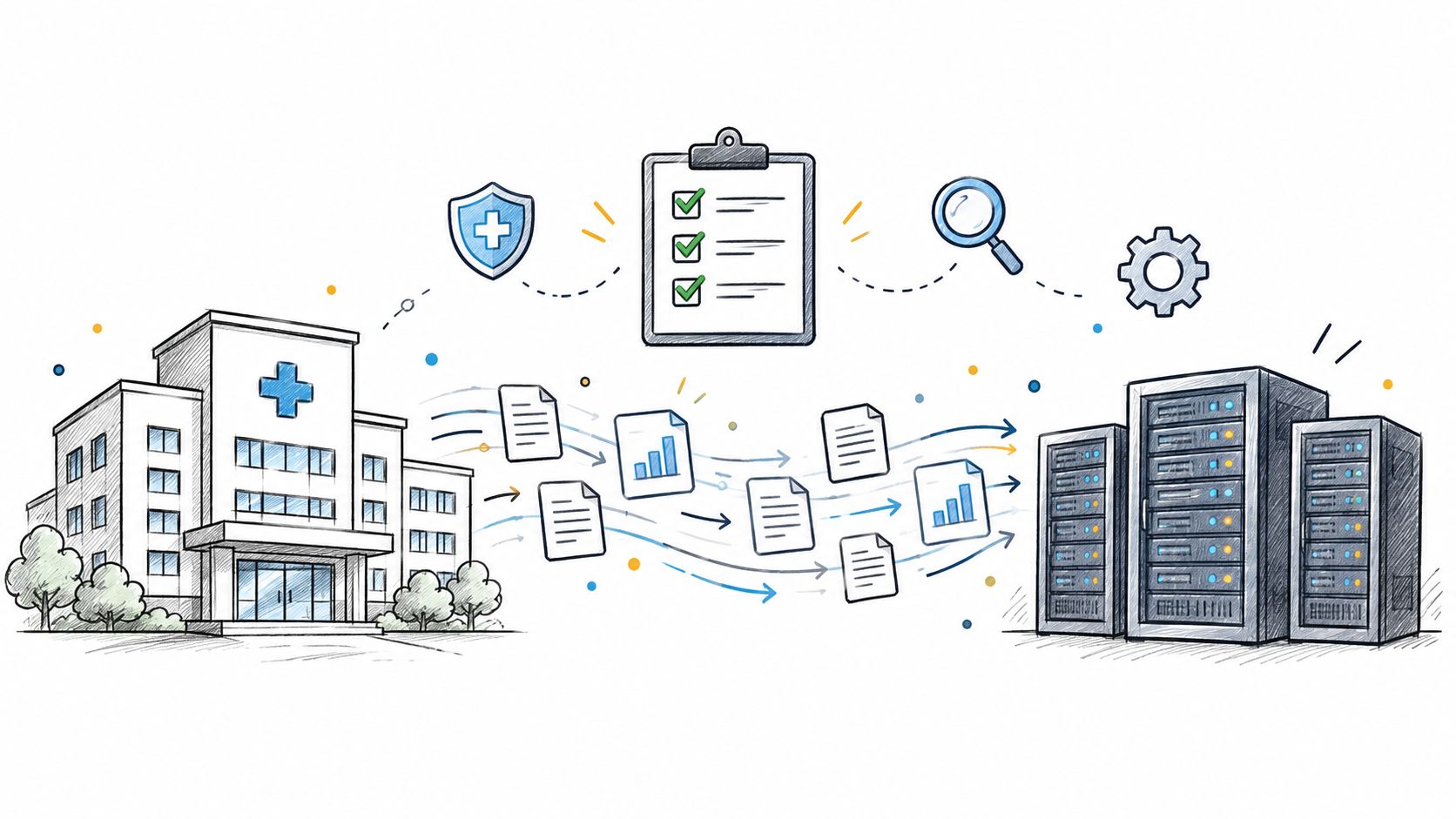
Practical data migration planning guide for healthcare teams. Scope, mapping, compliance, validation, cutover and rollback decisions explained end to end.
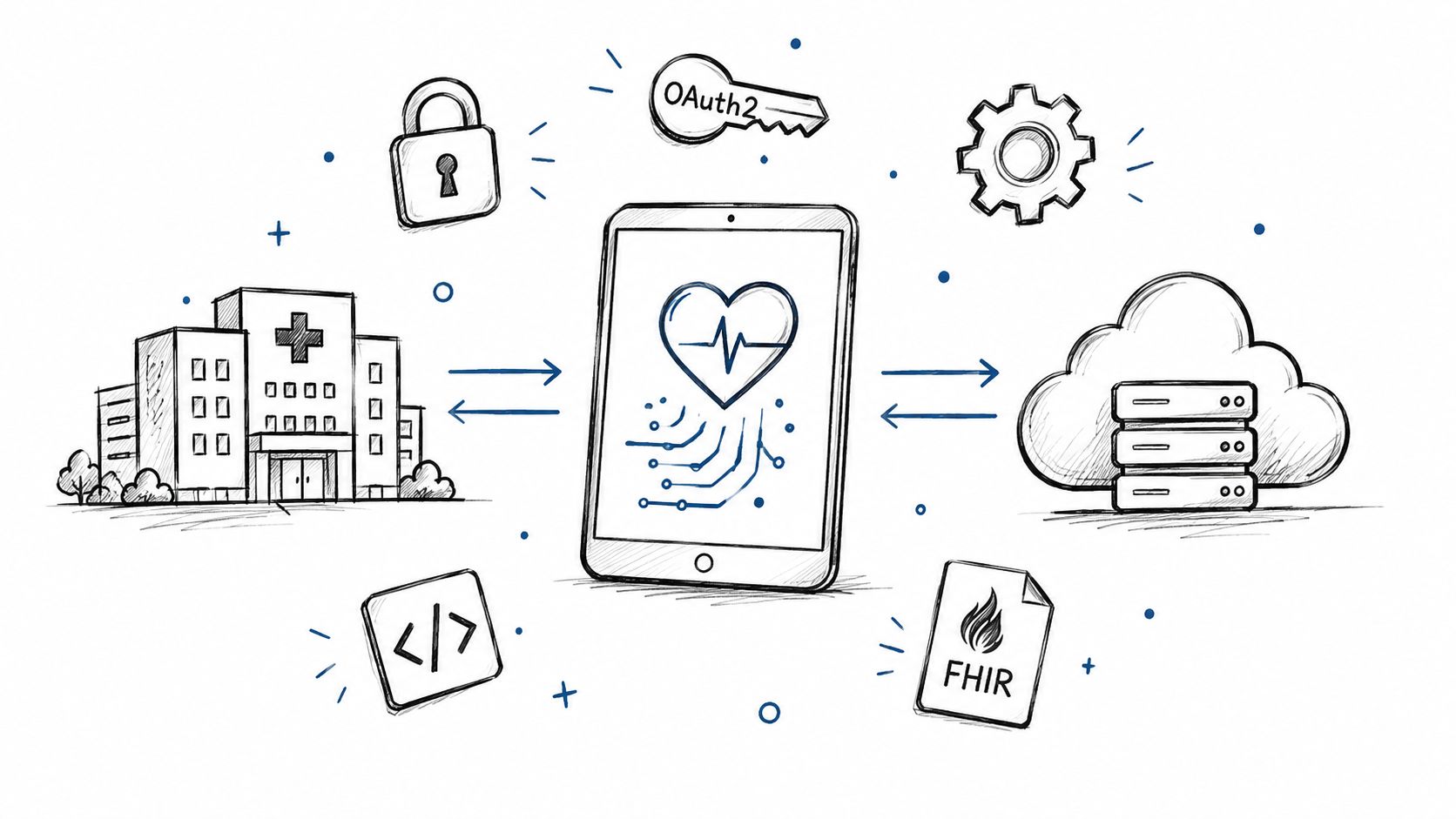
Smart on FHIR guide for healthtech engineers. Learn the OAuth 2.0 launch model, scope syntax, backend services, and US regulatory requirements.
Connect with our team to explore how AI expertise can transform your business.