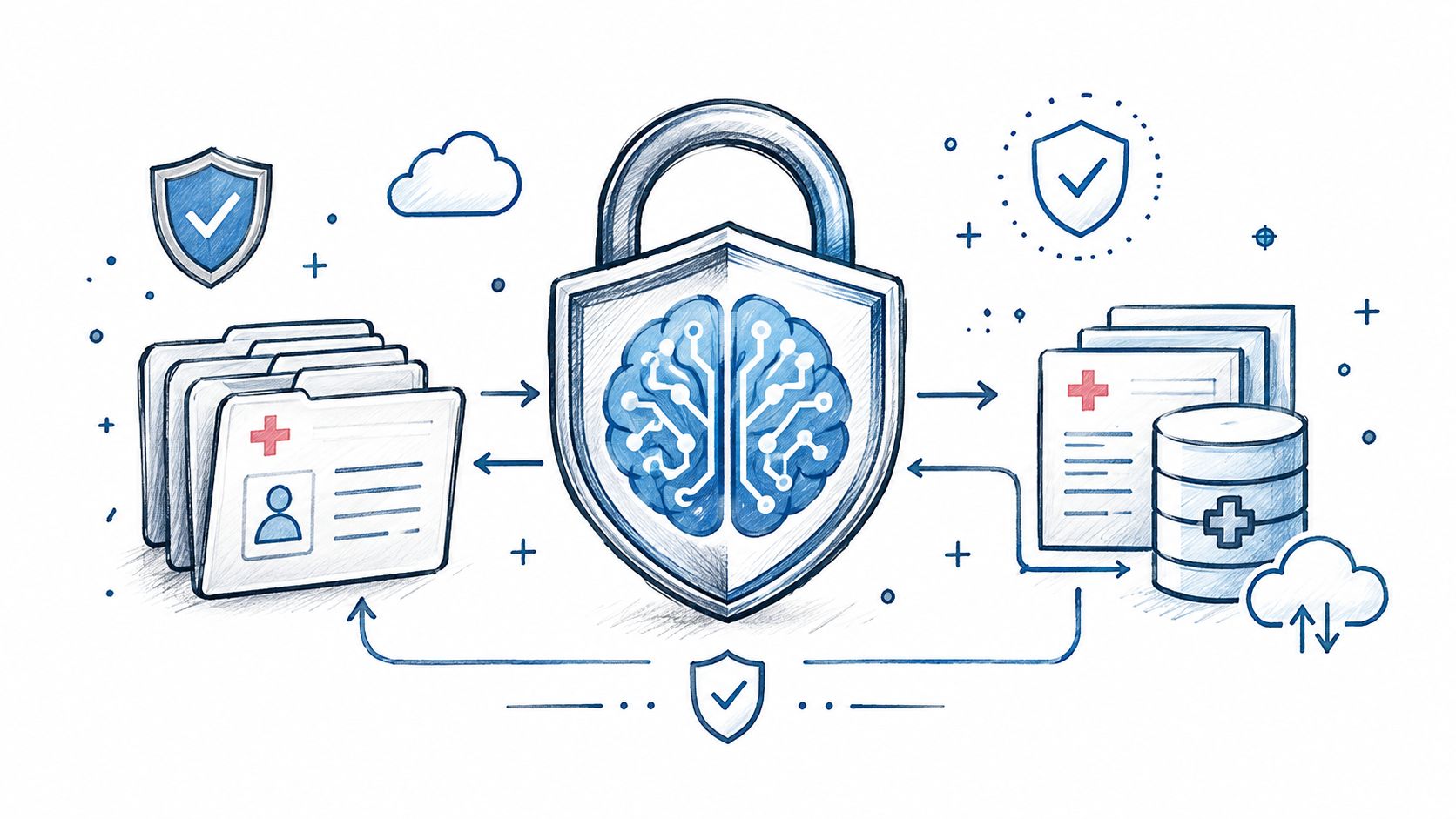
AI in Healthcare
HIPAA-Compliant AI: How to Use LLMs With PHI Safely
How to build HIPAA-compliant AI: when LLM providers need a BAA, data minimization, de-identification, audit controls and a reference architecture.
October 16, 2026Read more
Explore AI in home healthcare with our strategic guide. Learn key use cases, ROI, implementation roadmaps, and regulatory considerations for business leaders.

Home healthcare leaders should pay attention to one number: the global AI in home healthcare market is projected to reach USD 36.1 billion by 2031, growing at a CAGR of 53.2% according to KBV Research's market outlook on AI in home healthcare. That isn't incremental growth. It's a signal that AI in home healthcare is moving from isolated pilots to a core operating model.
Most executives still frame this category too narrowly. They think about remote monitoring, a chatbot, or one documentation feature. That misses the point. AI in home healthcare is becoming the decision layer across care delivery, staffing, documentation, scheduling, and risk detection.
If you run a home health business, the question isn't whether AI matters. The question is where to place your first serious bet, how to measure it, and how to avoid buying expensive complexity disguised as innovation.
Local operators and family-facing providers should also keep practical care infrastructure in view. For example, organizations serving Florida communities may find these resources for Pinellas County caregivers useful because successful home care still depends on the basics: equipment access, caregiver support, and clear patient education.
The home has become a serious care setting. That changes the economics of healthcare delivery and the software stack required to support it.
In hospitals and clinics, staff observe patients directly and frequently. In the home, clinicians see snapshots. Everything important happens between visits. That gap creates risk, but it also creates a major opportunity for AI systems that can interpret longitudinal data and surface the few key signals.
The demand is obvious. Home care generates fragmented but valuable information from assessments, vitals, caregiver notes, wearables, and connected devices. Humans struggle to synthesize that data at scale. AI can.
That's why the category is expanding so quickly. The market projection above matters not because forecasts are always perfect, but because it reflects where buyers are placing capital and where vendors are building products. The winning organizations won't be the ones that “use AI.” They'll be the ones that redesign operations around it.
Executive view: AI in home healthcare isn't a side project for innovation teams. It's an operating leverage decision.
Three conclusions follow.
If you're still treating AI as a pilot reserved for the IT team, you're already behind.
Most descriptions of AI in home healthcare are too vague to be useful. Here's the practical version.
It's an intelligence layer that sits on top of home care operations and patient data. It turns raw inputs into recommendations, alerts, summaries, predictions, and workflow actions. That is its primary function.
Telehealth lets a nurse or physician talk to a patient remotely. AI does something different. It helps the organization notice change between those interactions, prioritize attention, and reduce the administrative work surrounding care.
Think of a smart home. Basic automation turns lights on at a set time. A smarter system learns patterns, detects anomalies, and adjusts automatically.
AI in home healthcare works the same way. A standard monitoring setup collects readings. An AI-enabled setup compares those readings against a patient's baseline, looks for pattern shifts, and flags cases that deserve intervention before the next scheduled visit.
That can include:
For teams evaluating next-generation orchestration models, this broader discussion of AI agents for healthcare is useful because it shows how task execution is shifting beyond simple chat interfaces.
It's not a replacement for the nurse in the home. It's not a universal diagnosis engine. It's not a magic layer you bolt onto a broken operation.
The strongest deployments support human judgment. They don't try to erase it.
| Basic digital home care | AI in home healthcare |
|---|---|
| Stores data | Interprets data |
| Enables virtual visits | Flags issues between visits |
| Supports manual documentation | Structures and summarizes documentation |
| Relies on staff review | Prioritizes exceptions and action |
AI in home healthcare works when it reduces noise, not when it produces more dashboards.
This distinction matters because many executive teams buy technology that collects more information without improving decisions. That's a software procurement mistake, not an AI strategy.
The highest-value use cases fall into two camps. Some improve clinical performance. Others improve operational throughput. The best investments do both.

The strongest clinical application is predictive remote monitoring. According to AlayaCare's overview of AI in home-based care, AI-driven predictive tools in home care have been associated with reducing avoidable hospitalizations by up to 27%. That matters because home care often misses deterioration until it becomes obvious. AI can detect weak signals earlier.
This is especially relevant for patients whose deterioration shows up gradually in mobility, sleep, routine adherence, respiratory status, or cardiovascular patterns. A human visit catches a moment. A connected system sees the trend.
A second clinical use case is risk stratification. Not every patient needs the same intensity of follow-up. AI can help segment patients by changing risk level so clinical teams don't spread attention evenly when risk isn't evenly distributed.
A third is care-plan personalization. This doesn't require science-fiction tooling. It means using data to tailor reminders, follow-up cadence, and escalation rules around an individual baseline rather than generic pathways.
One adjacent example worth watching is smartphone-based assessment. PosturaZen's work on PosturaZen's mobile screening shows how camera-enabled AI can support accessible screening workflows outside conventional clinical environments. The lesson for home care executives is broader than the specific condition. Consumer-grade devices are becoming viable front doors for assessment and monitoring.
Most providers should start with workflow before they start with advanced prediction. The reason is simple. It's easier to measure, easier to adopt, and easier to integrate into daily work.
Priority use cases include:
If you want a concrete example of how these functions can appear in product form, review this Clinic AI Assistant, which reflects the broader shift toward AI-supported coordination and documentation layers in care operations.
Don't launch with six use cases. Pick one from each column below.
| Start here first | Wait until later |
|---|---|
| Documentation support | Fully autonomous decisioning |
| Scheduling optimization | Broad enterprise rollout without pilot proof |
| Remote monitoring alerts tied to clear workflows | Open-ended “AI platform” buys |
If you're choosing between a predictive model and admin automation, start with the use case your team will use every day. Habit beats novelty.
Most AI business cases fail because leaders measure the wrong thing. They focus on activity instead of value.
You don't need more dashboards showing alerts generated, notes summarized, or workflows touched. You need proof that AI improved margin, increased team capacity, or reduced preventable deterioration in a way your finance, operations, and clinical leaders all accept.

Across healthcare, adoption has moved past curiosity. As of late 2025, 85% of healthcare organizations had adopted or were exploring generative AI, and 82% reported moderate or high ROI, according to Vention's roundup of healthcare AI statistics. The key point isn't that every AI project works. It's that organizations are finding return when they apply AI to high-friction processes like documentation and scheduling.
That should shape executive priorities in home care. The best ROI often comes from work that staff already hate doing.
A useful scorecard has three categories.
CFOs usually start here, and rightly so.
Track whether AI reduces overtime tied to charting, lowers administrative rework, improves billing quality, or helps preserve reimbursement through cleaner documentation. If you can't connect the use case to cost structure or revenue protection, the initiative probably isn't mature enough.
Operations leaders should ask whether AI increases effective capacity.
Look at clinician time returned, scheduler workload reduced, turnaround time on documentation, and speed of exception handling. Capacity gains matter because home care growth is often constrained less by demand than by coordination friction.
Clinical leaders should focus on whether the tool changes what happens to patients.
That includes earlier intervention, better continuity, faster response to deterioration signals, and more reliable follow-up. Not every use case needs a direct clinical endpoint, but your portfolio should include a path from workflow improvement to care improvement.
Practical rule: If a use case has no owner in finance, operations, and clinical leadership, don't fund it yet.
A formal Custom AI Strategy report can help executives estimate which opportunities are likely to produce measurable returns first, before capital gets tied up in the wrong build.
Executives often sabotage otherwise good programs by using weak assumptions.
The right question isn't “Will AI produce value?” It's “Which workflow gives us the shortest, clearest path to value?”
Most AI in home healthcare programs don't fail because the model was weak. They fail because the rollout was careless.
You need a sequence. Not a brainstorm. Not a vendor demo spree. A sequence.

Start with one painful workflow or one preventable clinical failure pattern. Don't start with a general desire to “become AI-enabled.”
The first task is AI requirements analysis. That means identifying the decision you want to improve, the data available, the team that will use the output, and the metric that proves success. If you can't define those four things, you're not ready to build.
A strong discovery phase should answer:
The pilot should be small enough to manage and meaningful enough to matter.
For example, choose one region, one care program, or one operational team. Tie the pilot to a specific workflow, such as visit-note documentation, scheduling optimization, or exception-based remote monitoring. Broad pilots create political noise and muddy measurement.
Some organizations also need supporting internal tooling before they need patient-facing AI. That's often the smarter first move because internal tools can standardize data capture, make workflows auditable, and prepare the organization for more advanced use cases later.
Get the workflow stable before you automate it. AI amplifies process quality. It doesn't rescue broken operations.
A pilot can look great in a sandbox and collapse in production. Integration is where that usually happens.
Home care AI must fit into the systems people already use. That includes the EMR, scheduling environment, communication tools, and reporting stack. If staff need to open a separate environment, copy information manually, or reconcile conflicting records, adoption will stall.
Execution discipline matters more than concept quality. Teams using an AI Product Development Workflow tend to move faster because they treat product design, workflow integration, and governance as one program instead of three disconnected workstreams.
For build speed, many organizations now rely on ai assisted software development to prototype, test, and refine workflow-heavy solutions faster than traditional delivery models. That approach works well when paired with rigorous review by clinical and operations stakeholders.
Scaling too early is one of the most common executive mistakes.
Before expansion, confirm that alerts are actionable, users trust the outputs, and leadership has visibility into failures as well as wins. If the pilot generated usage but not behavior change, don't scale it. Fix it.
For organizations comparing build-versus-buy paths, experienced teams in custom healthcare software development can help clarify where bespoke integration is necessary and where off-the-shelf capability is enough.
If you're looking for examples of how teams sequence discovery, pilot, and rollout, review the broader patterns in the real-world use cases library and related implementation thinking often referenced in AI adoption guides.
Most AI home healthcare discussions stop at privacy. That's not enough.
Privacy matters, of course. But executive teams usually get burned somewhere else: workflow friction, weak governance, vendor lock-in, or a system that shifts burden onto clinicians and aides while managers celebrate dashboard metrics.

The first category is regulatory exposure. If your AI system influences care decisions, documentation, or clinical recommendations, you need clarity on intended use, auditability, human oversight, and whether the product begins to resemble regulated SaMD solutions. Too many teams buy tools before asking what claims the vendor is effectively making.
The second category is operational failure. A tool can be accurate and still fail if caregivers don't trust it, if the home environment is too messy for clean data capture, or if the integration work was underestimated. Home healthcare is not a controlled clinical setting. Noise, movement, poor connectivity, and nonstandard routines are normal.
The third category is workforce harm. This one gets ignored because it's inconvenient.
According to Cornell's analysis of fair AI implementation in home healthcare and low-wage work settings, AI can create “additional, invisible labor” for home care workers and reinforce power imbalances. The recommended safeguards are clear: opt-out rights, processes to contest AI decisions, and regular audits for bias.
Use this checklist in vendor review and internal design meetings:
The biggest AI risk in home care isn't model failure. It's deploying a tool that managers like and frontline workers quietly work around.
Some monitoring programs are sold as safety tools but implemented like control systems. That's a strategic mistake and a cultural one.
If staff and patients experience AI as something that watches them without recourse, trust deteriorates fast. Responsible deployment requires governance by design, not governance after complaints start.
Start with operations.
The fastest returns usually come from documentation, scheduling, intake, routing, and communication. Those workflows affect labor cost, staff capacity, response times, and patient experience every day. Clinical use cases matter, but they should follow once your organization proves it can deploy AI inside real workflows, measure adoption, and enforce oversight.
That sequencing protects capital and builds execution muscle.
It improves access only when the operating model supports it.
The National Academy of Medicine points to AI's potential in remote monitoring, telehealth, and personalized care in the home in its discussion of advancing artificial intelligence in health settings outside the hospital and clinic. The strategic mistake is assuming software alone closes care gaps.
It does not.
Access improves when providers fund connectivity, device support, patient onboarding, language access, and local trust-building. If you skip those investments, AI may widen disparities instead of reducing them.
AI should replace low-value administrative work, not caregivers.
Home health runs on judgment, trust, observation, and adaptation inside unpredictable home environments. AI handles summarization, pattern detection, triage support, and task prioritization well. Caregivers still handle the work that determines outcomes: noticing what the chart missed, building rapport, de-escalating family concerns, and adjusting care in context.
A CEO should treat AI as labor amplification with guardrails, not labor substitution with a marketing slogan.
They buy a platform before defining the workflow, owner, metric, and decision rights.
That decision drives bloated scopes, weak adoption, and no credible ROI story for the board. Pick one workflow first. Assign one executive owner. Measure one business outcome. Expand only after the pilot changes performance in a way finance and operations both accept.
Use a hard filter. If a vendor fails any one of these, move on.
Use a portfolio approach.
Buy standard capabilities where the workflow is common and vendor products are mature. Build where your care model, routing logic, staffing model, or service-line economics create differentiation. Many providers need both: bought components for speed, custom layers for advantage, and a clear architecture that prevents vendor lock-in.
If you are pressure-testing where AI fits in home healthcare, broader Healthcare AI Services can help frame the opportunity. For a sharper investment thesis before budget is committed, AI strategy consulting is the better starting point because it forces decisions on use case priority, governance, and rollout sequence.
How to build HIPAA-compliant AI: when LLM providers need a BAA, data minimization, de-identification, audit controls and a reference architecture.
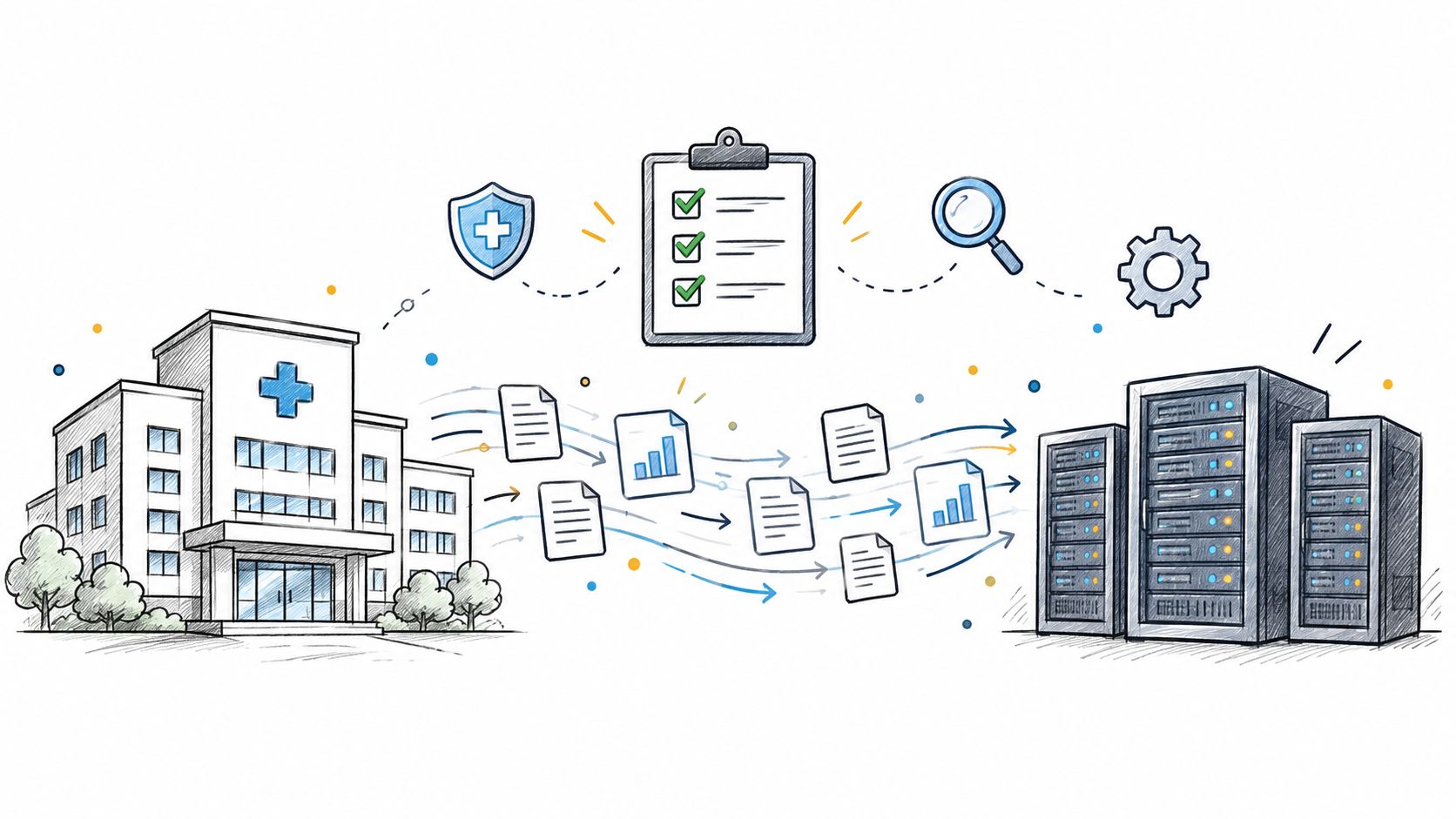
Practical data migration planning guide for healthcare teams. Scope, mapping, compliance, validation, cutover and rollback decisions explained end to end.
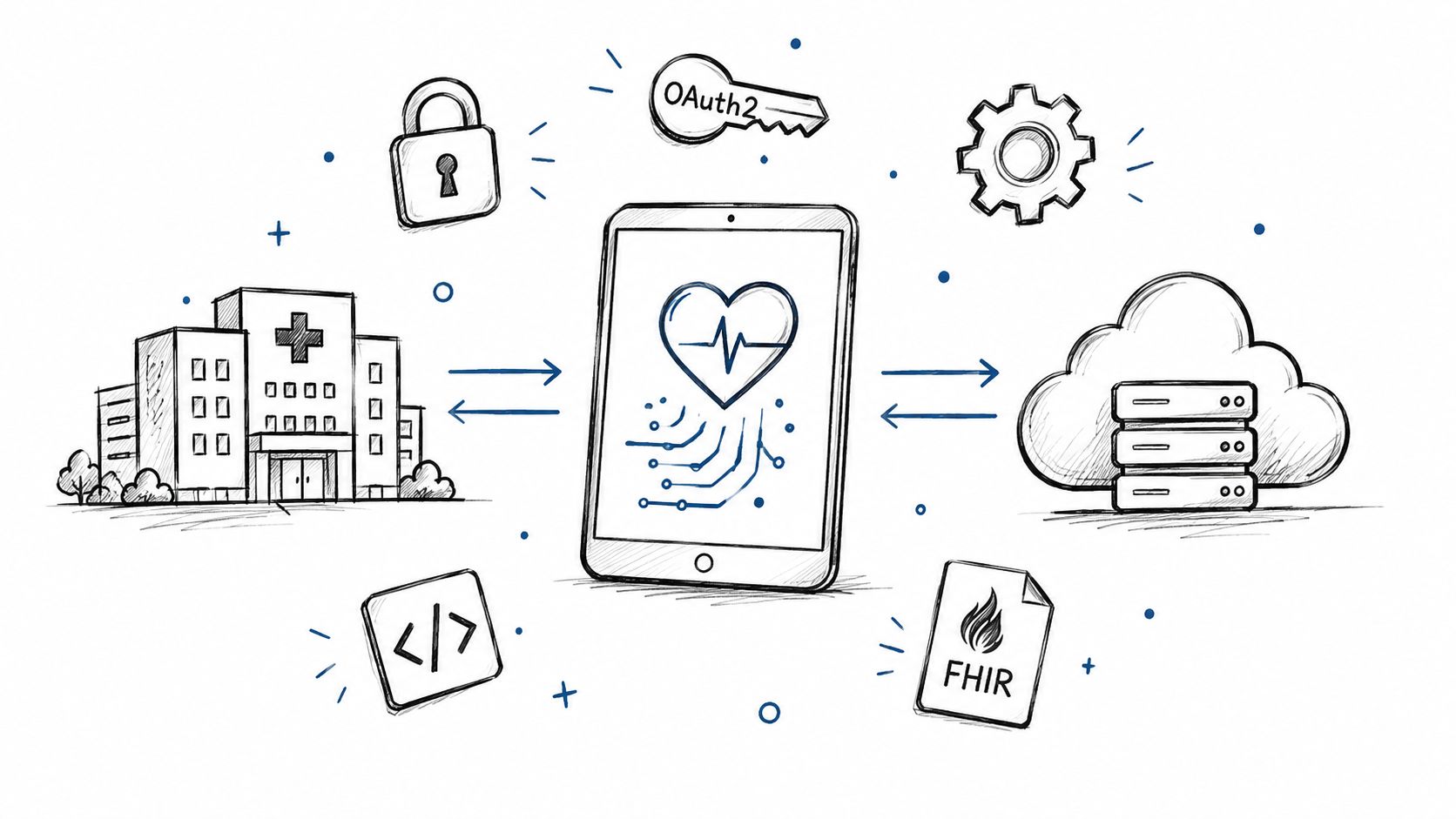
Smart on FHIR guide for healthtech engineers. Learn the OAuth 2.0 launch model, scope syntax, backend services, and US regulatory requirements.
Connect with our team to explore how AI expertise can transform your business.