AI in Healthcare
AI Transformation Healthcare Industry Explained
Learn what AI transformation healthcare industry means, from EHR integration to governance, ROI, and adoption roadmap for healthtech leaders.
September 23, 2026Read more
Learn how AI in logistics powers predictive supply chains that reduce risks, lower costs, and enable faster, more intelligent delivery operations.
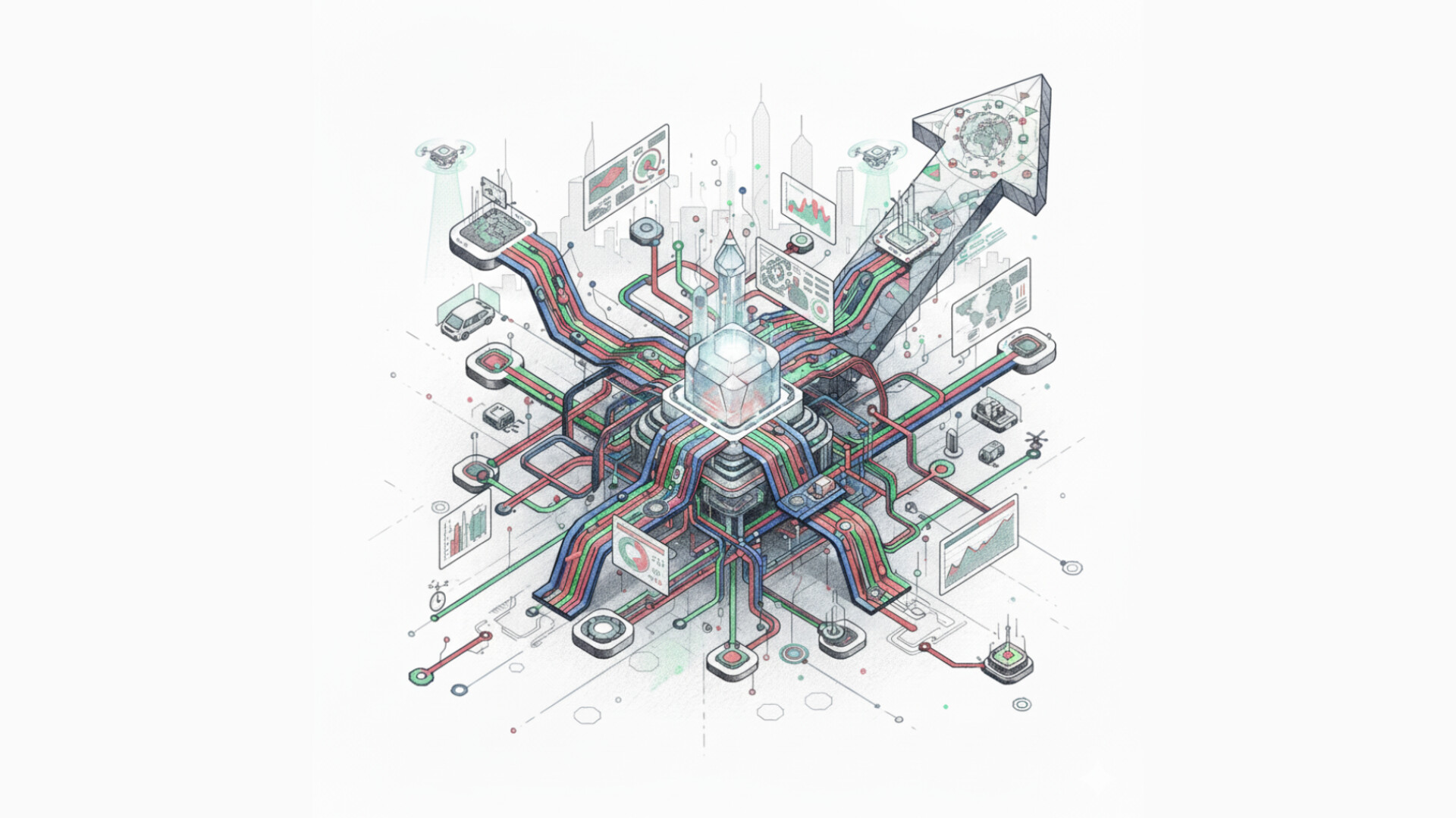
Think about the last thing you ordered online. Now, imagine the incredible journey it took to get to your door. This is the world of logistics, and in our hustle-bustle world, it's the essential backbone that keeps global trade moving. This industry is constantly pushed to be quicker, sharper, and more efficient in its mission to handle everything from your on-time package delivery to stocking shelves worldwide. But the old ways of doing things are struggling. They simply can't handle modern surprises such as sudden material shortages, unpredictable customer demand, or unexpected transportation delays.
This is where the magic of AI in logistics truly begins, and a clear AI adoption roadmap is the guide for this journey. Artificial Intelligence is giving logistics companies the power to predict, plan, and perform tasks with a level of precision that was once unimaginable. Instead of constantly reacting to problems, businesses can now use AI to anticipate and avoid them altogether. The result is a new era of predictive supply chains, systems that use data and automation to stay one step ahead.
At its heart, Artificial Intelligence (AI) is about giving machines the ability to learn, reason, and make smart decisions. It's like providing a digital brain that can work tirelessly. In the world of logistics, this powerful tool can process vast amounts of real-time data from countless sources, such as GPS trackers, warehouse sensors, and customer ordering systems, to find patterns and insights we could easily miss.
This allows companies to monitor shipments in real time, find the most efficient delivery routes, streamline warehouse operations, and even forecast what customers will want next. In essence, AI in logistics acts as a powerful translator, turning raw data into actionable insights that boost performance across the entire supply chain.
Many companies are finding that teaming up with an AI implementation partner is the smartest way to bring in the right tools. This partnership helps them automate tasks, find the best delivery routes, and accurately forecast customer demand. These solutions not only boost efficiency but also minimize human error and reduce operational costs.
A predictive supply chain is about a fundamental shift: it moves beyond simply knowing where your goods are to intelligently forecasting what comes next. It’s a system built on analyzing patterns, spotting potential risks, and accurately predicting outcomes before they ever happen.
Imagine an AI that can warn you a storm will delay a shipment days in advance, or alert you that a truck’s engine is likely to need servicing next week. By anticipating these challenges early, logistics companies can proactively plan alternate routes, schedule maintenance before it's critical, and keep delivery operations running smoothly to avoid costly interruptions.
To make this transformation a success, many businesses start with an AI readiness assessment. This crucial step provides an honest evaluation of their current systems, pinpointing areas for improvement to create a solid foundation before implementing new AI solutions.
Demand forecasting has always been a challenge in logistics. Order too much, and you're stuck with costly overstock. Order too little, and you face frustrating shortages. This is where AI steps in, using machine learning to carefully analyse purchasing trends, seasonal shifts, and even subtle changes in customer behavior.
The insights it provides enable businesses to maintain ideal inventory levels. This allows them to significantly reduce waste and consistently meet customer demand. To achieve this, many companies turn to AI strategy consulting, which helps them identify the most impactful AI use cases for their specific operational needs.
One of the clearest wins is smarter transportation planning. These intelligent systems analyze live traffic data, upcoming weather, and delivery schedules simultaneously to find the fastest and most economical routes for every journey.
Imagine a driver receiving an instant alert about a traffic jam ahead, with a better route already suggested. This real-time guidance, powered by predictive analytics, saves significant fuel and guarantees quicker deliveries, creating a clear benefit for companies and their customers alike.
To build on these gains, logistics firms often use a custom AI strategy report. This tailored document provides a clear plan for implementing predictive algorithms to achieve even greater route efficiency.
Today's modern warehouses are increasingly powered by automation. AI-driven robots now handle tasks like picking, packing, and sorting goods with remarkable speed and precision. Using computer vision and advanced sensors, these systems can accurately identify products, while intelligent algorithms ensure the entire process runs smoothly.
This high level of automation directly lowers labor costs, improves overall accuracy, and creates a safer working environment. It's a fundamental part of building a predictive supply chain, where smart, automated decisions keep operations both agile and resilient.
Unexpected equipment failures can bring logistics to a standstill. This is where AI-powered predictive maintenance makes a difference, identifying potential issues long before they become serious problems.
By constantly monitoring the performance of trucks, machinery, and conveyor belts with real-time data, AI can detect subtle irregularities. The system then alerts operators to schedule repairs at the most convenient time. This proactive approach slashes costly downtime and extends the life of valuable equipment, ensuring supply chains remain reliable.
For businesses looking to refine this process, a detailed AI maturity model provides a clear view of their current predictive capabilities and highlights the most valuable areas for future improvement.
Modern supply chains are exposed to countless risks, ranging from global disruptions and natural disasters to sudden shifts in customer demand. AI helps companies navigate this uncertainty by simulating various potential scenarios and recommending proactive steps to mitigate them.
Furthermore, AI-powered dashboards offer complete, end-to-end visibility across the entire supply chain. This allows companies to monitor shipments in real time and guarantee transparency for every single order. Ultimately, this predictive intelligence builds stronger, more reliable relationships with partners, suppliers, and customers.
Improved Efficiency: Automation and accurate predictions enable faster and much smarter decision-making across the board.
Cost Savings: By optimizing delivery routes and maintenance schedules, AI helps reduce unnecessary operational expenses.
Enhanced Accuracy: From data entry and demand forecasting to shipment tracking, AI significantly reduces the risk of human error.
Better Customer Experience: Customers enjoy greater satisfaction thanks to real-time updates and more reliable, on-time deliveries.
Sustainability: AI contributes to greener operations by minimizing waste and lowering overall fuel consumption.
With the right implementation partner, a business can rapidly scale these advantages and ensure they support its long-term strategic goals.
A successful transition to AI requires a thoughtful and clear plan. A great way to start is by launching small pilot projects to demonstrate value before a full-scale rollout. Teaming up with a trusted AI implementation partner is crucial, as they can help select the right technologies that align with your unique operational needs.
Developing a custom AI strategy report will give leadership a clear roadmap, helping to pinpoint high-value opportunities and track progress against concrete goals. Remember, this is an ongoing journey. Your AI models will need to learn and adapt as you gather more data.
Businesses that embrace these AI solutions now will gain a significant competitive edge, positioning themselves to create supply chains that are not only more efficient but also genuinely predictive and sustainable.
The logistics industry is evolving, and the role of AI in logistics is shifting from a competitive advantage to an absolute necessity. Predictive supply chains, powered by artificial intelligence, empower businesses to foresee potential challenges, control costs more effectively, and consistently provide outstanding service to their customers.
By implementing the right solutions and developing a clear AI adoption roadmap, companies can confidently navigate this transformation. With expert AI strategy consulting, organizations can identify the most valuable AI use cases for their specific needs and track their progress through a structured AI maturity model or comprehensive AI readiness assessment.
The transition to AI-powered logistics is happening now, and early adopters will lead tomorrow's market. If your organization is ready to transform its supply chain performance, contact us today to begin your journey toward a predictive future.
1. How is AI in logistics transforming modern supply chains?
AI in logistics powers predictive supply chains by forecasting risks, optimizing routes, and automating warehouse operations - helping businesses work smarter, reduce delays, and deliver with precision.
2. Why do companies need AI strategy consulting for logistics?
AI strategy consulting helps organizations identify the right AI use cases, choose effective AI solutions, and align AI adoption with long-term business goals for measurable operational improvements.
3. What are the most impactful AI use cases in logistics today?
Key AI use cases include demand forecasting, route optimization, warehouse automation, predictive maintenance, and real-time risk management - each driving accuracy, efficiency, and cost savings.
4. How do AI readiness assessment and AI maturity model support logistics transformation?
An AI readiness assessment evaluates current capabilities, while the AI maturity model tracks progress and identifies next steps, helping build a structured and scalable AI adoption roadmap.
5. What role does a custom AI strategy report and an AI implementation partner play?
A custom AI strategy report outlines tailored steps for AI adoption, and an expert AI implementation partner ensures smooth integration of AI solutions for fully predictive, future-ready logistics operations.
Learn what AI transformation healthcare industry means, from EHR integration to governance, ROI, and adoption roadmap for healthtech leaders.

Explore skilled nursing facility software in 2026. Covers core modules, compliance, KPIs, vendor evaluation, & AI integration for executives.

Unlock scalable impact with a practical healthcare AI transformation framework. This guide covers strategy, governance, ROI, and a phased roadmap for leaders.
Connect with our team to explore how AI expertise can transform your business.