AI in Healthcare
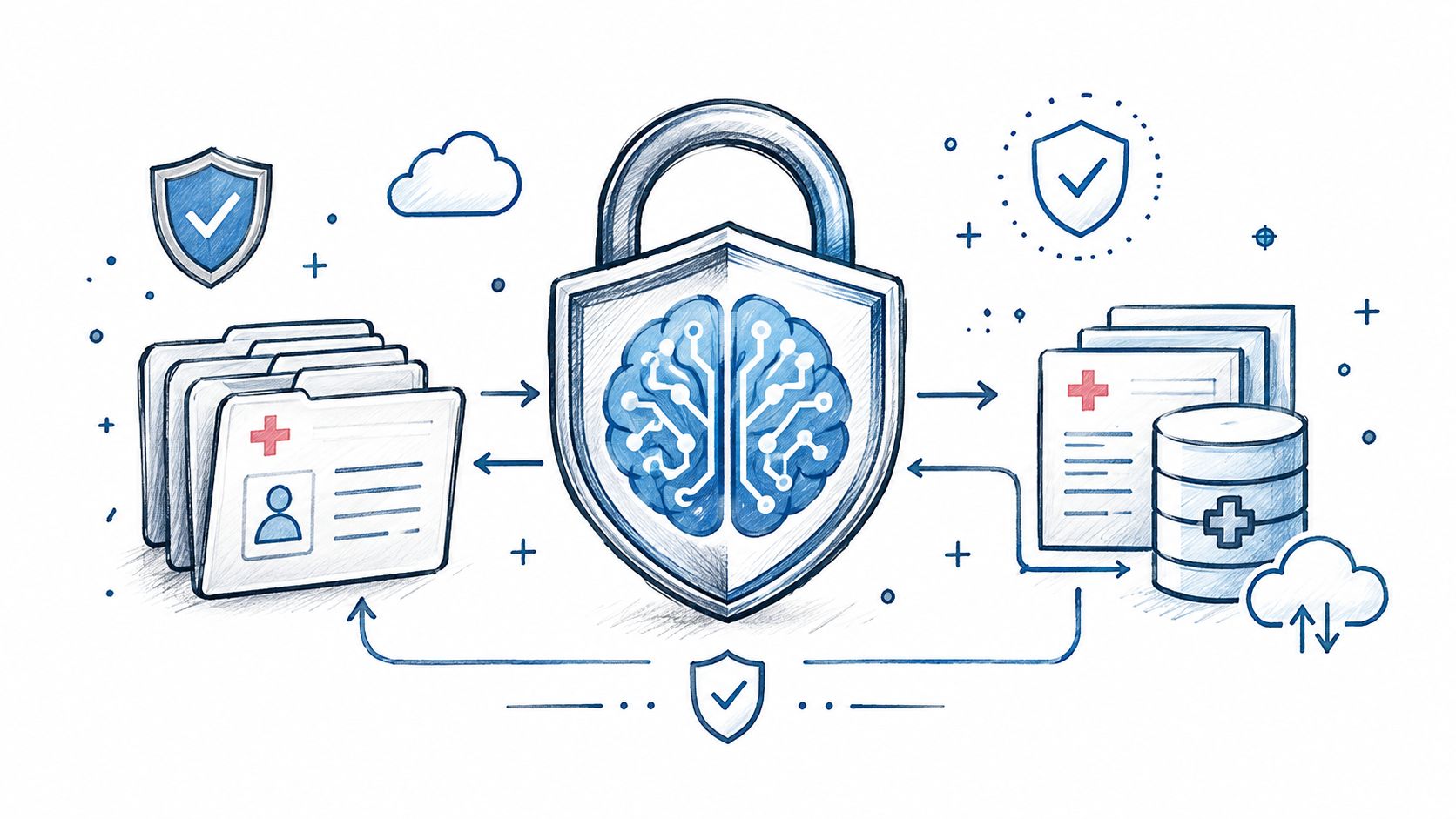
HIPAA-Compliant AI: How to Use LLMs With PHI Safely
How to build HIPAA-compliant AI: when LLM providers need a BAA, data minimization, de-identification, audit controls and a reference architecture.
October 16, 2026Read more
Explore how AI in medical field is revolutionizing patient care, diagnostics, and operations. Discover real-world applications and strategic insights.
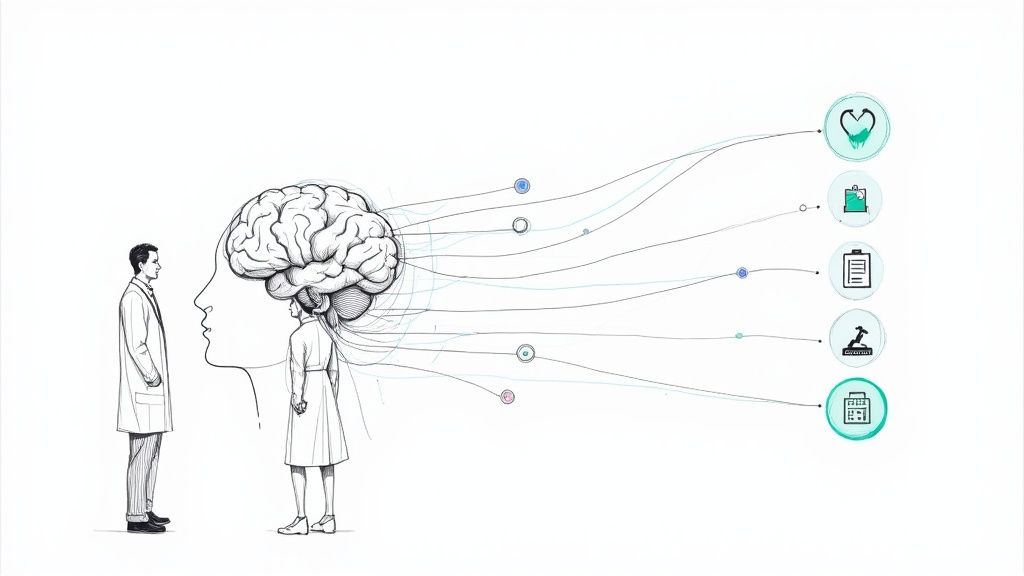
The future of healthcare isn't some far-off sci-fi fantasy; it's being built in clinics and hospitals right now. Artificial intelligence has moved from a buzzword to a practical tool that's fundamentally changing how we practice medicine. This shift is opening up incredible opportunities to diagnose diseases earlier, create truly personal treatment plans, and cut through the administrative red tape that bogs down so many providers.

Getting a handle on these emerging AI tools isn't just a good idea anymore—it's essential for any healthcare organization that wants to lead the pack. Smart systems are becoming a powerful partner to human expertise, driving better patient outcomes and serious operational gains. This guide will cut through the noise, showing you what’s working today and how to build a smart plan for tomorrow.
The move to integrate artificial intelligence in healthcare has hit a tipping point. As of 2025, a staggering 63% of healthcare organizations are already putting AI to work, and another 31% are in the pilot phase. That puts healthcare well ahead of other industries, where the average adoption rate hovers around 50%. You can learn more about these developments across healthcare and life sciences.
This isn't a slow burn. The rapid adoption proves that AI has graduated from an experimental curiosity to a core operational technology in just a few short years.
At its heart, the real power of AI in the medical field is its ability to see what we can't. It can sift through massive datasets—medical images, patient histories, genomic sequences—at a scale and speed no human ever could. Think of it as the ultimate clinical assistant, spotting subtle patterns that might otherwise go unnoticed.
The goal isn't to replace doctors; it's to supercharge them. By automating the mundane and uncovering deeper insights, AI frees up clinicians to do what they do best.
Here’s how it helps in practice:
For healthcare leaders today, the question has shifted from if we should adopt AI to how and where. Building a clear roadmap is the first step. It all starts with pinpointing the specific, high-value applications that will make the biggest difference for your organization, your providers, and most importantly, your patients.

Let's cut through the noise and look at how AI in the medical field is actually making a difference. This isn't about replacing doctors. Think of it more like giving a master craftsman a revolutionary new tool—it elevates their skill, allowing them to see more, understand complex patterns faster, and act with greater precision.
Diagnostic AI is where we're seeing some of the most dramatic gains. Imagine an algorithm that has studied millions of retinal scans. It can spot the nearly invisible, early signs of diabetic retinopathy, a leading cause of blindness, often with more accuracy than the human eye alone. This isn't a futuristic concept; it’s happening in clinics right now.
This same capability is spreading across medical imaging. Radiologists are now working alongside AI models that meticulously scan MRIs and CTs, flagging suspicious areas that might indicate a tumor. It’s an incredibly powerful safety net, ensuring even the most subtle anomalies get a second look from an expert.
Beyond spotting what’s already there, AI is becoming a powerful early warning system. By sifting through enormous patient datasets, predictive analytics can forecast health crises before they even start. It’s like having a clinical partner who never sleeps, constantly on watch for patterns that signal trouble ahead.
Think about all the data flowing through a hospital's electronic health record (EHR) system. An AI can monitor this firehose of information in real-time to identify patients at high risk of developing sepsis, a deadly condition.
By flagging these patients hours or even days in advance, AI gives clinical teams a crucial window to step in and change the outcome. This is a fundamental shift from reactive treatment to proactive, preventative care.
The same logic applies to a persistent problem like hospital readmissions. AI can analyze a patient's history, current condition, and even socioeconomic factors to predict their chances of returning shortly after being discharged. With this insight, care teams can arrange targeted support—like follow-up calls or home health visits—to keep recovery on track. These are the kinds of real-world use cases delivering measurable results.
For decades, medicine has been designed for the "average" patient. But none of us are truly average. AI is finally unlocking the potential of personalized medicine by analyzing an individual's unique genetic makeup, lifestyle, and environment to help doctors design truly custom treatment plans.
This level of personalization was simply out of reach before. The data was too complex to process. Now, healthcare leaders can begin by mapping out where these tools will have the most impact.
The influence of AI doesn't end there. Inside the operating room, AI-powered robotic systems are giving surgeons an incredible boost in precision and control. This enables less invasive procedures with smaller incisions, which means faster recovery times for patients. The AI offers real-time guidance and stability, translating a surgeon's hand movements into micro-movements with superhuman accuracy.
Even outside the hospital walls, AI is changing how patients manage their own health. We're seeing successful telemedicine portals making healthcare more convenient and accessible than ever. This is the next chapter for AI solutions in medicine—it's not just about treating sickness but about empowering a lifetime of wellness.
While the big, splashy diagnostic breakthroughs get most of the attention, the real-world impact of AI is quietly happening in the operational heart of the hospital. Let’s be honest: a hospital's ability to provide great care hinges on how well it runs behind the scenes. For far too long, we’ve had highly skilled clinicians drowning in administrative work, pulling them away from what they do best—caring for patients.
Intelligent automation is starting to fix that. Think about all the time that evaporates into medical coding, billing, and scheduling. A smart automation strategy can take on these repetitive, rule-based jobs and handle them with a speed and accuracy that's simply not humanly possible. This isn't just about saving time; it’s about freeing up your most valuable asset—your people—to focus on clinical work that actually moves the needle.
One of the oldest and most stubborn problems in healthcare is wrangling unstructured data. A doctor’s clinical notes, for instance, are a goldmine of information, but they’ve always been incredibly difficult to process in any systematic way. This is where Natural Language Processing (NLP), a core part of AI, is a genuine game-changer.
NLP models can actually read and understand these free-form text notes. They pull out the critical details like symptoms, diagnoses, and medications, and turn that messy text into clean, structured data. Once you have that, you can do some amazing things:
Suddenly, a massive pile of text becomes a source of real insight, helping both the hospital's financial health and the patient's journey.
It’s not just about paperwork, either. AI is also getting very good at managing the physical flow and resources within the hospital. Using predictive analytics, a system can forecast patient admission rates by looking at historical data, seasonal flu patterns, or even local public health alerts.
This kind of foresight lets administrators optimize bed management and staff scheduling before a crisis hits, not during it. It helps prevent a situation where the ER is overflowing while another floor sits half-empty, which means shorter wait times for patients and less burnout for staff.
This level of operational intelligence ensures your resources are exactly where they need to be, when they need to be there. For a closer look at these systems in action, our guide to workflow automation walks through some practical examples.
Putting AI to work on the operational side isn't just a cost-cutting measure; it’s a strategic play to build a more resilient and efficient healthcare organization. When you remove all that administrative friction, the entire system just works better.
Clinicians are happier and more engaged, patients move through the system more smoothly, and the risk of expensive human errors drops. It’s a shift that creates an environment where everyone can finally focus on what truly matters.
Bringing AI into your healthcare organization isn't just another IT project—it's a fundamental business shift that demands a clear, thoughtful plan. For leaders ready to move forward, a structured roadmap is the only way to ensure your investment in AI in the medical field actually pays off by improving patient outcomes and supporting your clinical teams. Diving in without a map is a surefire way to waste resources and end up with disappointing results, as we explored in our AI adoption guide.
The journey starts not with the technology, but with your strategy. The first and most critical step is to get an honest, deep understanding of your organization’s specific challenges and where the real opportunities lie. This means taking a hard look at your clinical workflows, operational bottlenecks, and long-term goals to pinpoint where AI can make the biggest difference.
Before anyone writes a single line of code, you have to align your AI ambitions with your core business objectives. This first phase is all about asking the tough questions. Where are our biggest pain points? Where can we create the most value for our patients and providers?
A great place to begin is by developing a Custom AI Strategy report. Think of this document as your north star, giving you a clear vision and making sure every action you take from here on out is intentional. This is where you’ll conduct a thorough AI requirements analysis to nail down the scope and technical needs for your initial projects.
Once your high-level strategy is in place, you can zero in on specific, high-impact use cases. Not all AI projects are created equal. You need to prioritize initiatives that offer a clear and measurable return on investment (ROI), such as:
Starting with a well-defined pilot project is the best way to prove the value of AI and get key stakeholders on board.
AI runs on data. Period. Without a solid data foundation, even the most sophisticated algorithms will fall flat. This phase is all about a meticulous audit of your existing data infrastructure to make sure it’s clean, secure, and accessible. Let's be honest—navigating the complexities of Electronic Health Record (EHR) integration is often a major hurdle here.
Your data has to be ready for AI to consume it. That means standardizing formats, cleaning up inaccuracies, and putting robust governance protocols in place to protect patient privacy and maintain HIPAA compliance. This step is completely non-negotiable.
This is also the time to choose the right AI tools for business. Whether you go with an off-the-shelf solution or decide to pursue custom healthcare software development, your choice has to perfectly match the use cases you identified back in Phase 1.
The infographic below shows how data, processes, and time come together in AI-driven hospital operations.
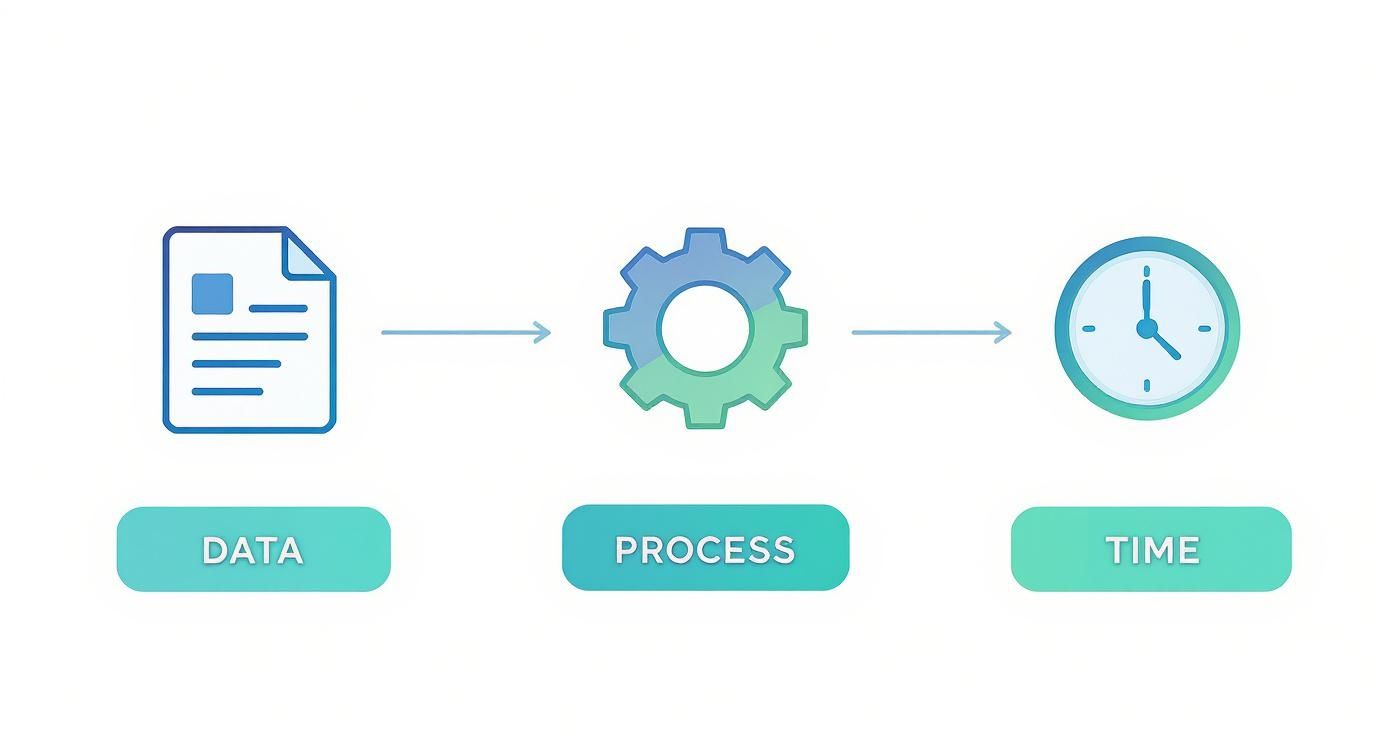
As you can see, successful AI implementation is a continuous cycle. It all starts with high-quality data that feeds automated processes, which ultimately saves time and makes everything more efficient.
With a clear strategy and a prepared infrastructure, you're finally ready to build. This is where your chosen pilot project comes to life. Following a proven framework like our AI Product Development Workflow gives you the structure you need to move from an idea to a working solution without spinning your wheels. The process is iterative—it involves building, testing, and refining the AI model with direct feedback from the clinicians who will actually be using it.
Building the right team is just as important as building the right tech. You'll need a mix of clinical champions, data scientists, IT specialists, and project managers. This blend of expertise ensures the final solution isn't just technically sound but is also practical and genuinely useful in a real-world clinical setting. You can see examples of these kinds of collaborative experts on our expert team page.
Once your pilot proves successful, the final step is to scale the solution across the organization. This involves creating a broader rollout plan, providing comprehensive training, and setting up key performance indicators (KPIs) to track its ongoing impact. This phased approach takes the risk out of implementation and builds the momentum you need for a wider, more impactful AI-driven future.
A structured roadmap is the best way to organize these phases and keep everyone aligned. Below is a high-level table that breaks down what this journey looks like.
| Phase | Key Activities | Primary Goal |
|---|---|---|
| Phase 1: Strategy & Planning (1-3 Months) | Define business goals, identify high-ROI use cases, assess organizational readiness, secure executive buy-in, and form a core AI team. | To align AI initiatives with strategic objectives and select a pilot project with a high probability of success. |
| Phase 2: Data & Infrastructure (2-4 Months) | Conduct a data audit, establish data governance, prepare and clean data sets, select technology platforms, and ensure HIPAA compliance. | To build a secure, reliable, and scalable data foundation that can support AI models effectively. |
| Phase 3: Pilot & Development (3-6 Months) | Develop and train the AI model for the pilot use case, integrate with clinical workflows, and conduct rigorous testing with end-users. | To validate the AI solution's value and technical feasibility in a controlled, real-world environment. |
| Phase 4: Deployment & Scaling (Ongoing) | Roll out the successful pilot solution to a wider audience, provide user training, monitor performance with KPIs, and plan for future use cases. | To achieve widespread adoption, measure tangible ROI, and create a continuous cycle of AI-driven improvement. |
This roadmap provides a clear, logical path forward, turning the complex process of AI adoption into a series of manageable steps. By following this phased approach, you can systematically de-risk your investment and build a foundation for long-term success.

As we bring powerful AI in the medical field, we can't ignore the serious ethical questions and regulatory hurdles that tag along. The ability to analyze massive amounts of sensitive health data is a classic double-edged sword, and it calls for an ironclad commitment to patient privacy and security. The bedrock of that commitment is a strict adherence to regulations like the Health Insurance Portability and Accountability Act (HIPAA).
When you start using AI, every single step—from how you gather data to how you train your models—has to be locked down with solid security. We're talking about advanced data encryption and anonymization techniques to keep patient information safe. Any organization stepping into this arena needs to bake compliance into its AI strategy consulting from day one. It's not optional.
One of the biggest ethical minefields is algorithmic bias. Here’s the simple truth: an AI model is only as unbiased as the data it learns from. If your training data mostly comes from one demographic, your algorithm is going to end up perpetuating, and maybe even worsening, existing health disparities.
Think about it. An AI tool trained primarily on data from one ethnic group might stumble when diagnosing conditions in patients from other backgrounds. This isn't just a hypothetical problem; it's a real-world risk that can make health inequities even worse.
To get this right, you have to:
Many of the most powerful AI models work like a "black box"—they give you an answer, but they don't show their work. That’s a problem in healthcare. For a doctor to trust an AI’s recommendation, or for a patient to agree to a treatment plan it suggests, they need to understand the why behind it. This is where Explainable AI (XAI) comes in.
XAI is all about creating systems that can actually explain their reasoning in a way that humans can understand. It peels back the curtain on the algorithm, turning a mystery into a transparent process that clinicians can check and validate.
Bringing XAI into your toolkit is absolutely critical for building trust and ensuring someone is accountable. It turns a mysterious algorithm into a trusted co-pilot for medical professionals. This kind of transparency is a cornerstone of any responsible AI Product Development Workflow.
The rulebook for AI-powered medical software is being written as we speak. The U.S. Food and Drug Administration (FDA) is hard at work creating new frameworks to oversee these technologies, trying to strike the right balance between encouraging innovation and guaranteeing patient safety.
If you're building or using AI solutions, you have to keep a close eye on these evolving guidelines. This means knowing the requirements for clinical validation, post-market surveillance, and reporting. It's a complex world to navigate, and it often requires help from experts who live and breathe medical device regulations and custom healthcare software development. Staying on top of compliance isn't just about avoiding legal trouble; it’s a smart move that proves your commitment to safety and quality.
You don’t have to go it alone when bringing AI into your healthcare organization. In fact, you probably shouldn't. This isn't just a technology project; it’s a strategic shift that requires a mix of clinical insight, technical know-how, and a clear vision.
Trying to navigate this complex world solo is slow and full of risks. Partnering with seasoned experts is the best way to sidestep common pitfalls and speed up your time to value. A good partner acts as your guide, helping you pinpoint the opportunities that will have the biggest impact on patient care and your bottom line.
The journey always starts with clarity. Before you write a single line of code, you need to know exactly what you’re trying to achieve. Using a tool like our AI Strategy consulting tool can help sharpen your objectives from day one, making sure every move you make supports your organization's mission.
Getting this foundation right is essential for building momentum and getting everyone—from clinicians to administrators—on board.
A strong partnership provides a clear roadmap, from the initial discovery phase all the way to a full-scale rollout.
Ultimately, this is about much more than just installing new software. It’s an opportunity to rethink how you deliver care, empower your clinical teams, and build a more efficient, resilient healthcare system.
AI isn’t here to replace human expertise. Think of it as a powerful ally in your mission to improve and save lives. It enhances the skills of your dedicated professionals, freeing them up to focus on what matters most.
This kind of change demands a delicate balance of technical skill and a deep understanding of the healthcare world. It’s about building AI solutions that are not only smart but also practical, compliant, and easy to weave into the daily workflows your clinicians already use.
The potential is massive, but the path forward requires a steady hand. To bring the power of AI to your organization, the final, most important step is choosing a partner you trust. Our expert team is ready to help you take that next step and turn your vision into a reality.
As AI becomes more integrated into healthcare, it's only natural that questions and a healthy dose of skepticism pop up. Let's tackle some of the most common ones.
Not at all. The primary objective is to augment human expertise, not replace it. AI tools handle repetitive, data-heavy tasks, which frees up medical professionals to focus on complex decision-making, patient interaction, and providing empathetic care—areas where the human touch remains irreplaceable.
The main challenges include ensuring high-quality, unbiased data for training models; the significant initial investment in technology and infrastructure; navigating the complex regulatory landscape like HIPAA; and building trust among clinicians and patients in the reliability of AI systems.
Yes. Smaller organizations can start with cost-effective solutions that deliver a quick return on investment. This includes leveraging AI Automation as a Service for administrative tasks or adopting pre-built diagnostic AI tools for business that integrate with existing systems, avoiding the need for large-scale custom development.
Patient data security is paramount. It is protected through strict adherence to HIPAA regulations, robust data encryption, anonymization techniques that strip personal identifiers, and the use of secure, compliant cloud infrastructure. Any AI solution must have privacy and security built-in from the ground up.
The best first step is to develop a clear strategy. This begins with an in-depth analysis of your specific operational and clinical challenges to identify high-impact use cases. Creating a Custom AI Strategy report provides a foundational roadmap to guide your implementation, ensuring your efforts are aligned with key organizational goals.
Ready to see what AI can really do for your healthcare operations? Ekipa AI specializes in creating practical AI strategies and handling the execution from start to finish. Let's turn your goals into real-world impact. Explore our AI solutions and meet our expert team to see how.
How to build HIPAA-compliant AI: when LLM providers need a BAA, data minimization, de-identification, audit controls and a reference architecture.
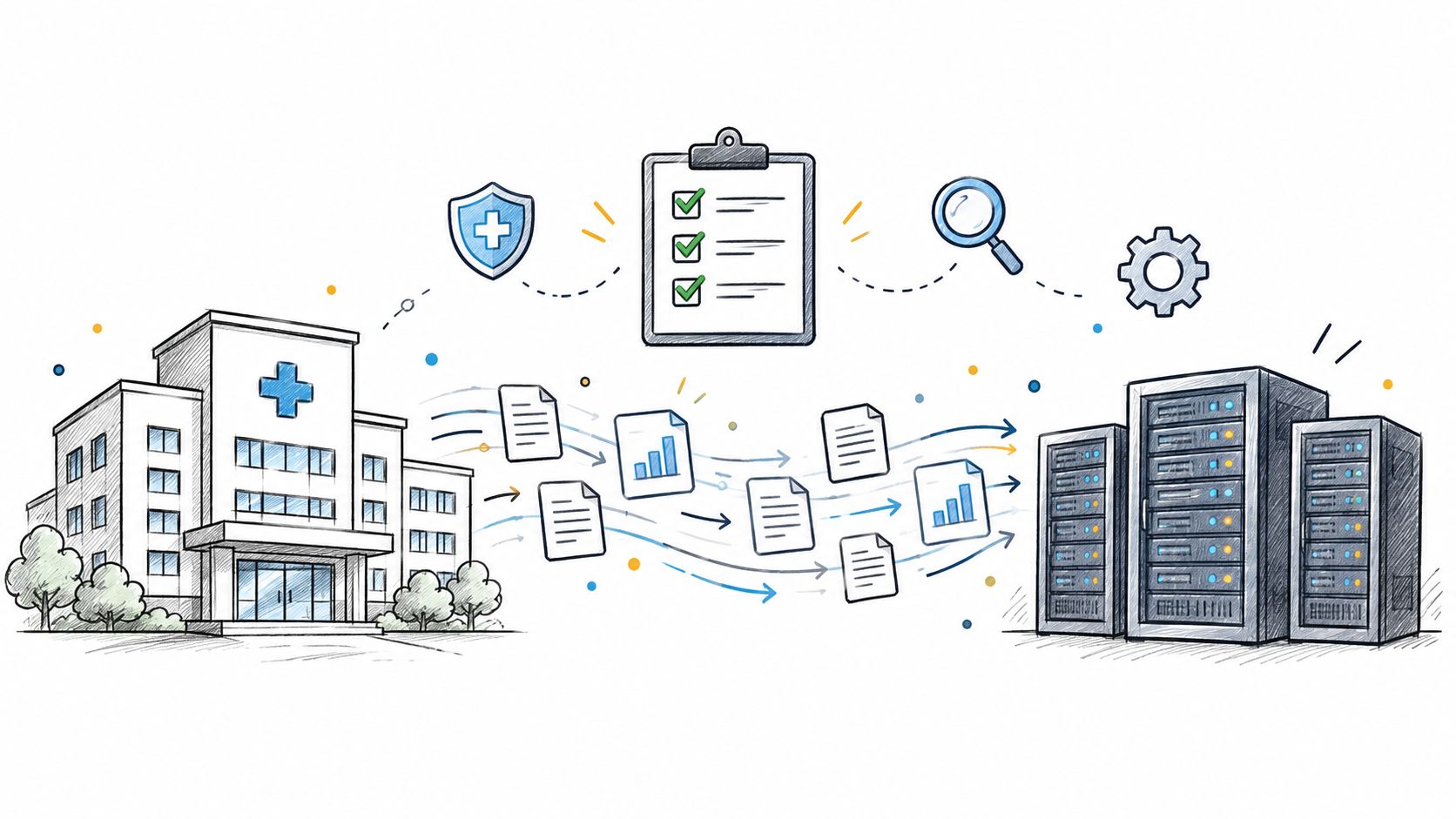
Practical data migration planning guide for healthcare teams. Scope, mapping, compliance, validation, cutover and rollback decisions explained end to end.
Smart on FHIR guide for healthtech engineers. Learn the OAuth 2.0 launch model, scope syntax, backend services, and US regulatory requirements.
Connect with our team to explore how AI expertise can transform your business.