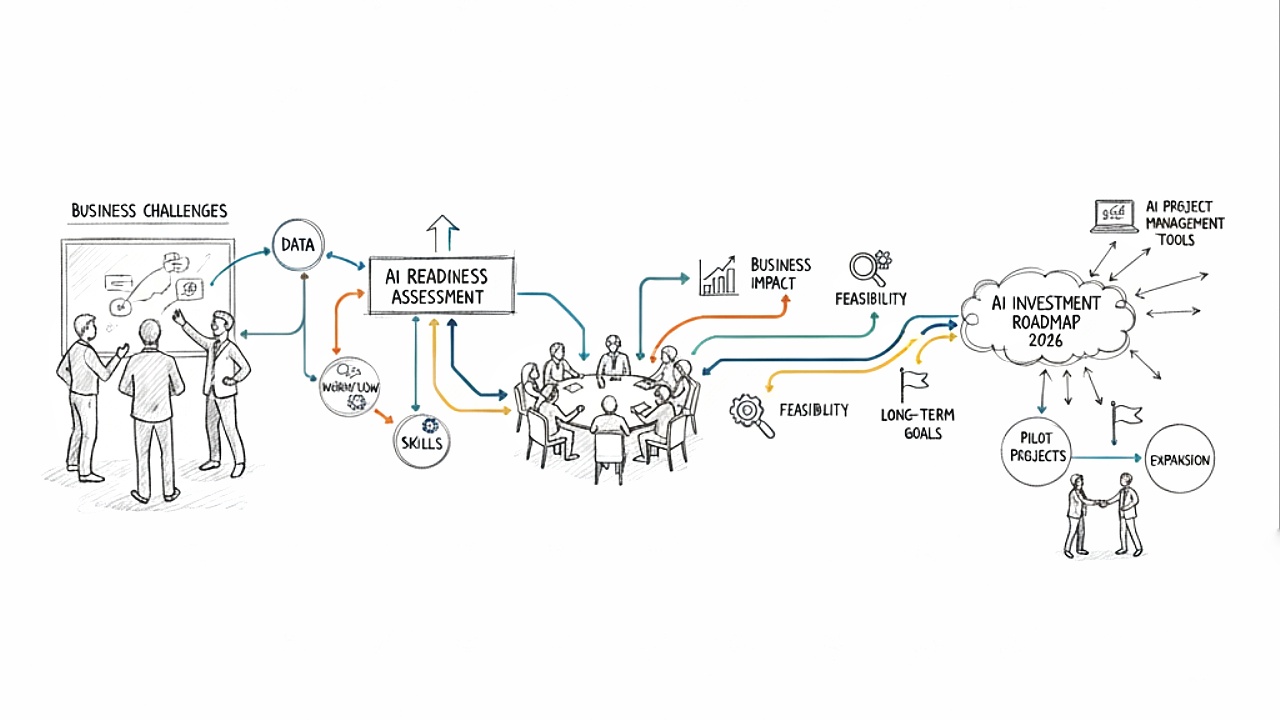
Many businesses today are shifting gears. This is a good shift, but it brings its own challenge. With endless tools and possibilities, deciding where to direct your money and effort presents a challenge. A clear and thoughtful plan is your best tool here. It keeps your team focused on what truly matters and makes sure your budget supports work that delivers real results. This is the value of a strong enterprise AI roadmap. It serves as a practical guide for leaders, outlining a sensible path to select the right projects, ready their teams, and move forward at a sustainable pace.
Why AI Planning Matters for 2026
A new generation of AI solutions is now available for businesses. The real task for any company is to decide which ones truly fit with their daily work. Jumping on every new trend is tempting, but it rarely works. A better approach is to carefully evaluate your ideas, focusing on those that will deliver lasting value. This thoughtful approach is what we see among leaders today. They are not just seeking any project; they want AI to support clearer decisions, foster more meaningful customer connections, and create more efficient operations.
The first step requires a deep examination of business challenges. When companies know what problems they want to solve, it becomes easier to pick the right tools. This clear thinking also makes it simpler to work with an AI implementation partner later on, because everyone already understands the goals.
Building a Solid Foundation for AI Investments
Your planning grows stronger when you truly know your starting point. That means examining your current data, everyday workflows, and the skills your team already possesses. Many groups begin with an AI readiness assessment. This is simply a clear-eyed look at where you are strong and where you have room to grow. It helps leaders identify immediate actions and areas requiring refinement before advancing.
Some companies find it valuable to engage external expertise for AI strategy consulting. This provides them with expert guidance on topics such as data quality, security, model selection, and long-term scalability. This support provides clarity and builds confidence for every decision that follows.
Another useful tool for planning is the AI maturity model. Think of it as a map that shows if a company is starting, building its skills, or already working at an advanced level. Knowing where you stand on this map makes it much easier to choose the right AI use cases for the coming years.
To maintain organization during detailed work, many companies adopt AI project management tools. These tools help teams monitor progress, maintain accurate records, and manage tasks efficiently throughout each project phase.
How To Prioritise AI Use Cases for 2026

Choosing which AI projects to focus on first can be a real challenge. It is common for each team to believe its idea is the most necessary. Following a simple structure can make this difficult process feel much smoother. Begin by writing down every possible idea. This list could include automatic report generation, smarter customer support, and tools that simplify daily work. Once you have your complete list, you can then give each one the careful thought it deserves.
Step 1: Consider Business Impact
A practical starting point involves estimating the potential value each idea could generate. Projects that can increase revenue, lower costs, or make work more efficient should naturally rise to the top of your list. Leaders can create a simple scoring sheet to help compare all the ideas on an equal footing. The results from this exercise will point them toward the most meaningful projects for the next year.
Step 2: Check Feasibility
Some projects require large data sets, specific tools, or a team with certain skills. When these elements are unavailable, progress cannot move forward. At this time, decision-makers review the necessary technical effort. A custom AI strategy report provides practical guidance. It looks at each idea and outlines clear, practical steps.
Step 3: Align With Long-Term Goals
Every business has a long-term vision. AI projects that help move the company toward that vision should receive more attention. For instance, a hospital may look at tools to manage patient records, while a store might think about a system that suggests products. A good AI adoption roadmap helps keep these important projects on track.
The Role of Teams and Partnerships
AI projects succeed when the people working on them truly understand the goal. Many businesses now run internal workshops and training sessions. This helps their employees learn and adjust at their own pace. When a team feels more sure of their knowledge, they engage with the work more fully. This often leads to more creative and useful ideas from them.
Partnerships also make a big difference. Working with outside experts can help a team accelerate progress, minimize potential issues, and gain knowledge of new technology. These partnerships are particularly valuable when a company is establishing its technical foundation or selecting its core tools.
Moving From Planning to Execution
A good plan must be practical, not theoretical. Putting a plan into action feels easier when the steps are clear and simple to follow. A smart way to begin is with a small pilot project. These limited tests allow a company to evaluate results before committing to a larger investment. Lessons from these pilots guide the full company-wide launch.
After a pilot proves effective, the focus shifts to expanding the project. This could involve extending automation to additional teams, integrating new AI tools with legacy systems, or improving model accuracy. Through all this growth, a strong enterprise AI roadmap maintains structure and aligns teams across the effort.
Many companies also rely on AI tools to manage everyday tasks, which support decision-making and enhance customer experience. These tools work best when they are not just standalone tests, but part of a wider, thoughtful plan.
Conclusion
AI is now shaping how businesses plan for the future. By selecting the right projects, setting clear goals, and building capable teams, companies can make real progress in 2026 and beyond. A well-defined enterprise AI roadmap gives leaders the clear vision they need to invest wisely, maintain focus, and avoid wasted effort. If your business is ready to start or advance its AI journey, contact us for thoughtful guidance.
FAQ
1. What Is an Enterprise AI Roadmap?
An Enterprise AI roadmap is a structured plan that helps businesses prioritise AI use cases, align investments with strategy, and scale AI Solutions effectively.
2. Why Is an AI Readiness Assessment Important Before Investing in AI?
An AI readiness assessment evaluates data, skills, and infrastructure to determine whether the organization can adopt AI successfully.
3. How Does an AI Maturity Model Help Prioritise AI Use Cases?
An AI maturity model shows the organisation’s current capability level, making it easier to select practical and high-impact AI use cases.
4. When Should Companies Consider AI Strategy Consulting or an AI Implementation Partner?
AI strategy consulting provides clarity on priorities and risks, while an AI implementation partner supports technical execution and deployment.
5. What Role Do an AI Adoption Roadmap and a Custom AI Strategy Report Play?
An AI adoption roadmap and custom AI strategy report define timelines, feasibility, and long-term goals, ensuring AI investments deliver measurable value.