
AI in Healthcare
HIPAA-Compliant AI: How to Use LLMs With PHI Safely
How to build HIPAA-compliant AI: when LLM providers need a BAA, data minimization, de-identification, audit controls and a reference architecture.
October 16, 2026Read more
AI investment roadmapping helps enterprises prioritize the right AI use cases. Learn how to align AI initiatives with business goals to maximize value and long-term impact in 2026.
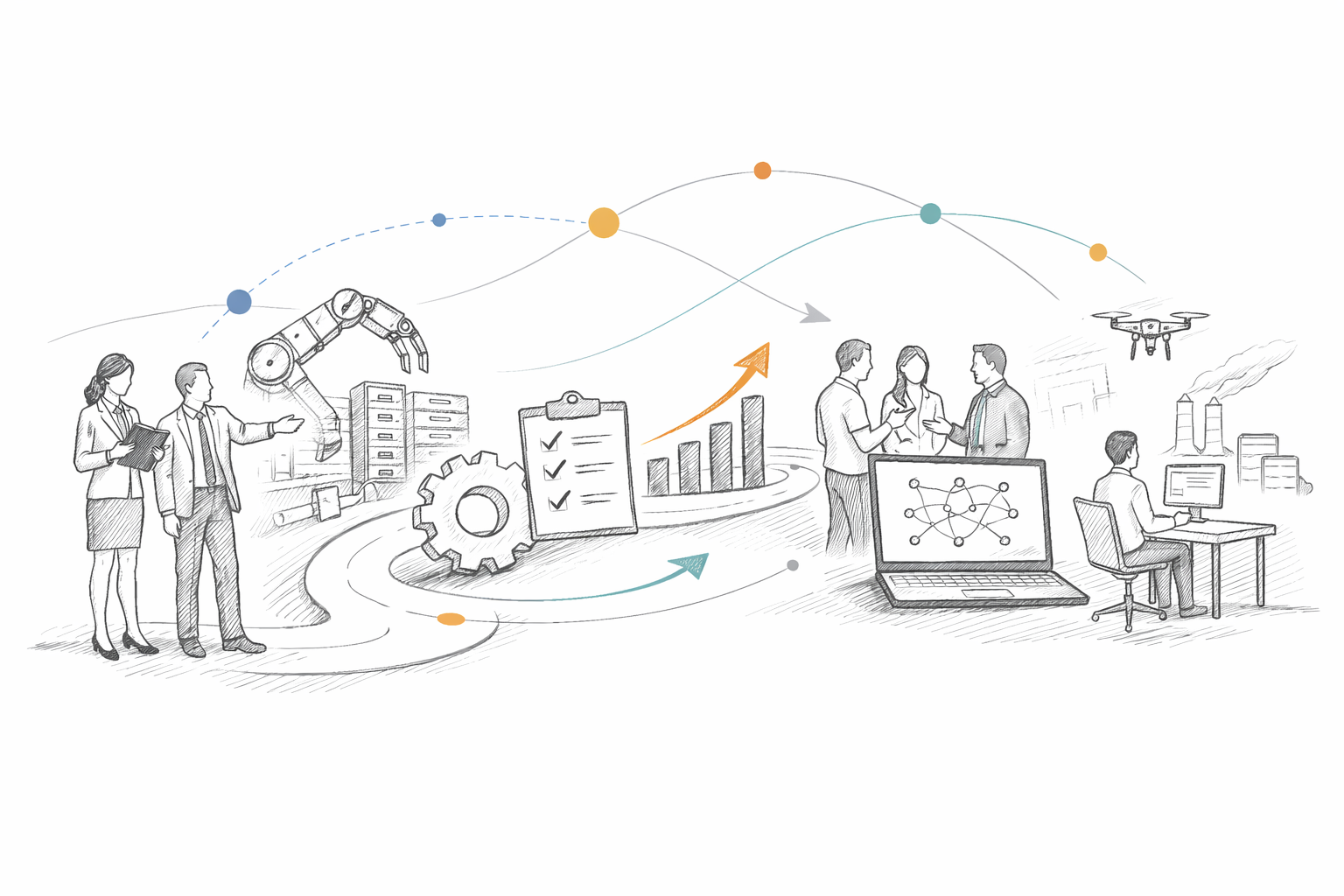
Across industries, leaders are investing significant resources in artificial intelligence to transform their organizations' operations. The excitement is clear, yet many projects remain stuck as small pilots that never grow beyond a single department. When investments are scattered across disconnected experiments, their impact remains limited. As we move into 2026, success depends on disciplined planning and a structured enterprise AI roadmap that directs funding toward measurable outcomes. With a clear AI investment roadmap, enterprises can identify high-value opportunities and scale AI in ways that bring lasting organizational benefit.
Artificial intelligence often takes root in organizations through uncoordinated efforts. Marketing teams may focus on predictive analytics, operations teams experiment with automation, and finance teams run forecasting models. Without a shared plan, these efforts remain disconnected. Over time, leaders realize that projects operate on different platforms, rely on different datasets, and pursue different goals. An investment roadmap brings order by setting clear priorities, defining governance, and aligning technology with long-term business needs. Working with AI strategy consulting specialists can also help organizations connect technical direction to meaningful business outcomes.
Leaders can assess technology opportunities based on business value, scalability, and practical use. This structure guides organizations toward transformation programs that extend across departments rather than remaining isolated. Teams working on advanced analytics often begin with an AI readiness assessment, which reviews data maturity, technical capacity, and organizational preparedness before any major investment decisions are made.
Enterprise transformation programs often encounter barriers that influence investment decisions.
Many organizations still rely on large technology stacks built over decades. Introducing modern analytics into these environments requires careful planning, system redesign, and data restructuring to align with newer platforms.
Artificial intelligence depends on reliable data. When storage systems are fragmented, labels are inconsistent, or records are incomplete, the accuracy of analytics outcomes drops.
Skilled engineers, researchers, and data professionals remain in short supply. Leadership teams often struggle to hire specialists with the experience needed to design models that can scale across the organization.
Industries that operate under strict regulations must meet clear standards for data protection, privacy, and information security. Any AI deployment must align with these legal requirements and fit within risk governance policies.
Some organizations find it difficult to measure the financial impact of early AI projects. Without clear performance indicators, investment planning becomes uncertain and harder to justify.
In many cases, these challenges lead organizations to work with an experienced AI implementation partner. Such partnerships provide architectural guidance, governance frameworks, and disciplined approaches to deployment.

Technology direction in 2026 continues to shape how enterprises plan their investments. Several important trends guide these decisions.
Organizations are focusing on cloud platforms that can scale easily, process massive datasets, and train complex models.
Data processing is spreading across connected devices, industrial sensors, and edge computing platforms, all linked with centralized data environments.
Advanced systems are now capable of decision-focused analysis across supply chains, financial forecasting, and customer engagement.
Enterprises are investing in monitoring tools that track model behavior, fairness, transparency, and long-term reliability.
Cybersecurity is shaping every stage of deployment, from protecting training data to maintaining model integrity and monitoring operations.
Organizations exploring these trends often review several AI solutions across infrastructure, analytics, automation, and enterprise decision intelligence platforms.
Planning investments begins with a clear view of how prepared the organization is. Technology leaders examine data maturity, system architecture, and internal expertise before committing resources to large transformation programs. Careful evaluation prevents scattered experiments and strengthens long-term direction. Many enterprises use an AI maturity model to review governance practices, data management, infrastructure, and collaboration across departments.
Readiness reviews also take into account regulatory requirements, risk frameworks, and organizational culture. Enterprises working in highly regulated industries need transparent model governance and audit readiness. Leadership teams often request a custom AI strategy report that examines operational readiness, investment opportunities, technology architecture, and the potential value across departments.
Enterprise transformation often starts with practical applications that deliver measurable value. The following AI use cases represent some of the most effective opportunities for organizations ready to scale their efforts.
1. Predictive analytics: Forecasting models draw on historical data and market signals to give leadership teams sharper decision intelligence.
2. Supply chain optimization: Systems review production schedules, inventory levels, and demand changes to improve planning and reduce disruption.
3. Fraud detection: AI examines transaction patterns, risk indicators, and behavioral data to identify suspicious activity across financial platforms.
4. Intelligent document processing: Solutions analyze contracts, invoices, and records across departments, reducing manual effort and improving accuracy.
5. Customer service automation: Conversational platforms handle service requests, guiding clients to the information they need quickly.
6. Predictive maintenance: Systems track equipment data, operational signals, and maintenance history to spot potential failures before they interrupt operations.
Enterprise transformation tends to unfold gradually. Early pilots focus on experimentation and small-scale validation. Once models prove consistent in real operations, organizations move toward production deployment. Scaling across the enterprise requires more than technology alone. It calls for centralized governance, cloud infrastructure that can expand with demand, security-focused architecture, model monitoring frameworks, and collaboration across departments that share data, processes, and governance structures.
Within this framework, leadership teams often design a structured AI adoption roadmap. This roadmap organizes investment phases, governance models, technical planning, operational integration, and collaboration across departments, creating a clear path for AI to grow sustainably.
Leadership teams assess the financial impact of transformation programs using clear performance indicators. Cost savings often come from automating repetitive tasks across operations and administration. Productivity rises when analysis cycles become faster, and decision intelligence improves. Revenue growth follows when forecasting becomes more accurate, and customer insights deepen.
Operational efficiency can be tracked through automation rates across departments, while forecasting accuracy shows how planning models improve supply chain management, financial planning, and market demand analysis. These indicators guide investment decisions across the enterprise AI roadmap, providing leadership teams with measurable insight into the outcomes of transformation.
Artificial intelligence adoption in 2026 requires a disciplined strategy, thoughtful investment planning, and alignment with enterprise goals. Organizations need to move past scattered pilots and fragmented experiments that remain stuck within departments. A structured enterprise AI roadmap gives leadership teams the direction to focus on valuable opportunities, coordinate governance, and connect innovation with operational priorities. Enterprises that choose to prioritize AI use cases today will shape the next generation of intelligent, data-driven organizations.
Contact us to learn more about structured planning approaches that guide leaders through effective artificial intelligence investment strategy development.
An enterprise AI roadmap is a structured plan that helps organizations prioritize AI use cases, align investments with business goals, and scale AI Solutions across departments.
A clear enterprise AI roadmap helps organizations avoid scattered pilots and focus on high-impact AI use cases that deliver measurable business value.
Organizations often conduct an AI readiness assessment and review an AI maturity model to evaluate infrastructure, data quality, and governance capabilities.
AI strategy consulting and a custom AI strategy report help leaders identify investment priorities and create a structured AI adoption roadmap.
Working with an experienced AI implementation partner helps deploy AI Solutions effectively and integrate them across enterprise systems.
How to build HIPAA-compliant AI: when LLM providers need a BAA, data minimization, de-identification, audit controls and a reference architecture.

Practical data migration planning guide for healthcare teams. Scope, mapping, compliance, validation, cutover and rollback decisions explained end to end.

Smart on FHIR guide for healthtech engineers. Learn the OAuth 2.0 launch model, scope syntax, backend services, and US regulatory requirements.
Connect with our team to explore how AI expertise can transform your business.