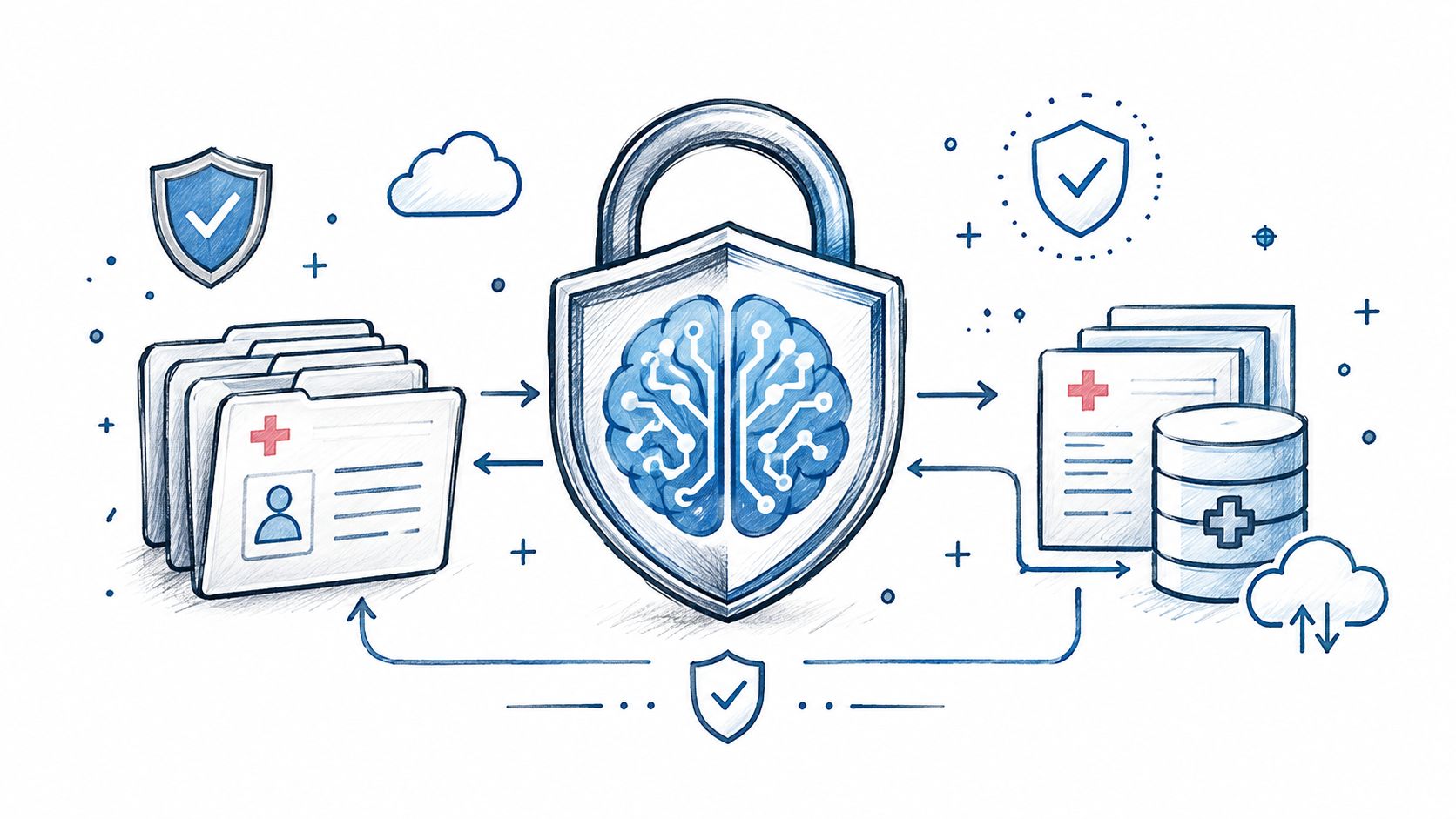
AI in Healthcare
HIPAA-Compliant AI: How to Use LLMs With PHI Safely
How to build HIPAA-compliant AI: when LLM providers need a BAA, data minimization, de-identification, audit controls and a reference architecture.
October 16, 2026Read more
Explore AI lifecycle management healthcare from planning to governance. Learn key stages, roles, and tools to deploy compliant AI solutions in 2026.

It’s a familiar story. A healthcare organization launches a dozen promising AI pilots, but months later, they’re stuck. They get tangled in compliance red tape, fail to integrate with clinical workflows, and ultimately, don't deliver any real-world value. This is the reality for far too many.
This is precisely where effective AI lifecycle management in healthcare comes in. It’s the framework that turns those isolated experiments into scalable, strategic assets that genuinely improve patient outcomes and operational efficiency.
In medicine, you wouldn’t dream of rolling out a new treatment without rigorous trials. Think of AI lifecycle management as the digital equivalent of that process—a structured, end-to-end discipline that ensures an AI model is safe, effective, and compliant from the moment it’s just an idea all the way through to its retirement.
Many organizations get stuck moving from an exciting proof-of-concept to a production-ready tool that clinicians can actually use. Without a formal lifecycle process, models can become unpredictable "black boxes," introduce hidden biases, or simply lose their accuracy over time. This decay in performance, known as model drift, is a serious risk when patient care is on the line.
A formal lifecycle provides a clear roadmap for navigating the unique hurdles of healthcare AI. It's built to address challenges like:
Strict Data Governance: Handling patient data correctly, ensuring it's properly de-identified and used in a way that respects HIPAA.
Clinical Validation: Rigorously proving that a model is accurate and safe before it ever influences a clinical decision.
Regulatory Compliance: Systematically mapping your AI tools to evolving FDA guidelines and other legal standards.
Continuous Monitoring: Actively watching a model's performance after it's deployed to catch and fix any drift, bias, or degradation.
Adopting this framework isn't just a good idea; it's a necessity for anyone serious about making an impact. A recent report projects that 63% of organizations will have AI running in live clinical and operational workflows by 2026. This isn't about experiments anymore—it's about full-scale deployment.
Where this is done right, the results are compelling. We're seeing documentation time fall by 40% and claim denials drop by 25%. You can explore more data like this in Innovaccer's State of Revenue Lifecycle in Healthcare 2026 report.
Putting a successful framework in place requires a team that speaks both technology and medicine fluently. Our Healthcare AI Services are designed to bridge that exact gap, helping you build systems that are not only powerful but also trustworthy and compliant.
To give you a clear path forward, let's break down the essential stages of a robust healthcare AI lifecycle.
Building and maintaining a successful AI model in healthcare is a journey, not a single event. It unfolds across seven distinct stages, each with its own focus and challenges. Understanding this entire process is the first step toward creating AI solutions that are not just technically impressive but also clinically valuable and sustainable.
| Stage | Core Activity | Key Challenge |
|---|---|---|
| 1. Data Sourcing & Governance | Identifying, collecting, and securing relevant patient and operational data. | Ensuring HIPAA compliance, data quality, and representative datasets to avoid bias. |
| 2. Data Annotation | Labeling raw data (e.g., medical images, clinical notes) to train the model. | Achieving consistent, high-quality labels from clinical experts, which is often slow and expensive. |
| 3. Model Development | Designing, training, and testing the AI model to perform a specific task. | Selecting the right algorithms and preventing overfitting, where the model performs well on training data but poorly on new data. |
| 4. Clinical Validation | Testing the model's performance and safety in a simulated or real-world clinical setting. | Proving the model’s efficacy and safety to clinicians and stakeholders before it impacts patient care. |
| 5. Regulatory Mapping | Aligning the model and its documentation with FDA or other regulatory requirements. | Navigating the complex and evolving regulatory landscape for AI as a Medical Device (SaMD). |
| 6. Deployment | Integrating the validated model into existing clinical or business workflows. | Overcoming technical integration hurdles and ensuring seamless adoption by end-users (e.g., doctors, nurses). |
| 7. Monitoring & Maintenance | Continuously tracking the model's performance, accuracy, and fairness in production. | Detecting and correcting model drift, retraining the model with new data, and ensuring long-term reliability. |
This end-to-end view shows that the initial development is just one piece of the puzzle. The real work lies in managing the entire lifecycle to ensure the AI delivers lasting value safely and effectively.
To bring AI from a promising concept into a real clinical setting, you need a disciplined, repeatable process. It helps to think of AI lifecycle management in healthcare much like a pharmaceutical development pipeline. Both demand incredible rigor, an unwavering focus on safety, and a clear path from the initial idea to its final application.
Without that kind of structure, even the most brilliant AI models can get stuck in pilot purgatory, fail to deliver any real value, or worse, introduce unacceptable risks to patients and the organization.
This blueprint lays out the entire journey in a clear, seven-stage framework. It provides the essential scaffolding for any healthcare leader looking to build a sustainable, well-governed AI program, not just run a few scattered experiments. For a personalized roadmap based on your organization's specific needs, our experts can develop a Custom AI Strategy report.
The diagram below shows the high-level flow of an AI model's life, from its birth as an idea to its eventual retirement.

This simple flow—Ideation, Production, and Retirement—is a powerful reminder. AI is not a one-off IT project; it's a living asset that needs to be managed from cradle to grave. Let's dive into the seven detailed stages that make this journey a success.
Every great healthcare AI begins with its data. This foundational stage is all about identifying, collecting, and securing the high-quality, relevant data needed to train and test your model. This might be anything from electronic health records (EHRs) and medical images to lab results or back-office operational data.
But just having a mountain of data isn't the point. Robust governance is absolutely non-negotiable. This means putting strict protocols in place for handling protected health information (PHI), ensuring ironclad HIPAA compliance, and mastering data de-identification techniques. A misstep here doesn't just put patient privacy at risk; it can poison your model with bias, leading to poor performance and serious health inequities.
With governed data ready to go, the real model building begins. This is where data scientists and ML engineers get to work, selecting the right algorithms, training the model on the prepared data, and then putting it through its paces.
Validation is where the rubber meets the road. A model has to prove itself against data it has never seen before to confirm its accuracy, fairness, and reliability. This is how you catch issues like overfitting, which is when a model essentially "memorizes" the training data but can't think for itself when faced with a new, real-world scenario.
A model that boasts 99% accuracy in a sterile lab is completely useless if it falls apart in a busy clinic. The validation stage is about pressure-testing the AI to make sure it's ready for the messy, complex reality of patient care.
Healthcare is one of the most regulated industries on the planet, and AI doesn't get a free pass. This stage is dedicated to mapping your AI tool to the relevant regulatory frameworks, like the FDA's guidance for Software as a Medical Device (SaMD).
This isn’t just about ticking boxes before a launch. It’s about building a case from day one to prove your AI is both safe and effective, with clear documentation and audit trails. Bringing in regulatory experts early in the process is one of the smartest moves you can make to avoid hitting a brick wall right before deployment.
Once a model is fully validated and its regulatory pathway is clear, it's time to bring it to life. Deployment means carefully integrating the AI into existing clinical or business workflows, whether for physicians, nurses, or administrative teams.
Success here comes down to one thing: a seamless user experience. If an AI tool is clunky, confusing, or disrupts how people already work, it will be abandoned—no matter how accurate it is. This stage demands close collaboration between your AI team, IT, and the frontline end-users to ensure the technology actually helps them do their jobs better.
The work doesn't stop after go-live. In many ways, it's just beginning. Continuous monitoring is the critical process of tracking your model's real-world performance to catch any signs of degradation, a phenomenon we call model drift.
Model drift happens for all sorts of reasons—the patient population changes, a new piece of lab equipment is introduced, or even subtle shifts in clinical practice. Constant monitoring ensures your model stays accurate, fair, and safe over its entire lifespan. This includes setting up alerts for performance drops and having a clear plan for retraining or updating the model when necessary.
If you can't measure it, you can't manage it. This stage is all about defining and tracking the right Key Performance Indicators (KPIs) and Service Level Agreements (SLAs) for your AI system.
These metrics need to go far beyond technical accuracy. They should connect directly to the clinical and business outcomes you want to achieve. For example:
A measurable reduction in diagnostic errors
Time saved on manual administrative tasks
A drop in patient readmission rates
A clear return on investment (ROI)
Solid metrics are how you prove the value of your AI initiatives and justify the resources to scale them.
Finally, every AI model has a finite lifespan. Eventually, it may be replaced by superior technology, become irrelevant due to changes in medicine, or no longer align with the organization's strategy.
The retirement stage is about gracefully decommissioning the model from production. This has to be handled responsibly, with a smooth transition plan for users and a secure process for either archiving or deleting all associated data. A formal retirement plan prevents old, forgotten models from becoming security risks or sources of clinical confusion down the road.
Let's be blunt: a brilliant algorithm is useless without the right team behind it. AI lifecycle management in healthcare hinges far more on people than it does on technology. You can have the cleanest data and the most sophisticated model, but if it doesn't solve a real clinical problem or fit into a doctor's workflow, it's just an expensive science experiment.
I've seen too many projects stall because they lack this crucial blend of expertise. Data scientists, working in a vacuum, build technically impressive models that are clinically irrelevant. Or engineers push a tool into production that clinicians simply refuse to use. The single best investment you can make is assembling a cross-functional team that bridges the gap between the code and the clinic. If you're struggling to find the right people, our expert team can step in to fill those critical roles and get you on the right track.
Your team will need more than just a single data scientist. To get AI out of the lab and into patient care, you need a core group of specialists covering medicine, technology, and governance. Think of it like a surgical team—each person has a distinct, vital role.
Clinical Champion: This is your most important hire, period. Usually a respected physician or nurse, they are the voice of the end-user. They ground the project in reality, ensuring it tackles a meaningful clinical challenge, helps steer the validation process, and ultimately gets other clinicians to trust and adopt the tool.
AI/ML Engineer: This is your architect and builder. They construct the MLOps infrastructure, develop the actual models, and handle the tricky work of plugging them into existing systems like the EHR. Their job is to build robust and scalable AI tools for business and healthcare that don't crash under pressure.
Data Scientist: If the engineer is the builder, the data scientist is the detective. They dive deep into the data, running the initial AI requirements analysis, uncovering hidden patterns, and figuring out which algorithms are right for the job. They live and breathe experimentation and statistical rigor, making sure the model is accurate and fair.
Regulatory & Compliance Officer: This person is your guide through the maze of healthcare regulations. They ensure every step—from how you source data to how you document model performance—is fully compliant with HIPAA, GDPR, and FDA expectations. Bringing them in on day one is non-negotiable if you want to avoid major roadblocks later.
IT Operations Specialist: This is the person who makes sure the AI can actually run within your hospital’s tech stack. They manage the deployment, keep an eye on performance, and troubleshoot the technical nuts and bolts of integrating the tool into daily clinical workflows, including any custom internal tooling.
With so many experts in one room, it’s easy for wires to get crossed. Who makes the final call on a validation metric? Who is just supposed to be kept in the loop? This is where a RACI chart becomes invaluable. It's a straightforward way to map out roles and responsibilities.
RACI is an acronym that clarifies who is:
Responsible: The person doing the hands-on work.
Accountable: The single person with the ultimate ownership of the task.
Consulted: The subject matter experts who provide input.
Informed: The people who need to be kept updated on progress.
By creating a RACI matrix, you eliminate confusion and create clear lines of ownership. This is absolutely critical for high-stakes processes, like validating a diagnostic AI model before it goes near a patient.
Here’s a practical look at how this works for that exact scenario.
| Activity | Clinical Champion | Data Scientist | Regulatory Officer | IT Operations |
|---|---|---|---|---|
| Define Validation Metrics | Accountable | Responsible | Consulted | Informed |
| Prepare Test Dataset | Consulted | Responsible | Informed | Accountable |
| Execute Model Testing | Consulted | Responsible | Informed | Informed |
| Review & Interpret Results | Responsible | Accountable | Consulted | Informed |
| Document for FDA Submission | Consulted | Responsible | Accountable | Informed |
A clear RACI chart like this one moves you from a collection of individuals to a truly cohesive unit. Everyone understands their contribution to the AI Product Development Workflow, which means faster decisions, fewer errors, and a clear path to delivering a safe and effective AI solution.
When you bring AI into a clinical setting, you're not just dealing with code and data; you're dealing with people's lives. That means every exciting possibility comes with a matching responsibility. Successfully managing the AI lifecycle management healthcare journey is less about chasing shiny new tech and more about building a rock-solid foundation of trust and safety from day one.
This isn't about bogging down innovation with red tape. It's about being smart and proactive. Think of it as building a bridge—you wouldn't just start throwing planks across a canyon. You’d carefully map the terrain, test your materials, and design for safety. The same goes for AI. A thoughtful early-stage analysis is crucial for navigating these complexities and ensuring compliance becomes a natural part of your workflow, not an obstacle.

The Health Insurance Portability and Accountability Act (HIPAA) is the law of the land for patient privacy in the U.S. Any AI system that even sniffs protected health information (PHI) has to be fully compliant, and that's a non-negotiable. It goes far beyond simply "anonymizing" data.
You need a concrete game plan that includes:
Robust De-identification: This means systematically stripping all 18 specific patient identifiers defined by HIPAA from your datasets before they're used to train any model.
Strict Access Controls: Not everyone needs to see everything. Implementing tight, role-based permissions ensures that only authorized people can access sensitive information.
Immutable Audit Trails: Every action taken by the AI, and every time a human accesses its data, must be logged. These trails are your source of truth for accountability and troubleshooting down the line.
Getting this right often means choosing the right partners and technologies from the start. It’s worth digging into dedicated guides on HIPAA compliant AI tools to understand what a compliant tech stack really looks like.
One of the most insidious risks in healthcare AI is bias. If a model is trained on data that doesn’t accurately reflect the diversity of your patient population, it can—and will—produce skewed results that create or worsen health inequities. This isn't a problem you can fix after the fact; you have to prevent it.
Before a model ever sees the light of day, you must conduct an Algorithmic Impact Assessment (AIA). This is a formal process for finding, analyzing, and fixing potential biases and ethical risks before they can do any damage.
Treat an AIA like a pre-flight checklist for your AI system. It's where your team has to confront the tough questions about fairness, transparency, and the real-world impact of your model. This is more than just an ethical box-ticking exercise; it’s a fundamental part of responsible governance that both regulators and patients are coming to expect.
Here’s a hard truth about AI: a model is at its best the day you launch it. After that, its performance can slowly degrade over time. This phenomenon is called model drift, and it happens when the real-world data the model encounters in production no longer matches the data it was trained on.
Imagine a diagnostic model trained on images from older scanners. If the hospital suddenly introduces a new, higher-resolution machine, the model's accuracy could plummet without anyone realizing it. This is why continuous monitoring is an absolute must.
A well-managed system will have automated alerts that flag performance drops, so you can retrain or recalibrate the model to keep it safe and effective. The results are worth it. At Northwestern Medicine, well-managed generative AI now helps draft radiology reports that are 95% complete in real-time. It's clear the industry sees the potential, with a recent Deloitte outlook showing that 83% of health system executives value these diagnostic tools and 97% of health plans anticipate similar benefits.
Frameworks and theories are great for understanding concepts, but the real story of AI lifecycle management in healthcare unfolds in the clinic. Seeing how a disciplined, end-to-end process moves an idea from a whiteboard to the bedside is what truly shows its impact. These aren't just tech projects; they're clinical breakthroughs.

Let's look at a couple of real-world scenarios that bring the AI lifecycle to life.
A major hospital system was facing a persistent challenge: high 30-day readmission rates for patients with congestive heart failure. This wasn't just a clinical problem; it came with heavy financial penalties. Their goal was to build a predictive model to flag high-risk patients before they went home.
Adhering to a strict lifecycle framework was the secret to their success.
Data Sourcing & Governance: It all started with the data. The team meticulously curated de-identified data from years of electronic health records. Right away, they formed a governance committee to ensure data integrity and absolute HIPAA compliance. This groundwork was non-negotiable for building a model anyone could trust.
Model Development: With a clean, reliable dataset in hand, data scientists crafted a model to generate a readmission risk score for each patient. They didn't stop there. The model was rigorously tested against a separate validation dataset to confirm its accuracy and, just as importantly, to root out any potential bias across different patient populations.
Deployment & Monitoring: The finished model was integrated directly into the hospital's EHR. When a patient’s risk score hit a certain level, the system automatically alerted the care coordination team. This allowed them to proactively schedule telehealth check-ins and home care support. Critically, the model’s performance was monitored constantly to spot any "drift" and keep its predictions sharp.
The result? They achieved a 15% drop in readmissions within the first year. This wasn't a one-and-done project. They succeeded because they treated the AI as a dynamic clinical tool that needed ongoing management. Integrating a tool like this often depends on powerful internal tooling that can speak the language of existing hospital systems.
Another fantastic example comes from the world of radiology. A startup set out to build an AI tool that could help radiologists spot the earliest signs of a specific cancer on CT scans. With patient lives on the line, the regulatory and clinical trust barriers were enormous.
The true test of a diagnostic AI isn't just its accuracy in a lab—it's whether it can earn the trust of both clinicians and regulators. That demands a transparent, auditable, and meticulously documented lifecycle from day one.
Their journey really shines a light on the later, and often tougher, stages of the lifecycle:
Clinical Validation: Once the initial model was built, it entered a multi-site clinical trial. Its diagnostic performance was benchmarked directly against a panel of expert radiologists to prove it was both safe and effective in a real-world setting.
Regulatory Mapping: The team had compiled exhaustive documentation from every single step of the process. This "digital paper trail" became the backbone of their FDA submission, clearly showing how the model was built, validated, and would be monitored post-deployment.
Post-Market Surveillance: After gaining regulatory clearance, the company didn't just launch the product and walk away. They put a robust post-market surveillance plan into action. This involved tracking the model's real-world performance, collecting feedback, and reporting any discrepancies to ensure its long-term safety and efficacy.
These real-world use cases prove that a well-managed lifecycle is what separates promising experiments from scalable solutions that make a difference. Success stories like these, which often involve sophisticated custom healthcare software development, show the incredible value of this disciplined approach. From our work providing Healthcare AI Services, we’ve seen time and again that this is how genuine innovation in medicine is achieved.
Alright, you have the strategy. You've seen the potential. Now comes the most important part: turning those ideas into something real. This is your roadmap for putting a practical AI lifecycle management healthcare framework into action, moving from a promising concept to a solution that truly makes a difference in the clinic or on the operational floor.
It all starts with a simple, critical question: where should we begin? Before anyone even thinks about code, a disciplined strategic review is essential. This is where you pinpoint the high-value, high-feasibility use cases—the problems that are both worth solving and actually solvable, as we explored in our AI adoption guide. This initial discovery work, a cornerstone of any effective AI strategy consulting, is what separates successful projects from expensive science experiments.
Once you’ve identified your first project, the real work begins. You need to build a solid data governance foundation from day one. This means setting clear, non-negotiable rules for data privacy, access, and quality control. Every piece of data has to be compliant and trustworthy before it ever touches a model.
With that governance in place, you can launch a pilot. The key here is to define success not just by the model's accuracy, but by its real-world impact. Are you saving clinicians time? Are you improving patient outcomes? At the same time, you need to be building out a scalable MLOps infrastructure that can support this pilot and every AI project that follows. This is precisely where something like our AI Automation as a Service comes in, giving you the technical horsepower to get from idea to a working model much faster.
What does success ultimately look like? It's a future where smartly managed AI is a natural part of how healthcare gets delivered. A future where predictive models help you get ahead of disease, where technology lifts the crushing administrative load from your clinical staff, and where diagnostic tools offer immediate, life-saving insights. This isn't science fiction; it’s the direct result of a well-run AI lifecycle management strategy.
But getting there takes more than just great technology. It requires a partner who has been there before. Behind our platform of healthcare software solutions is our expert team, ready to help you navigate every stage. We’re here to help you untangle the complexities of healthcare AI and turn your biggest goals into real, scalable solutions that redefine patient care.
If you're exploring AI for your healthcare organization, you probably have a lot of questions. We get it. Here are some of the most common questions we hear from clinical and business leaders, with answers straight from our experience in the field.
Everyone wants to jump straight to the technology, but the real first step is taking a breath and focusing on strategy. The smartest way to begin is with a clear-eyed strategic assessment to find a pilot project that offers high impact with low risk.
Good AI strategy consulting will help you pinpoint a problem that's not only technically solvable but also genuinely meaningful to your clinicians. Securing that first win is what builds the momentum you need for broader adoption.
Compliance isn't a box you check once; it's a living part of your AI operations. The only way to manage it is with a solid governance framework that includes nonstop monitoring of your model's performance and the data it's using.
It’s also absolutely critical to have regulatory experts on your team—or on call—who live and breathe the latest guidelines from bodies like the FDA. This is how you ensure your AI lifecycle management healthcare practices can adapt and stay on the right side of the rules.
We've seen a few recurring themes that can unfortunately derail promising healthcare AI projects. Here are the top three:
Lack of Clinical Buy-In: If the doctors and nurses on the floor don't trust an AI tool or see how it helps them, it's dead on arrival. It will not be used.
Poor Data Quality: The old saying "garbage in, garbage out" has life-or-death implications in medicine. Using biased, incomplete, or messy data will inevitably create unsafe and unreliable models.
Neglecting Post-Deployment Monitoring: An AI model is not a "set it and forget it" tool. Its accuracy will naturally drift and degrade over time if it isn't actively monitored and maintained.
Absolutely not. While a major health system might have a bigger budget, the fundamental principles of AI lifecycle management in healthcare—governance, validation, and monitoring—are universal and can be scaled to fit any size organization.
In fact, modern delivery models make these advanced capabilities more accessible than ever. For instance, our AI Automation as a Service offering provides the complete infrastructure and expertise, which means smaller hospitals and private clinics can deploy sophisticated AI without needing to hire an entire MLOps team from scratch. This is what truly democratizes access to safe, effective AI.
Ultimately, every successful AI initiative is powered by a team that deeply understands both the technology and the realities of healthcare. Our expert team is here to be that guide for you.
How to build HIPAA-compliant AI: when LLM providers need a BAA, data minimization, de-identification, audit controls and a reference architecture.
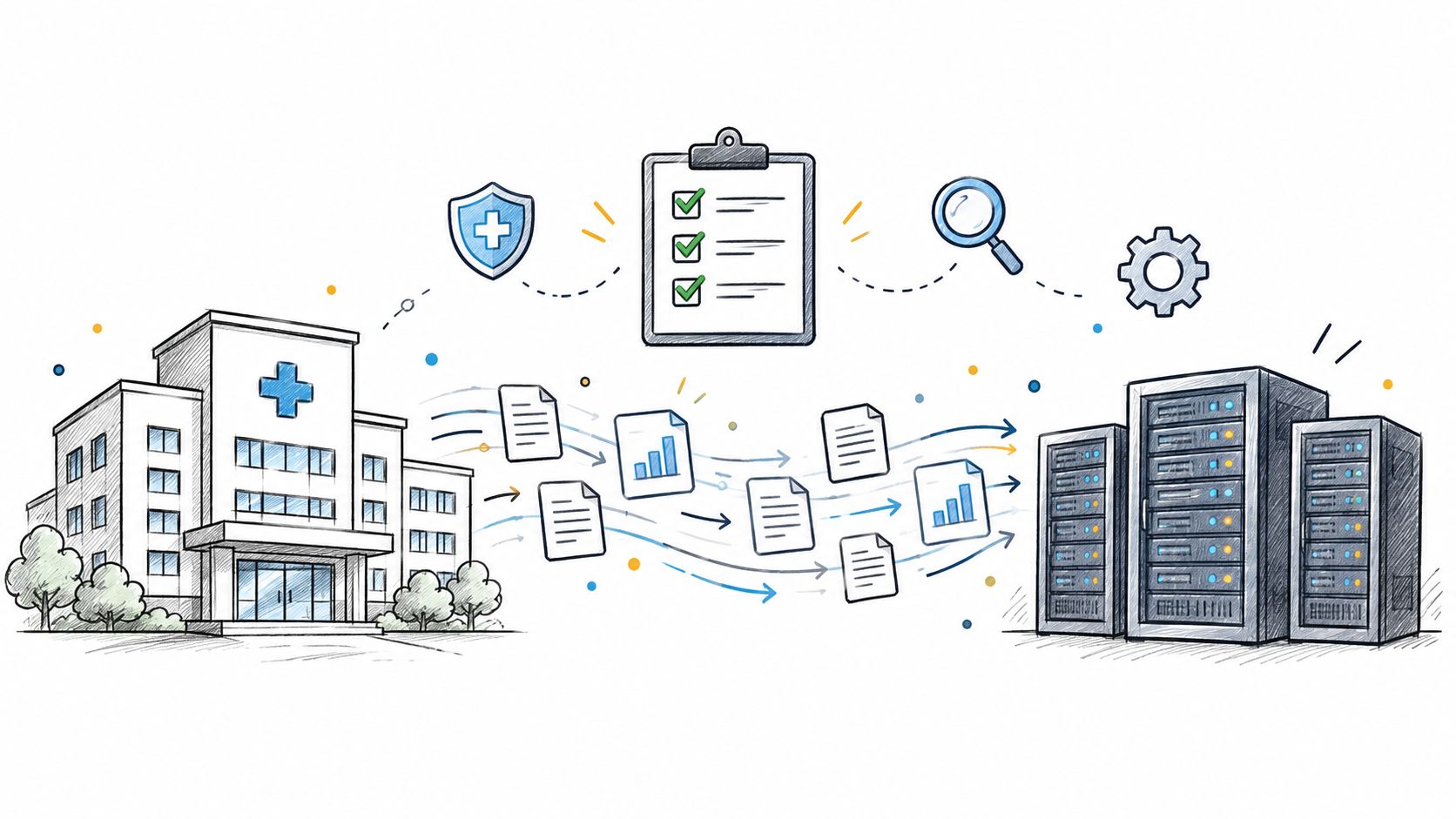
Practical data migration planning guide for healthcare teams. Scope, mapping, compliance, validation, cutover and rollback decisions explained end to end.
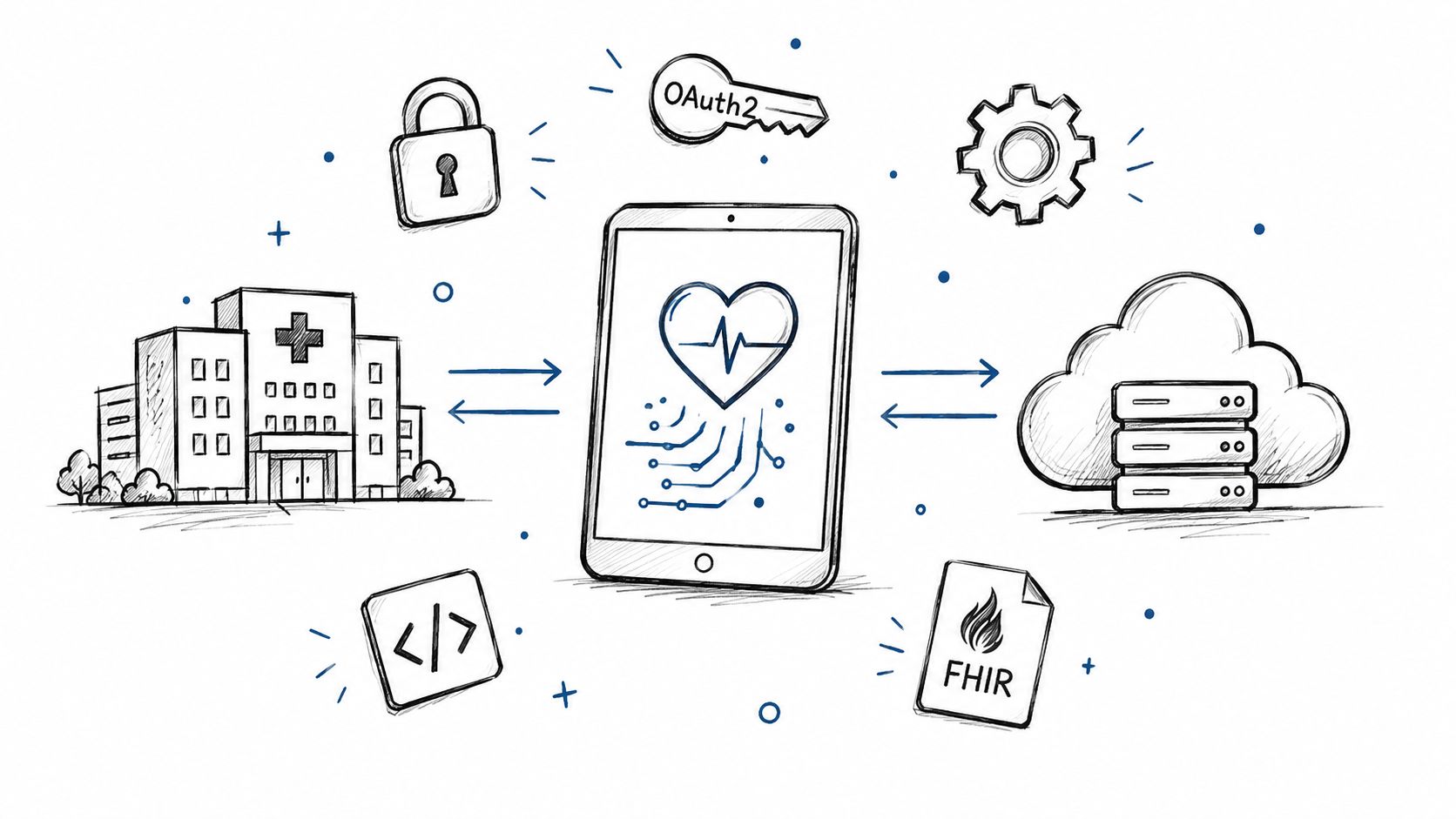
Smart on FHIR guide for healthtech engineers. Learn the OAuth 2.0 launch model, scope syntax, backend services, and US regulatory requirements.
Connect with our team to explore how AI expertise can transform your business.