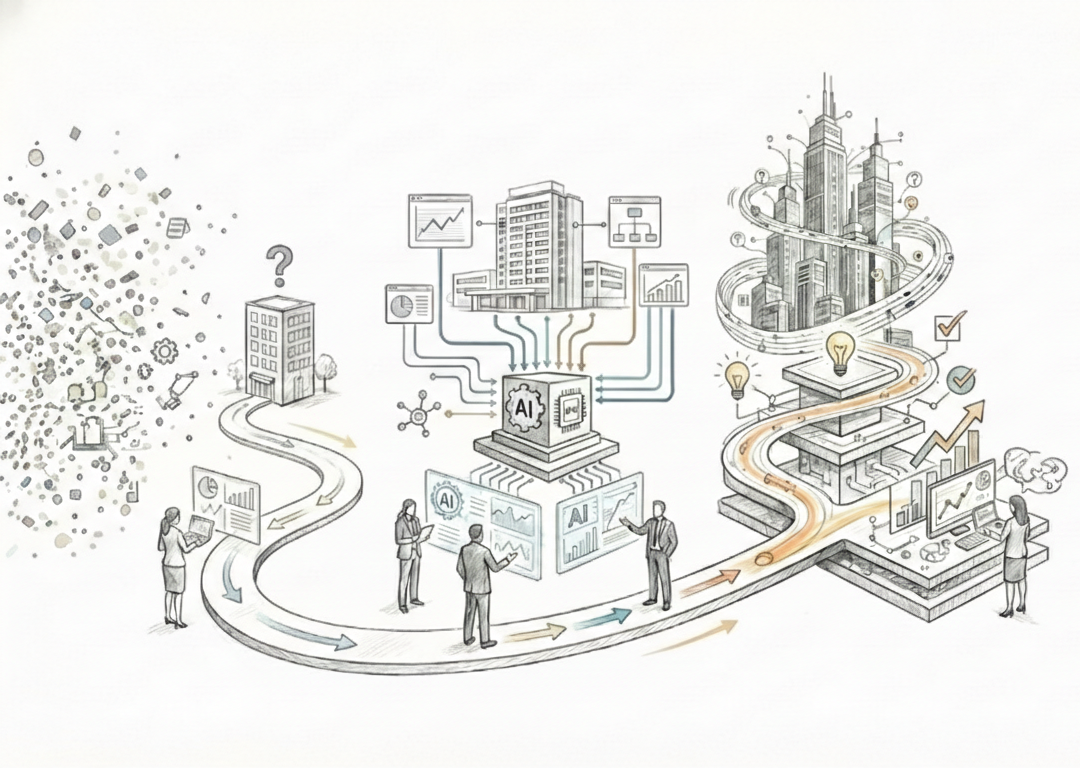
Every company, at some point, realizes artificial intelligence is no longer just a trend. It is becoming a fundamental part of how modern businesses operate. One team might use a simple chatbot for customer service, while another builds smart systems that predict market shifts. The difference between these two situations is not only the budget or ambition. It is maturity. Understanding the current stage of that journey is the first actual step forward. This is the value of an AI maturity assessment. It provides a clear view of the current position, identifies areas for development, and helps plan next steps with purpose.
The AI maturity model serves as a helpful guide for any organization. It illustrates readiness to adopt and grow with intelligent technology. This model indicates whether a company is starting out or advancing toward a future where AI is integrated into daily operations. With this insight, a business can build a practical, long-term plan that adds real value at every stage.
Understanding the AI Maturity Model
Consider the AI model as a useful guide for any organization. It measures how well artificial intelligence is woven into the daily fabric of a business. This framework examines several key areas, including data, technology, team skills, and leadership vision for the future. The goal is to help an organization grow from running small tests to using powerful AI solutions that actively support the team and improve decision quality.
Many companies begin their journey by identifying small, manageable opportunities. This could involve automating a simple, repetitive task or testing a few limited AI use cases. As the team gains experience, the organization advances. It starts building stronger systems that can support entire departments and deliver clear, measurable results.
Why AI Maturity Matters for Long-Term Growth
A clear path makes the journey with AI much smoother. Rather than adopting new tools without a plan, the maturity model provides a clear picture of your situation. Leaders can identify which areas need their attention first, whether that is data management, team skills, or technology updates. This helps them prepare properly before moving forward.
This clear picture becomes especially useful when you decide to work with an AI implementation partner. When a company understands its own position, it becomes simpler to create a solid plan. This plan will align with your actual business goals and move you away from relying on assumptions.
Key Stages in the AI Maturity Model

Foundational Stage
Many organizations begin their journey in this early phase. Here, AI is a new and often exciting concept. There is plenty of interest and curiosity, but the data is scattered across different systems, and teams continue to develop their skills. The first steps usually involve small, safe experiments. Alongside these tests, the focus is on building a reliable and well-organized data foundation.
This is also a time for discovery. Many companies begin exploring various AI Solutions during this stage. The goal is not a major rollout, but rather to learn which tools might best fit their unique needs and ambitions.
Integrated Stage
With a solid foundation built, companies are ready to take bigger steps. AI projects now connect directly to key business goals. Different departments bring smart tools into daily work. Team collaboration strengthens, data quality improves, and leaders pay close attention to the results.
At this point, having a clear long-term direction becomes important. Many organizations in this stage find great value in AI strategy consulting to help them shape their path forward.
Optimized Stage
At this advanced level, artificial intelligence is no longer different. It is integrated into daily operations. Projects can scale quickly across the company, teams use a common set of AI tools, and the data they depend on is consistently reliable. The entire organization builds a strong ability to make informed decisions using real-time insights.
Businesses operating at this height often seek custom AI strategy reports. This detailed analysis helps them plan for even deeper integration and identify the next wave of opportunities.
Transformative Stage
This final stage represents the peak of an organization's journey with AI. Here, technology actively fuels innovation across the entire company. It sparks new ideas, enables the creation of novel services, and opens up new revenue streams. Teams have the skills to work effectively with AI, models are regularly updated, and leaders make key decisions backed by powerful system support.
This sustained progress fits perfectly with a long-term AI adoption roadmap. Such a plan provides a clear guide for the company's future growth and expansion, giving the team clarity for each new step.
How an AI Maturity Assessment Supports Your Journey
An AI maturity assessment reveals your organization's strengths and areas for improvement. It provides a structured method to review your people, processes, and technology. The results present a clear view of your next steps, helping you create a plan for steady, manageable growth.
Many companies connect this evaluation with a broader AI readiness assessment. This second review focuses on data foundations, technical infrastructure, and system preparation. Together, these two diagnostics provide a thorough and accurate picture of the situation. This full view is the ideal starting point for creating a successful operational framework and developing strategic plans.
What Comes Next in Your AI Journey
Knowing your current stage makes the road ahead much clearer. Some organizations may discover they need to improve their data systems. Others might realize their teams need more training or simply require better tools. The objective is not to move quickly, but to build a journey that is both steady and sustainable.
At this stage, an AI maturity assessment acts as a practical roadmap. It illustrates how to move forward effectively, helping you avoid wasting valuable time and resources on the wrong steps.
Conclusion
Your journey with AI becomes smoother with a clear view of your starting point. The AI model provides this clarity, delivering direction and a strong structure to follow. It helps your team take purposeful steps forward, moving beyond scattered experiments to focused progress. Ready to map your path to AI maturity? Contact us to develop a clear strategy and build a steady growth plan.
FAQ
1. What is an AI maturity assessment, and why is it important?
An AI maturity assessment helps organizations understand their current AI capabilities and identify the next steps for growth and improvement.
2. How does an AI maturity model support business planning?
An AI maturity model gives a clear picture of AI adoption across data, teams, and technology, supporting businesses in planning realistic progress.
3. When should companies explore AI Solutions and AI use cases?
Companies should explore AI Solutions and AI use cases once they have clear business goals and a basic data foundation in place.
4. How do AI strategy consulting and an AI implementation partner help?
AI strategy consulting defines the right direction, while an AI implementation partner ensures smooth execution and scalable deployment.
5. What role do readiness assessments and roadmaps play in AI success?
An AI readiness assessment, a custom AI strategy report, and an AI adoption roadmap form a clear plan for long-term, sustainable AI growth.