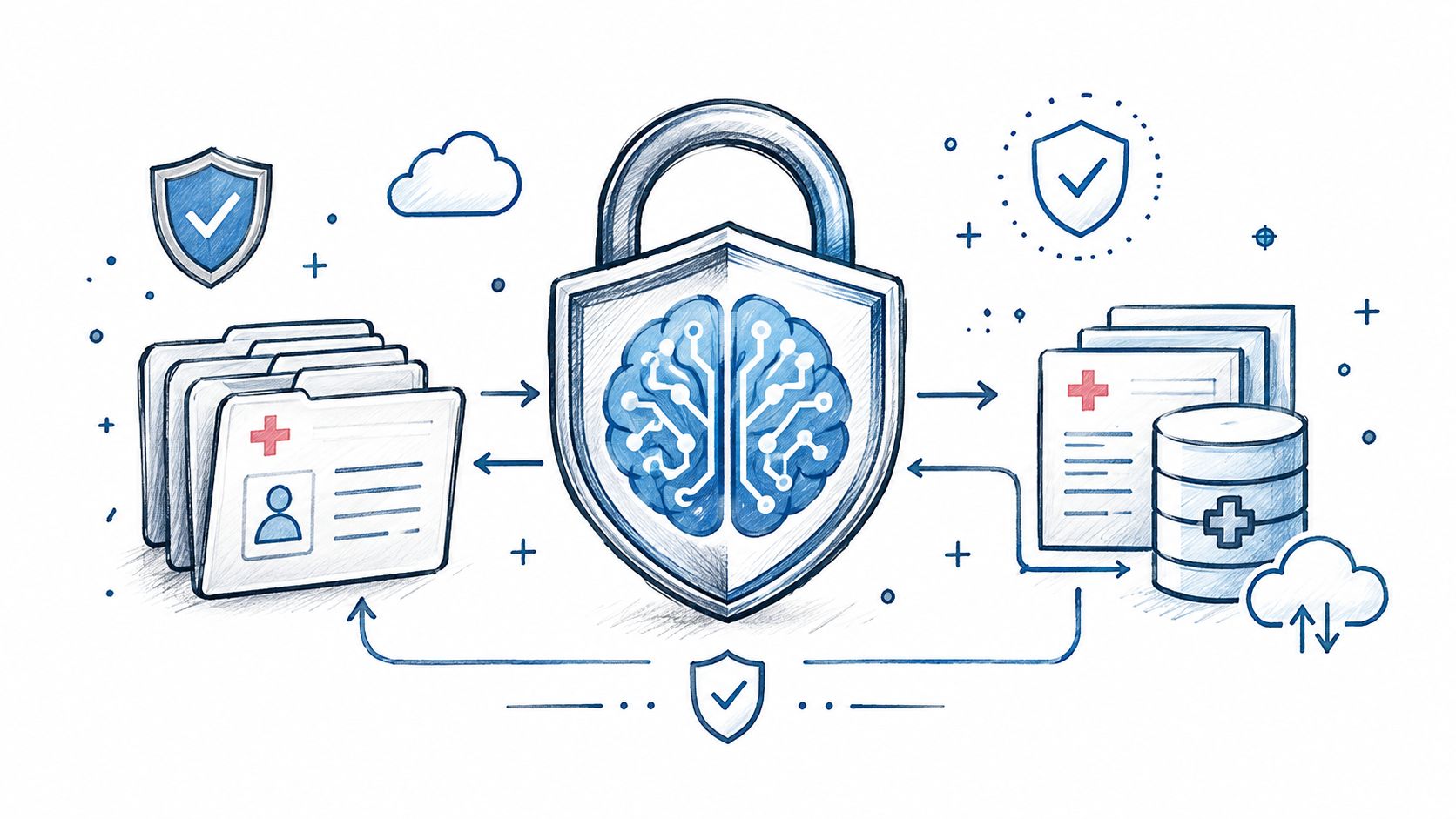
AI in Healthcare
HIPAA-Compliant AI: How to Use LLMs With PHI Safely
How to build HIPAA-compliant AI: when LLM providers need a BAA, data minimization, de-identification, audit controls and a reference architecture.
October 16, 2026Read more
Discover how AI-powered discharge planning systems streamline transitions, cut readmissions, and deliver ROI with our roadmap for healthcare leaders.

At 9:15 a.m., the emergency department is holding admitted patients because inpatient beds haven't turned over. A care coordinator is waiting on a rehab referral. A nurse is re-entering medication details into a discharge packet. A physician believes a patient can leave today, but transportation, home support, and follow-up scheduling still aren't lined up.
That scene is common because discharge is rarely a single task. It's a relay race across clinicians, case managers, pharmacists, social workers, external providers, and family members. When one handoff slips, the whole hospital feels it.
AI-powered discharge planning systems have become worth serious executive attention. Used well, they help teams spot likely discharge barriers sooner, predict readiness earlier, draft patient-facing instructions, and coordinate the next steps with less manual chasing. Used poorly, they can automate confusion or even introduce safety risks. The difference comes down to architecture, governance, and workflow fit.
Hospital leaders evaluating this space usually don't need another glossy pitch. They need a practical guide that connects clinical safety, technical design, implementation sequencing, and business value. That's the lens here.
A mid-sized hospital can have a clinically straightforward patient who still misses discharge by hours or a full day because the process is fragmented. The physician finishes rounds. Pharmacy needs clarification. Case management is waiting on placement confirmation. The family hasn't understood the home care plan. The discharge note pulls from several systems and outside documents, so staff members spend time hunting for missing details instead of closing the loop.
That delay affects more than one patient. It blocks beds, creates friction in the ED, frustrates nurses, and increases the chance that follow-up instructions will be rushed. For patients and caregivers trying to prepare for the next step, practical guidance matters just as much as clinical readiness. A useful plain-language example is this overview of Cream Home Care discharge plan advice, which reflects the actual questions families often have after the hospital team thinks the case is already complete.
For executives, the core issue is that discharge is both a clinical event and an operations event. If your organization treats it as paperwork at the end of the stay, you'll always be reacting late. If you treat it as a managed workflow that starts early and continuously updates, you can redesign throughput, coordination, and patient communication at the same time.
That's why many organizations now look for specialized Healthcare AI Services rather than generic automation alone. The challenge isn't only building software. It's fitting software into a safety-critical care process.
An AI-powered discharge planning system is best understood as an orchestration layer. It sits across clinical data, operational workflows, and care transition tasks, then helps the hospital decide who is likely ready to leave, what barriers remain, what support they'll need after discharge, and what instructions should be prepared.
An airport control tower provides a useful comparison. Planes don't take off just because the pilot is ready. The tower watches timing, runway availability, weather, gate turnover, and ground support. Discharge works the same way. A patient may be medically close to leaving, but the full departure depends on many moving parts.

Most platforms combine several functions:
Research also shows that AI algorithms can identify patients ready for discharge within 24 hours, helping teams move from reactive discharge work to proactive planning while also surfacing barriers such as homelessness or communication impairments, as described in this hospital discharge workflow study.
Many buyers hear “AI discharge planning” and assume it's one model that writes instructions. It usually isn't. A workable system is more like a set of connected services:
| Component | Plain-English role |
|---|---|
| Risk model | Flags patients who may need extra planning |
| Date prediction model | Estimates likely discharge timing |
| Coordination engine | Assigns tasks and tracks blockers |
| Generative layer | Drafts summaries and instructions |
| Rules layer | Checks safety-critical items before release |
Practical rule: If a vendor can only demo text generation, you're not looking at a discharge planning system yet. You're looking at one component.
Hospitals exploring this category often benefit from pairing technical design with workflow readiness. That's the kind of groundwork that usually happens in AI strategy consulting and in related planning work such as a Custom AI Strategy report. For examples of adjacent implementations, see Ekipa AI's real-world use cases.
The strongest case for AI-powered discharge planning systems isn't that they sound modern. It's that they can improve both patient outcomes and staff capacity when deployed into the actual workflow instead of around it.

A discharge failure often starts before the patient leaves. The warning signs are usually present in the record, but they're spread across multiple notes, missed in rounds, or not translated into action. AI systems help by turning those scattered signals into prioritized work.
A documented example is discharge planning programs that reduced 30-day readmission rates by 18% to 30%, with one implementation improving from 17.5% to 14.3%, which represented an 18.3% improvement and about 250 fewer readmissions annually for focus populations. The same source notes that avoiding a single readmission saves about $13,000 per patient, and one facility-level implementation estimated $3.75 million per year in readmission cost and penalty savings. The operational timeline also matters. Measurable readmission impact often appears within 6 to 12 months of a pilot, with fuller financial ROI within 18 to 24 months after enterprise rollout, according to this detailed review of AI patient discharge planning outcomes.
The less visible value is workflow relief. Hospitals often waste skilled clinical time on reconciliation, routing, and repetitive documentation.
The clearest summary is this: AI-powered discharge planning systems have demonstrated the ability to reduce 30-day hospital readmission rates by 18% to 30%, saving an estimated $600,000 to $1.5 million annually and freeing nurses from paperwork by up to 55%, based on the same documented discharge planning analysis.
That paperwork reduction matters because it doesn't just save labor in theory. It changes where nurses and care coordinators spend their day. Instead of assembling packets and chasing incomplete fields, they can use more time for medication teaching, caregiver clarification, and exception handling.
Here's a realistic pattern hospitals report after a successful pilot:
A good discharge AI system doesn't replace case management judgment. It gives case management a shorter list of patients who need judgment first.
For leaders comparing build-versus-buy options, capability scope is a primary consideration. A narrow point tool may automate summary drafting, while broader offerings in SaMD solutions or implementation advisory work tied to a healthtech engineering partner may be better suited if your discharge workflow spans EHR integration, quality controls, and regulated software pathways.
The technical architecture is where optimism meets reality. If the architecture is shallow, the system may produce polished text that sounds right and still misses critical actions. If the architecture is disciplined, AI becomes useful without being allowed to invent care steps.

Most enterprise-grade discharge systems cluster around three capability groups.
This layer estimates who is likely to need intervention. That includes readmission risk, likely discharge date, need for skilled nursing support, and unresolved barriers. One example from NYU Langone showed an AI tool predicting whether patients would require skilled nursing facility care after discharge with 88% accuracy by using short AI-generated summaries of doctor notes instead of the full original notes, as described in this NYU Langone research summary.
Prediction only helps if it triggers action. Coordination features assign tasks, alert the right role, collect external documents, and keep the discharge checklist moving. Yet, leaders often underestimate the challenge of outside information. When teams ask patients to gather records, referral forms, or medication history, even simple tasks like how to transfer medical records can become a delay point unless the workflow anticipates it.
Automation handles repetitive work. It drafts summaries, pre-fills instructions, flags missing elements, and reduces manual copy-paste. But this layer must never stand alone.
The safest design pattern today is hybrid neural-symbolic architecture. In plain terms, one part of the system is good at language and summarization, and another part is strict, deterministic, and binary about safety rules.
A practical architecture usually looks like this:
| Layer | Job | Failure if missing |
|---|---|---|
| Data ingestion | Pulls EHR, notes, referral docs, meds, tasks | Incomplete picture |
| Retrieval layer | Grounds outputs in approved patient-specific sources | Unsupported statements |
| LLM or SLM | Drafts narrative instructions and summaries | No language flexibility |
| Deterministic rules engine | Validates meds, follow-ups, escalation triggers | Safety gaps and contradictions |
| Integration bus | Sends tasks and updates to clinical systems | Workflow dead ends |
A concise statement of this pattern comes from this overview of AI discharge system architecture: AI-powered discharge planning systems architecturally combine LLMs/SLMs with Retrieval-Augmented Generation and deterministic rule engines to ground outputs in clinical sources and prevent hallucination-induced errors.
Engineering judgment: In discharge planning, generative AI should draft. Rules should decide.
Don't stop at “Which model do you use?” Ask architecture questions that expose safety maturity.
This is also the point where adjacent capabilities such as AI tools for business, AI Automation as a Service, and internal tooling start to matter. Some hospitals need a standalone solution. Others need custom orchestration that fits existing operations software. One example in that broader category is Ekipa AI, which works on healthcare workflow and deployment support, including care coordination use cases.
A discharge model is only as good as the data story behind it. Many hospital teams assume the EHR contains everything needed. It usually doesn't. Discharge planning depends on clinical status, prior utilization, medications, outside documents, social support, and logistics that may sit in separate systems or arrive as narrative text.
A practical input set includes:
Research on discharge summary sourcing shows why integration work matters. In one analysis, 39% of information in discharge summaries came from external sources rather than inpatient records. Of those external expressions, 43% came from patient past clinical records and 18% from referral documents. The overall percentage of sourced segments was 61.3%, which implies 38.7% of discharge summary information was obtained from external documents and needed synthesis across fragmented sources, according to this Frontiers in Digital Health study.
Controlled test accuracy is not the same as deployment reliability. One of the most important caveats for executives is that machine learning models integrated for discharge prediction achieve up to 98% accuracy in controlled datasets, dropping to 90% real-world accuracy for orthopedic patients and 83% for neurological, highlighting the need for continuous retraining, as reported in this discharge prediction research article.
That gap is why evaluation should include both model metrics and workflow metrics.
| Measure type | What to track |
|---|---|
| Model performance | Prediction accuracy, completeness, drift by service line |
| Workflow performance | Time to complete discharge tasks, unresolved blockers, review burden |
| Clinical outcomes | Readmissions, discharge safety events, follow-up completion |
| Financial outcomes | Penalty avoidance, staffing efficiency, throughput improvement |
Teams get into trouble when they celebrate model accuracy and ignore whether clinicians trust the output enough to use it.
For hospitals defining scope before integration, this is usually where AI requirements analysis becomes valuable. If you're connecting multiple systems and building role-specific workflows, custom internal tooling may be necessary so the discharge AI fits the hospital rather than forcing the hospital to fit the tool.
Buying discharge AI without a staged rollout is like installing a new air traffic system during live operations and hoping people figure it out. The technology can work, but only if governance, validation, and workflow redesign move with it.

Start with a population where the workflow pain is obvious and measurable. Orthopedics, neurology, complex medicine, or skilled nursing transitions are common starting points. Define what the system must do and what it must never do.
Most vendor evaluations overweight demos and underweight integration reality. Ask for examples of clinical workflow deployment, not just model performance.
Key checks include:
A strong regulatory compliance partner can help assess documentation and control expectations before procurement gets too far ahead of implementation.
Choose one unit or service line. Keep a human review loop in place. Measure not only output quality but also whether clinicians change behavior because of the tool.
The first pilot should answer two questions. Does the system improve coordination, and does staff trust it enough to act on it?
Clinicians don't need a product tour. They need workflow examples. Show how the system behaves when meds change at the last minute, when a referral document arrives late, or when the predicted discharge date slips.
Deployment should include transparent dashboards for adoption, exceptions, and quality checks. Leaders need visibility into where the system helps and where it creates review burden.
Once the tool is live, someone must own model monitoring, rule maintenance, clinician feedback intake, and release governance. Many projects stall at this stage.
A major blind spot in this category is follow-up safety. Independent research found that only about 50% of follow-up actions appear in AI-generated discharge instructions, creating a real risk of omissions and unsafe “new actions,” according to this Nature Digital Medicine study.
That finding changes the implementation plan. It means no hospital should treat generative output as discharge-ready text. It should be treated as draft content that passes through deterministic checks and clinical review.
Use a checklist like this during procurement:
| Area | What to ask |
|---|---|
| Safety controls | How are meds, follow-ups, and escalations validated? |
| Transparency | Can staff see why a recommendation was made? |
| Data handling | Which systems and document types are supported? |
| Change management | What training and rollout materials are included? |
| Long-term maintenance | Who owns updates, retraining, and rule changes? |
| Cost model | What expands cost over time, users, sites, or transactions? |
Hospitals that need specialized delivery often combine packaged software with implementation support such as AI Product Development Workflow, regulated SaMD solutions, or custom healthcare software development. The mix depends on whether you're deploying a single workflow tool or redesigning a broader discharge operating model.
The safest way to think about ROI is not through oversized projections. Treat AI-powered discharge planning systems as an operational redesign with software support. The return comes from fewer preventable readmissions, less manual administrative work, cleaner coordination, and better use of scarce clinical attention.
A community hospital usually starts with one service line and a narrow discharge workflow. The fastest visible gains often come from reducing paperwork, surfacing likely next-day discharges, and standardizing task routing. If the tool fits local workflow, leaders typically see whether staff time is being redirected to patient-facing work rather than documentation cleanup.
A larger center often gets more value from reducing variation. Different units discharge in different ways, and AI can become the common orchestration layer. The payoff is less about replacing people and more about making the process predictable enough to scale across complex care teams.
A network has a different incentive. Standardization matters almost as much as local efficiency. Shared discharge logic, common validation rules, and reusable integration patterns can make cross-site quality review far easier than trying to manage separate workflows in every facility.
What's credible here is already documented: some facilities using AI discharge strategies report yearly savings between $600,000 and $1.5 million, measurable impact often appears within months of a pilot, and operational burden on nurses and coordinators can fall significantly, as noted earlier in the article. The more important question is whether your organization can implement safely enough to realize those gains.
That's why discharge AI shouldn't be delegated only to IT or only to clinical leadership. It needs joint ownership from operations, nursing, medicine, informatics, and compliance. If one of those groups is absent, the tool usually becomes either underused or risky.
For organizations mapping next steps, a blend of AI Automation as a Service, workflow integration, and healthcare-specific delivery support can be more practical than a standalone software purchase. If you're evaluating partners, review our expert team to see the kinds of engineering and delivery roles that typically matter in healthcare AI implementation.
Start with access control, audit logging, and minimum-necessary data design. Make sure every integration path is documented, every prompt or retrieval source is governed, and every output is attributable to approved records. Privacy protection is strongest when the system is built into existing clinical identity and permission models rather than bypassing them.
Tie the tool to pain they already feel. Show fewer clicks, earlier visibility, and cleaner task routing. Train with live workflow scenarios, collect feedback weekly during the pilot, and adjust thresholds or rules quickly. Adoption usually follows usefulness, not slogans.
Plan for drift from the beginning. Monitor output quality by service line, review exceptions, and retrain when documentation patterns or patient mix change. Keep deterministic rules separate from model behavior so you can update safety logic without retraining the entire system.
Don't let generative output publish directly to discharge documents. Use rule-based validation for medications, follow-ups, and escalation triggers. Require clinician review for edge cases and maintain an auditable process for source tracing, exception handling, and post-release issue review.
If your team is evaluating discharge planning AI and needs a practical path from use-case definition to deployment, Ekipa AI can help shape the workflow, integration plan, and implementation approach around your existing clinical operations.
How to build HIPAA-compliant AI: when LLM providers need a BAA, data minimization, de-identification, audit controls and a reference architecture.
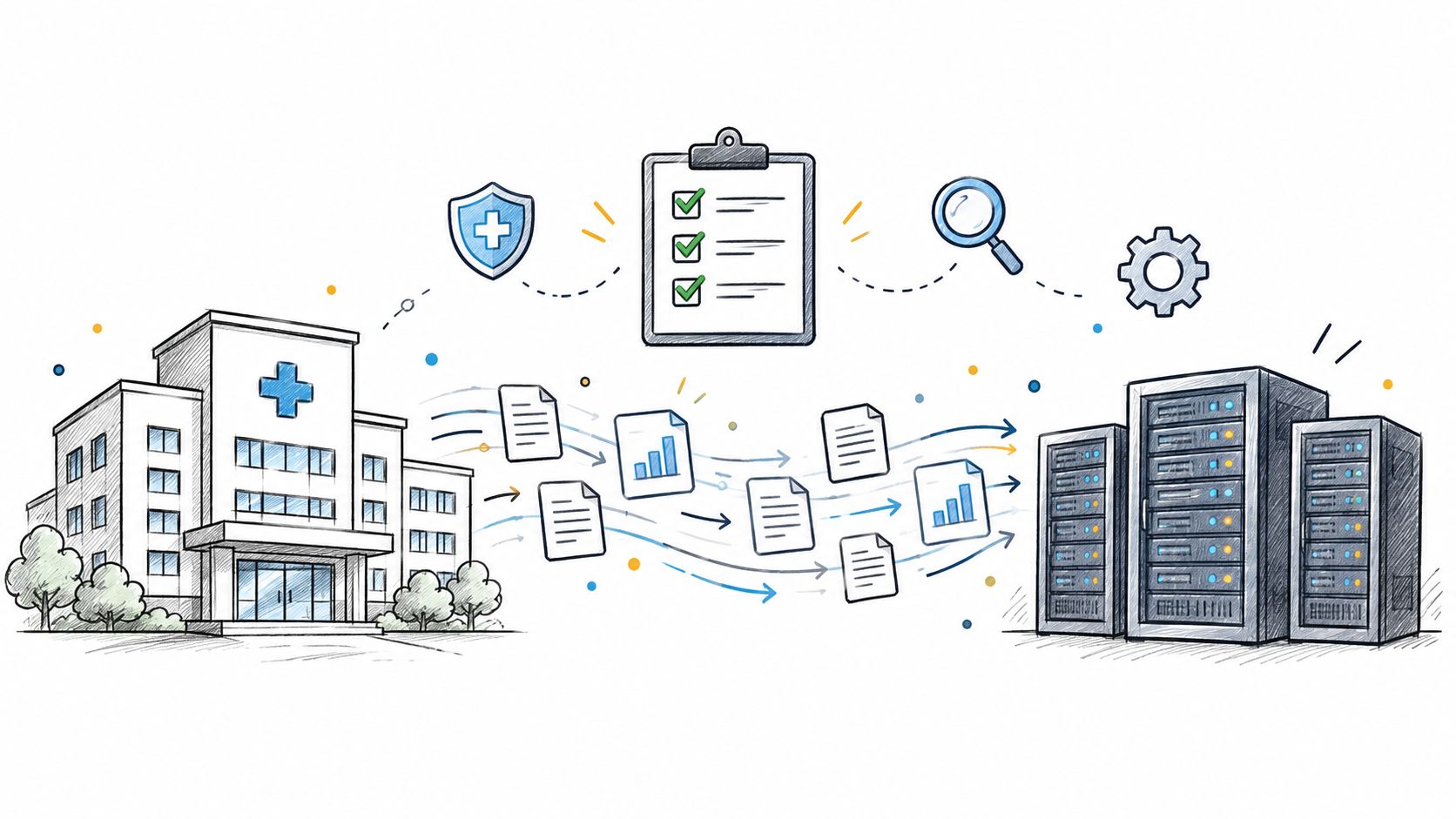
Practical data migration planning guide for healthcare teams. Scope, mapping, compliance, validation, cutover and rollback decisions explained end to end.
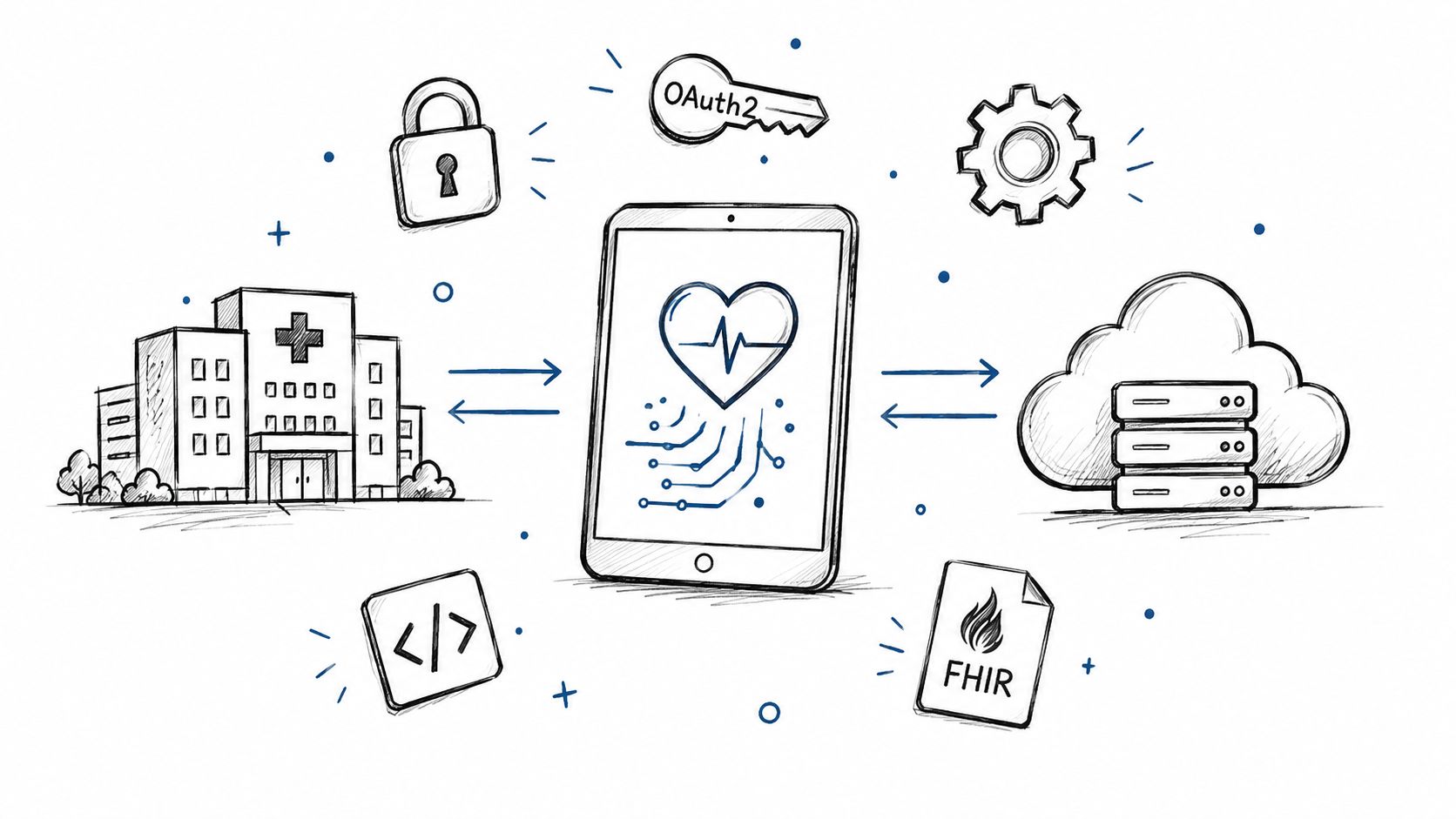
Smart on FHIR guide for healthtech engineers. Learn the OAuth 2.0 launch model, scope syntax, backend services, and US regulatory requirements.
Connect with our team to explore how AI expertise can transform your business.