
AI in Healthcare
HIPAA-Compliant AI: How to Use LLMs With PHI Safely
How to build HIPAA-compliant AI: when LLM providers need a BAA, data minimization, de-identification, audit controls and a reference architecture.
October 16, 2026Read more
AI ROI in healthcare goes beyond cost savings by measuring real impact on outcomes, efficiency, and patient care. Learn how to track performance, optimize investments, and drive long-term value.
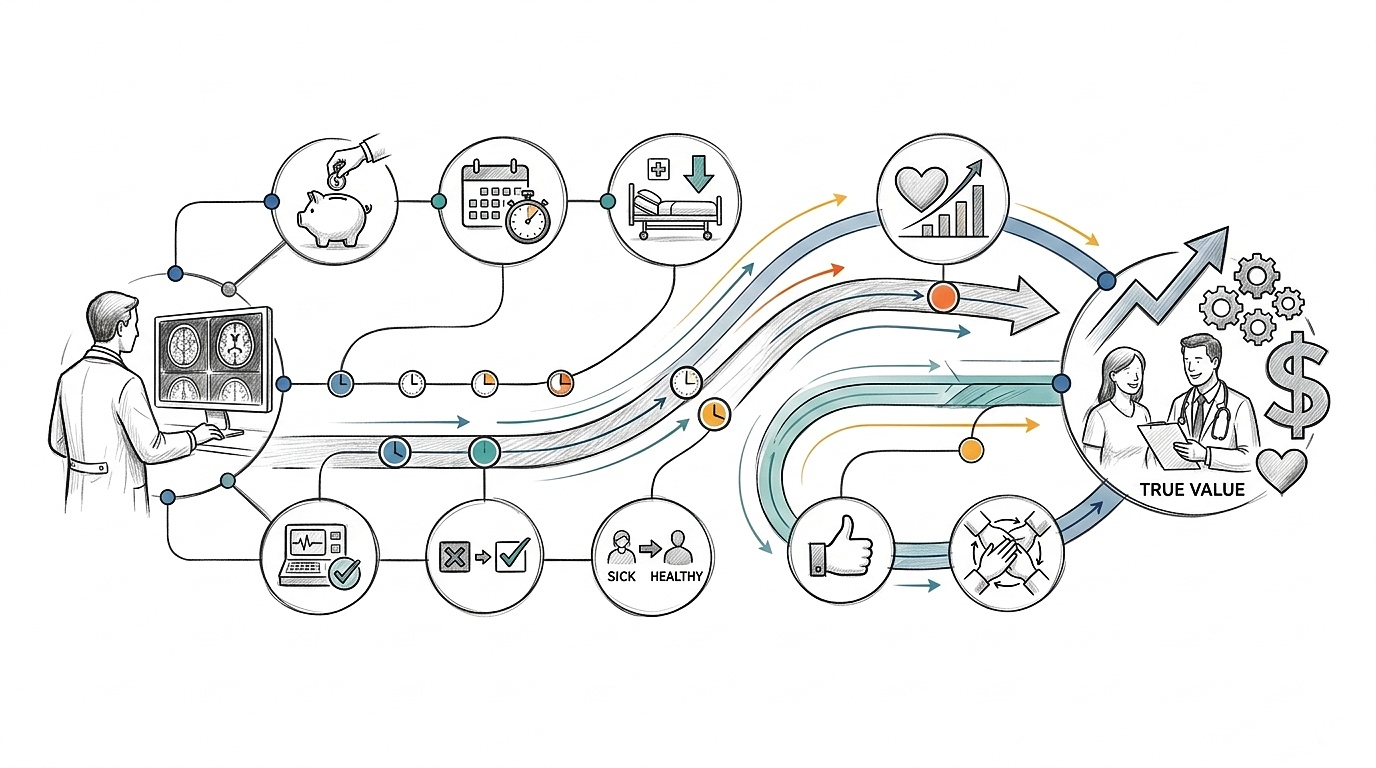
Healthcare providers are putting significant resources into artificial intelligence to raise clinical standards and improve daily operations. The key question is whether these investments are truly delivering value. Measuring AI ROI healthcare means looking at both financial gains and the outcomes that matter in real care settings. Many teams find it difficult to track results beyond simple cost numbers, which often leads to uncertain choices and missed opportunities. This blog outlines a practical way to measure impact and outcomes with clarity.
AI systems touch many parts of healthcare, from diagnosis to administrative tasks, which makes evaluation more challenging. A structured approach links technology performance with actual clinical and operational improvements, giving leaders the insight they need to judge long-term value.
AI return on investment in healthcare reflects the value gained compared to the resources spent. This value is not limited to financial returns. It also covers clinical progress, smoother operations, and patient experience. A trusted healthtech engineering partner often guides hospitals in defining what value means by focusing on real cases and measurable outcomes. Healthcare teams aim to improve diagnosis accuracy, shorten waiting times, and raise patient satisfaction. These gains form a major part of ROI, even when they do not bring immediate revenue.
Healthcare runs on complex systems and long timelines. Results often appear over extended periods, which makes measurement difficult. A structured approach through healthcare AI services brings clarity by linking data sources, workflows, and measurable indicators. Indirect gains, such as early disease detection or stronger care coordination, add value gradually. Data spread across different systems and varied clinical practices also create barriers to tracking consistent results. These challenges require careful planning and ongoing evaluation.
Tangible outcomes are those that can be measured directly in financial and operational terms. Examples include lower operating costs, shorter patient stays, and fewer manual tasks for staff. These outcomes are straightforward to track through defined metrics and regular reporting.
Intangible results focus on areas that are harder to measure but equally important. These include stronger patient health outcomes, more accurate decisions, and higher satisfaction levels. A detailed custom AI strategy report often highlights these aspects through structured frameworks that link clinical performance to long-term value.
Together, both tangible and intangible results provide a complete picture of AI ROI.

Measuring AI ROI in healthcare requires looking at financial, clinical, operational, and patient-focused indicators together. No single measure can capture the full value of AI. A structured set of metrics gives clarity on both short-term gains and long-term outcomes.
Financial metrics give a direct view of economic impact. These include cost reduction, revenue growth, and overall return on investment. Cost reduction may come from automating repetitive tasks, shorter hospital stays, and fewer diagnostic mistakes. Revenue growth can result from improved patient flow and smarter use of resources. Tracking ROI percentage over time shows how the investment compares with the value created. It is also useful to measure the cost per patient before and after AI adoption to better understand financial efficiency.
Clinical metrics reflect the main purpose of healthcare, which is better patient outcomes. These include diagnosis accuracy, treatment success rates, and readmission rates. AI-driven systems, including regulated SaMD Solutions, often improve early detection of diseases, leading to timely treatment and stronger recovery rates. Monitoring diagnostic error rates and tracking recovery timelines provides deeper insight into clinical effectiveness. Lower readmission rates also show that treatment plans are more accurate and complete, which adds long-term value.
Operational metrics look at how smoothly healthcare systems function after AI adoption. Key indicators include time saved in administrative work, staff productivity, and workflow efficiency. AI reduces manual effort in scheduling, documentation, and managing data, which frees clinical staff to focus more on patient care. Metrics such as average processing time per patient, appointment turnaround time, and resource use rates give a clear view of operational progress. Higher productivity without adding extra resources reflects meaningful ROI.
Patient experience metrics show how people feel about the care they receive. These measures cover satisfaction scores, how engaged patients stay, and how waiting times go down. AI-driven communication tools make it easier for patients to get information, which boosts their involvement. Keeping track of feedback scores, response times, and how many patients return gives useful insight into the overall experience. Shorter waits and faster service make the patient's journey smoother. This builds trust and supports better results over the long run.
AI systems need regular performance checks to stay accurate and dependable. Metrics like prediction accuracy, mistake rates, and model stability show how well these systems work in real life. Watching these metrics helps ensure that AI keeps producing reliable results over time. Steady performance matters for both clinical outcomes and smooth daily operations.
The true value of AI rests on how much and how well people use it. Adoption metrics track how often clinical and administrative teams turn to AI tools. Low adoption often points to poor design or insufficient training. Usage frequency, active user counts, and task completion rates give a clear picture of how deeply AI fits into daily routines. High adoption shows trust in the system and leads to measurable ROI.
Time to value metrics show how soon AI begins to deliver real results after going live. Shorter timelines point to smooth deployment and faster impact. Tracking the period between implementation and visible gains helps organisations see how quickly they get back their investment. This metric proves especially useful when planning future AI projects.
AI plays a big part in lowering risks tied to clinical mistakes and operational waste. Measures like fewer diagnostic errors, fewer compliance issues, and reduced process failures offer a clear view of risk management. Lower risk levels lead to safer patient care and smaller financial losses, which in turn boost overall ROI.
Start by deciding what problem AI is meant to solve. That could be shorter diagnosis times, better accuracy, or smoother operations. Clear goals tell you what to measure.
Calculate the full cost of bringing AI into your system. This covers tools, software, training, upkeep, and linking with current systems. Knowing the complete cost matters for an accurate ROI figure.
Track both money-based and non-money-based gains. Money benefits include lower costs and higher revenue. Non-monetary benefits cover better patient outcomes, faster workflows, and greater satisfaction.
Look at the performance before and after AI went live. This shows the true impact over time and helps you see whether the investment is delivering the value you expected.
AI tools are speeding up diagnosis through imaging tools, which reduces treatment delays. Virtual assistants lighten the workload by handling routine tasks on their own. Predictive analytics sharpens patient care by spotting risks before they become serious. These real-world examples show real gains in efficiency, accuracy, and patient outcomes. Many organisations report clear healthcare AI benefits when AI systems align with well-defined goals and measurable targets.
Focusing Only on Cost Savings: Looking only at cost reduction hides the full value of AI. Patient outcomes and experience also shape true ROI.
Ignoring Long-Term Impact: AI outcomes often unfold over time. Short-term reviews miss gains in diagnosis, prevention, and care quality.
Not Setting Clear KPIs: Without clear performance indicators, tracking progress becomes unclear. Defined KPIs lead to accurate measurement.
Poor Data Tracking: Inconsistent or incomplete data leads to unreliable results. Clean, well-organised data is essential for meaningful evaluation.
Getting the most from AI starts with clear goals that tie directly to clinical and business needs. Picking the right use cases delivers real impact from the beginning. Ongoing performance tracking keeps results in line with what you expect. Blending AI systems with human judgment strengthens decisions and patient outcomes. Over time, organisations see measurable gains, including cost savings in AI healthcare, along with better efficiency and higher care quality.
AI ROI in healthcare goes beyond just money. It includes real gains in patient care, daily operations, and clinical results. A structured way of measuring brings clarity and supports smarter decisions. Organisations that track outcomes over time gain lasting value from their AI investments. Looking at financial, clinical, and operational metrics together gives a full picture of performance. Steady tracking and clear benchmarks lead to better choices and stronger future AI adoption plans. Contact us to understand how to measure AI ROI in healthcare effectively and tie it to meaningful impact.
AI ROI healthcare measures the value gained from AI investments, including financial returns, healthcare AI benefits, and improved patient outcomes.
AI impact measurement is complex due to long timelines, scattered data, and both tangible and intangible healthcare AI benefits.
A custom AI strategy report helps track financial, clinical, and operational metrics, ensuring an accurate AI ROI healthcare evaluation.
SaMD solutions improve clinical accuracy and efficiency, contributing to cost savings, AI healthcare, and better overall ROI.
Working with a healthtech engineering partner and using healthcare AI services ensures better AI impact measurement and long-term value.
How to build HIPAA-compliant AI: when LLM providers need a BAA, data minimization, de-identification, audit controls and a reference architecture.

Practical data migration planning guide for healthcare teams. Scope, mapping, compliance, validation, cutover and rollback decisions explained end to end.

Smart on FHIR guide for healthtech engineers. Learn the OAuth 2.0 launch model, scope syntax, backend services, and US regulatory requirements.
Connect with our team to explore how AI expertise can transform your business.