AI in Healthcare
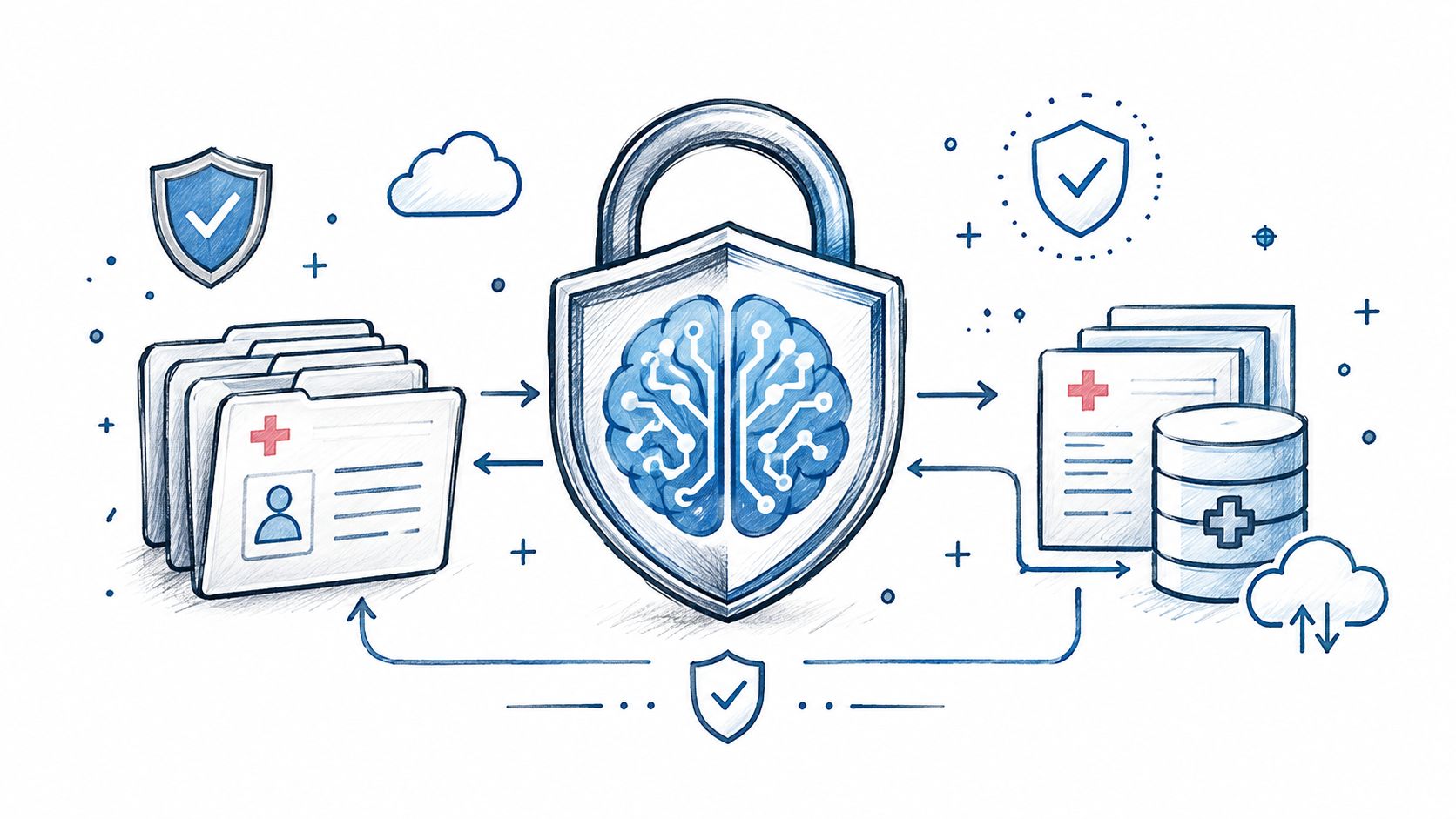
HIPAA-Compliant AI: How to Use LLMs With PHI Safely
How to build HIPAA-compliant AI: when LLM providers need a BAA, data minimization, de-identification, audit controls and a reference architecture.
October 16, 2026Read more
Learn how to measure AI ROI effectively by aligning AI solutions with business goals, tracking real value over costs, and scaling impact through a strategic AI roadmap.

In recent years, organizations have rushed to adopt AI solutions, hoping for major jumps in productivity, efficiency, or innovation. Yet for many, the journey stalls at proof of concept or pilot phase. A large fraction of AI initiatives deliver little to no return. This gap between ambition and outcome highlights a core challenge: AI ROI is tricky to measure, and often misinterpreted or mismanaged.
This blog takes a research-oriented, practical look at how businesses can meaningfully assess AI ROI. We will explore frameworks, pitfalls, and methods grounded in real data and case studies.
Along the way, we’ll touch on how an AI strategy consulting tool, an AI roadmap services approach, and partnering with an AI implementation partner or AI consulting team can strengthen your measurement rigor. By the end, you should feel more confident in deciding where to invest, how to track results, and when to pivot.
At first glance, ROI is simple: returns minus costs, divided by costs. That works well for well-defined investments. But AI is more complex. For instance, ROI must accommodate hard metrics (cost savings, revenue growth) and soft effects (customer satisfaction, reduced burnout).
Compounding this, many companies struggle with pilot purgatory: they never scale the initiative, so benefits never emerge. One survey reported that 42% of enterprises deployed AI without ever seeing meaningful ROI. As many as 95% of AI implementations fail to deliver profit uplift.
Data quality, siloed deployments, neglect of change management, and ignoring organizational alignment are common themes in failed AI projects. Because of this complexity, measuring AI ROI demands more than spreadsheets. It requires discipline, clarity, and alignment with business goals.
Before deploying any AI solution, you must connect it to a business need. What problem do you want solved? Which metrics will improve? This is where AI strategy consulting plays a role: helping you generate hypotheses and prioritize AI use cases.
Focus on high-impact, repeatable areas. For example, automating a repetitive report generation task or improving recommendation accuracy. Use cases with scale and measurable impact are easier to quantify and justify.
Once your use cases are chosen, map them to key performance indicators (KPIs) such as:
Establishing a credible baseline is crucial. You need “before AI” data to compare against “after AI” performance. Without a baseline, any claims of ROI remain speculative.
On the cost side, many organizations undercount expenses. An AI implementation partner can help you model cost structures accurately. Costs include:
You should treat these as part of the total cost of ownership (TCO). Some may amortize over multiple years. Once you have both benefit projections and cost estimates, you can compute an expected ROI. But remember, ROI may evolve; some returns show up later.
A robust measurement framework is fundamental. Good frameworks balance financial, operational, adoption, and capability metrics. For example, a firm can organize metrics across six dimensions: financial impact, efficiency, customer experience, productivity, adoption, and risk.
Here’s how you might structure measurement:

You should set up dashboards or reporting systems so that these indicators are updated frequently. Regular audits help detect degradation or drift in model performance.
A disciplined approach to AI rollout often follows three phases:
Test in a controlled environment, carefully track ROI metrics, and stress-test data, model, and process integration.
Once the pilot shows promise, expand to full production, integrate with workflows, and monitor adoption. At this stage, reconnect to the AI roadmap services, plan future enhancements, modular expansions, or new models.
Monitor drift, retrain models, iterate, and measure long-term ROI. Governance and alignment ensure sustainability. You may also revisit and refine your AI strategy consulting plan as you learn.
Throughout, the role of an AI consulting team or AI automation services is to ensure that the technology remains aligned with business goals, and that lessons from early deployment feed into the roadmap. To learn more, browse our industry-specific strategy reports.
One manufacturing firm reported that AI-driven productivity improvements now deliver over €50 million in annual ROI, with year-on-year growth near 40%. This shows that well-designed AI workstreams can scale beyond pilots.
Also, research suggests 92% of early adopters believe their AI investments already pay for themselves. Meanwhile, in a wider survey, 86% of organizations using generative AI report at least 6% revenue growth directly traced to AI.
On the flip side, 42% of companies get zero ROI from AI initiatives, and 29% report only modest gains. These mixed outcomes reinforce that success depends on leadership, alignment, and measurement discipline, not just algorithms.
Here are some practices that distinguish successful AI ROI efforts:
Common pitfalls include ignoring hidden costs, failing to account for model drift, neglecting governance, and treating AI as a one-off project instead of a continuous capability.
If you follow this disciplined path, coupling technical excellence with organizational alignment, your AI investments will have a credible shot at delivering real business impact.
AI ROI remains one of the most cited challenges in the age of digital transformation. Although many companies talk enthusiastically about AI solutions, only a fraction successfully convert that into meaningful returns. The difference lies not in having clever algorithms but in disciplined execution: linking AI to business goals, measuring both hard and soft returns, and iterating toward scale.
Effective AI implementation involves bridging strategy and execution. An AI consulting team or AI implementation partner can help you navigate this complexity, while AI roadmap services ensure your vision remains agile and resilient. With the right foundation, your AI use cases will be engines of sustained value.
If you are ready to move from ambition to action, we invite you to connect with us or visit our website. Let’s talk about how to design AI solutions that generate measurable ROI, aligned to your business.
1. What exactly is AI ROI, and how is it calculated?
AI ROI refers to the net value an organization gains from its AI initiatives, compared to the total cost. You calculate it as (Benefits − Costs) ÷ Costs. But unlike traditional investments, AI ROI must blend tangible metrics (like cost savings, revenue gains) with intangible ones (like improved customer experience or employee satisfaction).
2. How many AI projects fail to deliver ROI?
Surveys suggest a sizable share do not deliver a meaningful return. For example, one study found that 42% of enterprises report zero ROI on AI projects. Others claim as many as 95% of AI implementations fail to boost profit. These sobering figures underline the importance of careful planning, governance, and measurement.
3. What role does an AI implementation partner play in measuring ROI?
An AI implementation partner brings technical expertise, governance frameworks, and measurement discipline. They help you estimate full costs, integrate AI into workflows, design dashboards for measurement, and scale successful pilots. They also reduce risks of drift, compliance issues, or poor adoption.
4. Which AI use cases are easiest to measure ROI on?
Ideal use cases are repeatable, high-volume, and closely linked to cost or revenue. Examples include automating customer support, predictive maintenance in manufacturing, personalized recommendation engines, or fraud detection. These often produce measurable gains in efficiency or margin.
5. How long should I wait before measuring AI ROI?
It depends. Some gains appear quickly (e.g., automation of simple tasks), but many benefits accumulate over months or years. Especially for generative AI, organizations often need a medium to long-term view, as infrastructure tuning, adoption curves, and incremental learning take time.
How to build HIPAA-compliant AI: when LLM providers need a BAA, data minimization, de-identification, audit controls and a reference architecture.
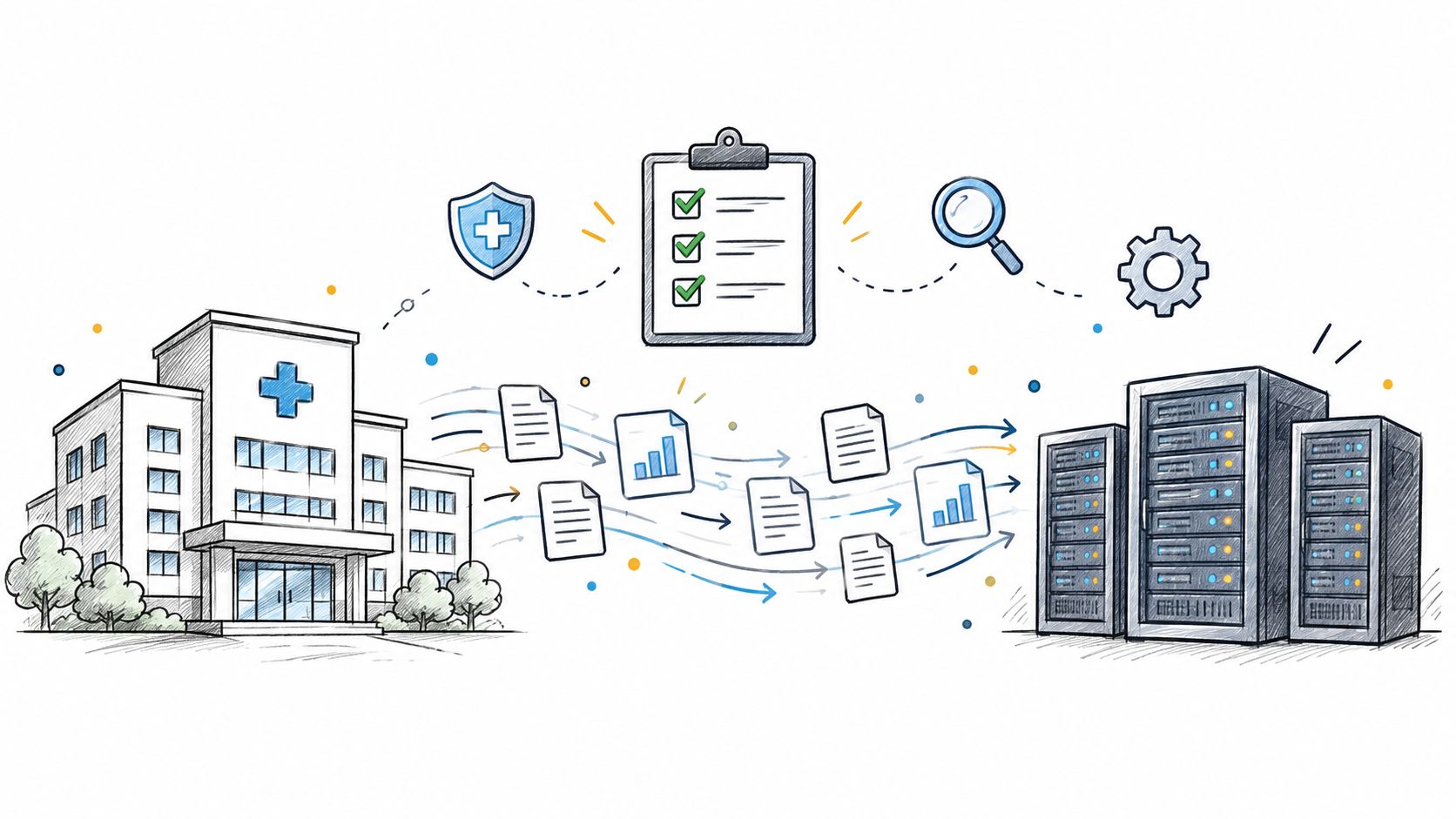
Practical data migration planning guide for healthcare teams. Scope, mapping, compliance, validation, cutover and rollback decisions explained end to end.

Smart on FHIR guide for healthtech engineers. Learn the OAuth 2.0 launch model, scope syntax, backend services, and US regulatory requirements.
Connect with our team to explore how AI expertise can transform your business.