
AI in Healthcare
Smart on FHIR: What It Is and How It Works in Practice
Smart on FHIR guide for healthtech engineers. Learn the OAuth 2.0 launch model, scope syntax, backend services, and US regulatory requirements.
October 14, 2026Read more
Building AI platforms for regulated healthtech requires balancing innovation with compliance, ensuring secure data handling, and delivering reliable clinical outcomes.

Healthcare technology carries responsibility for patient safety, clinical trust, and legal accountability. Artificial intelligence introduces new options for diagnosis, operations, and planning. However, regulated healthtech settings require careful design at every stage. Every data flow, system layer, and decision path is reviewed by auditors, clinicians, and regulators. A thoughtfully built healthtech AI architecture addresses these demands with clear structure, strong governance, and alignment with healthcare regulations. This article explains how skilled teams design platforms when regulation influences every technical decision.
Healthtech platforms operate under fixed requirements for patient privacy, data handling, audit trails, and clinical accountability. Regulations vary across regions, though the main expectations remain consistent. Accurate healthtech AI architecture, traceability, and accountability hold the highest priority. A single platform often serves hospitals, laboratories, insurers, and research teams, all with their own requirements. These conditions influence how healthcare AI services are designed and managed across large organizations.
Enterprise architects often share lessons from real practice. One hospital group introduced advanced analytics across departments. Clinical teams valued the insights, though compliance officers raised concerns about data lineage and access records. The message was clear. Innovation without regulatory alignment creates friction and risk. Architecture must respect governance from the very first design.
Healthcare data comes from electronic records, imaging systems, lab results, wearable devices, and administrative platforms. Each source has its own structure and update cycle. A reliable data foundation treats this information as a clinical asset rather than raw input.
Design teams focus on standardised ingestion, clear data models, and strict access controls. Metadata records where data originates, how it changes, and who interacts with it. Audit logs remain easy to read for both technical teams and compliance reviewers. These practices create a base where advanced analytics can work with clarity.
Within this foundation, healthtech AI architecture benefits from layered data zones. Raw clinical records stay preserved, curated datasets serve analytics, and governed views drive machine learning. This separation reduces risk and keeps oversight straightforward.

Platform structure influences how teams build, deploy, and maintain AI capabilities. In healthcare technology, architectural decisions have lasting effects. Modular design often proves valuable. Each component takes on a specific role, such as data ingestion, model training, inference, or reporting. These patterns help teams create AI Solutions for clinical and operational use.
Clear boundaries make validation and updates straightforward. When regulations change, teams adjust a single layer instead of the entire platform. Security controls remain consistent across all components. Identity management, encryption, and access review follow shared standards.
A senior architect once compared this approach to hospital design. Operating rooms, laboratories, and patient wards share utilities yet remain separated by purpose. Digital platforms gain from this same idea.
Governance often gets treated as a policy document instead of a technical feature. Mature platforms build governance directly into workflows. Model development follows clear approval steps. Data access requires role-based authorization. Monitoring tracks usage patterns and alerts teams when anomalies appear. This structured approach also works with AI strategy consulting, which guides long-term platform decisions.
This approach creates transparency for regulators and clarity for internal stakeholders. Clinical leaders gain visibility into model behaviour. Compliance teams review logs without delay. Engineers work within defined boundaries that reduce uncertainty. With this view, healthtech AI architecture becomes a tool for shared responsibility, not just a technical product.
AI models in healthcare shape clinical decisions, resource planning, and patient engagement. Each model requires clear documentation for training, validation, deployment, and retirement. Version control tracks changes. Performance metrics stay visible. Bias checks form part of regular review. A custom AI strategy report often guides these governance practices, connecting how systems are used with regulatory expectations.
When a model reaches the end of its life, teams archive artifacts and data references. This practice maintains audit readiness and preserves institutional knowledge. Accountability across the lifecycle builds trust among clinicians and regulators.
Healthcare platforms face constant pressure around security. External attackers target sensitive data, and internal misuse also creates risk. Security gains strength through design rather than add-ons. An AI maturity model helps match security controls to organizational readiness.
Architects set secure defaults for data access, network communication, and storage. Encryption protects data both at rest and during transfer. Continuous monitoring tracks unusual activity. Incident response plans connect technical actions with compliance reporting.
A security lead once shared an audit insight. Auditors preferred clarity over complexity. Simple controls used consistently offered better protection than advanced tools applied unevenly.
As healthtech platforms grow, operational clarity is essential. New data sources, models, and users are added to the system. Without discipline, complexity increases, and oversight fades. Scalable design relies on repeatable patterns. Standard deployment processes, shared monitoring dashboards, and common documentation ease the workload. Teams focus on clinical value, not on fixing issues.
Operations teams gain from clear ownership. Each service carries defined responsibility, escalation paths, and service level expectations. This clarity reduces friction across engineering, clinical, and compliance groups.
Regulated environments bring together diverse stakeholders. Clinicians speak in terms of outcomes and safety. Audit teams handle reviews and accountability. Engineers think in systems and performance. Architecture brings these perspectives together. This is important when conversations focus on data-driven workflows and AI use cases for clinical and operational goals.
Clear diagrams, plain documentation, and structured reviews close gaps. Storytelling plays a role here. A platform narrative that explains how data flows from patient encounter to insight builds understanding across roles. Shared understanding reduces resistance and speeds up acceptance.
Healthcare regulation evolves as technology advances and public expectations shift. Platforms built with flexibility adapt with less disruption. Configurable rules, modular components, and clear documentation prepare teams for change. This preparation reflects experience rather than prediction. Teams accept uncertainty as part of the healthcare innovation. Thoughtful architecture absorbs change without crisis.
Building AI platforms for healthtech environments requires patience, discipline, and attention to all stakeholders. Successful platforms include regulation as part of the design process rather than a barrier. Data foundations, governance, security, and operational clarity work together to create reliable systems. A mature healthtech AI architecture combines innovation, accountability, and clinical trust.
Contact us to discuss how thoughtful platform design can align advanced AI capabilities with healthcare regulation through practical and responsible engineering.
Healthtech AI architecture is the structured design of AI platforms in regulated healthcare environments, ensuring data security, compliance, and clinical trust.
Healthcare AI services provide analytics, monitoring, and workflow integration while maintaining compliance with patient safety and regulatory standards.
AI use cases include predictive diagnostics, resource planning, patient engagement, operational optimization, and regulatory compliance monitoring.
Hospitals use a custom AI strategy report, AI maturity model, and AI readiness assessment to create a structured AI adoption roadmap with measurable goals.
Collaboration with an AI implementation partner and guidance from AI strategy consulting ensures smooth, compliant, and scalable AI Solutions.
Smart on FHIR guide for healthtech engineers. Learn the OAuth 2.0 launch model, scope syntax, backend services, and US regulatory requirements.
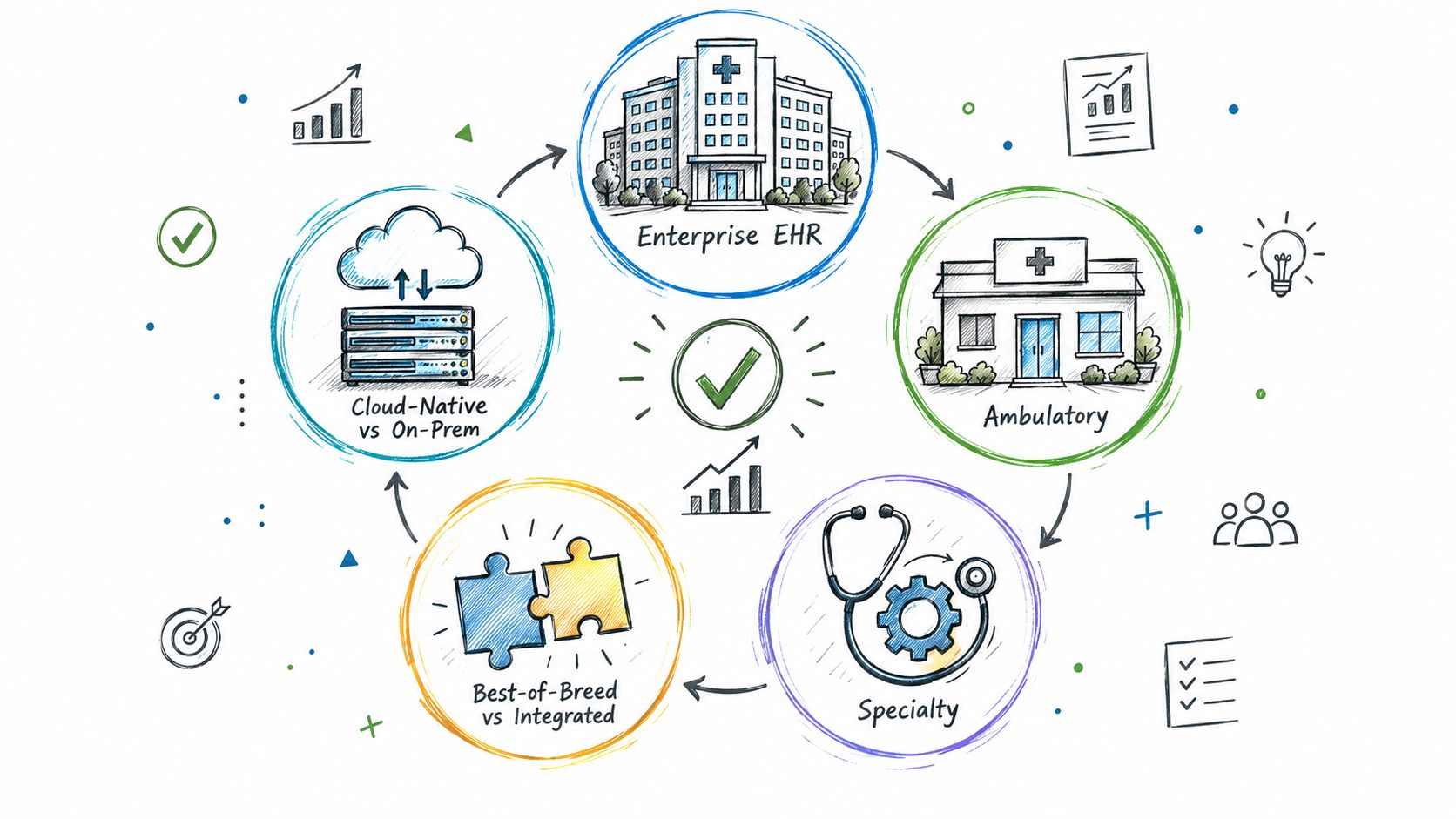
Explore the types of EHR systems by deployment model, care setting and scope. Compare integration options, trade-offs and selection tips for healthtech teams.

Compare Fhir vs. hl7 standards for healthtech integration. See how HL7 v2 and FHIR differ in use, mechanics, regulation, and real-world architecture.
Connect with our team to explore how AI expertise can transform your business.