AI in Healthcare
HIPAA-Compliant AI: How to Use LLMs With PHI Safely
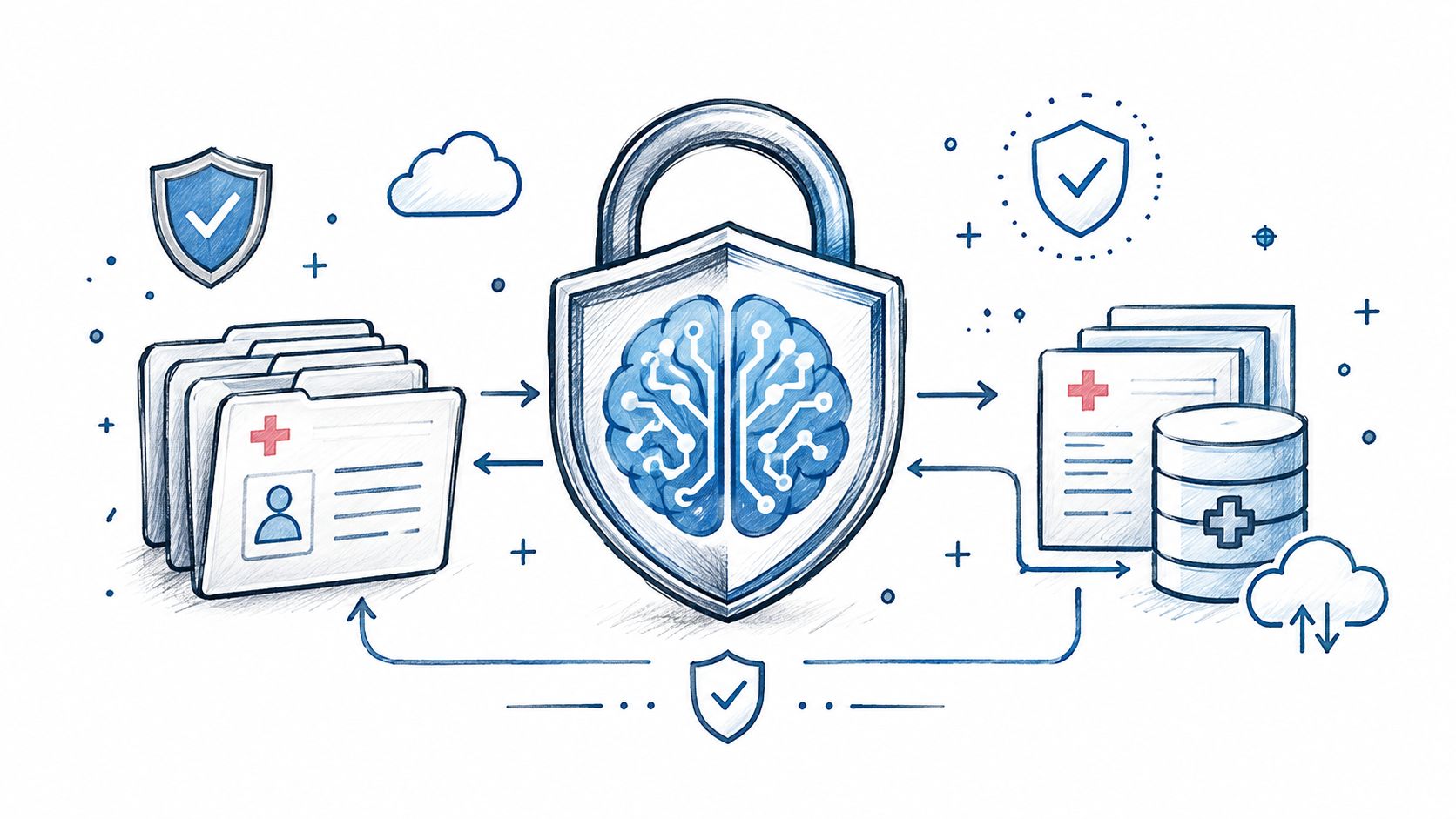
How to build HIPAA-compliant AI: when LLM providers need a BAA, data minimization, de-identification, audit controls and a reference architecture.
October 16, 2026Read more
Explore the 2026 behavioral health technology landscape. Our guide covers AI use-cases, KPIs, vendor evaluation, and implementation for business leaders.

Behavioral health technology has crossed the line from emerging category to board-level healthcare priority. The market was estimated at USD 4.1425 billion in 2024 and is projected to reach USD 8.6058 billion by 2030, with a 13.0% CAGR from 2025 to 2030, while the software segment held the largest share and was expected to grow at 13.5%, and North America accounted for 41.3% of revenue in 2024 according to Grand View Research's behavioral health market analysis.
That matters for leadership teams because this isn't just a story about more apps, more teletherapy, or another AI wave. It's a story about how healthcare organizations are trying to close access gaps, reduce clinician burden, and deliver more continuous care in a field where demand keeps outrunning capacity.
The mistake I see most often is treating behavioral health technology as a channel decision. Teams ask whether they need telehealth, an AI scribe, or a patient app. The better question is where technology creates durable operational value without undermining trust, workflow, or clinical quality. In behavioral health, poor implementation shows up fast. Clinicians ignore it, patients disengage, and leadership ends up with another underused platform contract.
Strategy must be practical. Buyers need to know which tools solve access problems, which tools improve care coordination, which tools reduce documentation load, and which tools still need tighter governance before broad rollout. They also need to know who gets left out when digital delivery becomes the default.
Behavioral health has become one of the clearest tests of healthcare strategy because demand is high, staffing is tight, and digital tools now shape how patients enter, experience, and continue care.
For leadership teams, the investment case goes beyond adding another app or automation layer. Behavioral health technology affects referral flow, intake capacity, triage, documentation, patient follow-up, and the quality of ongoing engagement between visits. It also exposes a hard truth that many digital strategies miss. More technology does not automatically create more access if the people with the highest need are the least likely to trust, use, or benefit from the tool.
That is why this belongs on the executive agenda. Decisions made here influence operating margins, clinician retention, patient access, and reputational risk across the organization.
The strongest behavioral health programs start with care delivery problems that already show up in performance reviews and frontline complaints. Patients wait too long for intake. Clinicians spend evenings finishing notes. Care teams lose visibility after the first visit. Digital engagement drops fastest among patients with language barriers, unstable housing, limited device access, or low confidence in how their data will be used.
Those realities make behavioral health technology a cross-functional investment decision that spans clinical leadership, operations, IT, compliance, and finance.
In practice, the useful starting point is simple. Identify where friction creates avoidable cost, delay, or dropout.
The ROI discussion improves when a proposed tool is tied to one of those failures and to a population you can realistically engage.
Practical rule: Buy technology to fix a workflow problem and improve a measurable outcome.
High-value initiatives usually share four traits.
They fit the way care is delivered, including handoffs between call centers, therapists, psychiatrists, care managers, and billing teams. They improve a measurable process such as documentation time, time-to-intake, attendance, response rates, or escalation speed. They address trust, privacy, and usability before rollout. They can operate at scale without depending on one internal champion to keep adoption alive.
I also advise teams to test one question early: who is likely to be excluded by this model? A chatbot may reduce intake burden for some patients and lose others. Video follow-up may improve continuity for employed adults and fail for patients who lack private space, stable broadband, or confidence using a portal. Responsible behavioral health strategy accounts for those trade-offs up front, because poor engagement in this category is not just a product problem. It is a clinical and financial one.
Organizations that need execution support often look for a healthcare technology strategy and delivery partner that can align product decisions with workflow design and implementation discipline. Teams working with public programs or regulated reimbursement models may also need guidance for federal health systems when technology choices affect documentation and care delivery requirements.
The strongest driver behind behavioral health technology isn't hype. It's unmet need.
In 2024, an estimated 61.5 million Americans experienced any mental illness, but only 52.1% received treatment, leaving nearly 30 million without care. The same source notes 14.6 million had serious mental illness and 48.4 million people age 12+ met criteria for a substance use disorder, while behavioral-health telehealth use rose from 2.1% pre-pandemic to 54.4% during the pandemic and stabilized at 42.9% post-pandemic according to Definitive Healthcare's review of behavioral health data trends.

That treatment gap explains why behavioral health technology keeps moving up the investment list. Healthcare organizations aren't digitizing this area because it's fashionable. They're doing it because traditional delivery models alone can't absorb demand.
Telehealth's post-pandemic stabilization is especially important. It shows digital delivery didn't vanish when in-person care returned. It became part of the operating baseline. That changes planning assumptions for provider networks, health systems, and digital health vendors.
For teams building or modernizing care delivery, this usually pushes investment toward:
Organizations evaluating these priorities alongside broader care infrastructure often bundle them into larger Healthcare AI Services roadmaps rather than handling behavioral health as an isolated project.
Behavioral health leaders sometimes separate clinical strategy from operational design. That usually slows adoption. The key question isn't whether digital delivery works in principle. It's whether the model fits documentation, coding, staffing, and reimbursement realities.
For organizations operating in public-sector or regulated environments, reimbursement mechanics and care-delivery policy often shape rollout more than product features do. Teams that need a grounded view of billing and policy context may find this guidance for federal health systems useful when they're aligning digital behavioral health workflows with service models.
Telehealth solved part of the geography problem. It didn't solve coordination, engagement, or clinician capacity by itself.
Not all behavioral health technology does the same job. Some tools increase access. Some improve care quality. Some reduce labor tied to administrative work. Strong portfolio decisions depend on keeping those categories separate.
Teletherapy platforms expand access and scheduling flexibility. Their value is usually straightforward: faster connection between patient and provider, fewer logistics barriers, and better continuity for people who struggle with transportation, stigma, or inconsistent availability.
Measurement-based care tools give clinicians structured symptom tracking between visits or at regular points in treatment. These tools become useful when organizations want more consistency in follow-up and better visibility into change over time.
Digital therapeutics and structured self-guided interventions can extend care outside the session. They're most useful when a clinical model supports guided use, escalation rules, and review of progress. Left as standalone apps, they often become shelfware.
Clinical decision support and AI workflow tools reduce note burden, support triage, and surface relevant history. This category is where many organizations find early operational wins because the user is the care team, not the patient.
Predictive and risk-stratification tools aim to identify deterioration, relapse risk, or need for outreach earlier. These tools can be valuable, but they demand tighter governance because false positives and poor escalation design quickly erode trust.
| Technology Category | Primary Function | Key Value Driver for Organizations |
|---|---|---|
| Teletherapy platforms | Deliver remote sessions and related communication | Broader access, scheduling flexibility, continuity of care |
| Measurement-based care tools | Capture structured symptom and progress data | Better longitudinal visibility and more consistent follow-up |
| Digital therapeutics | Extend treatment with guided digital interventions | Support between visits and more standardized care pathways |
| Clinical decision support and AI documentation tools | Assist clinicians with summaries, notes, and context | Lower admin burden and faster workflow completion |
| Predictive analytics and risk stratification | Flag patients who may need intervention | Earlier outreach and better care prioritization |
Leadership teams often overfocus on what's novel and underinvest in what clinicians will use every day. In most organizations, documentation support, intake triage, and structured monitoring create more reliable value than consumer-facing chatbot experiments.
That's also why many of these products increasingly sit inside regulated or semi-regulated clinical environments. Depending on functionality and claims, they may move toward SaMD solutions territory, which changes requirements around validation, risk controls, and quality processes.
On the build side, teams are also moving faster with ai assisted software development. That can shorten delivery cycles for provider tools, care-navigation systems, and internal automation. It doesn't remove the need for clinical review, workflow testing, or privacy controls. It just makes iteration cheaper when governance is handled properly.
A practical example is clinician support tooling such as a clinic AI assistant, where the value case typically depends less on model sophistication and more on whether the tool fits session workflows, note review habits, and compliance expectations.
If a behavioral health technology program can't prove value in operations or care delivery, it won't survive budget review. The cleanest way to avoid that is to measure against three buckets: engagement, clinical usefulness, and workflow efficiency.
Downloads and registrations don't tell leadership much. What matters is whether patients and care teams changed behavior.
Useful engagement indicators often include:
These aren't glamorous metrics, but they reveal whether the technology has entered routine use.
If clinicians still work around the platform after launch, the implementation hasn't succeeded no matter how strong the demo looked.
Behavioral health buyers often want immediate proof of improved outcomes. That's reasonable, but clinical value usually emerges through better consistency, earlier escalation, and more informed follow-up before it appears in high-level outcome reporting.
A sound measurement approach asks:
That's where passive digital phenotyping becomes strategically interesting. Smartphones and wearables can capture movement, sleep, phone usage, voice features, and social interaction signals, then detect deviations from a person's baseline that may indicate escalating depression, mania, or psychosis, as described by the National Institute of Mental Health's overview of mental health technology.
Passive sensing sounds powerful because it promises earlier detection. The engineering problem is more difficult than many product decks admit. The issue isn't collecting more data. It's deciding which changes matter, for which person, and when a human should review them.
That's why the most useful models are usually:
If a program can't define who reviews alerts, how follow-up happens, and when escalation is appropriate, predictive monitoring won't create ROI. It will create noise.
Behavioral health technology succeeds or fails in operations long before it proves itself in board reporting. Leadership teams usually do not miss on ambition. They miss on workflow fit, staffing assumptions, and the amount of trust required for clinicians and patients to use a new tool consistently.

A useful implementation plan begins with one specific bottleneck. “Improve behavioral health operations” is too broad to guide vendor selection or change management. “Cut intake leakage between referral and first appointment,” “reduce after-hours charting,” or “shorten time from symptom escalation to outreach” gives the team something concrete to design around.
That decision shapes the rest of the roadmap. It affects whether the organization should buy, configure, or build, how much integration work is justified, and which teams need to own the rollout.
Custom development can make sense when consent logic, family involvement, crisis protocols, or multi-program documentation rules are too specific for a standard product. In those cases, custom healthcare software development may be the right path if internal systems cannot support the care model you need.
Implementation planning should map more than systems. It should map failure points.
For behavioral health, that means looking closely at where people disengage because the technology asks too much of them. A portal-first intake flow may work for insured, digitally fluent adults with private internet access. It may fail for adolescents sharing devices, older adults with low digital confidence, people with limited English proficiency, or patients who avoid written screening because they do not trust where the information goes.
Teams should document four things early:
This work prevents a common mistake. A tool can fit the clinical workflow and still fail the engagement model.
The near-term use cases are practical. Organizations are deploying tools that draft notes, summarize histories, support triage, and route administrative tasks. The value is real when those outputs land inside a process that staff can review, correct, approve, and act on without adding extra clicks or liability.
Industry reporting on technology innovations driving change in behavioral health reflects that shift toward documentation support and care coordination. The strategic question is narrower. Which tasks are repetitive enough to automate, and which ones still require human judgment because the cost of being wrong is too high?
I advise leadership teams to make that boundary explicit. Session note drafting may be appropriate with clinician review. Crisis disposition usually is not.
Broad deployment sounds efficient and usually creates preventable resistance. A better pattern is a contained pilot with one population, one workflow, one accountable leader, and a short list of review criteria.
Use a checklist before scale:
For more complex programs, early requirements work matters because behavioral health workflows contain hidden operational detail. Ekipa often sees these edge cases surface around consent, crisis escalation, family participation, and documentation review rights. Teams should also confirm basic data handling expectations up front, including vendor security terms and a clear privacy policy for handling behavioral health data.
Technical deployment is only half the implementation job. Clinicians need to know what the tool does, what it does not do, how much review is expected, and where they retain decision authority. Care coordinators need clarity on response times and escalation rules. Patients need simple explanations that make the benefit and the privacy trade-off understandable.
Trust is built in the small details. Clear scripts. Opt-out paths. Language that does not sound surveillant. Alternatives for people who cannot or will not use the digital channel.
An implementation roadmap should end with operating decisions, not a go-live date. Who owns adoption, who monitors exceptions, which patient groups are under-engaging, and what will be changed in the first 30 days are the questions that determine ROI.
The most important strategic question in behavioral health technology isn't “Can we deploy this?” It's “Who benefits, and who gets excluded?”

NCQA puts the issue plainly. Organizations should ask who the technology is for, who it might leave out, whether it is culturally responsive, whether it assumes digital literacy, and how it protects privacy and dignity, as noted in NCQA's discussion of behavioral health technology risks and opportunities.
A telehealth platform may widen access for one group and reduce engagement for another. A remote monitoring tool may help a highly connected patient while creating discomfort for someone with limited privacy at home. A chatbot may feel convenient to one person and culturally alienating to another.
That's why “more tech = more access” is a weak strategy. Availability is only one layer. Equitable engagement depends on trust, language, context, privacy conditions, and the patient's ability to use the tool without shame or confusion.
Technology can extend care, but it can also expose gaps in dignity, literacy, and trust that were already there.
Privacy and ethics work in behavioral health can't stop at compliance language. Leaders need operating rules for sensitive situations:
These decisions should be visible in product and service design, not buried in policy PDFs. Teams also need to make privacy expectations easy to find and easy to understand. A clear privacy policy is part of that, but policy text alone won't establish trust if the lived experience feels opaque.
The organizations that handle this well usually design for choice. They give patients more than one way to engage, and they don't punish people for preferring the lower-tech path.
Behavioral health programs often lose value in the handoff between strategy and execution. The usual failure is not picking too few tools. It is funding too many use cases before the organization has proved adoption, trust, and measurable operational gain.
Set priorities by starting with the breakdown that costs the organization the most today. In one setting, that may be clinician time lost to documentation and intake rework. In another, it is no-shows, low follow-through after referral, or weak visibility into patient status between visits. The right first investment depends on the constraint, not on which product category gets the most attention.
A practical screen helps leadership teams choose where to place the first dollar:
That third filter changes the investment order for many organizations. A patient-facing tool may look promising in a demo and still underperform if the target population shares phones, avoids text reminders, has limited data plans, or does not trust automated outreach. Leadership teams that ignore those realities can report strong rollout numbers while widening engagement gaps.
In practice, the best first bets are usually narrow and measurable. Documentation support, intake optimization, referral coordination, and structured follow-up often produce cleaner ROI than broad consumer-facing AI experiences. They fit existing workflows, create visible time savings, and give the organization a safer way to build governance muscle before expanding into higher-risk use cases.
If outside support is part of the decision process, use it to pressure-test sequencing, build-versus-buy choices, and the KPI model. Ekipa also offers strategy and product advisory services for teams that need a more structured way to compare use cases and define an investment roadmap. The standard should stay the same either way. Fund the use case that solves a costly problem, can be adopted by real users, and does not leave your hardest-to-engage patients further behind.
The category includes digital tools used to support mental health and substance use care delivery. That can include teletherapy platforms, intake and triage systems, symptom-tracking tools, AI documentation support, measurement-based care software, remote monitoring, and some device-enabled or software-based treatment models.
In practice, many teams find the fastest operational value in workflow support. Documentation assistance, intake coordination, care navigation, and structured follow-up tend to create clearer adoption paths than broad patient-facing AI experiences. They solve daily pain points and are easier to measure.
Yes. It has moved from emergency adoption to a durable delivery channel, as discussed earlier. But telehealth alone isn't a full behavioral health technology strategy. It needs surrounding workflows for triage, documentation, engagement, and escalation.
No. Risk depends on what the system does and how people use it. A note-drafting tool reviewed by a clinician presents a different risk profile than a tool making high-stakes predictions about suicide risk or relapse. Governance should match the use case, not the buzzword.
Buy when the workflow is common and the integration burden is manageable. Build when your service model, patient population, compliance constraints, or product goals require more control than an off-the-shelf platform can give you. The right choice often depends on whether technology is supporting operations or becoming part of your differentiated offering.
Think in layers. The first layer is operational efficiency, such as less documentation lag or smoother intake. The second is service delivery, such as better continuity and faster follow-up. The third is strategic advantage, where the organization gains a stronger care model, better data visibility, or a more scalable platform for future services.
Treating implementation like procurement. Buying the software is the easy part. The hard part is mapping workflow, training users, defining accountability, and designing around people who may be left out by the digital default.
Look for product, engineering, and healthcare workflow judgment in the same room. A partner should be able to discuss integration constraints, AI governance, user adoption, and service design without reducing the work to a feature checklist. If you want to assess that capability directly, review our expert team.
If you're assessing where behavioral health technology fits in your roadmap, Ekipa AI can help structure the decision. From an AI Strategy consulting tool to implementation planning and healthcare-focused delivery support, the goal is to move from broad AI interest to a workable execution plan with fewer false starts.
How to build HIPAA-compliant AI: when LLM providers need a BAA, data minimization, de-identification, audit controls and a reference architecture.

Practical data migration planning guide for healthcare teams. Scope, mapping, compliance, validation, cutover and rollback decisions explained end to end.

Smart on FHIR guide for healthtech engineers. Learn the OAuth 2.0 launch model, scope syntax, backend services, and US regulatory requirements.
Connect with our team to explore how AI expertise can transform your business.