AI in Healthcare
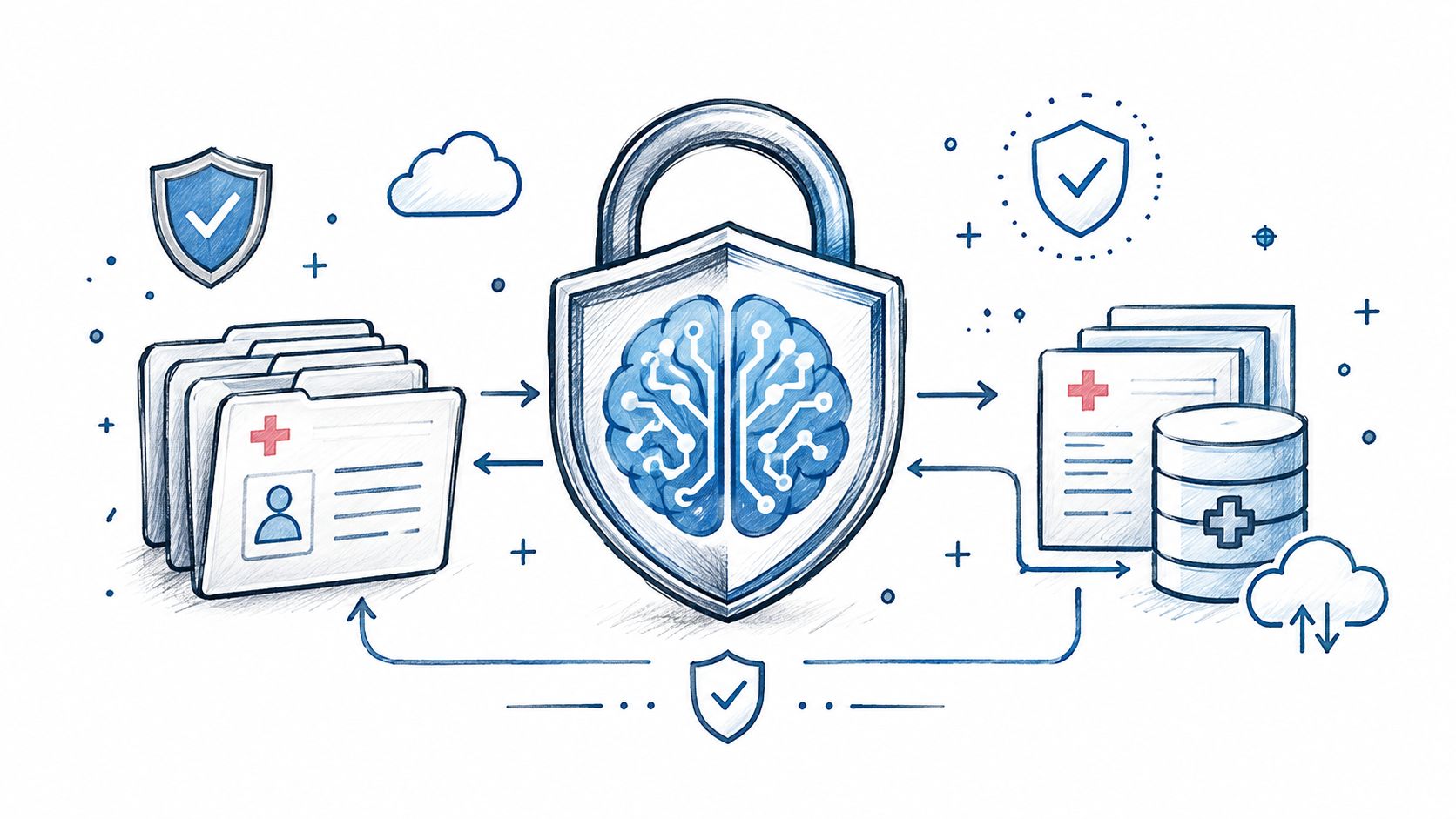
HIPAA-Compliant AI: How to Use LLMs With PHI Safely
How to build HIPAA-compliant AI: when LLM providers need a BAA, data minimization, de-identification, audit controls and a reference architecture.
October 16, 2026Read more
What is behavioral health technology and how to scale it? Explore telehealth, AI, ROI and compliance for behavioral health technology in 2026.

In just over a decade, the share of U.S. mental health treatment facilities offering telehealth rose from under 40% in 2019 to nearly 90% in 2022, a shift that turned digital delivery from a convenience into operating infrastructure. The broader market reflects the same change. The global digital mental health market was valued at USD 27.8 billion in 2024, reached USD 32.95 billion in 2025, and is projected to reach USD 180.56 billion by 2035, according to market research on digital mental health.
For executives, the question is no longer whether behavioral health technology will matter. The practical questions are where it belongs in the care workflow, how it exchanges information with the EHR, how clinicians stay accountable, and how a health system proves that adoption improves care rather than just generating more app activity.
A health system can have a full referral pipeline, qualified clinicians, and strong demand, yet still leave patients waiting because intake, scheduling, screening, documentation, and follow-up operate in separate systems. A clinic director trying to expand access without adding headcount might begin with virtual visits, then discover that the main constraint is not video. It's the manual work surrounding every visit.
That's why behavioral health technology has moved beyond standalone apps. It now supports tele-mental health, remote monitoring, digital therapeutics, workflow automation, analytics, and AI-enabled assistance across the patient journey. North America accounted for over 42.19% of global digital mental health revenue in 2024, approximately USD 13.9 billion, which shows how seriously major healthcare markets are treating digitally enabled behavioral care. The same market estimate projects an 18.54% CAGR from 2025 through 2035.

Patient expectations have changed alongside service delivery. A Bipartisan Policy Center survey summary reports that 3 in 10 U.S. adults have used a self-guided digital tool for mental health or well-being, rising to nearly half among adults ages 18–44. Among digital-tool users, 60% used a mental health-specific app, while nearly 50% used a general chatbot.
The adoption drivers are practical. Nearly 70% of users said digital tools felt more comfortable than speaking directly with someone, and about half considered them more affordable, according to the same source. A health system that ignores those preferences may create access friction before a patient ever reaches a clinician.
Executive takeaway: Treat digital behavioral care as part of the delivery model, not as a marketing layer attached to an existing clinic.
The infrastructure still has to fit the organization. A provider may need structured intake, consent management, clinician dashboards, EHR exchange, crisis escalation, and revenue-cycle support in one coordinated design. A Healthcare AI Services team can help connect those pieces, but the business case starts with the workflow and the patient population, not with a fashionable model or app category.
A meditation app, video visit, or chatbot is only one component of behavioral health technology. The broader system is an integrated set of digital solutions that helps people access, receive, monitor, coordinate, and improve behavioral healthcare. It can include patient-facing tools, clinician workspaces, decision support, data exchange, reporting, and administrative automation.

The front door is often telehealth. It lets patients meet therapists, psychiatrists, coaches, or care coordinators without traveling to a facility. A therapy platform may also handle messaging, scheduling, education, and appointment reminders.
The intervention layer delivers structured support. A digital therapeutic can guide a defined program, while remote monitoring collects patient-reported symptoms, sleep patterns, medication observations, or other signals between visits. Clinicians still make the care decisions. Technology supplies better-timed information.
Coordination determines whether that information becomes useful. Relevant data should reach the appropriate care team, enter the EHR in a structured form where appropriate, and retain the context needed for follow-up. Otherwise, clinicians may switch between systems, re-enter screening responses, or work from incomplete records.
The implementation challenge resembles fitting new equipment into a busy clinic. A tool creates value only when its data, alerts, permissions, and escalation rules fit the existing workflow.
A freestanding app can attract users and still fail operationally. If worsening symptoms generate no alert for a care team, the system has collected data without creating a response. If a therapist cannot view a completed assessment, the organization has added documentation instead of reducing it.
By 2024, 40% of adults experiencing serious psychological distress reported using a digital health tool, up from 10% in 2013, according to the survey summary from the Bipartisan Policy Center. As the same Bipartisan Policy Center survey noted, that existing use makes integration important because patients may already rely on digital tools before entering a formal care pathway.
Governance also depends on the product's purpose. A wellness feature, clinical workflow tool, and software as a medical device can require different evidence and oversight. Teams assessing a guide to SaMD compliance and governance should define the intended clinical purpose, users, risk level, and escalation path before choosing technology. Those decisions provide the basis for testing clinical value, workflow performance, and equitable access.
A useful way to assess the field is to follow information through the care system. The patient enters through a digital channel, receives an intervention, generates data, and triggers a clinical or operational response. Every layer needs a clear handoff.

Foundation, EHR, data warehouse, and security. This layer stores identity, clinical records, consent, access controls, and reporting data. If the foundation is fragmented, every later layer inherits the problem.
Delivery, teletherapy and digital care platforms. These systems handle virtual appointments, messaging, scheduling, reminders, and patient education. Their value depends on whether they connect cleanly to clinical operations.
Intervention, digital therapeutics and prescription apps. These products deliver structured programs that may complement therapy or medication management. The product team must distinguish a general wellness experience from a clinically intended intervention.
Intelligence, analytics and predictive insights. Dashboards can help leaders understand access, caseloads, follow-up, and population patterns. Predictive features require careful validation, transparent thresholds, and human review.
Outcome, population health and value-based care. Organizations connect service delivery to continuity, symptom measures, utilization, and financial performance. The system must measure more than logins.
A platform such as AI tools for business can support administrative and analytical work, while AI Automation as a Service can be relevant when repetitive tasks need controlled orchestration. Internal tooling may also help staff manage referrals, authorizations, queues, and documentation without exposing every operational function to patients.
AI chatbots deserve stricter scrutiny than ordinary engagement features. A 2026 review found that clinically designed, framework-anchored chatbots can be feasible for suicide risk assessment and crisis intervention. The same review reported that tested commercial chatbots without clinical validation showed systematic risk miscalibration, failed to distinguish intermediate risk levels, and that none of 29 apps met criteria for an adequate crisis response. See the review of AI chatbots for suicide risk assessment.
A safe design needs a validated clinical framework, clinician oversight, crisis-system integration, documented escalation rules, and pre-deployment benchmarking. A fluent response isn't evidence of clinical safety.
The strongest use cases begin with a service bottleneck. A clinic director may have patients waiting for an initial assessment, while staff spend hours collecting information that patients could submit before the appointment. A payer operations lead may see repeated handoffs between utilization review, providers, and care managers because authorization data doesn't travel with the case.
Technology can address both problems, but the workflow must define the outcome.
A digital front door can collect intake information, offer self-guided education, schedule an appropriate appointment, and route urgent cases for human review. That supports a stepped-care model, where people receive the least intensive appropriate intervention first and move to higher-touch services when their needs require it.
For a provider, relevant measures might include referral completion, appointment throughput, clinician preparation time, no-show patterns, and the time between a screening result and follow-up. The exact KPI depends on the pathway. A chatbot that answers routine questions should not be judged by the same standard as a clinical monitoring program.
A therapist or psychiatrist needs more than engagement data. Structured assessments can give clinicians a consistent view of symptom changes, treatment response, and missed follow-up. The platform should display trends in the clinical workspace, preserve the assessment source, and make it easy to document the decision that followed.
A payer can apply a similar model to care management. The system might identify members needing outreach, document contact attempts, and help care teams coordinate physical and behavioral health services. Population stratification is useful only when it leads to an accountable action.
Crisis triage must be designed around escalation, not conversation volume. A system needs defined thresholds, human review, location-aware routing where applicable, and clear instructions for users who need immediate help. Follow-up after a crisis contact can also be coordinated through reminders, outreach queues, and clinician review.
The implementation challenge is substantial. A JMIR analysis of behavioral health technology implementation identifies interoperability barriers, documentation friction, lower EHR adoption, and immature data exchange standards as continuing obstacles. That's why real-world use cases should be assessed by their operational handoffs, not just by the feature list.
Organizations often need custom healthcare software development when their payer rules, clinical pathways, consent requirements, or EHR environment don't match an off-the-shelf product. The right build decision follows a workflow and ROI analysis. It shouldn't be a reaction to a vendor demo.
Compliance isn't a final review before launch. It shapes the product architecture from the first data field.
Behavioral health platforms may need to account for HIPAA, 42 CFR Part 2, state privacy rules, consent requirements, and emerging AI governance. The risk is not limited to a data breach. A system can also create harm by sharing sensitive information too broadly, retaining it without a clear purpose, or presenting an automated recommendation without an accountable reviewer.
Free-text notes are valuable for clinical context, but they're difficult to compare, route, and analyze consistently. A 2020 evidence-based interoperability strategy concluded that uniformly defined domains and patient-level equivalency scoring can support comparable interpretation and cross-setting exchange. It also connected EHR certification with the ability to acquire, store, transmit, and download self-reported behavioral data.
That means intake and screening workflows should capture normalized fields wherever possible. The design should preserve the original response, record who entered or reviewed it, and map the data to the systems that need it. Structured capture supports care coordination, analytics, reporting, and controlled exchange.
State regulation adds another layer of complexity. A 2025 review of state bills affecting mental health AI examined 793 bills, identifying 143 as potentially impactful to mental-health AI. Only 28 explicitly referenced mental health, while 115 had indirect or substantial implications. Teams can't rely on a search for laws that use the exact phrase “behavioral health AI.”
Privacy by design is a trust feature. Patients and clinicians need to understand what the system collects, why it collects it, who can access it, and what happens when an automated process detects risk.
| Requirement Area | What to Verify Before Scaling |
|---|---|
| Clinical purpose | Define whether the product supports wellness, care delivery, clinical decision-making, or a regulated medical purpose. |
| Consent and confidentiality | Map consent, disclosure, retention, and access rules, including 42 CFR Part 2 where applicable. |
| Structured data | Use consistent fields, definitions, provenance, and equivalency rules for screening and patient-reported data. |
| EHR exchange | Test acquisition, storage, transmission, download, and reconciliation across target systems. |
| AI governance | Document validation, human review, escalation, monitoring, and change-control procedures. |
| Outcomes | Pair engagement measures with validated clinical and operational outcomes. |
A regulatory compliance partner can help teams translate requirements into controls, while AI requirements analysis can turn clinical, technical, and privacy assumptions into buildable specifications. ONC and SAMHSA have also announced more than USD 20 million over three years for behavioral health IT data standards, according to the federal interoperability initiative announcement.
A vendor comparison should start with a scorecard, not a feature tour. Two products may both offer a chatbot, dashboard, or telehealth module, yet differ significantly in clinical evidence, EHR integration, escalation design, implementation effort, and support.

Clinical efficacy should receive the greatest attention. Ask what population the product serves, what outcomes were measured, how the intervention was evaluated, and which claims are supported by evidence. Engagement can indicate usability, but it doesn't prove symptom improvement, safety, or continuity.
Integration comes next. Request a live demonstration of identity matching, structured data exchange, clinician review, consent handling, audit history, and failure recovery. A vendor that says “we integrate with your EHR” should explain the actual data objects, workflows, interfaces, and implementation responsibilities.
Security and compliance need the same specificity. Review access controls, data retention, incident response, subcontractors, model governance, and the process for updating clinical content. Then assess the support model. A technically capable platform can still fail if staff don't receive training, configuration help, and timely issue resolution.
Revenue-cycle friction belongs in the business case. A 2026 Black Book survey found that 61.0% of behavioral health IT respondents saw an increase in claim denials over the prior year, while 79.0% ranked prior authorization among their top three administrative challenges, according to the survey coverage.
A separate HealthIT.gov progress report reported that 68% of behavioral health facilities exclusively used an EHR system. That doesn't mean exchange works well. It means a new product must operate in an already digital environment rather than assume paper-based workflows.
Track claim denial patterns, authorization handling time, referral completion, clinician documentation burden, utilization, patient retention, and validated clinical outcomes. Use a baseline, define the measurement window, and identify which team owns each metric.
For a structured build and rollout, an AI Product Development Workflow can help connect requirements, architecture, validation, integration, and operational support. A Custom AI Strategy report can also clarify whether the organization needs a vendor, configuration work, custom development, or a staged combination.
A pilot should be small enough to control and meaningful enough to test the operating model. Don't pilot a feature in isolation if the eventual product depends on intake, EHR exchange, clinician review, billing, and escalation.
Begin with AI requirements analysis and stakeholder interviews. Include clinicians, operations, compliance, security, revenue-cycle staff, patients, and the people responsible for EHR administration.
Document:
The equity question must remain visible. An ASPE review of health IT adoption in behavioral health links slower HIT and HIE adoption to cost, workforce limits, privacy concerns, unstable funding, and limited behavioral-health-specific functionality. It also notes that many platforms report engagement metrics rather than validated clinical outcomes.
Run the pilot with a defined patient group, a named clinical owner, and a documented fallback process. Test incomplete forms, missed appointments, connectivity problems, conflicting records, high-risk responses, and clinician unavailability. A successful demo won't reveal those conditions.
Set an exit review that examines safety events, clinician workload, data quality, patient experience, access patterns, and outcome measures. If the system increases staff work or leaves certain groups behind, pause and redesign rather than expanding the problem.
After the workflow proves viable, strengthen identity matching, consent handling, EHR exchange, monitoring, training, and support. Establish a change-control process for prompts, models, assessment instruments, and clinical content. Document who reviews performance and how quickly the team responds to a safety or privacy issue.
Enterprise deployment requires more than turning on accounts. Assign owners for product, clinical governance, security, data exchange, revenue cycle, and adoption. Maintain a dashboard that separates activity from outcomes, and review performance across relevant patient groups instead of relying only on aggregate results.
As we explored in our AI adoption guide, adoption improves when leaders pair a clear use case with accountable ownership, workflow training, and a practical path from pilot evidence to operating policy. A healthtech engineering partner can support that path from discovery through deployment. You can also meet our expert team before deciding whether external support fits your program.
Scale only what your care team can govern. A larger deployment magnifies both the value of a sound workflow and the consequences of a weak one.
Ekipa AI helps healthcare organizations define behavioral health use cases, design interoperable workflows, build clinical AI and software products, and prepare systems for compliant deployment. Visit Ekipa AI to discuss your EHR integration, pilot roadmap, or behavioral health technology strategy with a team that can help shape, plan, and build the solution.
How to build HIPAA-compliant AI: when LLM providers need a BAA, data minimization, de-identification, audit controls and a reference architecture.

Practical data migration planning guide for healthcare teams. Scope, mapping, compliance, validation, cutover and rollback decisions explained end to end.
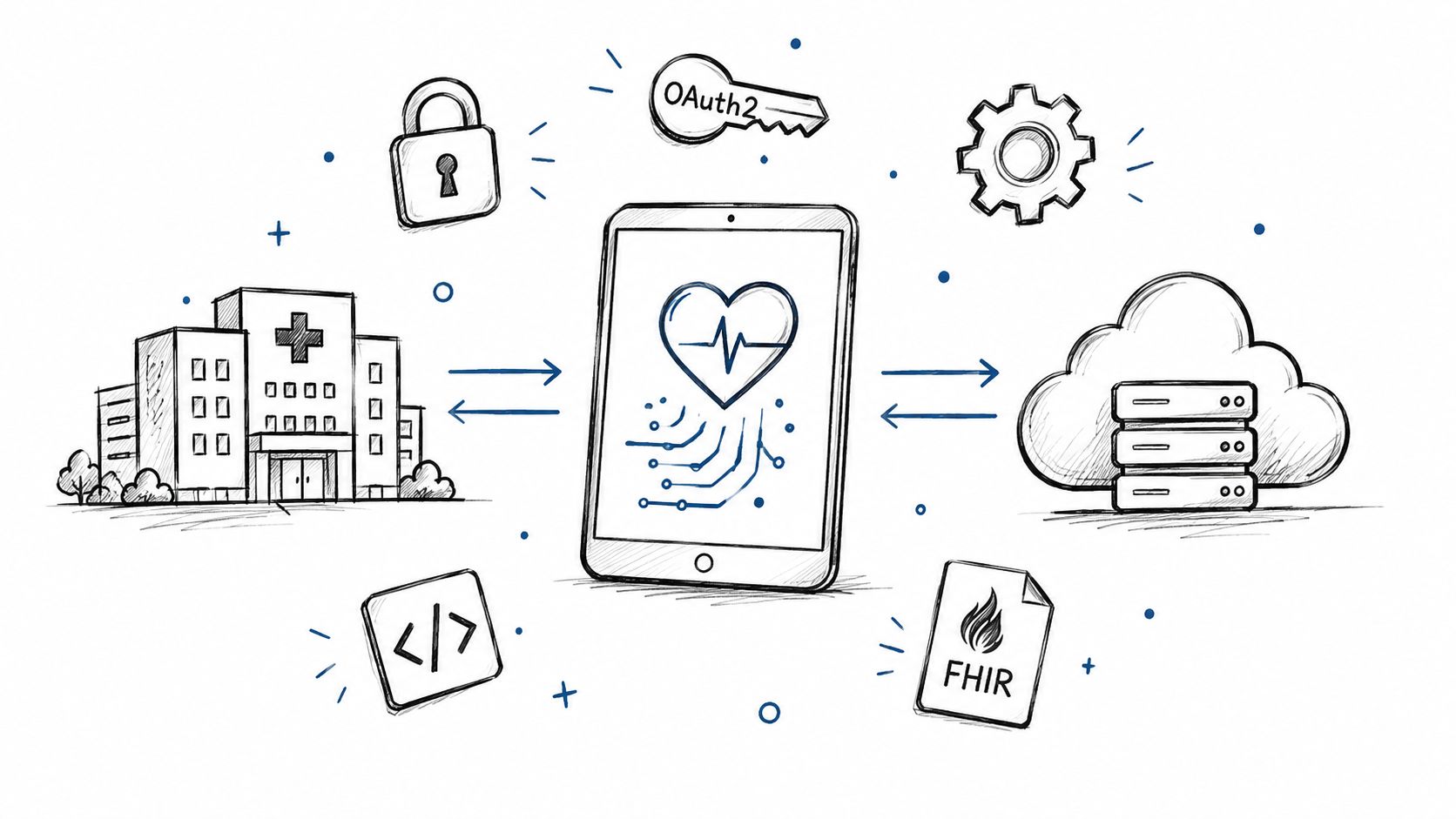
Smart on FHIR guide for healthtech engineers. Learn the OAuth 2.0 launch model, scope syntax, backend services, and US regulatory requirements.
Connect with our team to explore how AI expertise can transform your business.