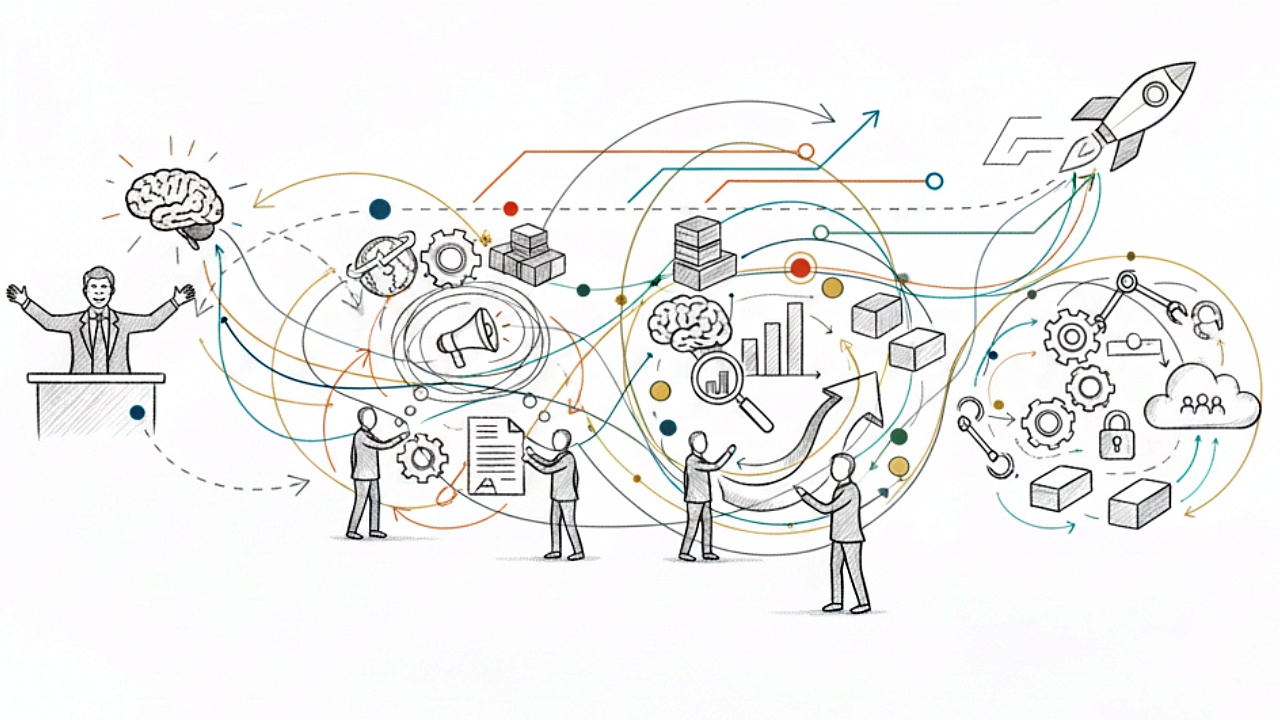
Business leaders are turning their attention to a more significant application of generative AI. Chatbots served as a useful introduction, but they are only the first chapter. The real opportunity lies in using these tools to meet business objectives, streamline complex internal processes, and enable better decisions. This shift reflects a more deliberate, integrated approach. In this method, AI becomes a fundamental part of how a company operates. As organisations strengthen their data, establish clear guidelines, adopt more specialised systems, and apply AI solutions, they can capture real opportunities for meaningful progress.
The New Phase of Generative AI for Enterprises
The most significant change is the transition from basic automation to intelligent systems that aid long-term business planning. Companies are now exploring generative AI enterprise use cases that offer greater control and flexibility across their teams. This development builds confidence in using AI as a tool for genuine innovation, moving beyond simple operational tasks.
Many organisations now seek external guidance on AI. They work with partners for AI strategy consulting to understand where this technology fits in their plans. This guidance helps teams determine which processes to automate, which to enhance, and where they can achieve the greatest impact. As a result, the approach to AI has evolved. It is no longer about small tests. It has become part of a structured change plan.
Content Centric Capabilities That Drive Growth
Marketing, product communication, and brand content have always demanded considerable time and human effort. Now, AI-generated content helps scale these activities effectively. From drafting product descriptions to refining marketing messages, content teams rely on AI to handle routine writing tasks. This allows them to focus on more creative thinking.
Enterprises also employ AI to generate multiple versions of designs, campaign templates, and visual assets efficiently. Tools that support this workflow give teams a dependable way to test new ideas. They can do this without waiting through long production cycles.
Smarter Decision Making Through Analytics

Large language models are changing how businesses examine their data. More leaders now engage an AI implementation partner to integrate AI with their analytics systems. This work enables teams to uncover insights, condense lengthy reports, and forecast business outcomes using historical data.
Enterprises also use structured frameworks, such as the AI maturity model, to understand their place in this journey. This framework helps organisations measure their progress and identify gaps in their systems. As they progress to more advanced stages, generative AI supports financial planning, risk assessments, compliance activities, and strategic forecasting.
AI-Powered Automation Across Operations
Several departments see real benefits from intelligent automation. Human resources teams use it to create training materials, summarise candidate profiles, and handle routine communications. Finance teams apply AI to draft reports and check internal documents. Operations teams rely on it to simplify task handovers and lower manual work.
As businesses discover more possibilities, they spend time reviewing AI use cases that can improve specific processes. Many begin with an AI readiness assessment to determine which tasks can be automated safely and accurately. After identifying the right areas, they begin creating workflows that support lasting operational gains.
Building Personalised Digital Experiences
Businesses serving many customers now use AI to create personalised digital journeys. These AI systems look at past user behaviour and produce tailored content based on individual needs. This approach works well in customer portals, banking apps, retail platforms, and company service centres.
This change encourages customer experience teams to explore more generative AI enterprise use cases, such as personalised recommendations, self-service support, new user guides, and interactive information systems. These abilities smooth the path for users and let companies deliver more reliable engagement.
Enterprise Development and Engineering Enhancement
Software teams receive clear advantages from generative AI. Developers rely on AI assistants to suggest code, clarify complex functions, and identify potential issues during testing. This shortens development time and allows for quicker releases.
Technology leaders depend on this progress to make long-term plans. An AI adoption roadmap frequently guides these plans. This roadmap outlines how engineering teams can progressively integrate advanced AI tools into their processes. As systems become more reliable, developers also explore modular designs and workflows supported by AI. These help them build more robust applications.
Data-Driven Product and Service Innovation
Product teams across various industries now employ AI to explore new ideas, test scenarios, and develop concepts for future products. Generative AI can process existing product data and generate versions, enhancements, or modifications for teams to evaluate. This method helps businesses accelerate their innovation cycles.
Many enterprises also ask for a custom AI strategy report. This report aligns product development with the company's long-term strategy. With this improved alignment between teams, generative AI becomes a lasting strategic advantage rather than a temporary test.
Preparing for the Future of Enterprise AI
The expansion of AI across numerous fields demonstrates that this journey extends well beyond chatbots. Companies now focus more on building reliable systems that support their business targets. The increasing adoption of generative AI enterprise use cases signals a mature approach. In this approach, AI supports decision-making, creativity, automation, and user engagement.
Conclusion
As businesses look ahead to 2026, generative AI will assume a more prominent position across their departments and functions. The focus will remain on developing practical AI solutions that drive business growth and improve day-to-day operations. With proper guidance and the right tools, companies can shape their future with greater confidence. For more information or support, contact us to begin your AI transformation journey.
FAQ
1. What Are Generative AI Enterprise Use Cases Beyond Chatbots?
Generative AI enterprise use cases go beyond chatbots to include content creation, analytics, product design, automation, and personalised digital experiences. These AI Solutions support strategic decision-making and long-term growth.
2. How Can Companies Identify the Right AI Use Cases?
Organizations often begin with an AI readiness assessment to evaluate systems, data, and skills. This helps prioritise high-impact AI use cases and build a structured AI adoption roadmap.
3. Why Is AI Strategy Consulting Important for Enterprise AI Adoption?
AI strategy consulting helps align generative AI enterprise use cases with business goals. It may include a custom AI strategy report that outlines implementation priorities, risks, and measurable outcomes.
4. What Role Does an AI Implementation Partner Play?
An AI implementation partner supports system integration, workflow automation, and analytics enhancement. They ensure AI Solutions are deployed effectively and aligned with enterprise objectives.
5. How Does an AI Maturity Model Support Long-Term AI Success?
An AI maturity model helps organizations measure progress, identify capability gaps, and scale responsibly. It strengthens the AI adoption roadmap and ensures generative AI enterprise use cases deliver sustainable value.