
AI in Healthcare
HIPAA-Compliant AI: How to Use LLMs With PHI Safely
How to build HIPAA-compliant AI: when LLM providers need a BAA, data minimization, de-identification, audit controls and a reference architecture.
October 16, 2026Read more
Building a patient-centric CareOps model with digital health tools helps healthcare providers improve coordination, streamline workflows, and enhance patient experiences. It supports efficient care delivery through connected and data-driven systems.
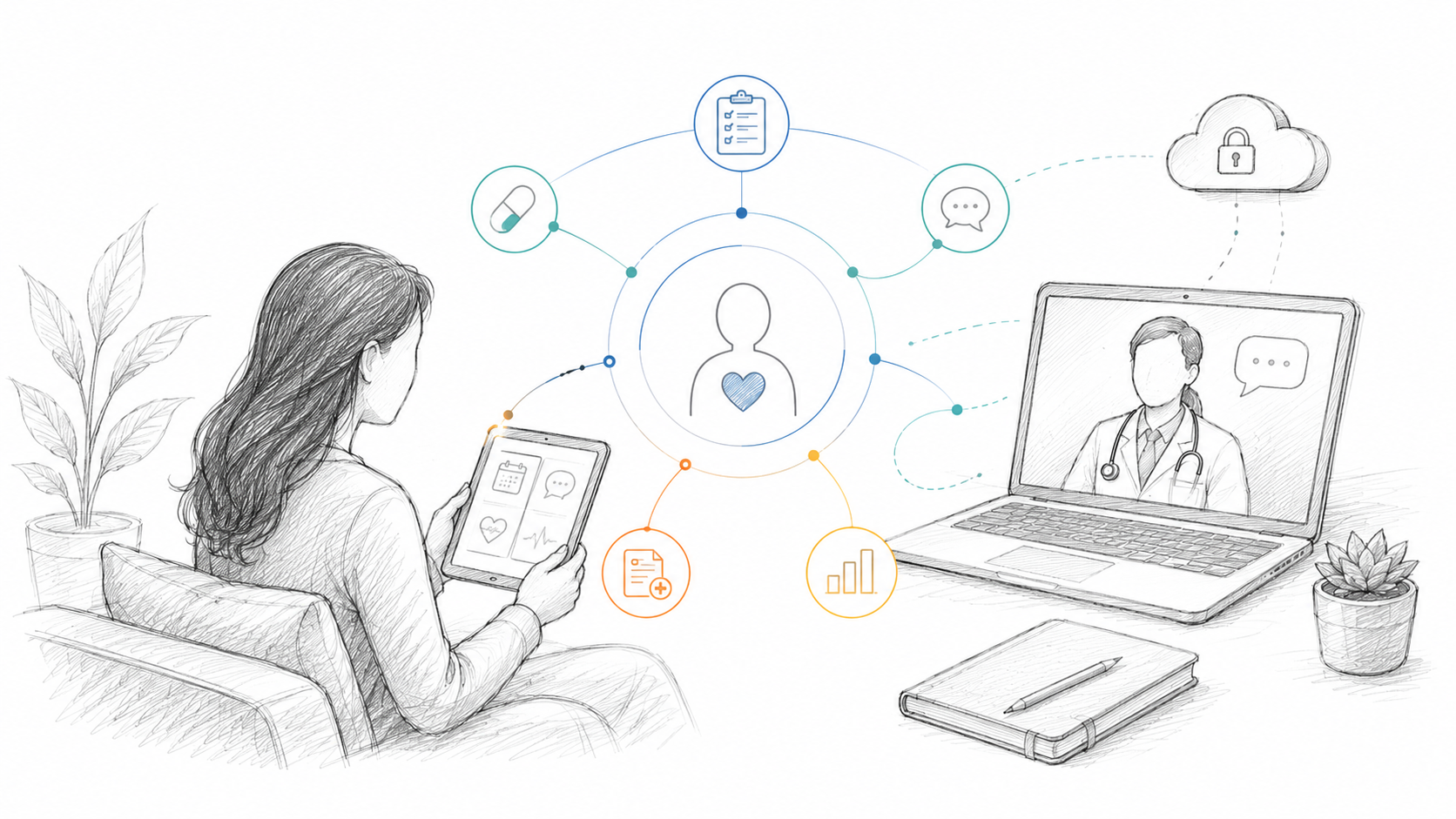
From busy hospitals to remote care teams, the conversation in healthcare now begins with one priority: the patient experience. Digital systems bring smoother workflows, steady communication, and timely access to care at every stage of treatment. Many providers are building patient-centric care operations through connected platforms, shared records, virtual care services, and data-driven planning. This approach creates a care journey that gives patients and care teams clarity, comfort, and meaningful interaction at every touchpoint.
Patients today expect healthcare experiences that offer convenience, transparency, and faster access to medical guidance throughout their care journey. Digital health tools create direct communication between providers, caregivers, and patients through appointment updates, virtual consultations, remote monitoring, and centralised medical records. To strengthen this connected approach, many healthcare organizations work with a healthtech engineering partner to build platforms that improve coordination across departments and create a more personalized experience for every patient.
Patient-centered care is about shaping healthcare around each person’s needs, preferences, medical goals, and values. It encourages patients, families, caregivers, and healthcare professionals to work together during every stage of treatment planning and decision-making. This approach looks at more than physical health. It also considers emotional wellbeing, the quality of communication, and long-term care experiences across the entire patient journey.
Respect: Healthcare professionals treat patients with dignity and give importance to personal preferences, cultural values, and individual expectations during treatment and consultation.
Clear Communication: Care teams share medical information in plain language through direct conversations. Patients receive accurate guidance about treatment plans, medications, and follow-up steps.
Emotional Support: Healthcare experiences can bring emotional stress for patients and families. Providers offer empathy, reassurance, and psychological care during consultations, treatment planning, and recovery.
Comprehensive Care: Patient-centered care looks at physical conditions, emotional well-being, lifestyle choices, and mental health together to create a complete care experience.
Involvement of Family and Friends: Family members and caregivers often play an important role during treatment and recovery. Providers include them in communication, care planning, and patient assistance whenever needed.
Access to Care: Patients receive timely consultations, follow-up appointments, remote care services, and medical guidance through connected healthcare systems and digital communication platforms.
Care coordination brings physicians, nurses, specialists, administrative staff, and caregivers together in one connected process. Tasks such as appointment planning, discharge, follow-up scheduling, and record sharing depend on clear communication across departments.
Many healthcare organizations now approach patient-centric care operations through structured digital workflows. These workflows connect clinical data, appointment records, and care planning across multiple facilities, creating smoother collaboration and more reliable care delivery. A regional provider may also invest in healthcare AI services to strengthen patient triage, predict appointment needs, and plan clinical workflows in high-volume care settings.
Patients look for quick updates, easy access to consultations, and clear communication during treatment. Digital platforms provide real-time appointment alerts, medication reminders, and direct messaging between patients and care teams. These systems reduce confusion and create smoother care experiences across hospitals and remote care programs. Large healthcare groups may request a custom AI strategy report before planning wide-scale digital care programs that include telehealth, analytics, and patient communication systems.
Shared digital records create a single source of patient information for physicians, laboratories, nurses, and specialists. Clinical teams gain faster access to medical history, prescriptions, and treatment plans. This process strengthens continuity across consultations, discharge planning, and long-term care. Healthcare product firms building regulated digital platforms often invest in SaMD solutions for connected diagnostics, remote patient data review, and clinical software planning.
Patient portals and mobile health applications create direct communication between providers and patients. These systems deliver prescription reminders, wellness guidance, appointment alerts, and follow-up planning in one digital space. Many healthcare organizations now view digital health transformation as a central part of modern care delivery, covering patient communication, remote care, and workflow coordination.
Virtual consultation platforms give patients easy access to care, especially those living far from hospitals or specialty clinics. Through secure digital channels, patients can speak with physicians, review treatment plans, and discuss symptoms. This approach brings convenience to routine consultations and ongoing care for chronic conditions.
Electronic health records bring together patient history, diagnostic reports, prescriptions, laboratory data, and treatment details in one connected system. Physicians can quickly access updated information during consultations, which strengthens continuity of care across departments and clinical teams. Healthcare providers planning long-term communication programs may invest in patient engagement technology to manage appointment reminders, track wellness activities, and organize digital interactions.
Remote monitoring platforms collect patient data at home through wearable devices and connected medical systems. Physicians can track blood pressure, glucose levels, heart activity, and medication progress without requiring frequent hospital visits. This steady observation supports patients managing chronic conditions in daily life.
Automated scheduling platforms organize physician availability, patient appointments, and caregiver coordination in one place. Administrative teams gain clear visibility across clinical schedules, discharge planning, and consultation timelines. This reduces delays and improves patient flow throughout the care process.
During treatment, patients often move through different departments such as laboratories, pharmacies, consultation units, imaging centers, and rehabilitation teams. Digital coordination keeps every stage connected. Medical records stay accessible, communication remains clear, and follow-up continues without delay.
Many healthcare organizations now approach patient-centric care operations through connected scheduling systems, virtual care channels, and shared clinical records that support the entire treatment journey.
Digital healthcare platforms collect patient preferences, medical history, consultation records, and treatment patterns. Physicians can review this information during care planning and clinical discussions. Personalized care plans make each interaction more meaningful and create a stronger experience for patients throughout their journey.
Healthcare data offers valuable insight into patient behavior, treatment results, and daily operations. Clinical teams review patient participation, appointment history, medication use, and follow-up records to plan future care more effectively.
Administrative leaders study workflow patterns, physician schedules, patient flow, and consultation timelines using analytics platforms. This visibility makes resource planning smoother across hospitals, specialty clinics, and remote care programs.
Healthcare systems are building connected environments that link hospitals, diagnostic centers, pharmacies, laboratories, and remote care programs through shared digital infrastructure. This creates coordinated care experiences for patients across every stage of treatment.
Artificial intelligence, predictive analytics, and connected monitoring systems continue to shape modern healthcare delivery. Care teams gain deeper insight into patient activity, clinical history, and treatment patterns. As a result, personalized healthcare experiences are expanding across digital care environments.
Healthcare organizations are steadily adopting connected care models that strengthen patient communication, improve clinical visibility, and bring coordinated treatment planning across different care environments. Digital healthcare platforms create smoother interaction between physicians, caregivers, administrative teams, and patients through shared data access, remote care systems, and continuous engagement throughout the treatment journey.
Future healthcare delivery will place greater focus on personalized care experiences, intelligent workflow planning, and connected patient communication across digital ecosystems. Healthcare leaders who invest in advanced care coordination platforms and patient-focused digital systems can create meaningful healthcare experiences across hospitals, clinics, and remote care networks. Contact us to discuss strategies for digitally connected healthcare delivery and patient-centric care operations.
Patient-centric care operations focus on improving patient experiences through connected communication, coordinated workflows, and personalized healthcare services.
A healthtech engineering partner helps healthcare organizations build connected systems that improve patient engagement technology and workflow coordination.
Healthcare AI services support patient scheduling, virtual consultations, predictive analytics, and care coordination across digital healthcare environments.
A custom AI strategy report helps providers identify workflow gaps, communication challenges, and technology goals before starting digital health transformation projects.
SaMD solutions support remote monitoring, connected diagnostics, and digital patient communication, creating smoother patient-centric care operations.
How to build HIPAA-compliant AI: when LLM providers need a BAA, data minimization, de-identification, audit controls and a reference architecture.

Practical data migration planning guide for healthcare teams. Scope, mapping, compliance, validation, cutover and rollback decisions explained end to end.

Smart on FHIR guide for healthtech engineers. Learn the OAuth 2.0 launch model, scope syntax, backend services, and US regulatory requirements.
Connect with our team to explore how AI expertise can transform your business.