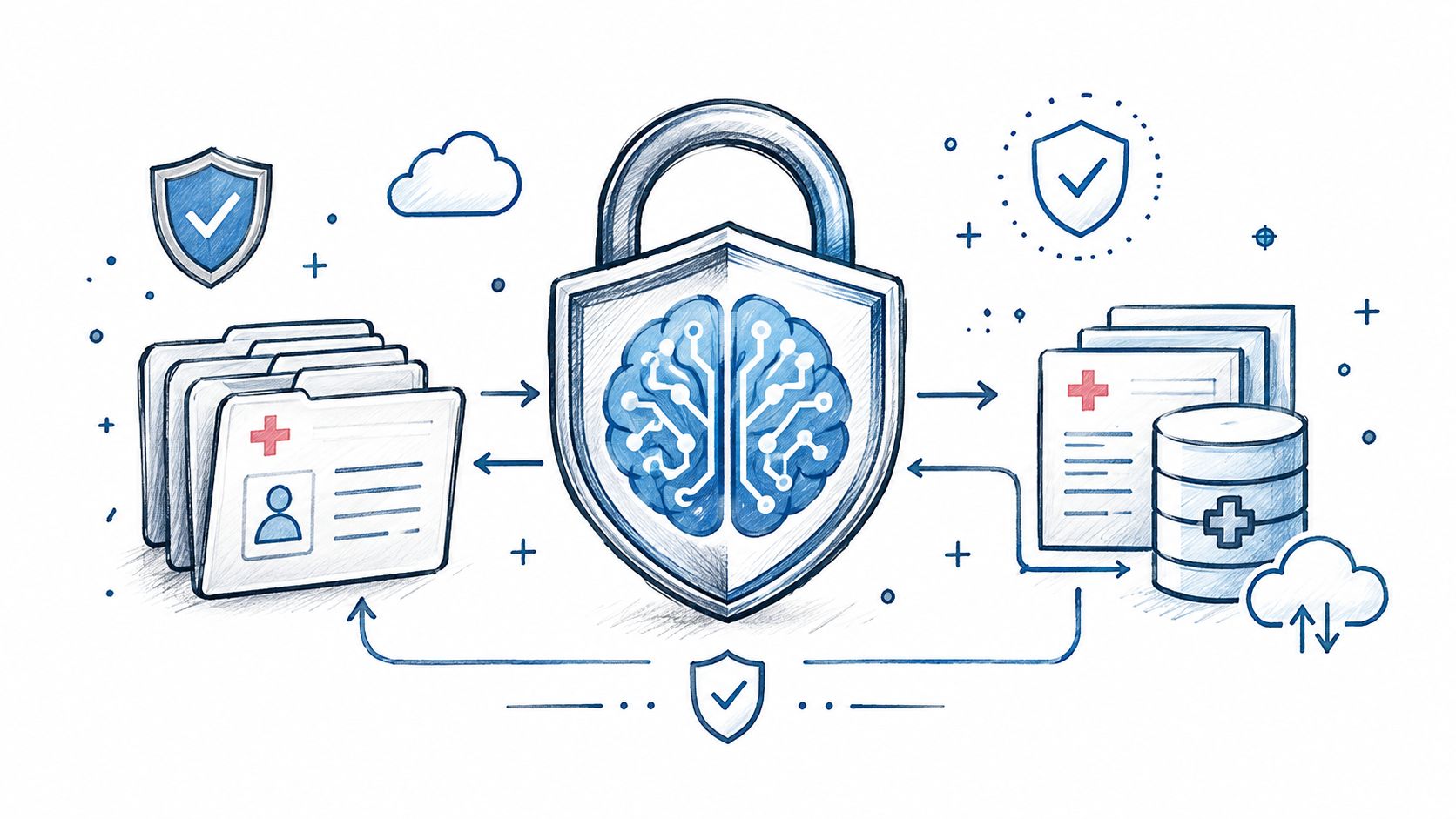
AI in Healthcare
HIPAA-Compliant AI: How to Use LLMs With PHI Safely
How to build HIPAA-compliant AI: when LLM providers need a BAA, data minimization, de-identification, audit controls and a reference architecture.
October 16, 2026Read more
CareOps explained for HealthTech teams. Learn the operating model, core metrics, implementation roadmap, and compliance levers behind modern care delivery.

The product demo looks clean until the clinical lead asks one question the room can't answer: what happens to a nurse, a scheduler, or a patient when this new path goes live at scale? That's where CareOps stops being a slide deck topic and starts being an operating discipline. It's the work of making care flow design visible inside the product, owned by named people, and improved through the same release cadence that ships everything else.
For HealthTech teams, that shift matters because care rarely fails at the level of intent. It fails when triage rules live in one system, the scheduling logic lives in another, and the people responsible for the workflow are spread across clinical, product, engineering, and operations without a shared operating model. CareOps is the discipline that closes that gap in production, not in a quarterly workshop.

A useful way to think about this in a digital health context is to compare the product team's idea of “done” with the care team's reality. A workflow that looks approved in a sprint review can still create queue buildup, extra handoffs, and hidden exceptions once it hits live patient volume. If you want a broader view of how enterprise platforms are being reworked around this kind of operational discipline, the SAP healthcare enterprise evolution 2026 piece is a solid adjacent read.
If you're building in this space, the right question isn't whether the flow is elegant. The question is whether the flow is observable, governable, and durable once clinicians, coordinators, and software all have to act together. For teams serving healthcare buyers, that's exactly why a healthtech engineering partner has to think beyond features and into the machinery of delivery.
A lot of teams still talk about care flows as if they're a workshop artifact. That mindset breaks down the moment the workflow has to survive live patients, shift changes, and edge cases that never made it into the original whiteboard. CareOps treats those flows as part of the product itself, meaning they're designed, versioned, and improved with the same seriousness as any other production system.
In practice, that means the care path isn't “owned” by clinical operations alone or by engineering alone. It's a shared system with explicit roles, clear handoffs, and a feedback loop that reaches back into the software. If a step creates avoidable nurse toil or makes patient routing ambiguous, the team doesn't just document it, they change the flow.
When care flow design lives inside the product, the operating rhythm changes. Product managers stop treating workflow as a one-time specification, and clinical informatics stop acting as the only source of truth for how care should move. The team starts making smaller, safer changes based on what the live flow is doing.
That's the key practical difference. CareOps doesn't ask whether the workflow is clinically sensible in theory. It asks whether the team can run it, observe it, and improve it without losing control of the patient experience.
For teams in healthcare, that shift becomes especially visible in scheduling, triage, escalation, and discharge. Those are the moments where a software decision becomes a staffing decision. They're also where Healthcare AI Services can help only if the underlying care flow is already well defined.
Practical rule: if the workflow can't be explained as a sequence of owned product behaviors, it isn't operationalized yet.
That's why CareOps belongs closer to the runtime of the product than to the planning cycle. It's not a synonym for process improvement. It's the discipline of making the care process shippable, measurable, and maintainable.
The regulatory anchor matters here. U.S. health care operations has long covered quality assessment, care coordination, provider evaluation, training, auditing, compliance, and business planning, which gives the CareOps idea a real administrative backbone rather than a branding exercise (Stat.io). That grounding is important because it keeps the conversation tied to how healthcare organizations are governed.
The suffix also pulls weight from the operating models that changed software delivery in other domains. DevOps, Site Reliability Engineering, and RevOps all earned legitimacy by taking messy work and making it observable, repeatable, and accountable. CareOps borrows that same logic for care delivery.
If you remove the “Ops,” the term becomes easy to flatten into “workflow.” That misses the point. Operations implies ownership, runtime feedback, exceptions, and a controlled response when reality diverges from the plan.
CareOps therefore implies more than mapping a journey. It implies that the journey has a lifecycle, a support model, and change control. It also implies that clinicians, coordinators, product leaders, and engineers need a common language for deciding when the flow changes and who approves it.
That's why the best teams don't use CareOps as a synonym for process documentation. They use it as a way to define how care is run inside software. In the same way that SaMD solutions have to treat regulated functionality as an engineering and governance problem, CareOps treats care delivery as a managed system, not a loose collection of best intentions.
CareOps earns the name only when it moves from description to control.
That control matters most when the workflow is no longer held together by people improvising around gaps. Once the team has to manage exceptions at scale, the “Ops” part becomes the difference between a fragile rollout and a repeatable operating model.
A CareOps program usually breaks when ownership is fuzzy. A flow gets stuck, someone says “the team” will handle it, and no one can say who changes the workflow, who approves the exception, or who watches the impact after launch. Durable CareOps needs a people, process, platform model that turns care flow design into day-to-day operating discipline.
The people layer is about decision rights, not org charts. Clinical teams define what safe and appropriate care looks like. Product management decides how the flow behaves in software and what gets prioritized. Clinical operations owns routing, escalation, and throughput in practice. Engineering carries the instrumentation, integrations, and interface changes that make the flow executable.
That split matters because each group sees a different failure mode. Clinicians spot unsafe friction. Product teams see where the experience breaks. Operations sees where staff workarounds hide. Engineers see what can be built and monitored. CareOps becomes real when those views are forced into one design loop instead of passed around as feedback.
The process layer connects that ownership to actual care movement. Intake, triage, routing, escalation, and discharge all need defined handoffs, but the harder part is governance. Teams need a cadence for approving changes, handling exceptions, and deciding when a flow is no longer fit for use. Without that discipline, the process stays theoretical and the same work keeps leaking into manual coordination.
The platform layer makes the operating model repeatable. Workflow engines, identity controls, integration surfaces, and telemetry give the team a place to run the flow and see where it fails. Most programs get stuck here because tooling is fragmented. One system holds the care logic, another holds the audit trail, and a third holds the operational metrics. If those pieces do not line up, the team cannot manage the workflow as a single system.
A useful way to pressure-test the model is simple:
That is why AI strategy consulting only helps when it sits inside an operating model. AI tools can surface patterns and suggest next steps, but they do not fix weak governance or inconsistent handoffs on their own. CareOps only holds when the people, process, and platform layers are designed to work together.

A care flow breaks down fast when the data layer is patched together. EHR connectivity alone does not make the workflow better if the team still has to bounce between systems, copy context by hand, and guess which record is current. Interoperability changes the shape of the flow itself, because once data moves cleanly, scheduling, routing, and discharge can be designed around that movement instead of around manual workarounds.
The evidence is mixed in a useful way. A 2022 systematic review found effects across patient safety, medication safety, data accuracy, workflow productivity, and cost savings, but it also showed that some workflow outcomes were inconsistent and task completion time could worsen in at least one study after interoperability was added. That is the lesson. Integration does not create efficiency on its own. It has to be paired with workflow redesign.
AI follows the same rule. A 2023 INFORMS tutorial argues that embedding AI into healthcare workflow changes scheduling, routing, allocation, and discharge planning, while also raising questions about productivity gains and access disparities. So the operational question is not whether the model can predict. It is what happens to the care state when the model acts.
A practical data foundation treats care state as event-sourced, not as a static chart copy. That makes auditability, rollback, and traceability easier when steps change. It also gives the team a clear boundary for what AI can read, suggest, or write, without letting the model take control of clinical decisions.
The architecture has to be designed with the workflow, not bolted on later. A published interoperability framework PDF describes a five-layer stack, data ingestion, AI processing, integration orchestration, security and compliance, and API management, with controls such as access auditing, AES-256, TLS 1.3, MFA, RBAC/ABAC, and HL7 FHIR-compatible REST endpoints. That kind of structure keeps automation visible enough to govern.
For delivery teams, the test is whether the build includes the full AI delivery workflow from the start. The flow needs to show where data enters, where AI touches it, and where humans can see and override the decision. If those points are unclear, the automation may still run, but it will not be something the team can trust inside care operations.
If you can't audit the handoff, you can't trust the automation.
The most telling CareOps gap is organizational. The 2024 data shows 83% of organizations said they use care flows, but only 36% had all four core roles involved in care flow design, and only 7% used dedicated design tools while 86% still relied on external tools to access care flows. That looks like adoption, but it functions like fragmentation.
Operating discipline is what separates a flow that gets discussed from one that holds up in production. Teams can move faster on slides and still miss the in-product controls that make the process repeatable. A care flow in a spreadsheet is easy to edit and hard to govern. A care flow inside the product is harder to build, but it is the version that survives audits, handoffs, and growth.
Quarterly workshops create alignment theater. They do not produce durable ownership maps, telemetry loops, or exception handling. The work that changes outcomes is less visible, shared runbooks, change approval logic, and clear visibility into where the flow breaks under pressure.
The tooling gap matters too. When care flow design lives in one system, execution in another, and reviews in email or meeting notes, nobody has a single source of truth for what changed, who approved it, or which exceptions were handled. A useful adjacent example of operational workflow thinking is the see how BoloSign boosts workflows article, because the issue is similar, making a process visible enough to manage without turning it into admin theater.
That is the part most content skips. CareOps does not become real because people agree on it in a meeting. It becomes durable when the product enforces the flow, measures the handoffs, and shows who owns the next exception.
The first two weeks are about truth, not transformation. Audit the current care flows, then map clinical intent to what the software does in production. Identify where staff are improvising, where patients are waiting, and where the product adds handoffs nobody designed.
Weeks three through six are for naming ownership and setting control. Assign clear accountability for baseline metrics, change approval, and exception review, then write down the path a flow change must follow before it reaches production. If the team cannot say who signs off on a change or who handles an exception, the rollout is not ready for scale.
Weeks seven through ten should focus on integration work. Wire the critical checkpoints, including FHIR endpoints, EEHRxF readiness where applicable, and audit logging for every care-state transition. The European Commission's EEHRxF work matters because it sets a concrete interoperability direction for the EU, with harmonized components and staged requirements beginning in 2029 for interoperability obligations (European Commission summary).
That governance work needs to sit inside delivery, not after it. HIPAA, GDPR, and emerging EU Health Data Space obligations shape what gets logged, who can access it, and how long the team can wait before making a decision. If those rules stay outside the build plan, the pilot turns into a redesign exercise.
Weeks eleven through thirteen should be a controlled pilot with evidence capture. Run one care flow, keep the scope tight, and record what changed in the product, what changed in staff behavior, and what changed in the audit trail. Once the pilot shows the path is safe and observable, formalize the governance cadence so the next iteration does not depend on heroics.
If you need help turning that plan into delivery work, our implementation support for care flow delivery fits directly into this operating model. If you're asking for help turning that plan into delivery work, AI Automation as a Service works when it sits inside this kind of operating discipline.
A clinically led virtual care team usually starts with one painful workflow, triage to routing. The care flow architect cleans up the handoff logic, product reduces tab-switching by moving the right data into the right surface, and clinical operations watches whether the new path reduces chaos for nurses and coordinators. The gain comes from making the flow less fragile, not from pretending the team has eliminated complexity.
An AI-enabled hospital-at-home team starts differently. The AI policy lead sits in product review, the scheduling module gets guardrails before launch, and the discharge path has clear human override points. The work is less about elegance and more about preventing automation from making decisions too early or too abruptly.
The shared backbone is what matters most. Both teams need named roles, a governance cadence, and telemetry that tells them when the flow is drifting. The shape of the team changes, but the operating discipline doesn't.
CareOps Case Comparison: Clinical-Led vs. AI-Enabled
| Dimension | Case A: Clinical-Led Redesign | Case B: AI-Enabled Operations |
|---|---|---|
| Starting point | Triage and routing are noisy and manual | Scheduling and discharge need controlled automation |
| Primary owner | Clinical informatics and care operations | Product, AI policy, and engineering |
| Main change | Cleaner handoffs and fewer clinician workarounds | Guardrailed AI in live workflow steps |
| Core control | Shared flow specification | Human override and audit visibility |
| Success signal | Fewer broken transfers between steps | Safer automated decisions with clear fallback paths |
If your team is mapping this to custom healthcare software development, the point isn't to add more screens. It's to build a flow that staff can trust when volume rises. For teams that need execution support, a regulatory compliance partner may also matter when the flow crosses privacy or quality boundaries.
The minimum telemetry set is straightforward. Track time-to-care, clinician cognitive load index, escalation and fallback rate, integration uptime, and audit-log coverage. Those are the weekly numbers that tell you whether the care flow is working or just appearing to work.
A good rule is to separate leading signals from lagging outcomes. Handoff latency and policy-violation fires tell you about risk now. Adherence, readmission, and patient satisfaction tell you what happened after the system had time to run. If you only watch lagging metrics, you'll miss the failure while it's still fixable.
A related view from operations comes from billing, where teams often track throughput and exception handling closely. The key medical billing metrics to track piece is useful because it reinforces the same lesson, operational discipline only works when the team instruments the work it does.
Is this just DevOps with a stethoscope?
No. DevOps optimizes software delivery. CareOps optimizes a regulated care pathway that includes clinical judgment, staffing reality, privacy controls, and patient impact.
Do we need a CareOps team before product-market fit?
Not necessarily. You do need explicit ownership for the first care flow that's in production, even if the team is small. The operating model can stay lightweight until the workflow starts carrying real volume.
How is this different from population health or care management?
Population health focuses on cohorts. Care management focuses on patient support. CareOps focuses on how the care flow itself is designed, shipped, observed, and changed inside the product.
If you're choosing where to start, pick one flow that hurts today, name the four roles, and ship one instrumented handoff in the next sprint. That's the first real proof that CareOps exists in your organization.
If you want help turning one messy care flow into a governed product workflow, Ekipa AI works with healthcare teams on workflow mapping, integrations, automation, and delivery support across regulated systems. Visit Ekipa AI to see how the team approaches care operations, then connect with our expert team to discuss the flow you want to stabilize next.
How to build HIPAA-compliant AI: when LLM providers need a BAA, data minimization, de-identification, audit controls and a reference architecture.
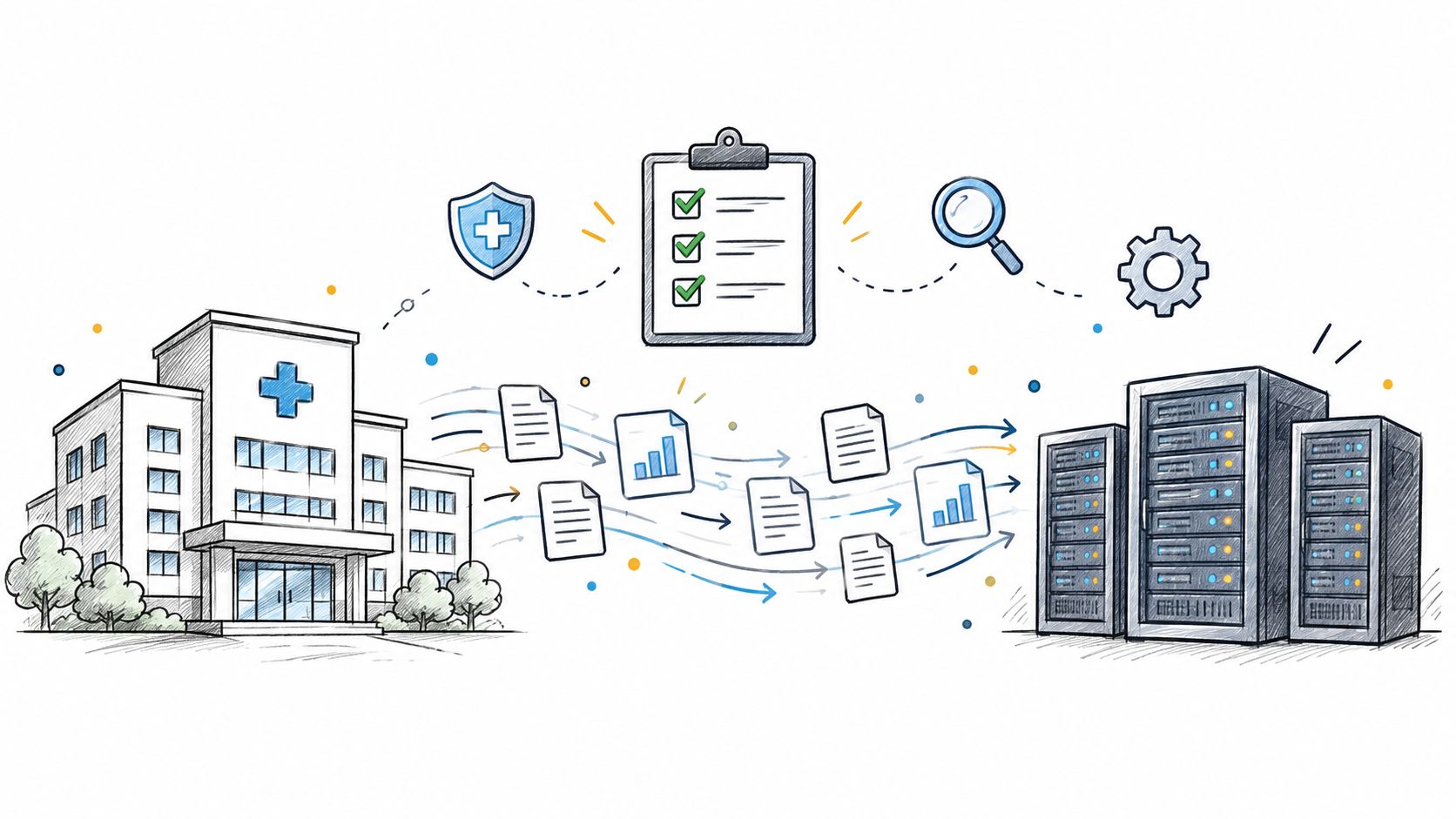
Practical data migration planning guide for healthcare teams. Scope, mapping, compliance, validation, cutover and rollback decisions explained end to end.
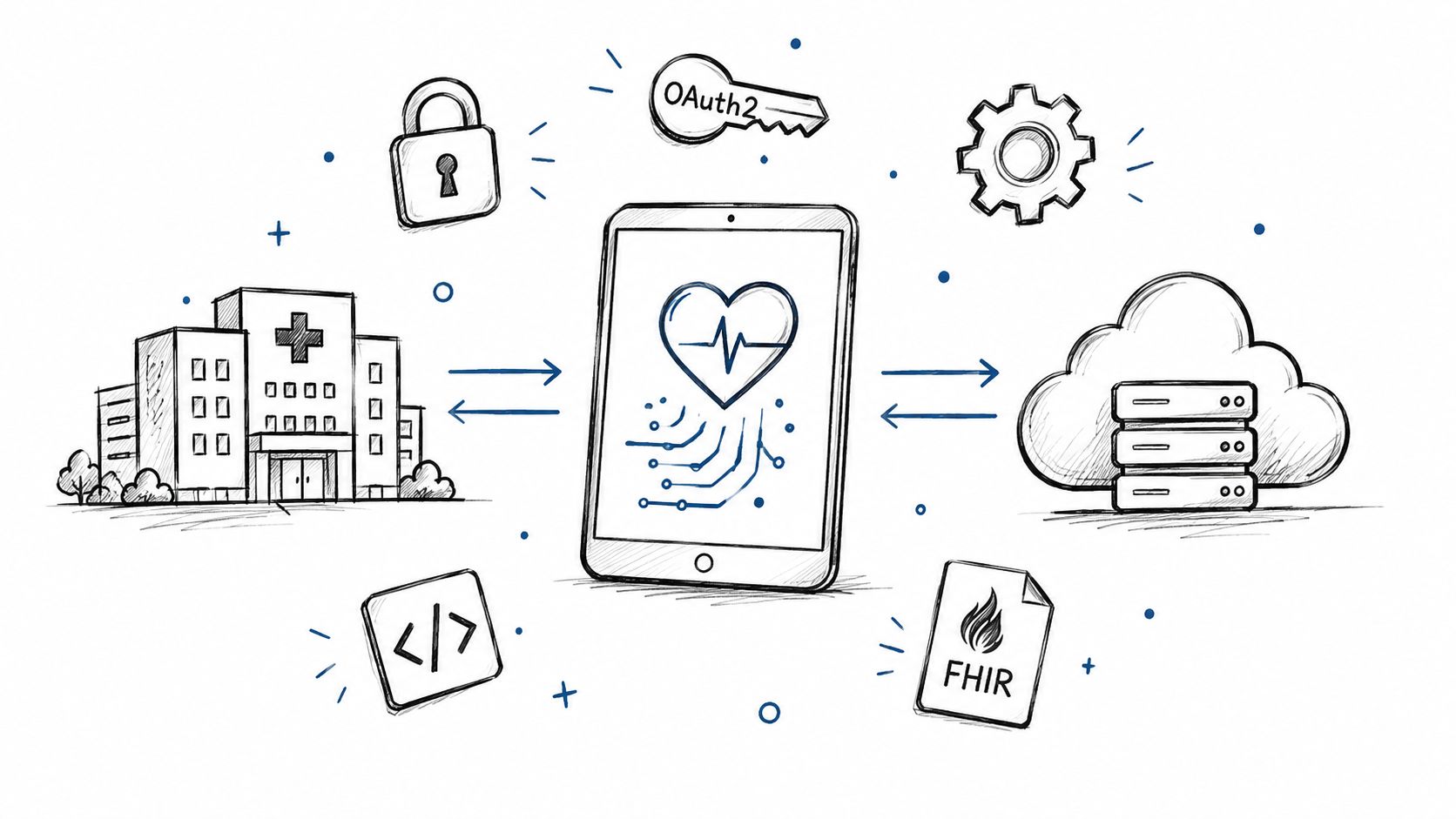
Smart on FHIR guide for healthtech engineers. Learn the OAuth 2.0 launch model, scope syntax, backend services, and US regulatory requirements.
Connect with our team to explore how AI expertise can transform your business.