
AI in Healthcare
HIPAA-Compliant AI: How to Use LLMs With PHI Safely
How to build HIPAA-compliant AI: when LLM providers need a BAA, data minimization, de-identification, audit controls and a reference architecture.
October 16, 2026Read more
Successful healthcare AI depends on seamless integration with existing clinical workflows. Learn how to design AI systems that support clinicians without disrupting patient care.
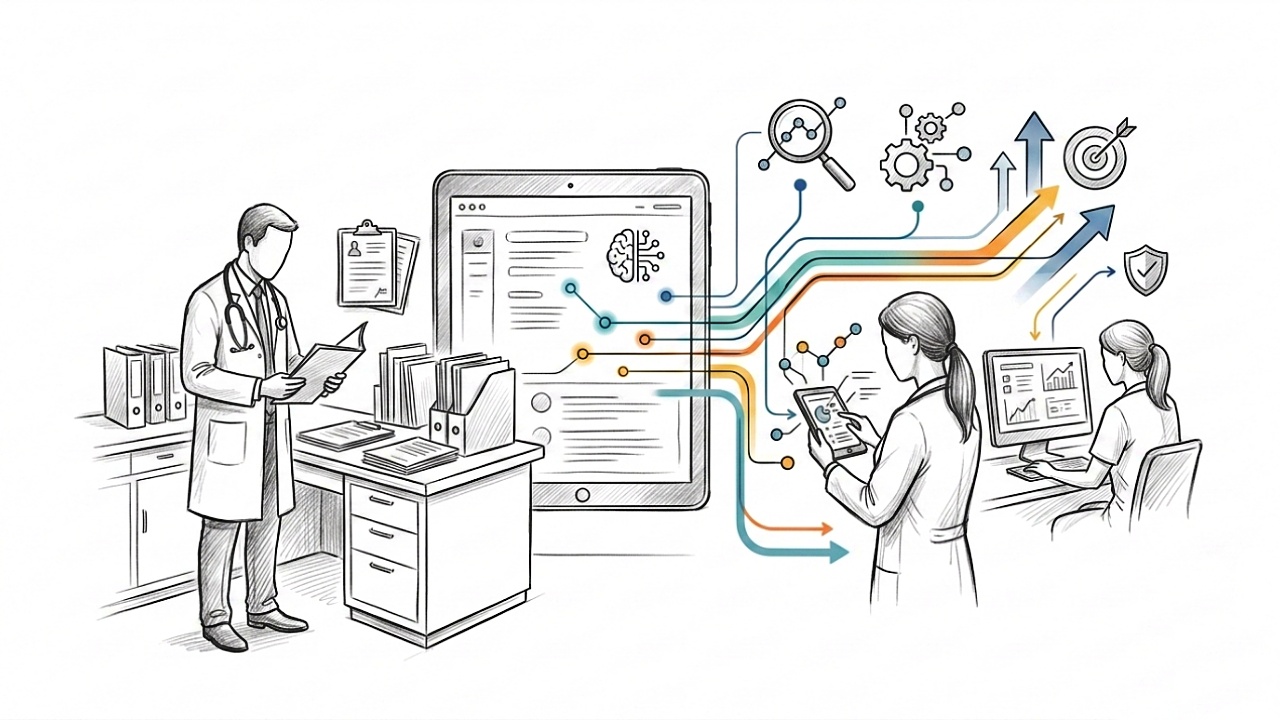
Clinical spaces have a familiar pace and a trusted routine. Medical professionals follow steps they have mastered, solidified over many years of practice and patient care. Introducing artificial intelligence into this setting asks for a gentle approach. The goal is to fit in without disruption. When design is thoughtful, AI can become a natural part of the background, supporting the team rather than demanding their attention. This blog explains how AI can align with the existing flow of clinical work. It requires careful planning, practical design, and a clear focus on keeping patient care at the center.
Clinical workflows are the step-by-step paths that guide how care is delivered, notes are taken, and decisions are made. These paths involve tools such as health records, lab machines, team communication, and the rules that must be followed. To design for this space, you must first see a clear picture of their day, how information moves between people, and where tasks slow down or accumulate. Organizations that provide AI healthcare services can offer a valuable perspective and support during this important analysis.
True AI clinical workflow integration starts with carefully charting these daily patterns. The aim is to place AI alongside the current steps, rather than reshaping routines around new technology. A system built with this priority lowers resistance and encourages a natural, gradual adoption among the clinical teams.
Interfaces should stay clear and predictable. Clinicians work under time pressure and have no capacity for complicated screens or additional clicks. AI outputs benefit from a clear presentation and a logical place within familiar systems such as digital health records. Thoughtful planning can help design workflows that integrate AI smoothly into these everyday systems.
Clinical decisions are based on the situation. AI systems must recognize patient background, the phase of care, and the role of the clinician. Lacking this awareness, results could turn into a distraction instead of useful guidance.
Trust forms when clinicians follow the AI's reasoning. Simple explanations build confidence and promote steady use, avoiding situations of dependence or misunderstanding.
The quality of the information directly shapes how well artificial intelligence works in a clinical environment. This information often originates from varied sources and presents itself in varied forms. Building systems that can handle both organized and free-form data reduces the need for manual fixing and review.
Organizations that provide healthcare AI services often focus first on standardizing data and ensuring different systems are compatible. This work guarantees the AI's actions align with the standards used for clinical documentation and necessary reports.
AI design should follow the same logic that clinicians use. Systems designed to show risk scores, recognize patterns, or analyze trends must support clinical judgment, not challenge it. A thoughtful approach to AI Solutions stresses support over automation. This method keeps the final say in human hands, while offering insights at the precise point in the work process where they matter most.
Clinical AI projects require clear goals linked to patient outcomes and operational clarity. AI strategy consulting can bridge the gap between technical design and the real-world priorities of patient care, all while meeting regulatory standards.
Projects that grow without limits can create uncertainty. To maintain stability, it is important to establish clear responsibility for the system, manage updates carefully, and set a consistent process for review and approval across all teams involved.
Clinical teams often find the most success starting with a specific focus. Rather than a wide rollout, a common beginning is with targeted AI use cases. Examples include scan analysis, patient prioritization, or clinical note generation. Each specific case offers a clear view of how the tool fits into the daily routine and how the staff responds to it. This step-by-step method provides space for careful improvement and preserves the daily work routine.

Clinical platforms depend on stable connections. AI systems must connect with the existing setup without causing delays or creating duplicate tasks. Choosing a skilled AI implementation partner promotes system compatibility, delivers consistent data flow, and upholds reliability during deployment.
Clinical workflows rely on systems that behave predictably. Interruptions or slowdowns break the flow of patient care. Testing how a system performs in actual clinical situations is a fundamental part of the design process.
Clear written plans support a consistent process. A custom AI strategy report offers a structured outline of goals, design choices, risk factors, and how success will be measured. This document serves as a shared guide for both technical and clinical teams to follow.
Understanding an organization's current position shapes realistic planning. An AI maturity model provides a framework for assessing governance, data practices, technical skills, and clinical engagement.
An AI readiness assessment examines operational capacity, cultural fit, and compliance status. This review identifies areas that need focus before any system goes live.
A successful launch is just the beginning. An AI adoption roadmap outlines phased expansion, ongoing training, regular performance checks, and future system updates.
Clinical practice is not static; it changes and grows. Regular reviews assess if AI systems stay aligned with current guidelines, new sources of information, and evolving priorities in patient care. AI clinical workflow integration is an ongoing process, not a single project. This dedication to continuous refinement sustains the technology's relevance and preserves trust for the clinical teams that use it.
Managing change builds acceptance. Open communication, organized training, and clear feedback channels build confidence. Training focuses on practical use rather than technical detail, supporting smooth transition into everyday tasks. Active leadership shows a shared purpose between the organization's aims and the needs of patient care.
Clinical AI systems function under strict rules. Privacy, data safety, and the ability to be audited are always important. Design choices must meet these rules without creating extra work. Ethical review steps guide responsible use and strengthen patient trust at every stage.
Designing AI systems for clinical workflow demands discipline, clarity, and a deep respect for clinical practice. Success is not found in technology alone, but in thoughtful design, a step-by-step approach, and a commitment to staying aligned with real-world practice. When AI finds its place within established routines, it offers support, not interruption. This simple principle shows the value of AI clinical workflow integration across care settings.
For organizations planning this journey, careful preparation is the foundation for lasting value and meaningful adoption. A strategic partner can provide guidance through each step, from the first review to full, lasting integration. Contact us to start building the future of care.
AI clinical workflow integration ensures AI Solutions fit naturally into existing care routines without disrupting clinical decision-making or patient flow.
Understanding daily processes helps align AI use cases with real clinical needs, improving adoption and reducing resistance.
Healthcare AI services standardize data, ensure interoperability, and prepare systems for reliable AI clinical workflow integration.
An AI readiness assessment and AI maturity model evaluate governance, skills, and infrastructure before following an AI adoption roadmap.
AI strategy consulting defines direction through a custom AI strategy report, while an AI implementation partner ensures secure, scalable integration with clinical systems.
How to build HIPAA-compliant AI: when LLM providers need a BAA, data minimization, de-identification, audit controls and a reference architecture.

Practical data migration planning guide for healthcare teams. Scope, mapping, compliance, validation, cutover and rollback decisions explained end to end.

Smart on FHIR guide for healthtech engineers. Learn the OAuth 2.0 launch model, scope syntax, backend services, and US regulatory requirements.
Connect with our team to explore how AI expertise can transform your business.