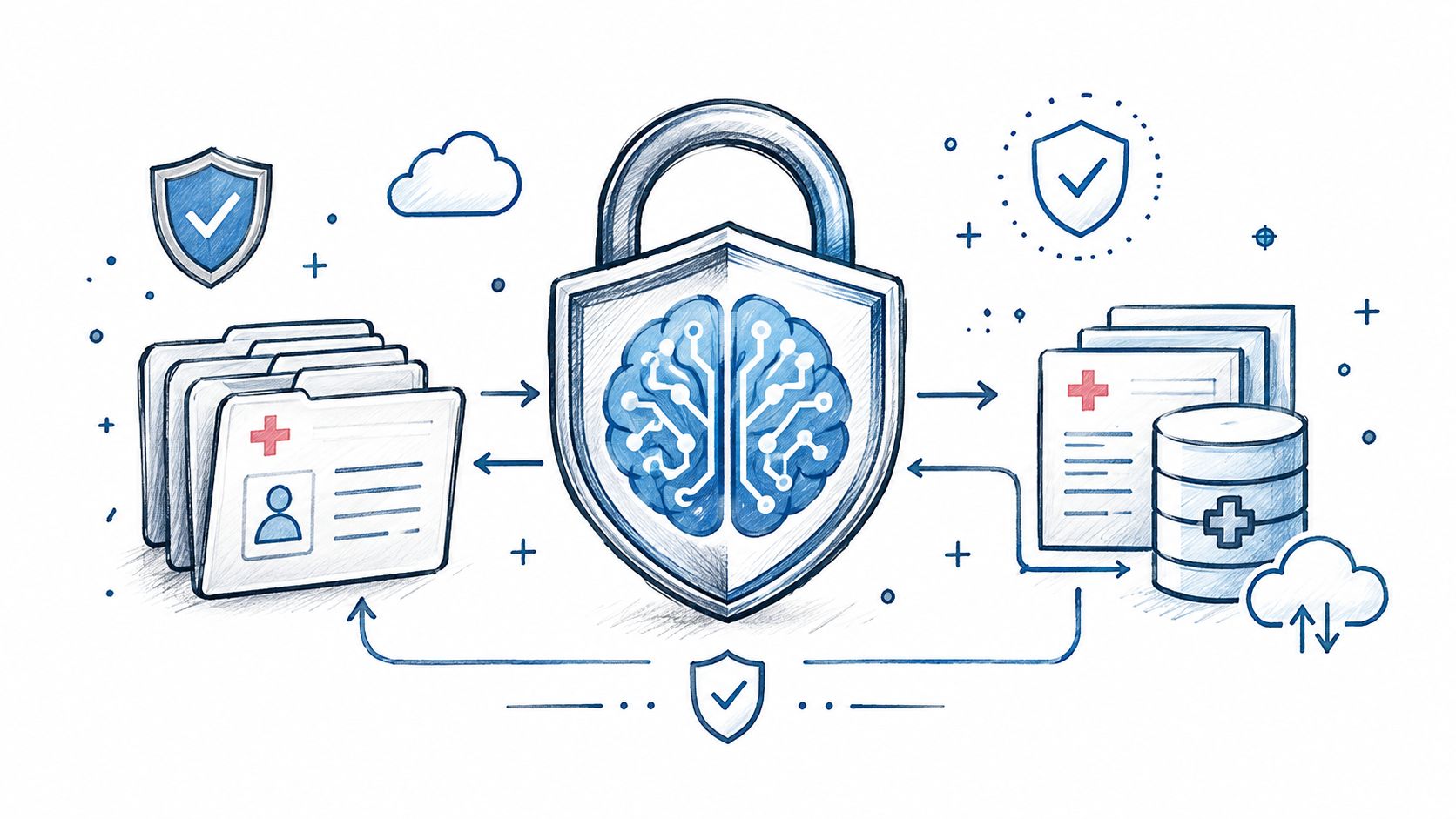
AI in Healthcare
HIPAA-Compliant AI: How to Use LLMs With PHI Safely
How to build HIPAA-compliant AI: when LLM providers need a BAA, data minimization, de-identification, audit controls and a reference architecture.
October 16, 2026Read more
A clear guide to digital patient monitoring, covering technologies, ROI, and a practical build roadmap for healthcare leaders.

Digital patient monitoring is no longer a pilot. Medicare RPM spending exceeded $536 million in 2024, and the global market is projected to reach $66.33 billion by 2031, so leaders should treat it as core care delivery infrastructure, not a side experiment.
The right question is no longer whether to try it. It's what to build, what to buy, what to integrate, and who owns the workflow after the devices ship.
Digital patient monitoring is the continuous, technology-enabled observation of physiological, behavioral, and self-reported patient data across care settings. That umbrella includes remote patient monitoring (RPM), remote therapeutic monitoring (RTM), wearables, ambient sensors, and AI-driven analytics, but each category drives different operating choices. Blur them together, and procurement, reimbursement, and clinical governance get messy fast.
RPM is the most familiar slice of the category. CMS says Medicare coverage requires a device that meets the FDA definition of a medical device, digitally uploads data, and collects and transmits health data at least 2 days every 30 days (CMS remote patient monitoring policy). RTM works differently because it tracks non-physiologic therapy adherence and functional status, so you cannot plug it into the same workflow and expect billing or care review to line up.
A monitoring program succeeds when data changes decisions fast enough to affect care. Device accuracy matters, but workflow determines whether the signal reaches the right clinician, gets reviewed, and turns into action. A perfect sensor that drops into a messy inbox is still a failed program.
The scale shift is already visible in reimbursement behavior. Medicare spending on RPM rose from about $15 million in 2019 to $311 million in 2022 and then exceeded $536 million in 2024, while enrollees receiving RPM increased from about 55,000 in 2019 to 570,000 in 2022 and then to roughly 970,000 by 2024 (RPM statistics summary). A peer-reviewed US study also found 13,529,594 remote-monitoring services between 2019 and 2023, representing $664,518,754 in spending. That is an operations budget line, not a side project.
Digital patient monitoring belongs inside Healthcare AI Services because the hard problems are clinical operations, not gadgets. Build the workflow first, then choose the device stack to fit it.
The stack matters because each layer either moves a patient signal into action or leaves it stranded. If one layer fails, the program loses value through late alerts, bad patient matching, or clinician distrust.
Start with the device and sensor layer. Firmware, calibration, battery life, and real-world durability all matter. The common failure is fragmentation, where a device that looks good in a demo behaves differently once a patient uses it at home, around noise, movement, and routine interruptions.
Next is connectivity. Bluetooth Low Energy, cellular, and LoRaWAN solve different field problems, and the wrong choice shows up quickly as missing readings and support calls that never stop. Rural and low-bandwidth settings usually need the least fragile option, not the prettiest dashboard.
Practical rule: if the device cannot connect reliably in the patient's home, nothing above it matters.
Then comes ingestion and normalization. HL7 v2, FHIR, and vendor APIs either produce a usable data model or a pile of inconsistent fields. Identity reconciliation is where many programs break. If patient identifiers do not line up with MRNs and encounter records, clinicians stop trusting the feed.
The fourth layer is analytics and AI. Threshold rules, anomaly detection, and risk stratification only help if they cut noise. Otherwise, alert overload turns monitoring into administrative clutter. Use AI tools for business only where the workflow can absorb the output and route it to the right person.
The fifth layer is the clinician UX layer. Dashboards, queues, and EHR surface integration have to fit how nurses and physicians already work. Poor triage UX is an operations failure, not a design flaw. If a care manager has to open three tabs and retype the same note, adoption drops fast.
A vendor review should be layered too. Ask what happens if you swap the device, replace the ingestion engine, or change the risk model. If the answer is “everything breaks,” you do not have an architecture. You have a dependency chain.
The biggest mistake leaders make is buying the platform before they redesign the work. Digital patient monitoring changes who sees data, when they see it, and who is accountable when the data crosses a threshold.
The operational sequence should be explicit. First comes enrollment and device onboarding. Then the patient generates daily data, the system scores risk automatically, and a review queue routes items to the right role. Care managers or RNs should handle first-pass triage, advanced practice providers should handle mid-tier escalation, and physicians should only be pulled in for clinical exceptions.
That structure only works if escalation rules are written before launch. Alert thresholds, on-call coverage, and documentation standards need co-design from clinical leadership, operations, and IT. Otherwise, the system sends too many weak signals and the team stops respecting the queue.
If every alert demands a physician, the program is already too expensive.
Closed-loop documentation matters too. A reading should trigger an action, the action should be recorded, and the patient should get a clear follow-up. That feedback loop is where monitoring becomes care delivery instead of passive data collection.
Recent literature notes that RPM increases patient messaging and requires updated workflow for asynchronous nonvisit care, while other reviews point to data overload, ambiguous clinical responsibility, and poor workflow integration as recurring barriers (workflow and implementation review). That is why programs stall. The devices keep working, but the organization doesn't.
Poor triage UX is a production gap that breaks adoption. If a care manager has to open three tabs and retype the same note, the queue slows down and the team starts bypassing the process.
Treat internal tooling as part of the product, because the triage queue, escalation notes, and audit trail are part of the service. If you do not own those mechanics, you do not really own the monitoring program.
EHR integration should be decided as an operations problem, not a feature checklist. The right path depends on how much clinical work you want to pull into the EHR, how fast you need to launch, and how much vendor dependence you can tolerate.
A native FHIR API with SMART on FHIR context is the cleanest fit when the EHR and the monitoring vendor already use the same data model. Choose it when clinicians need fast access inside their existing workflow and you want to avoid a heavy integration layer.
An EHR vendor-certified app marketplace listing works for smaller organizations with one dominant EHR instance. A health system running a single Epic environment can usually move quickly through this path when the use case is narrow and the workflow is simple.
A custom HL7v2-to-FHIR bridge fits multi-site systems with mixed EHRs and several device vendors. It costs more engineering time, but it gives you a canonical data model and reduces dependence on one vendor's workflow decisions.
FHIR scope mismatch is a common failure point when the vendor app and the EHR version do not line up. Identity reconciliation breaks too, especially when device identifiers and patient MRNs do not map cleanly. Bidirectional write-back is the hardest part, because care plans and alerts must land where clinicians already work, not in a separate inbox.
A small hospital with one Epic instance can usually live with the marketplace path. A multi-site IDN with Epic, Cerner, and athenahealth needs an integration engine, a canonical device data model, and DevOps support. If the answer is "everything breaks," the system is a dependency chain, not an architecture.
That is the point where AI Product Development Workflow becomes an operating decision, not a marketing phrase.
If the goal is fast deployment, use the native path. If the goal is platform control over time, build the bridge. Those are different bets, and leadership should budget for the one it wants.
Reimbursement rules are becoming more operational, not less. CMS finalized 2026 billing changes that lower the remote physiologic monitoring and remote therapeutic monitoring thresholds so payment can apply when data is collected for 2 to 15 days in a 30-day period, instead of the older 16-day minimum, and treatment management can be billed at 10 minutes in a calendar month instead of the older 20-minute minimum (2026 CMS billing changes). Your product has to capture timing precisely, not just readings.

A 2026 CMS proposal would tighten the operating model by requiring remote monitoring services to be furnished only by clinical staff who are direct employees of the billing practitioner or practice, starting January 1, 2027, if finalized, and it would also require a separately reportable initiating visit for RPM and RTM episodes (CMS proposal summary). That changes staffing design and onboarding flow now, not later.
Build your workflow around that constraint. If your service model depends on contractors, outsource-heavy monitoring, or a loose intake process, you are setting yourself up for billing friction.
FDA expectations matter on the product side. The agency's non-invasive remote monitoring enforcement policy shows that product design and regulatory classification shape how these systems are treated, and Medicare policy reinforces that the device must meet FDA's medical-device definition (FDA enforcement policy). If the telemetry layer is not compliant, reimbursement will not rescue the program.
Treat HIPAA, HITRUST CSF v11, and SOC 2 Type II as baseline, then design for the places they usually fail. The common breakpoints are unencrypted telemetry in transit, shared service accounts, and missing BAA coverage for analytics subcontractors. Use per-patient device key rotation, network segmentation for ingest endpoints, and immutable audit logs.
For teams evaluating SaMD solutions, start with the billing rule, the data flow, and the audit trail in that order. That is the checklist a CTO can hand to legal without turning the review into guesswork.
The ROI case for digital patient monitoring should rest on three levers. First is direct reimbursement under CPT 99457, 99458, 99091, and the newer 2026 billing structure. Second is lower clinician touchpoint cost from better triage of stable patients. Third is avoided downstream spend from readmissions, ED visits, and SNF days.
Cardiology and heart failure usually make the strongest business case because the workflow and outcomes are obvious. A monitored HF cohort can pay back faster when the program catches decompensation early and pushes action into the outpatient setting. In many organizations, that's where break-even comes first.
Hypertension is different. It often looks attractive on paper, but low acuity, weak engagement, and thin reimbursement coverage can make the economics fail. If the program is really a wellness add-on, the cost stack wins and the ROI disappears.
The cost stack is straightforward. You pay for device CAPEX or subscription, connectivity, platform licensing, FTE monitoring time, and integration maintenance. If the workflow still depends on manual review of low-value data, staffing burns the margin.
Decision rule: monitoring pays when reimbursement eligibility is clear, acuity is high enough to change outcomes, and clinical leadership owns the workflow.
A useful worksheet is simple. List the cohort, expected enrollment, billable time captured, device cost, monthly monitoring labor, integration cost, and downstream utilization you can plausibly avoid. If you can't defend each line item, you don't have an ROI model, you have optimism.
Start small, but don't start vague. Every phase needs a hard gate, or the pilot becomes a permanent side project.

Weeks 1 to 4: pick one clinical use case with a measurable endpoint, such as 30-day CHF readmissions, and assign one executive sponsor. Keep the scope narrow enough that everyone can name the patients, the workflow, and the success metric.
Weeks 5 to 10: run a 25-patient pilot with off-the-shelf devices, HL7 FHIR ingestion, and one clinical champion. The point is workflow fit, not feature depth. If the nurses hate the queue, stop early.
Weeks 11 to 18: integrate alerting into the EHR, codify escalation protocols, and measure adherence, not just vitals capture. custom healthcare software development often becomes relevant if the vendor can't support your clinical handoff.
Months 5 to 9: expand to 3 to 5 conditions and 500+ patients, harden uptime, and renegotiate device contracts. The platform should be stable enough that operational noise doesn't drown out clinical signal.
Year 1 and beyond: scale to enterprise populations, layer in AI analytics, and own the roadmap internally. If you still depend on a vendor to define your monitoring logic at this stage, you're renting your strategy.
A good outside reference for mobile app implementation discipline is the Technioz mobile app guide, especially if your patient-facing layer still needs product work. Use it as a process reference, not a substitute for clinical design.
Buy the platform when the use case is standard, the pilot must start fast, and the monitoring load stays modest. That fits straightforward RPM programs where the vendor's workflow already matches your clinical model and you do not need heavy customization.
Build when monitoring is part of the product, when your claims depend on proprietary data, or when per-patient fees will break the economics as volume climbs. It also makes sense when you need control over triage logic, data models, and EHR extensions that off-the-shelf tools will not prioritize.
Partner when you need FHIR-native architecture, custom analytics, or an EHR workflow that fits your actual operations better than a vendor roadmap. A healthtech engineering partner can help shape the architecture and integration plan, while compliance support should come from a regulatory compliance partner before procurement, not after. Use a Custom AI Strategy report only if you need to decide whether AI belongs in the program at all.
Before you commit, do three things. Audit your billing codes and device mix, map one workflow end to end on paper, and schedule an architecture review before signing any platform contract.
If routing, triage, or documentation is overwhelming the team, AI Automation as a Service can help on the operations side. It only works after the clinical workflow is defined. The right stack is the one your staff can run on a Tuesday afternoon without improvising.
How to build HIPAA-compliant AI: when LLM providers need a BAA, data minimization, de-identification, audit controls and a reference architecture.
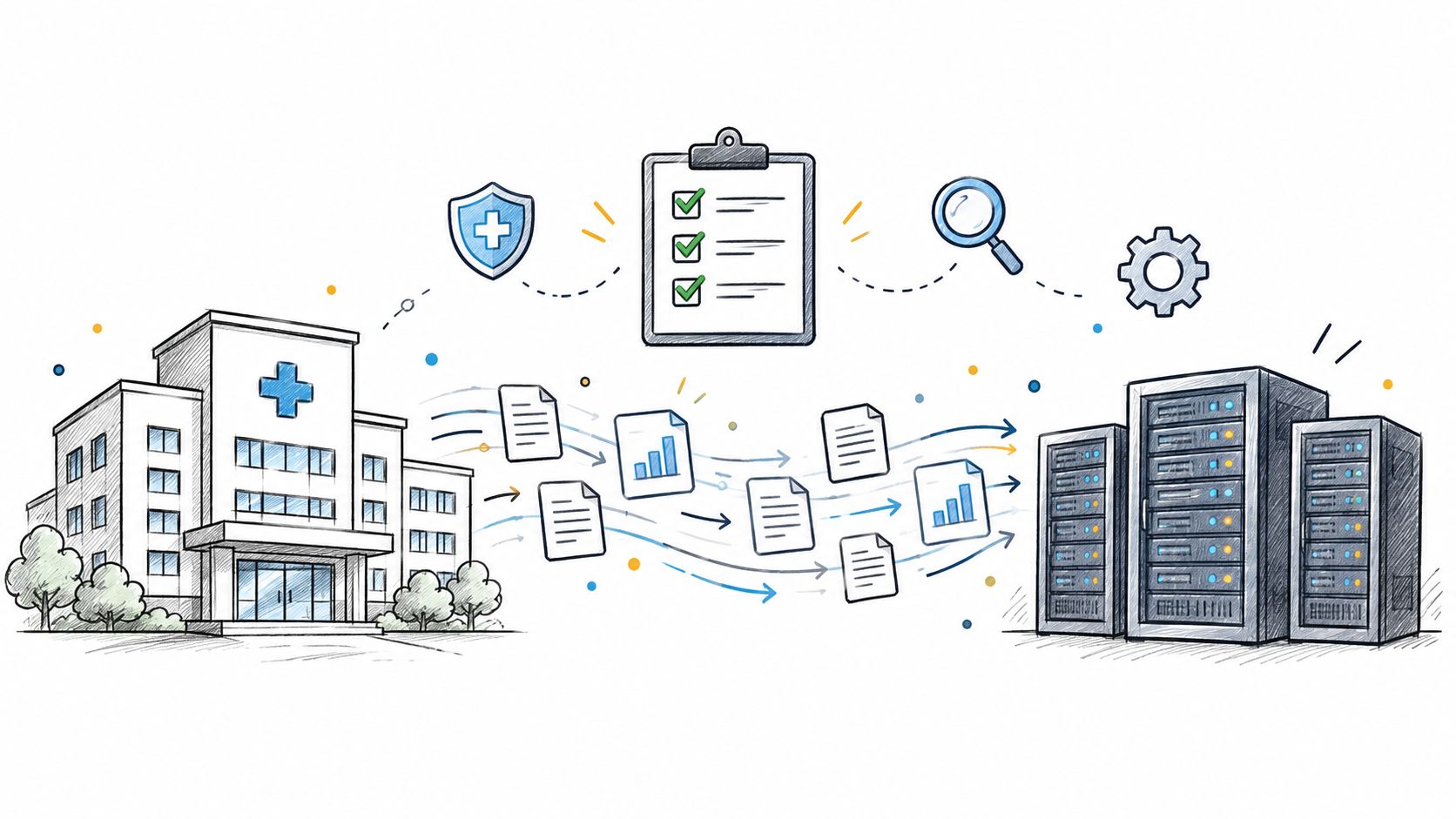
Practical data migration planning guide for healthcare teams. Scope, mapping, compliance, validation, cutover and rollback decisions explained end to end.
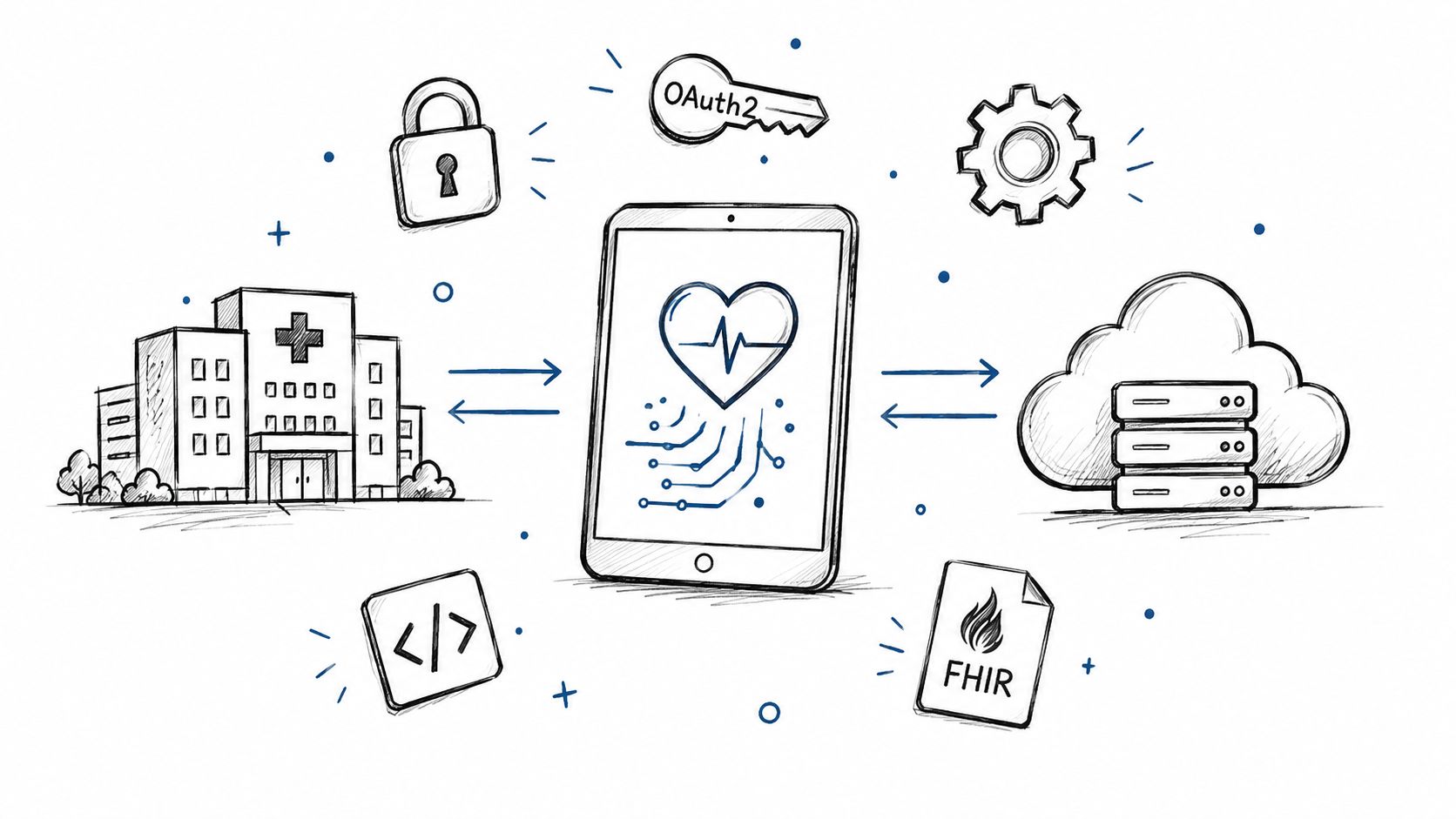
Smart on FHIR guide for healthtech engineers. Learn the OAuth 2.0 launch model, scope syntax, backend services, and US regulatory requirements.
Connect with our team to explore how AI expertise can transform your business.