AI in Healthcare
HIPAA-Compliant AI: How to Use LLMs With PHI Safely
How to build HIPAA-compliant AI: when LLM providers need a BAA, data minimization, de-identification, audit controls and a reference architecture.
October 16, 2026Read more
Build a successful enterprise AI roadmap for healthcare systems with our expert guide on strategy, governance, implementation, and measuring real-world impact.

An enterprise AI roadmap is much more than a technical document. It’s a strategic blueprint that maps out exactly how your healthcare system will use artificial intelligence to hit specific clinical and operational targets. The goal is to connect every AI initiative back to core organizational objectives, ensuring your investments are coordinated, scalable, and actually deliver measurable value—not just a series of isolated, expensive experiments.
The conversation about AI in healthcare has shifted. It’s no longer about if we should adopt it, but how fast we can integrate it meaningfully. Without a formal plan, health systems often find themselves funding disjointed, low-impact pilots that look promising in a demo but never scale.
An enterprise AI roadmap isn't a luxury anymore; it's a critical tool for survival. It turns AI from a series of flashy tech projects into a real, sustainable competitive advantage.
This strategic document is what ensures every AI project aligns with your most important goals. Maybe that’s cutting patient readmission rates, streamlining surgical scheduling, or automating the endless churn of administrative tasks. It provides a shared vision that steers everything from technology purchases to talent development, stopping individual departments from going rogue with siloed solutions that don’t talk to each other or serve the greater good.
Let's look at a common scenario. Hospital A lets its departments experiment freely with AI. The radiology team buys a slick imaging tool, while the finance department pilots a billing automation bot. Both projects might even show some promise. But they don't share data, they run on different platforms, and the lessons learned are never shared across the organization. What you get is a patchwork of expensive tools with almost zero enterprise-wide impact.
Now, consider Hospital B. They develop a cohesive enterprise AI roadmap for healthcare systems. After careful analysis, they decide their biggest strategic priority is to crush operational bottlenecks. Their roadmap prioritizes integrated AI solutions that first tackle patient scheduling and then tie directly into revenue cycle management. This unified strategy means each investment builds on the last, creating compounding value and real momentum.
This planned approach is quickly becoming the norm because the pressure to adopt AI is immense. The numbers speak for themselves. Recent data shows that 22% of healthcare organizations have already implemented domain-specific AI tools.
Health systems are leading the way with 27% adoption rates. And if you look at large acute care organizations, 56% of executives report they are actively using AI. This isn't a slow-moving trend; it's a fundamental shift. Having a deliberate plan is now essential just to keep up.
Ultimately, a roadmap brings clarity. It helps you make smart, strategic bets on the technology that will define the future of both patient care and your own operations. From our experience, we've seen time and again how a well-crafted plan is the single biggest factor in successfully navigating this complex field.
Before you even think about algorithms or vendors, your AI journey has to start with people and purpose. I’ve seen too many healthcare systems jump straight to the technology, only to have their ambitious projects stall out. A successful AI roadmap is built on a solid foundation: the right team, a clear vision, and a brutally honest look at where you stand today. Get this part right, and everything that follows becomes more focused and effective.
The first move is always to build a cross-functional AI steering committee. This can't be just another IT project; if it is, it's doomed. This group is your central command, ensuring your AI strategy is woven into the fabric of the entire organization.
You need a mix of voices and expertise at the table. From my experience, the most effective committees include:
This core team becomes the engine for your entire AI program. We often find that bringing in an outside perspective, like the folks on our expert team, can help accelerate this process and challenge internal assumptions.
With your team in place, it’s time to define a powerful, unifying vision. And please, don't make it a vague statement about "innovation." A strong AI vision is specific, measurable, and hooks directly into your health system's most important goals. It has to answer the question: "What will success actually look like for us?"
For example, a vision I’ve seen work well is: "To use predictive analytics to cut patient wait times in our emergency departments by 20% within three years." It’s clear, everyone understands it, and it gives the team a concrete target to hit.
This isn't just a feel-good exercise; it’s a core part of effective AI strategy consulting. It takes AI from being a buzzword and turns it into a strategic tool for achieving real outcomes, whether that's boosting patient satisfaction, easing clinician burnout, or improving the bottom line.
Last but not least, you have to take a hard, honest look in the mirror. This internal audit is critical for building a roadmap that’s ambitious but achievable. You need to know your real strengths and weaknesses across a few key areas:
Understanding where you are today is the only way to build a credible plan to get where you want to go. This assessment will immediately show you where you need to focus first—maybe it's a data governance overhaul or a training program to upskill your teams. By putting in this foundational work, you’re setting your health system up for an AI program that delivers real, sustainable value for years to come.
Once you’ve assembled your AI team and defined a clear vision, the real work begins. It’s time to pinpoint exactly where AI can make the biggest difference in your healthcare system. A smart enterprise AI roadmap for healthcare systems doesn’t just chase the latest tech trend. It methodically uncovers and prioritizes opportunities that directly support your core goals, making sure every investment creates tangible value.
I’ve found that the best ideas rarely originate in the boardroom. They come from the people on the front lines—the clinicians, nurses, and administrative staff who navigate the daily friction points of patient care and back-office operations. Engaging them is the single most reliable way to find genuine, high-impact problems that AI is perfectly suited to solve.
You have to create dedicated channels for this feedback. Think about hosting targeted workshops, setting up a digital suggestion box, or even embedding analysts within different departments for a few weeks. The objective is to listen for the recurring complaints and bottlenecks that signal systemic issues.
These pain points aren't just complaints; they're goldmines. Each one represents one of the many real-world use cases that, if solved, could deliver immediate and obvious improvements to both efficiency and staff morale.
This approach follows a logical flow: start with your team, align on a vision, and then assess your real-world opportunities.
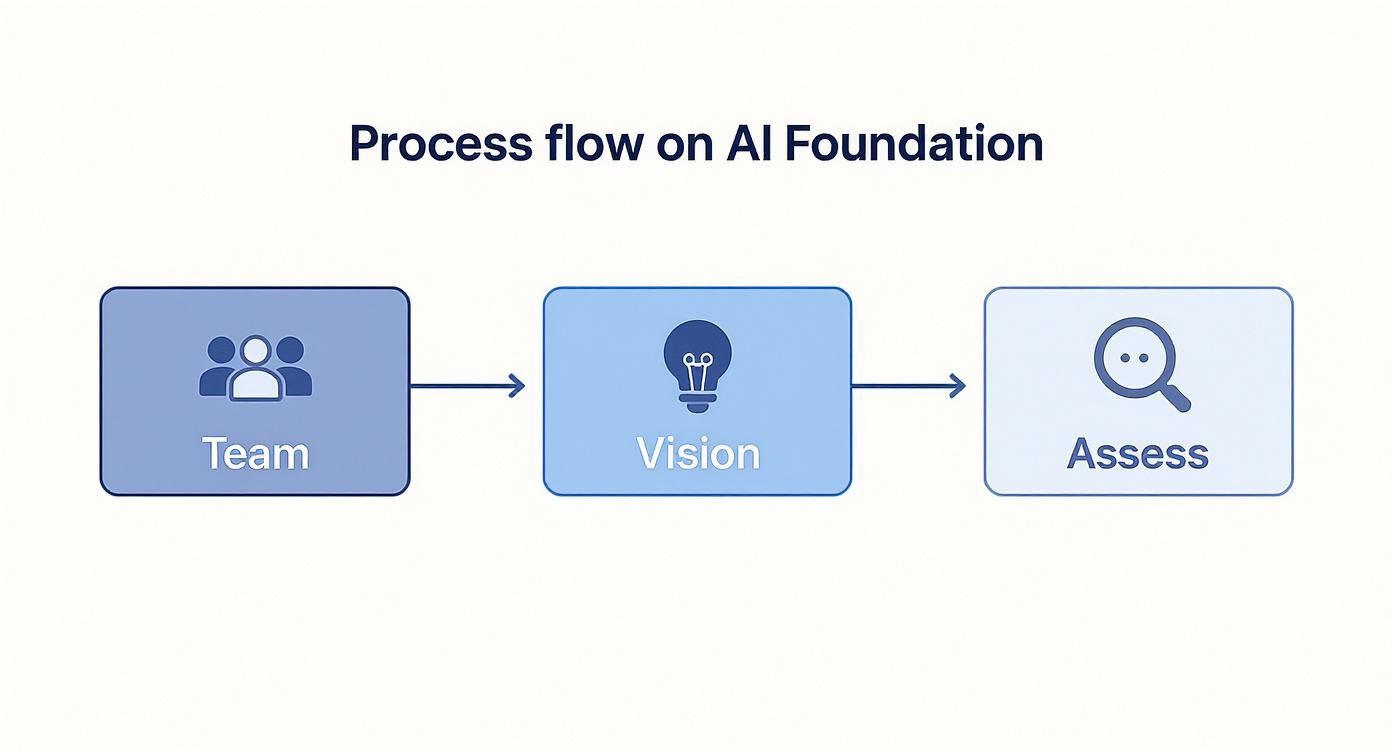
Following this process ensures your use-case discovery is driven by a unified strategy and powered by the insights of the people who know your operations best.
After brainstorming, you'll likely have a long list of potential AI projects. You need a structured, objective way to decide what to tackle first. This is where a prioritization matrix becomes an indispensable tool. It helps you score each idea against a consistent set of criteria, moving the conversation from "what sounds good" to "what makes strategic sense."
Here’s a practical template you can adapt. The goal is to get a holistic view of each project's potential.
| Use Case Example | Clinical Impact (1-5) | Financial ROI (1-5) | Technical Feasibility (1-5) | Data Availability (1-5) | Priority Score |
|---|---|---|---|---|---|
| Predictive Patient Flow | 4 | 5 | 3 | 4 | 16 |
| Automated Coding | 2 | 4 | 5 | 5 | 16 |
| Diagnostic Imaging Aid | 5 | 3 | 2 | 3 | 13 |
This framework forces an objective discussion. A project might promise huge clinical impact (like a new diagnostic tool) but be technically daunting and require data you don't have yet, giving it a lower initial priority score. On the other hand, automating a revenue cycle task might have a lower direct clinical impact but offer a massive, immediate ROI and be simple to implement. That makes it a perfect quick win.
Looking at industry trends, it’s clear that leading healthcare organizations are zeroing in on high-impact areas. Administrative efficiency is a massive priority, with many systems implementing AI for documentation automation. We see this firsthand with tools like our Clinic AI Assistant, which uses ambient speech to dramatically reduce physician burnout from charting.
Recent data shows a clear pattern in where organizations are focusing their efforts: patient scheduling (55% of organizations), pharmacy services (47%), and cancer services (37%). The strategic goals driving these projects are equally clear: accelerating R&D (24%), improving patient outcomes (22%), and uncovering new clinical insights (22%). This highlights a dual focus on achieving both operational excellence and clinical breakthroughs.
Key Takeaway: The goal of prioritization isn't just to make a list; it's to build momentum. Your first projects should deliver clear, demonstrable value. A successful pilot builds incredible credibility and secures the buy-in you'll absolutely need for the more ambitious and complex initiatives down the road.
By blending direct feedback from your teams with a structured prioritization framework, you can build your AI roadmap with confidence. This data-driven approach ensures you’re not just chasing interesting tech but executing a strategic plan for measurable improvement across your entire healthcare system.
Once you've pinpointed the most promising AI opportunities, the focus has to shift from what to how. This is where we build the essential scaffolding for your entire AI program—the governance, data infrastructure, and technology stack that will keep everything secure, compliant, and scalable.
I've seen too many organizations jump straight into pilots without this critical groundwork. It's like building a new hospital wing on a shaky foundation. It's not a question of if it will fail, but when. Getting this stage right means creating a trustworthy environment where clinicians feel confident using these new tools and patient safety is never compromised.
Think of your AI governance framework as the constitution for your program. It's not a dusty document that sits on a shelf; it's a living set of rules that defines how AI is developed, deployed, and monitored ethically and responsibly across the health system. This isn't just about checking a box—it's about building a system of accountability.
Getting this right is so crucial that I always point leaders to resources like a practical guide to AI governance to understand the depth required.
At a minimum, your framework needs to spell out your stance on:
AI runs on data. But in healthcare, our data is notoriously messy, locked away in different systems, and full of inconsistencies. A huge part of your roadmap is simply getting your data ready for prime time. This is about moving from just having data to having clean, reliable, and usable data.
A word of caution from experience: Don't underestimate the data prep. I've seen teams assume their EHR data is good to go, only to find that up to 80% of their project time is spent just cleaning, mapping, and standardizing it. You have to plan for this reality.
Your data readiness strategy needs to tackle a few core challenges head-on. First, you have to honestly assess the quality of your data sources, starting with your EHR. This means hunting for gaps, inconsistencies, and hidden biases.
Second is interoperability. Your AI tools won't just live in one system; they'll need to securely pull information from labs, radiology, pharmacy, and even billing. This requires building robust and efficient data pipelines that can connect these disparate sources.
With your governance and data strategy taking shape, you can finally decide how you'll get the technology you need. You're not locked into one path; the key is to match the approach to the use case. Generally, you have three options.
Build It In-House: This gives you maximum control and a perfectly customized solution. It’s a viable path if you already have a mature data science team and are tackling a problem unique to your organization. Be warned, though—it’s easily the most expensive and time-consuming route.
Partner for a Custom Build: You can work with a firm that specializes in custom healthcare software development. This is often a great middle ground. You get a tailored solution without having to hire an entire AI team from scratch, letting your clinical experts focus on validation while the partner handles the technical heavy lifting.
Buy a Ready-Made Solution: Subscribing to an existing platform, perhaps through an AI Automation as a Service model, is usually the fastest way to get value. This works exceptionally well for standardized problems like optimizing the revenue cycle or improving internal tooling. The most important thing here is to vet the vendor's security and compliance posture with a fine-tooth comb.
Most health systems find a hybrid approach works best. You might buy off-the-shelf solutions for common problems while partnering to build the unique, high-impact tools that truly set you apart. By laying this solid foundation, you create an environment where AI can finally begin to thrive safely and effectively.
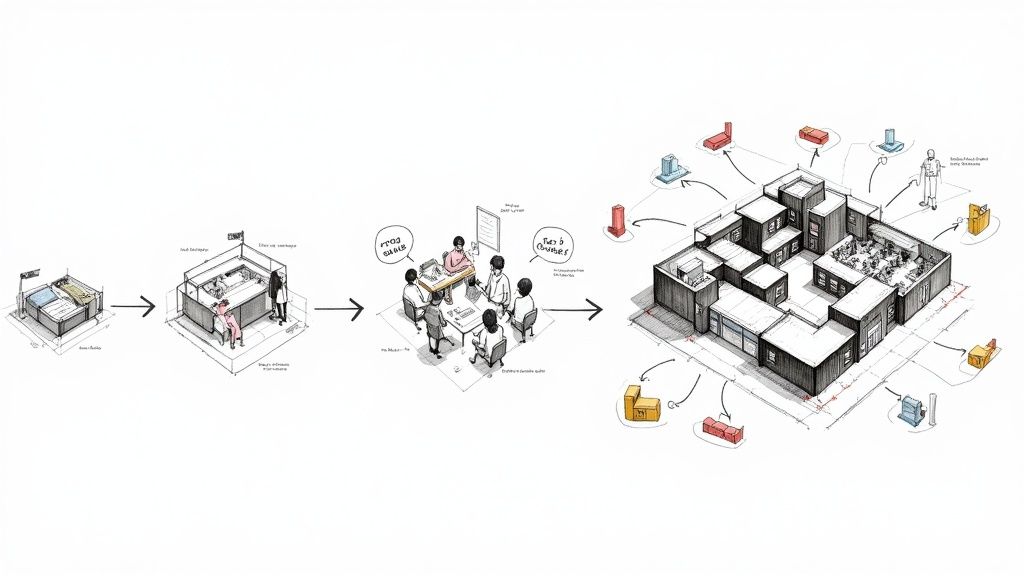
This is where the rubber meets the road—where your strategy moves from a PowerPoint deck into the real world. A well-designed pilot is the ultimate stress test for your roadmap. Think of it as a controlled experiment to validate your assumptions, measure real-world impact, and build a rock-solid business case for a broader rollout.
Trust me, skipping this step or running a vague, poorly defined pilot is one of the fastest ways to derail an otherwise promising AI initiative. It’s not just a tech trial; it’s a mini-transformation. Its success hinges as much on your people and processes as it does on the algorithm itself.
Your first pilot needs to target one of your highest-priority use cases—ideally, one with a clear and direct line to both clinical and financial wins. Before anyone writes a single line of code or signs a vendor contract, you have to define what success looks like in painfully specific terms.
Ambiguous goals like "improve efficiency" simply won't cut it. You need quantifiable metrics.
For example:
These hard numbers give you a clear yardstick. They transform the pilot from a fuzzy experiment into a focused business initiative with clear stakes.
A pilot that works is a collaborative effort, not something IT pushes onto clinical staff. The entire process must be built around hands-on training and a continuous, unfiltered feedback loop. Your clinical champion is absolutely essential here, helping to translate the tech’s benefits into a language that resonates with frontline users.
I’ve seen this happen time and again: you're not just implementing a tool; you're fundamentally changing a workflow. If the new process is clunky or feels like an extra burden, clinicians will find a workaround. Your pilot will fail.
Ongoing engagement is non-negotiable. Hold weekly check-ins with your pilot users to get their raw feedback. What’s working? What's driving them crazy? This input is pure gold. It allows you to make rapid adjustments and shows your team you're actually listening. Understanding the AI Product Development Workflow is key to turning this crucial feedback into tangible improvements.
No AI project gets off the ground without smart, empathetic change management. Your staff will have valid concerns, and the most common one is the fear that AI is coming for their jobs. Your communication has to be proactive, transparent, and relentless.
Emphasize how this technology augments their work, freeing them from tedious tasks so they can focus on high-value patient care. Share early wins and testimonials from pilot users to build momentum and social proof. Celebrating the "human impact"—like a nurse finally getting to spend more time with her patients because of less paperwork—is often far more powerful than quoting ROI statistics.
Once your pilot wraps up, it's time to analyze the results against the metrics you set from day one. A strong business case tells a clear story, combining hard data with compelling user anecdotes to justify a wider rollout.
The financial proof is getting harder to ignore. We're seeing successful AI implementations drive substantial budget increases across the industry. Recent data shows that 81% of healthcare organizations have seen increased revenue from AI, with nearly half achieving ROI in under a year. This is prompting 78% of organizations to plan budget increases for AI in the coming year, highlighting just how critical a successful pilot is.
The data also reveals a powerful trend: system-affiliated hospitals achieve 81-86% AI usage, while independent hospitals lag behind at just 31-37%. This gap underscores the power of a scalable roadmap—one that starts small with a successful pilot and expands methodically across the entire enterprise.
Think of your enterprise AI roadmap for healthcare systems as a living document, not something you create once and file away. It's a blueprint that needs to breathe, adapting to new tech, shifting hospital priorities, and real-world feedback from your staff. The difference between a roadmap that collects dust and one that actually drives value is a commitment to continuous monitoring and improvement.
This means looking beyond whether a project was simply completed on time. You need a balanced scorecard—a set of key performance indicators (KPIs) that tell the whole story. We're talking about a mix of metrics covering clinical outcomes (like a drop in patient readmission rates), operational wins (shorter appointment wait times), and, of course, the financial return on your investment.
To keep the roadmap from going stale, you have to build in a formal review cycle. I’ve found that setting up quarterly reviews with your AI steering committee works best. This isn't just a status update meeting; it's a dedicated strategic session to get tough on what’s working, what isn't, and re-evaluate your priorities based on hard data.
A huge part of these reviews is bringing in feedback from the people actually using the tools. Qualitative feedback from your pilot programs and scaled deployments is just as crucial as the numbers. For example, if the data shows an efficiency gain but your clinicians report the new tool is a documentation nightmare, that’s a red flag you can't ignore. A great way to benchmark your overall agility is by running a DevOps maturity assessment, since the core principles of continuous improvement apply directly to managing an AI strategy.
The world of AI moves at a dizzying pace. A key responsibility for your steering committee is to constantly scan the horizon, keeping an eye on emerging AI tools for business and new methods that could give your health system an edge. This kind of proactive thinking is what prevents your strategy from becoming obsolete six months after you write it.
An AI roadmap is a compass, not a map. It sets the direction but allows for course corrections as the terrain changes. The goal is consistent, forward momentum toward your strategic vision.
Using a dedicated AI Strategy consulting tool can be a game-changer for maintaining this alignment between your day-to-day initiatives and future opportunities. This loop of measuring, learning, and adapting is what turns your roadmap from a simple plan into a powerful engine for sustained, meaningful change.
An enterprise AI roadmap for healthcare systems is a strategic blueprint that aligns AI initiatives with core organizational goals. Its primary purpose is to ensure that every AI investment is coordinated, scalable, and delivers measurable clinical and operational value, rather than being a series of disconnected experiments.
The very first step isn't technical. It’s about assembling a cross-functional steering committee of clinical, technical, and executive leaders to agree on a clear, shared vision. You must define why you are implementing AI—whether to improve patient outcomes, reduce operational costs, or both—before exploring specific technologies.
The most significant roadblocks are typically related to data, people, and governance. Key challenges include dealing with messy, siloed data (data readiness), gaining buy-in from skeptical clinicians (change management), and navigating the complex landscape of HIPAA, ethics, and regulatory compliance (governance).
Measuring ROI for AI in healthcare requires looking beyond direct financial returns. Success metrics should include a mix of clinical KPIs (e.g., improved diagnostic accuracy, reduced medical errors), operational KPIs (e.g., shorter patient wait times, optimized staff scheduling), and financial KPIs (e.g., reduced claim denials, lower operational costs). A strong roadmap defines these metrics before any projects begin.
Ready to build an AI roadmap that delivers real results? The expert team at Ekipa AI can help you create a tailored strategy to accelerate your healthcare transformation. Get your Custom AI Strategy report today.
How to build HIPAA-compliant AI: when LLM providers need a BAA, data minimization, de-identification, audit controls and a reference architecture.
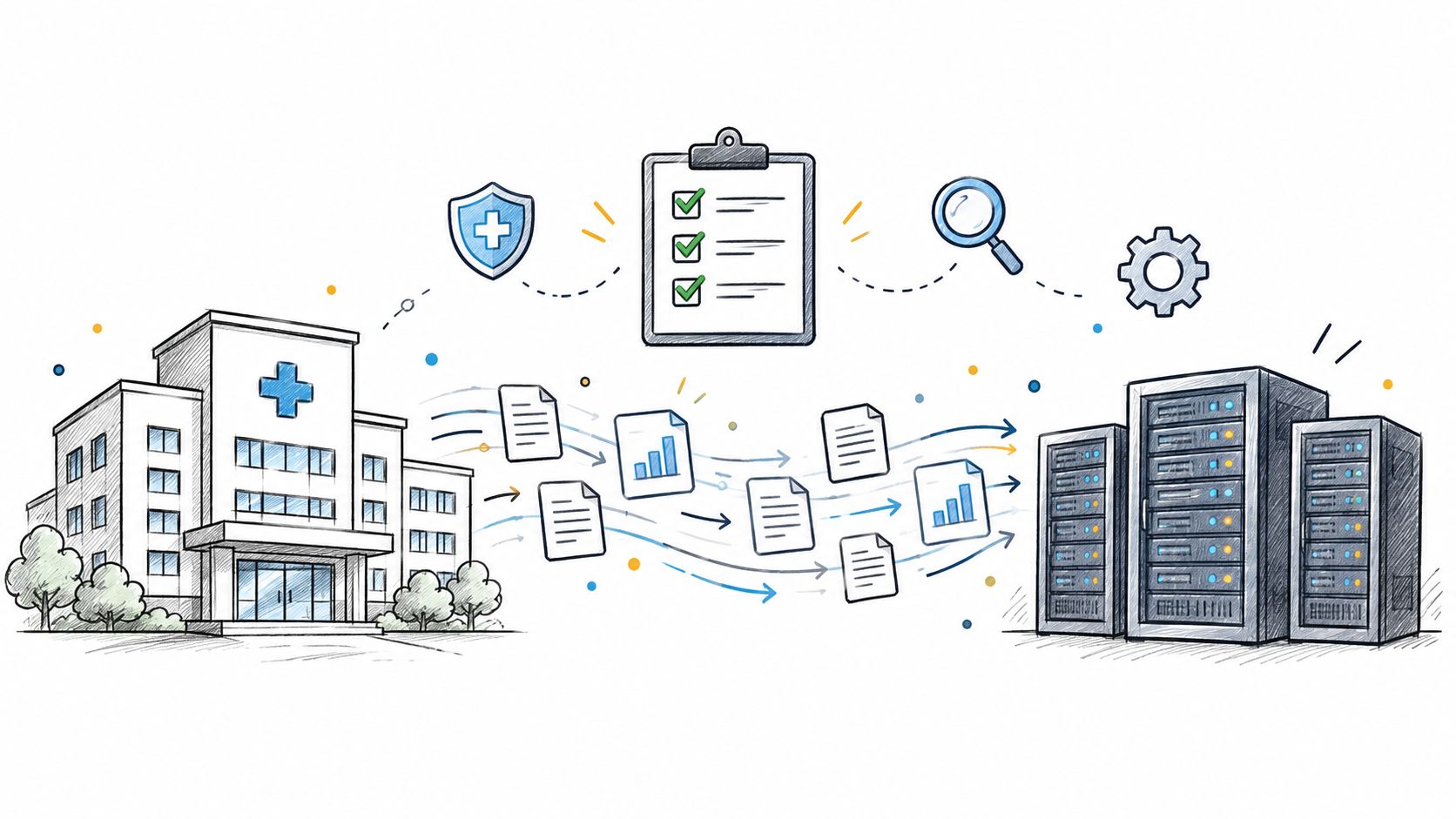
Practical data migration planning guide for healthcare teams. Scope, mapping, compliance, validation, cutover and rollback decisions explained end to end.
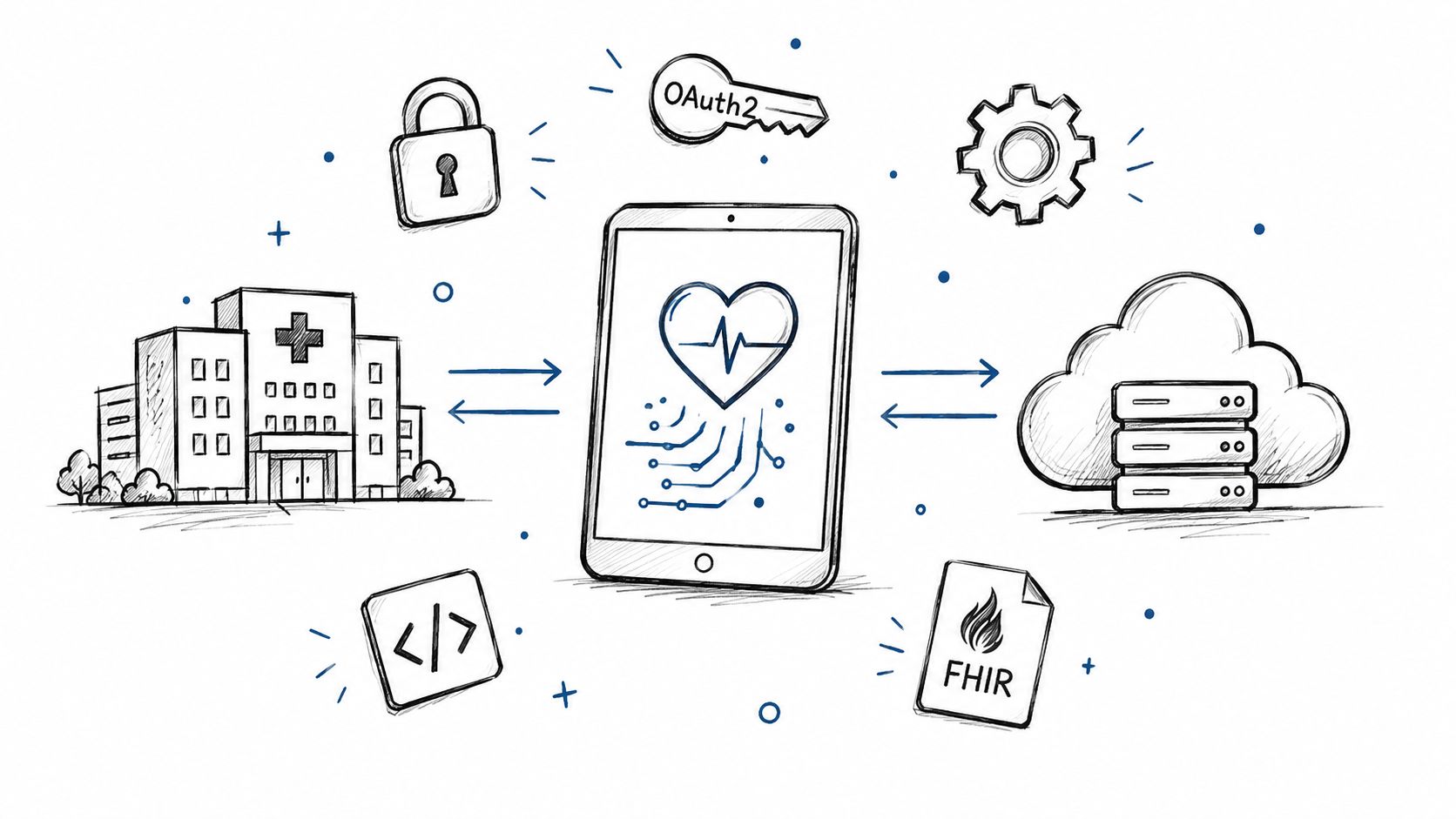
Smart on FHIR guide for healthtech engineers. Learn the OAuth 2.0 launch model, scope syntax, backend services, and US regulatory requirements.
Connect with our team to explore how AI expertise can transform your business.