
AI in Healthcare
HIPAA-Compliant AI: How to Use LLMs With PHI Safely
How to build HIPAA-compliant AI: when LLM providers need a BAA, data minimization, de-identification, audit controls and a reference architecture.
October 16, 2026Read more
AI pipelines in healthcare systems turn complex data into actionable insights. They streamline data flow, improve accuracy, and support faster, smarter decisions for better patient outcomes.
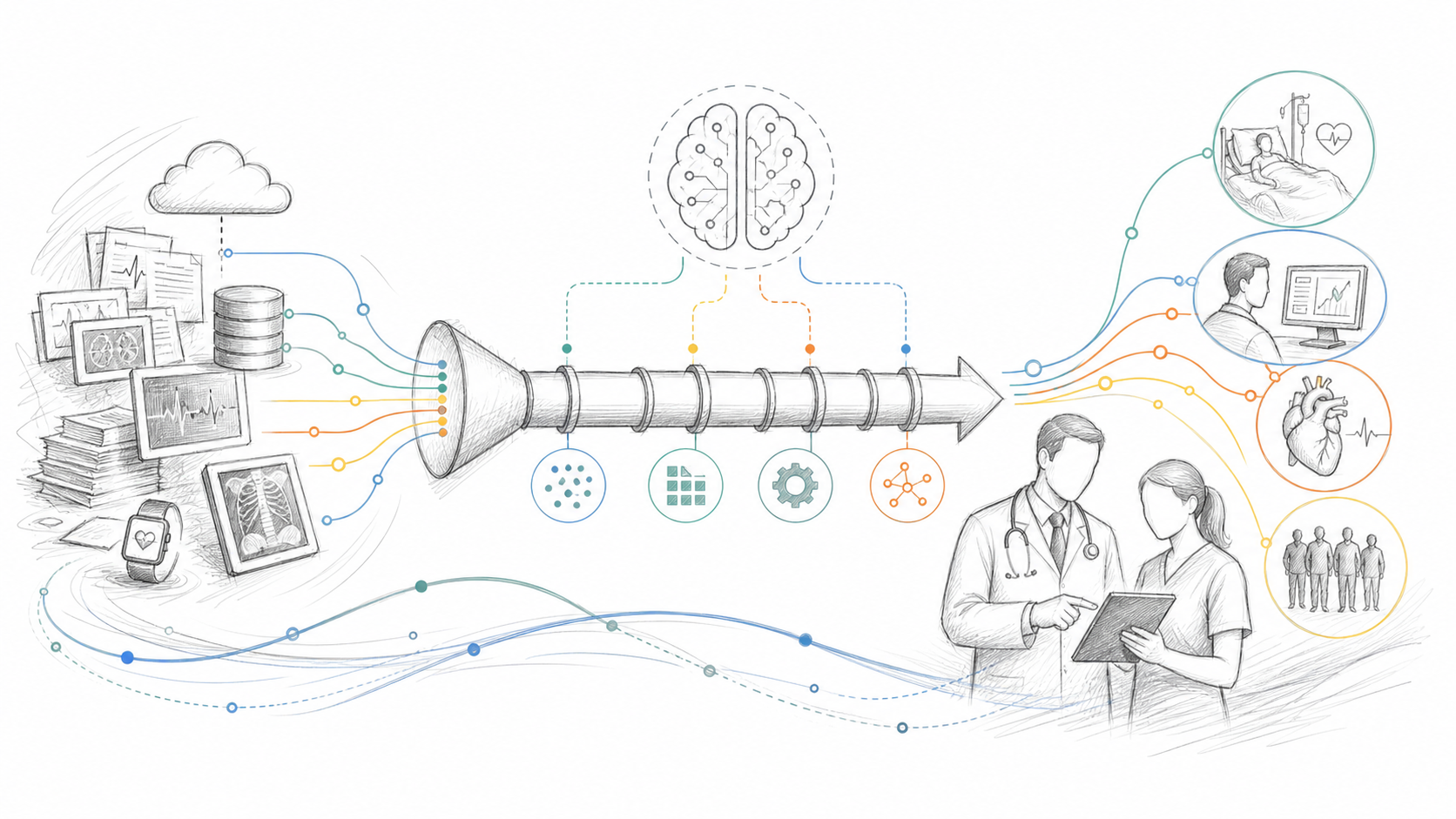
Healthcare systems generate large volumes of data every single day. Patient records, lab reports, and medical images keep growing at a fast rate. Without a clear structure, this information stays scattered and hard to use. This is where healthcare AI data pipelines add real value. They guide data along a defined path and turn raw inputs into useful insights that improve clinical decisions.
As healthcare environments expand, the gap between having data and being able to use it becomes more noticeable. Clinicians often work with incomplete views because of disconnected systems and inconsistent data formats. A structured approach brings order, improves data flow, and creates a dependable path for informed decisions across clinical and operational settings.
Healthcare data exists in many forms across many systems. Hospitals handle electronic health records, diagnostic reports, and imaging files, all stored in different formats. These disconnected systems create data silos that limit visibility. Poor data quality and inconsistency add further difficulty. When systems cannot share information smoothly, decision-making slows down, and clinical teams face delays that affect patient care.
A reliable healthtech engineering partner brings order to this fragmented environment by aligning systems, processes, and data flow across healthcare platforms.
Healthcare data often lacks proper structure. Mixed formats, missing entries, and repeated records create confusion. Data accuracy and standardisation remain ongoing struggles. Privacy and compliance rules add another layer of difficulty. When data stays messy, results become unpredictable, and decisions rest on incomplete information.
Organisations using healthcare AI services focus on improving data quality and structure before bringing in advanced tools. This work includes aligning data formats across systems, checking information at each step, and setting consistent standards for data entry and storage. When data becomes trustworthy and well organised, it creates a solid base for analysis, reduces mistakes, and strengthens decision-making across healthcare settings.

AI data pipelines describe the organised path healthcare data follows from its starting point to final use in decision-making. They connect several steps, such as data collection, cleaning, transformation, and analysis, into one smooth process. This organised flow creates consistency, improves how data can be used, and prepares information for accurate analysis. In healthcare settings, pipelines establish a clear route where raw data becomes meaningful and ready for clinical use. This work is often guided by insights from a custom AI strategy report that aligns data processes with clinical and operational goals.
AI models depend completely on the data they receive. When data lacks quality, even the most advanced models produce unreliable results. Pipelines solve this problem by cleaning and preparing data before it reaches the model. This is precisely why healthcare AI data pipelines are critical; they ensure that every piece of information is refined and ready for analysis before any model touches it. They boost accuracy, remove inconsistencies, and standardise data formats across systems. This builds a solid base for analysis, where insights become trustworthy and useful for real-world healthcare decisions.
AI data pipelines connect each stage of the healthcare data journey through a structured flow:
They gather data from many healthcare sources and bring it into one unified system
They process and standardise data to keep it accurate and consistent
They prepare data for AI analysis by structuring it in usable formats
They deliver insights generated by AI systems to clinical teams
They create a continuous flow where data leads to analysis, and analysis leads to informed decisions
Data pipelines follow a clear process that turns raw information into usable data.
Key Stages:
Data Collection from Multiple Sources: Healthcare systems pull data from electronic records, medical devices, labs, and imaging systems.
Data Cleaning and Normalisation: Messy data gets refined. Duplicate entries are removed, and formats become uniform.
Data Integration and Interoperability: Different systems connect, breaking down isolated silos and creating a single view of data.
Data Extraction and Transformation: Raw data is structured through defined steps so it becomes ready for analysis.
Data Standardisation: Data formats are aligned across systems, which improves usability and consistency.
Solutions such as SaMD solutions depend on this structured flow to maintain accuracy and compliance in clinical settings.
Healthcare systems produce more data each day. Scalable infrastructure handles this growth without slowing down performance. It creates a steady environment where data moves smoothly across systems, even as demand rises.
Automation reduces manual work in data processing. It brings uniformity to tasks like data cleaning, transformation, and integration. Automated pipelines keep data accurate and prevent delays in how information moves through the system.
Hospitals and clinics manage data from many sources, such as records, devices, labs, and imaging systems. A well-structured pipeline organises this data efficiently, preventing overload and improving access.
Dependable pipelines maintain a steady stream of data across systems. This consistency improves data availability for analysis and decision-making, reducing interruptions in clinical and operational tasks. The integration of medical data processing AI strengthens these pipelines by improving speed and accuracy at every stage.
AI models depend on the quality of the data they receive, and they fail when that data lacks accuracy and consistency. The value of good data and reliability stands clear in healthcare, where even small mistakes can affect results. The rule is simple: poor input leads to poor output. That makes data preparation a vital part of any AI system. Pipelines shape how data enters, changes, and reaches AI systems, which directly affects the final results.
A well-built pipeline acts as the true key to success, offering a solid base for analysis. Organisations that focus on healthcare data workflows gain better clarity across their systems, leading to more dependable outcomes.
AI systems examine processed healthcare data and offer clear insights to doctors. This raises the quality of decisions by providing recommendations rooted in data during diagnosis and treatment.
Structured data and AI analysis shorten the time needed to spot diseases. Doctors gain quicker access to relevant patient information, which accelerates the diagnosis process.
AI-driven insights help doctors choose suitable treatment plans. With access to complete and trustworthy data, treatment decisions become more precise and better matched to patient needs.
A steady flow of data through pipelines provides up-to-date information. Doctors receive timely insights during patient care, which improves response time and clinical efficiency.
An end-to-end pipeline architecture connects every stage of healthcare data in a clear and organised manner. From data collection to processing, analysis, and final decision-making, each step works together within one unified system. This organised flow removes confusion, improves visibility, and creates a steady path for data across departments and platforms.
Breaking data silos plays a key part in this process. When systems stay disconnected, valuable information remains trapped, leading to delays and gaps in understanding. A connected environment brings all data together, offering a complete view of patient information and operational processes. This improves coordination between teams and reduces reliance on manual data exchange.
As data moves smoothly across systems, decision-making becomes faster and more dependable. Clinicians and administrators gain access to accurate, current information when they need it most. This connection between data, systems, and decisions creates a stable foundation for a more efficient and data-driven healthcare system.
Healthcare systems depend on accurate data, clear processes, and trustworthy insights to work well. As data volumes keep growing, the gap between raw information and useful decisions becomes more noticeable. AI pipelines close this gap by creating an organised flow where data is gathered, cleaned, and analysed in a steady manner. This organised approach improves clarity across systems, cuts down decision delays, and strengthens confidence in the data used by clinical teams. With healthcare AI data pipelines, organisations gain the ability to boost efficiency, accuracy, and patient outcomes. Contact us to learn how structured data systems can shape the future of healthcare decision-making.
Healthcare AI data pipelines organise and move data through structured healthcare data workflows, turning raw inputs into useful clinical insights.
Medical data processing AI cleans, standardises, and prepares data, ensuring accurate analysis and better decision-making in healthcare systems.
Healthcare AI services streamline healthcare data workflows, reduce errors, and enable faster, more reliable data flow across systems.
A healthtech engineering partner builds scalable AI data engineering healthcare systems and ensures smooth integration across platforms.
A custom AI strategy report guides pipeline design, while SaMD solutions ensure compliant, accurate data processing within clinical environments.
How to build HIPAA-compliant AI: when LLM providers need a BAA, data minimization, de-identification, audit controls and a reference architecture.

Practical data migration planning guide for healthcare teams. Scope, mapping, compliance, validation, cutover and rollback decisions explained end to end.

Smart on FHIR guide for healthtech engineers. Learn the OAuth 2.0 launch model, scope syntax, backend services, and US regulatory requirements.
Connect with our team to explore how AI expertise can transform your business.