
AI in Healthcare
HIPAA-Compliant AI: How to Use LLMs With PHI Safely
How to build HIPAA-compliant AI: when LLM providers need a BAA, data minimization, de-identification, audit controls and a reference architecture.
October 16, 2026Read more
AI in healthcare goes beyond diagnostics. Explore how workflow automation and enhanced patient experiences are transforming care delivery.
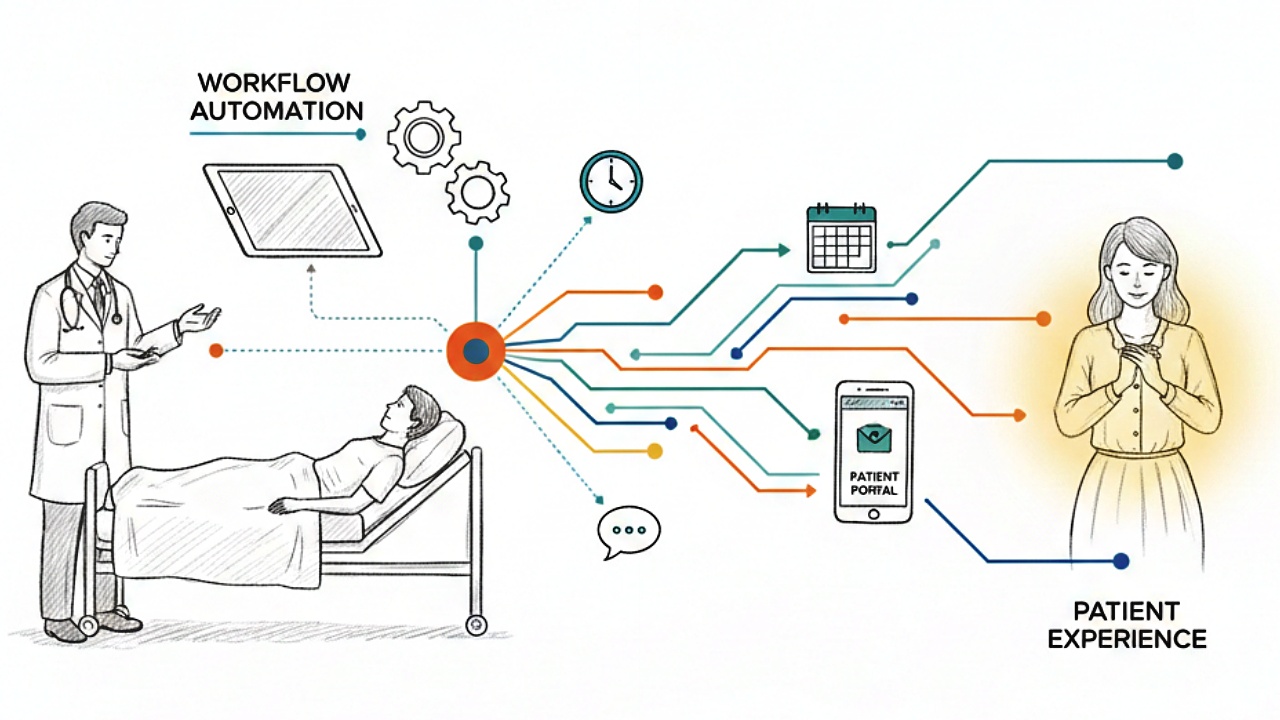
Look past the headlines about AI diagnosing disease, and you'll find where it's making a real difference: in the daily life of a clinic. It examines how daily work proceeds and how individuals feel during their care. This change emphasizes streamlined workflows, fewer delays, and improved communication throughout the care journey. AI is no longer confined to labs and radiology rooms. It now reaches every part of a hospital, shaping how clinicians and patients perceive and receive care.
Most discussions about AI in healthcare focus on diagnosis and medical imaging. While these applications remain crucial, the conversation is expanding. Healthcare leaders are now seeing AI's potential to transform everyday operations. This means improving processes, patient intake, staff coordination, documentation, and follow-ups.
In this new role, AI in healthcare helps care teams. It handles the repetitive, day-to-day tasks with thoughtfully built AI solutions. They can use this time to build stronger relationships with their patients. This change is not about removing people. It's about giving them support, with tools that smooth out the challenges in their daily tasks.
Workflow automation is about making sure tasks flow from one step to the next without getting stuck. In healthcare settings, even small inefficiencies can frustrate patients and burden staff. AI helps manage this flow by bringing more clarity and speed to the process.
With workflow automation in healthcare, everyday tasks such as appointment scheduling, referral management, and report generation can be completed with minimal manual effort. Staff get a clearer picture of what needs to be done, and patients face fewer delays. This method helps care continue smoothly, without putting more pressure on the clinical team.

A patient's journey is about more than their final test results. It is shaped by wait times, the clarity of information, and the level of support they receive. AI tools enable healthcare teams to respond faster and communicate with greater clarity.
Simple, automated messages, online check-in forms, and timely updates help patients feel more at ease. These tools also help staff prepare more thoughtfully for each patient visit. When background work flows without trouble, the time patients spend talking with their care team becomes more valuable. This direct link between smoother operations and patient confidence is a key result of AI workflow automation in healthcare.
Healthcare organizations are adopting AI use cases in practical ways every day. These applications focus on routine tasks, not just complex medical decisions. They help manage waiting lists, identify patients at risk of missing appointments, and prioritize messages so the most urgent ones receive attention first.
They provide teams with a method to identify urgent needs and adjust swiftly as circumstances evolve. As these tools are adopted, they support a more consistent standard of care across all departments and locations.
Technology alone does not solve problems. Clear planning is what leads to real success. Healthcare leaders often work with AI strategy consulting experts. They do this to identify where automation provides the greatest benefit and where human judgment remains essential.
A good plan begins with an honest assessment of current operations. Once that is clear, an organization can set its goals and see what is missing. Many teams rely on a custom AI strategy report to align technology decisions with their patient care mission. This foundation supports lasting progress instead of temporary solutions.
Each healthcare organization moves at its own pace with new technology. An AI maturity model is a tool that helps leaders see their current position. It looks at factors such as the quality of their data, the skills of their team, and how well their systems can work together.
An AI readiness assessment offers a clear picture of what an organization does well and where it needs support. It helps teams make thoughtful choices rather than rushing ahead. By understanding their starting point, organizations can create an AI adoption roadmap that truly fits how they work and what they value.
Execution matters as much as planning. Working with an experienced AI implementation partner helps healthcare groups turn their goals into real results. These partners offer expertise in regulations, data protection, and the practical demands of day-to-day operations.
Their role is to shape AI solutions around current workflows, helping teams avoid disruption from rigid new systems. This collaboration supports consistent use and strengthens trust among staff who rely on this technology daily.
Every smooth automated process rests on a base of good data. AI systems require accurate information that can flow across platforms to function correctly. When these tools connect directly with electronic health records, they can get the patient details they need. This occurs without requiring additional manual entry from staff.
When technology systems communicate effectively, automation becomes a useful part of the daily routine. It does not feel like a disruption. This kind of integration supports two key goals: smoother operations and safer patient care.
The true potential of healthcare AI is unfolding in the quiet moments of a patient's day. Its success is now measured by how care feels, not just by clinical results. Looking beyond diagnostics reveals many ways to improve both the delivery of care and the patient's own experience. Automating workflows creates space for meaningful conversations, quicker responses, and calmer settings for patients and staff alike. This is exactly where AI workflow automation in healthcare makes a real difference, creating a smoother and more personal path for patient care. Organizations that navigate this change with a clear plan and careful execution set themselves up for lasting positive change.
Contact us to discover how AI workflow automation can support your healthcare team and improve patient care.
AI workflow automation in healthcare uses AI solutions to streamline daily tasks, reduce delays, and improve staff efficiency, allowing clinicians to focus more on patient care.
AI tools automate appointments, reminders, and communication, helping patients get timely updates and clearer guidance while easing staff workload.
AI use cases include managing waiting lists, prioritizing urgent messages, automating reports, and identifying patients at risk of missed appointments.
Healthcare leaders use AI strategy consulting, custom AI strategy reports, AI maturity models, and AI readiness assessments to create a practical AI adoption roadmap.
An AI implementation partner ensures smooth integration of AI solutions into existing workflows, maintaining compliance, supporting staff, and maximizing automation benefits.
How to build HIPAA-compliant AI: when LLM providers need a BAA, data minimization, de-identification, audit controls and a reference architecture.

Practical data migration planning guide for healthcare teams. Scope, mapping, compliance, validation, cutover and rollback decisions explained end to end.

Smart on FHIR guide for healthtech engineers. Learn the OAuth 2.0 launch model, scope syntax, backend services, and US regulatory requirements.
Connect with our team to explore how AI expertise can transform your business.