AI in Healthcare
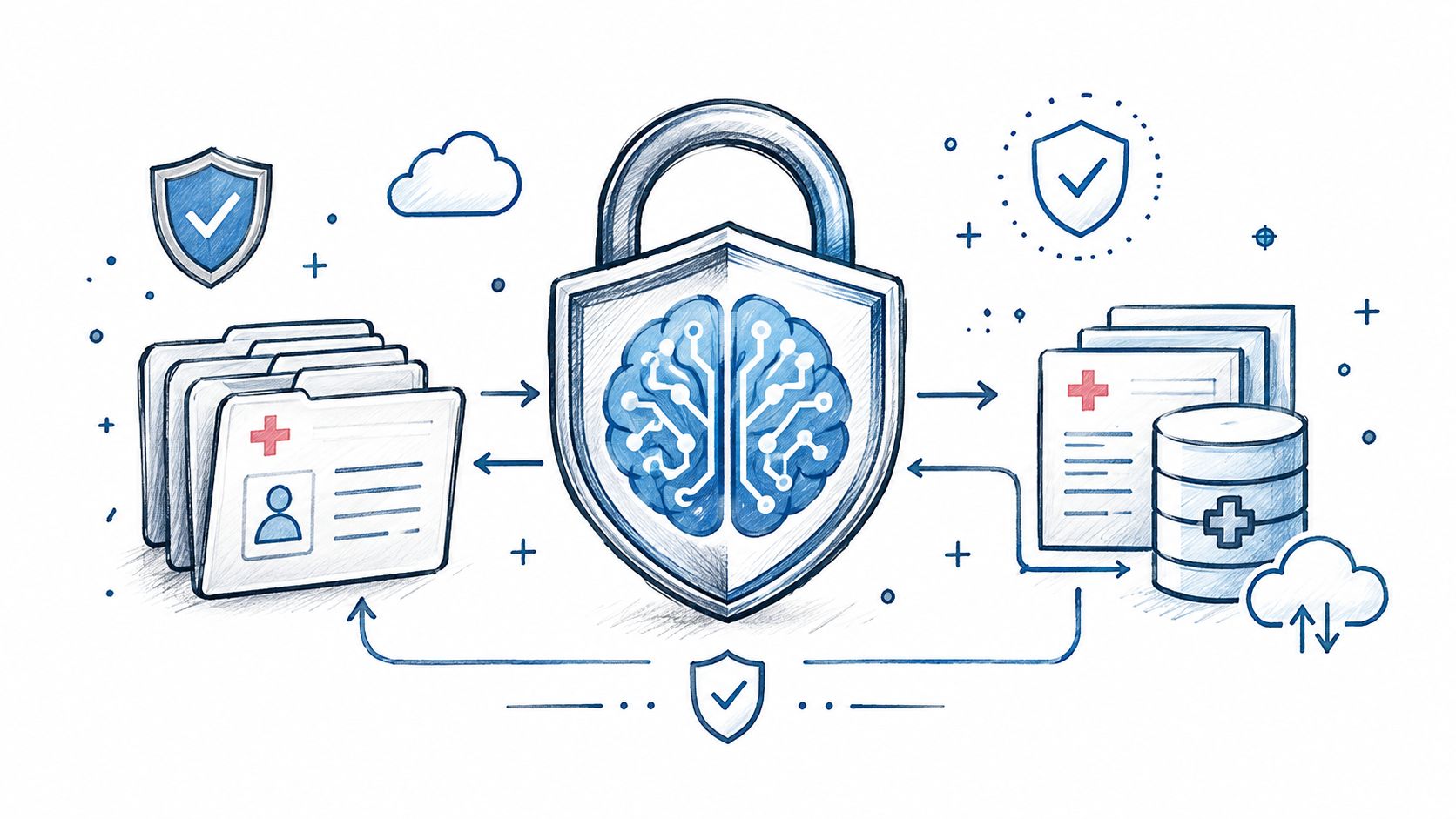
HIPAA-Compliant AI: How to Use LLMs With PHI Safely
How to build HIPAA-compliant AI: when LLM providers need a BAA, data minimization, de-identification, audit controls and a reference architecture.
October 16, 2026Read more
Healthcare CRM for providers explained: core features, EHR integration, compliance, KPIs, vendor selection, and practical use cases across provider types.

Most healthcare CRM advice starts with the wrong question. It asks which platform has the most features, then treats the vendor shortlist like a software shopping exercise. For providers, that's backwards. The decision is which part of the patient journey the CRM owns, and what stays in the EHR, scheduling stack, or billing system.
That boundary matters because the evidence around healthcare CRM still leans heavily toward implementation, not clean workflow design. In a review of healthcare CRM systems, 58% of selected studies focused on implementation, while social CRM and adoption were much less studied at 26% and 16% respectively, which tells you how much practical fit still gets glossed over in vendor marketing PMCID review. The organizations that get this right don't buy a “patient engagement platform” in the abstract. They define ownership of referral follow-up, outreach, reminders, and reporting before they compare products.
The common mistake is treating a healthcare CRM for providers like a feature checklist. That's how teams end up comparing reminder templates, dashboard colors, and automation buzzwords while ignoring the harder operational question, who owns each step of the workflow. If the CRM is expected to run the front office memory for a practice, it has to take responsibility for coordination. If it's only a contact layer, it won't move the needle.
A provider CRM should own the parts of the journey that need coordination across teams. That includes referral follow-up, recall outreach, appointment nudges, and status visibility across operational handoffs. It should not try to become the clinical record if your EHR already does that job well. The more clearly you define that boundary, the less likely you are to build duplicate processes that frustrate staff.
Practical rule: if staff still have to copy patient status from one system to another, the CRM boundary is wrong.
A lot of comparison content fails providers by selling one platform as if every organization needs the same scope. A multi-site group, a behavioral health practice, and an outpatient specialty clinic don't need identical ownership models. They need a CRM that fits the journey they run every day.
A provider CRM has to do four things well. It has to unify patient information, coordinate outreach, automate recurring admin work, and protect regulated data. If a vendor can't do those four jobs cleanly, the rest is decoration. That's the frame I'd use before reading any demo script or RFP response.
The market reflects that provider-centered reality. Healthcare providers were the largest end-use segment of the global healthcare CRM market in 2023, accounting for 40.2% of market share, with the market estimated at USD 17.87 billion in 2023 and projected to reach USD 30.65 billion by 2030 at a 7.7% CAGR Grand View Research. That doesn't mean every provider needs a massive platform. It does mean provider workflows are no longer niche use cases.
A useful definition is simple. A healthcare CRM is a centralized system that gives authorized staff a 360-degree patient view, pulling together clinical and non-clinical context so teams can coordinate outreach and operations from one place Salesforce healthcare CRM guide. In practice, it works as the front office memory the EHR does not provide. It keeps track of scheduling history, communication, referral status, and patient interaction history, so staff do not have to reconstruct the story from scattered tools.

The EHR owns clinical truth, diagnoses, orders, notes, and documentation. The CRM owns relationship context, outreach orchestration, and operational visibility. Healthcare also needs HIPAA-aware controls and workflows built around patient journeys instead of lead pipelines, which is why a generic sales CRM usually misses the mark. A patient portal serves as the patient-facing surface, while the CRM decides what needs to happen next and who owns the next step.
That boundary matters because provider teams often load one tool with too many jobs. Ask the CRM to replace the EHR, and you create data conflicts. Ask the EHR to run outreach campaigns, and you bury staff in clicks. The cleanest setup is usually a split model where the EHR keeps the record and the CRM coordinates the action.
Ekipa AI's HCP engagement co-pilot is an example of a layer built for this coordination problem, not a replacement for clinical systems.
The market size shows this category has moved from experiment to enterprise infrastructure. Independent research estimates the global healthcare CRM market at USD 17.87 billion in 2023, rising to USD 19.69 billion in 2024 and projected to reach USD 30.65 billion by 2030 Grand View Research. A separate 2025 estimate puts the market at US$ 19.8 billion, with North America holding 57.0% share, and the healthcare provider end-user group at 42.2% Market.us. That concentration says one thing clearly. Providers are buying these systems because workflow coordination has become a core operating need.
The best definition I can give a CEO or operations lead is this. A healthcare CRM for providers is the operational layer that connects patient data, outreach, scheduling, and reporting without making staff juggle disconnected systems. If it does not do that, it is just another database with a healthcare label.
A provider CRM has a simple test. It either removes handoffs or it adds them. In provider environments, the systems that survive are the ones that handle a few jobs consistently, not the ones that advertise every feature under the sun. That is why the comparison is job by job, not feature by feature.

The first job is data unification. The CRM should pull together EHR, billing, appointment, and communication data into one patient profile so staff can see the full context without bouncing between systems Ksolves. If the platform cannot do that, every other promise gets weaker. Duplicate records, stale statuses, and missing referral context are usually the first signs that adoption will fail.
Integration quality matters more than a polished interface. A provider CRM needs enough connectivity to remove manual lookup work, but it should not be wired so tightly that every configuration change turns into an IT project. The strongest setups keep the EHR as the system of record and let the CRM surface action-ready data for staff who need to move quickly. Ekipa AI's HCP Engagement Co-Pilot is a clear example of a coordination layer built around that split.
The second job is coordinated patient engagement. Two-way SMS and email, reminder campaigns, reschedule or cancel links, and status-driven referral workflows make outreach measurable from trigger to outcome Zendesk healthcare CRM overview. That is the difference between sending messages and running a follow-up system. Provider teams need to know who responded, who ignored the message, and what happened next.
Many CRMs are noisy. They can send a message, but they cannot manage the next step cleanly. When a patient replies, the workflow should route the response instead of leaving staff to chase it manually. If the platform cannot close that loop, it creates more work than it removes.
The third job is workflow automation. Gap-in-care outreach, recall campaigns, appointment reminders, and referral tracking should run on rules, not memory. That is where a CRM earns its place on the stack. It strips low-value follow-up out of front desk and care coordination work.
A good provider CRM does not replace people. It removes the repetitive clicks that keep people from doing real follow-up.
The fourth job is governance. Role-based access, encryption, and audit logs are baseline requirements for handling regulated data Zendesk healthcare CRM overview. Predictive segmentation matters too, but only if consent, explainability, and fairness are part of the design. AI is not a separate feature bucket. It belongs in the governance discussion.
If I were shortlisting vendors, I would separate table stakes from differentiators this way. Unified profiles, secure messaging, and audit trails are table stakes. Predictive outreach, patient-disparity targeting, and intelligent prioritization are differentiators, but only if they can be deployed safely in your environment Zoho healthcare CRM guidance. One of the clearest product examples of how providers package this kind of workflow is Ekipa AI's HCP Engagement Co-Pilot, which sits in the coordination and engagement space instead of pretending to be the source of clinical truth.
A provider CRM is not one universal product in practice. A multi-specialty group, an ambulatory clinic, a hospital outpatient service, and a behavioral health practice care about different parts of the journey. If a vendor cannot explain those differences without falling back on feature lists, they have probably not implemented enough real workflows. The better question is not what the CRM can do in general, it is who owns each workflow and where the CRM stops at the EHR boundary.
In a multi-specialty group, the CRM's most valuable job is often referral handoff. Cardiology sends a patient back to primary care, primary care sends the patient to imaging, and someone has to make sure the loop closes. The CRM should track that handoff, preserve the context, and surface the next required action. Referral visibility is the point, not just referral storage.
Referral work also exposes sloppy ownership fast. If one team assumes scheduling owns the follow-up and another team assumes care coordination owns it, the handoff breaks and the patient waits. A provider CRM should make that ownership explicit so the referral does not disappear into inboxes, phone tags, or a half-updated spreadsheet.
An ambulatory clinic usually lives or dies by schedule discipline. Recall campaigns, no-show recovery, and rapid reschedule workflows matter more than deep reporting layers. The CRM has to make it easy for the front desk to recover a missed appointment without creating extra admin work. If the workflow is clunky, staff will revert to phone calls and spreadsheets.
That is why the clinic use case is unforgiving. The system should support fast rebooking, simple outreach queues, and clear task ownership for staff who are moving patients back into the schedule all day. If the CRM slows down that recovery path, it becomes another screen people avoid.
For a hospital outpatient service, the value is coordination across pre-visit, post-visit, and billing touchpoints. Patients often move through multiple administrative steps that live in different systems, and the CRM should provide the shared view that keeps those interactions aligned. Centralized visibility reduces confusion for both staff and patients.
This setting also forces a hard boundary question. The CRM should coordinate outreach, reminders, and service recovery, while the EHR remains the source of clinical truth. Teams that blur those roles usually end up with duplicate data entry and arguments over which system staff should trust. For a practical example of a healthcare coordination workflow built around that division, see Ekipa AI's healthcare services page.
Behavioral health is the strictest use case on this list because the outreach cadence, consent handling, and sensitive flags are different from medical-surgical flows. The CRM should support careful segmentation without over-messaging patients or exposing information too broadly. In this setting, the most important capability is controlled communication, not broad automation.
That means the team running the workflow has to be precise about who can see what, when follow-up is appropriate, and which outreach paths are off limits. Behavioral health groups should reject systems that treat every patient journey the same way. The workflow has to reflect consent, discretion, and careful pacing, or staff will work around the tool.
The wrong CRM choice isn't always bad software. It's often a mismatch between workflow design and the actual care setting.
The implementation literature reinforces that mismatch problem. In a review of healthcare CRM systems, implementation dominated the studies, while social CRM and adoption were studied far less often PMCID review. That tells me provider teams still need to do the hard work of fitting the tool to the journey, instead of assuming the vendor has already solved it.
Compliance and integration break together in practice. If the CRM cannot exchange data cleanly with the EHR, staff build shadow workflows. If it mishandles regulated data, leadership will lose trust quickly. Treat compliance and integration as one foundation, because that is how provider operations fail or hold up.

Start with the basics. Does the vendor support HIPAA-aligned handling? Will they sign a Business Associate Agreement? Do they offer role-based access, encryption, and audit logging? Those are required for a provider workflow system, as outlined in Zoho healthcare CRM guidance.
You also need clear ownership inside your organization for permissioning and data retention. If nobody owns those decisions, the system will drift. Broad access becomes the default, and narrow access gets ignored. That is how teams end up exposing more data than they intended.
On the integration side, the CRM needs HL7/FHIR-compatible EHR connectivity, plus scheduling write-back where it matters. It should fit the billing and appointment environment without forcing staff to reconcile records by hand Ksolves. A provider CRM is most useful when it brings EHR, billing, appointment, and communication data into a single patient profile, then supports gap-in-care outreach, referral tracking, and reminders without constant system switching.
That kind of work usually needs a serious implementation partner. If you do not have an internal team that can own the build, implementation support for healthcare AI and workflow projects is the sort of help that matters more than another feature demo.
AI segmentation sounds attractive until it runs into governance. Predictive outreach can help prioritize patients, but it also raises questions about bias, consent, and explainability. If a vendor cannot explain why a cohort was targeted, the AI layer turns into a liability instead of an efficiency gain. Ask how the model is reviewed, how outreach rules are approved, and who can override them.
The right shortlist question is blunt. Can this platform safely move patient data, trigger the right action, and leave a clean audit trail? If the answer stays vague, keep walking.
Most CRM failures happen before go-live, not after it. Teams either map the wrong data, overbuild the scope, or launch without frontline buy-in. A realistic deployment is less like a software install and more like an internal tooling program with a clinical workflow in the middle of it.

First, map the data you have. That means patient identity, contact data, referral source fields, appointment statuses, and communication history. You also need a master patient index decision early, because bad identity matching creates duplicate outreach and broken trust. If the data model is weak, everything downstream gets harder.
Next, build the integration layer. FHIR APIs, HL7 feeds, scheduling write-back, and billing connections should be stable before automation goes wide. Many teams make a scope mistake here. They try to launch reminder campaigns before the data flow is trustworthy, then spend weeks cleaning up exceptions.
Then bring in the people who will use it every day. Front-desk staff, care coordinators, and clinical leads need to pressure-test the workflow before rollout. If the CRM creates extra clicks, they'll route around it. If the flow feels natural, adoption is much easier to sustain.
Don't launch everything at once. Pick one use case that matters and is visible, then expand from there. A reminder workflow, referral tracking, or recall campaign is usually a better pilot than a broad “patient engagement transformation.” Scope creep is the usual killer here, not the software itself.
Training needs to be role-specific, and adoption metrics should be visible from day one. If nobody is measuring usage, response handling, and workflow completion, you're guessing about success. A good rollout plan includes steady-state optimization after go-live, because the first version of the workflow won't be the final one.
Independent guidance backs that caution. Providers are advised to verify HIPAA-aligned handling, role-based access, and the availability of a Business Associate Agreement, and enterprise platforms often require dedicated implementation resources, which can strain groups without large IT teams Zoho. That's also where the right engineering partner matters more than the vendor pitch. If you need internal workflow buildout, internal tooling support is usually a more realistic conversation than “just turn it on.”
If the CRM cannot show operational change, leadership will file it under overhead. Engagement counts alone do not carry the case. Tie the system to conversion, less manual follow-up, and a cleaner path for staff to act on.
Start with scheduling performance. No-show rate, reschedule rate, and days-to-first-appointment show whether the CRM is improving access and keeping the schedule usable. Then move to referral performance. Referral conversion and referral leakage show whether handoffs are completed instead of disappearing in the gaps.
Outreach metrics matter too, but only if they connect to action. Recall campaign response and follow-up completion tell you whether the CRM is helping staff close loops, not just send messages. If a campaign looks busy but the next step never happens, it is noise.
Labor efficiency belongs in the same review. When the CRM removes manual follow-up, that saved time shows up in staff hours and task load. Leadership usually understands retention faster than process language, so patient lifetime value can sit in the analysis as a directional measure, not a vanity target.
| KPI | What it measures | Primary CRM data source |
|---|---|---|
| No-show rate | Missed appointments relative to scheduled visits | Appointment status and reminder history |
| Reschedule rate | How often patients convert a missed visit into a new booking | Two-way messaging and scheduling write-back |
| Referral conversion | Referrals that turn into completed visits | Referral workflow status |
| Referral leakage | Referrals that never complete the handoff | Referral tracking and appointment records |
| Days-to-first-appointment | Access speed after intake or referral | Scheduling data |
| Recall campaign response | How many patients act on recall outreach | Campaign messages and response logs |
| Staff hours saved | Manual follow-up work removed by automation | Workflow completion and task logs |
The most common mistake is measuring after launch without a baseline. That makes ROI hard to defend because nobody can separate real improvement from a better mood around the project. Capture the current state first, then instrument the CRM so every conversion has a visible source.
If leadership asks where the gain came from, the answer needs to live in the data. It should not depend on memory, anecdotes, or whoever happened to be in the room when the workflow changed.
For teams formalizing measurement plans, AI strategy consulting and a structured Custom AI Strategy report can help separate the KPIs worth automating from the ones that should stay manual for now. Measure the right things consistently, and keep the list tight.
Shortlist vendors against the workflow you want them to own. Not against a generic marketing page. If you take that seriously, the right decision becomes much clearer, and the wrong vendors fall away fast.
Most provider groups should buy and configure, not build. Building makes sense only when you have an in-house healthtech engineering partner and a workflow that differentiates your organization. Otherwise, you'll spend too long recreating basic CRM mechanics instead of improving care coordination. The exceptions are narrow, not common.
A CRM can replace parts of a patient portal experience, but it shouldn't replace the portal itself. The portal is where patients interact directly with their care experience. The CRM is what your staff uses to coordinate what happens behind the scenes.
For a mid-size provider group, deployment usually takes long enough that anyone promising a casual, overnight rollout is selling fiction. Plan for an implementation program, not a quick install. And if a vendor can't explain how predictive outreach is reviewed, approved, and audited, the AI story isn't ready for production.
Provider teams that want a structured path often pair implementation support with strategy work. AI Automation as a Service, AI tools for business, and real-world use cases are useful reference points when you need to map a CRM to actual operational work. If your shortlist includes custom software, compare it against custom healthcare software development and a regulatory compliance partner before you commit. If you want a team that can help with use case selection, integration planning, and rollout support, start with our expert team.
If you're evaluating a healthcare CRM for providers and you want a workflow-first implementation plan, Ekipa AI can help you define the boundary between the CRM, EHR, and scheduling stack before you buy. Visit Ekipa AI to talk through integration, automation, and deployment with a team that works on healthcare systems, not generic software pitches.
How to build HIPAA-compliant AI: when LLM providers need a BAA, data minimization, de-identification, audit controls and a reference architecture.

Practical data migration planning guide for healthcare teams. Scope, mapping, compliance, validation, cutover and rollback decisions explained end to end.
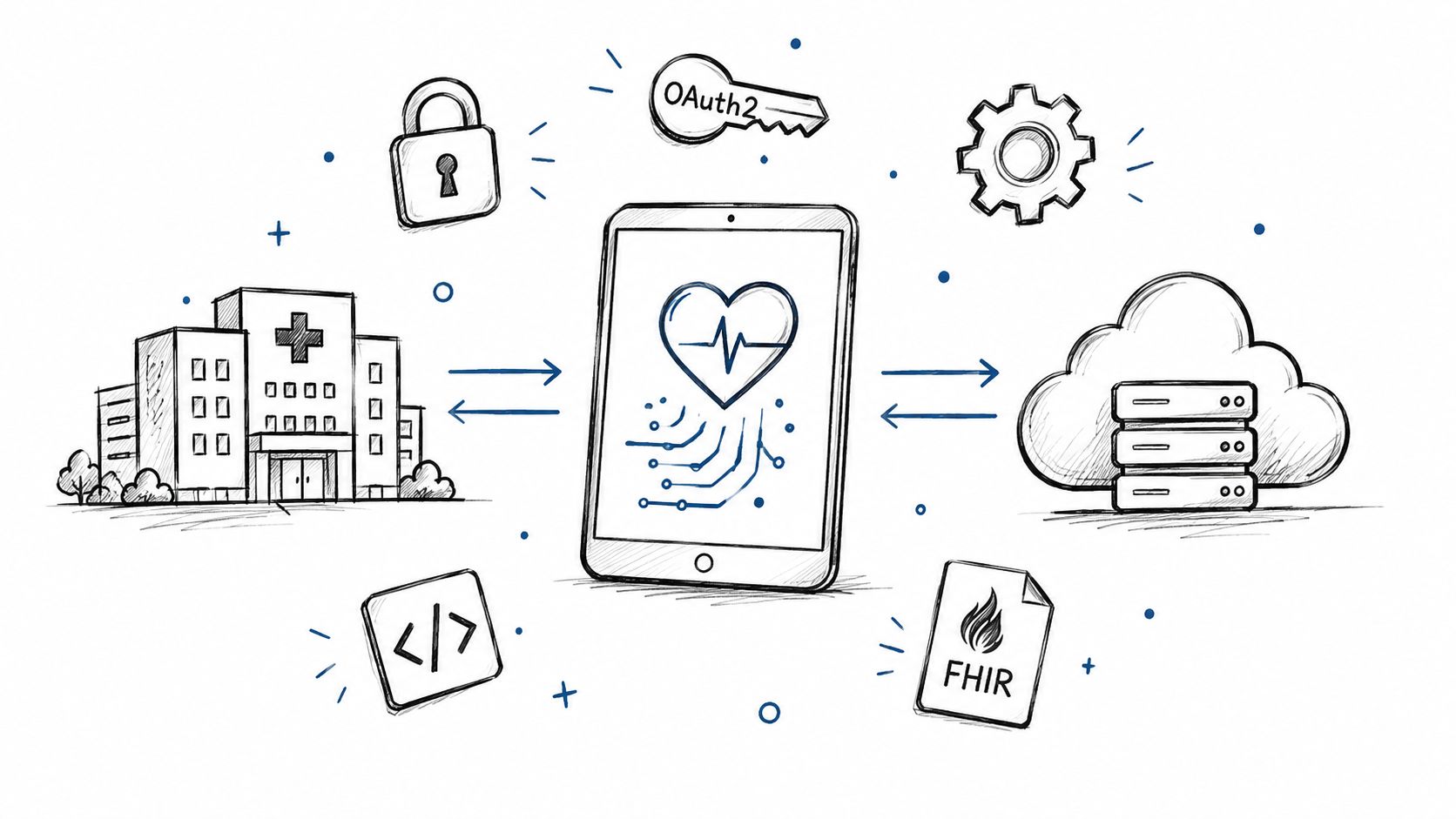
Smart on FHIR guide for healthtech engineers. Learn the OAuth 2.0 launch model, scope syntax, backend services, and US regulatory requirements.
Connect with our team to explore how AI expertise can transform your business.