AI in Healthcare
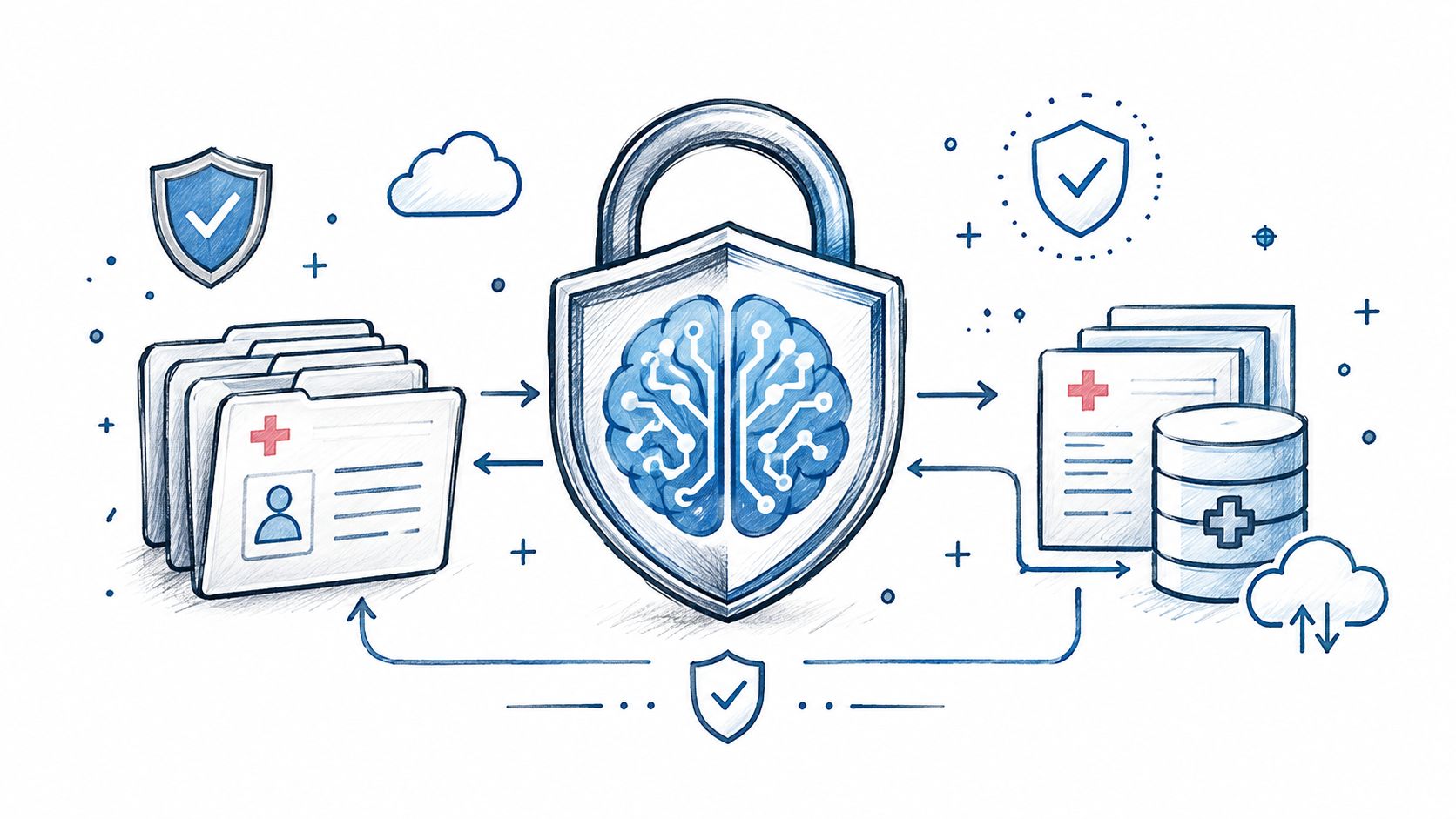
HIPAA-Compliant AI: How to Use LLMs With PHI Safely
How to build HIPAA-compliant AI: when LLM providers need a BAA, data minimization, de-identification, audit controls and a reference architecture.
October 16, 2026Read more
Discover how healthcare intelligence platforms turn data into better patient outcomes and higher ROI. Our guide explains how to leverage these AI-driven tools.

For years, healthcare has been great at collecting data. The real challenge has always been knowing what to do with it. This is where healthcare intelligence platforms come in, acting as the central nervous system for a modern healthcare organization.
These platforms are designed to pull meaningful, clear-cut insights from the flood of information generated by EHRs, patient monitors, billing software, and dozens of other sources.
Think of your organization's traditional IT systems like a massive library where every book is written in a different language and stored on a random shelf. A healthcare intelligence platform isn't just a catalog; it's an expert librarian who can read every language, find the exact information you need, and connect disparate ideas to tell you what's truly important.
By using AI, these platforms can automate tedious administrative work, anticipate patient needs before they become critical, and give leaders the clarity needed to make smarter financial and operational decisions. This guide is all about showing you how to put these powerful tools to work. Understanding this evolution is the first step toward building a more resilient and efficient system, and our comprehensive healthcare software solutions are built to guide organizations through this exact transition.
The shift toward intelligent systems isn't just a fleeting trend—it's a seismic market realignment. The global healthcare software market, which forms the foundation of healthcare intelligence platforms, is projected to rocket past $100 billion by 2035, driven by a steady 10.34% compound annual growth rate.
This explosive growth is happening for a reason. Organizations are scrambling to replace outdated, disconnected systems with cloud-based, AI-driven platforms that can actually automate complex workflows.
These advanced platforms are a direct answer to the immense operational pressures facing providers today. They are already helping to tackle over 50% of clinician burnout by automating the administrative tasks that currently eat up as much as 40% of a healthcare professional's time.
This move from passive data collection to active, intelligent application is creating a clear divide. Organizations that adapt are gaining a serious competitive edge, while those that don't risk being left behind.
A quick look at the old versus the new makes the difference clear.
This table offers a quick overview comparing the limitations of traditional healthcare IT with the capabilities of modern healthcare intelligence platforms.
| Feature | Legacy Healthcare IT | Healthcare Intelligence Platform |
|---|---|---|
| Data Structure | Siloed in separate, non-communicating systems (EHR, billing, etc.) | Unified into a single, accessible source of truth |
| Primary Function | Data storage and record-keeping | Data analysis, insight generation, and prediction |
| Workflow Support | Manual, repetitive tasks with limited automation | Automated clinical and administrative workflows |
| Decision-Making | Based on historical, often incomplete, reports | Based on real-time, comprehensive, and predictive insights |
| Focus | Department-specific operations | Enterprise-wide performance and patient outcomes |
The contrast is stark. One is about managing records; the other is about driving outcomes.
At its core, the problem these platforms solve is data fragmentation. Critical information gets trapped in different systems that can't talk to each other, creating a fractured and incomplete picture of both patient health and organizational performance.
An intelligence platform systematically breaks down these walls. The benefits are immediate and tangible:
By creating a single source of truth, these platforms empower everyone—from clinicians at the bedside to executives in the boardroom—to make faster, more confident decisions. Seeing the full picture changes everything. Our AI-Powered Data Extraction Engine is a perfect example of the technology that makes this unified view possible.
So, what's really going on under the hood of these platforms? To understand what makes a healthcare intelligence platform work, it helps to think of it not as a single piece of software, but as your organization’s central nervous system—an operational brain processing information from every corner of your health system.
This structure is what turns a chaotic storm of data into clear, confident actions.
It all begins with the data ingestion layer. Think of this as a universal translator. It pulls information from dozens of different sources that don't normally talk to each other—your Electronic Health Records (EHRs), billing software, pharmacy systems, and even data from wearable IoT health devices. This first step is absolutely crucial for breaking down the data silos that keep departments from working together effectively.
Once all that information is collected, it flows into a secure data lake. This isn't your typical rigid database. Instead, it’s a massive, flexible repository that holds all the raw data in its original format, ready to be analyzed whenever it's needed.
Next up is the AI-powered analytics engine—the real brains of the operation. This is where sophisticated algorithms get to work, sifting through mountains of data to spot complex patterns, predict future trends, and uncover insights a human analyst could never find on their own. The role of AI here is fundamental; you can see how AI is transforming medical billing and other financial processes to get a sense of its impact.
Finally, a presentation layer makes all this complex information digestible. Through clean dashboards, automated reports, and clear visualizations, it delivers the right insights to the right people—whether they're a clinician on the floor, an executive in the boardroom, or a manager in operations.
The diagram below shows how this all fits together, moving from scattered data sources to focused, actionable intelligence.

This hierarchy is the key to creating a single source of truth that everyone in the organization can trust and use to make smarter decisions.
Knowing the architecture is one thing; making it work with your existing technology is another. The goal isn't to rip and replace your current systems, but to build a cohesive digital ecosystem where data flows freely between your new intelligence platform and your established internal tooling.
Key integration points usually involve:
This architectural design is about more than just technology; it's about creating an environment where data serves a strategic purpose. It systematically dismantles information silos and fosters a culture of data-driven decision-making.
A smooth integration demands careful planning and a deep audit of your current tech stack. This is where expert guidance, like our AI strategy consulting services, can be invaluable. We help ensure the platform’s architecture is tailored to your unique operational realities and long-term goals.
With the right structure in place, a healthcare intelligence platform becomes the engine that drives continuous improvement across your entire organization.
The real magic of a healthcare intelligence platform isn't just about crunching numbers or spitting out reports. It's about turning a mountain of raw data into tangible results you can see in your budget and feel in your patient outcomes. These platforms are engines for creating real value, moving far beyond a simple look in the rearview mirror.
One of the most powerful things they do is predictive analytics. Imagine knowing a flu outbreak will spike admissions before it happens, or being able to pinpoint which patients are most likely to be readmitted while they're still in your care. This kind of foresight isn't a crystal ball; it's data-driven insight that lets you plan resources, intervene early, and sidestep major costs.

Then there’s operational intelligence, which is all about making the day-to-day run smoother. These platforms tap into real-time data from everywhere—staffing systems, patient flow monitors, even the supply chain.
This means you can fine-tune nurse schedules to meet patient demand without causing burnout. It means reallocating an expensive piece of equipment to the department that actually needs it, cutting down on waste and making everyone's job a little easier.
These aren't just abstract features; they are practical tools for saving money and improving care. For instance, by flagging those high-risk patients, a hospital can roll out follow-up protocols that prevent costly readmission penalties. A focused AI strategy consulting session can help you pinpoint which of these powerful AI tools for business will give you the biggest and fastest return.
The market's explosive growth tells the story. We're seeing the demand for healthcare business intelligence platforms projected to more than double, jumping from $8.51 billion in 2024 to an expected $16.53 billion by 2033. Software is the clear leader here, grabbing 71% of the market share as organizations scramble for AI-powered analytics to make sense of the tidal wave of electronic health records (EHRs). You can dive deeper into these market trends with this comprehensive growth analysis.
But a great platform doesn’t stop at operations. It brings clinical and financial insights together to give you a complete picture.
Clinical Decision Support: This puts evidence-based knowledge directly into a doctor's workflow. It delivers real-time alerts and recommendations at the point of care, helping clinicians make safer, more informed decisions that lead to better patient outcomes.
Financial Analytics: For your CFO and finance team, these platforms are a game-changer. They use smart analytics to find revenue leaks, catch coding mistakes before claims go out the door, and optimize the entire revenue cycle management (RCM) process.
By tying clinical decisions directly to their financial impact, a healthcare intelligence platform gives you a true 360-degree view of your organization. You finally get to see not just what's happening, but why it's happening—and exactly what it costs.
In the end, the ROI you get is about more than just one thing. It’s found in lower operational costs, avoided penalties, a faster revenue cycle, and—most importantly—in a higher standard of patient care. A well-crafted Custom AI Strategy report can build a roadmap that connects these capabilities to your specific goals, showing you the clearest path to achieving that value.
This is where the rubber meets the road. All the talk about platforms and architecture is interesting, but what really matters is how this technology solves real-world problems. The best healthcare intelligence platforms aren't just sitting in a server room crunching numbers; they’re actively changing how hospitals and clinics operate every single day.
Take predictive staffing, for example. Hospitals are constantly trying to match the right number of nurses to a fluctuating number of patients. Using an intelligence platform, they can analyze historical data and upcoming schedules to forecast demand. This means fewer shifts are critically understaffed, which is a direct win for both patient care and nurse burnout.
Think bigger, though. These platforms are phenomenal tools for managing the health of an entire community. A provider can look at massive sets of public health data to spot neighborhoods or demographics at high risk for diabetes or heart disease. Instead of waiting for sick people to show up, they can launch targeted wellness programs to keep them healthy in the first place.
It’s the same story on the financial side. A hospital's revenue cycle is notoriously complex, and insurance claim denials are a huge headache. We’ve seen AI-driven systems that scan claims before they’re submitted, catching the small errors that typically lead to denials. When you can cut down a denial rate that often floats around 10-15%, you're talking about a serious acceleration of cash flow.
This is where the abstract idea of "intelligence" becomes tangible. The platform stops being a piece of software and starts being the engine for a more proactive, efficient, and patient-centered organization.
The impact doesn’t stop at the hospital walls—it extends all the way to the patient. These platforms are the backbone of what many call the "digital front door," completely changing how patients interact with their providers.
By connecting patient records with modern communication tools, you can move beyond generic robocalls. Imagine sending a patient personalized reminders, follow-up instructions tailored to their specific procedure, and helpful articles about their condition. For a deeper look at what’s possible, this breakdown of healthcare patient engagement solutions is a great resource.
It’s all about creating a continuous, supportive journey that keeps patients engaged and on track with their treatment plans.
So, where do you start? The possibilities can feel overwhelming. Most organizations get the best traction by focusing on a few high-impact areas where the ROI is clear and immediate. Here are three of the most common starting points:
Reducing Hospital Readmissions: Platforms can sift through clinical data to flag patients who have a high probability of being readmitted within 30 days. This gives care teams a heads-up to arrange follow-up calls or a home health visit, preventing a costly and disruptive return trip to the hospital.
Optimizing Operating Room Utilization: The OR is a hospital's financial nerve center. An intelligence platform can analyze everything from surgeon schedules to procedure lengths to build a hyper-efficient OR schedule. The goal is to maximize the number of patients that can be treated safely while minimizing expensive downtime.
Enhancing Supply Chain Management: Running out of a critical medical supply is a nightmare. By forecasting demand based on patient volume and historical trends, these platforms ensure you have what you need when you need it—without tying up cash in overstocked inventory.
These aren't just reports and dashboards; they are active solutions to pressing business problems. Our specialized Healthcare AI Services are designed to implement these kinds of high-impact solutions, helping our partners turn raw data into measurable improvements in both their finances and patient outcomes.
Bringing a healthcare intelligence platform into your organization is much more than a simple IT project—it's a deep-seated change in how your entire team will operate. To get it right, you need a clear, step-by-step plan that builds momentum and gets everyone on board. The best way to manage this complexity is with a phased approach.
The real work starts long before you ever look at vendors. First, you have to know exactly what problems you're trying to solve. A thorough AI requirements analysis is the only way to do this. That initial discovery work feeds directly into a Custom AI Strategy report, which turns your big ideas into a concrete plan with measurable goals.

You can't build a house on sand, and you can't build a reliable intelligence platform on messy data. This is where data governance comes in. You must lock down clear rules for how data is handled to ensure it’s secure, accurate, consistent, and compliant with standards like HIPAA. If you get this wrong, your insights will be flawed from the start.
With your data house in order, it's time to launch a pilot program. The trick is to start small and aim for an early, visible win. Pick a single, high-impact area where the platform can make an immediate difference—think reducing patient readmissions or streamlining OR scheduling. A successful pilot creates the buy-in you need to convince skeptics and build momentum for the larger rollout.
This entire process, from pilot to full deployment, is far easier to manage when you follow a structured AI Product Development Workflow. It gives you the guardrails to keep the project on track as it grows.
Once your pilot proves its worth, you can begin expanding the platform to other departments and workflows. This is when you start to see the real payoff. But remember, scaling isn't just about technology; it's about people.
This is where change management becomes your most important task. Your staff—from clinicians on the floor to administrators in the back office—needs to understand why this shift is happening and, more importantly, how it will make their jobs easier and improve patient care.
Communicating the benefits, providing excellent training, and involving staff from day one are essential for fostering a data-driven culture. Without buy-in from the people who will use the platform every day, even the most advanced technology will fail.
The industry is clearly betting big on this shift. The market for intelligent healthcare data platforms, valued at $9.80 billion in 2025, is projected to explode to $63.20 billion. Cloud-based solutions now make up 58% of this market, a sensible trend given healthcare's unfortunate status as the industry with the highest data breach costs. You can dig deeper into these platform market dynamics and security trends.
If you want to move faster, services like AI Automation as a Service can be a powerful accelerator. By handing off the heavy technical lifting, your team can concentrate on the strategic and cultural changes needed to make the implementation a lasting success.
With a flood of healthcare intelligence platforms on the market, picking the right one—and the right implementation partner—is one of the most consequential decisions you'll make. It’s easy to get this wrong. A rushed choice can leave you with a costly, ineffective system, but a careful, methodical evaluation will set you up for years of success.
Think of it as a two-part challenge. You have to put the technology under a microscope, but you also need to vet the people who will help you implement it.
Don't get distracted by flashy dashboards and slick demos. You need to start with the foundational, non-negotiable technical specs.
Can it talk to your other systems? The platform’s interoperability is paramount. It absolutely has to integrate smoothly with your existing EHR and other critical software. If it can't, you’ll never achieve that single source of truth you’re after.
Will it grow with you? Healthcare data is exploding in volume. The platform must have the scalability to handle not just your data load today, but also the massive growth you’ll see in the coming years, all without grinding to a halt.
Is it Fort Knox secure? This one is a deal-breaker. The platform needs to be fully HIPAA compliant with airtight security and compliance protocols. If a vendor can't give you a clear, confident breakdown of their security architecture, walk away.
A powerful platform is only a paperweight without a partner who understands the realities of healthcare. The technology is just one piece of the puzzle; expert guidance is the other.
Once you've shortlisted platforms that meet your technical bar, the focus has to shift to the human element. Does the vendor actually get healthcare?
A team that has cut its teeth in retail or finance won’t grasp the clinical, operational, and regulatory pressures you face every day. Look for a proven track record of successful projects in organizations like yours.
You also want a partner who’s in it for the long haul. This means they offer genuine, end-to-end support, from initial strategy sessions to potentially even custom healthcare software development for unique features you might need down the line. A mature partner will have a well-defined process, and a transparent AI Product Development Workflow is a great sign they know what they’re doing.
To keep the process objective, use a scorecard. A good AI Strategy consulting tool can help you rank vendors against a consistent set of criteria, preventing personal bias from swaying the decision. Your scorecard should give equal weight to technical prowess and the quality of the partnership.
Ultimately, you’re looking for a team that invests the time to truly understand your organization’s unique goals and pain points. The right partner will feel less like a vendor and more like an extension of your own leadership team.
By working with our expert team, you ensure your investment does more than just solve a technical problem—it becomes a strategic advantage. This is how a simple technology purchase evolves into a foundational pillar for a more efficient, data-driven future.
What's the real difference between an EHR and a healthcare intelligence platform? Think of it this way: An Electronic Health Record (EHR) is your system of record. Its main job is to document what happened during a patient encounter—it’s the official history. A healthcare intelligence platform, on the other hand, is a system of insight. It pulls in all that EHR data, combines it with information from dozens of other sources, and starts connecting the dots. It doesn't just tell you what happened; it helps you understand why it happened and, crucially, what's likely to happen next.
Can smaller clinics and practices actually use these platforms? Absolutely. There's a common misconception that this kind of technology is only for massive hospital systems. That’s not true anymore. Modern cloud-based platforms are built to be scalable and affordable. Smaller practices can use them to optimize schedules, pinpoint high-risk patients, clean up billing processes, and make the same sophisticated, data-driven decisions as their larger counterparts.
What are the biggest hurdles in getting started? The biggest implementation hurdles are almost always organizational, not technical. The top three are:
How exactly does an intelligence platform lead to better patient outcomes? At its core, it enables a shift from reactive to proactive care. As we explored in our AI adoption guide, instead of waiting for a patient to get sick, these platforms analyze data to flag individuals at high risk for issues like sepsis or readmission. This gives your clinical teams a chance to step in before a crisis hits. It also acts as a co-pilot for providers, offering evidence-based recommendations right at the point of care, which is central to our work in Healthcare AI Services. To see how this technology is being applied, you can explore these real-world use cases. For a deeper dive, connect with our expert team.
Ready to discover how AI can transform your healthcare organization? Ekipa AI provides a next-generation AI strategy consulting platform that helps companies rapidly uncover and execute high-impact AI opportunities. Get your Custom AI Strategy report and start building a more intelligent healthcare future.
How to build HIPAA-compliant AI: when LLM providers need a BAA, data minimization, de-identification, audit controls and a reference architecture.
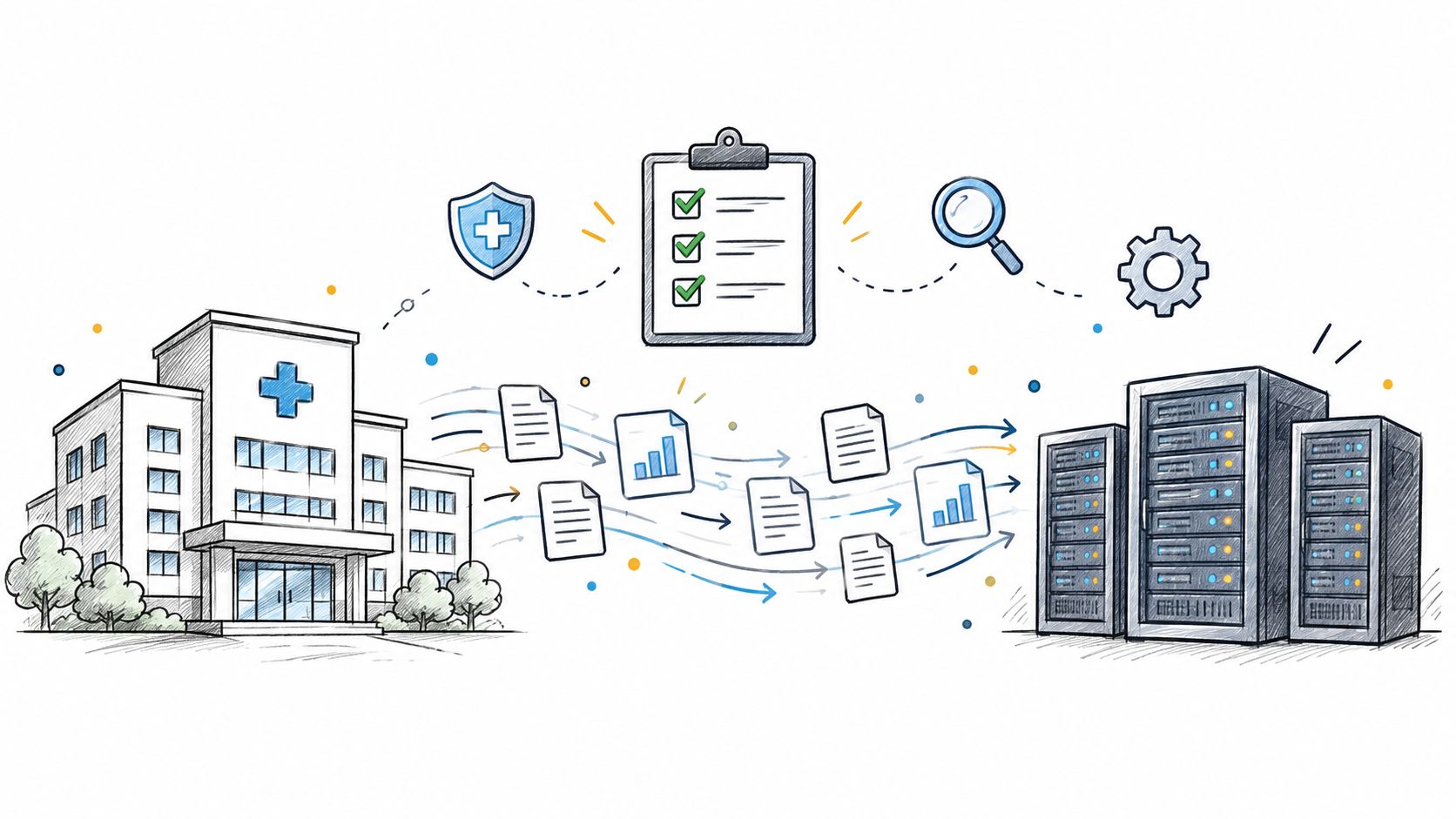
Practical data migration planning guide for healthcare teams. Scope, mapping, compliance, validation, cutover and rollback decisions explained end to end.
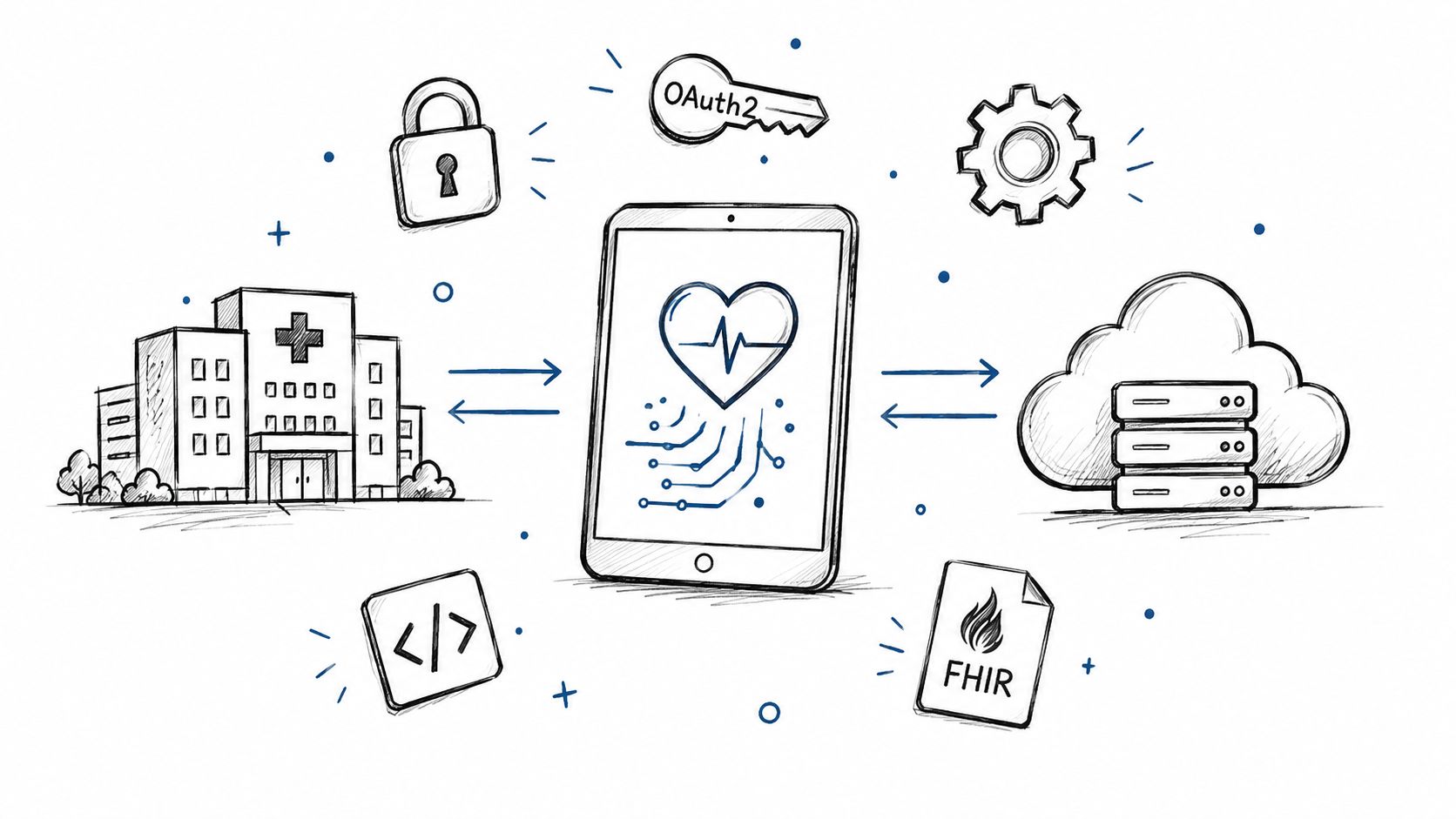
Smart on FHIR guide for healthtech engineers. Learn the OAuth 2.0 launch model, scope syntax, backend services, and US regulatory requirements.
Connect with our team to explore how AI expertise can transform your business.