
AI in Healthcare
HIPAA-Compliant AI: How to Use LLMs With PHI Safely
How to build HIPAA-compliant AI: when LLM providers need a BAA, data minimization, de-identification, audit controls and a reference architecture.
October 16, 2026Read more
Care teams often struggle with fragmented communication and delayed updates. AI agents help bridge these gaps by automating information sharing, coordinating tasks, and delivering timely insights, enabling faster collaboration and more connected patient care.
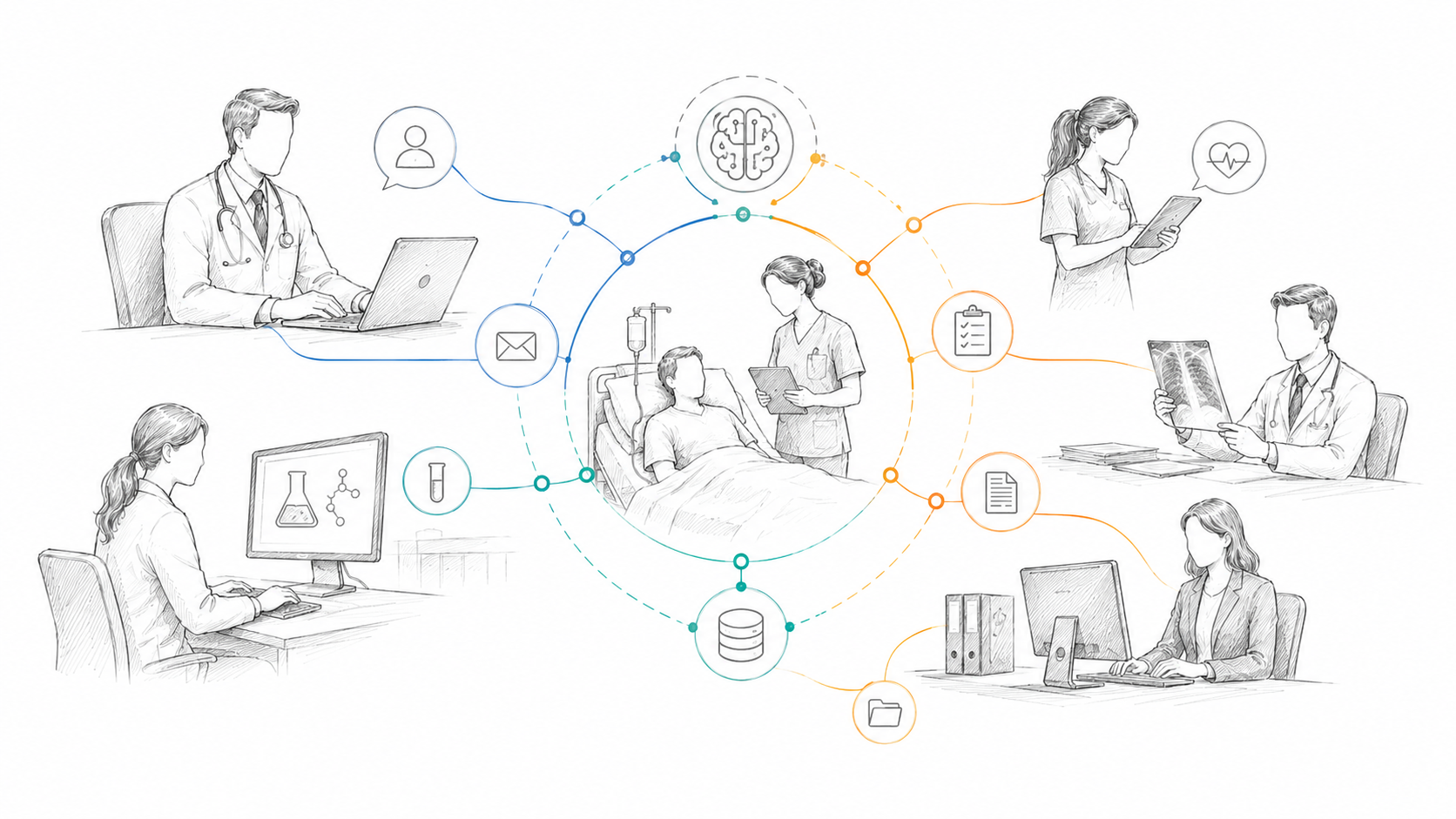
Clear communication shapes every step of patient care. Doctors, nurses, specialists, lab staff, and administrators share updates throughout the day. When a single message is delayed, treatment schedules, patient safety, and clinical decisions can all be affected. Large hospitals manage thousands of records, reports, and instructions across different departments. When communication breaks down, confusion spreads quickly. A nurse may wait for lab results, a specialist may miss the latest patient notes, or administrative staff may spend hours chasing records across multiple systems. These gaps increase workload and slow down clinical routines.
AI agents in healthcare bring structure to this process. They organise patient information, deliver updates instantly, and cut down repetitive coordination across departments. Care teams gain quicker access to accurate details, which strengthens communication throughout the patient journey.
AI agents process healthcare data and guide clinical teams through clear communication workflows. They gather patient updates, arrange records, highlight urgent cases, and send information to the right departments. Inside a hospital, countless exchanges happen every day. Nurses update charts, labs share diagnostic results, specialists review medical histories, and administrative staff manage schedules. When these tasks rely only on manual coordination, delays and missed updates often occur.
AI-driven systems create a connected flow of communication for care teams. Information reaches the right place at the right time through structured workflows. Clinical staff spend less time searching for records and more time focusing on patient care. To build these platforms, many healthcare organisations work with a healthtech engineering partner that designs advanced communication systems linking departments through intelligent workflows.
Modern hospitals depend on constant coordination between departments. Emergency teams, radiology, laboratories, nursing stations, pharmacies, and specialists all play a role in patient care at different stages. When updates rely only on manual methods, gaps often appear. Phone calls, paper notes, scattered records, and disconnected software systems slow communication across departments. Staff may even repeat the same documentation several times during a single patient visit.
Administrative pressure adds to the challenge. Nurses and administrative staff spend large parts of the day updating records, arranging schedules, and tracking patient details. These repetitive tasks reduce the time available for direct patient interaction. To address this, many healthcare organisations are turning to healthcare AI services that simplify communication and make information exchange between departments more efficient.
Care teams need immediate access to patient updates during treatment. When reports are delayed, diagnosis, medication choices, and treatment planning can all be affected. AI agents in healthcare instantly share patient information across systems. Lab results, physician notes, medication updates, and patient records reach the right departments without long waits. This gives clinical teams a clear view of patient care activities as they happen. A custom AI strategy report can guide healthcare organisations in addressing communication gaps, workflow challenges, and system integration needs for more coordinated care.
Critical patient updates demand quick attention. Any delay in communication can affect emergency response and clinical decisions. AI systems send alerts for abnormal test results, medication schedules, changes in patient condition, and pending clinical actions. Nurses, physicians, and specialists receive these updates through connected communication platforms. Faster notifications strengthen coordination across treatment workflows.
Healthcare staff spend much of the day on repetitive administrative tasks. Updating documentation, coordinating schedules, transferring patient records, and entering data consume valuable time.
AI-driven workflow systems simplify these tasks through automated documentation and organised record management. Clinical teams experience smoother operations across departments. Many providers also use SaMD solutions to build digital clinical systems that more effectively connect patient data, treatment planning, and communication workflows.
During treatment planning, healthcare professionals review large volumes of patient data. Access to organised information makes communication across care teams more effective.
AI systems study patient information and identify patterns from records, treatment history, and diagnostic updates. Physicians and nurses receive structured insights that support faster coordination during patient care discussions.
Smooth coordination between departments is central to effective healthcare communication. Real-time updates reduce delays across different stages of patient treatment. Digital platforms strengthen care team collaboration across hospitals, nursing stations, laboratories, and speciality units. Faster coordination improves efficiency across the entire healthcare environment.
Manual communication often creates risks. Missed updates, duplicate records, and delayed reports can directly affect patient care. AI-driven communication systems organise patient information through structured workflows. Clinical teams receive accurate updates across connected systems, reducing gaps during treatment coordination.
Timely communication supports better patient care decisions. Healthcare professionals need accurate information during diagnosis, medication review, and treatment planning. Connected systems provide continuous patient updates across departments. Patients experience smoother transitions through different stages of treatment.
Administrative work consumes large portions of time in healthcare settings. Documentation and manual coordination reduce productivity for clinical staff. AI-powered healthcare communication tools simplify documentation, patient updates, and departmental coordination. Professionals gain more time to focus on patient care during daily operations.
 ws
wsNurses manage constant communication throughout patient care. They coordinate medication schedules, monitor patient conditions, update records, and share information with physicians and specialists during treatment. AI systems make monitoring and documentation easier through organised digital workflows. Faster communication across departments reduces pressure on healthcare staff and keeps daily routines more manageable.
Administrative coordination also becomes more structured with connected systems. Professionals spend less time tracking updates across multiple departments, which strengthens communication and improves efficiency in clinical operations.
Patient monitoring depends on constant communication between healthcare teams. Real-time updates allow faster responses during medical situations. AI systems track patient conditions through connected monitoring platforms, including Remote Patient Monitoring (RPM) solutions that continuously collect and share patient data. Clinical teams receive quick updates on patient status, treatment progress, and urgent care needs.
Clinical documentation takes up a large amount of staff time. Repetitive updates and paperwork often slow down operations. AI-powered documentation systems arrange patient records, automate clinical notes, and simplify coordination across departments. This creates smoother communication during daily routines.
Healthcare communication relies on coordination between laboratories, specialists, physicians, nursing teams, and administrative staff. Connected AI systems transfer patient information across departments through structured workflows. Faster communication strengthens treatment coordination across healthcare environments.
Healthcare professionals need timely information during treatment planning. Early recognition of clinical risks improves coordination across care teams. AI systems study patient records and highlight urgent clinical patterns from healthcare data. Care teams receive structured updates that support quicker treatment planning and communication across departments.
Healthcare communication systems are steadily advancing across modern clinical settings. Connected digital platforms strengthen communication between departments through structured workflows and organised patient information systems. Future hospitals may use predictive communication tools, advanced patient monitoring, and coordinated clinical platforms across wider healthcare networks. Professionals will gain quicker access to patient updates through connected care systems.
Integrated communication platforms will continue to improve coordination across multidisciplinary teams and streamline clinical operations.
Healthcare communication directly shapes the quality of patient care across every clinical setting. Delayed updates, fragmented records, and repetitive coordination tasks place heavy pressure on care teams. AI agents in healthcare strengthen communication through structured workflows, organised patient information, real-time updates, and connected systems. This gives clinical teams smoother coordination across departments, leading to improved patient experiences and more efficient operations.
Healthcare organisations continue to invest in intelligent communication platforms to build connected clinical environments. Contact our team to learn more about advanced healthcare communication tools designed for coordinated patient care.
AI agents in healthcare help hospitals organise patient data, automate updates, and improve communication between departments through connected digital workflows.
A healthtech engineering partner helps healthcare organisations build secure communication platforms that improve care team collaboration and workflow efficiency.
Healthcare AI services support faster information sharing, automated alerts, and better coordination between doctors, nurses, labs, and administrative teams.
A custom AI strategy report helps healthcare providers identify communication gaps, plan system integration, and improve healthcare communication tools across departments.
SaMD solutions support connected patient monitoring, digital workflows, and structured communication for stronger care team collaboration.
How to build HIPAA-compliant AI: when LLM providers need a BAA, data minimization, de-identification, audit controls and a reference architecture.

Practical data migration planning guide for healthcare teams. Scope, mapping, compliance, validation, cutover and rollback decisions explained end to end.

Smart on FHIR guide for healthtech engineers. Learn the OAuth 2.0 launch model, scope syntax, backend services, and US regulatory requirements.
Connect with our team to explore how AI expertise can transform your business.