AI in Healthcare
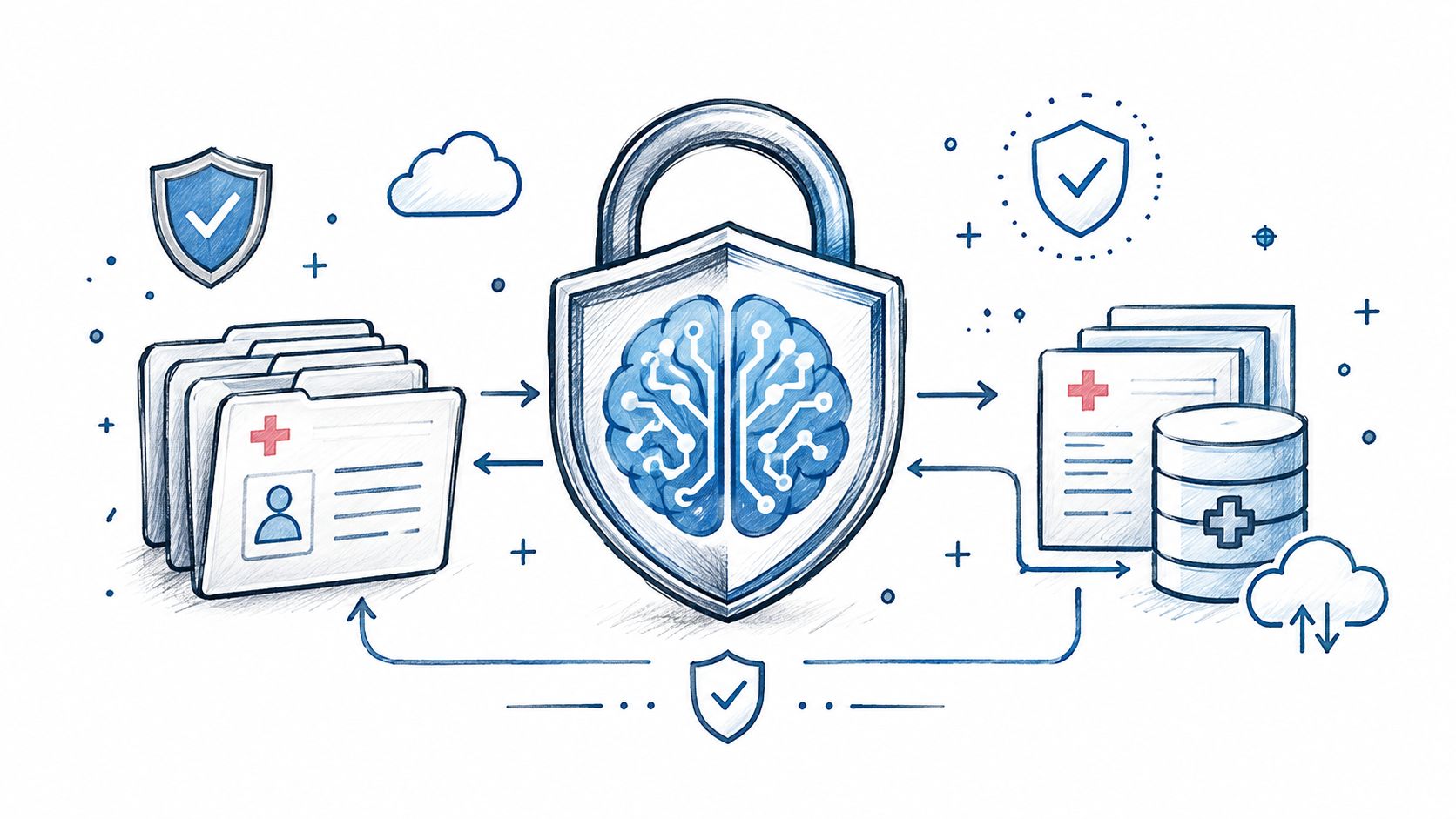
HIPAA-Compliant AI: How to Use LLMs With PHI Safely
How to build HIPAA-compliant AI: when LLM providers need a BAA, data minimization, de-identification, audit controls and a reference architecture.
October 16, 2026Read more
From billing and scheduling to documentation and claims processing, administrative work slows healthcare systems down. Learn how AI-driven automation can reduce manual effort, cut costs, and free up teams to focus on patient outcomes.
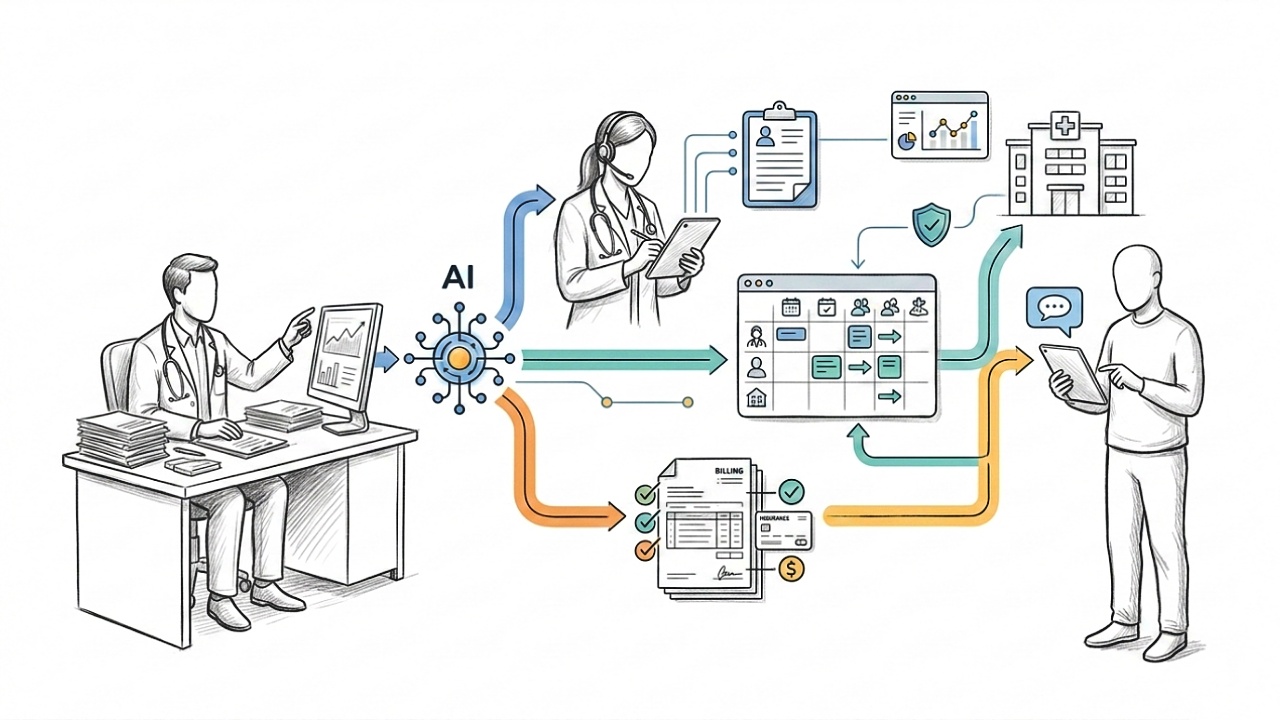
Healthcare organizations face rising pressure to balance administrative tasks with the delivery of quality patient care. Long documentation, complex scheduling, and detailed billing consume significant time and resources, generating delays that reduce overall efficiency. Artificial intelligence presents a clear opportunity to streamline these processes while maintaining the standard of care. By incorporating smart solutions into daily workflows, hospitals and clinics can operate more effectively, and medical staff can focus more on patient care. The concept of AI healthcare operations optimization transforms how providers manage these challenges, paving the way for easier administration and smoother operations.
Administrative work in healthcare features tasks such as managing patient records, processing insurance claims, scheduling appointments, and preparing reports. These tasks are important, but often require more time than clinical duties. This can lead to staff exhaustion and slower operations. Manual data entry and repetitive steps not only delay processes but also increase the risk of errors. These errors can lead to compliance issues or delayed reimbursements.
Healthcare institutions are adopting healthcare AI services to address these challenges. By studying patterns and automating everyday tasks, AI can reduce the repetitive burden. This approach does not simply replace manual effort. It reshapes administrative workflows into a more structured and reliable system, easing pressure on staff and allowing resources to go further.
Administrative complexity often leads to gaps across departments that go beyond time consumption. Separate systems, manual transfers, and disconnected data flows create challenges for consistent operations. These gaps increase repeated work and slow down decision-making. Well‑defined AI use cases address these issues by focusing on specific tasks such as record management, scheduling, and reporting. When applied with clarity, these use cases bring order to scattered processes and create smoother coordination across healthcare operations.

Maintaining accurate patient records is one of the most time‑consuming parts of healthcare administration. AI solutions can transcribe clinician notes, arrange them in standard formats, and highlight missing or inconsistent details. This reduces the time medical staff spend on paperwork and keeps records complete and compliant with regulations. Using a custom AI strategy report can guide hospitals on how to add these tools into existing systems without difficulty.
Managing patient appointments and staff shifts requires balancing numerous factors, including clinician availability and room capacity. AI-powered scheduling tools analyze past data to predict demand, allocate resources well, and minimize conflicts. Hospitals that apply AI solutions for scheduling can decrease idle time, prevent overbooking, and upgrade the management of daily operations. Insights from an AI maturity model help organizations understand their readiness to adopt advanced scheduling systems and highlight areas for improvement.
Billing and claims management often involve detailed steps, repeated checks, and strict compliance rules. AI systems can review insurance eligibility, process claims, and identify errors before submission, supporting stronger interoperability in healthcare across billing platforms and insurance systems. This reduces mistakes, speeds up reimbursements, and lowers the administrative load. Working with an AI implementation partner guarantees these technologies integrate seamlessly into daily operations and align with the institution's objectives.
AI chatbots and virtual assistants can manage routine patient questions, appointment confirmations, and reminders. By completing these tasks automatically, staff move away from repetitive work and focus attention on more complex patient needs. Insights from an AI readiness assessment guide healthcare facilities in selecting the right communication tools while maintaining a high standard of patient experience.
Healthcare organizations must follow strict regulations and reporting standards. It can track compliance measures, prepare required reports, and highlight areas that need attention. By reducing manual monitoring and reporting work, AI supports operational integrity and lowers the risk of compliance issues. Partnering with a provider that offers AI strategy consulting ensures these solutions operate within the full administrative framework and align with future objectives.
Administrative leaders need clear insight into daily operations to make timely decisions. AI systems can combine data from separate administrative functions into unified dashboards that display the present situation. This visibility supports better planning, quicker responses to issues, and stronger coordination across departments. With clearer views of workloads and performance trends, healthcare operations establish stability and predictability.
Integrating into AI healthcare operations optimization requires a clear and structured plan. The first step is to review current workflows and identify areas where automation can create the most impact. Hospitals can employ AI adoption roadmap services to design a phased rollout, starting with priority areas such as documentation, billing, and scheduling. This method opens the path for providers to track progress, adjust strategies, and expand over time. Selecting AI use cases that align with operational priorities secures technology adoption that delivers measurable outcomes and supports future goals.
Artificial intelligence is transforming healthcare administration by simplifying complex workflows and reducing the administrative burden that often limits operational efficiency. From automating documentation to streamlining scheduling, billing, and communication, AI offers practical solutions that free staff to focus on patient care. Implementing AI with careful planning ensures that healthcare organizations achieve measurable operational improvements. By adopting AI healthcare operations optimization, hospitals and clinics can achieve more efficient administration, lower error rates, and improved patient experiences.
Contact us to explore tailored solutions that drive operational change. Together, we can build a sustainable AI‑driven healthcare system.
AI healthcare operations optimization uses AI solutions to manage administrative tasks, reduce errors, and improve how healthcare organizations function.
Healthcare AI services automate documentation, billing, and scheduling while identifying practical AI use cases that streamline daily workflows.
An AI readiness assessment evaluates current systems and processes, ensuring organizations are prepared for structured adoption guided by an AI adoption roadmap.
AI strategy consulting defines priorities, and a custom AI strategy report outlines actionable steps aligned with operational and compliance goals.
Hospitals should involve an AI implementation partner early to integrate AI Solutions effectively and track progress using an AI maturity model.
How to build HIPAA-compliant AI: when LLM providers need a BAA, data minimization, de-identification, audit controls and a reference architecture.

Practical data migration planning guide for healthcare teams. Scope, mapping, compliance, validation, cutover and rollback decisions explained end to end.
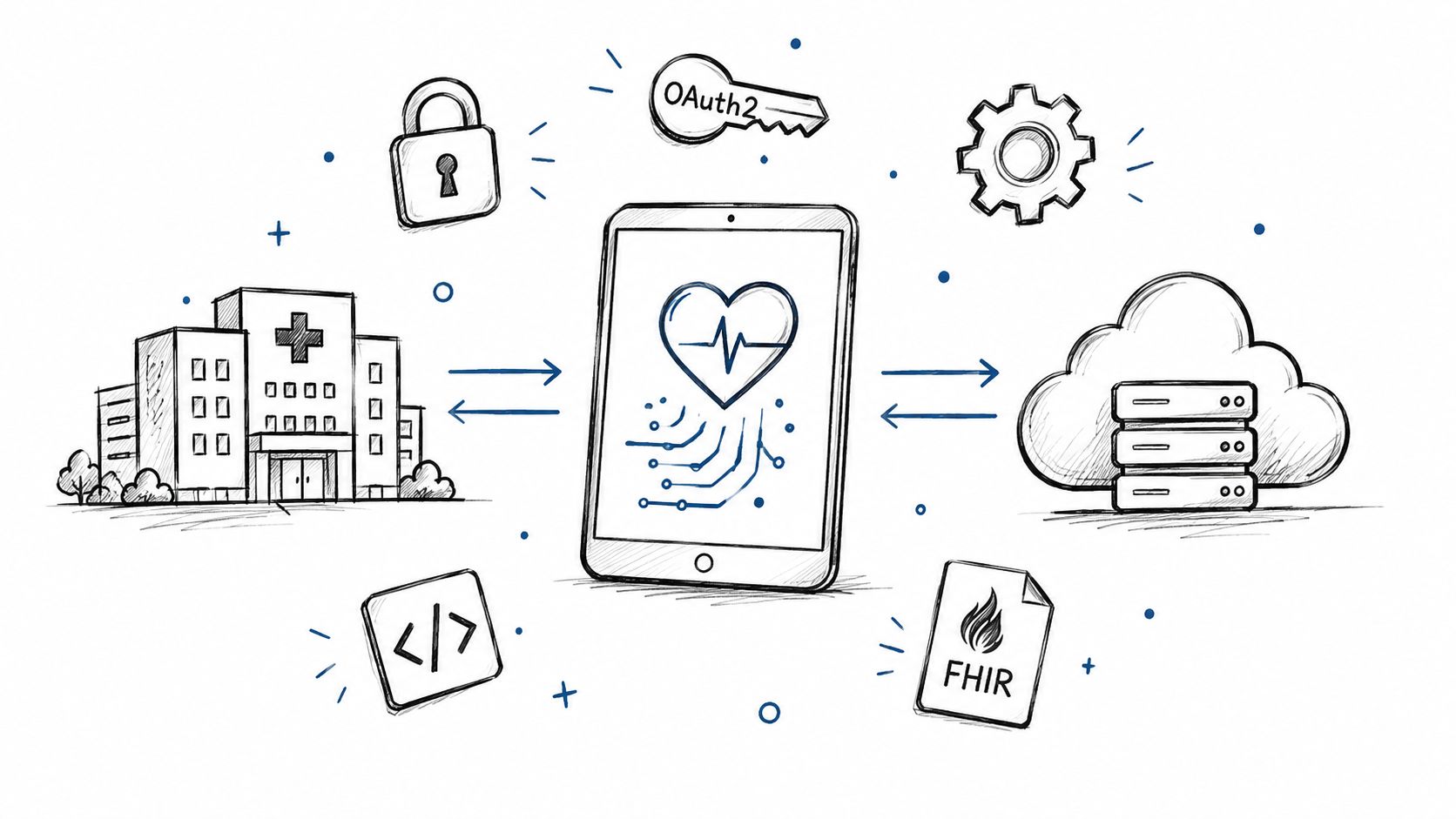
Smart on FHIR guide for healthtech engineers. Learn the OAuth 2.0 launch model, scope syntax, backend services, and US regulatory requirements.
Connect with our team to explore how AI expertise can transform your business.