
AI in Healthcare
HIPAA-Compliant AI: How to Use LLMs With PHI Safely
How to build HIPAA-compliant AI: when LLM providers need a BAA, data minimization, de-identification, audit controls and a reference architecture.
October 16, 2026Read more
The future of healthcare is proactive, not reactive. Explore how predictive analytics empowers providers to identify risks early, improve care coordination, and deliver better outcomes at scale.
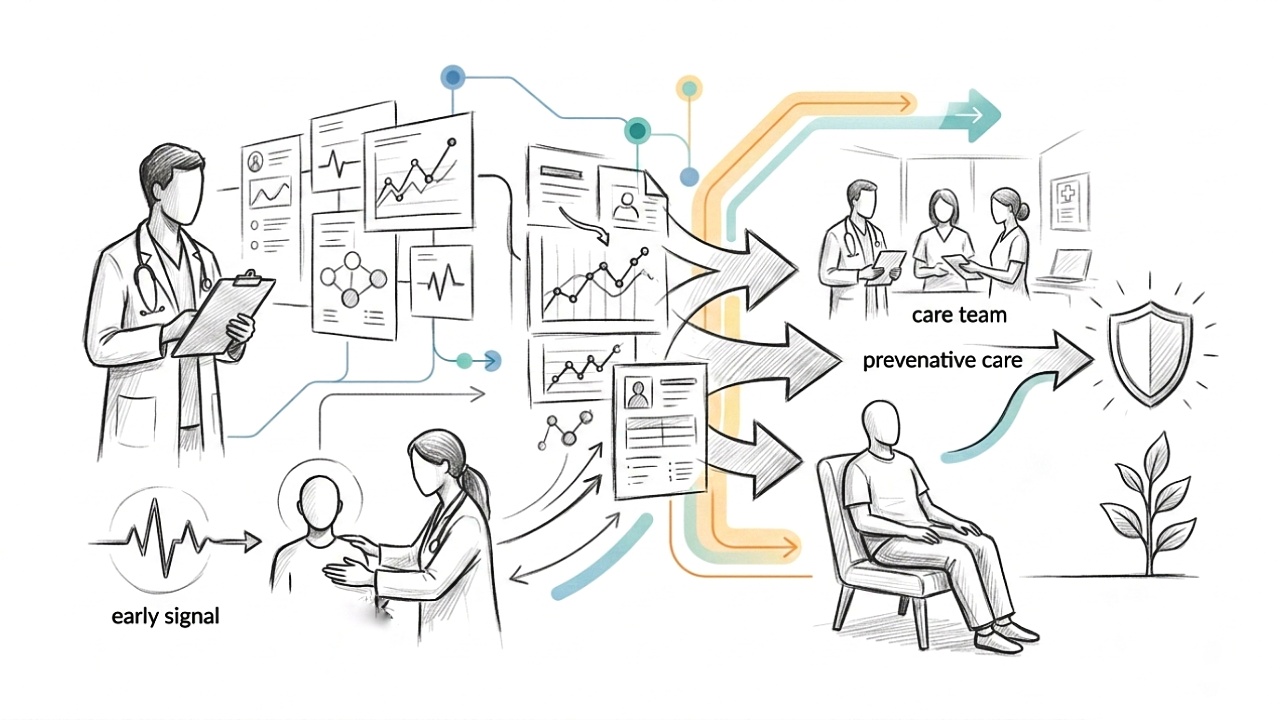
Healthcare decisions have often been based on what has already taken place. Symptoms are noticed, tests confirm a condition, and treatment follows. This order has guided treatment for many years. A new way is now changing this pattern by focusing on what may come next rather than what has already occurred. Predictive analytics in healthcare reflects this change by bringing foresight into clinical decision-making. By studying patient data and trends, care teams receive early signals that guide timely action and careful planning. This marks a steady step toward proactive care delivery, where anticipation becomes part of daily clinical practice rather than something rare.
Predictive analytics brings a forward-looking perspective to healthcare operations. Rather than relying on current symptoms, clinical teams review patterns across records, patient data, and population trends. These patterns highlight signals that may indicate future risks such as disease progression or unexpected admissions. Data trends play a vital role in this process, offering deeper visibility into patient risks and operational challenges. Proactive care delivery develops from this insight, guiding interventions before conditions become more serious. Over time, this approach contributes to smoother workflows, stronger continuity of care, and greater confidence in clinical planning.
Predictive models are valuable because they can review large amounts of information and identify useful signals. When information from electronic health records, test results, and patient histories is combined, it gives a wider view of health patterns. Healthcare AI services often play a role in this process by managing data flows and building models that make sense of large amounts of information. These services focus on presenting insights that suit clinical routines, keeping the message clear and easy to use.

Predictive insight becomes valuable when it helps drive action. Risk scores and trend indicators guide earlier reviews, closer observation, and customized care plans. In this setting, AI solutions assist clinical teams by organizing predictions around specific care goals such as reducing avoidable complications or managing long-term conditions. The focus stays on decision support rather than automation, keeping clinicians at the center of care delivery.
Introducing predictive analytics requires clear guidance. AI strategy consulting often plays a role during early planning by aligning predictive goals with broader care priorities. Strategic alignment helps define where predictive analytics deliver the greatest impact and how teams respond. This clarity prevents scattered efforts and encourages consistent adoption across departments.
Proactive care delivery becomes clear through practical examples. In predictive healthcare, AI use cases are often applied to detect risks early, for instance, identifying patients who may experience delayed recovery or repeated admissions. Each example connects prediction with a clear clinical response, strengthening the link between information and action.
Using predictive models is a key step in advancing proactive care. An experienced AI implementation partner helps with the careful introduction of these tools within clinical settings. The process respects existing workflows while adding new insights to daily routines. During this stage, stability and ease of use are key, ensuring adoption lasts over time rather than fading after a temporary change.
Clear visibility of performance helps healthcare teams improve continuously. A custom AI strategy report provides a clear view of predictive initiatives, highlighting adoption levels, outcome trends, and areas that may need adjustment. This reporting style keeps leadership and clinical teams informed, helping decisions remain transparent as predictive capabilities expand.
Beyond tracking adoption, these reports also indicate whether predictive tools have a meaningful effect on patient outcomes. They can reveal patterns such as reduced readmissions, faster recovery times, or improved resource allocation. By connecting performance data with clinical results, teams gain confidence that predictive analytics is not just a technical upgrade but a meaningful improvement in care delivery.
Healthcare organizations are at different stages when it comes to using predictive analytics. Some are just beginning with basic data practices, while others have progressed to advanced predictive tools. A maturity model helps outline these stages, helping teams understand their current position. Understanding this readiness supports realistic planning and steady progress, enabling improvements without disrupting daily operations. Over time, this approach builds stronger analytical capabilities and prepares organizations for more advanced predictive care.
Good preparation is the foundation for long‑term success. A readiness assessment reviews core areas, including data quality, governance processes, and internal capabilities in predictive analytics. This review helps identify what is already strong and what needs improvement. With that clarity, healthcare teams can plan realistically and move forward without placing unnecessary strain on resources.
Lasting adoption depends on clear direction. An AI adoption roadmap for predictive care outlines the stages of integration, from small pilot projects to full clinical use. This structured approach encourages steady progress while keeping focus on the goals of patient care.
As predictive systems become more established, their role in everyday care is easier to see. Spotting risks early enables timely action, supports smoother care transitions, and ensures consistent monitoring. Predictive analytics in healthcare moves beyond being just a technical upgrade; it helps shape a care model built on anticipation rather than reaction. This shift supports the broader transition toward patient‑centered care and lasting improvements in outcomes.
Proactive care is a practical way to handle the growing complexity in healthcare. Predictive analytics provides the foundation by bringing foresight into everyday clinical decisions. By identifying risks early and supporting timely action, predictive analytics in healthcare helps create a calmer and more prepared care environment. Organizations on this journey require thoughtful planning, a clear strategy, and a steady, step-by-step approach.
Turn predictive insight into better care outcomes. Contact us now to begin your journey toward proactive care.
Predictive analytics in healthcare uses data patterns to forecast risks and support proactive clinical decisions before issues escalate.
Healthcare AI services manage data, build models, and deliver AI Solutions that align predictions with everyday clinical workflows.
AI strategy consulting aligns predictive AI use cases with care priorities and outlines next steps through a custom AI strategy report.
An AI readiness assessment evaluates data and governance capabilities, while an AI maturity model measures progress over time.
Working with an AI implementation partner and following a clear AI adoption roadmap supports steady, sustainable integration into clinical practice.
How to build HIPAA-compliant AI: when LLM providers need a BAA, data minimization, de-identification, audit controls and a reference architecture.

Practical data migration planning guide for healthcare teams. Scope, mapping, compliance, validation, cutover and rollback decisions explained end to end.

Smart on FHIR guide for healthtech engineers. Learn the OAuth 2.0 launch model, scope syntax, backend services, and US regulatory requirements.
Connect with our team to explore how AI expertise can transform your business.