
AI in Healthcare
HIPAA-Compliant AI: How to Use LLMs With PHI Safely
How to build HIPAA-compliant AI: when LLM providers need a BAA, data minimization, de-identification, audit controls and a reference architecture.
October 16, 2026Read more
AI is enhancing healthcare supply chains by predicting disruptions, optimizing inventory, and improving efficiency, helping hospitals stay resilient and deliver better patient care.
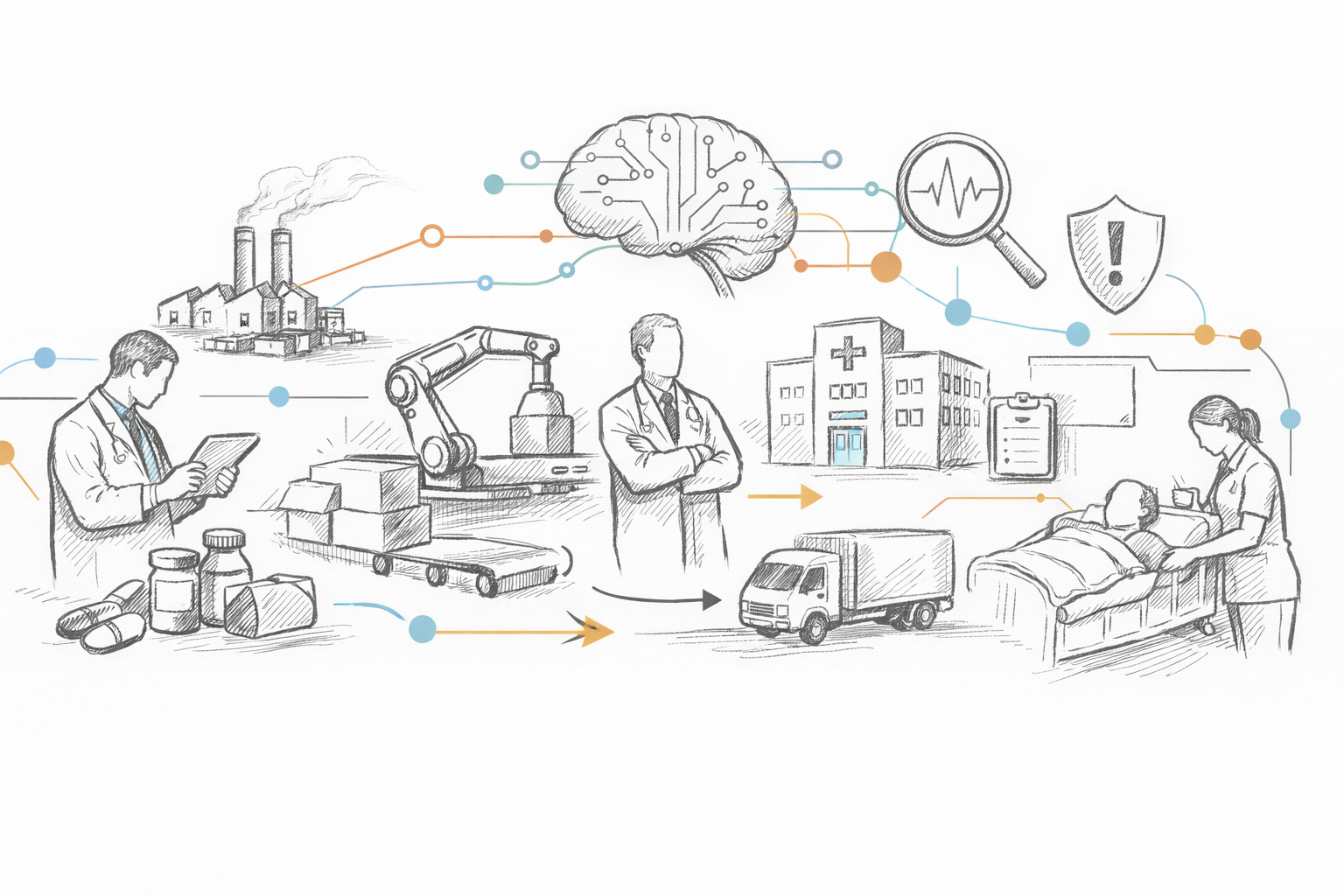
Healthcare delivery relies on a wide network of suppliers, distributors, hospitals, and care teams working together. When any part of this network breaks down, patients feel the impact almost immediately. Recent global events have revealed clear gaps in planning, visibility, and coordination across medical supply systems. The rise of AI healthcare supply chain solutions offers a practical way to reduce uncertainty, improve foresight, and maintain continuity of care. Artificial intelligence provides data-driven insight that strengthens readiness while keeping decision-making straightforward for healthcare leaders.
The healthcare supply chain covers all steps required to deliver medical products and services. Raw materials initiate the process, followed by production, storage, transportation, and clinical use. This range includes medicines, medical devices, diagnostic equipment, surgical instruments, and protective articles. Each step has strict requirements for quality, safety, and timing.
The healthcare supply network faces greater pressure than most other industries. Patient requirements change rapidly. Regulatory requirements add layers of oversight. Delayed shipment or missing items can create a direct clinical risk. For this reason, supply chain design in healthcare requires foresight, precision, and accountability.
More organizations now turn to healthcare AI services to gain clarity across procurement, inventory, and logistics. These services study historical patterns, supplier behavior, and usage trends to improve visibility across the supply network.
Disruptions in healthcare supply chains arise from multiple sources. A sudden health crisis can cause demand to rise overnight. Manufacturing setbacks reduce the availability of critical products. Delivery delays are caused by transportation problems. Vulnerability during regional challenges results from a heavy reliance on a single supplier. Teams are unable to identify risks early when data is locked in different systems.
Hospitals and clinics often view only their direct suppliers. This restricts their awareness of problems earlier in the supply chain. A delay several steps earlier in the chain may remain hidden until stock levels drop. Manual tracking methods struggle when demand rises sharply. These conditions create uncertainty across procurement and clinical planning.
To address these challenges, some organizations use AI Solutions to process large volumes of supplier data, logistics updates, and usage records. These systems reveal risk patterns that manual review often overlooks, giving healthcare leaders clearer insight into potential disruptions.

Healthcare supply chains encounter recurring challenges that impact daily operations. Forecasting often struggles during sudden shifts in demand. Inventory policies rely on fixed thresholds that lack quick adaptability. Supplier reviews tend to focus on cost instead of resilience. Communication gaps slow down responses when disruptions occur.
Staff teams also work across multiple systems that rarely connect. This lack of integration delays decision-making. Leaders require timely information to allocate resources and prevent waste.
To address these issues, enterprises often turn to AI strategy consulting. This approach reviews current workflows, data quality, and decision models. It connects technology adoption to business results, moving beyond standalone tools.
Many healthcare supply networks still rely on manual processes for procurement, inventory, and billing. Paper-based work is slow, leads to mistakes, and delays restocking. It also makes it harder to respond quickly to clinical needs.
Manual tracking often leads to shortages of critical items or excess stock that becomes waste. Without automated systems, teams lack accurate insight into inventory levels, creating both scarcity and waste.
Contracts updated by hand often contain errors in pricing, terms, or supplier details. These gaps lead to poor ordering decisions and financial loss.
Slow invoice processing causes late payments. This strains supplier relationships and reduces their willingness to prioritize urgent deliveries.
Although advanced analytics are widely discussed, fewer than half of providers use AI to detect disruptions. As a result, many miss predictive insights that could prevent risks.
Supply chain disruptions affect patients directly through delayed treatments, canceled procedures, and reduced quality of care. When supplies are missing, clinicians must adjust protocols under pressure. Using substitute products can raise safety concerns, and shortages increase stress for staff.
Patients rarely see the supply network behind their treatment. They feel the impact through longer wait times and limited availability of care. Reliable supply planning shields clinical teams from constant crisis management and helps maintain patient trust.
Healthcare organizations consider AI use cases, including demand prediction, inventory prioritization, and distribution planning. These use cases transform operational understanding into better patient care.
Effective risk management starts with early signals. Traditional reporting relies on past performance and scheduled reviews. This means action occurs only after a disruption has already happened. Predictive analysis offers a different approach.
Artificial intelligence reviews live data from suppliers, transport partners, and internal systems. It identifies anomalies, trends, and correlations that signal possible shortages or delays. Alerts provide teams the opportunity to respond before problems become serious.
Many providers collaborate with an AI implementation partner to integrate predictive tools into procurement and logistics platforms. This collaboration connects technical deployment with the realities of daily operations.
Implementing AI in healthcare supply chains requires a careful approach. Data must be standardized, governance frameworks must define accountability, and teams need clarity on who makes decisions. Technology alone adds little value unless it connects directly to daily operations and clinical priorities.
A custom AI strategy report provides structure by outlining objectives, data readiness, technology scope, and success measures. This document guides leadership decisions and establishes realistic goals. At the same time, organizations frequently apply an AI maturity model to evaluate data quality, analytics, governance practices, and team readiness. These reviews highlight gaps that need attention before moving forward.
Before deployment, leaders conduct an AI readiness assessment to examine infrastructure, skills, compliance, and change management capacity. This step reduces risk during rollout. From there, an AI adoption roadmap sequences short-term and long-term initiatives. It combines quick operational gains and foundational improvements in data and governance. During deployment, teams focus on AI healthcare supply chain resilience, aiming for continuity, foresight, and adaptability.
Artificial intelligence improves healthcare supply chains by anticipating problems rather than reacting to them. Predictive demand planning adjusts inventory before usage increases. Supplier risk analysis points out weaknesses before contracts break down. Logistics intelligence finds new routes when deliveries face delays.
These capabilities build resilience through awareness and coordination. Leaders gain more time to respond. Clinicians deal with fewer surprises. Procurement teams make clearer decisions when facing choices.
Throughout the healthcare field, this same pattern is evident. Organizations that invest in data visibility and predictive insight recover faster from disruption. They plan with context instead of assumptions. True resilience grows through preparation and learning.
Building resilience in the healthcare supply chain requires foresight, coordination, and consistent execution. Artificial intelligence brings practical tools that make supply networks clearer and cut uncertainty during disruptions. A thoughtful approach connects technology with daily operations and patient care priorities. Organizations that choose resilience over short-term gains establish lasting stability across clinical services. Contact us to discuss AI healthcare supply chain strategies that build stability in healthcare operations.
AI healthcare supply chain uses predictive analytics and AI Solutions to improve visibility, reduce disruptions, and strengthen resilience in medical supply networks.
Healthcare AI services analyze supplier data, track inventory, and optimize logistics to ensure the timely delivery of critical medical products.
AI use cases include demand forecasting, inventory prioritization, supplier risk analysis, and logistics route optimization.
Hospitals use a custom AI strategy report, AI maturity model, and AI readiness assessment to plan structured deployment with measurable goals.
Collaboration with an AI implementation partner, supported by AI strategy consulting and a clear AI adoption roadmap, ensures smooth and effective integration.
How to build HIPAA-compliant AI: when LLM providers need a BAA, data minimization, de-identification, audit controls and a reference architecture.

Practical data migration planning guide for healthcare teams. Scope, mapping, compliance, validation, cutover and rollback decisions explained end to end.

Smart on FHIR guide for healthtech engineers. Learn the OAuth 2.0 launch model, scope syntax, backend services, and US regulatory requirements.
Connect with our team to explore how AI expertise can transform your business.