
AI in Healthcare
HIPAA-Compliant AI: How to Use LLMs With PHI Safely
How to build HIPAA-compliant AI: when LLM providers need a BAA, data minimization, de-identification, audit controls and a reference architecture.
October 16, 2026Read more
AI is enhancing decision-making in clinical settings by analyzing patient data, delivering real-time insights, and supporting accurate diagnoses. It helps clinicians make faster, informed decisions and improve patient outcomes.
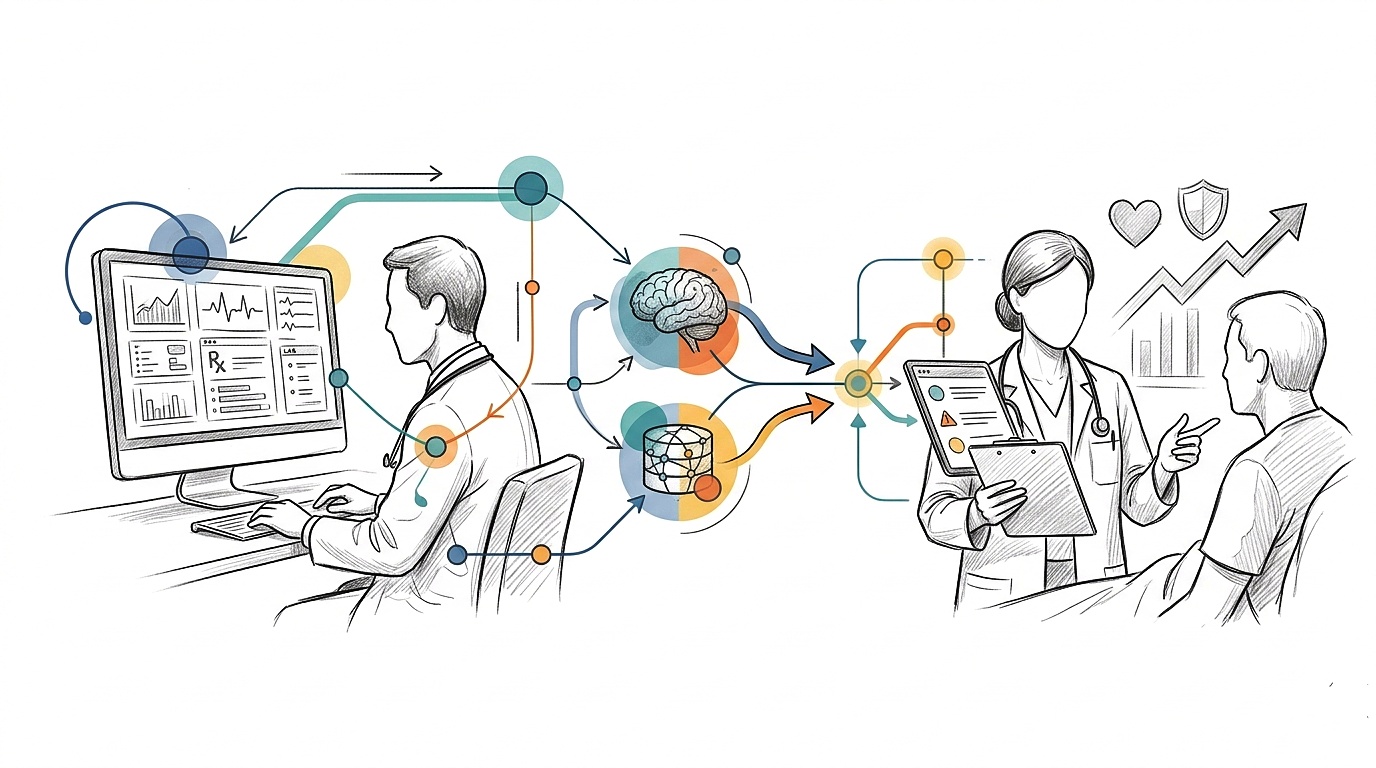
Healthcare now runs largely on data, with every patient encounter producing valuable clinical information. Doctors review medical histories, lab reports, imaging results, and live patient data before making a decision. This growing amount of information adds pressure during critical moments of care. AI clinical decision support offers a structured way to handle this challenge. It analyses large datasets and delivers clear insights. It strengthens clinical judgment by offering recommendations grounded in data.
AI in healthcare refers to systems that study medical data, find patterns, and offer insights for clinical use. Clinical Decision Support Systems, or CDSS, act as tools that guide doctors during diagnosis and treatment planning by presenting the right information at the right time. These systems gather data from sources like patient records, lab results, imaging reports, and clinical notes, then process that information to highlight possible conditions, risks, and treatment options.
Traditional systems rely on fixed rules and limited datasets, which restrict how well they adapt to complex or changing clinical situations. AI-powered systems learn from large amounts of both structured and unstructured data, which improves their accuracy over time and allows them to detect subtle patterns that manual review might miss. They also provide real-time recommendations, risk alerts, and evidence-based insights that stay current with medical knowledge. These systems assist doctors with insights, though final decisions remain with clinical professionals, preserving clinical judgment and responsibility in patient care.
Modern healthcare handles complex cases where multiple conditions, treatments, and patient histories intersect. Doctors often work under time constraints, which raises the risk of missing something important. Large amounts of patient data keep growing across hospitals, clinics, and digital health platforms. Reviewing all that data manually can slow down clinical work. There is a clear need for faster, more accurate, and data-driven decisions that improve patient outcomes and lower clinical risks. A skilled healthtech engineering partner can help bridge the gap between clinical needs and AI capabilities, ensuring the right systems are built for real-world use.

AI systems process medical records, imaging data, and lab results within seconds. They spot patterns that may not be visible through manual review. This improves diagnostic accuracy and reduces treatment delays. AI diagnostics support plays a key role in finding early-stage conditions through data-driven analysis, which leads to timely clinical action.
Predictive models study patient data to identify risk factors before symptoms become serious. This approach strengthens preventive care and lowers hospital admissions. By studying patterns in medical history, lifestyle data, and clinical reports, these models can flag early warning signs of conditions like heart disease, diabetes, and infections. Clinicians receive timely alerts, which guide early action and closer patient follow-up. This improves treatment results and lowers the need for emergency care by catching issues at an earlier stage.
AI systems review patient history, genetic data, and treatment responses to suggest tailored treatment plans. This approach improves recovery rates and reduces guesswork in choosing treatments. Healthcare AI services bring advanced analytical abilities that help clinicians select the most suitable treatment path for each patient.
During consultations, clinicians need immediate insights. AI systems offer real-time recommendations based on current patient data, which strengthens clinical decisions in critical moments. Clinical insights AI delivers structured data interpretation that improves clarity during patient evaluation and treatment planning.
Human error remains a problem in high-pressure clinical settings. AI systems double-check data, flag inconsistencies, and highlight risks. Decision intelligence healthcare provides a data-driven framework that improves safety by guiding clinicians through evidence-based pathways.
Machine Learning studies large amounts of medical data to find patterns and trends. It gets better over time by learning from new data, which sharpens accuracy in diagnosis and treatment suggestions. A well-defined custom AI strategy report helps healthcare organisations identify which machine learning models align best with their clinical goals.
Natural Language Processing reads and understands unstructured medical text such as doctor notes, discharge summaries, and reports. It turns this information into structured data that can be used for clinical analysis.
Big data systems handle large volumes of patient information from many sources. Predictive models use this data to identify risks, forecast how diseases may progress, and guide early clinical decisions.
Integration with Electronic Health Records connects patient data across systems into a single, unified view. This improves access to complete medical histories, which strengthens the accuracy of clinical decisions.
AI-powered clinical decision support systems help healthcare providers deliver more efficient, accurate, and consistent care. By studying large volumes of medical data as it comes in, these systems assist clinicians in making informed decisions, lowering errors, and improving overall healthcare delivery.
Improved Accuracy: AI systems analyse complex datasets and find patterns that may not be easily visible. This helps clinicians make more precise and evidence-based decisions.
Faster Decision-Making: With real-time data processing and instant insights, AI shortens the time needed for diagnosis and treatment planning. This allows for quicker clinical actions.
Better Patient Outcomes: Early detection, accurate diagnosis, and personalised treatment recommendations lead to improved patient care and long-term health results.
Reduced Workload for Clinicians: AI automates routine tasks such as data analysis and documentation. This lets healthcare professionals focus more on patient care.
Cost Efficiency in Healthcare: By lowering errors, avoiding unnecessary tests, and using resources wisely, AI helps reduce overall healthcare costs.
While AI in clinical decision support offers clear benefits, it also brings certain challenges that healthcare organisations must address to ensure safe, effective, and reliable use.
Data Privacy & Security Concerns: Handling sensitive patient data requires strict rule following and strong security measures to prevent breaches and unauthorised access.
Integration With Existing Systems: Connecting AI solutions with older healthcare systems can be difficult and may need extra time, resources, and technical adjustments. Many SaMD solutions are designed with integration in mind, but legacy environments still pose challenges.
Dependence on Data Quality: AI systems depend heavily on accurate and complete data. Poor quality or biased data can lead to wrong insights and decisions.
Resistance to Adoption by Clinicians: Some healthcare professionals may be slow to adopt AI due to a lack of trust, limited understanding, or worries about disruption to their daily work.
AI keeps improving with new models that handle complex medical data more precisely. Predictive and personalised care will become more common across healthcare systems. Hospitals are slowly adopting AI as a normal part of clinical workflows. As the technology matures, it will take on a larger role in guiding decisions across different medical specialties.
Healthcare teams are also focusing on building dependable systems that meet clinical standards and patient safety requirements. Continuous learning models get better through real-world data, which sharpens decision accuracy over time. As adoption grows, teamwork between clinicians, data experts, and technology teams will shape how AI becomes further embedded in everyday clinical practice.
AI is changing how clinical decisions are made through data-driven insights, predictive analysis, and real-time guidance. It strengthens clinical judgment and improves patient care across healthcare systems.
AI clinical decision support continues to grow as a trusted approach that works alongside clinicians, bringing clarity and precision to complex medical choices. Contact us to learn how this approach can fit with today's healthcare needs and future clinical plans.
AI clinical decision support uses data and algorithms to guide diagnosis and treatment. A healthtech engineering partner helps implement it through advanced healthcare AI services.
AI analyzes large datasets to provide AI diagnostics support and detect patterns early. This improves accuracy and delivers better clinical insights, AI for faster decisions.
Decision intelligence healthcare combines data analysis with real-time insights to guide clinicians. It strengthens outcomes when supported by SaMD solutions in clinical workflows.
A custom AI strategy report helps plan adoption and align goals. With a healthtech engineering partner, AI clinical decision support can be integrated effectively.
It improves speed, accuracy, and safety using clinical insights AI. Healthcare AI services enable better care delivery and stronger AI diagnostics to support outcomes.
How to build HIPAA-compliant AI: when LLM providers need a BAA, data minimization, de-identification, audit controls and a reference architecture.

Practical data migration planning guide for healthcare teams. Scope, mapping, compliance, validation, cutover and rollback decisions explained end to end.

Smart on FHIR guide for healthtech engineers. Learn the OAuth 2.0 launch model, scope syntax, backend services, and US regulatory requirements.
Connect with our team to explore how AI expertise can transform your business.